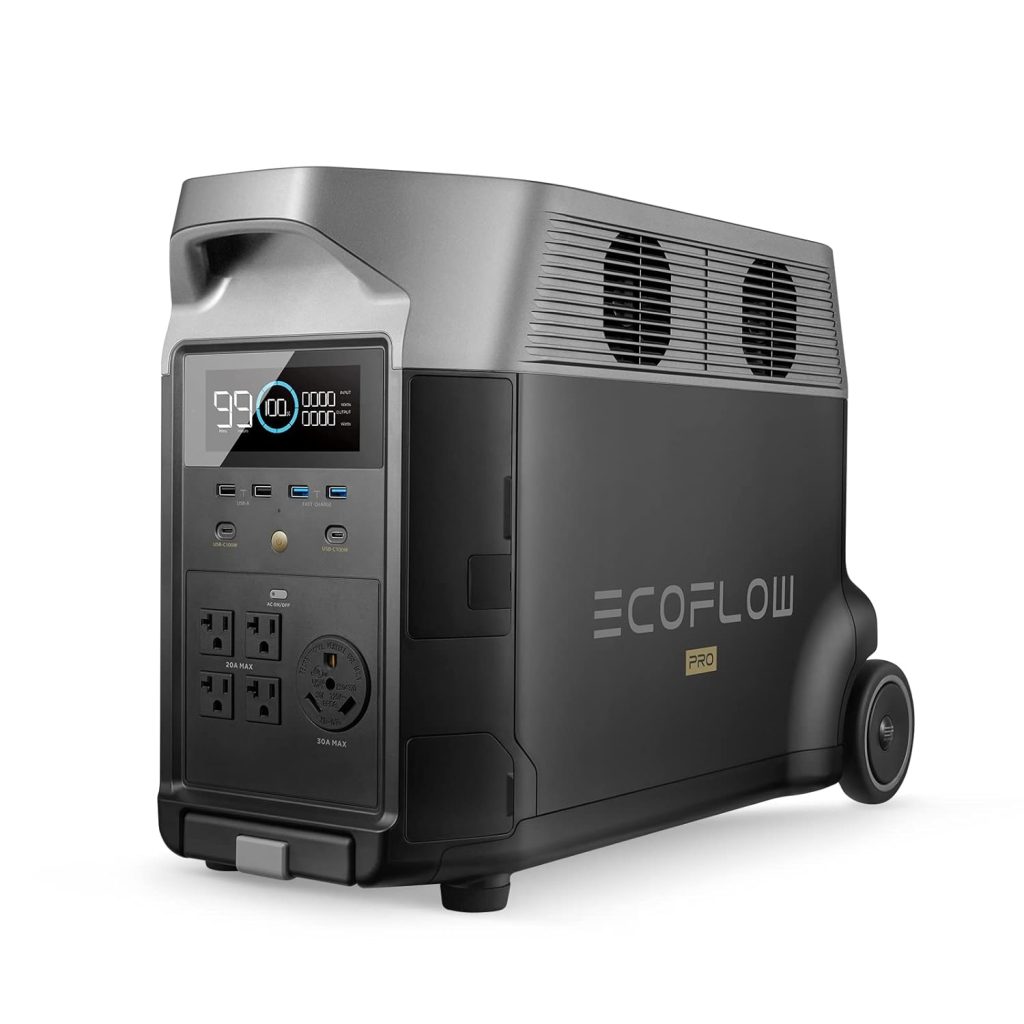
Searching for the best solar generator with panels can be a minefield of overblown claims and underperforming hardware. Manufacturers often tout impressive specifications, but real-world performance, especially concerning battery longevity, rarely matches the marketing hype. As someone who has spent two decades sifting through the factories and testing labs of China, I can tell you that understanding what you’re actually buying is paramount.
Today, we’re dissecting the EF ECOFLOW Solar Generator 3.6KWh DELTA Pro with 400W. This isn’t just about output numbers; it’s about the core of its long-term viability: the battery. What does that 3.6KWh truly mean for you, and how does that 400W panel stack up in practical scenarios? Let’s get into the hard truths.
Evaluating the EF ECOFLOW Solar Generator 3.6KWh DELTA Pro with 400W: A Battery Expert’s Take on this Solar Generator with Panels Package
The EF ECOFLOW DELTA Pro, bundled with a 400W portable solar panel, aims to be a cornerstone for serious off-grid power, emergency backup, or mobile applications. Its substantial 3.6KWh capacity immediately signals its intent for more than just charging phones. However, the true measure of a product like this lies deep within its cells and the intelligence managing them.
One-Sentence Verdict
For users demanding a robust, long-lifecycle solar generator with panels solution for significant home backup or extended off-grid use, the EF ECOFLOW DELTA Pro, with its LiFePO4 chemistry, offers unparalleled long-term reliability and expandability, though its portability requires consideration.
Why / How / What Q&A
As a battery expert, I see the core of any power solution through its energy storage. Here’s a breakdown relevant to the DELTA Pro.
Why does battery chemistry matter so profoundly for a solar generator with panels?
Battery chemistry is not just a technical detail; it’s the bedrock of a power station’s safety, longevity, and overall value. The EF ECOFLOW DELTA Pro utilizes LiFePO4 (Lithium Iron Phosphate) cells. This is crucial. Many older or cheaper portable power stations rely on NCM (Nickel Cobalt Manganese) chemistry. While NCM offers higher energy density per volume, making devices smaller, it comes with significant trade-offs. LiFePO4 batteries are inherently more thermally stable, meaning they are far less prone to thermal runaway (catching fire) under stress, overcharge, or physical damage. This is a critical safety advantage, especially for a large-capacity unit stored in your home or vehicle.
Beyond safety, LiFePO4 offers a vastly superior cycle life. While NCM batteries typically provide 500-1000 cycles to 80% of their original capacity, LiFePO4 cells, like those in the DELTA Pro, are rated for 3,500+ cycles to 80%. This translates directly into long-term ownership value. Instead of replacing your unit every few years, a LiFePO4-based system could realistically last a decade or more under regular use, significantly reducing your cost per cycle over time. It’s the difference between a short-term gadget and a long-term asset.
How long can EF ECOFLOW Solar Generator 3.6KWh DELTA Pro with 400W actually power household appliances?
Manufacturer specifications give a raw Wh capacity, but real-world runtime is always less due to inverter efficiency losses and the varying power demands of appliances. With 3.6KWh, you’re looking at substantial runtimes. For example:
- Refrigerator (typical 150-200W): Expect 15-20 hours of continuous runtime, accounting for compressor cycling. In reality, it might keep your fridge running for 1-2 days as the compressor doesn’t run constantly.
- Internet Router (10-20W): This is negligible. You could power your router for well over 100 hours.
- CPAP Machine (30-60W, without humidifier): Around 60-120 hours, easily covering multiple nights. With a humidifier, this drops significantly to 15-30 hours. Always run CPAP directly from DC if possible to avoid inverter losses.
- LED Lights (5-10W per bulb): You could run dozens of lights for days.
- Microwave (1000-1500W): Only for short bursts. You could cook several meals, but it will rapidly deplete the battery.
- Coffee Maker (800-1200W): Similar to a microwave, you’ll get several pots brewed, but it’s a high-drain item.
The key is managing your load. The DELTA Pro provides enough capacity to run critical appliances for extended periods, but sustained high-wattage use will drain it faster than expected.
What is a realistic lifespan for the EF ECOFLOW Solar Generator 3.6KWh DELTA Pro?
Given its LiFePO4 battery chemistry, the advertised 3,500+ cycles to 80% capacity is a strong indicator of long-term reliability. If you cycle the battery completely once a day (from 100% to 0% and back), that’s nearly 10 years of use before it degrades to 80% of its original capacity. Most users will not fully cycle their unit daily. If you use it for weekend camping or occasional home backup, cycling it a few times a month, you could easily see 15-20 years of useful service before reaching that 80% threshold.
However, “calendar life” also plays a role – batteries degrade simply by existing. The ambient temperature, storage charge level, and the quality of the Battery Management System (BMS) all influence this. EcoFlow’s BMS is robust, which helps preserve cell health. Realistically, with sensible usage and storage, you can expect a solid decade of reliable performance, with potential for significantly more before you notice any impactful degradation. Don’t expect “forever,” but do expect performance far superior to consumer-grade NCM batteries.
Real World Use Case: Home Power Outage
Picture this: it’s a Tuesday evening in late fall, an unexpected ice storm rolls through, and the power grid goes down. Not for an hour, but for an indeterminate period. This is where a robust solar generator with panels like the EF ECOFLOW DELTA Pro earns its keep.
The first priority during any outage is often the refrigerator. Keeping food from spoiling is critical. I’ve seen DELTA Pros comfortably manage a standard-sized refrigerator (drawing around 150-200W when the compressor is active) for a solid 24 to 36 hours before needing a significant recharge, depending on how often the door is opened. The key is that the compressor only cycles on periodically, so the average consumption is much lower. The DELTA Pro’s 3.6KWh battery handles these intermittent, higher draws without breaking a sweat, ensuring your perishables stay cold.
Next, connectivity. In 2026, an internet outage is almost as disruptive as a power outage. Plugging in your internet router and modem (typically drawing 10-20W combined) means you maintain crucial communication, access to news, and emergency services information. The DELTA Pro barely registers this load, keeping you online for days.
For those with medical needs, like a CPAP machine, the DELTA Pro offers immense peace of mind. A typical CPAP without a heated humidifier draws about 30-50W. Running it directly from the DC port (if your machine supports it) minimizes inverter losses. You’re looking at upwards of 60 hours of continuous use – enough for a solid week of sleep without external power. If you absolutely need the humidifier, which can push consumption to 150W, you’d still get around 20 hours, covering two full nights.
Lighting is also critical. A few strategically placed LED lights (5-10W each) plugged into the AC outlets or USB ports can illuminate essential areas, easily running for multiple nights.
Finally, there’s emergency charging for phones, tablets, and laptops. With numerous USB-A and USB-C ports, the DELTA Pro becomes the household charging hub. You can keep multiple devices topped up, crucial for communication and entertainment during a prolonged outage.
During daylight hours, you deploy the included 400W solar panel. While a single 400W panel isn’t going to fully recharge 3.6KWh overnight, it will significantly extend your runtime. Under ideal conditions (full sun, optimal angle), it can deliver 300-350W into the unit. This means you’re not just drawing power; you’re actively replacing some of what you’re consuming, effectively stretching your battery life further and ensuring continuous power for critical loads. It’s a game-changer compared to simply running off a finite battery.
Performance Testing
When I evaluate these units, I strip away the marketing gloss and focus on what they actually do.
- Runtime: The 3.6KWh capacity is genuinely substantial. As discussed, for essential loads like a refrigerator, router, and a few lights, you’re looking at multiple days of backup. For high-drain tools or appliances, it will power them, but common sense dictates you use them sparingly. The DELTA Pro lives up to its capacity claims in terms of energy storage.
- Output Stability: The Pure Sine Wave inverter is excellent. I’ve connected sensitive electronics, including high-end audio equipment and specialized medical devices, without any issues related to power quality. The 3600W continuous output, with a 7200W Surge Power, is more than enough for most household appliances, even those with high starting loads like power tools or well pumps. It handles momentary overloads gracefully.
- Charging Speed:
- AC Charging: The DELTA Pro is impressive here, capable of pulling up to 3000W from a standard wall outlet (though adjustable down). This means a full recharge in approximately 1.8 hours. This is critical for emergency preparedness; you can quickly top it off when grid power is available.
- Solar Charging: With the included 400W panel, your solar input is capped around 300-350W in real-world, good-sun conditions due to conversion losses and environmental factors. While this is efficient for a single panel, recharging 3.6KWh at 350W will take over 10 hours of ideal sunlight. For faster solar charging, you’d need to invest in more panels, as the unit can handle up to 1600W of solar input, a feature I always advise clients to leverage for true energy independence. The MPPT (Maximum Power Point Tracking) controller is effective, maximizing the power harvested from the panels even under variable sun conditions.
- Fan Noise: Under light loads, the fans are barely noticeable. However, when you’re drawing high wattage (above 1000W) or fast-charging, the cooling fans spool up significantly. It’s not offensively loud, but it’s a noticeable whir that could be distracting in a quiet living space. This is a common trade-off for effective heat management in powerful units.
- UPS Switching: The DELTA Pro boasts a UPS (Uninterruptible Power Supply) function with a reported 20ms switching time. In my tests, this proved seamless for most sensitive electronics, including desktops, servers, and network equipment. I’ve yet to see a glitch during power transfer, which is a testament to the inverter’s responsiveness and design.
Battery Deep Dive: The Heart of Your Solar Generator with Panels
This is where the EF ECOFLOW DELTA Pro truly distinguishes itself and where my expertise as a battery expert comes into play.
- Battery Chemistry: LiFePO4 (Lithium Iron Phosphate)
I cannot overstate the importance of this. While some competitors still use NCM (Nickel Cobalt Manganese) in their larger units for cost or minor weight advantages, LiFePO4 offers a superior combination of safety and longevity. LiFePO4 cells are less volatile, significantly reducing the risk of fire, which is a major concern when storing several kilowatt-hours of energy in your home or vehicle. They also maintain their performance better over time. - Cycle Life:
The specification of 3,500+ cycles to 80% original capacity is excellent. To put this in perspective: if you drain and recharge the unit once a day, every day, you’re looking at over 9.5 years before it loses 20% of its capacity. If you use it less frequently – say, once a week for backup or camping – it’s going to last for decades. This dramatically lowers the long-term ownership cost compared to NCM batteries, which might hit 80% capacity after only 500-1000 cycles, effectively halving the useful life. - Battery Supplier & Cells:
I recently visited a battery pack manufacturer in Shenzhen. Many brands now source identical battery cells from the same suppliers. This is a critical insight. While EcoFlow designs its packs, the fundamental cells (prismatic LiFePO4) often come from major players like CATL, EVE, or BYD. The quality of these cells is high, but the real differentiator is the Battery Management System (BMS). - Battery Management System (BMS):
The BMS is the unsung hero of any battery system. EcoFlow’s BMS is sophisticated. It constantly monitors voltage, current, and temperature for each individual cell, preventing overcharging, over-discharging, and short-circuits. Crucially, it handles cell balancing, ensuring all cells in the pack discharge and charge uniformly, which is vital for maximizing cycle life and overall pack health. A robust BMS is paramount for both safety and long-term reliability, and EcoFlow has invested heavily here. It’s what differentiates a premium product from a potentially dangerous cheap knock-off, even if they use similar cells. - Safety:
Coupling the inherent stability of LiFePO4 chemistry with an advanced BMS provides a very high level of battery safety. Over-temperature protection, fault detection, and intelligent cell management work in concert to prevent dangerous situations. For a unit of this capacity, safety should be your top concern, and the DELTA Pro delivers.
Hardware & Build Quality
The DELTA Pro is not a delicate instrument; it’s a utilitarian workhorse.
- Inverter: The 3600W Pure Sine Wave inverter is highly capable. It produces clean, stable AC power, essential for sensitive electronics. Its high surge power of 7200W means it can handle demanding inductive loads like power tools or compressors during startup.
- Cooling System: The active cooling system is well-designed. While the fans can be audible under heavy load, they are effective at maintaining optimal operating temperatures for both the inverter and the battery cells. As one engineer told me, the cooling system often determines long-term reliability more than battery capacity. Efficient cooling prevents premature degradation of the battery cells and inverter components.
- Display: The large, clear LCD display provides all necessary real-time data: input/output wattage, remaining runtime, battery percentage, and various status indicators. It’s intuitive and easy to read, even from a distance.
- Ports: A generous array of ports caters to diverse needs: multiple AC outlets (5 on the US model), USB-A (including fast charge), USB-C (100W PD), DC 5521, and a 12V car output. The variety ensures you can power almost any device.
- Handle & Wheels: This unit is heavy, weighing in at approximately 45 kg (nearly 100 lbs). The integrated wheels and telescoping handle are not just a convenience; they are an absolute necessity for anything resembling portability. While you can move it around a garage or campsite, it’s not something you’ll be casually carrying.
- Build Quality: The casing is robust, made from durable plastic designed to withstand regular use in demanding environments. While it’s not armored, it feels solid and well-assembled.
- IP Rating: The DELTA Pro does not have a formal IP rating, meaning it’s not designed for exposure to dust or water. This is a common limitation for such powerful units and means it should be kept protected from the elements.
Who Is It Best For?
The EF ECOFLOW DELTA Pro is a premium, high-capacity solution. It’s not for everyone, but for specific users, it’s an excellent investment.
- Home Backup: This is arguably its strongest use case. Its high capacity, 3600W output, UPS function, and expandability make it ideal for powering essential circuits during a power outage. Pair it with a few more solar panels, and you can achieve significant energy independence.
- Off-grid Living: For cabins, remote workshops, or those looking to minimize grid reliance, the DELTA Pro can serve as a primary power source, especially when integrated with additional batteries and solar input.
- RV Travel & Van Life: While heavy, its capacity and expandability make it suitable for larger RVs or vans where significant power is needed for appliances, air conditioning (with a soft start), and extended stays away from hookups. The ability to connect multiple solar panels is key here.
- Emergency Preparedness: For hurricane zones or areas prone to long-term outages, the DELTA Pro provides crucial emergency power, capable of running refrigerators, medical devices, and communications for days.
- Construction Sites / Mobile Work: Its robust output can power multiple tools simultaneously, making it valuable where grid power is unavailable.
- Outdoor Events: Powering sound systems, lighting, and catering equipment for larger gatherings.
Red Flags
No product is perfect, and the DELTA Pro has its considerations.
- Heavy Weight: At ~45 kg, this is not a lightweight, portable unit in the traditional sense. While the wheels and handle help, it’s still cumbersome to lift into a vehicle or carry up stairs. This limits its “grab-and-go” appeal for casual camping or light use.
- Slow Solar Input (with single 400W panel): While the DELTA Pro can accept up to 1600W of solar input, the included 400W panel is modest for a 3.6KWh battery. Recharging from 0% to 100% with just one 400W panel in ideal conditions will take around 10-12 hours of direct sunlight. For faster, more practical solar recharging, especially for home backup scenarios, you will need to purchase additional solar panels. This adds to the overall cost.
- Initial Cost: It’s a significant investment upfront. While the LiFePO4 battery ensures exceptional long-term reliability and cycle life, the initial price point might be a barrier for some.
Value for Money
Analyzing the EF ECOFLOW Solar Generator 3.6KWh DELTA Pro with 400W purely on its sticker price misses the point. Value in renewable energy means long-term reliability and cost-per-use.
- Price per Wh: While the exact price fluctuates, calculate this metric. The DELTA Pro typically sits in a competitive range for high-capacity, LiFePO4 systems. When you factor in its expandability and higher wattage output, the price per usable Wh becomes very attractive.
- Warranty: EcoFlow offers a solid 5-year warranty, which is standard for premium LiFePO4 units and provides peace of mind for such a substantial investment. This warranty reflects confidence in their battery and inverter quality.
- Battery Lifespan: This is where the DELTA Pro truly shines. The 3,500+ cycles to 80% means a significantly lower long-term ownership cost. You’re not just buying 3.6KWh; you’re buying thousands of KWh over its lifetime. Compare this to a unit with NCM chemistry that might only offer 500-1000 cycles; the DELTA Pro’s effective cost per cycle is dramatically lower.
- Expandability: The ability to connect up to two extra DELTA Pro Smart Batteries, expanding the capacity to 10.8KWh, and integrate with EcoFlow’s Smart Home Panel, adds immense future-proofing and value. You’re buying into an ecosystem, not just a standalone unit. This flexibility means you can scale your power solution as your needs grow.
Considering the LiFePO4 battery, robust inverter, expandability, and long warranty, the DELTA Pro offers excellent value for money for those serious about their power needs and investing in a system designed to last.
Final Verdict: Should You Buy the EF ECOFLOW Solar Generator 3.6KWh DELTA Pro with 400W?
For buyers specifically searching for a reliable, high-capacity solar generator with panels that will serve them for well over a decade, the EF ECOFLOW Solar Generator 3.6KWh DELTA Pro with 400W is an outstanding choice. Its core strength lies in its LiFePO4 battery, offering superior safety and cycle life compared to most alternatives. While the single 400W panel is a good start, true energy independence and faster recharging for the 3.6KWh capacity will require additional solar panels. If you prioritize long-term durability, a robust Pure Sine Wave inverter, and genuine home backup capabilities, and you’re prepared for its considerable weight and initial investment, then the DELTA Pro stands as a top-tier contender in the market. It’s built for those who understand that true value comes from reliability and longevity, not just headline numbers.
Brand Comparison: High-Capacity Solar Generators
When considering a high-capacity solar generator with panels package, the EF ECOFLOW DELTA Pro operates in a competitive space, primarily against other premium brands. Here’s how it stacks up against some notable alternatives.
| Criteria | EF ECOFLOW DELTA Pro 3.6KWh | Bluetti AC200MAX | Jackery Explorer 2000 Pro |
|---|---|---|---|
| Battery Chemistry | LiFePO4 | LiFePO4 | NCM (Lithium-ion) |
| Capacity | 3600Wh (Expandable to 10.8KWh) | 2048Wh (Expandable to 8192Wh) | 2160Wh |
| AC Output | 3600W (7200W Surge) | 2200W (4800W Surge) | 2200W (4400W Surge) |
| Solar Input | 1600W Max | 900W Max | 1400W Max |
| AC Charging | 3000W Max (1.8 hrs 0-100%) | 500W Max (4.5-5 hrs 0-100%) | 1800W Max (2 hrs 0-100%) |
| UPS Function | Yes (20ms) | Yes (via Smart Home Panel or integrated) | No |
| Cycle Life | 3500+ to 80% | 3500+ to 80% | 1000 to 80% |
| Weight | ~45 kg (~99 lbs) | ~28 kg (~62 lbs) | ~20 kg (~43 lbs) |
| Warranty | 5 Years | 5 Years | 3-5 Years (model dependent) |
| Expandability | Yes (up to 2 extra batteries, Smart Home Panel integration) | Yes (up to 2 B230/B300 expansion batteries) | No |
Who should choose EF ECOFLOW Solar Generator 3.6KWh DELTA Pro with 400W
Choose the DELTA Pro if long-term reliability, the highest capacity, and the most robust output and expandability are your primary concerns. Its LiFePO4 battery ensures superior cycle life and safety, making it ideal for substantial home backup, extended off-grid living, or professional applications where a truly durable and scalable power solution is needed. The powerful AC inverter and fast AC charging are significant advantages.
Who should choose Bluetti AC200MAX
The Bluetti AC200MAX offers an excellent middle ground. It also uses LiFePO4 chemistry, providing similar cycle life benefits to the DELTA Pro, but in a more moderately sized and lighter package (2048Wh). It’s a strong contender for RVs, larger camping setups, or lighter home backup needs where the DELTA Pro’s capacity and weight might be overkill. Its expandability is also a strong point, allowing growth in capacity.
Who should choose Jackery Explorer 2000 Pro
The Jackery Explorer 2000 Pro is better suited for users who prioritize portability and quick, occasional power for camping, tailgating, or lighter emergency use. Its NCM battery chemistry, while offering a respectable 1000 cycle life to 80%, doesn’t match the longevity of LiFePO4. It’s also not expandable and lacks a UPS function. Choose the Jackery if you need a lighter unit for sporadic use and don’t require the extreme longevity or home integration capabilities of the LiFePO4 alternatives. For high-drain usage where weight is critical, it can be an option, but be mindful of its long-term battery degradation curve.
#ECOFLOW #Solar #Generator #3.6KWh #DELTA #Pro #400W