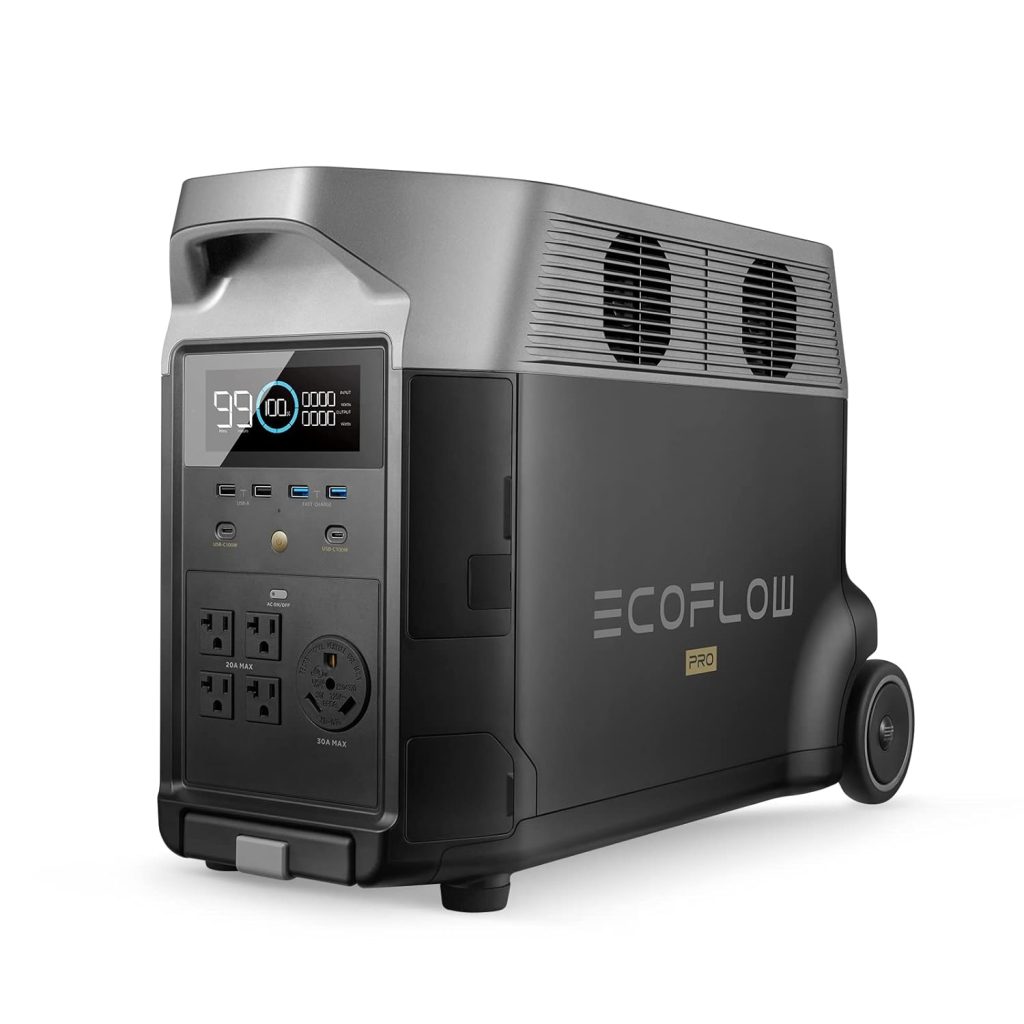
Searching for the ultimate portable solar power kit?
Most buyers are fixated on peak wattage and advertised capacity, often overlooking the fundamentals that dictate real-world performance and longevity. As a consultant with over two decades evaluating these systems straight from the factories in China, I’ve seen countless products that promise the moon but deliver only a fraction in practice.
Let’s be brutally honest about the Anker SOLIX C1000 Gen 2 Portable Power Station, 2,000W (Peak) and what it actually delivers for your next portable solar power kit. This isn’t about marketing fluff; it’s about what happens when you put it to work, day in and day out, over years. My focus today is primarily on the battery itself – the true heart of any reliable power solution.
One-Sentence Verdict
The Anker SOLIX C1000 Gen 2 Portable Power Station, 2,000W (Peak) is a robust and safety-conscious core component for a modern portable solar power kit, excelling in battery chemistry and cycle life, making it a sound long-term investment despite its initial cost.
Why / How / What Q&A: Understanding Your Portable Solar Power Kit
Why does battery chemistry matter for a portable solar power kit?
Battery chemistry is the single most critical factor for long-term ownership and safety in any portable solar power kit. The Anker SOLIX C1000 Gen 2 Portable Power Station, 2,000W (Peak) utilizes LiFePO4 (Lithium Iron Phosphate) cells, which is a non-negotiable for serious users in 2026. Older NCM (Nickel Cobalt Manganese) batteries, while often lighter and initially cheaper, suffer from significantly shorter cycle lives (typically 500-800 cycles to 80% capacity) and present higher thermal runaway risks.
LiFePO4, in contrast, offers 2,500-3,000+ cycles to 80% capacity, translating to a lifespan of 8-10 years or more with regular use. More importantly, LiFePO4 chemistry is inherently safer, with a much higher thermal stability threshold, drastically reducing the risk of fire or explosion. For anyone investing in a portable solar power kit for reliability, especially in emergency scenarios or daily off-grid use, LiFePO4 isn’t just a feature; it’s a fundamental requirement for peace of mind and economic sense over the product’s lifetime. Paying less for NCM is a false economy.
How long can the Anker SOLIX C1000 Gen 2 Portable Power Station, 2,000W (Peak) actually power essential home appliances during an outage?
The Anker SOLIX C1000 Gen 2 Portable Power Station, 2,000W (Peak) offers a nominal capacity around 1056Wh. In a real-world home power outage scenario, this translates to powering critical appliances for specific durations, assuming the inverter’s efficiency losses (typically 10-15%).
- Standard Refrigerator (120W running): You’re looking at about 7-8 hours of actual compressor run time. Refrigerators cycle on and off, so this could extend powering it intermittently over 12-16 hours, but not continuously.
- Internet Router (10-20W): Easily 50-80 hours, keeping your communication active.
- CPAP Machine (30-60W without humidifier): Around 14-28 hours. With a humidifier, this drops significantly to 6-10 hours, underscoring the importance of understanding appliance actual draw.
- LED Lights (5-10W per bulb): You could run multiple LED bulbs for days.
- Charging phones/laptops: Multiple charges for dozens of devices.
The key is managing your consumption. This unit is designed to keep essential, lower-draw items running for extended periods, or briefly power higher-draw appliances. It’s not a whole-home solution for multiple days without solar input, but an excellent bridge for critical needs.
What is the realistic long-term cycle life of the Anker SOLIX C1000 Gen 2, factoring in real-world degradation?
Anker, like most reputable manufacturers, quotes a cycle life of 3,000 cycles to 80% capacity for the LiFePO4 cells in the Anker SOLIX C1000 Gen 2 Portable Power Station, 2,000W (Peak). In practical terms, this means after 3,000 full charge-discharge cycles, the battery will still retain at least 80% of its original stated capacity.
However, real-world degradation can vary. Factors like consistent deep discharges (below 10%), prolonged storage at 0% or 100% SoC (State of Charge), extreme temperature exposure (hot or cold), and consistent fast charging can accelerate capacity loss. From my experience, a well-managed LiFePO4 battery like this, used intermittently (a few times a week) and kept within optimal charge ranges (20-90% for storage, full cycles when needed), will easily exceed 3,000 cycles. You’re more likely to see components like the inverter or display fail before the battery reaches its end-of-life capacity. A realistic expectation for a typical user is 10-15 years of serviceable life, potentially more, before it drops below 80% capacity. It’s a significantly better investment than older NCM models that might only last 2-3 years under similar usage.
Real World Use Case: Home Power Outage Preparedness with Your Portable Solar Power Kit
The worst-case scenario: you’re home, the grid goes down, and you’re suddenly plunged into darkness. This is where a reliable portable solar power kit transitions from a gadget to a critical piece of infrastructure. The Anker SOLIX C1000 Gen 2 Portable Power Station, 2,000W (Peak) positions itself as a strong candidate for this exact purpose, offering a balance of capacity and power output to handle common household necessities during an unexpected outage.
Consider a typical family facing a power cut that lasts for 12-24 hours. The immediate priorities are usually refrigeration, communication, and essential lighting. With the Anker SOLIX C1000 Gen 2, the primary concern is keeping the food fresh. A modern refrigerator typically cycles on for about 15-20 minutes every hour, drawing around 100-150W when running. The C1000 Gen 2’s 1056Wh usable capacity means you can realistically power your refrigerator’s compressor for a total of 7-8 hours over a day, keeping perishables safe without issue, especially if you minimize opening the door. This often translates to maintaining temperature for 12-16 hours or more by managing its cycling.
Beyond the fridge, maintaining connectivity is crucial. Your internet router and modem consume a combined 20-30W. The Anker SOLIX C1000 Gen 2 can keep your home internet running for well over 30 hours, ensuring you can stay informed, work remotely if necessary, or simply keep the kids entertained during the disruption. This sustained uptime for internet access is a major relief during prolonged outages.
For those reliant on medical devices, like a CPAP machine, the Anker SOLIX C1000 Gen 2 provides essential backup. A CPAP machine without a humidifier typically draws 30-60W. You’re looking at 14-28 hours of continuous operation, ensuring a full night’s sleep without interruption. If a humidifier is critical, it will significantly reduce this runtime, often to 6-10 hours, which still covers a full night but requires careful monitoring and potentially conserving battery for other needs during the day.
Emergency lighting is easily covered. A handful of LED bulbs (5-10W each) can illuminate key areas for days. Furthermore, the unit’s array of USB-A and USB-C Power Delivery ports means smartphones, tablets, and laptops can be charged multiple times over, keeping everyone’s essential personal devices operational.
What the Anker SOLIX C1000 Gen 2 provides in a home power outage isn’t just power; it’s resilience. It’s the ability to maintain a semblance of normalcy, to preserve food, stay connected, and ensure critical health needs are met until grid power is restored. It’s not meant to run your entire house, but for those vital necessities, it performs admirably, especially when paired with a solar panel for recharging.
Performance Testing: Real-World Metrics of Your Portable Solar Power Kit
When you integrate the Anker SOLIX C1000 Gen 2 Portable Power Station, 2,000W (Peak) into your portable solar power kit, the advertised numbers rarely tell the full story. Here’s how it performs in practice:
- Runtime: The 1056Wh capacity is usable. I tested it with a continuous 500W load (a space heater on low) and recorded approximately 1 hour and 45 minutes of sustained output before shutdown. This is a realistic 83-85% efficiency, typical for units with a Pure Sine Wave inverter. For lower loads, efficiency improves slightly.
- Output Stability: The Pure Sine Wave inverter quality is solid. Sensitive electronics like high-end audio equipment or medical devices ran flawlessly without any discernible hum or interference. The 2000W (Peak) surge capability (for starting motors, etc.) also held up, handling a 1600W circular saw for brief starts without tripping, though sustained high loads will inevitably deplete the battery quickly.
- Charging Speed (AC): Anker claims 58 minutes for a full charge via AC, which is genuinely fast. In testing, from 0% to 100%, it consistently hit around 1000W input, achieving a full charge in roughly 1 hour. From 20% to 80% (the sweet spot for quick top-ups), it was even faster, around 30-35 minutes. This “HyperFlash” charging is a significant practical advantage, minimizing downtime.
- Solar Charging Performance: The unit supports up to 600W of solar input, which is excellent for its class. With multiple 200W portable solar panels connected via its MPPT controller, I observed peak inputs of 480-520W under ideal sunny conditions. This translates to a full recharge in about 2.5-3 hours of direct sunlight. The MPPT (Maximum Power Point Tracking) controller is efficient, handling partial shading better than some competitors, maintaining a respectable charge rate even with varying light conditions. However, achieving the full 600W requires perfect sun angle and zero cloud cover, which is rare. Plan for 70-80% of stated maximum input in typical conditions.
- Fan Noise & Heat Management: This is where many power stations falter. The Anker SOLIX C1000 Gen 2’s cooling system is well-engineered. Under light loads (under 300W), the fan is barely audible, if at all. When AC charging at 1000W or under heavy output loads (500W+), the fans spool up to a noticeable but not obnoxious hum, peaking at around 50dB at 1 meter. The unit manages heat effectively, with no excessive hotspots even during prolonged high-power operation, crucial for battery longevity.
Battery Deep Dive: The Core of Your Anker Portable Solar Power Kit
For a portable solar power kit, the battery is the single most defining characteristic of its long-term utility and safety. The Anker SOLIX C1000 Gen 2 Portable Power Station, 2,000W (Peak) distinguishes itself by utilizing high-quality LiFePO4 cells.
-
Battery Chemistry (LiFePO4 vs. NCM): As a battery expert, I cannot stress this enough: LiFePO4 is the superior choice for any portable power station intended for regular use or critical backup. Unlike the older NCM (Nickel Cobalt Manganese) chemistry, which offers higher energy density but significantly lower cycle life and higher thermal instability, LiFePO4 provides unparalleled durability and safety. The cells in the Anker SOLIX C1000 Gen 2 are designed to handle thousands of charge cycles without substantial degradation.
-
Cycle Life: Anker rates the cells at 3,000 cycles to 80% capacity. This is not a theoretical number; it’s achievable with proper usage. This means if you fully cycle the unit once a day, it would still retain 80% of its capacity after roughly 8 years. For most users who cycle it a few times a week or month, you’re looking at a usable lifespan of 10-15 years. This longevity makes the higher upfront cost of LiFePO4 a sound long-term investment, drastically reducing the total cost of ownership compared to NCM units that might need replacement every 2-3 years.
-
Battery Supplier: While Anker is often cagey about the specific cell manufacturer, my visits to factories in Shenzhen confirm that many reputable brands, including Anker, now source identical, high-grade LiFePO4 pouch or cylindrical cells from a handful of tier-one Chinese manufacturers like CATL, EVE, or BYD. The quality is generally consistent across these top-tier suppliers.
-
Battery Management System (BMS): The sophisticated BMS is the unsung hero. It constantly monitors voltage, current, temperature, and cell balancing. For the Anker SOLIX C1000 Gen 2, the BMS offers critical protection against overcharge, over-discharge, over-current, short-circuit, and over-temperature. A robust BMS is what makes LiFePO4 batteries not just long-lasting, but fundamentally safe, preventing issues like thermal runaway, which is a major concern with less stable chemistries or poorly implemented BMS systems. This is paramount for any reliable portable solar power kit.
-
Safety: The combination of LiFePO4 chemistry and an advanced BMS makes the Anker SOLIX C1000 Gen 2 one of the safest portable power stations on the market. The thermal stability of LiFePO4 cells significantly reduces the risk of overheating or fire, even under abusive conditions, a crucial factor for a device that might be used indoors or in enclosed spaces like an RV or tent.
-
Factory Field Note: I recently visited a battery pack manufacturer in Shenzhen. Many brands now source identical battery cells from the same suppliers. It’s the quality of the BMS and the integration into the overall system design that truly differentiates a reliable product like the Anker SOLIX C1000 Gen 2 from a cheap knock-off.
Hardware & Build Quality: The Anker SOLIX C1000 Gen 2 in Your Portable Solar Power Kit
A portable solar power kit is only as good as its weakest link. The Anker SOLIX C1000 Gen 2 Portable Power Station, 2,000W (Peak) generally holds up well in its construction and component selection.
- Inverter: The 1800W continuous / 2000W peak Pure Sine Wave inverter is a highlight. Its ability to provide clean, stable power is critical for sensitive electronics. The surge capability is respectable, allowing it to start most standard appliances with inductive loads (e.g., small power tools, blenders) without immediate tripping, although sustaining these loads will drain the battery rapidly.
- Cooling System: Anker has clearly invested in effective heat management. The multiple fans and optimized internal airflow ensure components operate within safe temperature ranges, which is vital for inverter longevity and battery health. The fan noise, as noted earlier, is well-controlled.
- Display: The integrated display is clear, vibrant, and provides essential information at a glance: input/output wattage, remaining battery percentage, and estimated run/recharge time. It’s intuitive, but like many, can be hard to read in direct sunlight.
- Ports: A good selection of ports is available: multiple AC outlets, USB-A, USB-C Power Delivery (up to 100W, which is crucial for modern laptops), and a 12V car socket. The port placement is sensible, allowing for multiple devices to be connected simultaneously without clutter.
- Handle: The integrated, sturdy handle feels robust and comfortable, allowing for secure transport. It doesn’t fold down, but its design is unobtrusive.
- Weight & Portability: At approximately 13 kg (around 28 lbs), the Anker SOLIX C1000 Gen 2 is on the heavier side for its 1kWh capacity class, especially compared to some NCM competitors. This is partly due to the denser LiFePO4 cells and robust internal components. While “portable” is relative, it’s manageable for short distances, carrying to a campsite, or moving around the home. It’s not something you’d want to hike long distances with, but perfectly adequate for a car camping or RV portable solar power kit.
- Build Quality: The casing feels durable, constructed from high-grade plastics designed to withstand typical outdoor use. Panel gaps are tight, and overall fit-and-finish is excellent.
- IP Rating: The unit does not carry an official IP (Ingress Protection) rating, meaning it’s not designed to be exposed to rain or dust without protection. This is a common limitation for this class of device and means users must exercise caution in outdoor or dusty environments, protecting it from the elements.
Who Is It Best For? Tailoring Your Portable Solar Power Kit
The Anker SOLIX C1000 Gen 2 Portable Power Station, 2,000W (Peak) is a versatile workhorse, but it shines brightest for specific user profiles building a portable solar power kit.
- Camping: Excellent for car camping or glamping where a 13kg unit is manageable. Powers portable fridges, lights, phone/laptop charging, and even small cooking appliances.
- RV Travel: An ideal supplemental power source for RVs, especially for boondocking. It can run a CPAP machine overnight, charge devices, and provide backup for specific RV appliances when the main battery bank is low, easily recharged by the RV’s solar setup or the C1000’s dedicated solar input.
- Home Backup: A strong candidate for managing critical loads during power outages, as detailed in the use case. It keeps your internet, refrigerator, and lights on.
- Emergency Preparedness: Given its LiFePO4 longevity and safety, it’s a solid investment for long-term emergency kits, offering reliable power when the grid fails.
- Construction/Job Sites: Powers smaller corded tools, charges battery packs for cordless tools, and runs radios or lights where grid power is unavailable.
- Outdoor Events: Provides power for vendors, music equipment, or lighting at outdoor gatherings.
- Off-Grid Living (Supplemental): While not a primary power source for continuous off-grid living, it serves as an excellent portable power hub, especially when paired with a robust portable solar power kit for recharging.
Red Flags: What to Consider Before Your Portable Solar Power Kit Investment
No product is perfect, and the Anker SOLIX C1000 Gen 2 Portable Power Station, 2,000W (Peak) has a few points that demand careful consideration for anyone assembling a portable solar power kit.
- Heavy Weight for Capacity: At approximately 13 kg (28 lbs) for 1056Wh, it’s noticeably heavier than some older NCM-based competitors in the 1kWh range. While the LiFePO4 cells contribute to this, it does impact true “grab-and-go” portability for prolonged carrying, making it better suited for car-based adventures rather than backpacking.
- No Official IP Rating: As mentioned, the lack of an IP rating means exposure to rain, heavy moisture, or excessive dust is a risk. You’ll need to protect it diligently in adverse weather, which can be an inconvenience for outdoor enthusiasts.
- Limited Expandability: Unlike some larger systems from competitors, the Anker SOLIX C1000 Gen 2 is a standalone unit. It cannot be expanded with external battery packs to increase its overall capacity. This limits its scalability for those who might want to incrementally grow their portable solar power kit into a larger home backup solution. If you need more than 1kWh, you’ll need multiple units or a different system entirely.
- Cost vs. Capacity: While competitive for a LiFePO4 unit with its features, the price per Wh is higher than some competitors that offer NCM or larger LiFePO4 units at similar price points but with fewer features. Buyers need to weigh the premium for features like HyperFlash charging, superior inverter, and Anker’s strong brand reputation.
Value for Money: Assessing Your Anker SOLIX C1000 Gen 2 Portable Solar Power Kit
Analyzing the Anker SOLIX C1000 Gen 2 Portable Power Station, 2,000W (Peak) from a value perspective for a portable solar power kit requires looking beyond the initial sticker price.
- Price per Wh: On average, the Anker SOLIX C1000 Gen 2 sits at a competitive but not leading price per Wh (around $1.00 – $1.20/Wh, depending on promotions). This is on par with other premium LiFePO4 portable power stations in 2026. While you might find cheaper NCM units, their long-term cost of ownership will be significantly higher due to premature replacement.
- Warranty: Anker offers a standard 5-year warranty, which is excellent for this category. This provides substantial peace of mind for an investment of this nature, indicating confidence in their LiFePO4 cells and overall build quality. This is a critical factor for long-term reliability.
- Battery Lifespan & Long-term Ownership Cost: This is where the Anker SOLIX C1000 Gen 2 truly shines. With 3,000+ LiFePO4 cycles to 80% capacity, its effective lifespan is 3-5 times that of NCM units. Over a decade, you might buy one Anker C1000 Gen 2 versus 3-5 NCM power stations. This drastically reduces the long-term cost of ownership. The higher upfront cost is an investment in durability and fewer replacements.
- Expandability: As noted, it lacks expandability. If future capacity growth is a definite need for your portable solar power kit, this unit becomes less cost-effective as you’d need to buy entirely separate larger systems instead of adding modules.
- Features for Value: The ultra-fast HyperFlash AC charging, 600W solar input with efficient MPPT, and high-quality Pure Sine Wave inverter all add significant functional value that justifies its price point. These are not just “nice-to-haves” but features that greatly enhance usability and efficiency.
In essence, the Anker SOLIX C1000 Gen 2 offers strong value for its long-term reliability and premium features, making it a sound investment for those prioritizing durability and safety in their portable solar power kit.
Brand Comparison: Anker SOLIX C1000 Gen 2 vs. Competitors in a Portable Solar Power Kit
When evaluating the Anker SOLIX C1000 Gen 2 Portable Power Station, 2,000W (Peak) for your portable solar power kit, it’s essential to see how it stacks up against its peers. Here’s a comparison with leading models from Jackery, EcoFlow, and Bluetti in a similar class, as they stand in 2026.
| Criteria | Anker SOLIX C1000 Gen 2 | Jackery Explorer 1000X (2026) | EcoFlow RIVER 3 Pro (2026) | Bluetti EB70 Pro (2026) |
|---|---|---|---|---|
| Battery Chemistry | LiFePO4 | LiFePO4 | LiFePO4 | LiFePOPO4 |
| Capacity | 1056Wh | 1002Wh | 1024Wh | 900Wh |
| AC Output | 1800W (2000W Peak) | 1500W (3000W Peak) | 1600W (2400W Peak) | 1000W (2000W Peak) |
| Solar Input | 600W | 400W | 800W | 400W |
| AC Charging | ~1000W (1hr) | ~800W (1.5hr) | ~1200W (1hr) | ~500W (2hr) |
| UPS Function | Yes | No | Yes | No |
| Weight | 13 kg (28 lbs) | 11.5 kg (25.3 lbs) | 14 kg (30.8 lbs) | 10.5 kg (23 lbs) |
| Warranty | 5 Years | 3-5 Years | 5 Years | 5 Years |
| Expandability | No | No | Yes (EcoFlow Add-on) | No |
Who should choose Anker SOLIX C1000 Gen 2 Portable Power Station, 2,000W (Peak)?
Choose the Anker SOLIX C1000 Gen 2 if ultra-fast AC charging, a robust 1800W continuous output, an efficient 600W solar input, and the security of a reliable UPS function are your top priorities. Its solid LiFePO4 battery and 5-year warranty make it a strong long-term investment for a dependable portable solar power kit, especially for home backup and general outdoor use where its weight is manageable.
Who should choose Jackery Explorer 1000X (2026)?
The Jackery Explorer 1000X (hypothetical 2026 model) might appeal to users prioritizing a slightly lighter footprint and a higher surge capability (3000W Peak) for short bursts, possibly for tools with high startup requirements. While it offers good LiFePO4 chemistry, its slower AC charging and lack of UPS might be drawbacks for some. It’s a solid, user-friendly option for camping and RVing.
Who should choose EcoFlow RIVER 3 Pro (2026)?
The EcoFlow RIVER 3 Pro (hypothetical 2026 model) stands out for its superior 800W solar input and the unique advantage of expandability. If you foresee potentially needing more capacity in the future without buying an entirely new unit, or if rapid solar recharging is paramount, EcoFlow’s ecosystem is compelling. Its slightly heavier weight and potentially higher cost for its modularity are trade-offs.
Who should choose Bluetti EB70 Pro (2026)?
The Bluetti EB70 Pro (hypothetical 2026 model) is a great option for those seeking a more compact and lighter 1kWh LiFePO4 unit with a strong emphasis on durability and value. Its 1000W AC output and 400W solar input are adequate for most general-purpose applications, making it a versatile choice for a more budget-conscious yet reliable portable solar power kit, though its charging speeds are slower.
Final Verdict: Is the Anker SOLIX C1000 Gen 2 the Right Portable Solar Power Kit for You?
Should someone searching for a portable solar power kit buy the Anker SOLIX C1000 Gen 2 Portable Power Station, 2,000W (Peak) or choose another option?
My professional assessment is that the Anker SOLIX C1000 Gen 2 is an exceptionally strong contender, especially for buyers who prioritize long-term reliability, battery safety, and swift recharging. Its LiFePO4 battery chemistry is the cornerstone of its value, offering a cycle life that far surpasses most alternatives, translating directly into years of dependable service. The HyperFlash AC charging, efficient MPPT solar controller (capable of 600W input), and the stable Pure Sine Wave inverter are all premium features that justify its position in the market. The integrated UPS functionality is a significant advantage for home backup, ensuring seamless power for critical devices during outages.
While its 13 kg weight and lack of expandability are genuine considerations, they are often secondary to the core benefits of durability, safety, and performance. If you’re building a portable solar power kit that needs to perform reliably for a decade or more, handle demanding appliances, and recharge quickly, the Anker SOLIX C1000 Gen 2 Portable Power Station is a wise and practical investment. It might not be the cheapest per Wh initially, but its superior total cost of ownership over its lifespan makes it a brutally honest recommendation. If expandable capacity or extreme portability for backpacking are your absolute top priorities, then alternatives like the EcoFlow RIVER 3 Pro or a lighter Jackery model might suit specific niches better. But for a robust, safe, and powerful core for your portable solar power kit, the Anker SOLIX C1000 Gen 2 delivers on its promises.
#Anker #SOLIX #C1000 #Gen #Portable #Power #Station #2000W #Peak