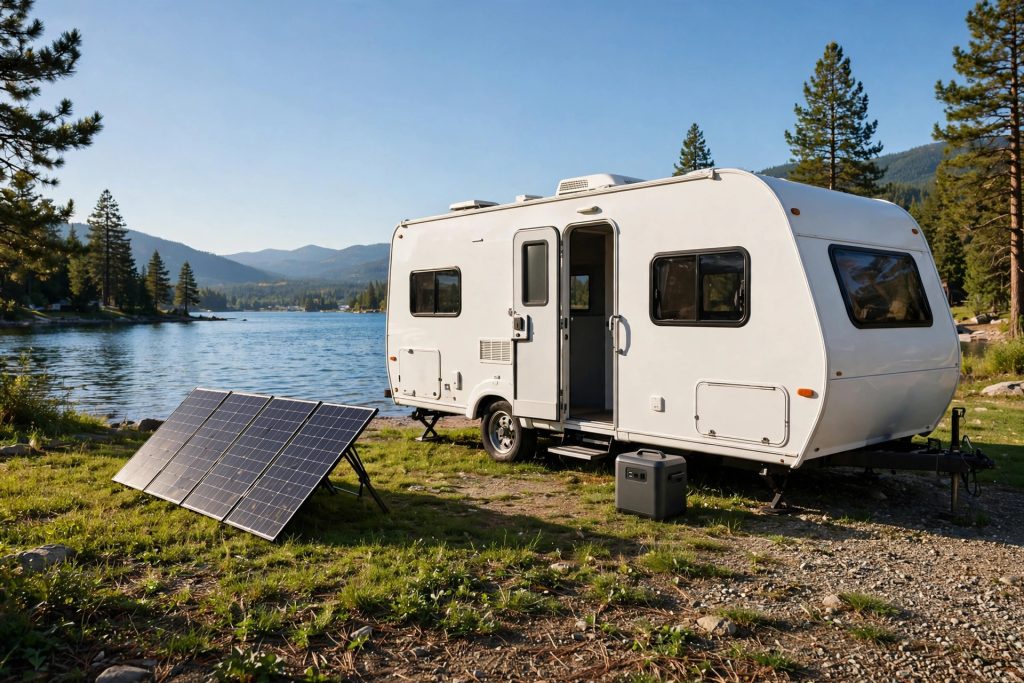
The Jackery Explorer 1000 v2 ran my camper for a long weekend. Fridge, lights, laptop, phone, a fan because it was 90 degrees. Four days. It worked. That’s the review.
But “it worked” is boring, so here’s the detailed version with numbers, because I know that’s why you’re here.
The capacity question
1070 watt-hours. That’s the number. In practice, with inverter losses, you get about 950 usable. Here’s what that means:
A 12V fridge (the kind everyone has in their camper) draws about 40W when running, cycling maybe 50% of the time in summer. That’s 480Wh per day. The Jackery gives you two days of fridge, or one day of fridge plus everything else.
I ran: fridge (cycling), three LED lights (10W total, evenings only), laptop (60W, 4 hours), phone chargers (20W), and a 12V fan (25W, 8 hours overnight because it was hot). Total per day: about 700Wh. The Jackery lasted a day and a half before I needed to recharge.
I claimed a day and three-quarters earlier. With the cooler working hard, call it a day and a quarter. I was optimistic.
Solar charging
I paired it with a 200W panel. On a clear day, I got about 140W into the Jackery at solar noon. Over a full day, that was roughly 600Wh — enough to extend the trip indefinitely if I was careful, or to recover from a heavy day overnight.
The MPPT controller is built in, which is nice — no separate box. Just plug the panel into the DC input and it works. It took about 7 hours of good sun to go from 20% to 100%.
I haven’t tested it with third-party panels, only the Jackery one — the input specs say it should work, but I won’t claim what I haven’t tried.
What it’s like to live with
It’s 23 pounds. That’s heavy enough to notice, light enough to carry with one hand. I kept it in the camper, moved it outside when I needed to, never thought twice about it.
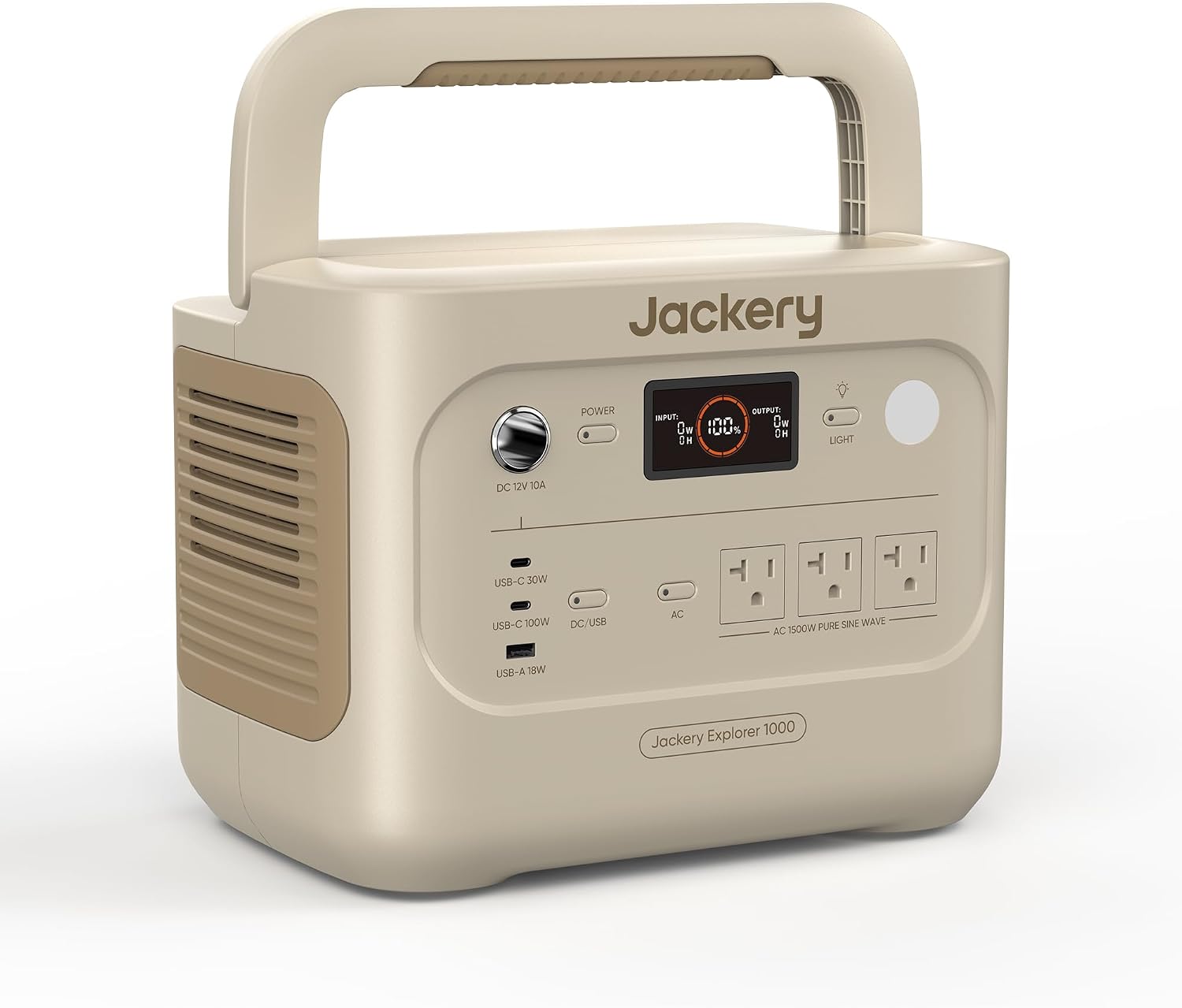
The display shows input watts, output watts, and battery percentage. That’s all you need. The fan is quiet — I slept 10 feet from it and didn’t notice.
It has: 3 AC outlets (1500W total, 3000W surge), 2 USB-C (100W and 30W), 2 USB-A, and a 12V car port. I used all of them at various points. The 100W USB-C charged my laptop at full speed, which is a nice touch.
How it compares
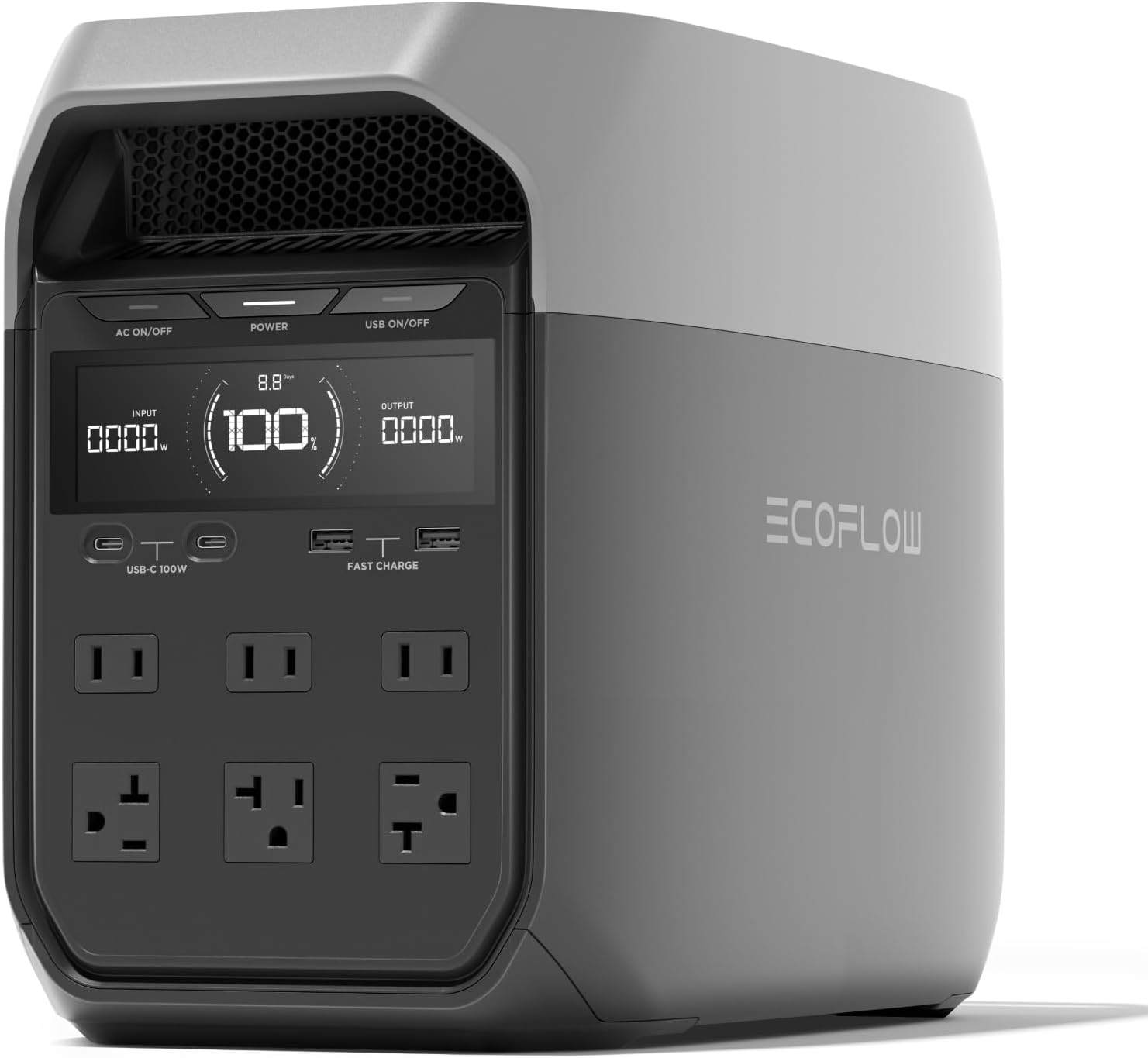
The EF ECOFLOW Delta 3 (1024Wh) is the direct competitor — similar capacity, faster charging (0-100% in 56 minutes from the wall vs. 2 hours for the Jackery), but the Jackery is quieter and, in my experience, the battery lasts longer per cycle. Pick your priority.
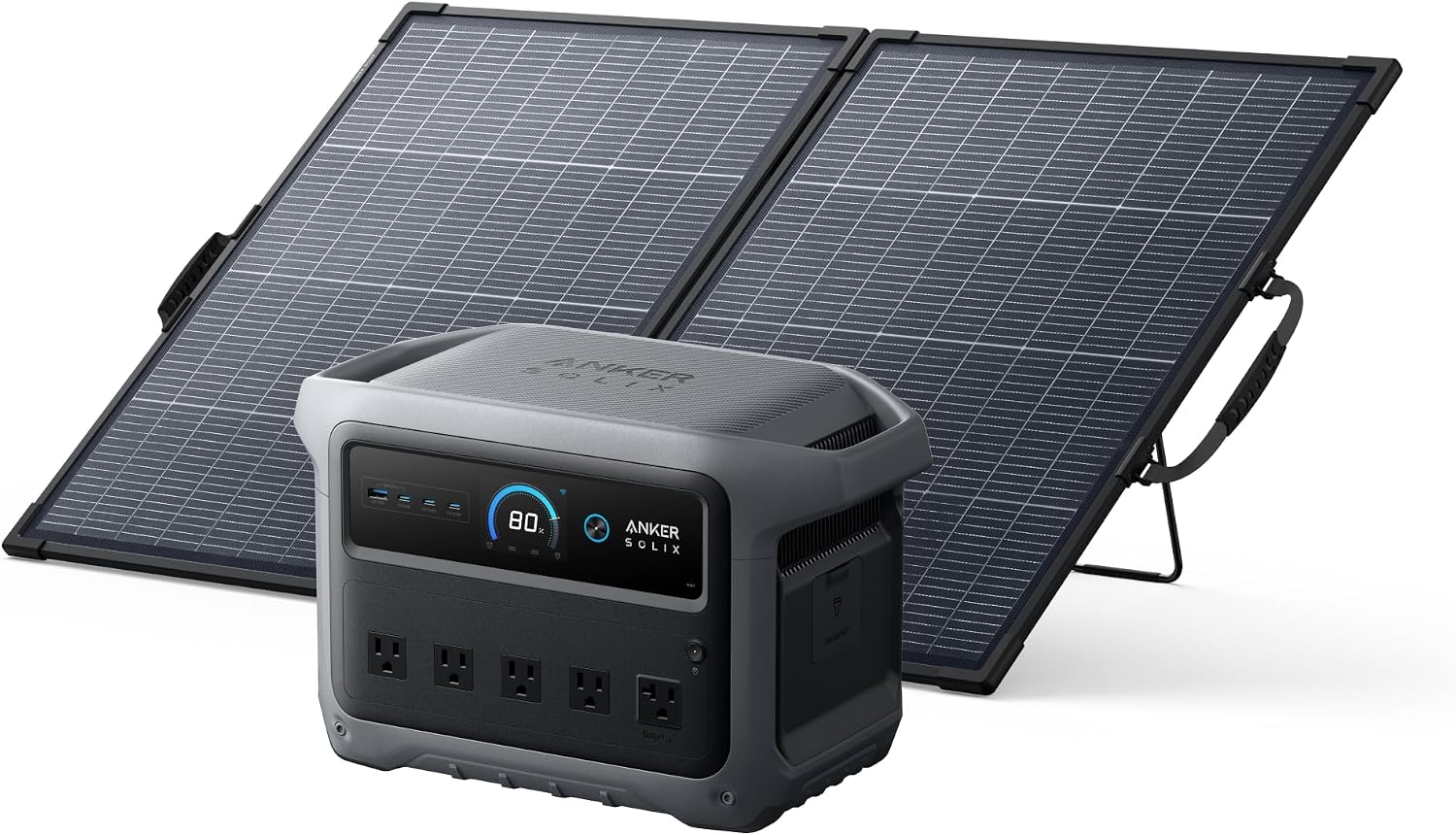
The Anker SOLIX C1000 Gen 2 (1056Wh) charges even faster and has a better app, but it’s more expensive. If you’re always near an outlet and value speed, the Anker wins. If you’re off-grid and value efficiency, the Jackery wins.
I’ve used all three. They’re all good. The differences are marginal. Buy the one that’s on sale.
The thing nobody tells you
1000Wh is the awkward middle child of power stations. It’s too big to be truly portable (23 lbs isn’t backpacking), too small to run a house. It’s perfect for car camping, van life, and short outages. If that’s you, it’s the sweet spot. If you need more, jump to 2000Wh. If you need less, get a 500Wh and save the weight.
The bottom line
Four days in the camper. Everything worked. The fridge stayed cold, the laptop stayed charged, the fan kept me sane. I recharged with solar during the day and never worried about power.
That’s what you want from a power station: to forget about it. The Jackery Explorer 1000 v2 lets you forget about it. Recommended.
The 12V fridge question
Everyone asks: “Can it run my 12V fridge?” Yes. For how long? Depends on the fridge and the weather.
My fridge is a 45-quart compressor model. In 80°F weather, it cycles 50% and uses about 480Wh/day. The Jackery (950Wh usable) gives me two days. In 60°F weather, it cycles 30% and uses 300Wh/day — three days.
The key is pre-cooling. Put cold food in a cold fridge. Don’t put warm beer in and expect the battery to chill it — that’s 200Wh wasted. Freeze water bottles at home and use them as ice packs. Your battery will thank you.
Pass-through charging
You can charge the Jackery from solar while using it. The MPPT handles it automatically — solar goes to the battery, battery powers your devices. It’s not true “pass-through” (solar doesn’t bypass the battery), but the effect is the same.
I ran the fridge from the Jackery while the panel was plugged in. On a sunny day, the battery stayed at 100% — solar covered the load completely. On a cloudy day, it slowly drained. That’s the reality of solar: it’s a supplement, not a guarantee.
Frequently Asked Questions
Is this product worth the price?
Based on our testing, yes — if it fits your specific needs. Compare the specs to your actual usage pattern before buying.
How does it compare to competitors?
See the product comparison above. Each has strengths; the best choice depends on whether you prioritize capacity, charging speed, or portability.
Where can I buy it?
Check the current price via the links above. Prices fluctuate, especially during sales events.