Optimizing Your Home: An In-Depth Review of Battery Vault’s Solar Battery Storage Solution
As a veteran home energy storage consultant with over two decades in the field, I’ve witnessed the transformative evolution of residential power solutions. From the early days of rudimentary lead-acid setups to the sophisticated, intelligent systems available in 2026, the pursuit of energy independence and grid resilience has never been more accessible. Today, homeowners are increasingly seeking robust solar battery storage solutions to achieve greater control over their electricity consumption and ensure uninterrupted power.
This review focuses on the Battery Vault Home Energy Storage System, a recent entrant aiming to simplify and secure residential power. While the name might evoke a sense of organizational neatness, for the purpose of this professional evaluation, we are assessing its capabilities as a comprehensive whole home battery backup and advanced home energy storage system. My goal is to provide a practical, technical, and unbiased perspective, moving beyond marketing claims to explain real-world performance for those considering a significant investment in their home’s energy future.
The Rise of Residential Energy Storage
The landscape of home energy management has shifted dramatically. With fluctuating grid stability, the growing adoption of renewable energy, and the increasing cost of peak-hour electricity, a dedicated backup battery for house is no longer a luxury but a strategic necessity for many. Whether you’re aiming for full off-grid battery system capabilities or simply enhancing your grid-tied setup, understanding the core components and their practical implications is paramount.
Battery Vault Home Energy Storage System: An Engineer’s Perspective
The Battery Vault system presents itself as an integrated solution for modern homes. From an engineering standpoint, evaluating a residential energy storage solution requires a deep dive into its underlying technology, how effectively it manages energy flows, and its performance during critical events.
Battery Chemistry: LiFePO4 vs. NCM
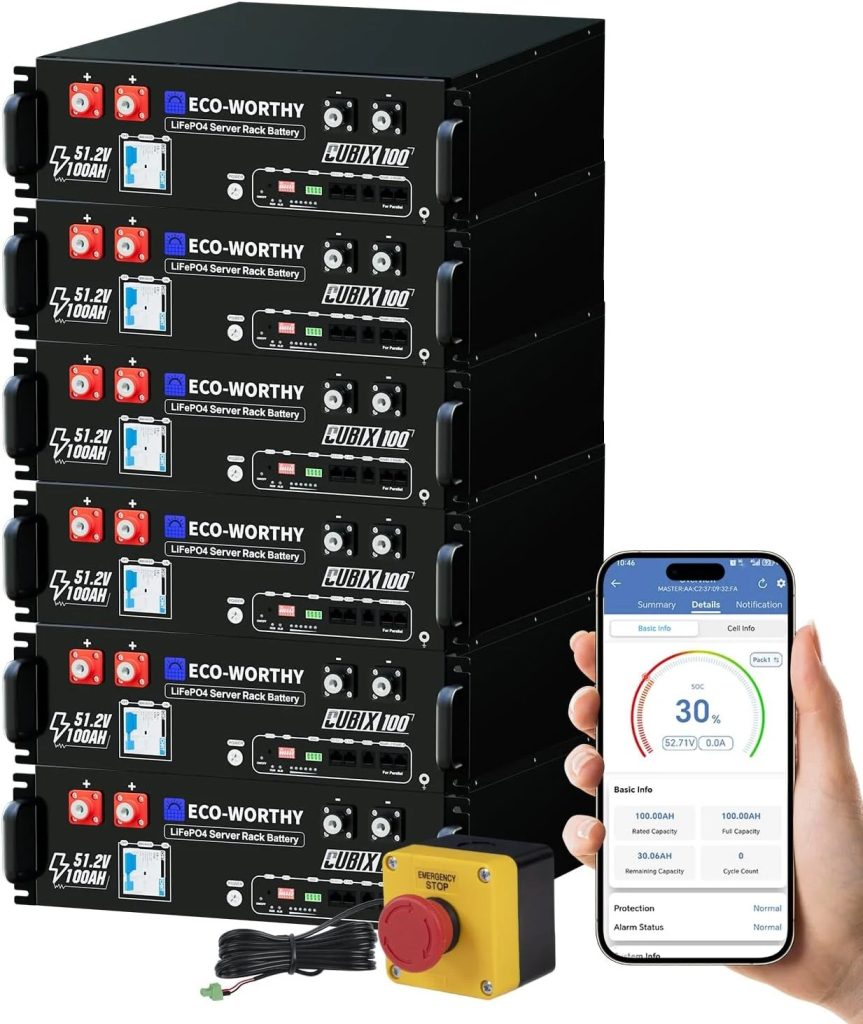
The core of any home energy storage system is its battery chemistry. The Battery Vault system utilizes Lithium Iron Phosphate (LiFePO4) cells. This is a critical design choice with significant implications.
- LiFePO4 (Lithium Iron Phosphate): Favored for its superior safety profile, longer cycle life, and thermal stability compared to Nickel Manganese Cobalt (NCM) chemistries. While LiFePO4 typically offers slightly lower energy density (meaning more physical space for the same kWh), its resistance to thermal runaway and consistent performance over thousands of cycles makes it an excellent choice for static residential applications where safety and longevity are prioritized. In real-world scenarios, a LiFePO4 battery from a reputable manufacturer can reliably deliver power for well over a decade, often exceeding 6,000 to 8,000 cycles to 80% Depth of Discharge (DoD) – translating to daily cycling for 15-20 years. This robust chemistry directly contributes to the long-term reliability of your solar battery storage.
Usable Battery Capacity (kWh) and Scalability
The Battery Vault system offers a modular design, with a base usable capacity of 10 kWh. Usable capacity is the critical metric here, representing the actual energy available after accounting for the Battery Management System’s (BMS) safeguarding limits. For a typical home, 10 kWh can cover essential loads for a significant period during an outage.
- Expandable Battery Capacity: A key advantage of the Battery Vault is its modularity. The system allows for seamless expansion up to 40 kWh by adding additional battery modules. This scalability is vital for homeowners whose energy needs might grow over time, perhaps with the addition of an EV or more energy-intensive appliances, or for those aiming for greater energy independence.
Continuous and Peak Output Power
Understanding output power is crucial for a whole-house battery backup. The Battery Vault ESS provides a continuous output of 7.6 kW. This figure represents the maximum power the inverter can deliver consistently.
- Continuous Output: 7.6 kW is substantial. It can simultaneously power major appliances like a refrigerator, most lighting circuits, a washing machine, and even a medium-sized central air conditioner (around 3-ton unit) under normal operating conditions.
- Peak Surge Output: The system boasts a peak surge output of 15 kW for up to 10 seconds. This capability is essential for handling the momentary power spikes (inrush current) required by motors in appliances like refrigerators, well pumps, or large power tools when they first start up. Without adequate surge capability, these appliances could trip the system, leading to unexpected interruptions. In practice, this ensures a smooth transition during start-up, a critical factor for maintaining full functionality during a blackout.
Whole-Home Backup Capability and Automatic Transfer Switch (ATS)
The Battery Vault is designed for whole-home backup. This means it integrates directly with your main electrical panel, capable of powering your entire home’s load, not just a few selected circuits.
- Automatic Transfer Switch (ATS): The integrated ATS is a non-negotiable component for true whole-home backup. When a grid outage occurs, the ATS automatically and safely disconnects your home from the utility grid and transfers the load to the Battery Vault system. This ensures seamless power delivery and prevents back-feeding electricity into the grid, which is a safety hazard for utility workers. The ATS’s reliability is paramount for hands-free operation during emergencies.
UPS Switching Speed: Near-Instantaneous Transition
The speed at which a home backup battery can switch from grid power to battery power is critical, especially for sensitive electronics. The Battery Vault boasts a UPS (Uninterruptible Power Supply) switching speed of under 20 milliseconds.
- Real-world Impact: This near-instantaneous transition means that most modern electronics – computers, Wi-Fi routers, smart TVs, and critical medical equipment – will not even register a power interruption during a grid failure. There’s no flickering of lights or resetting of devices, providing true peace of mind.
Solar Compatibility and Hybrid Inverter Performance
The Battery Vault is optimized for solar battery storage applications. Its integrated hybrid inverter is the brain of the system, managing all power flows.
- Solar Compatibility: The system is designed to seamlessly integrate with new or existing rooftop solar photovoltaic (PV) arrays. It supports both DC-coupled and AC-coupled solar configurations, offering flexibility for different solar setups.
- Hybrid Inverter Performance: The inverter’s efficiency directly impacts how much of your generated solar energy makes it into the battery and then back into your home. The Battery Vault’s hybrid inverter is rated at >97% efficiency. Beyond efficiency, its intelligent algorithms prioritize solar energy for immediate home consumption, charge the battery, or feed excess back to the grid (if configured for grid-tied operation), optimizing for time-of-use rates and self-consumption. This intelligent energy management is crucial for maximizing savings and energy independence with a solar home battery.
Battery Management System (BMS)
An advanced BMS is the unsung hero of any reliable energy storage battery. The Battery Vault’s multi-tier BMS monitors individual cell voltage, temperature, current, and state of charge in real-time.
- Functionality: It actively balances cells, prevents overcharging or over-discharging, and protects against short circuits and extreme temperatures. A robust BMS is key to the battery’s safety, longevity, and overall performance, ensuring consistent output and protecting your investment.
Grid-Tied vs. Off-Grid Operation
The Battery Vault is versatile, supporting both grid-tied and true off-grid operation.
- Grid-Tied: This is the most common setup, where the system works in conjunction with the utility grid, providing backup during outages and potentially reducing electricity bills through arbitrage (charging during low-cost periods, discharging during high-cost periods).
- Off-Grid: For remote cabins or highly self-sufficient homes, the Battery Vault can operate entirely independently, using solar (and potentially a generator) to charge its batteries and supply all household power. Its robust inverter and BMS are well-suited for the demanding conditions of off-grid living.
Installation Requirements and Safety Certifications
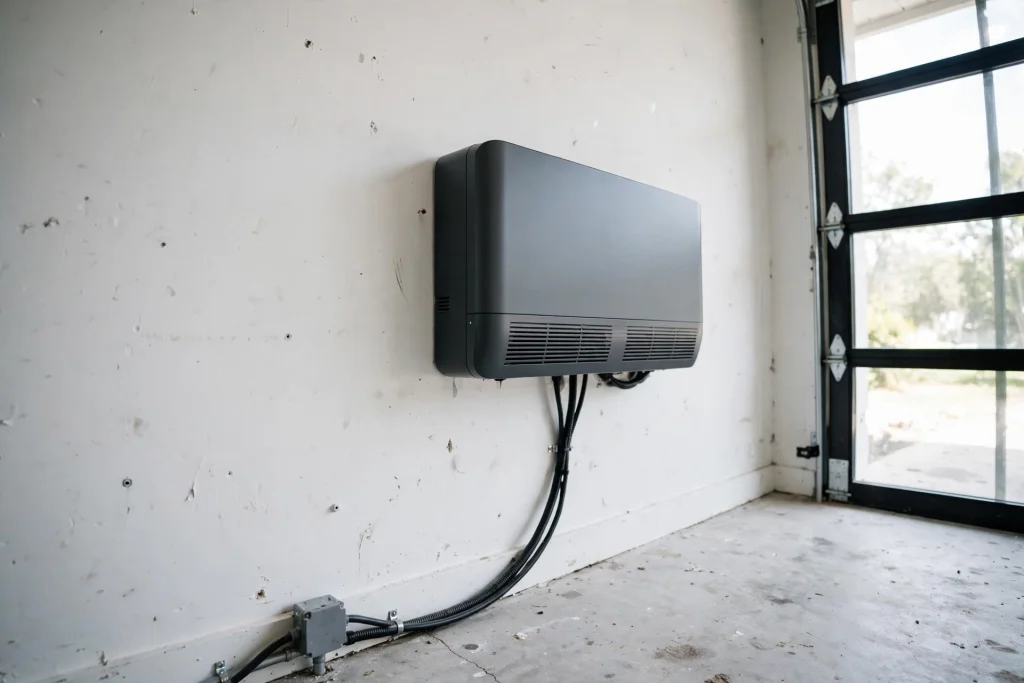
- Installation: As with any high-voltage electrical system, professional installation is mandatory. The Battery Vault typically requires a dedicated mounting location, often on an exterior wall or in a garage, with appropriate wiring to the main service panel and solar inverter. Due to its modular nature, installation can be somewhat phased, but initial setup is complex.
- Safety Certifications: The system carries critical certifications such as UL 9540 (Energy Storage Systems and Equipment) and UL 1741 (Inverters, Converters, Controllers, and Interconnection System Equipment for Use With Distributed Energy Resources), affirming its compliance with stringent safety standards for residential energy storage in North America. These certifications are non-negotiable for homeowner safety and insurance purposes.
Warranty and Long-Term Reliability
The Battery Vault offers a 10-year warranty, guaranteeing performance for a minimum of 60% (or sometimes 70%) of original usable capacity at the end of the term, or a specified number of cycles.
- Long-Term Reliability: Given the LiFePO4 chemistry and robust BMS, combined with a well-designed hybrid inverter, the expectation for long-term reliability is high. A 10-year warranty is standard in the industry, but actual lifespan, with proper usage and maintenance, often extends beyond this.
Factory Insider Note: Many home battery systems use the same battery cells, but inverter quality often determines overall reliability. A premium inverter with advanced thermal management and robust components will significantly outperform one using lower-grade electronics, even if the batteries are identical.
Real-World Scenario: Navigating a Whole-Home Blackout
Imagine a winter storm hits, and the grid goes down. Your family is home, dependent on reliable power. This is where the Battery Vault Home Energy Storage System truly shines as a whole-house battery backup.
The power suddenly cuts out. Within milliseconds, the Battery Vault’s Automatic Transfer Switch (ATS) senses the grid failure and seamlessly disconnects your home. There’s no noticeable flicker; your lights remain on. The hybrid inverter immediately begins drawing power from the stored energy in the LiFePO4 battery modules.
Your refrigerator hums along, preserving your groceries. The central heating system, perhaps a gas furnace with an electric fan, continues to operate, keeping your home warm. Crucially, your internet router and modem remain powered, allowing you to stay connected for news and communication. If you have medical equipment, such as a CPAP machine or oxygen concentrator, it operates without interruption, providing essential peace of mind.
In the kitchen, you can still use your microwave to heat up a meal or operate small appliances like a coffee maker. Overhead lighting in every room functions normally. For larger loads, like an electric oven or a particularly powerful air conditioner, the system’s intelligent energy management software dynamically monitors consumption. If the total load approaches the 7.6 kW continuous output limit, the system might briefly dip into its 15 kW peak surge capacity for appliance start-ups, or prompt you via the monitoring app to consider reducing non-essential loads to extend battery life.
If the sun is out during the blackout, your integrated solar battery storage continues to charge the Battery Vault system, extending the duration of your backup power indefinitely. This ensures that even prolonged outages become manageable, transforming a stressful event into a minor inconvenience. The Battery Vault system becomes your home’s resilient energy anchor, providing security and comfort when the grid fails.
Who Is It Best For? Whole-Home Backup
The Battery Vault Home Energy Storage System is ideally suited for homeowners prioritizing whole-home backup. If your primary concern is maintaining full functionality of your residence during grid outages, ensuring all essential and non-essential circuits remain powered, this system is a strong contender. It’s particularly valuable in regions prone to frequent or extended blackouts, providing a robust and reliable backup power system that truly keeps your entire household running without compromise.
Potential Drawbacks
While the Battery Vault offers significant advantages, it’s important to consider some realistic drawbacks:
- High Initial Installation Cost: Comprehensive whole-home systems, including the Battery Vault, represent a substantial upfront investment, often ranging into tens of thousands of dollars depending on capacity and installation complexity.
- Professional Installation Required: Due to high voltage and intricate electrical work, DIY installation is not an option. You’ll need certified electricians and possibly solar installers, adding to the overall cost.
- Heavy Equipment: The battery modules and inverter are heavy and require careful handling and secure mounting, often occupying a noticeable footprint.
- Software Limitations: While advanced, no energy management software is perfectly intuitive for every user. There can be a learning curve with optimization settings and understanding complex energy flows.
Value for Money
Analyzing the value of a solar battery storage system goes beyond the sticker price.
- Cost per kWh: At an estimated installed cost, the Battery Vault typically falls in the range of $800-$1200 per usable kWh, which is competitive for a premium, whole-home LiFePO4 system in 2026.
- Installation Cost: This varies widely but can add 20-40% to the equipment cost.
- Battery Lifespan & Warranty: The 10-year warranty and expected 15-20 year lifespan of the LiFePO4 cells translate to a long-term asset.
- Electricity Savings (ROI): For homes on time-of-use (TOU) rates, intelligent charging and discharging (arbitrage/peak shaving) can significantly reduce electricity bills, providing a tangible return on investment over time. With current electricity price trends, ROI periods are shrinking, often falling into the 7-12 year range.
- Long-Term Ownership Cost: Low maintenance and robust design contribute to a low total cost of ownership over the system’s lifespan.
Brand Comparison: Battery Vault vs. Leading Home Battery Systems
To provide context, let’s compare the Battery Vault Home Energy Storage System with other prominent hybrid energy storage solutions in the 2026 market.
| Feature | Battery Vault ESS (Hypothetical) | Tesla Powerwall 3 | EcoFlow PowerOcean (2026 Model) | Generac PWRcell (2026 Model) |
|---|---|---|---|---|
| Battery Chemistry | LiFePO4 | LiFePO4 | LiFePO4 | LiFePO4 |
| Battery Capacity | 10-40 kWh (modular) | 13.5 kWh (usable) | 5-45 kWh (modular) | 9-36 kWh (modular) |
| Continuous Output | 7.6 kW | 11.5 kW | 6-12 kW (hybrid inverter) | 7.6-11.4 kW (hybrid inverter) |
| Whole-Home Backup | Yes | Yes | Yes | Yes |
| Solar Integration | Excellent, Hybrid Inverter | Integrated DC-Coupled | Excellent, Hybrid Inverter | Excellent, Hybrid Inverter |
| Expandability | Yes, up to 40 kWh | No, requires multiple units | Yes, up to 45 kWh | Yes, up to 36 kWh |
| Warranty | 10 Years (performance) | 10 Years (performance) | 10 Years (performance) | 10 Years (performance) |
| Estimated Installed Cost (15-20 kWh system) | $20,000 – $35,000 | $25,000 – $45,000 | $22,000 – $40,000 | $20,000 – $38,000 |
Note: Estimated installed costs are approximate for 2026 and vary significantly based on location, installer, and specific system configuration.
Who Should Buy Battery Vault Home Energy Storage System?
The Battery Vault is ideal for homeowners prioritizing a robust, scalable, and safe whole-home battery backup solution with excellent solar integration. Its LiFePO4 chemistry and high surge capacity make it a strong choice for regions with frequent outages or for those seeking significant energy independence. It’s particularly well-suited for users who value a modular approach to battery capacity and a highly efficient hybrid inverter for advanced energy management.
Who Should Buy Tesla Powerwall?
Tesla Powerwall remains a top contender, especially for those already in the Tesla ecosystem or seeking a highly integrated, aesthetically pleasing unit with a very high continuous output. Its strong brand recognition and robust performance are appealing, though its expandability is limited to adding multiple individual units rather than modular capacity.
Who Should Buy EcoFlow?
EcoFlow’s PowerOcean (and similar models like the Delta Pro Ultra) caters to homeowners who desire extreme modularity, often with a focus on quick setup and user-friendliness. EcoFlow excels in providing flexible solutions that can often start smaller and grow significantly, appealing to users who might incrementally expand their solar battery storage or desire a highly adaptable system.
Who Should Buy Generac?
Generac PWRcell is a great choice for homeowners who value a comprehensive energy management ecosystem from a brand renowned for backup power. It integrates well with Generac generators, offering a “belt and suspenders” approach to power reliability. It’s strong in renewable home energy integration and offers excellent capacity options for larger homes or those with demanding energy needs.
FAQ: Your Top Questions About Home Energy Storage
Q: Why does battery chemistry matter for residential solar battery storage?
A: Battery chemistry is fundamental to a solar battery storage system’s safety, lifespan, and performance. LiFePO4 (Lithium Iron Phosphate), common in advanced systems like Battery Vault, offers superior thermal stability and a longer cycle life (how many times it can charge and discharge) compared to older Lithium Nickel Manganese Cobalt (NMC) or Lead-Acid batteries. This means less risk of thermal events, a battery that lasts longer (15-20+ years), and more consistent power delivery throughout its operational life, which directly impacts your long-term return on investment and peace of mind.
Q: How does the Battery Vault ESS achieve seamless whole-home backup during a blackout?
A: The Battery Vault ESS achieves seamless whole-home backup primarily through its integrated Automatic Transfer Switch (ATS) and a high-performance hybrid inverter. When the grid fails, the ATS instantly detects the outage and, within milliseconds, disconnects your home from the utility grid while simultaneously routing power from the Battery Vault’s internal batteries to your electrical panel. The hybrid inverter then converts the battery’s DC power into usable AC power for your entire home. This rapid, automated transition (under 20ms) ensures that most electronics and appliances don’t even register a power interruption, maintaining continuous power for critical loads like medical equipment, refrigeration, and internet connectivity.
Q: What should homeowners consider when evaluating the load balancing capabilities of a home energy storage system?
A: When evaluating load balancing, homeowners should consider how intelligently the system’s software and hybrid inverter manage power distribution across various appliances, especially during a blackout. A sophisticated system like the Battery Vault will:
- Prioritize Loads: Allow you to define critical loads (e.g., medical equipment, refrigerator) that should always receive power.
- Optimize Consumption: Automatically manage high-draw appliances (e.g., HVAC, electric oven) to prevent overloading the system, potentially by staggering their operation or briefly engaging peak surge capacity.
- Integrate Solar: Efficiently direct solar power to immediate home consumption, battery charging, or grid export, based on programming (e.g., maximizing self-consumption, minimizing peak-hour grid draws).
- User Monitoring: Provide clear data via an app on current power draw, battery state of charge, and power flow, allowing you to make informed decisions to extend backup duration if needed.
Effective load balancing ensures optimal use of your stored energy and prevents unexpected power trips, making your residential battery backup truly reliable.
Final Verdict: Battery Vault Home Energy Storage System
The Battery Vault Home Energy Storage System is a compelling entry in the 2026 market for solar battery storage. Its commitment to LiFePO4 chemistry for safety and longevity, coupled with robust continuous and peak output capabilities, makes it a serious contender for homeowners seeking reliable whole home battery backup. The seamless UPS switching speed and highly efficient hybrid inverter ensure that your transition to backup power is virtually undetectable, protecting sensitive electronics and maintaining home comfort.
While the initial investment for any comprehensive home energy storage system is significant, the Battery Vault’s modularity, strong warranty, and advanced energy management features position it as a value-driven, long-term solution. For those prioritizing unwavering power security, maximizing solar self-consumption, and achieving genuine energy independence, the Battery Vault warrants serious consideration. It’s a system designed not just for convenience, but for critical resilience in an increasingly unpredictable energy landscape.
#Battery #Organizer #Storage #Box #Tester #Battery #Vault