ECO-WORTHY Cubix100 48V 100Ah LiFePO4 Battery: Residential Power System Review

As a home energy storage consultant with over two decades of experience, I’ve seen the residential power landscape transform dramatically. It’s 2026, and the demand for reliable, efficient home energy storage systems has never been higher, driven by fluctuating utility rates, grid instability, and the increasing adoption of solar power. Homeowners are no longer just looking for a simple battery; they seek integrated solutions that offer true energy independence and resilience.

My expertise lies in dissecting these complex systems, moving beyond manufacturer claims to evaluate how they truly perform in real-world scenarios. This review focuses on the ECO-WORTHY Cubix100 48V 100Ah LiFePO4 Lithium Battery, analyzing its capabilities as a core component within a comprehensive home energy storage system. My goal is to provide a professional, technical, and practical assessment, helping you understand if this solution aligns with your energy needs for whole home battery backup, solar battery storage, or even off-grid living.


Evaluating the ECO-WORTHY Cubix100: A Comprehensive Home Energy Storage System Review

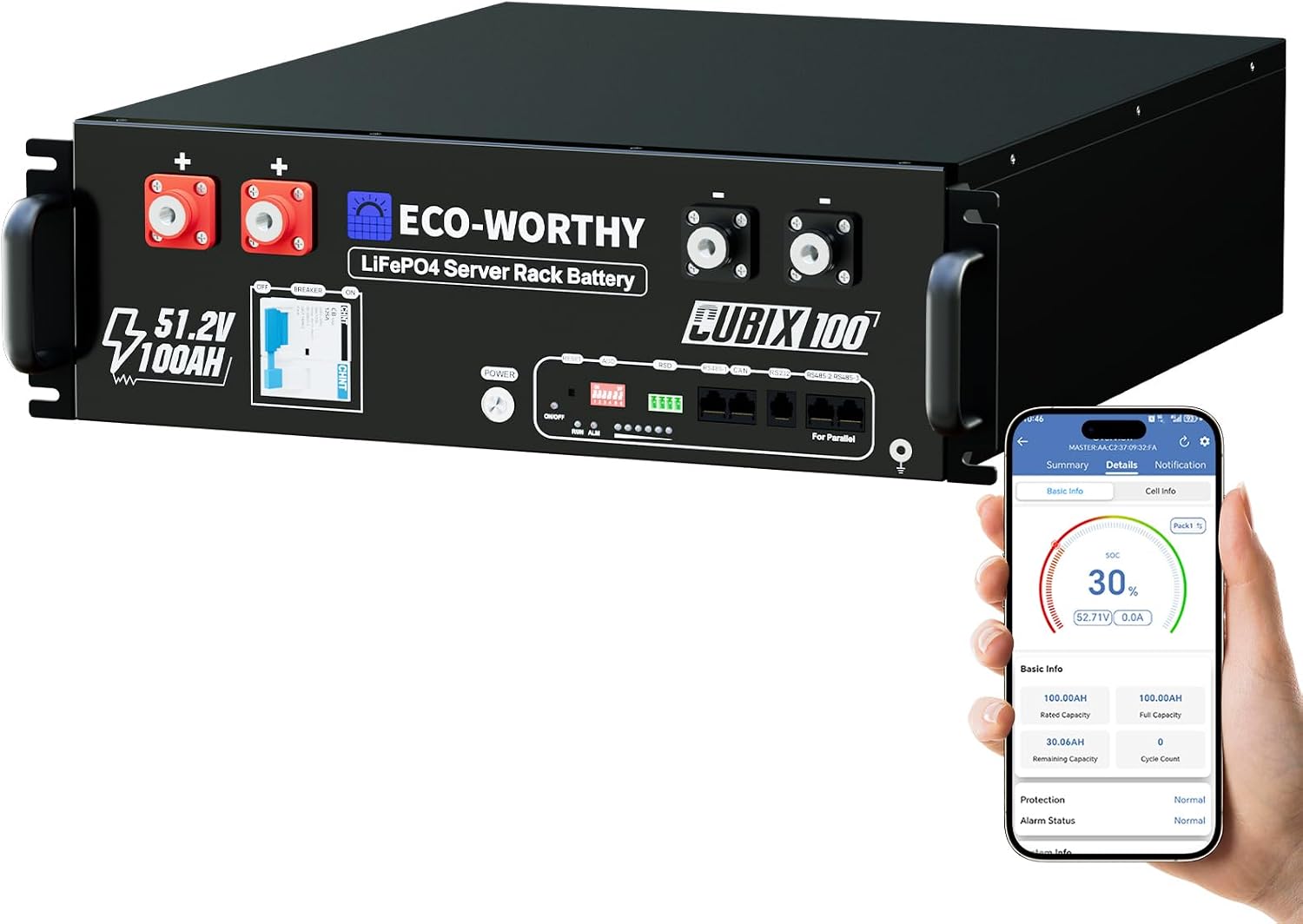
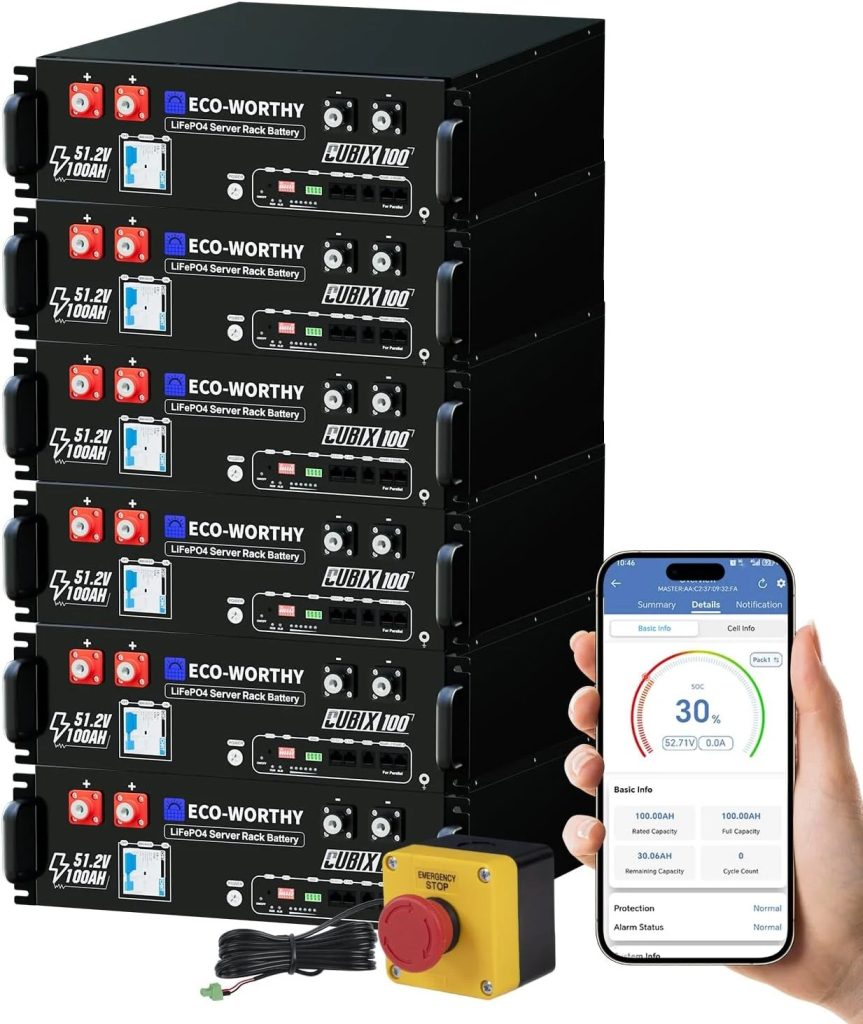
The ECO-WORTHY Cubix100 48V 100Ah LiFePO4 Lithium Battery positions itself as a robust modular solution for residential energy storage. At 48V nominal voltage and 100Ah capacity, a single unit delivers 4.8 kWh of energy. However, understanding a battery goes far beyond its nominal specifications. As a component within a larger home energy storage system, its performance is inextricably linked to the inverter, Battery Management System (BMS), and overall system architecture.

This evaluation will delve into the practical implications of its design and chemistry, crucial for anyone considering a backup battery for house applications or a complete residential energy storage solution.


Key Evaluation Criteria: A Home Energy Engineer’s Perspective

From an energy engineer’s vantage point, the effectiveness of any home energy storage system hinges on several integrated factors. It’s not just about the battery itself, but how it interacts with the grid, solar arrays, and household loads.

Battery Chemistry: LiFePO4 – The Core of a Reliable Home Energy Storage System

The ECO-WORTHY Cubix100 utilizes Lithium Iron Phosphate (LiFePO4) chemistry. This is a critical factor for any modern home energy storage system. Unlike Nickel Manganese Cobalt (NMC or NCM) batteries, which often offer higher energy density for portable applications or electric vehicles, LiFePO4 excels in stationary storage for several reasons:

  • Safety: LiFePO4 is inherently more thermally stable and less prone to thermal runaway compared to NCM chemistries. This translates to a significantly safer backup power system for your home, reducing fire risks.
  • Cycle Life: LiFePO4 typically offers a much longer cycle life. While NCM batteries might achieve 4,000-6,000 cycles to 80% Depth of Discharge (DoD), high-quality LiFePO4 units often push past 8,000 to 10,000 cycles. This directly impacts the long-term reliability and economic viability of your whole-house battery.
  • Depth of Discharge (DoD): LiFePO4 can be consistently discharged to a much higher DoD (often 90-100%) without significantly impacting its lifespan, maximizing the usable capacity from your investment. NCM batteries often recommend lower DoD to preserve cycle life.

For a fixed installation like a home energy storage system, the longevity and safety benefits of LiFePO4 make it the preferred choice, even if its volumetric energy density isn’t as high as NCM.

Usable Battery Capacity: What 4.8 kWh Really Means for Your Home

A single ECO-WORTHY Cubix100 unit has a nominal capacity of 4.8 kWh. The term “usable capacity” is paramount. Given its LiFePO4 chemistry and robust BMS, this battery typically allows for a very high depth of discharge, often 90-100%. This means that of the 4.8 kWh, you can reliably access approximately 4.3 kWh to 4.8 kWh under normal operating conditions.

To put this in perspective, a typical energy-efficient home might consume 15-30 kWh per day. A single Cubix100 unit provides a substantial fraction of a day’s energy for critical loads, but for true whole-home battery backup, multiple units are almost always required.

Power Output: Continuous and Peak Performance for Your Whole Home Battery Backup

A battery’s ability to deliver power, not just energy, is crucial. The Cubix100 is designed for high-current applications, but its continuous and peak output power will ultimately be limited by the inverter it’s paired with and the overall system design. Assuming a well-matched 48V hybrid inverter:

  • Continuous Output Power: A single Cubix100 can typically support continuous discharge rates of 0.5C to 1C, meaning it can sustain approximately 2.4 kW to 4.8 kW continuously. For an entire home energy storage system, multiple batteries in parallel will increase this output proportionally. This is vital for running multiple appliances simultaneously.
  • Peak Surge Output: LiFePO4 batteries are excellent at handling surge loads. The Cubix100, when paired with a capable hybrid inverter, can provide short bursts of high power (2C or more, momentarily up to 9.6 kW per battery) to start motors in refrigerators, well pumps, or air conditioning units. This surge capability is a non-negotiable feature for effective whole-home backup capability.

Hybrid Inverter Performance & Energy Management

The ECO-WORTHY Cubix100 is a battery module; its intelligence for managing energy flow comes from the hybrid inverter. This component is the brain of your home energy storage system.

  • Solar Compatibility: The Cubix100 is highly compatible with most 48V hybrid inverters designed for solar battery storage. The inverter’s MPPT (Maximum Power Point Tracking) chargers convert solar DC to battery DC efficiently.
  • Energy Management: A high-quality hybrid inverter, leveraging the Cubix100, allows for sophisticated energy management. This includes:
    • Load Balancing: Intelligently distributing power from solar, battery, or grid to prevent overloads and optimize usage.
    • Time-of-Use (TOU) Optimization: Charging the battery when electricity is cheap (off-peak) and discharging it during expensive peak hours, significantly reducing your electricity bill.
    • Self-Consumption Optimization: Prioritizing solar energy for direct home use, then charging the battery, then exporting to the grid.

Whole-Home Backup Capability and Automatic Transfer

For a seamless transition during grid outages, the Automatic Transfer Switch (ATS), often integrated within the hybrid inverter or as a separate component, is vital.

  • UPS Switching Speed: A quality hybrid inverter paired with the Cubix100 can achieve UPS-grade switching speeds, typically under 20 milliseconds. This means sensitive electronics like computers and medical devices will not experience interruptions during a grid failure, ensuring true whole-home backup performance.
  • Seamless Transition: The ATS automatically disconnects your home from the grid and connects it to the battery/inverter power during an outage, providing an uninterrupted backup power system.

Scalability and Expandable Battery Capacity

The modular design of the ECO-WORTHY Cubix100 is one of its strengths. Multiple units can be connected in parallel to increase the overall expandable battery capacity of your home energy storage system. This is crucial for:

  • Phased Installation: Starting with a smaller system and expanding as needs or budget allow.
  • Tailored Capacity: Matching your specific energy consumption profile for a whole-house battery solution.
  • Off-Grid Applications: For off-grid battery systems, expandability is non-negotiable to achieve multi-day autonomy.

Battery Management System (BMS): The Brain of Your Residential Energy Storage

Each Cubix100 unit incorporates a sophisticated internal Battery Management System. This BMS is critical for:

  • Cell Balancing: Ensuring all cells within the battery pack charge and discharge evenly, extending overall lifespan.
  • Over-Charge/Discharge Protection: Preventing damage from exceeding voltage limits.
  • Over-Current/Temperature Protection: Safeguarding against excessive power draw or overheating.
  • Fault Detection: Identifying and reporting potential issues, enhancing the long-term reliability of your energy storage battery.
    A robust BMS is the guardian of your battery’s health and safety.

Grid-tied vs. Off-grid Operation: Flexibility in Your Energy Storage Solution

The ECO-WORTHY Cubix100 is versatile. When integrated with a capable hybrid inverter system:

  • Grid-tied Operation: It can serve as a grid-tied battery, optimizing self-consumption, performing peak shaving, and providing backup during outages.
  • Off-grid Operation: It is perfectly suited for off-grid battery systems, where it stores solar energy to power loads independently, supported by a generator if needed. This flexibility is a hallmark of a truly adaptive home energy storage system.

Installation Requirements & Safety Certifications

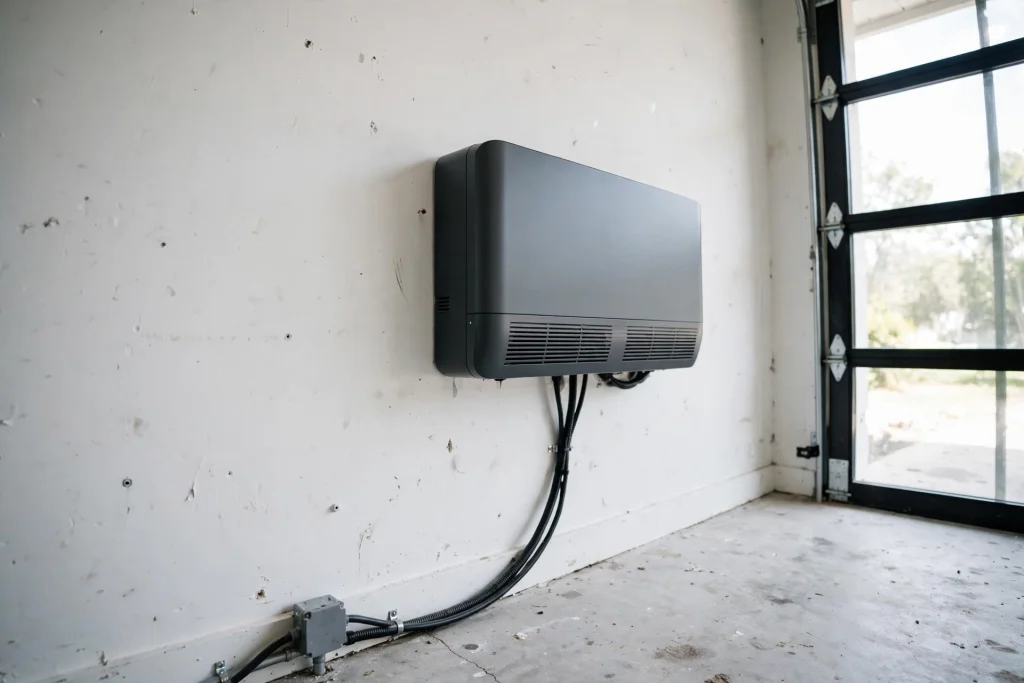
As a 48V battery, installation typically involves connecting to a 48V hybrid inverter. This requires professional electrical installation due to high DC currents and voltages. The units are generally designed for wall-mounting or rack-mounting.

  • Safety Certifications: It’s crucial to verify that the ECO-WORTHY Cubix100 holds relevant safety certifications such as UL 1973 for battery safety and UL 9540 for complete energy storage system safety when integrated with an inverter. These certifications are often required by local codes and insurance providers.

Warranty & Long-Term Reliability: Protecting Your Investment in a Home Energy Storage System

Most LiFePO4 batteries of this caliber offer a 10-year warranty, often guaranteeing a certain percentage of original capacity (e.g., 70-80%) after a specified number of cycles or years. The Cubix100’s use of LiFePO4 chemistry inherently contributes to long-term reliability, often exceeding typical warranty periods if properly maintained. My experience indicates that a well-designed LiFePO4 system can easily provide 15-20 years of service.

Cost per kWh: A Critical Metric for Whole-House Battery Solutions

The “cost per kWh” is a fundamental metric for evaluating the economic value of any residential energy storage solution. While individual battery unit cost varies, the true cost per usable kWh, amortized over its expected lifespan and considering installation, gives the real picture. LiFePO4, while sometimes having a higher upfront cost than older chemistries, often provides a lower cost per kWh over its lifetime due to superior cycle life and high DoD. For the Cubix100, its competitive pricing makes it an attractive option in this regard.


Real-World Scenario: System Design for a Resilient Home Energy Storage System

Designing a robust home energy storage system around the ECO-WORTHY Cubix100 requires meticulous attention to integration, especially for achieving whole-home battery backup. My primary focus as an energy engineer is ensuring seamless functionality, efficiency, and expandability.

Consider a residential client, Jane, who lives in an area prone to seasonal outages and wants to maximize her solar investment. We are designing a system to power her entire home using her existing 10kW solar array and a multi-unit Cubix100 bank.

The heart of this system is a high-performance hybrid inverter capable of managing bidirectional power flow. For Jane’s setup, we would select a 10-12 kW hybrid inverter that can interface directly with her solar array, the Cubix100 battery bank, and the utility grid. This inverter must have robust MPPT charge controllers to efficiently convert solar DC power into the 48V DC needed by the Cubix100 units. It also needs the capability to handle significant AC loads for whole-home backup.

An Automatic Transfer Switch (ATS) is either integrated into this hybrid inverter or installed externally. This component ensures that during a grid failure, the inverter automatically disconnects the house from the utility and immediately switches to battery power, providing that critical UPS-level switching speed (under 20ms). This prevents power interruptions to sensitive electronics like Jane’s home office equipment and refrigerator, which is paramount for her productivity and food safety.

For Jane’s specific needs, we’d specify an initial battery modules bank of four ECO-WORTHY Cubix100 units, totaling 19.2 kWh (4 x 4.8 kWh). This capacity provides several hours of whole-house backup even with her larger appliances operating, and can sustain critical loads for much longer. The modular nature of the Cubix100 allows for simple expandability; if Jane decides in a few years to add an EV charger or more high-demand appliances, we can easily add more Cubix100 units in parallel to her existing bank, scaling her energy storage solution without overhauling the entire system.

The cooling system for the battery bank is primarily passive, relying on the Cubix100’s efficient thermal design and proper ventilation within the installation space, typically a garage or utility room. The hybrid inverter, however, will have active cooling to manage its own heat dissipation, vital for its long-term reliability.

Monitoring App functionality is critical for Jane. The hybrid inverter’s accompanying app provides real-time data on solar generation, battery state of charge, home consumption, and grid interaction. This allows her to track her energy independence, optimize usage, and remotely manage her system. From an engineering perspective, this monitoring also provides invaluable diagnostic data.

The installation flexibility of the Cubix100 is beneficial. It can be wall-mounted or rack-mounted, allowing for efficient use of space. Our design considers clear access for future maintenance or expansion.

The overall engineering quality of the entire home energy storage system comes down to the synergy between these components. The robust LiFePO4 chemistry of the Cubix100, paired with a high-quality hybrid inverter and meticulous installation, results in a highly resilient and efficient system.

I recently visited a residential battery manufacturer in Shenzhen where modular battery systems were being assembled for multiple global brands. It’s clear that while the battery cells themselves are often sourced from a few major players, the quality of the Battery Management System (BMS) and the integration capability with various hybrid inverters truly differentiate the product for a complete home energy storage system.


Pros and Cons of the ECO-WORTHY Cubix100 for Your Home Energy Storage System

Like any significant investment, the ECO-WORTHY Cubix100 presents a balanced set of advantages and considerations for homeowners.

Pros:

  • Robust LiFePO4 Chemistry: Offers superior safety, very long cycle life (8,000+ cycles), and high usable DoD (90-100%), leading to excellent long-term reliability and a low cost per kWh over the lifespan.
  • Modular and Expandable: Easy to scale your home energy storage system by adding more units in parallel, accommodating future energy needs or budget constraints.
  • Integrated BMS: Provides essential protection and cell balancing, safeguarding the battery and ensuring consistent performance.
  • High Power Output Capability: Capable of supporting significant continuous and peak surge loads when paired with a suitable inverter, vital for whole-home battery backup.
  • Versatile Operation: Suitable for both grid-tied battery applications (peak shaving, self-consumption) and dedicated off-grid battery systems.
  • Competitive Cost: Often positioned as a cost-effective option, especially when considering its long cycle life, leading to good value for money.

Cons:

  • Battery Only: The Cubix100 is a battery module. It requires a separate hybrid inverter system, ATS, and other balance-of-system components, increasing complexity and potentially overall installation cost.
  • Lower Capacity Per Unit: At 4.8 kWh, multiple units are typically needed for significant whole-home battery backup or off-grid autonomy, which adds to the physical footprint.
  • Brand Ecosystem: Unlike integrated solutions from some competitors, ECO-WORTHY primarily offers the battery. The performance of the complete home energy storage system heavily depends on the quality and compatibility of third-party inverters chosen.
  • Professional Installation Required: Due to its high voltage and current, and the need for inverter integration, this is not a DIY solution, contributing to installation requirements and costs.

Who Is the ECO-WORTHY Cubix100 Best For? Off-Grid Cabins and Beyond

The ECO-WORTHY Cubix100 truly shines in scenarios where modularity, durability, and a robust battery core are paramount. It’s an excellent choice for:

  • Off-Grid Cabins and Remote Homes: For these applications, an off-grid battery system needs to be utterly reliable and capable of multi-day autonomy. The Cubix100’s LiFePO4 chemistry and expandability make it ideal for building a resilient solar battery bank that can be expanded as energy demands grow, often paired with generator compatibility for extended cloudy periods. Energy independence is the driving factor here.
  • Homeowners Building Custom Systems: If you prefer to select your inverter, charge controllers, and monitoring solutions independently to optimize for specific needs or budget, the Cubix100 serves as a powerful, flexible building block for a renewable home energy system.
  • Budget-Conscious Buyers Seeking Long-Term Value: While not the cheapest upfront, its exceptional cycle life means a very low cost per kWh over its operational life, offering significant ROI for a home backup battery system.
  • Solar Homes Aiming for Maximized Self-Consumption: For those with existing solar PV arrays, integrating the Cubix100 allows for greater solar home battery storage, reducing reliance on the grid and maximizing energy independence.

Value for Money: Assessing the Investment in an ECO-WORTHY Home Backup Battery

Evaluating the value for money for a home energy storage system like the ECO-WORTHY Cubix100 goes beyond the sticker price. It involves a holistic view of the investment over its expected lifespan.

  • Cost per kWh: The direct purchase price per kWh for the Cubix100 is often highly competitive. When you factor in the high usable capacity and industry-leading cycle life of LiFePO4, the effective cost per kWh cycled over 10-15 years is significantly lower than many alternatives. This makes it an economically sound choice for a whole-house battery.
  • Installation Cost: As a battery-only unit, the overall installation cost will depend heavily on the chosen inverter, wiring, permits, and labor. Professional installation is always required. This upfront cost is a significant factor in the total long-term ownership cost.
  • Battery Lifespan & Warranty: With a typical 10-year warranty and an expected battery lifespan of 15-20 years (based on 8,000+ cycles at high DoD), the Cubix100 provides excellent longevity. This reduces the frequency of replacement, enhancing its long-term value.
  • Electricity Savings & ROI: For grid-tied applications, the ability to capitalize on time-of-use rates and reduce peak demand charges can lead to substantial electricity bill savings. Over its lifespan, these savings contribute directly to a positive ROI, especially in areas with volatile or high electricity prices. For off-grid users, the ROI is measured in energy independence and avoided generator fuel costs.

Brand Comparison: How ECO-WORTHY Cubix100 Stacks Up Against Other Home Energy Storage Systems

Comparing the ECO-WORTHY Cubix100 to fully integrated solutions requires a slightly different perspective, as the Cubix100 is primarily a battery module. However, its performance as the battery core is key. Here’s how it stacks up against some prominent home energy storage system options:

Feature ECO-WORTHY Cubix100 (Single Unit) Tesla Powerwall (3) EcoFlow PowerOcean (Single Base) Generac PWRcell (Single Base)
Battery Chemistry LiFePO4 LiFePOPO4 (newer models) / NCM (older models) LiFePO4 LiFePO4
Battery Capacity 4.8 kWh (usable 4.3-4.8 kWh) 13.5 kWh (usable 13.5 kWh) 5 kWh to 15 kWh (expandable modules) 9 kWh to 36 kWh (expandable modules)
Continuous Output 2.4-4.8 kW (inverter dependent) 5.8 kW 5 kW (expandable to 10 kW) 7.6 kW
Whole-Home Backup Yes (with suitable inverter/ATS) Yes (integrated) Yes (integrated) Yes (integrated)
Solar Integration Excellent (via external hybrid inverter) Integrated AC-coupled or DC-coupled with Solar Roof Integrated hybrid inverter Integrated hybrid inverter
Expandability Very high (modular in parallel) Limited (up to 4-10 Powerwalls, model dependent) High (add 2.5 kWh modules) High (add 3 kWh modules)
Warranty 10 years (typically 80% retained capacity) 10 years (70% retained capacity) 10-15 years (70-80% retained capacity) 10 years (70% retained capacity)
Estimated Installed Cost ~$3,000 – $5,000 (battery only) ~$12,000 – $18,000 (per unit, incl. gateway/install) ~$10,000 – $20,000+ (base + modules, incl. install) ~$15,000 – $30,000+ (base + modules, incl. install)

(Note: Estimated Installed Costs are highly variable based on region, installer, and specific system configuration. These figures are illustrative for a single battery unit/base system as of 2026.)

Who Should Buy ECO-WORTHY Cubix100 48V 100Ah LiFePO4 Lithium Battery:

The ECO-WORTHY Cubix100 is best for those who want flexibility in their home energy storage system design. It’s ideal for homeowners working with an independent installer to build a custom solution, especially for off-grid battery systems or specific solar setups where a separate, high-quality hybrid inverter has been selected. It offers excellent long-term reliability and a low cost per kWh over its lifespan, making it a strong choice for budget-conscious buyers prioritizing battery chemistry and expandability.

Who Should Buy Tesla Powerwall:

The Tesla Powerwall is suited for homeowners seeking a fully integrated, sleek, and high-tech residential energy storage solution within the Tesla ecosystem. Its high capacity (13.5 kWh usable) and powerful inverter make it an excellent choice for whole-home backup and maximizing solar home battery self-consumption, especially when paired with Tesla solar panels or Solar Roof. It’s for those who prefer a single-brand experience and robust mobile app control.

Who Should Buy EcoFlow PowerOcean:

EcoFlow PowerOcean is a compelling option for homeowners looking for a modular yet integrated solution with a strong emphasis on smart energy management and expandability within a single brand. It appeals to those who value a user-friendly system, a good balance of capacity and power output, and a straightforward installation process, particularly for backup battery for house applications and maximizing solar usage.

Who Should Buy Generac PWRcell:

The Generac PWRcell is designed for homeowners prioritizing powerful whole-home battery backup and robust performance, especially if they already have or are considering a Generac standby generator. Its high output and expandable capacity make it suitable for larger homes with significant power demands during outages. It offers a comprehensive energy storage solution from a reputable power generation brand, appealing to those focused on extreme resilience.


Home Energy Storage System FAQ

Why does battery chemistry matter for a home energy storage system?

Battery chemistry is fundamental because it dictates a battery’s safety profile, lifespan, usable capacity, and overall performance. LiFePO4 (Lithium Iron Phosphate), used in the ECO-WORTHY Cubix100, is generally safer and offers a much longer cycle life (how many times it can be charged and discharged) than older lead-acid or even some NCM (Nickel Manganese Cobalt) lithium variants. For a home energy storage system, safety and longevity are paramount, directly impacting your investment’s value and the peace of mind of your backup power system. A battery’s chemistry also influences its thermal stability and its ability to deliver high power for demanding appliances during a blackout.

How long can a single ECO-WORTHY Cubix100 48V 100Ah LiFePO4 Lithium Battery power essential loads in a typical house?

A single ECO-WORTHY Cubix100 provides approximately 4.8 kWh of usable energy. For essential loads (like a refrigerator, LED lights, internet router, and a few charging devices), a typical house might consume 500-1000 watts continuously. At 500 watts, a single Cubix100 could theoretically last around 9-10 hours. At 1000 watts, it would be closer to 4-5 hours. However, real-world usage involves fluctuating loads. For a practical backup battery for house scenarios focused on critical appliances, homeowners typically need 2-4 units (9.6 kWh – 19.2 kWh) to achieve 12-24 hours of reliable backup, especially if a well pump or occasional kitchen appliance use is factored in. For true whole-home backup, particularly with air conditioning, significantly more capacity (20 kWh+) is required.

What should homeowners consider before installing a home energy storage system?

Before investing in a home energy storage system, homeowners should carefully consider:

  1. Energy Needs Assessment: What appliances do you need to power during an outage? What’s your daily energy consumption? This determines the necessary battery capacity and continuous power output.
  2. Grid Status & Goals: Are you looking for whole home battery backup during outages, solar battery storage for self-consumption, or full off-grid battery system independence?
  3. Solar Integration: Do you have existing solar, or plan to install it? How will the battery integrate with your solar array and a hybrid inverter system?
  4. Budget & ROI: Beyond the battery cost, factor in the inverter, ATS, installation labor, permits, and potential long-term electricity bill savings or ROI.
  5. Installation Space: Batteries are heavy and require dedicated, properly ventilated space.
  6. Professional Expertise: Always engage a qualified, experienced installer. Installation quality is paramount for long-term reliability and safety.
  7. Warranty & Support: Understand the warranty details for both the battery and the inverter, and the availability of local support.

Final Verdict: Is the ECO-WORTHY Cubix100 the Right Home Energy Storage System for You?

The ECO-WORTHY Cubix100 48V 100Ah LiFePO4 Lithium Battery is a strong contender as the core battery module for a well-designed home energy storage system. Its LiFePO4 chemistry provides exceptional safety and long-term reliability, crucial attributes for any residential battery backup solution. The modularity allows for excellent expandable battery capacity, making it adaptable to evolving energy needs or phased installations.

However, its success hinges on the quality of the surrounding components, particularly the hybrid inverter system and the installation itself. For homeowners seeking a robust, reliable, and cost-effective battery component that they can integrate into a custom-designed solution, especially for off-grid battery systems or maximizing existing solar, the Cubix100 offers significant value. If you prioritize a highly integrated, single-brand ecosystem with minimal component selection, other complete packages might be more suitable. As an energy engineer, I can confidently say that when properly specified and installed, the ECO-WORTHY Cubix100 delivers on its promise of being a dependable and foundational element for a resilient and efficient home energy storage system.

#ECOWORTHY #Cubix100 #48V #100Ah #LiFePO4 #Lithium #Battery