Short answer: Most solar batteries last 10–15 years. Modern lithium iron phosphate (LFP) batteries — the standard in 2026 — typically carry a 10-year warranty and are rated for 3,000–6,000 full charge cycles. Older lead-acid solar batteries last only 3–5 years. The honest catch: lifespan is measured in cycles and depth of discharge, not just calendar years — a battery cycled daily ages very differently from one used for weekend outages.
When shoppers ask “how long do solar batteries last,” they’re usually really asking one of two things: how many years until I have to buy a replacement, or how many years of service am I getting for the price. This guide answers both, with published cycle ratings from popular products, the simple cycles-to-years math, and what 256 verified owner reviews of a best-selling 12V LiFePO4 battery actually say about real-world longevity.
Lifespan by Battery Chemistry: The Numbers
Answer first: In 2026, nearly every new solar battery sold is lithium iron phosphate (LFP) — expect 10–15 years of service. Lead-acid is the budget option and lasts 3–5 years.
| Battery chemistry | Typical lifespan | Rated cycles (to ~80% capacity) | Common use |
|---|---|---|---|
| LFP (LiFePO4) | 10–15 years | 3,000–6,000 | Home batteries, portable power stations |
| NMC lithium | 10–13 years | 1,000–2,000 | Older home batteries, EVs |
| Lead-acid (AGM/gel) | 3–5 years | 300–1,000 (at 50% depth of discharge) | Budget off-grid systems |
| Flow batteries | 15–20+ years | 10,000+ | Niche / commercial installs |
The headline number most buyers miss: “lasting” doesn’t mean holding 100% capacity the whole time. A battery rated for 10 years will gradually lose capacity — typically warrantied to retain at least 70–80% of its original capacity at the end of the warranty period. A 10 kWh home battery at 75% health still stores 7.5 kWh; it’s degraded, not dead.
What “Cycles” Really Mean — the Years-Math Nobody Shows You
Answer first: One cycle = one full charge and discharge. Divide the published cycle rating by how many full cycles you actually use per day, and you get a realistic lifespan in years.
Here is that math applied to two of the most popular portable power stations on the market, using their manufacturer-published cycle ratings (verified against multiple independent comparison reviews):
| Product | Published cycle life (manufacturer-stated) | ≈ Years at 1 full cycle/day | ≈ Years at 1 full cycle/week |
|---|---|---|---|
| EcoFlow DELTA 2 (1,024Wh LFP) | 3,000 cycles to 80% | ~8 years | ~57 years* |
| BLUETTI AC180 (1,152Wh LFP) | 3,500 cycles to 80% | ~9.5 years | ~67 years* |
*The weekly-use column is deliberately absurd: it shows that for occasional-use gear, calendar aging — not cycle count — is the real limit. An LFP battery slowly degrades even sitting on a shelf, losing a few percent of capacity per year, so plan on 10–15 years regardless of how gently you treat it.
The practical takeaway: a home battery that cycles nearly every day will use up its rated cycles in roughly the warranty period — which is exactly why home-battery warranties are written as “10 years or a throughput limit, whichever comes first.” A portable station used for camping and outages, meanwhile, will almost certainly die of old age before it runs out of cycles. If you’re sizing one, see our guide on what size portable power station you need — buying more capacity than you’ll cycle daily doesn’t buy proportional extra years.
Home Batteries vs. Portable Power Station Batteries
Answer first: Same chemistry, different duty. Home batteries work every day; portable stations sit idle most of the year — so portables usually die of old age while home batteries die of use.
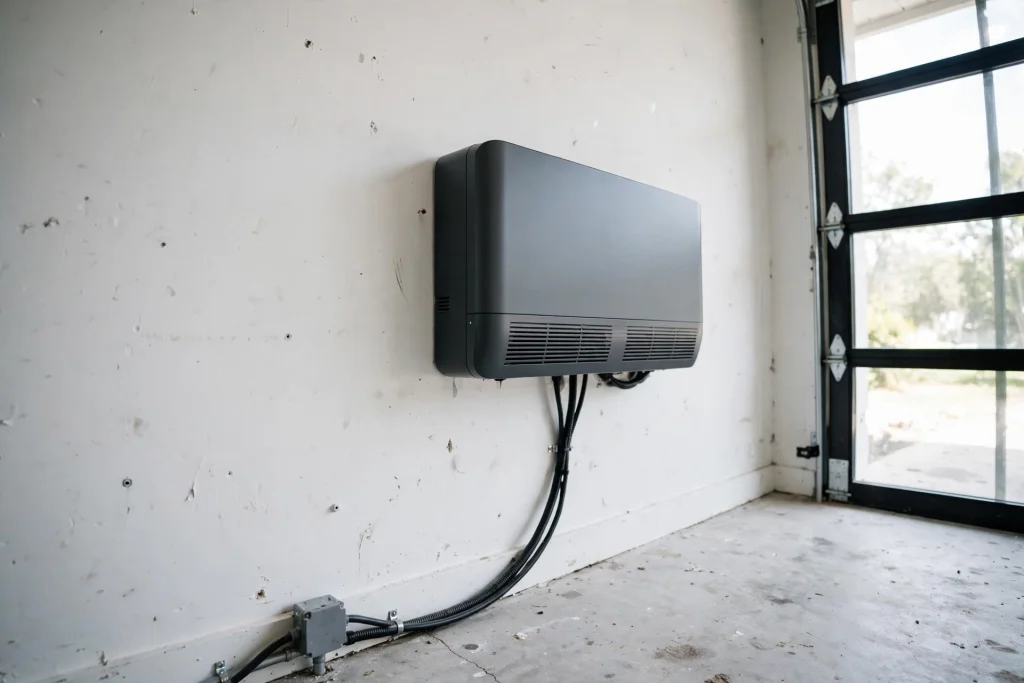
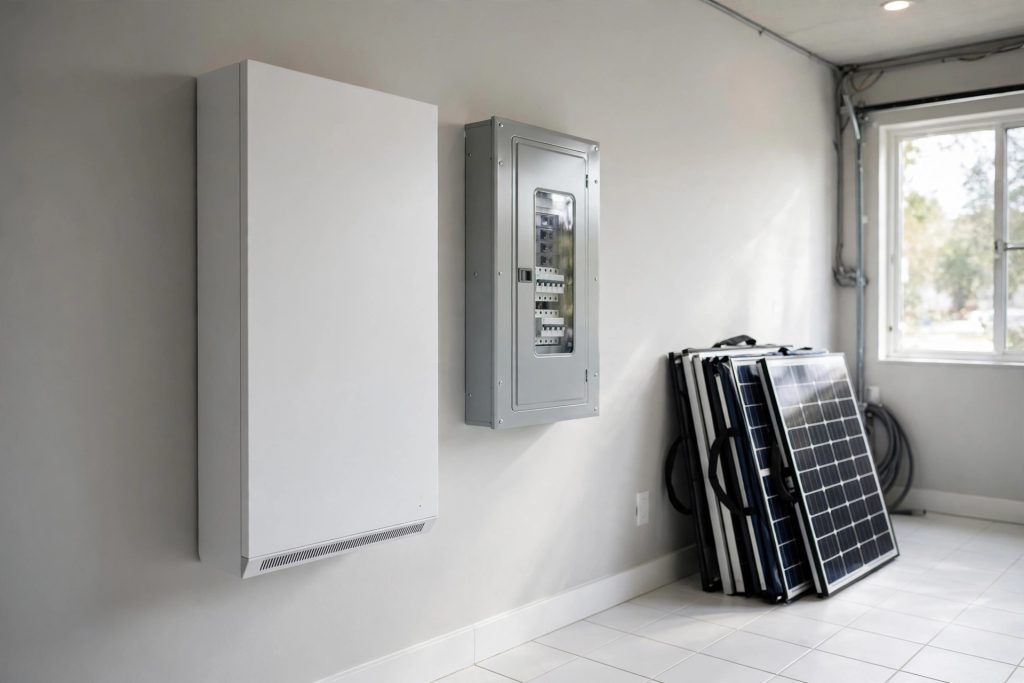
Home batteries (wall-mounted units like the Tesla Powerwall 3 or Enphase IQ) charge from your rooftop panels and discharge every evening. Expect daily or near-daily cycling, 10-year warranties, and a guaranteed capacity floor (usually 70–80% retention). They live in garages and utility rooms, where heat is the main enemy — more on that below.
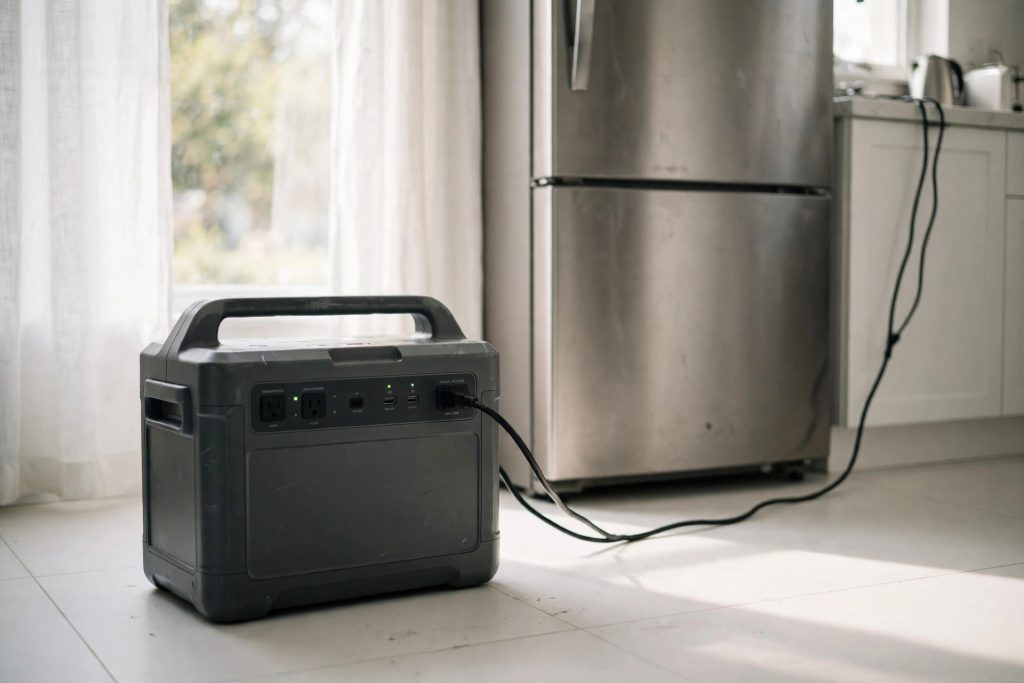
Portable power station batteries use the same LFP cells in a smaller box. Typical warranties are 5 years rather than 10, reflecting lighter expected use. The failure mode we see most in owner reports isn’t worn-out cells — it’s a unit left in a hot car trunk or stored dead for a year. Treated well, a quality LFP portable station should still be at 80%+ capacity a decade in. For context on the hardware side, see how long solar generators last overall.
Thinking of buying? If longevity is your priority, shop specifically for LFP chemistry and a published cycle rating — not all lithium batteries are equal.
Check Price Now: LiFePO4 Solar Batteries Check Price Now: LFP Power Stations
What Real Owners Report: 256 Verified Battery Reviews
Answer first: On a popular 12V 100Ah LiFePO4 battery’s official product page, 256 verified owner reviews split 95% five-star / 5% four-star, with zero 1–3 star reviews — and the most repeated longevity claim in the review text is “years of trouble-free use.”
We pulled the full review distribution from the manufacturer’s own product page (Judge.me verified-reviews widget, checked October 2026) rather than relying on marketing copy. Recurring themes across the reviews:
- Replacing dead lead-acid: many buyers upgraded from lead-acid batteries that died in 2–4 years, and report the lithium swap as “drop-in” with a solar charge controller settings change.
- RV and marine duty: the most common use cases — trolling motors, boat house batteries, trailer refrigerators — all daily-cycling scenarios where lead-acid previously failed early.
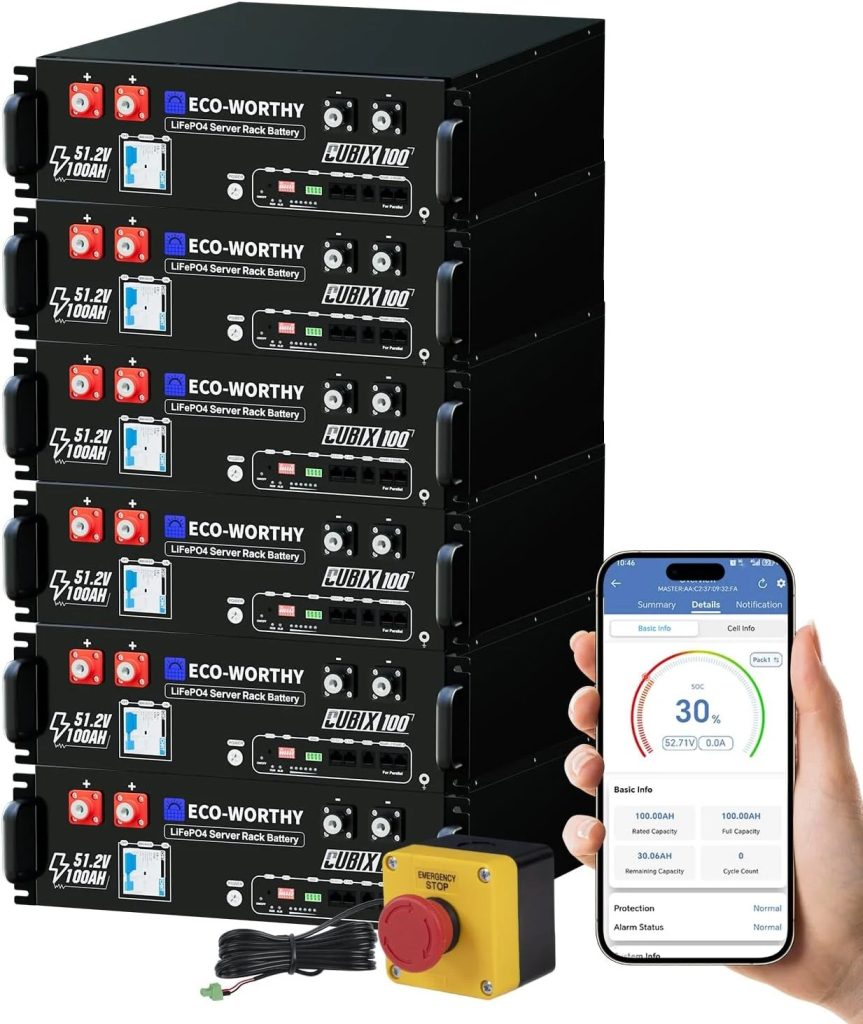
- Bluetooth monitoring praised: owners repeatedly mention checking state of charge from their phone, which prevents the deep-discharge accidents that kill batteries.
- Longevity mentions: several reviewers report multiple years of service with no noticeable capacity loss, consistent with LFP’s published cycle ratings.
One honest caveat: this is the brand’s own review widget, so treat it as owner sentiment rather than a lab study — dissatisfied buyers complain elsewhere more often than on the seller’s page. The published cycle ratings in the table above remain the more objective yardstick. Source: manufacturer’s official product page, 256 verified reviews (Judge.me widget), checked October 2026.
5 Things That Actually Shorten Solar Battery Life
Answer first: Heat, chronic deep discharge, and cheap protection electronics kill more batteries than old age does.
- Heat. Lithium degradation roughly doubles for every 10°C (18°F) above 25°C. A battery in a Phoenix garage ages far faster than one in a Maine basement. If yours lives somewhere hot, ventilation or a shaded install location is the single highest-ROI lifespan move.
- Deep discharge — for lead-acid. LFP tolerates 90–100% depth of discharge routinely; lead-acid permanently loses capacity when regularly drained below 50%. This is the main reason lead-acid’s real-world lifespan is half its lab rating.
- Storing at the extremes. Lithium stored at 100% charge in heat degrades fastest; stored at 0%, the battery management system’s standby drain can pull cells below their safe voltage and brick the pack. For seasonal storage, leave LFP at roughly 50–80% charge.
- A cheap BMS. The battery management system — not the cells — is the most common failure point in budget batteries. It handles overcharge, over-discharge, and temperature cutoff. This is one spec where the cheapest option is rarely the best value.
- Calendar aging. Even unused, lithium cells lose a few percent of capacity per year. A battery bought “for someday” and left in a closet for five years has still aged five years.
When Should You Replace Your Solar Battery?
Answer first: Replace when usable capacity no longer covers your needs — for home batteries, that’s typically when capacity falls below 70–80% of original, which is also where most warranties draw the line.
Signs it’s time: your battery hits “empty” noticeably earlier than it used to, the app shows reduced full-charge capacity, or it can no longer carry your essential loads through a typical outage (see whether a solar generator can run a refrigerator through an outage for a sense of what “essential loads” means in practice).
The replacement math is friendlier than it looks. A 12V 100Ah LiFePO4 battery (~1.28 kWh usable) typically costs around $250–$350 in 2026 — spread over a 10-year service life, that’s roughly $25–$35 per year of storage. Installed home-battery systems run roughly $8,000–$15,000, which is why the battery — not the panels, which carry 25-year warranties — is the one component you should budget to replace once during your solar system’s life.
Frequently Asked Questions
How long do solar batteries last?
Most modern LFP solar batteries last 10–15 years, typically backed by a 10-year warranty guaranteeing 70–80% capacity retention. Lead-acid solar batteries last 3–5 years.
Do solar batteries degrade over time?
Yes — all batteries lose capacity gradually through cycling and calendar aging. LFP batteries degrade slowly (a few percent per year); the warranty’s capacity floor, not sudden failure, is what defines end of life.
How many charge cycles do LiFePO4 solar batteries last?
Typically 3,000–6,000 full cycles to 80% capacity. At one full cycle per day that’s about 8–16 years; with lighter use, calendar aging (10–15 years) becomes the limit first.
How long do portable power station batteries last?
Quality LFP portable stations (e.g., units rated 3,000–3,500 cycles) should deliver 10+ years of occasional camping and outage use. They usually age out from calendar aging before they run out of cycles.
What kills a solar battery fastest?
Heat is the biggest accelerator of lithium degradation. For lead-acid, regularly discharging below 50% is the fastest killer. A low-quality battery management system is the most common single point of failure in budget batteries.
Is it worth replacing a solar battery or buying a whole new system?
Usually just the battery. Solar panels last 25+ years and inverters 10–15 years, so a mid-life battery replacement (~$250–$350 for a 12V 100Ah LiFePO4; ~$8,000–$15,000 for an installed home battery) is normal maintenance, not a reason to scrap the system.
Sources: manufacturer-published cycle ratings (EcoFlow, BLUETTI) cross-checked against independent comparison reviews; manufacturer’s official product page, 256 verified owner reviews (Judge.me widget), checked October 2026. This site contains affiliate links. We may earn a commission on qualifying purchases.