
“How long do solar generators last?” is really two questions: how many years the unit serves you, and how many charge cycles the battery survives. The straight answer: most last 5 to 15 years — and the battery pack, not the panels or electronics, almost always decides.
The Short Answer: 5–15 Years, and the Battery Decides
Expect 5–15 years of useful life; the battery chemistry you buy determines which end of that range you land on. A lithium-iron-phosphate (LiFePO4) station delivers 3,000–4,000+ charge cycles before dropping to 80% of original capacity — roughly 8–15 years of real-world use. Older nickel-based (NMC/NCA) packs typically fade after 500–800 cycles, or about 5–8 years. The panels, inverter, and charge controller usually outlive the battery by a wide margin.
What Counts as “Dead”? The 80% Rule
A solar generator isn’t “dead” when it can’t hold a full charge — manufacturers define end of life as roughly 80% of original capacity remaining. Degradation is gradual: runtimes slowly shrink year after year, a station that once ran your fridge for 12 hours now manages 9. That fade is normal chemistry.
A “cycle” means a full 0–100% equivalent of charge — two 50%-to-100% top-ups count as roughly one cycle, not two, so partial charges are gentler than the raw count suggests.
Battery Chemistry Is the Biggest Factor
LiFePO4 (LFP) is the longevity champion: 3,000–4,000+ cycles to 80% capacity, roughly 8–15 years — versus 500–800 cycles for older lithium chemistries. It’s the single most important spec on the box, and why most quality stations built since about 2022 switched to LFP cells.
| Battery Chemistry | Cycles to 80% Capacity | Daily Full Cycling | Occasional Emergency Use |
|---|---|---|---|
| LiFePO4 (LFP) | 3,000–4,000+ | ~8–11 years | 10–15 years |
| Lithium-ion NMC/NCA | 500–800 | ~1.5–2 years | 5–8 years |
| Lead-acid (AGM/gel) | 300–700 | Under 2 years | 2–4 years |
Year estimates are illustrative: one full cycle per day on a 3,000-cycle pack equals about 8.2 years, and calendar aging applies even when the unit sits unused.
Lead-acid packs add another penalty: usable capacity drops sharply below 50% charge, and they weigh far more per watt-hour. For lifespan alone, LFP is the clear pick.
Every Component Ages Differently
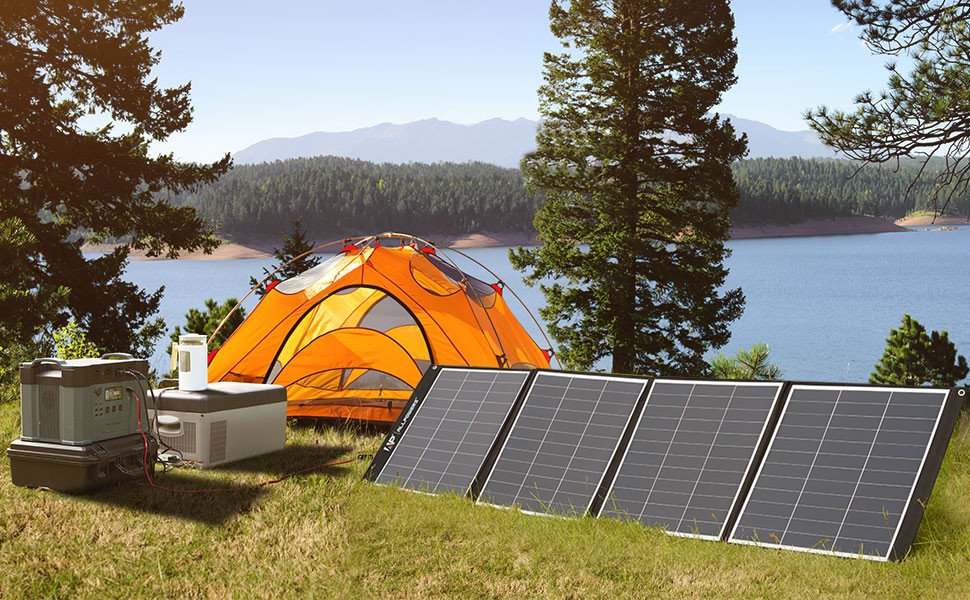
The battery fails first; the panels, inverter, and charge controller will typically still be going strong when the battery gives out. Each part runs on its own clock:
| Component | Typical Lifespan | Notes |
|---|---|---|
| Battery pack | 5–15 years | The limiting factor; chemistry-dependent |
| Solar panels | 25–30 years | Lose ~0.5% output per year; portable panels wear faster from folding and transport |
| Inverter | 10–15 years | Keep vents clear and avoid constant max-load operation |
| MPPT charge controller | 10–20 years | Rarely fails with decent surge protection and cooling |
| Casing, ports, wiring | 15+ years | Mechanical parts don’t degrade with use |
The practical upshot: when a solar generator “dies,” it’s almost always the battery — and the panels you bought with it can often keep charging your next station a decade later.
7 Things That Shorten (or Extend) Battery Life
Heat, deep discharges, and long neglect kill batteries faster than actual use does.
- Heat is enemy number one. A hot garage, attic, or car trunk accelerates every form of degradation. Cool, shaded storage around 15–25°C (59–77°F) is ideal.
- Charging below freezing. Never charge lithium batteries — including LiFePO4 — below about 0°C (32°F); it can cause permanent cell damage. In winter, charge indoors, or pick a model with a self-heating battery.
- Habitual deep discharges. Running 100% to near-empty every cycle wears cells faster. Staying between roughly 20% and 80% for routine use measurably extends cycle life.
- Sitting at 100% for months. A full battery under storage stress ages faster. Parking the unit between seasons? Leave it at 40–60% instead.
- Neglect and parasitic drain. The battery management system sips power even when “off.” Check stored units every 3–6 months and top them up — a battery drained to true zero may not recover.
- Constant max-load operation. Running the inverter at its rated ceiling for hours generates heat and stress. Our sizing guide helps you buy headroom instead.
- Dirty panels. Dust and grime cut charging efficiency, forcing deeper discharges per use. A quick wipe before trips matters more than people think.
5 Habits That Add Years to Your Solar Generator
Five simple habits — store it cool, keep it mid-charge, top it up quarterly, cycle it occasionally, and keep the vents clear — can add years to a battery’s useful life.
- Store at 40–60% charge in a cool, dry place — the single best thing you can do for a unit that sits between outages or camping seasons.
- Top up every 3–6 months to counter self-discharge and BMS parasitic drain. Set a calendar reminder — “set and forget” is how batteries die quietly.
- Exercise the battery a few times a year: run it down to ~20% on real loads, then recharge. This keeps the battery management system calibrated so the percentage readout stays honest.
- Keep vents and fans clear. Dust-clogged cooling forces the inverter to run hotter, and heat damage is cumulative.
- Update firmware when offered. BMS updates sometimes improve charge curves and low-temperature protection — free lifespan.
Pair good habits with realistic recharge expectations — see our charge-time guide — and a quality LFP station bought today can plausibly serve you into the late 2030s.
When to Replace Instead of Repair
Replace the unit when usable capacity drops below roughly 70–80% of its rating, or when the battery won’t hold a charge between uses — the panels and electronics rarely need replacing first. Most portable stations use sealed, non-user-replaceable packs, so a worn battery usually means a new unit. Most brands cover 2–5 years, and a failure inside the warranty window is a replacement, not a repair bill. Before giving up, try one full calibration cycle — sometimes the BMS readout is wrong. For the value math, see whether solar generators are worth the money.
Frequently Asked Questions
How long do solar generators last on a single charge?
That’s the other half of the question — runtime per charge depends on capacity and load. A 1,000Wh station runs a 100W load for roughly 8.5 hours (using the (Wh × 0.85) ÷ W formula). See our refrigerator runtime guide for worked examples.
Does leaving a solar generator plugged in all the time hurt it?
Modern battery management systems prevent true overcharging, so you won’t destroy it overnight. But holding at 100% for months accelerates calendar aging — for a backup unit, store it at 40–60% and top up quarterly instead.
Can you replace the battery in a solar generator?
Usually not. Most portable stations seal the pack inside with no user-serviceable parts. For mainstream all-in-one units, plan on the battery’s lifespan being the unit’s lifespan.
Do solar panels degrade over time?
Yes, but slowly — about 0.5% per year for quality monocrystalline panels, leaving roughly 90% output after 20 years. They’ll almost certainly outlast the battery they’re paired with. Output also dips temporarily in heat and clouds; details in our cloudy-day output guide.
Is a 10-year-old solar generator still usable?
Maybe. A well-stored LiFePO4 unit can still hold most of its capacity after a decade of light use; a hard-cycled NMC pack of the same age is likely weak. Test it under a real load before trusting it for an outage.
Should I drain the battery fully before recharging?
No — that’s a nickel-battery habit. Lithium prefers shallow cycles; routinely running 20% to 80% is gentler than 0% to 100%. Save the occasional full cycle for BMS recalibration.
Bottom line: buy LiFePO4, store it cool at mid-charge, top it up every few months, and don’t cook it in a hot garage. Do that, and a solar generator bought today can realistically be your backup power for a decade or more — long after cheaper packs have faded.
Common Questions About Solar Generators
Quick Answers
Straight answers to the questions people ask most about this topic.
How Long Do Solar Generators Last?
The short answer is yes — with the right expectations. Lead-acid packs add another penalty: usable capacity drops sharply below 50% charge, and they weigh far more per watt-hour.
Lead-acid packs add another penalty: usable capacity drops sharply below 50% charge, and they weigh far more per watt-hour.
How much should I expect to spend on solar generators?
Costs vary widely by capacity and brand, but the sweet spot for most buyers is a mid-range option that covers essential needs without overpaying for capacity you'll never use.
Bottom line: buy LiFePO4, store it cool at mid-charge, top it up every few months, and don’t cook it in a hot garage.
What should I look for when choosing solar generators?
Focus on capacity, charging speed, and build quality first — those determine everyday satisfaction far more than bonus features.
Read the specifications carefully and compare at least two or three options before deciding. Real user reviews reveal issues spec sheets hide.
What mistakes do people make with solar generators?
The most common mistake is buying too much or too little capacity — either wasting money or ending up short when it matters.
Measure your actual needs first. A little research up front prevents the two biggest regrets: overpaying and underpowering.
How do I get the most out of solar generators?
Follow the manufacturer's charging guidelines and store it properly between uses — that alone extends useful life significantly.
A lithium-iron-phosphate (LiFePO4) station delivers 3,000–4,000+ charge cycles before dropping to 80% of original capacity — roughly 8–15 years of real-world use.
Common Questions About Solar Generators
Quick Answers
Straight answers to the questions people ask most about this topic.
How Long Do Solar Generators Last?
The short answer is yes — with the right expectations. Lead-acid packs add another penalty: usable capacity drops sharply below 50% charge, and they weigh far more per watt-hour.
Lead-acid packs add another penalty: usable capacity drops sharply below 50% charge, and they weigh far more per watt-hour.
How much should I expect to spend on solar generators?
Costs vary widely by capacity and brand, but the sweet spot for most buyers is a mid-range option that covers essential needs without overpaying for capacity you'll never use.
Bottom line: buy LiFePO4, store it cool at mid-charge, top it up every few months, and don’t cook it in a hot garage.
What should I look for when choosing solar generators?
Focus on capacity, charging speed, and build quality first — those determine everyday satisfaction far more than bonus features.
Read the specifications carefully and compare at least two or three options before deciding. Real user reviews reveal issues spec sheets hide.
What mistakes do people make with solar generators?
The most common mistake is buying too much or too little capacity — either wasting money or ending up short when it matters.
Measure your actual needs first. A little research up front prevents the two biggest regrets: overpaying and underpowering.
How do I get the most out of solar generators?
Follow the manufacturer's charging guidelines and store it properly between uses — that alone extends useful life significantly.
A lithium-iron-phosphate (LiFePO4) station delivers 3,000–4,000+ charge cycles before dropping to 80% of original capacity — roughly 8–15 years of real-world use.


