
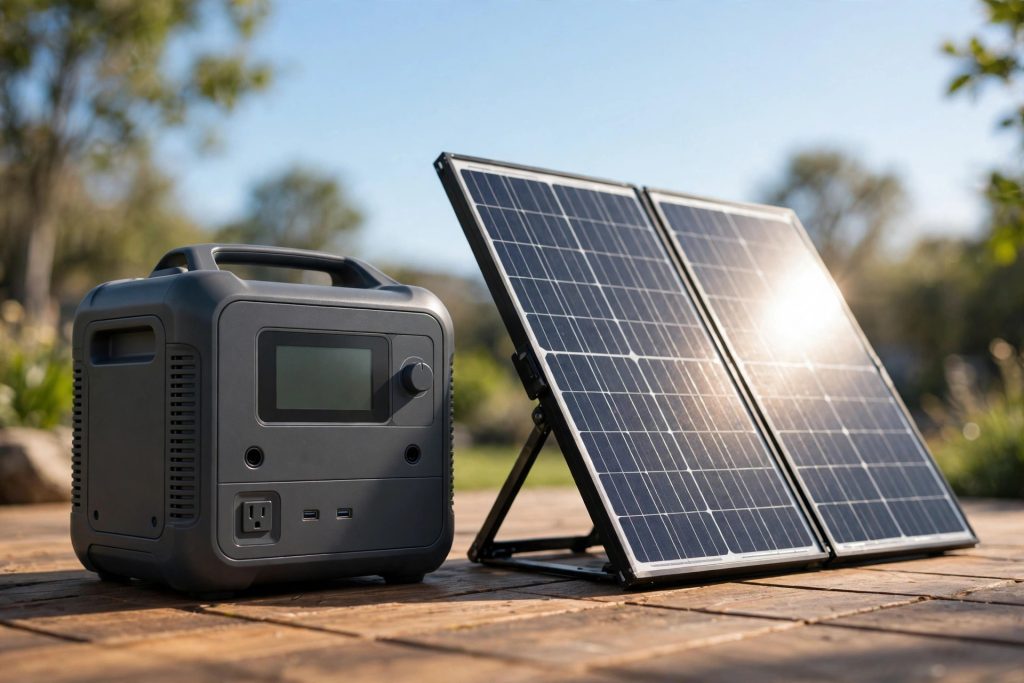
The short answer: a solar generator typically takes 4–10 hours to fully charge from solar panels, and 1–3 hours from a wall outlet. The exact time depends on your battery size, how many watts your panels deliver, and the charging method you use. Below, we break down the simple math, real-world charging times, and practical ways to charge faster.
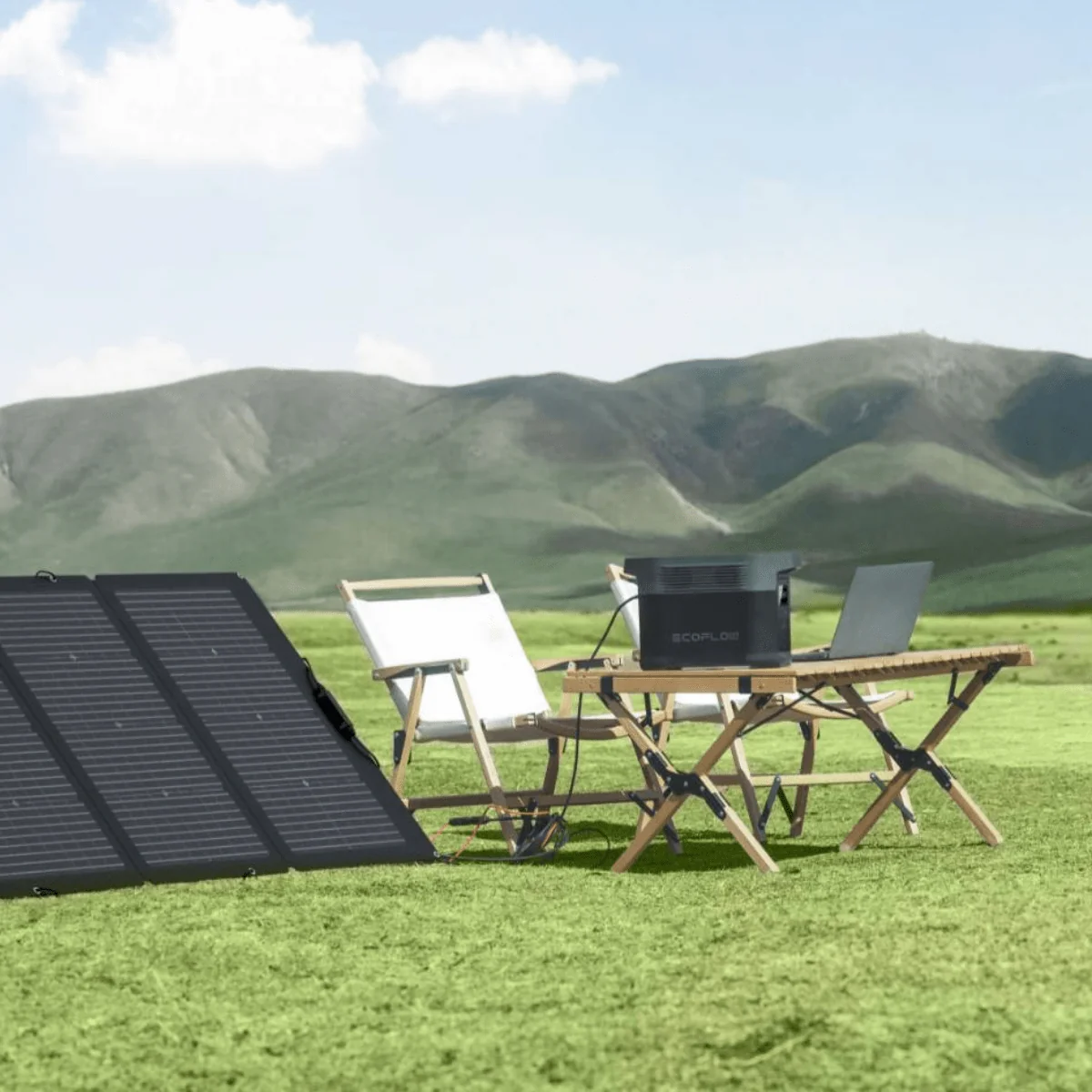
If you are shopping for a solar generator, charging speed matters as much as battery capacity — a huge battery that takes two days to refill is far less useful than a mid-size one you can top up in a single afternoon. And if you have not picked a unit yet, our portable power station sizing guide will help you match battery size to your actual needs first.
The Simple Charging-Time Formula
divide the battery capacity (in watt-hours) by the real solar input (in watts) to estimate charging time.
The basic formula is:
Charging time (hours) ≈ Battery capacity (Wh) ÷ Solar input (W)
For example, a 1,000Wh power station paired with a 200W solar panel gives 1,000 ÷ 200 = 5 hours in theory. In practice, add roughly 15–25% to account for conversion losses, heat, and less-than-perfect sun — so plan on 6–8 hours of good sunlight for that setup.
Here are some common real-world scenarios:
- 300Wh station + 100W panel: about 3.5–4.5 hours of strong sun
- 1,000Wh station + 200W panel: about 6–8 hours of strong sun
- 1,000Wh station + 400W of panels: about 3–4 hours of strong sun
- 2,000Wh station + 400W of panels: about 6–7 hours of strong sun
These are estimates, not guarantees. Your panel rarely produces its full rated wattage all day — more on why below.
Solar vs. Wall Outlet vs. Car: How Each Method Compares
a wall outlet is the fastest way to charge; solar is free but weather-dependent; car charging is the slowest and best reserved as a backup.
Charging from a wall outlet (fastest)
Most modern solar generators charge from a standard AC wall outlet in 1–3 hours, and many support fast-charging modes that fill a mid-size battery in about an hour. This is the method to use when you want the unit fully ready before a trip or an expected power outage — charge it from the grid, then maintain it with solar.
Charging from solar panels (free, variable)
Solar charging typically takes 4–10 hours for a full charge, spread across the sunniest part of the day. The upside is obvious: free, silent, off-grid energy. The downside is that you are at the mercy of weather, season, and daylight hours. On a short winter day, you may not get a full charge from solar alone no matter how good your panels are.
Charging from a car 12V socket (slowest)
A car’s cigarette-lighter socket usually delivers only 90–120W, so a 1,000Wh station can take 8–12 hours of driving to fill. It works as a trickle-charge on long road trips, but do not count on it as your primary method.
Dual charging
Some larger stations let you combine inputs — for example, wall outlet plus solar at the same time — which can cut charging time significantly. Check your model’s manual before trying this; not every unit supports it.
5 Factors That Determine Your Real Charging Speed
your panels almost never deliver their rated wattage — expect 70–85% in good conditions, and far less with clouds, shade, or bad angles.
1. Your station’s maximum solar input
Every power station has a maximum solar input limit (for example, 200W, 500W, or 800W). Connecting more panel wattage than the unit accepts does not speed things up — the extra capacity is simply wasted. Match your panels to the unit’s limit; a little headroom above the limit is fine, but far above it buys you nothing.
2. Panel angle and orientation
A panel lying flat at noon in summer performs very differently from one tilted toward low winter sun. Pointing panels directly at the sun — roughly perpendicular to the rays — can easily add 20–30% more power versus a flat or poorly aimed setup. Adjustable panel stands pay for themselves in charging speed.
3. Clouds and weather
Light overcast typically cuts output by 25–50%; heavy cloud cover can drop it by 70% or more. Your generator still charges on cloudy days, just much more slowly. If you are planning around solar-only charging, budget for the worst weather you are likely to see, not the best.
4. Shade — even partial shade
Shade is the silent killer of solar charging. Because most panels wire their cells in series, shade on even a small section can disproportionately cut the whole panel’s output. Keep panels fully clear of trees, railings, and roof edges.
5. Heat and panel quality
Solar panels lose efficiency as they heat up — a panel baking at 65°C (150°F) produces noticeably less than the same panel at 25°C (77°F). This is normal physics, not a defect. It is one reason real-world output sits at 70–85% of the label rating on a hot, sunny day.
How to Charge Your Solar Generator Faster
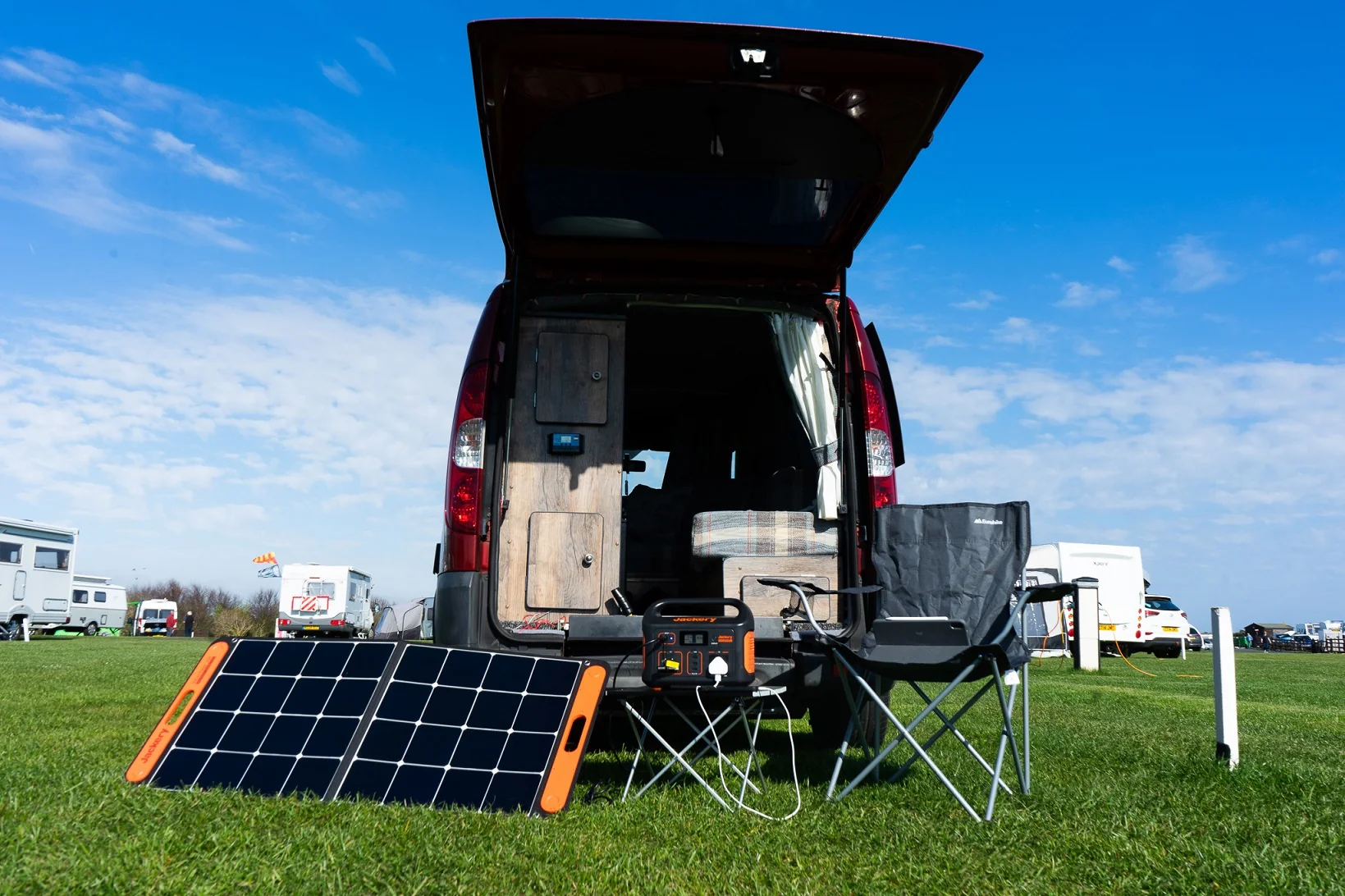
max out your unit’s solar input limit, aim panels at the sun, and pre-charge from the wall before you actually need the power.
- Use the full solar input your station allows. If your unit accepts 400W of solar and you are only feeding it 200W, adding a second panel is the single biggest speedup available.
- Angle panels toward the sun and re-aim them midday. A 45-minute re-aim around solar noon can add meaningful watt-hours on a long charging day.
- Charge during peak sun hours (roughly 10am–3pm). An hour of midday sun can deliver as much energy as two to three morning or late-afternoon hours.
- Keep panels cool and clean. Dust, pollen, and bird droppings measurably reduce output — a quick wipe with a damp cloth helps. A small air gap under the panel aids cooling.
- Pre-charge from a wall outlet before trips or storms. Topping up from the grid the night before means solar only has to maintain your charge, not build it from zero.
Wondering whether a solar generator is worth the investment in the first place? Our breakdown of solar generator costs and payback walks through the real numbers.
Can You Use a Solar Generator While It Charges?
yes — most modern stations support pass-through charging, so you can run devices while solar panels refill the battery.
Pass-through (also called UPS-style or simultaneous charge/discharge) lets incoming solar power flow straight to your devices while the surplus tops up the battery. It works best with light to moderate loads: charging phones and laptops while the panels work is fine, but running a 1,500W heater while trying to solar-charge will slow or stall the refill.
One caution: frequent heavy use during charging generates extra heat and cycles the battery harder, which can shorten its lifespan over time. For everyday off-grid use, it is perfectly fine — just avoid maxing out both directions at once on a regular basis.
Looking for a fast-charging setup?
A mid-size station paired with 200–400W of portable panels covers most camping and emergency backup needs, and refills in a single sunny day. Browse current options and compare solar input specs before you buy:
Does Fast Charging Damage the Battery?
no — charging at the manufacturer’s rated speed is safe; heat and deep discharges harm batteries far more than charging speed does.
Most portable solar generators today use LiFePO4 (lithium iron phosphate) batteries, rated for roughly 3,000–4,000 charge cycles before capacity drops to 80%. They are designed to handle their rated fast-charging speeds without meaningful extra wear. What actually shortens battery life is chronic heat exposure, storing the unit at 0% or 100% for months, and repeatedly draining it to empty.
For longest life, store your generator at roughly 50–80% charge in a cool place, and top it up every few months if it sits unused.
Solar Generator Charging: FAQ
How long does a 1000W solar generator take to charge?
A 1,000Wh-class station takes about 6–8 hours of strong sunlight with a 200W panel, or about 3–4 hours with 400W of panels. From a wall outlet, expect 1–2 hours. (Note: “1000W” usually refers to output power — charging time depends on the battery capacity in watt-hours, so check the Wh rating.)
Can a solar generator charge overnight?
Not from solar — panels produce nothing at night. But you can charge overnight from a wall outlet or a car socket, so the unit is full by morning. Many owners charge from the grid overnight and let solar maintain the battery during the day.
Do solar generators charge on cloudy days?
Yes, but much more slowly — expect 25–50% of normal output under light overcast and as little as 10–30% under heavy clouds. On a fully gray day, a wall outlet is the practical way to reach a full charge.
How many solar panels do I need to charge my generator?
Enough panel wattage to reach your station’s maximum solar input — that is the point of diminishing returns. For a unit with a 200W solar input limit, one good 200W panel (or two 100W panels) is the sweet spot. Adding more panels beyond the limit will not charge it any faster. If you are sizing panels for a whole home rather than a portable station, see our guide on how many solar panels a home needs.
Is it better to charge with one big panel or two small ones?
Electrically, it makes little difference as long as the total wattage matches your station’s input limit and voltage range. Practically, two smaller panels are easier to carry, aim, and replace — one big panel is simpler to set up. Check your station’s voltage limits before wiring panels in series.
How do I know when my solar generator is fully charged?
The display screen shows battery percentage and input wattage; most units also stop accepting charge automatically at 100% and many have an app with charge notifications. Input wattage dropping toward zero while the battery reads 100% means the charge controller has finished its job.
Disclosure: This article contains affiliate links. If you purchase through them, we may earn a commission at no extra cost to you — it helps us keep publishing free guides.
Compare solar generator charging speeds
Charging speed varies widely between models — compare max solar input and battery capacity side by side to find the fastest-charging option for your budget:
The Bottom Line
A solar generator charges as fast as your panels and its input limit allow — typically 4–10 hours on solar or 1–3 hours from the wall. Use the Wh ÷ W formula to estimate your own setup, max out the solar input your unit supports, aim your panels at the sun, and pre-charge from the grid when a storm or trip is coming. Do that, and you will rarely be caught with an empty battery.
Still comparing models? Our hands-on reviews of popular stations — like the BLUETTI AC180 bundle and the Jackery Explorer 2000 Plus — include real charging specs to help you choose.
Common Questions About Solar Generator
Quick Answers
Straight answers to the questions people ask most about this topic.
How Long Does It Take to Charge a Solar Generator?
The short answer is yes — with the right expectations. The short answer: a solar generator typically takes 4–10 hours to fully charge from solar panels, and 1–3 hours from a wall outlet.
The short answer: a solar generator typically takes 4–10 hours to fully charge from solar panels, and 1–3 hours from a wall outlet.
How much should I expect to spend on solar generator?
Costs vary widely by capacity and brand, but the sweet spot for most buyers is a mid-range option that covers essential needs without overpaying for capacity you'll never use.
Charging from solar panels (free, variable) Solar charging typically takes 4–10 hours for a full charge, spread across the sunniest part of the day.
What should I look for when choosing solar generator?
Focus on capacity, charging speed, and build quality first — those determine everyday satisfaction far more than bonus features.
Read the specifications carefully and compare at least two or three options before deciding. Real user reviews reveal issues spec sheets hide.
What mistakes do people make with solar generator?
The most common mistake is buying too much or too little capacity — either wasting money or ending up short when it matters.
Measure your actual needs first. A little research up front prevents the two biggest regrets: overpaying and underpowering.
How do I get the most out of solar generator?
Follow the manufacturer's charging guidelines and store it properly between uses — that alone extends useful life significantly.
(Note: “1000W” usually refers to output power — charging time depends on the battery capacity in watt-hours, so check the Wh rating.) Can a solar generator charge overnight?
Common Questions About Solar Generator
Quick Answers
Straight answers to the questions people ask most about this topic.
How Long Does It Take to Charge a Solar Generator?
The short answer is yes — with the right expectations. The short answer: a solar generator typically takes 4–10 hours to fully charge from solar panels, and 1–3 hours from a wall outlet.
The short answer: a solar generator typically takes 4–10 hours to fully charge from solar panels, and 1–3 hours from a wall outlet.
How much should I expect to spend on solar generator?
Costs vary widely by capacity and brand, but the sweet spot for most buyers is a mid-range option that covers essential needs without overpaying for capacity you'll never use.
Charging from solar panels (free, variable) Solar charging typically takes 4–10 hours for a full charge, spread across the sunniest part of the day.
What should I look for when choosing solar generator?
Focus on capacity, charging speed, and build quality first — those determine everyday satisfaction far more than bonus features.
Read the specifications carefully and compare at least two or three options before deciding. Real user reviews reveal issues spec sheets hide.
What mistakes do people make with solar generator?
The most common mistake is buying too much or too little capacity — either wasting money or ending up short when it matters.
Measure your actual needs first. A little research up front prevents the two biggest regrets: overpaying and underpowering.
How do I get the most out of solar generator?
Follow the manufacturer's charging guidelines and store it properly between uses — that alone extends useful life significantly.
(Note: “1000W” usually refers to output power — charging time depends on the battery capacity in watt-hours, so check the Wh rating.) Can a solar generator charge overnight?


