
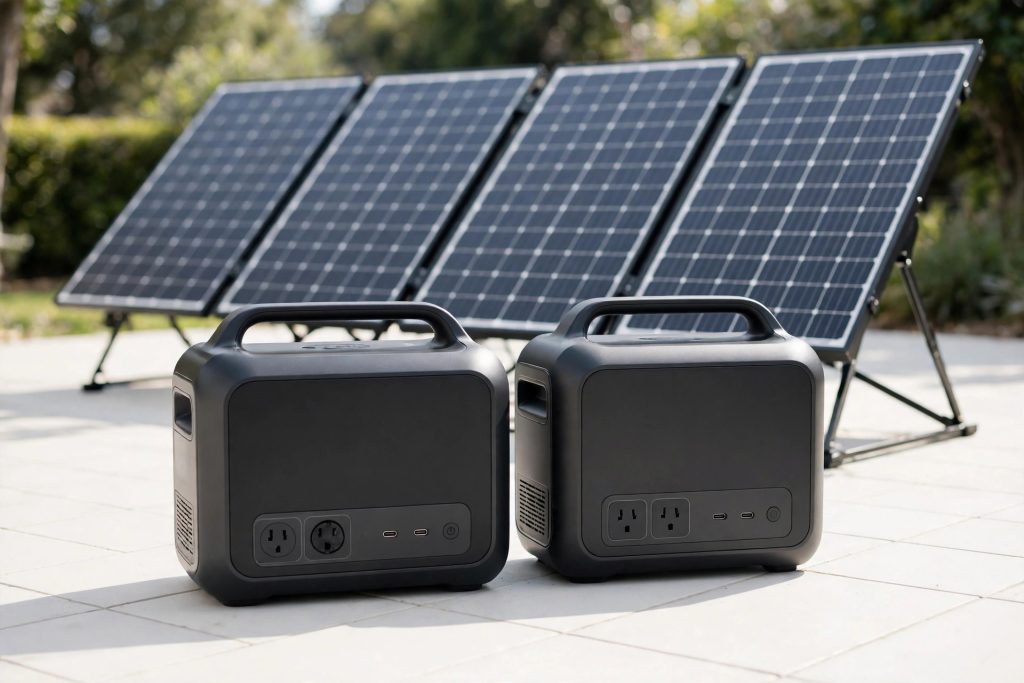
Quick answer: Neither brand wins outright. EcoFlow is the better pick if you want the fastest recharging and expandable capacity; Jackery is the better pick if you want the simplest, quietest, most portable unit. This guide compares the two brands on published specifications and independent reviews (not our own lab tests), so you can match the right station to how you’ll actually use it.
The One-Sentence Verdict
Buy EcoFlow if you recharge often or want a system that can grow; buy Jackery if you mostly camp and want the lightest, quietest box for the money. Everything below explains why — the differences that actually matter are charging speed, expandability, noise, and battery chemistry, not the logo on the front.
Meet the Two Brands
Jackery pioneered the portable power station category and still stands for simplicity: straightforward controls, a basic app, and units tuned for outdoor use. EcoFlow built its name on charging speed and ecosystem: its X-Stream fast-charging tech refills stations far quicker than rivals, and its larger models accept add-on batteries that grow capacity over time. Both sell complete solar generator bundles (station + panels), both use pure sine wave inverters that are safe for sensitive electronics, and both now use LiFePO4 batteries in their current-generation models.
Head-to-Head: The Specs That Matter
At the popular ~1 kWh size, the spec sheets trade blows rather than delivering a knockout. Here’s how the two brands’ flagship mid-size units compare on the numbers that affect daily use (figures from manufacturer specifications as widely reported):
| Spec | Jackery Explorer 1000 v2 | EcoFlow Delta 2 |
|---|---|---|
| Capacity | 1,070 Wh | 1,024 Wh |
| AC output | 1,500 W | 1,800 W (2,700 W surge) |
| Battery chemistry | LiFePO4, ~4,000 cycles to ≥70% | LiFePO4, 3,000 cycles to 80% |
| Wall recharge time | ~1.7 h (1 h emergency mode via app) | ~80 minutes |
| Max solar input | ~400 W | 500 W |
| Weight | ~23.8 lb (lighter) | ~27 lb |
| Expandability | No add-on batteries (1000 v2) | Add-on batteries available |
EcoFlow leads on output power, recharge speed, and expansion; Jackery counters with slightly more capacity per dollar, lower weight, and longer cycle ratings on its newest models. If you’re still unsure how much capacity your devices need, see our guide on what size portable power station you need before comparing brands.
Charging Speed: EcoFlow’s Home Turf
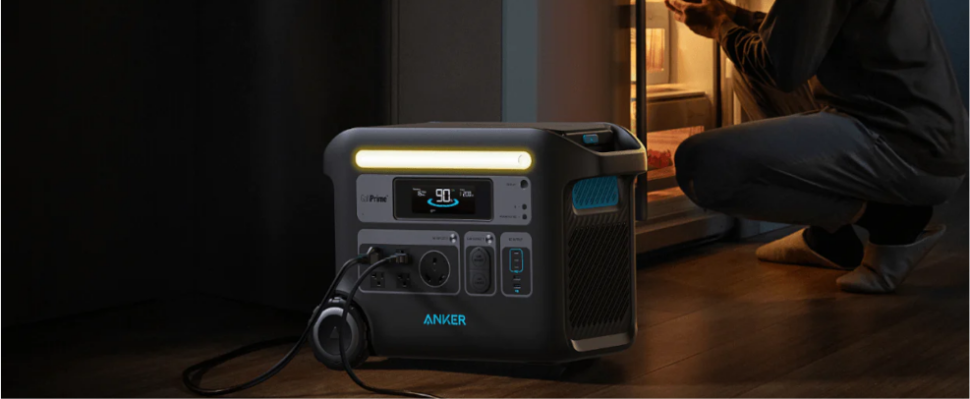
If you recharge your station frequently, EcoFlow’s faster AC charging is the single biggest practical difference. The Delta 2 refills from a wall outlet in about 80 minutes, and the newer Delta 3 does a full charge in under an hour — roughly half the time of typical rivals. That matters when you’re topping up between uses, charging overnight during a storm outage, or cycling the battery daily. Jackery’s emergency charge mode closes the gap to about an hour on the 1000 v2, but it requires enabling in the app each time. Solar charging is closer: both brands’ MPPT controllers harvest similar power from equivalent panels, so sunshine erases most of the brand gap.
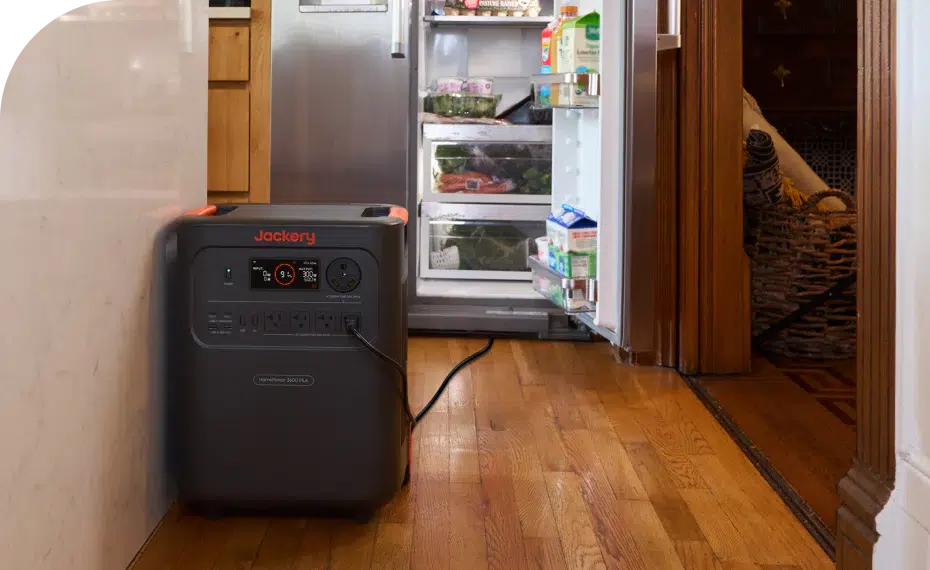
Jackery Explorer 1000 v2 — 1,070Wh LiFePO4 Portable Power Station
Battery Life and Expandability
Current-generation models from both brands use long-life LiFePO4 cells — but check the exact model, because older stock differs. The Explorer 1000 v2 is rated 4,000 cycles to ≥70% capacity and EcoFlow’s Delta line around 3,000–4,000 cycles to 80% capacity, translating to roughly a decade of regular use (see our breakdown of how long solar generators last). The trap: older Jackery models such as the Explorer 1000 Pro still use NMC chemistry rated around 500 cycles — fine for occasional camping, but a much shorter lifespan for daily cycling. EcoFlow’s other structural edge is expansion: Delta-series stations accept add-on batteries (the Delta 3 scales toward 5 kWh), while the Explorer 1000 v2 itself is fixed capacity — if you outgrow it, you buy a second unit or step up to an expandable model (Jackery’s Explorer 1000 Plus accepts battery packs).
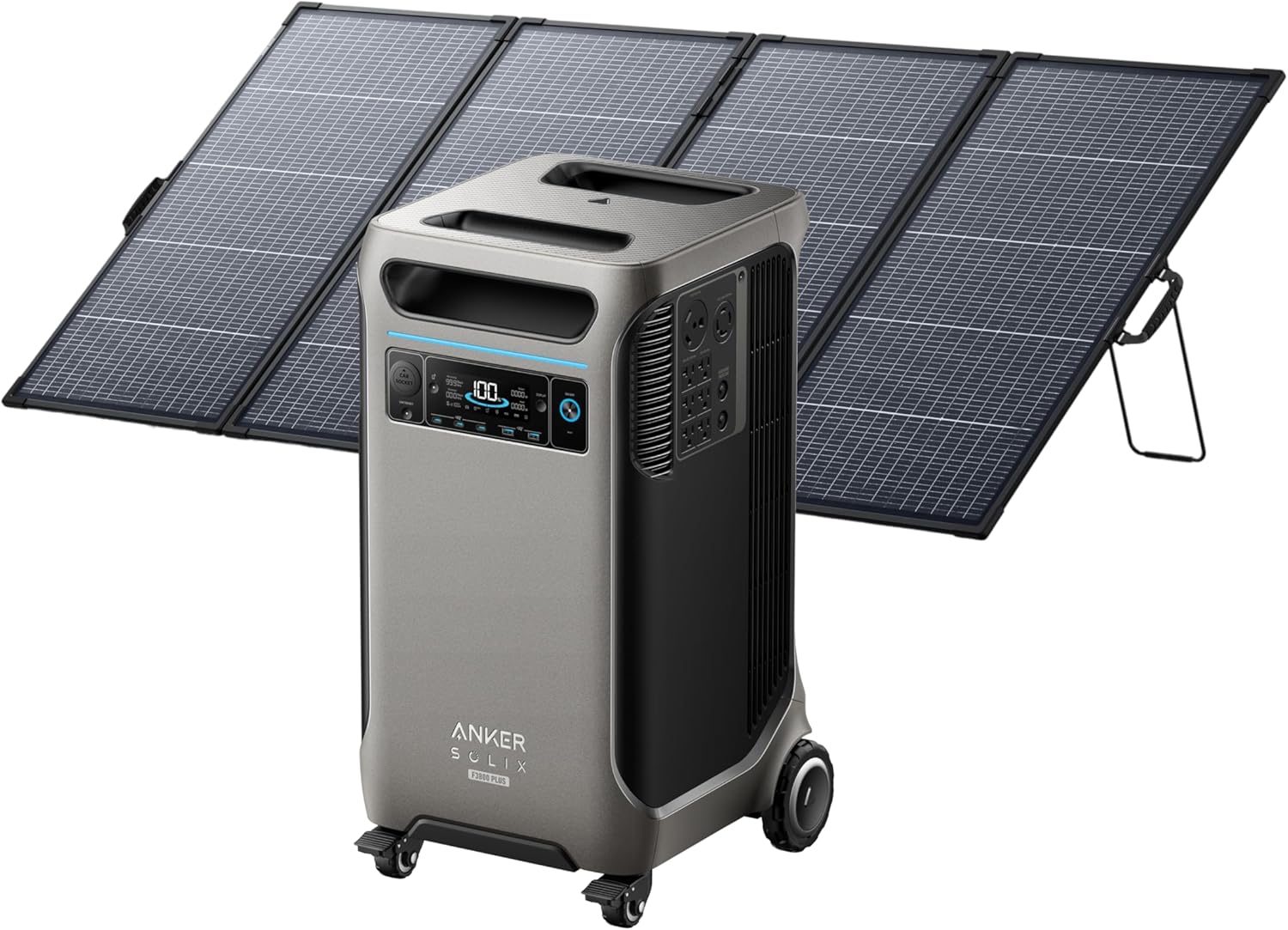
EcoFlow Delta 2 — 1,024Wh LiFePO4 Portable Power Station
Portability and Noise: Jackery’s Home Turf
For camping and tent-side use, Jackery’s lighter builds and quieter operation are genuinely noticeable. The Explorer 1000 v2 weighs about 23.8 lb and its quiet mode runs near 30 dB — easy to sleep next to — while independent comparisons consistently rate Jackery the quieter, more grab-and-go of the two brands. EcoFlow units aren’t loud by generator standards (nothing like a gas generator), but their cooling fans spin up more aggressively under heavy loads and fast charging; one independent review measured the Delta 2 near 58 dB at full charging speed. (Note: EcoFlow’s newer Delta 3 also advertises sub-30 dB operation at light loads, so the noise gap narrows with newer models.) If your station mostly lives in a garage for outages, this barely matters; if it rides in your car every weekend, it matters a lot.
Price and Value
Street prices swing constantly, so compare cost per watt-hour on the day you buy — and never judge value without checking battery chemistry. As a rough frame, the 1 kWh flagships from both brands typically land in the same $800–$1,100 band before sales, with frequent discounts narrowing any gap. A cheaper older-chemistry unit (like a discounted NMC model) can look like a bargain until you divide by its 500-cycle lifespan versus 3,000+ cycles on a LiFePO4 model. Also weigh whether the purchase makes sense at all for your situation — our analysis of whether solar generators are worth the money walks through the payback math.
Which Should You Buy? Use-Case Picks
Match the brand to the job, not to the hype:
- Weekend camping and road trips → Jackery. Lighter to carry, quieter at night, simpler to operate. Our full Jackery 1000 v2 review covers the details.
- Home backup and frequent outages → EcoFlow. Faster recharging between uses and battery expansion for longer runtimes. See our EcoFlow Delta 2 review.
- High-draw appliances (heaters, power tools) → EcoFlow. Higher continuous output and surge headroom; resistive heaters are brutal loads, as explained in can a solar generator run a space heater.
- Tightest budget → whichever 1 kWh LiFePO4 unit is on deeper sale, verified as LiFePO4 — not an older NMC model clearing inventory.
Two Checks Before You Buy Either Brand
First, confirm pure sine wave output — both brands’ current stations have it, which keeps CPAP machines, fridges, and laptop chargers safe, but it’s worth verifying on any listing. Second, check solar panel compatibility: both brands accept third-party panels through standard DC inputs as long as voltage stays within the station’s limit, but each brand’s bundled kits are tuned for its own units. Buying the station first and panels later is fine either way.
FAQ
Is EcoFlow better than Jackery?
For charging speed, output power, and expandability, yes. For simplicity, weight, and quiet operation, Jackery has the edge. “Better” depends entirely on whether you recharge often (EcoFlow) or carry it camping (Jackery).
Which lasts longer, Jackery or EcoFlow?
EcoFlow’s Delta line is rated 3,000–4,000 cycles to 80% capacity, and Jackery’s Explorer 1000 v2 is rated 4,000 cycles to ≥70% capacity — roughly a decade of regular use either way. Avoid older NMC-based models from either brand if longevity is your priority.
Can I use Jackery solar panels with an EcoFlow power station?
Usually yes. Both use standard DC solar inputs with built-in MPPT controllers, so cross-brand panels work as long as the panel voltage stays within the station’s specified input range. Check the max input voltage in the manual first.
Which is better for home backup during outages?
EcoFlow, mainly because faster wall recharging and add-on batteries cover longer outages better. Either brand handles the essentials (fridge, phones, lights, router) at the 1 kWh size and up.
Which is quieter for camping?
Jackery. Its quiet mode runs near 30 dB on current models, and reviewers consistently rate Jackery the quieter brand. Both are dramatically quieter than any gas generator.
Sources
- Jackery Explorer 1000 v2 official specifications — https://ca.jackery.com/products/jackery-explorer-1000-v2-portable-power-station (weight 23.8 lb / 10.8 kg; 1,070Wh; LiFePO4; 4,000 cycles to 70%+; 1,500W rated, 3,000W surge; 400W max DC input)
- EcoFlow Delta 2 specifications (retailer listings) — https://www.bdshop.com/product/ecoflow-delta-2-portable-solar-power-station-with-expandable-capacity-and-fast-charging-for-home-backup-power-camping-amp-rvs and https://www.clicknplant.co.za/product/ecoflow-delta-2-and-extra-battery/ (1,024Wh; 1,800W / 2,700W surge; 0–100% in 80 min; 500W solar input; 3,000+ cycles to 80%; expandable)
- EcoFlow Delta 3 specifications (retailer listings) — https://dongsolar.co.ke/40-ecoflow-delta-3-portable-power-station-1800w-1024wh.html (56-min full charge; expandable to 5 kWh)
- Jackery Explorer 1000 Pro specifications — https://www.protoolreviews.com/jackery-1000-solar-generator-review-battery-inverter (NMC, 500 cycles to 80%)
- Noise measurements — Gizmodo review (Jackery 1000 v2 quiet mode ~30 dB); https://thetechnologyman.com/ecoflow-delta-2-detailed-review-best-all-round-portable-power-station/ (Delta 2 ~58 dB at full charging speed)
Common Questions About Portable Power Station
Quick Answers
Straight answers to the questions people ask most about this topic.
Jackery vs EcoFlow: Which Portable Power Station Should You Buy?
The short answer is yes — with the right expectations. The Delta 2 refills from a wall outlet in about 80 minutes, and the newer Delta 3 does a full charge in under an hour — roughly half the time of typical rivals.
The Delta 2 refills from a wall outlet in about 80 minutes, and the newer Delta 3 does a full charge in under an hour — roughly half the time of typical rivals.
How much should I expect to spend on portable power station?
Costs vary widely by capacity and brand, but the sweet spot for most buyers is a mid-range option that covers essential needs without overpaying for capacity you'll never use.
Jackery’s emergency charge mode closes the gap to about an hour on the 1000 v2, but it requires enabling in the app each time.
What should I look for when choosing portable power station?
Focus on capacity, charging speed, and build quality first — those determine everyday satisfaction far more than bonus features.
Read the specifications carefully and compare at least two or three options before deciding. Real user reviews reveal issues spec sheets hide.
What mistakes do people make with portable power station?
The most common mistake is buying too much or too little capacity — either wasting money or ending up short when it matters.
Measure your actual needs first. A little research up front prevents the two biggest regrets: overpaying and underpowering.
How do I get the most out of portable power station?
Follow the manufacturer's charging guidelines and store it properly between uses — that alone extends useful life significantly.
The One-Sentence Verdict Buy EcoFlow if you recharge often or want a system that can grow; buy Jackery if you mostly camp and want the lightest, quietest box for the money.
Common Questions About Portable Power Station
Quick Answers
Straight answers to the questions people ask most about this topic.
Jackery vs EcoFlow: Which Portable Power Station Should You Buy?
The short answer is yes — with the right expectations. The Delta 2 refills from a wall outlet in about 80 minutes, and the newer Delta 3 does a full charge in under an hour — roughly half the time of typical rivals.
The Delta 2 refills from a wall outlet in about 80 minutes, and the newer Delta 3 does a full charge in under an hour — roughly half the time of typical rivals.
How much should I expect to spend on portable power station?
Costs vary widely by capacity and brand, but the sweet spot for most buyers is a mid-range option that covers essential needs without overpaying for capacity you'll never use.
Jackery’s emergency charge mode closes the gap to about an hour on the 1000 v2, but it requires enabling in the app each time.
What should I look for when choosing portable power station?
Focus on capacity, charging speed, and build quality first — those determine everyday satisfaction far more than bonus features.
Read the specifications carefully and compare at least two or three options before deciding. Real user reviews reveal issues spec sheets hide.
What mistakes do people make with portable power station?
The most common mistake is buying too much or too little capacity — either wasting money or ending up short when it matters.
Measure your actual needs first. A little research up front prevents the two biggest regrets: overpaying and underpowering.
How do I get the most out of portable power station?
Follow the manufacturer's charging guidelines and store it properly between uses — that alone extends useful life significantly.
The One-Sentence Verdict Buy EcoFlow if you recharge often or want a system that can grow; buy Jackery if you mostly camp and want the lightest, quietest box for the money.

