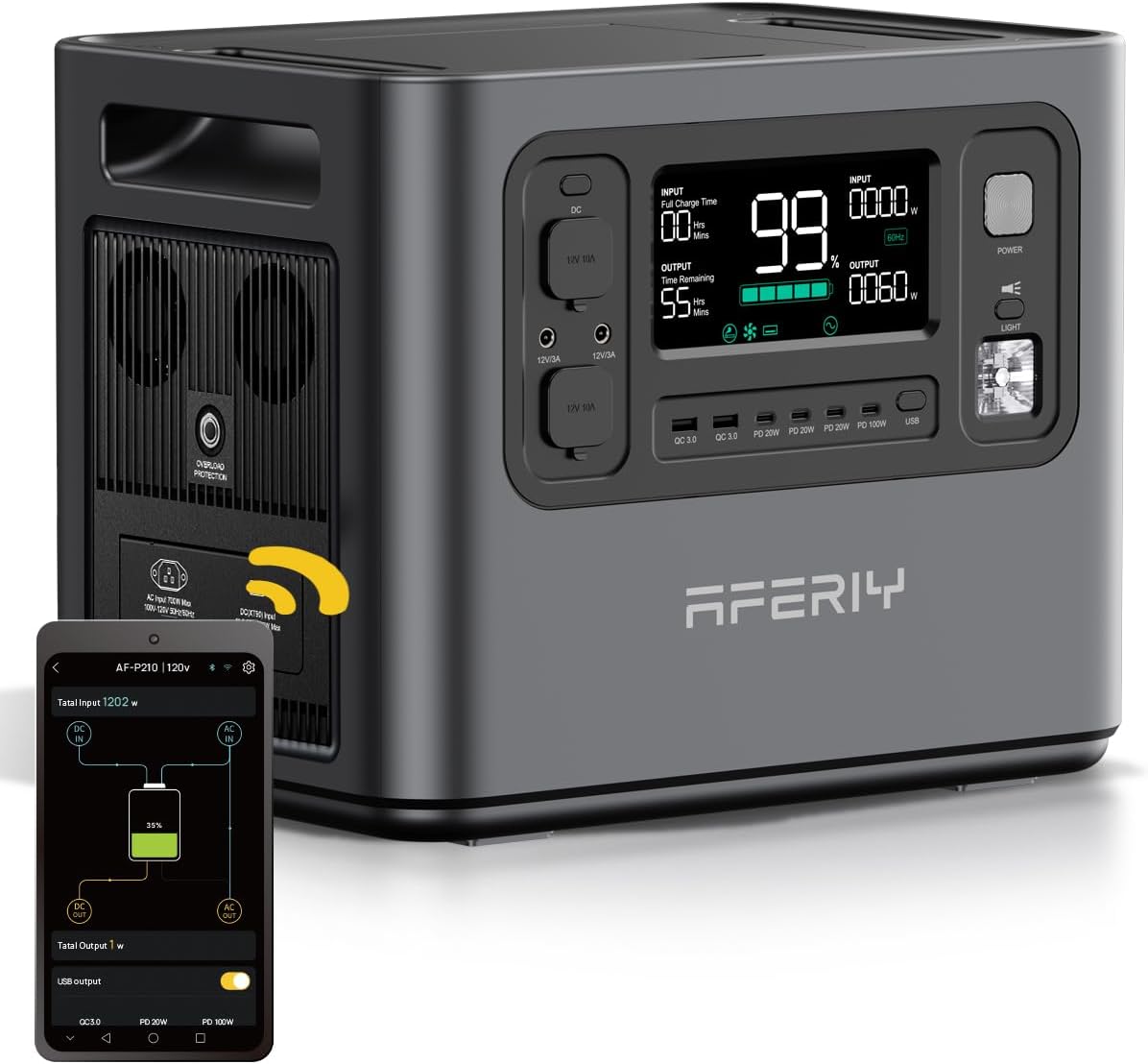
The AFERIY P210’s listing says 2048Wh and 2400W, and my first reaction was suspicion, because I’ve been burned by off-brand power stations before. The burn went like this: a no-name 2kWh unit, half the price of the big brands, arrived with a battery that tested at 1.6kWh on my meter and an inverter that shut down at 1800W despite the 2500W sticker. I returned it. The return shipping cost me forty bucks. The lesson cost me more.
So when the P210 showed up, I did what I always do now: I tested it before I trusted it, and I wrote down every number.
2048Wh claimed. Measured usable, running a constant 500W load through the AC outlets until shutdown: 1690Wh. That’s 82.5% of rated, which is right in line with what the big brands deliver once you account for inverter losses. Not inflated. Not magical. Honest, within the normal physics tax. I checked it twice because I didn’t believe the first result. Both times, 1690-ish. Okay. That’s a real 2kWh-class battery.
2400W claimed output. I ran a 2000W space heater and a 300W load together: held fine, fans ramped up, no complaints. I pushed it to 2400W with the heater on high plus extras: held for the ten minutes I dared.
Held.
The 4800W surge rating is for motor startups, and my fridge compressor’s inrush didn’t trip it. So the output numbers are real too. I’m as surprised as you are.
The price question nobody asks politely
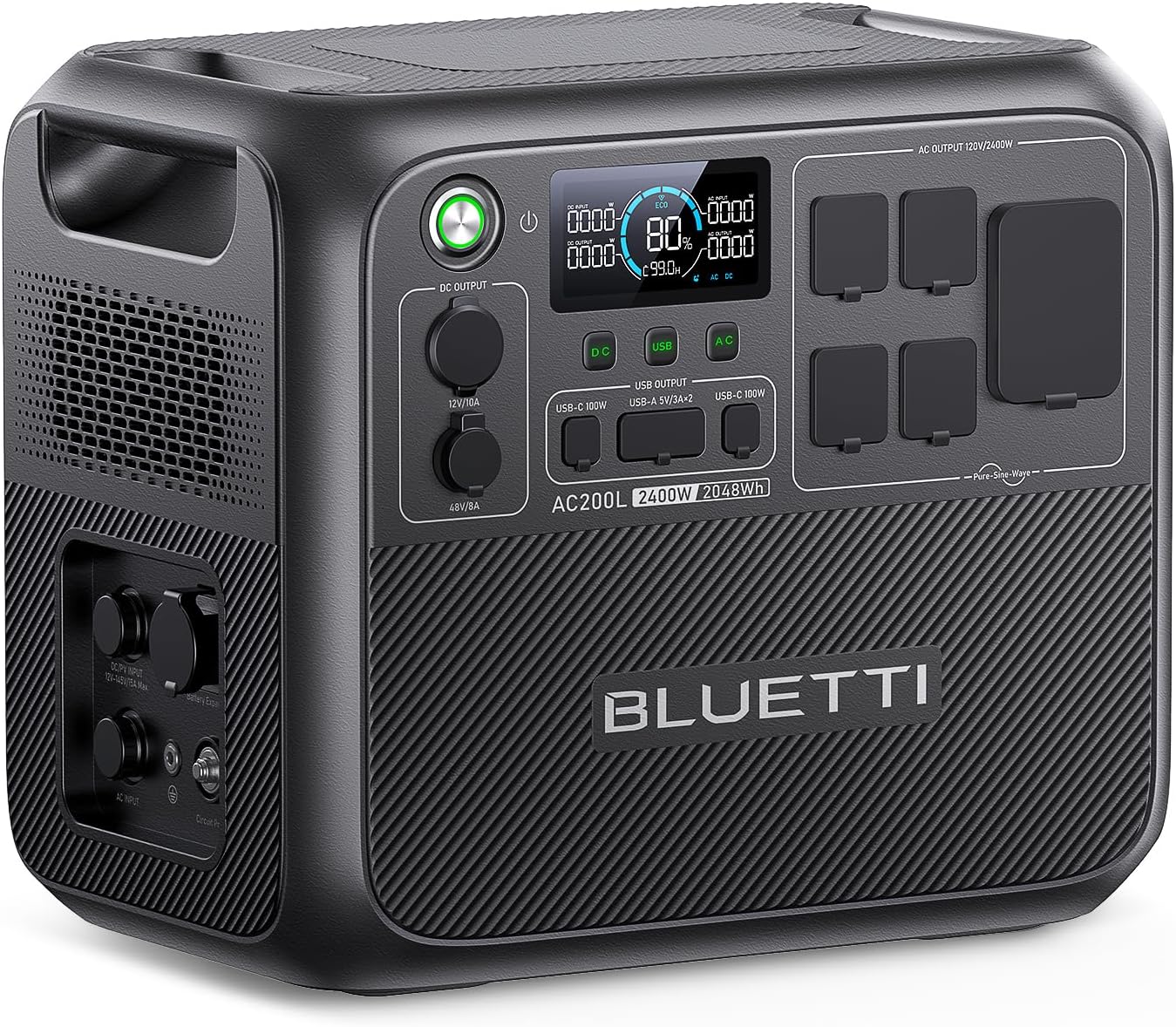
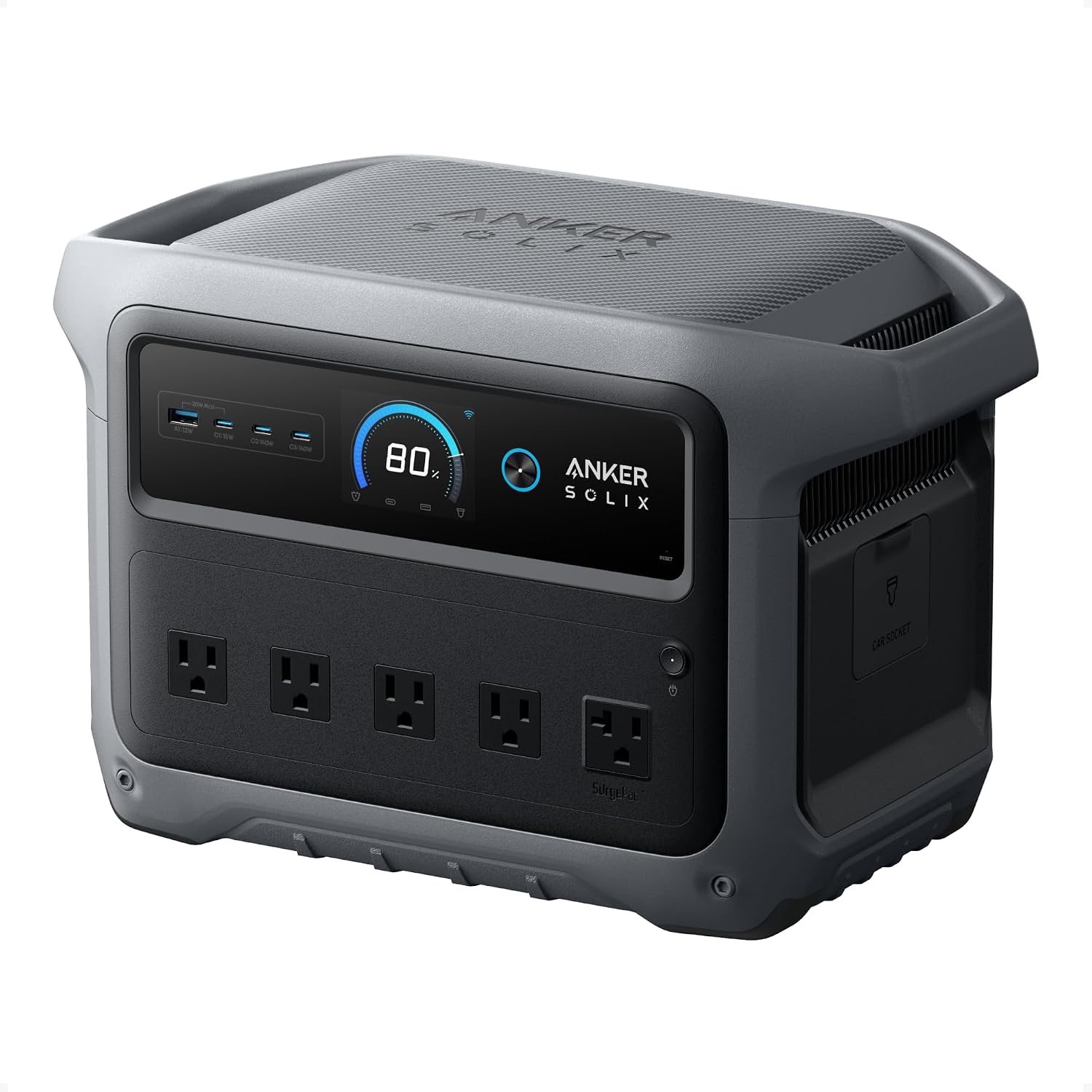
Here’s the thing about AFERIY: it’s cheaper than Jackery, EcoFlow, BLUETTI. Noticeably cheaper. And the entire power-station market has trained us to believe that cheaper means lying about specs. Sometimes it does. Here, based on my testing, it doesn’t, at least not on the two numbers that matter most.
So where’s the catch? There usually is one. In this case, I think it’s the intangibles: the app is clunky, translated by someone who has never seen a power station, with menu labels that read like poetry. “Electricity quantity remaining” is my favorite. The display on the unit itself is fine, clear numbers, no complaints, but the app feels like a homework assignment. The big brands have spent years polishing their apps. AFERIY spent that money on the battery, apparently, and I respect the tradeoff, but let’s not pretend the software experience is equal.
The other catch is the unknown: longevity. The cells are LiFePO4, rated 3500+ cycles, which is standard for the chemistry. But cycle ratings are lab numbers, and the difference between a good battery and a great one shows up in year five, not month five. Jackery and EcoFlow have units in the field with years of history. AFERIY doesn’t, not at this scale. I’m not saying it’ll fail. I’m saying nobody knows yet, including AFERIY.
The 1.5-hour recharge is the real story
This site contains affiliate links. We may earn a commission on qualifying purchases.
AC charging at 1100W fills this thing fast. Dead to full in about 1.5 hours, I measured 1 hour 34 minutes, and that speed is the feature I didn’t know I needed until an outage taught me. Here’s the scenario: storm coming, six hours warning, battery at 20%. With a slow-charging station, you’re doing triage math. With the P210, you plug it in, make dinner, and it’s full before the wind picks up. Fast charging turns “I forgot to charge it” from a crisis into a footnote.
The 10-millisecond UPS switchover works, too. I have my router and a small server on it, and through three brownouts this summer, neither noticed. My uptime monitor, which is the most judgmental piece of software I own, recorded zero drops. That’s the test that matters for UPS claims, not the marketing copy.
My tangent, and it’s about the server: I run a little home server for photos and backups, nothing fancy, and during the big outage two years ago I lost a drive to an unclean shutdown. Not the drive’s fault. The power just died mid-write. I was annoyed for a week, then I bought a UPS, then I outgrew the UPS, and now the P210 sits under the desk doing the job properly. The point is that “backup power” started for me as data protection, not fridge protection, and I think a lot of buyers are in the same boat without admitting it. We tell ourselves it’s for emergencies. It’s really for the server. And that’s fine.
Who should buy this
If you want 2kWh of honest capacity and 2400W of honest output for less than the big-brand price, and you can live with a mediocre app and an unproven long-term record, the P210 is the value pick in this class right now. The numbers I measured are real. The build quality feels solid, 48 pounds of it, not light, not absurd.
If the app experience matters to you, or if you need the reassurance of a brand with a decade of field history, pay the premium for the big names. That’s a rational choice too.
What I won’t do is what I did last time: assume the cheap one is lying. Sometimes the cheap one is just cheap. I measured it. The meter doesn’t care about brand names.
The meter is never impressed.
Actually, wait. Let me correct myself on one thing: I said the app was the catch, but the real catch might be support. If this thing breaks in year three, is there a service network? A phone number with a human? I haven’t tested that scenario, thankfully, and I hope I never do. But it’s the question I’d ask before buying, and it’s the one question my testing can’t answer.