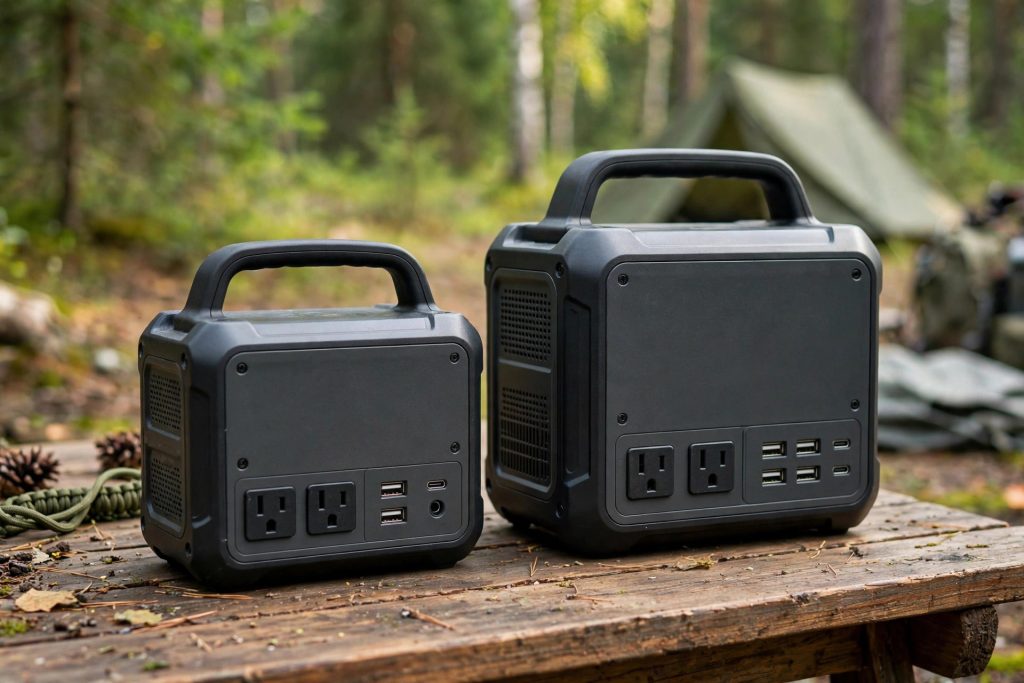
Before I bought the RIVER 2 Pro, I thought the jump from a 500Wh station to a 768Wh station would feel like a big upgrade. Fifty percent more battery! That’s the kind of number that sounds transformative on a product page. In practice, the difference between 500 and 768 watt-hours is the difference between “dead by Saturday night” and “dead by Sunday morning.” It’s real, it’s measurable, and it is not transformative. It’s one more phone charge and three more hours of fridge. I know this because I owned the smaller one first, and I kept a log, because I am that person now.
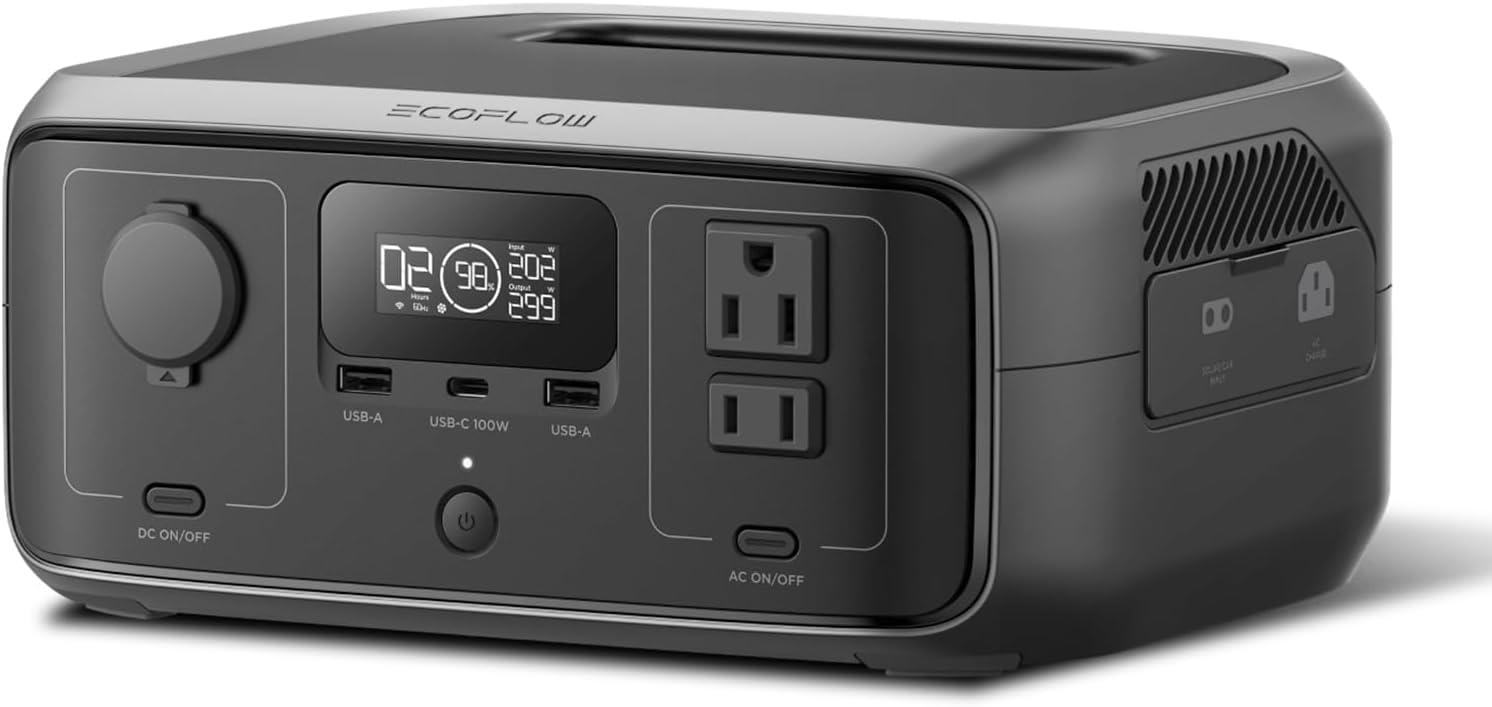
The RIVER 2 Pro is 768Wh of LiFePO4 with 800W of continuous output, X-Boost pushing resistive loads to 1600W. It weighs 17 pounds, charges from the wall in 70 minutes, and fits in the footwell of the back seat. Those are the facts. Here’s what they mean after a season of use.
The 70-minute fast charge is the headline feature, and unlike most headline features, it’s the one I actually use. The scenario: you’re leaving for a trip in two hours, the station is at 30%, and with any other battery you’d be doing departure math. With this, you plug it in, finish packing, and it’s full. I timed it once, 68 minutes from 22% to full, and then I stopped timing it because it just works.
It just works.
Fast charging is the most underrated spec in this whole category. Everyone shops for capacity. Nobody shops for charge speed. Everyone should shop for charge speed.
What 768Wh actually runs
My camping budget, measured over four trips: 12V fridge, about 400Wh per day in summer. Laptop, one full charge, 90Wh. Phones, lights, fan, another 120Wh. Total: roughly 610Wh per day. The RIVER 2 Pro’s usable capacity, after inverter losses, is about 620Wh. So it’s exactly one day of my camping life. Not two. One.
That sounds like a complaint, but it’s actually the point. This is a one-day battery, and once you accept that, it’s a great one-day battery. It’s light enough to carry with one hand. It’s small enough to live in the car permanently. And with the 70-minute recharge, “one day” resets fast: drive to town for lunch, plug it into the car or a cafe outlet, come back to a full battery. The capacity didn’t change my trips. The charge speed did.
The 800W output with X-Boost to 1600W handles everything I own except the big stuff. Kettle? The 1200W kettle works on X-Boost, technically, and drains 15% of the battery per use, which is absurd, so the kettle stays home. Hair dryer? Don’t be ridiculous. But the induction plate on low, the fridge startup surge, a small power tool, all fine. I ran a 700W microwave off it for three minutes to heat a burrito, because I could, and it worked, and the battery dropped 6%, and I felt like I’d gotten away with something.
This site contains affiliate links. We may earn a commission on qualifying purchases.
The LFP thing, explained without hype
LiFePO4 chemistry, 3000+ cycles to 80%. Translation: you can drain and refill this thing daily for eight years before it noticeably degrades. My old NMC station was rated 800 cycles, and I could feel it fading after two seasons. The LFP battery is the reason to buy this over the cheaper alternatives, full stop. It’s not about safety marketing or whatever the listings emphasize. It’s about the battery still being good in 2030.
My tangent: I lent the RIVER 2 Pro to my sister for a beach trip, and she called me from the parking lot to ask “which button turns it on,” which is a fair question because the button layout is minimalist to the point of mystery. I talked her through it. She ran a fan and a speaker all day, charged two phones, came home with 40% left, and is now the family evangelist for power stations. She doesn’t know what a watt-hour is. She doesn’t need to. The product worked, the buttons eventually made sense, and now she wants one.
That’s the review.
The honest size question
Is 768Wh enough? For car camping, day trips, emergency phone-and-lights duty, absolutely. For running a full camp kitchen or multi-day off-grid without recharging, no, and you should buy bigger. The RIVER 2 Pro knows what it is: the grab-and-go size. It doesn’t pretend to be a home backup unit. I respect that.
One thing I haven’t tested: solar charging in real conditions. The unit takes up to 220W of solar input, and I don’t own a panel in that range, so I can’t tell you how it behaves on a gray day. The wall charging I can vouch for. The solar side, you’ll have to take the spec sheet’s word, which I know is asking a lot.
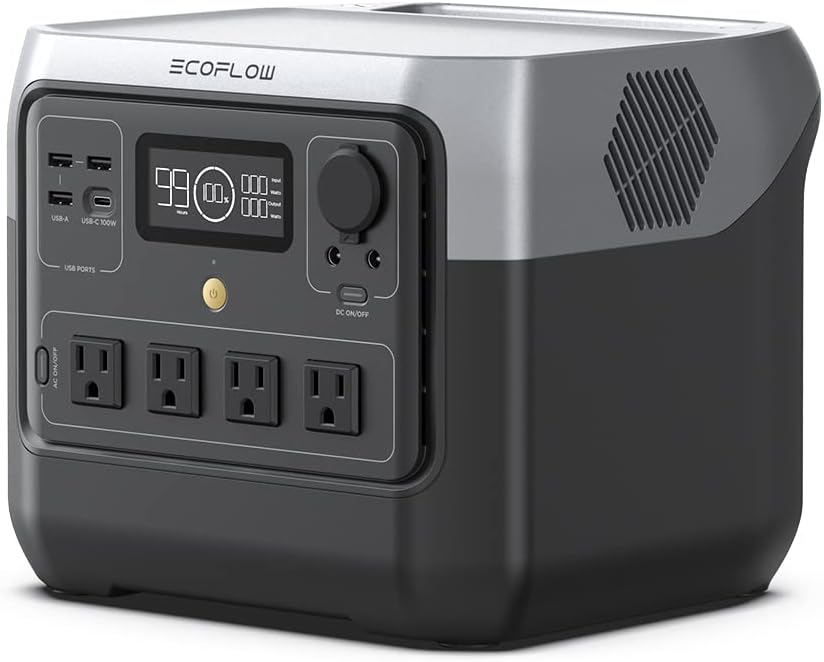
Would I recommend it? If your use case is “I need power for a day, and I need it fast,” this is the best-executed version of that idea I’ve used. The fast charging alone justifies it. The LFP battery justifies keeping it for a decade. And at 17 pounds, it’s the station that actually leaves the house with you, which is the only spec that really counts.