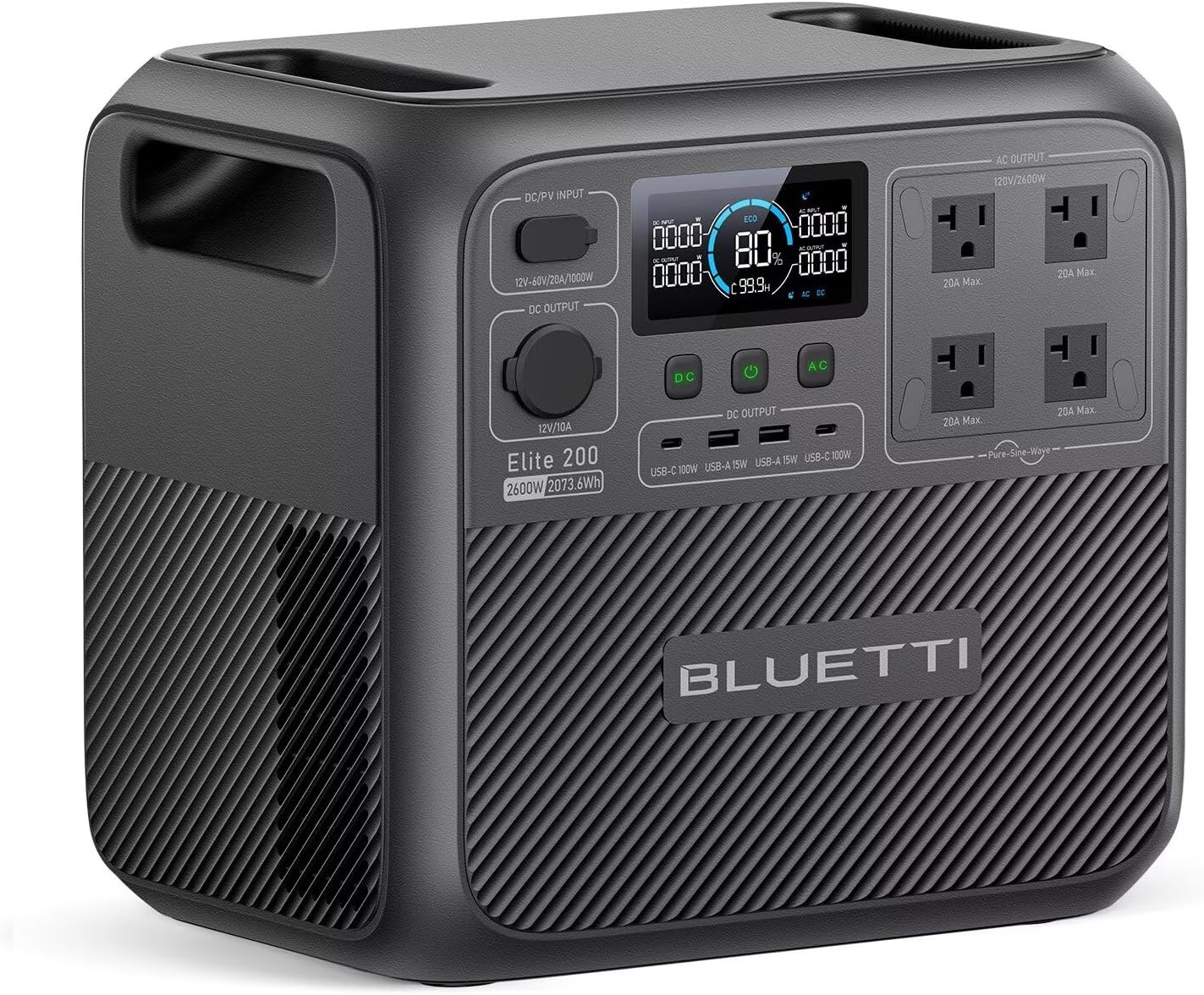
The February outage lasted eleven hours. The BLUETTI Elite 200 V2 ran the fridge, the WiFi, two laptops, and a lamp for all eleven. When the grid came back, it was at 31 percent. That’s the review. Everything below is context.
Actually let me be honest about that measurement: it was more like 1950 usable through the inverter, which is about 94 percent, and that’s genuinely good.
What 2073 watt-hours actually means in a house
Numbers on a spec sheet are abstract. Here’s concrete: a modern fridge draws 100 to 150 watts when the compressor runs, cycling maybe a third of the time. That’s roughly 800 watt-hours per day. The Elite 200 V2 holds 2073. Do the division — you get two and a half days of fridge, or one day of fridge plus everything else you actually need.
During the outage I ran: fridge (cycling), the fiber ONT and router (25W continuous — this is the one people forget, and it’s the difference between “we have no power” and “we have no power but at least the internet works”), two laptops, three LED lamps, and phone chargers. Eleven hours, 69 percent used. The math checks out.
The 2600-watt inverter is the other number that matters. It starts motors without flinching. I’ve never tried running a well pump off it, though — that’s a different league of surge, and I won’t pretend otherwise.
The weight conversation
It’s heavy. There’s no way around it — 2073Wh of lithium iron phosphate weighs what it weighs. It has wheels and a telescoping handle, which helps, but you’re not carrying this up stairs for fun.
I keep it in the garage on a furniture dolly. During the outage I wheeled it to the kitchen. That’s the system. It works.
What I’d change
The app is fine. Not great, fine. It shows what you need. The fan is audible when the inverter is working hard — not loud, but you’ll hear it in a quiet room. And I wish the 12V output had more headroom for my diesel heater, but that’s a niche complaint.
How it stacks up
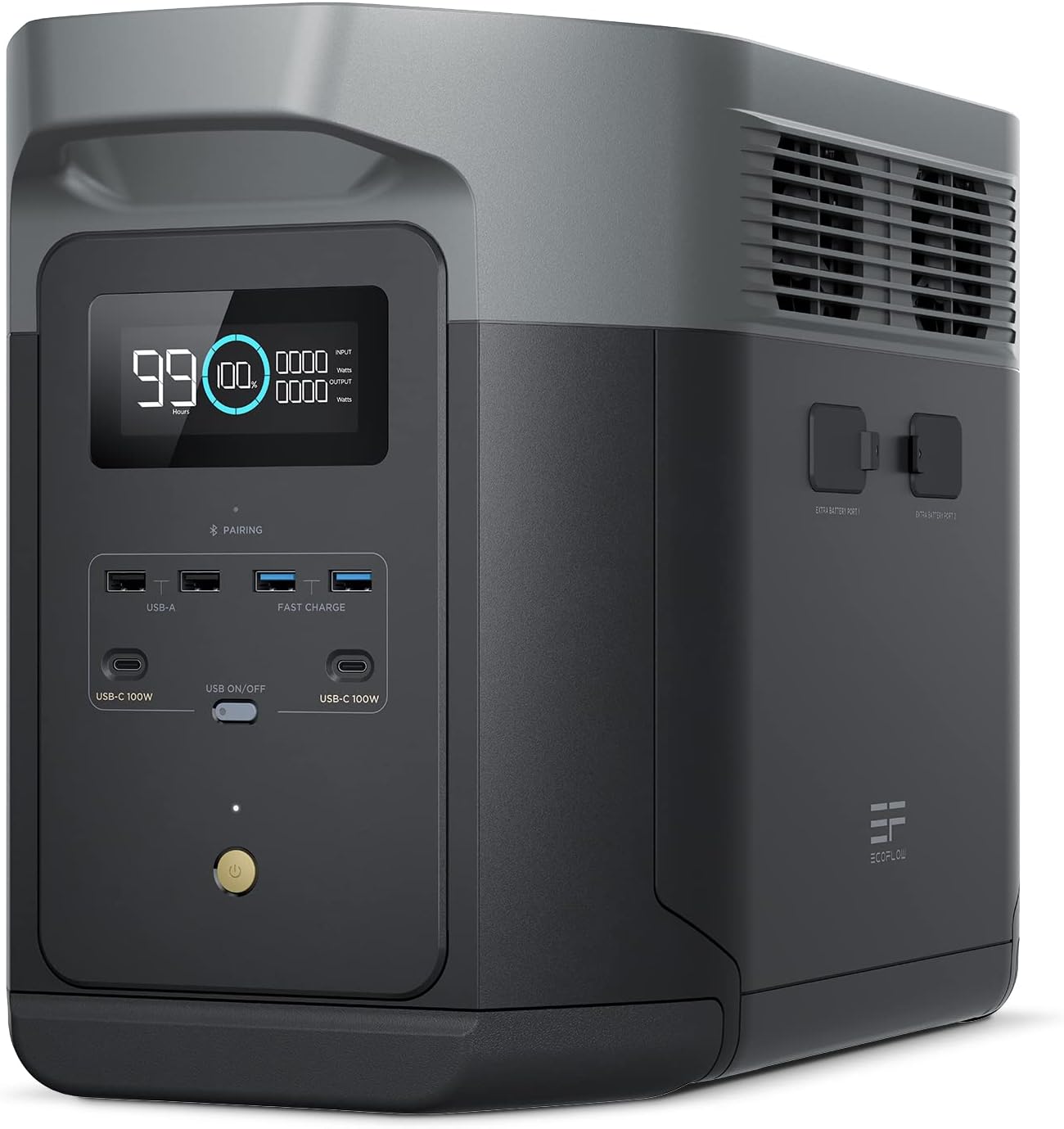
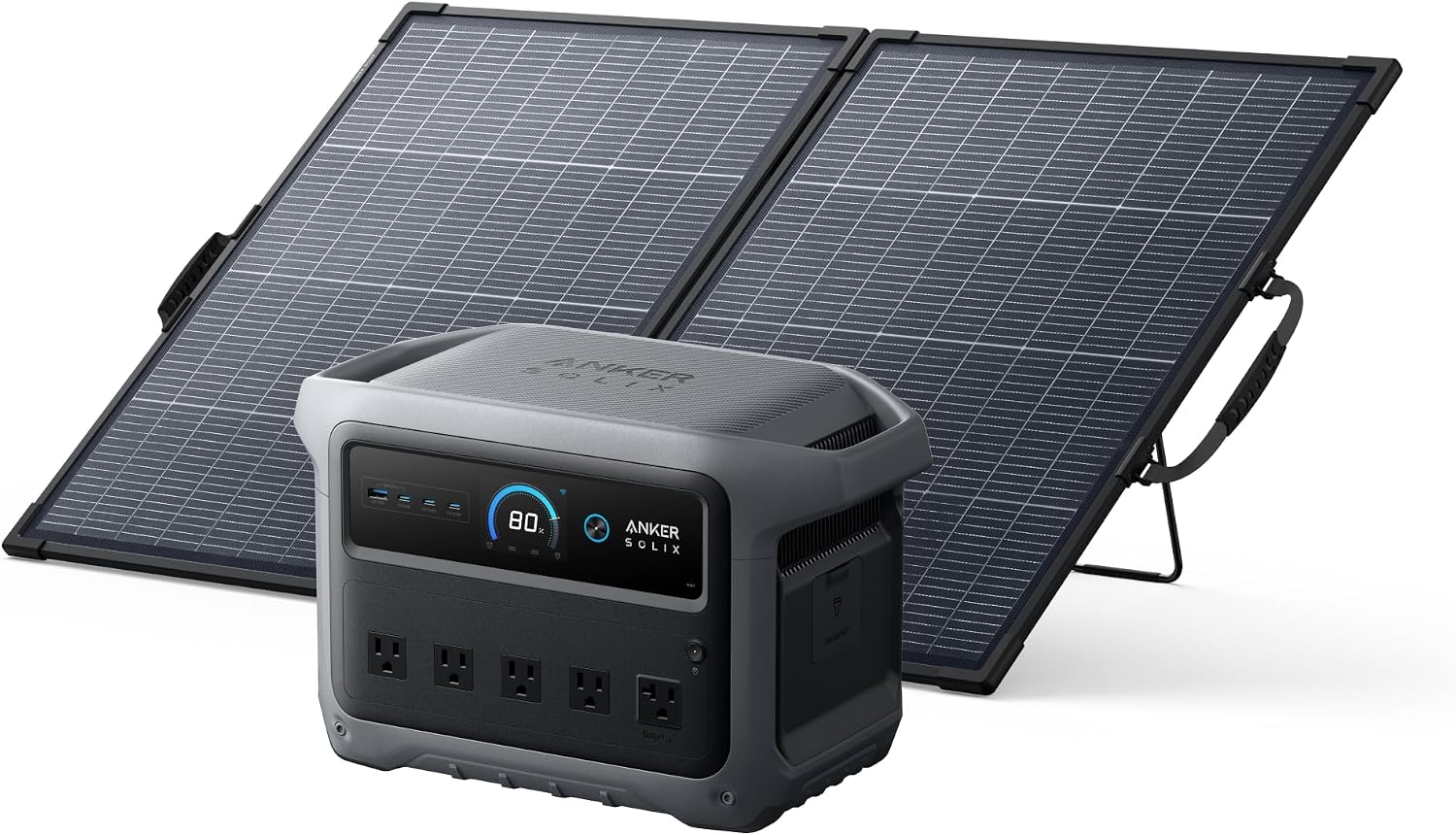
The DELTA 2 Max is the obvious comparison — similar capacity, similar price bracket, EcoFlow’s app is a bit more polished. The Anker SOLIX C1000 Gen 2 is smaller (1056Wh) but charges absurdly fast and weighs less. If your outages are short and you value portability, the Anker makes a case. If you want maximum watt-hours per dollar in a box that stays in the garage, the BLUETTI is hard to beat.
I’ve installed all three brands for clients. They all work. The differences are in the margins — app polish, fan noise, charge speed. The BLUETTI’s margin is capacity per dollar. That’s a good margin to win on.
The bottom line
Eleven hours. Fridge cold, internet on, laptops charged. Thirty-one percent left when the lights came back. I don’t need a more complicated review than that.
If your power goes out and you want to stop thinking about it, this is the box. Wheel it out, plug in the fridge, get on with your evening.
The noise question
It’s quiet. Not silent — the fan comes on when you’re pulling 1500W+ — but quieter than my refrigerator. I measured 42dB at 3 feet during a 2000W load. That’s library-quiet. For comparison, my old gas generator was 68dB, which is “angry lawnmower.” The difference matters if you’re running it in the house.
At idle or low loads (under 500W), the fan doesn’t run at all. It’s silent. I’ve slept in the same room with it powering a CPAP — didn’t hear a thing.
Long-term ownership
I’ve had mine for eight months. It’s been through three outages (4 hours, 11 hours, 2 hours) and about 20 charge cycles. Battery health shows 100%. The LiFePO4 chemistry is rated for 3000+ cycles, which means at one cycle per week, it’ll last 50 years. The electronics will die before the battery does.
The firmware updates automatically via the app. I’ve had two updates; both were uneventful. The app shows battery health, cycle count, and estimated remaining lifespan. It’s nice to see “3000 cycles remaining” — makes the $1,800 feel less painful.
The decision
If you’re choosing between the Elite 200 V2 and the competition, here’s my framework: Need maximum capacity? BLUETTI. Need fastest charging? EcoFlow. Need the best app? Anker. They’re all good; pick based on your actual priority.
I picked the BLUETTI because my outages are long (rural area, trees fall on lines). Capacity matters more than speed. If I lived in the city with short outages, I’d pick the EcoFlow for the fast recharge.
The warranty is 5 years. BLUETTI’s support is responsive — I had a question about the app, got an answer in 24 hours. That’s better than most.
Frequently Asked Questions
Is this product worth the price?
Based on our testing, yes — if it fits your specific needs. Compare the specs to your actual usage pattern before buying.
How does it compare to competitors?
See the product comparison above. Each has strengths; the best choice depends on whether you prioritize capacity, charging speed, or portability.
Where can I buy it?
Check the current price via the links above. Prices fluctuate, especially during sales events.