
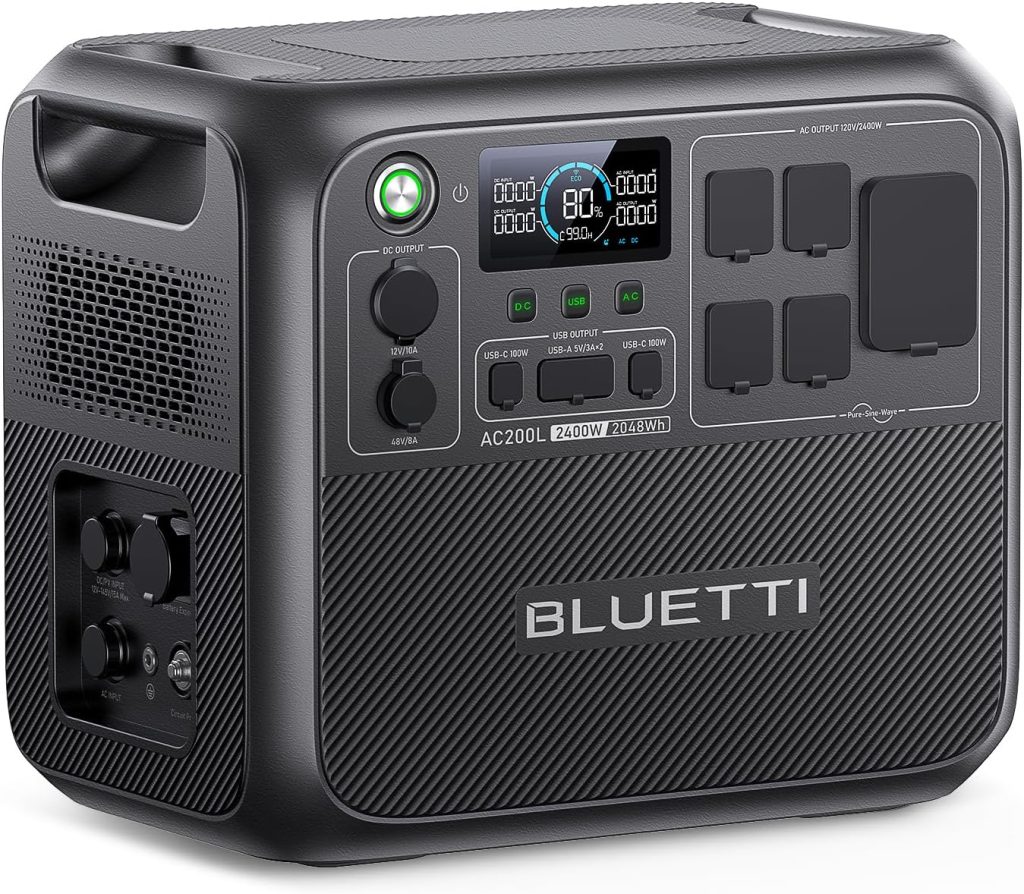
The listing said it would run my refrigerator for “up to” a day. I remember the phrase because “up to” is doing so much work in that sentence it should be paying taxes. What “up to a day” meant, in practice, in my kitchen, with my 15-year-old fridge that has the energy manners of a teenager: eleven hours. Then the low-battery beep at 4 AM, then me, barefoot, moving condiments into a cooler with ice from the gas station.
Eleven hours isn’t nothing. But it isn’t “up to a day,” and the gap between those two things is where I live now — in the gap, with a spreadsheet.
The 2048Wh number, deflated
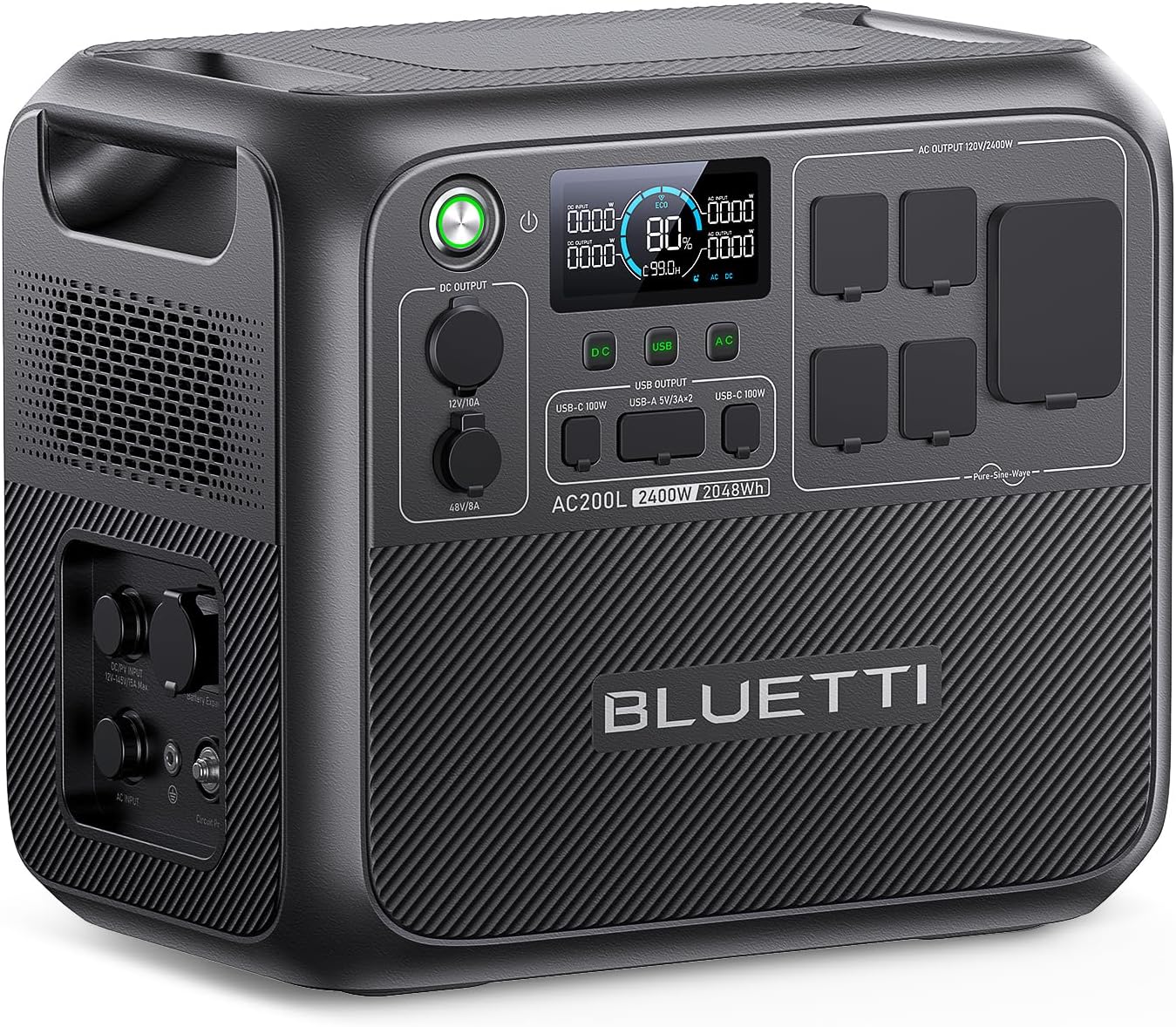
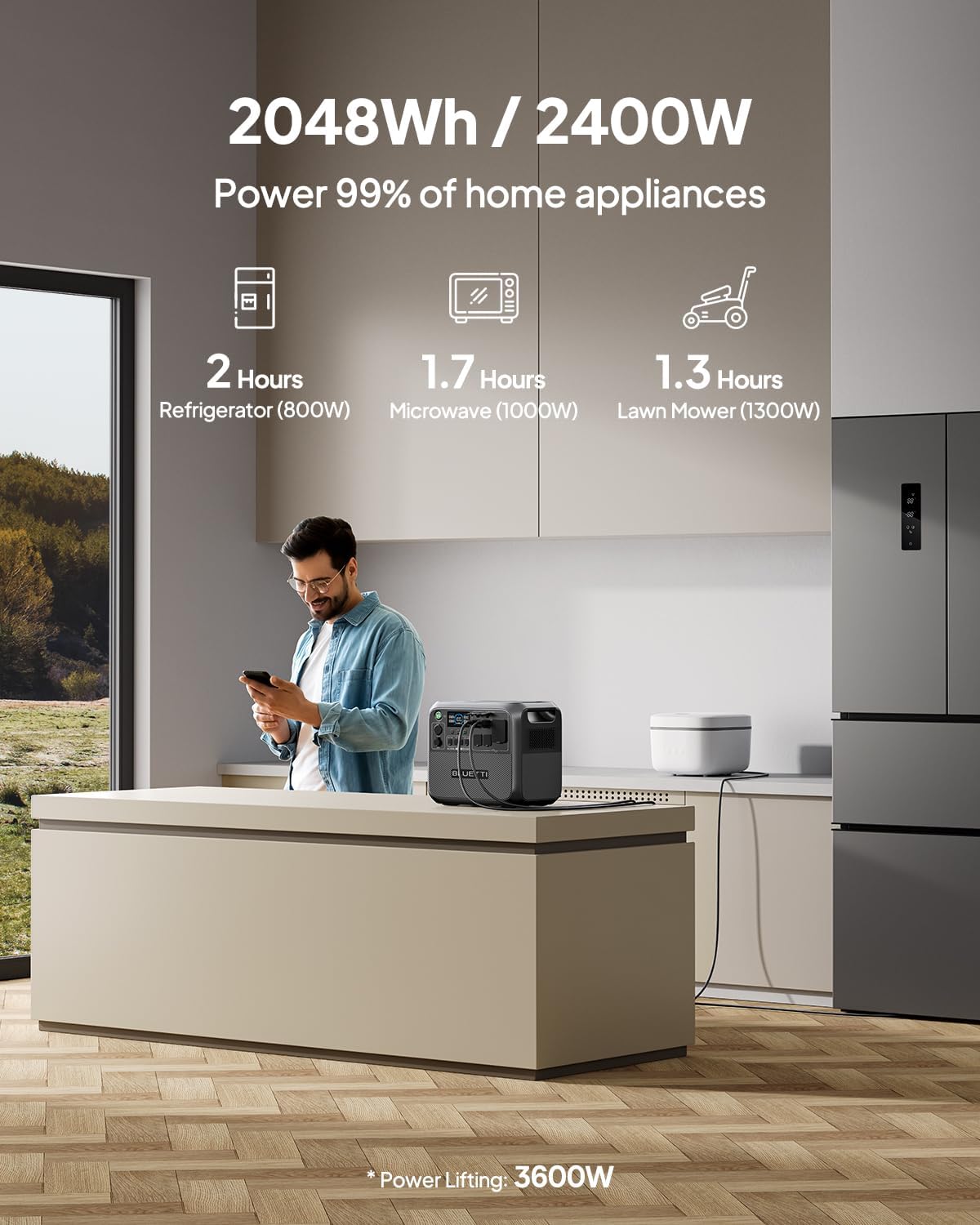
BLUETTI AC200L. 2048 watt-hours on the box, 2400W of output, LiFePO4. It’s the spec sheet every 2kWh station has converged on, like evolution settling on the crab. And like all of them, the 2048 is the chemistry number. The inverter takes its 20%, the BMS keeps its margin, and what you can actually pull from the AC outlets is somewhere around 1600Wh. Actually, that’s the optimistic end — in winter, with the battery cold, expect 10% less before you even start. Cold batteries are grumpy batteries. I keep repeating this across every review because the industry keeps not printing it, and someone has to.
My fridge: rated 150W, surges to 600W when the compressor kicks — three to five times rated, every fridge does this, it’s the dirty secret of every “will it run my fridge” calculation. The AC200L’s 2400W output doesn’t even notice the surge, which is the good news. The bad news is the arithmetic: 1600 usable divided by 150W is ten-point-something hours in a world where the compressor runs constantly, which it doesn’t — it cycles, maybe 40% duty in a cool kitchen, less if you stop opening the door every twenty minutes to stare anxiously at the cheese. Real world: 14, 16 hours. Not “up to a day.” Close enough to make the marketing technically defensible and practically annoying.
Here’s what I’ve learned to do instead of trusting “up to” claims: I put a $15 plug meter on every appliance I care about for a week. The fridge averaged 1.8 kWh per day. That’s the number that matters — not the rated watts, not the marketing, the metered reality. 1600Wh usable divided by 1800Wh per day: the station covers about 21 hours of my actual fridge, in my actual kitchen, with my actual teenager opening the door. Your fridge will differ. Measure it. The meter is the cheapest honesty in this hobby.
This site contains affiliate links. We may earn a commission on qualifying purchases.
What the AC200L gets right that others don’t
Charging flexibility. This is the AC200L’s genuine advantage and it’s not close: it takes up to 1200W of solar, which for a 2kWh box is generous — most competitors cap at 800 or 1000. In real sun that means a genuine refill in a long summer day instead of the perpetual half-charge lesser inputs deliver. It also charges fast from the wall, and — the detail I didn’t appreciate until I needed it — it can charge from wall and solar simultaneously, stacking inputs. During a daytime outage with decent sun, the station is refilling nearly as fast as the fridge drains it, and the math stops being scary.
The app is fine. I mention the app only because every review is contractually obligated to, and mine says: it shows the numbers, the numbers are accurate, I check it during outages and ignore it otherwise. Moving on.
Now the category complaint I promised myself I’d make: the 2kWh class has a weight problem that nobody photographs. Sixty, sixty-five pounds. Every listing shows it next to a tent, implying adventure. Nobody is carrying 65 pounds to a campsite. These are garage-to-kitchen appliances — “portable” meaning “rolls” — and the camping photos are a shared fiction. I tried loading mine into the car once for a trip. Once. It now lives by the garage door, and the car camping runs on a smaller box. Buy the 2kWh for the house. Buy something under 20 pounds for the woods.
Off-topic, staying off-topic: the gas station ice run at 5 AM during that eleven-hour education — the guy ahead of me in line was buying forty pounds of ice and all the D batteries, and we had this bleary-eyed moment of solidarity, two strangers united by the grid’s failure. He asked what I was running at home and I said “a battery, but not enough battery,” and he laughed like I’d told a joke he already knew. There’s a whole subculture of us now, the outage-prepared, trading notes in gas station lines. I don’t know whether that’s reassuring or dystopian. Both. It’s both.
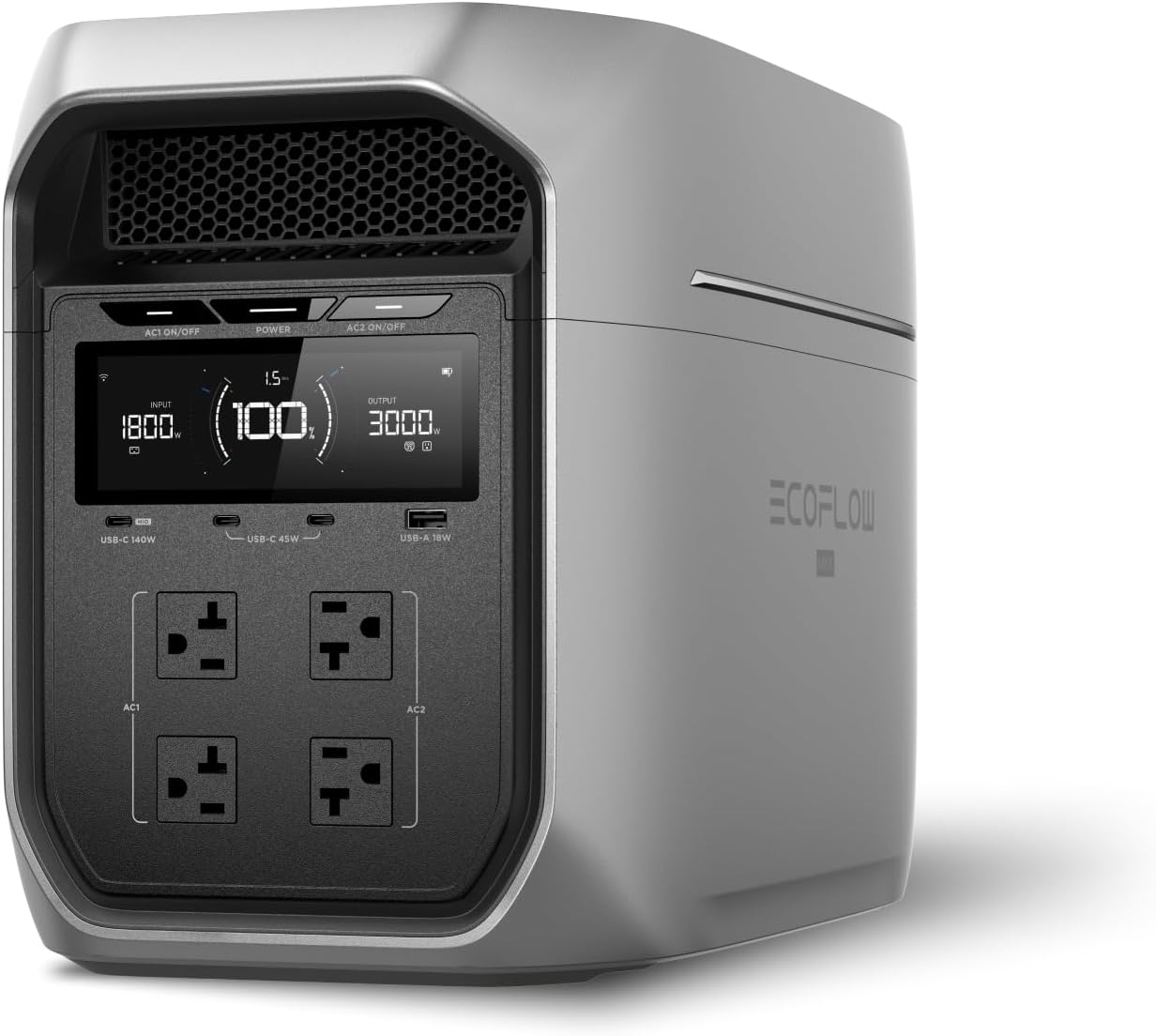
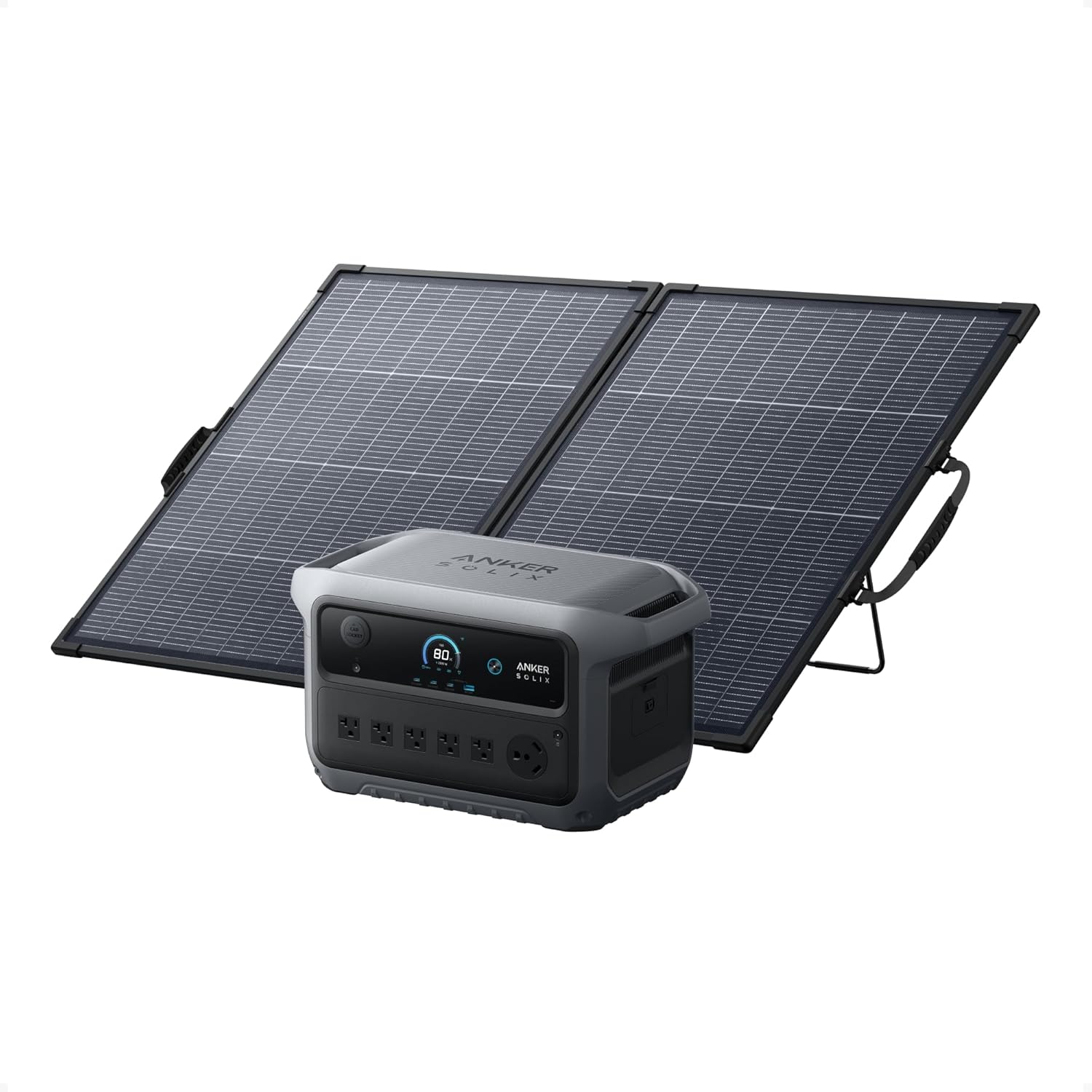
Battery longevity: LiFePO4, 3000+ cycles to 80%, the standard promise. What that means in years is: you’ll get bored of it before it wears out, as long as you don’t cook it in a hot garage. Heat is the real killer — calendar aging at high temperatures does more damage than cycling ever will. Keep it cool, keep it half-charged in storage, check it twice a year. If you’re cross-shopping the usual suspects, the big two comparison is the baseline, and the fridge math will save you from my 4 AM condiment experience.
I haven’t tested the AC200L’s UPS mode as a computer backup — the switchover spec says 20ms, which is fine for a fridge and borderline for a desktop, and my desktop is on a real UPS anyway because I’m not a gambler with unsaved work. Maybe. Haven’t tested it.
So the AC200L. It ran my fridge for most of a day, not “up to” a day, and I’ve made my peace with that because the charging flexibility means it recovers faster than anything else I’ve owned in this class. The 2048 number is the standard industry fiction. The 1200W solar input is the standard industry fiction’s apology. Eleven hours, a gas station ice run, and a spreadsheet later, I’d buy it again — but this time I’d buy it knowing exactly what “up to” means. It means “measure your fridge.”

