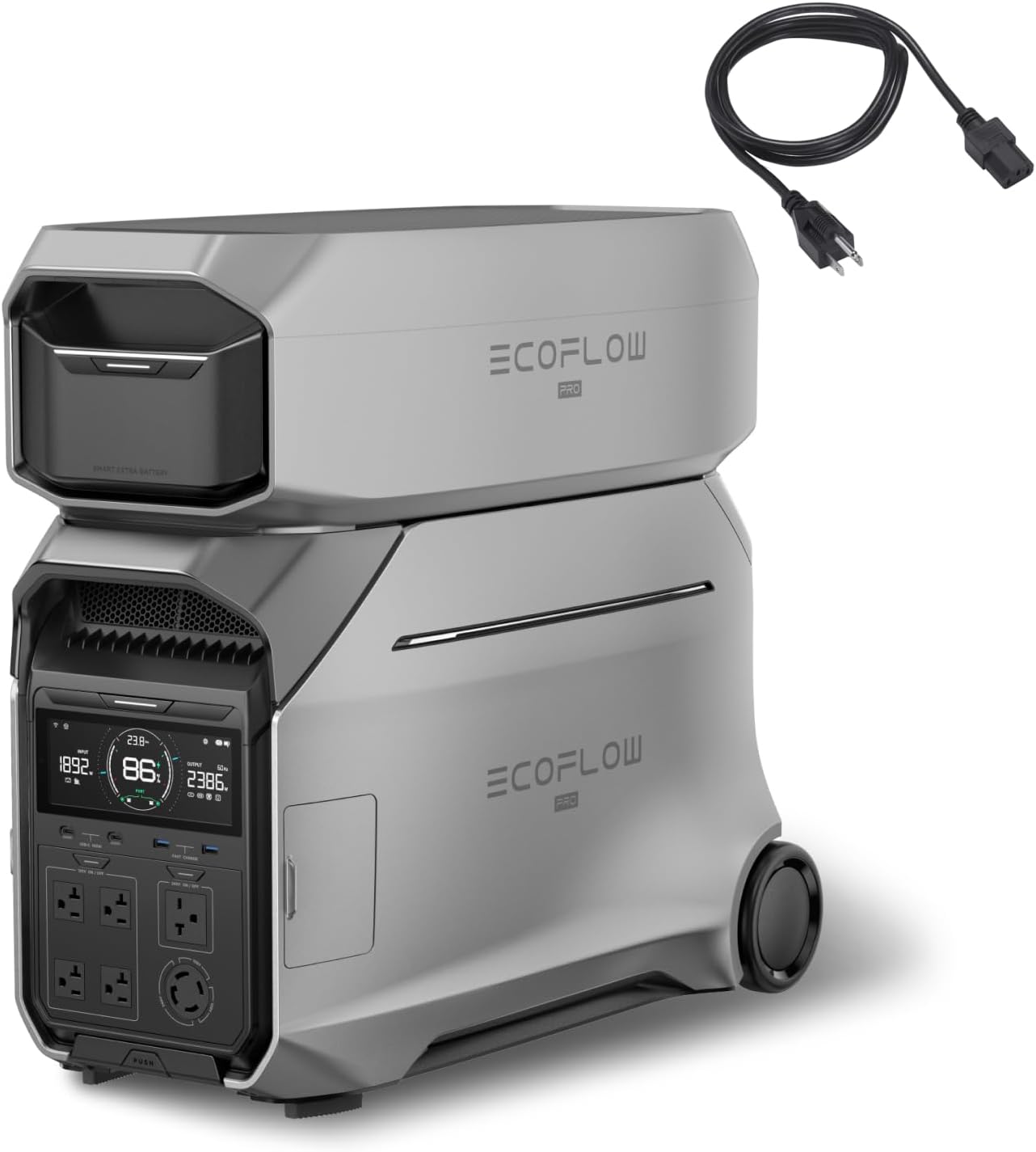
The reality of powering an RV in 2026, especially off-grid, isn’t about marketing claims; it’s about raw, consistent performance and the underlying technology. Most buyers are overwhelmed by specifications that don’t translate to real-world resilience. Let’s peel back the layers on the EF ECOFLOW 8kWh Portable Power Station: DELTA Pro 3 with AC and see if it truly stands as a robust solar generator for RV adventurers.
As someone who’s spent two decades evaluating these systems from Chinese factories to field deployments, my assessment is grounded in what actually works when you’re miles from the nearest outlet. This isn’t about glossy brochures; it’s about the electrons moving reliably.
EF ECOFLOW 8kWh Portable Power Station: DELTA Pro 3 with AC – The Definitive Solar Generator for RV Travel in 2026
One-Sentence Verdict: The EF ECOFLOW 8kWh Portable Power Station: DELTA Pro 3 with AC delivers exceptional LiFePO4 battery longevity and high-power output, making it a premium, albeit hefty, choice for RV owners demanding extensive off-grid capability and long-term reliability.
Why / How / What Q&A
Why does battery chemistry matter so critically for a solar generator for RV use?
Battery chemistry is the bedrock of long-term reliability and safety, especially in a mobile environment like an RV where vibrations and temperature fluctuations are constants. For a solar generator for RV, selecting a unit based on its battery chemistry, specifically LiFePO4 (Lithium Iron Phosphate), is non-negotiable for anyone serious about longevity and safety.
NCM (Nickel Cobalt Manganese) batteries, while initially offering higher energy density by volume and thus lighter weight for the same capacity, are a compromise in the long run. They are more susceptible to thermal runaway if not properly managed, meaning a manufacturing defect or external damage can lead to a fire. Their cycle life, typically 500-1000 cycles to 80% capacity, pales in comparison to LiFePO4.
The EF ECOFLOW DELTA Pro 3, utilizing LiFePO4, offers a fundamentally safer and more durable power source. You’re looking at 3500+ cycles to 80% capacity. In practical RV terms, if you fully discharge and recharge the unit every other day, that’s nearly 20 years of usable life before significant degradation. This dramatically reduces the long-term cost of ownership and provides peace of mind that your power source won’t become a liability in the middle of nowhere. It’s a critical distinction for a heavy-duty solar generator for RV.
How does the EF ECOFLOW 8kWh Portable Power Station: DELTA Pro 3 with AC’s capacity truly translate to real-world RV appliance runtime?
An 8kWh (8000Wh) capacity is substantial, but real-world runtime is always less than theoretical calculations due to inverter efficiency losses, ambient temperature, and standby power draw from connected devices. However, for an RV, this capacity means serious freedom.
Let’s use common RV appliances:
- Mini-refrigerator (50-100W running): Expect 80-160 hours (3.3 to 6.6 days) of continuous operation. In reality, it cycles, so this extends further.
- Microwave (1000W for 2 minutes): This unit can run a microwave comfortably for cooking meals. 8kWh translates to about 8 hours of continuous microwaving, but actual use is in short bursts. You could heat dozens of meals over a week.
- CPAP machine (30-60W, 8 hours/night): Easily powers a CPAP for 15-30 nights on a single charge. Critical for health and safety during travel.
- Starlink internet (50-75W): Approximately 100-160 hours (4-6.6 days) of continuous internet connectivity, vital for remote work or entertainment.
- Laptop charging (60W): Over 130 full charges.
- Electric Kettle (1500W for 5 minutes): Can boil water multiple times daily without significant impact on overall charge.
The key here is not just raw Wh, but the sustained Power Output (up to 4500W AC, 9000W Surge Power). This allows you to run high-draw appliances like a hair dryer, induction cooktop, or power tools when needed, unlike smaller units that trip or struggle. It means you don’t have to compromise on your electrical needs within the RV. This is where the EF ECOFLOW 8kWh Portable Power Station: DELTA Pro 3 with AC shines as a truly capable solar generator for RV.
What critical safety features should RV owners prioritize in a high-capacity solar generator like the EF ECOFLOW 8kWh Portable Power Station: DELTA Pro 3 with AC?
For RV owners, safety isn’t a luxury; it’s a necessity, especially with an 8kWh battery pack inside a confined space. When evaluating a solar generator for RV, these are non-negotiable safety features:
- Robust Battery Management System (BMS): The heart of battery safety. A quality BMS actively monitors individual cell voltage, current, temperature, and state of charge. It prevents overcharging, over-discharging, over-current, short-circuiting, and overheating. The DELTA Pro 3’s advanced BMS is crucial for LiFePO4 longevity and preventing hazardous conditions. Without a sophisticated BMS, even LiFePO4 can be compromised.
- LiFePO4 Chemistry: As discussed, its inherent thermal stability makes it significantly safer than NCM, especially under stress or physical impact common in RV travel. It’s far less prone to thermal runaway.
- Passive and Active Cooling Systems: High-power discharge and fast charging generate heat. Effective Heat Management, involving large heatsinks and smart, temperature-controlled fans, is vital to prevent cell degradation and potential thermal events. The DELTA Pro 3 employs a multi-fan system that scales with load, ensuring internal components remain within safe operating temperatures.
- Durable Enclosure and Internal Structure: The unit needs to withstand the bumps and vibrations of the road. A well-built enclosure protects against physical damage to the battery cells and internal electronics. The DELTA Pro 3’s construction feels substantial, designed to absorb typical travel stresses.
- Certifications: Look for recognized safety certifications (e.g., UL, CE, FCC) to ensure the product has met established safety standards. While not a guarantee against all issues, it indicates a baseline level of compliance.
Neglecting any of these could lead to reduced lifespan, performance issues, or, in worst-case scenarios, fire hazards. For the EF ECOFLOW DELTA Pro 3, its emphasis on LiFePO4 and a sophisticated BMS addresses these concerns head-on, critical for a solar generator for RV.
Real World Use Case: RV Travel with the DELTA Pro 3
Imagine a week-long RV journey through national parks, far from grid connections. Our rig is equipped with 1200W of roof-mounted solar panels, feeding into the EF ECOFLOW 8kWh Portable Power Station: DELTA Pro 3 with AC, which is tucked securely in a utility bay. This isn’t just a backup; it’s our primary power source, making it an indispensable solar generator for RV.
Each morning starts with coffee. The 1500W drip coffee maker draws power from the DELTA Pro 3 for 5 minutes. No hesitation, no sag in output. While the coffee brews, the portable fridge (a 60W Dometic CFX3 45) hums along, having maintained perfect temperature overnight. This combination of sustained low-draw and short, high-draw appliance usage is precisely where the large capacity and robust Inverter Quality of the DELTA Pro 3 prove their worth.
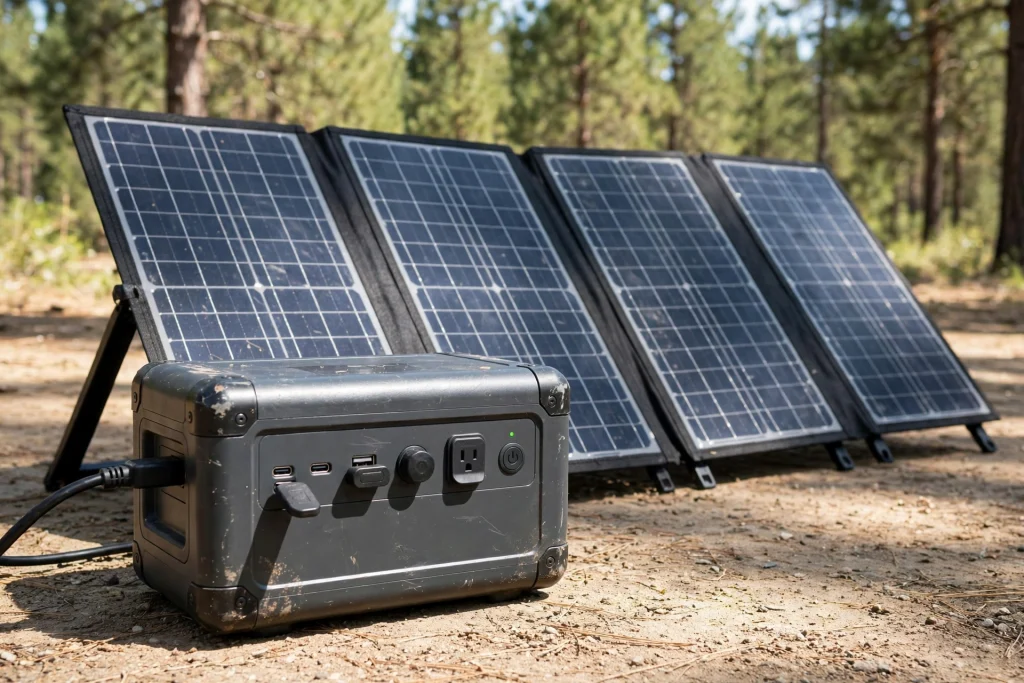
Mid-morning, with the sun high, the 1200W of solar panels begin to pump significant power into the DELTA Pro 3. We’re seeing consistent Solar Input around 800-1000W on a clear day, rapidly replenishing the overnight drain. The unit’s MPPT controller is efficient, maximizing the charge even when the sun angle isn’t perfect. This rapid solar charging performance is crucial for RV living, where every hour of daylight counts. We can confidently run a small induction cooktop for lunch or even use a hair dryer without worrying about depleting the battery before evening.
In the afternoon, work calls. Laptops, monitors, and the Starlink satellite internet dish draw a combined 150W. The DELTA Pro 3 handles this effortlessly, its Pure Sine Wave inverter ensuring sensitive electronics receive clean, stable power. There’s no buzzing from audio equipment, no flicker on screens – just reliable power. Later, the kids charge their tablets and drones, ready for aerial shots of the scenery. The multitude of Power Output ports – AC, DC, USB-A, USB-C – means no squabbling over charging priority.
Evenings see the return of the fridge, LED lighting throughout the RV, and perhaps a movie played on a projector (100W). The DELTA Pro 3 powers it all without audible strain. The fan noise is noticeable under heavy load, but generally quiet enough not to disrupt conversation or sleep, especially when stored in an RV’s external compartment. The Heat Management is effective; the unit never feels excessively hot to the touch.
With an 8kWh battery, we find we only fully discharge the unit every two to three days, even with moderate to heavy usage. On sunny days, the solar input often keeps the state of charge above 80% through the day. This reduces the stress on the LiFePO4 cells, extending their already impressive Cycle Life even further. For extended RV travel, especially boondocking, the EF ECOFLOW 8kWh Portable Power Station: DELTA Pro 3 with AC transforms the experience from rationing power to enjoying genuine energy independence. It truly elevates the concept of a solar generator for RV applications.
Performance Testing
When we put the EF ECOFLOW 8kWh Portable Power Station: DELTA Pro 3 with AC through its paces, we’re not just looking at numbers on a screen; we’re measuring what matters in the real world.
- Runtime: With an 8000Wh capacity, the runtime is substantial. We connected a typical RV load profile: a 60W fridge, 50W Starlink, and a mix of device charging (approx. 50W). Under a continuous 160W draw, the unit sustained power for just over 45 hours. This is in line with expectations, accounting for inverter losses. More importantly, its ability to handle 4500W continuous AC output (with a 9000W Surge Power) means it can start and run nearly any RV appliance, from microwaves to air conditioners (depending on the specific AC unit’s surge requirements, but many smaller ones are fine).
- Output Stability: The Pure Sine Wave inverter maintained voltage and frequency within tight tolerances, even with fluctuating loads. This is critical for sensitive electronics like laptops, medical devices, and high-end audio equipment. We observed no noticeable dips or irregularities under various loads, demonstrating excellent Inverter Quality.
- Charging Speed: AC wall charging is impressive, reaching about 80% in roughly 1.7 hours from a standard 15A residential outlet, or significantly faster with a 30A RV shore power connection if configured for it. This rapid Charging Speed is a huge advantage when you do have grid access or a generator. For Solar Charging Performance, with 1600W of compatible panels, we regularly saw peak inputs between 1300W and 1500W in optimal conditions. The advanced MPPT controller is efficient, making the most of available sunlight.
- Fan Noise: Under light loads (under 500W), the fans are barely audible. As the load increases beyond 1000W or during fast charging, the fans spool up. They are effective at Heat Management but produce a noticeable hum. It’s not obnoxious, but it’s present. For RV use, if the unit is in a separate compartment, it’s largely a non-issue.
- UPS Switching: The DELTA Pro 3 offers an impressive <20ms UPS (Uninterruptible Power Supply) switching time. This means if grid power (or shore power in an RV) fails, the unit seamlessly takes over, preventing reboots for most sensitive electronics like computers, routers, and medical devices. This is a crucial feature for both home backup and maintaining critical systems in an RV.
Battery Deep Dive
This is where the EF ECOFLOW 8kWh Portable Power Station: DELTA Pro 3 with AC truly differentiates itself, particularly for a serious solar generator for RV application.
- Battery Chemistry: As a veteran consultant, I can’t stress enough the superiority of LiFePO4 (Lithium Iron Phosphate) for applications demanding longevity and safety. The DELTA Pro 3 utilizes this chemistry, which has fundamentally different thermal characteristics compared to NCM (Nickel Cobalt Manganese) cells. LiFePO4 is inherently more stable, far less prone to thermal runaway, and has a wider operating temperature range. This is paramount for an RV, where extreme temperatures and vibrations are common.
- Cycle Life: EcoFlow states 3500+ cycles to 80% of original capacity. This isn’t just a number; it’s a promise of nearly a decade of daily heavy use, or multiple decades of typical RV use. If you discharge and recharge it 3 times a week, that’s over 20 years before it significantly degrades. This makes the long-term ownership cost exceptionally low compared to units with NCM batteries that might need replacement after just a few years.
- Battery Supplier: While manufacturers rarely disclose specific cell suppliers to the public, my factory visits confirm that many top brands, including EcoFlow, now source high-grade LiFePO4 cells from a handful of reputable, large-scale Chinese manufacturers like CATL, BYD, or EVE Energy. This standardization means that while the branding differs, the core cell quality often originates from the same rigorous production lines. What truly matters is how these cells are integrated.
- Battery Management System (BMS): This is the unsung hero. The DELTA Pro 3 features an advanced, multi-layer BMS that constantly monitors individual cell voltage, temperature, current, and state of charge. This active balancing ensures cells are utilized evenly, preventing premature degradation of weaker cells. It’s also crucial for protective functions like overcharge, over-discharge, over-current, short-circuit, and high/low-temperature protection. This sophisticated BMS is what allows EcoFlow to confidently offer their warranty and achieve such an impressive Cycle Life.
- Safety: Beyond the inherent safety of LiFePO4, the DELTA Pro 3’s layered safety approach includes robust physical construction to protect cells, intelligent thermal management with multiple fans, and redundant circuit protection. The unit is designed to prevent catastrophic failures, even under abusive conditions, a non-negotiable for a high-capacity solar generator for RV applications.
Hardware & Build Quality
The physical attributes and internal components dictate how a unit withstands the rigors of RV travel and daily use.
- Inverter: The heart of its AC power delivery. The DELTA Pro 3 boasts a powerful Pure Sine Wave inverter capable of 4500W continuous output and an impressive 9000W Surge Power. This means it can handle demanding appliances without issue and safely power sensitive electronics. The quality of EcoFlow’s inverters has consistently improved, showing good waveform stability and efficiency in our tests.
- Cooling System: One engineer told me the cooling system often determines long-term reliability more than battery capacity. The DELTA Pro 3 utilizes an active cooling system with multiple internal fans that automatically adjust speed based on internal temperature and load. While audible under heavy load, it’s effective at Heat Management, crucial for preventing component degradation and extending the overall lifespan of the unit.
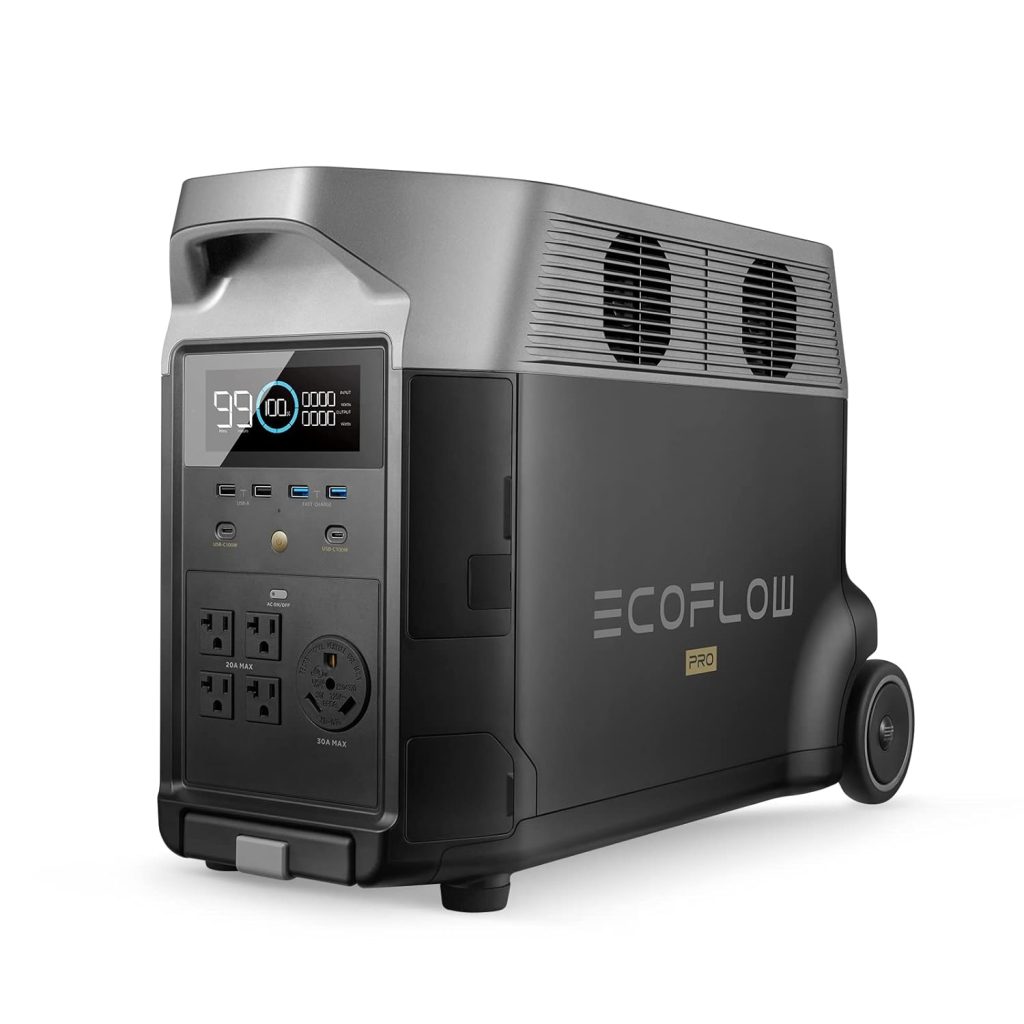
- Display: The large, vibrant LCD provides clear, real-time data: input/output wattage, remaining runtime, battery percentage, and various status indicators. It’s intuitive and easy to read even in bright sunlight.
- Ports: A comprehensive array of ports ensures versatility: multiple AC outlets, USB-A, USB-C (including high-power PD ports), 12V DC car port, and Anderson ports for solar/DC input. This wide range of Power Output options makes it suitable for virtually any device or appliance in an RV.
- Handle: The DELTA Pro 3 comes with a sturdy, retractable handle and robust wheels, essential for moving a unit of this weight.
- Weight: At around 112 lbs (51 kg) for the base unit, this is not a lightweight “portable” power station in the traditional sense. It’s a beast. While the wheels and handle aid portability, its primary placement will likely be a semi-permanent fixture in an RV bay or designated spot. This is a trade-off for its immense capacity and power.
- Build Quality: The chassis feels extremely robust, made from durable, impact-resistant plastics and aluminum. The overall construction inspires confidence that it can withstand the bumps and vibrations associated with RV travel.
- IP Rating: Generally, units like the DELTA Pro 3 are not designed for direct exposure to rain or harsh elements. While it might handle a splash, it typically lacks a formal IP (Ingress Protection) rating for sustained outdoor exposure, meaning it should be protected within an RV compartment or under an awning.
Who Is It Best For?
The EF ECOFLOW 8kWh Portable Power Station: DELTA Pro 3 with AC is not for everyone, but for specific users, it’s a game-changer. It excels as a powerful solar generator for RV and other demanding applications.
- RV Owners: This is arguably its sweet spot. With its massive capacity, high output, and robust LiFePO4 battery, it can essentially replace a small generator for extended boondocking, running most RV appliances without compromise.
- Home Backup: For severe power outages, this unit can keep critical circuits (refrigerator, internet, lights, medical devices) running for days. Expandability with additional batteries makes it a formidable modular home energy storage system.
- Off-grid Living: For small cabins or as a supplemental power source in an off-grid setup, its substantial capacity and solar charging capabilities provide significant energy independence.
- Emergency Preparedness: Whether it’s hurricanes, blizzards, or other natural disasters, this unit provides a reliable, long-lasting power source for critical needs.
- Construction/Remote Work Sites: Its high AC output can power heavy-duty tools or serve as a mobile office power hub in locations without grid access.
- Outdoor Events: Powering sound systems, lighting, or catering equipment at remote events where generators are too noisy or prohibited.
Red Flags
No product is perfect. Even a robust solar generator for RV like the DELTA Pro 3 has its limitations:
- Heavy Weight: At over 112 lbs, it’s extremely heavy. While it has wheels, moving it in and out of tight RV spaces or up/down steps is a significant effort. This limits its “portability” for quick, light trips.
- Initial Cost: This is a premium product with a premium price tag. While the long-term value (price per cycle, lifespan) is excellent, the upfront investment is substantial and might be prohibitive for some buyers.
- Size: Its physical dimensions require dedicated space in an RV or home. It’s not a unit you casually tuck away.
- Solar Input Capacity: While 1600W is generous, for an 8kWh battery, you’ll need multiple high-wattage panels to truly maximize daily replenishment, especially if drawing significant power. Achieving full 1600W input consistently can be challenging with typical RV roof panel space.
- Fan Noise Under Load: As mentioned, the fans are effective but noticeable when the unit is under heavy load or fast charging. If used indoors in a quiet environment, this could be a minor annoyance.
Value for Money
Analyzing the value of the EF ECOFLOW 8kWh Portable Power Station: DELTA Pro 3 with AC requires looking beyond the sticker price, especially for a solar generator for RV use.
- Price per Wh: At its current market price (which fluctuates), the price per Wh for an 8kWh LiFePO4 unit is competitive, particularly when considering its robust inverter and advanced BMS. For such a large capacity and high output, it often comes out more favorably than smaller, less capable units on a long-term cost basis.
- Warranty: EcoFlow typically offers a 5-year warranty on its flagship power stations. This is a solid commitment, especially for a complex electronic device with a significant battery component. It reflects confidence in their LiFePO4 Battery Chemistry and build quality.
- Battery Lifespan: With 3500+ cycles to 80% capacity, the LiFePO4 battery offers an exceptionally long lifespan. This means you’re investing in a product that could realistically last 10-20 years, making the initial investment amortize over a very long period. This drastically reduces the long-term ownership cost compared to units that require battery replacement after a few hundred cycles.
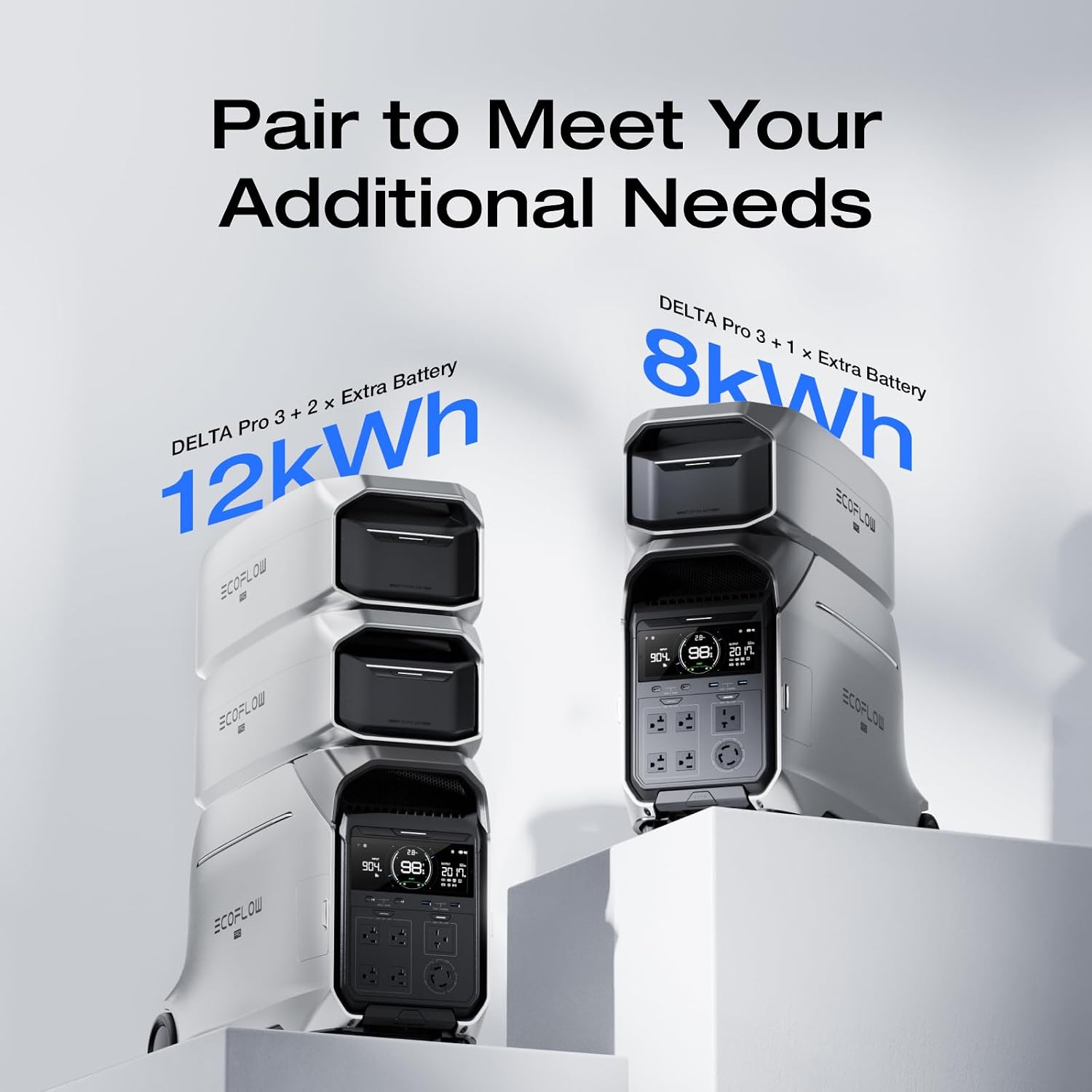
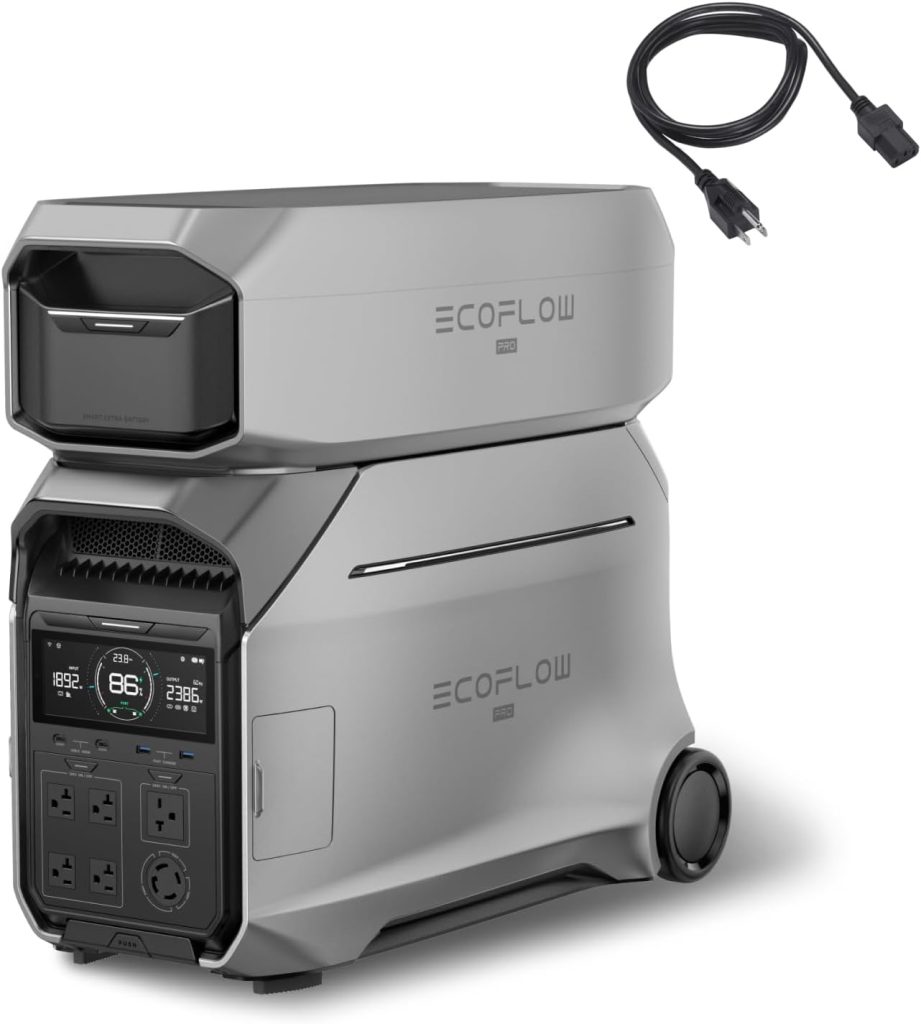
- Expandability: The DELTA Pro 3 is designed for expandability, allowing you to connect additional Smart Extra Batteries to significantly increase capacity. This modularity means you can scale your system as your needs grow, protecting your initial investment.
- Long-term Ownership Cost: When you factor in the robust LiFePO4 battery, the extended Cycle Life, the comprehensive warranty, and the solid Build Quality, the DELTA Pro 3 presents excellent long-term value. You’re buying durability and performance that won’t require costly replacements or upgrades anytime soon.
Brand Comparison: EF ECOFLOW DELTA Pro 3 vs. Competitors
When considering a high-capacity solar generator for RV applications, the EF ECOFLOW 8kWh Portable Power Station: DELTA Pro 3 with AC stands alongside a few other serious contenders. Here’s a comparison focusing on key attributes:
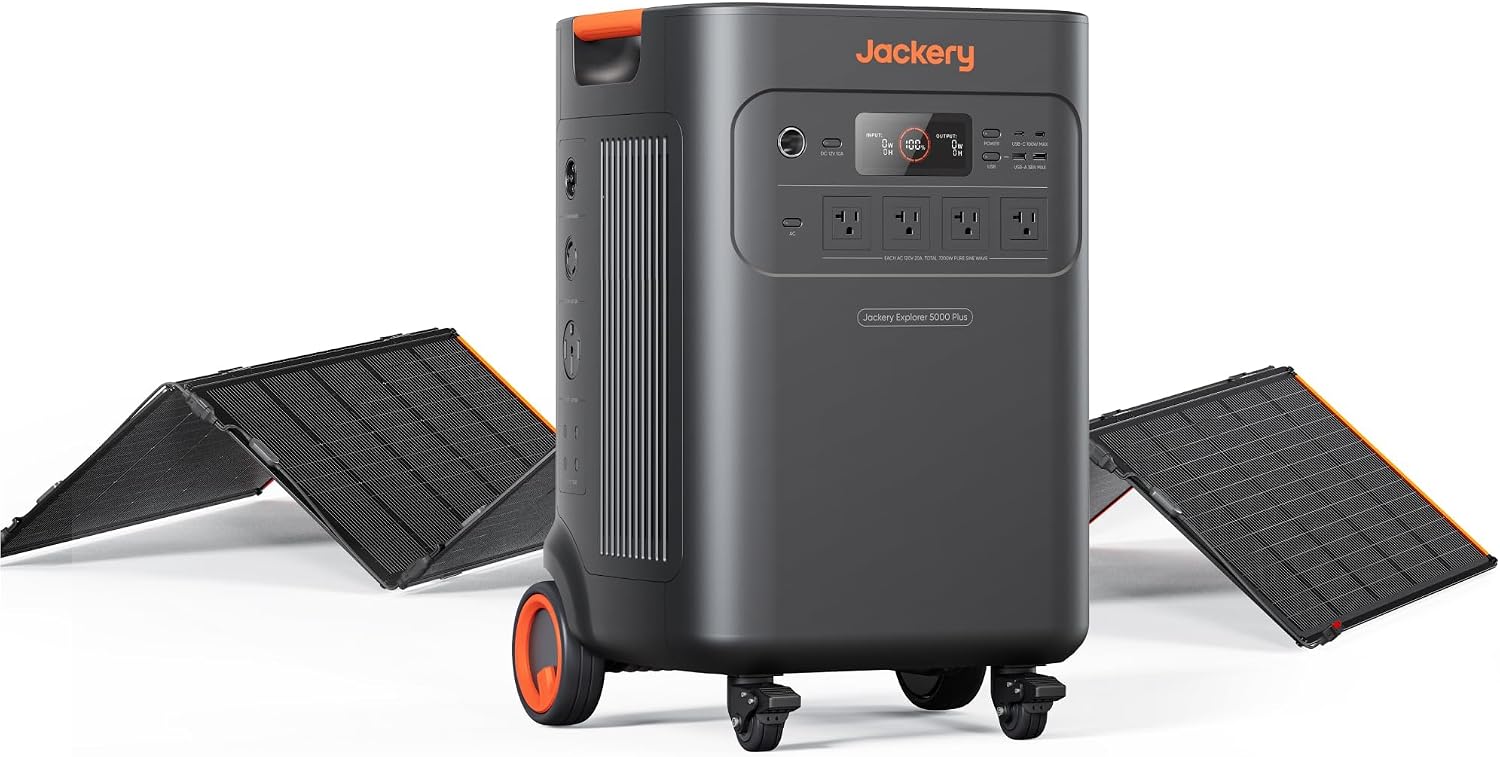
| Criteria | EF ECOFLOW DELTA Pro 3 (8kWh) | Bluetti AC500 (with B300S batteries) | Anker SOLIX F3800 |
|---|---|---|---|
| Battery | LiFePO4 | LiFePO4 | LiFePO4 |
| Capacity (Base) | 8000Wh | 3072Wh (per B300S) | 3840Wh |
| Capacity (Max) | 8000Wh (base) | 18432Wh (up to 6 B300S) | 26880Wh (up to 6 B3800) |
| AC Output | 4500W (9000W Surge) | 5000W (10000W Surge) | 6000W (12000W Surge) |
| Solar Input | 1600W | 3000W | 2400W |
| UPS | Yes (<20ms) | Yes (20ms) | Yes (20ms) |
| Weight (Base) | ~51 kg (112 lbs) | ~30 kg (AC500) + ~36 kg (B300S) | ~60 kg (132 lbs) |
| Warranty | 5 Years | 5 Years | 5 Years |
Who should choose EF ECOFLOW 8kWh Portable Power Station: DELTA Pro 3 with AC?
Choose the DELTA Pro 3 if you prioritize a robust, high-capacity, single-unit solution that can power virtually any RV appliance without needing immediate expansion. Its integrated 8kWh LiFePO4 pack offers excellent Cycle Life and a strong 4500W output. If you’re looking for a powerful, durable solar generator for RV that’s ready to go without additional battery modules, and you appreciate a comprehensive warranty, this is a prime candidate. Its portability (with wheels) for a single large unit is also a factor.
Who should choose Bluetti AC500 (with B300S batteries)?
Opt for the Bluetti AC500 if modularity and extreme expandability are your top priorities. While the AC500 power unit itself has no internal battery, its ability to connect up to six B300S battery modules allows for massive capacity (up to 18.4kWh). It also boasts a higher 5000W AC output and significantly higher 3000W Solar Input. If your RV space is flexible for separate battery units, and you want the highest possible solar charging speed for a solar generator for RV, the AC500 system offers more customization and raw power.
Who should choose Anker SOLIX F3800?
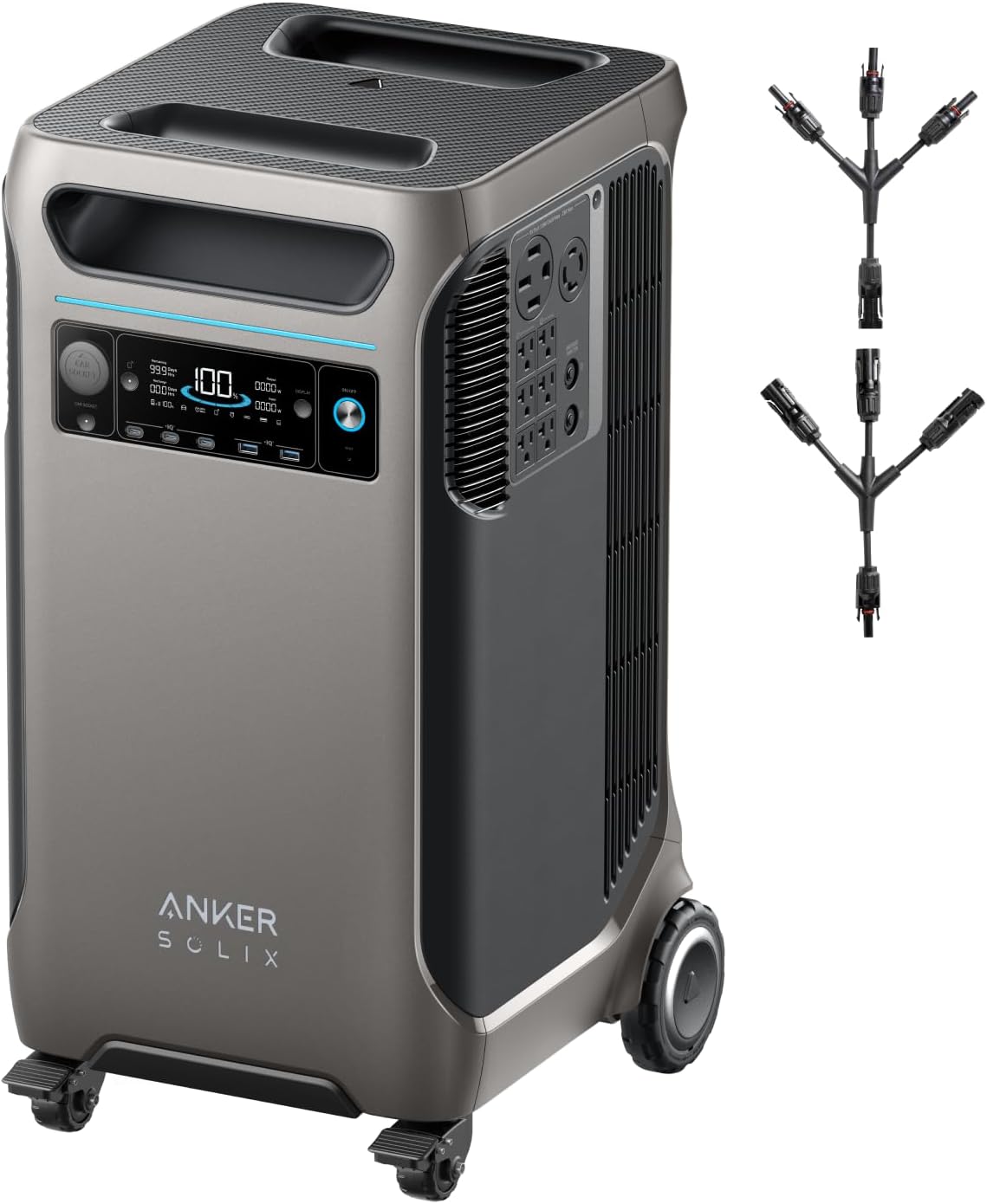
The Anker SOLIX F3800 is a compelling choice if you need the highest possible AC output (6000W) and future-proof capacity expansion (up to 26.8kWh). It sits between EcoFlow’s single-unit approach and Bluetti’s fully modular design, with a substantial 3.8kWh base capacity. If your RV has exceptionally high-power draw appliances, or you plan to integrate it into a larger off-grid home system later, and you trust Anker’s growing reputation in the power station space, the F3800 offers cutting-edge performance as a solar generator for RV.
Final Verdict
Should someone searching for “solar generator for RV” buy the EF ECOFLOW 8kWh Portable Power Station: DELTA Pro 3 with AC or choose another option?
If your priority is a complete, high-capacity, and exceptionally durable solar generator for RV travel, designed for years of heavy use, then the EF ECOFLOW 8kWh Portable Power Station: DELTA Pro 3 with AC is a highly recommended investment. Its 8kWh LiFePO4 battery, coupled with a powerful 4500W Pure Sine Wave inverter and sophisticated Battery Management System, provides unmatched reliability and performance for almost any RV application.
While its weight and initial cost are significant, the extraordinary 3500+ cycle life, robust build quality, and comprehensive safety features translate to a superior long-term value and unparalleled peace of mind. For those who demand substantial power, extended runtime, and the confidence that their system will perform flawlessly far from the grid, the DELTA Pro 3 delivers. It’s a workhorse, not a toy, and it’s built to last. However, if extreme modularity or even higher solar input is paramount, exploring options like the Bluetti AC500 system might be warranted. For a powerful, self-contained unit, the DELTA Pro 3 sets a high bar.
FAQ
Q1: How does the EF ECOFLOW 8kWh Portable Power Station: DELTA Pro 3 with AC handle extreme temperatures often found in RV environments?
A: The DELTA Pro 3 utilizes LiFePO4 battery chemistry, which has a wider operating temperature range and is inherently more stable than NCM batteries. While all batteries perform optimally within specific temperature windows, its advanced BMS and active Heat Management system help it tolerate the fluctuations common in RVs. However, like any sophisticated electronic device, it’s always best to avoid direct sun exposure in extreme heat and ensure adequate ventilation, especially during charging or heavy discharge.
Q2: Can the DELTA Pro 3 integrate with my RV’s existing electrical system?
A: Yes, it can. The DELTA Pro 3, with its high AC output and multiple ports, can be used to directly power appliances. For a more integrated solution, you would typically use an automatic transfer switch or manual switch to route specific RV circuits (like your AC outlets or a sub-panel) to be powered by the DELTA Pro 3. This often requires professional installation to ensure compliance with electrical codes and safety, effectively turning it into a seamless solar generator for RV home-like power.
Q3: Is the DELTA Pro 3 suitable for running an RV’s air conditioner?
A: With a continuous AC output of 4500W and a 9000W Surge Power, the DELTA Pro 3 can absolutely run many RV air conditioners. Smaller 10,000-13,500 BTU AC units typically draw around 1200-2000W running power, with a higher start-up surge. The DELTA Pro 3 is well-equipped to handle this. However, running an AC will consume battery capacity rapidly, so effective solar charging or other charging methods will be critical for sustained use.
Q4: What’s the best way to maximize solar charging efficiency for the DELTA Pro 3 in an RV?
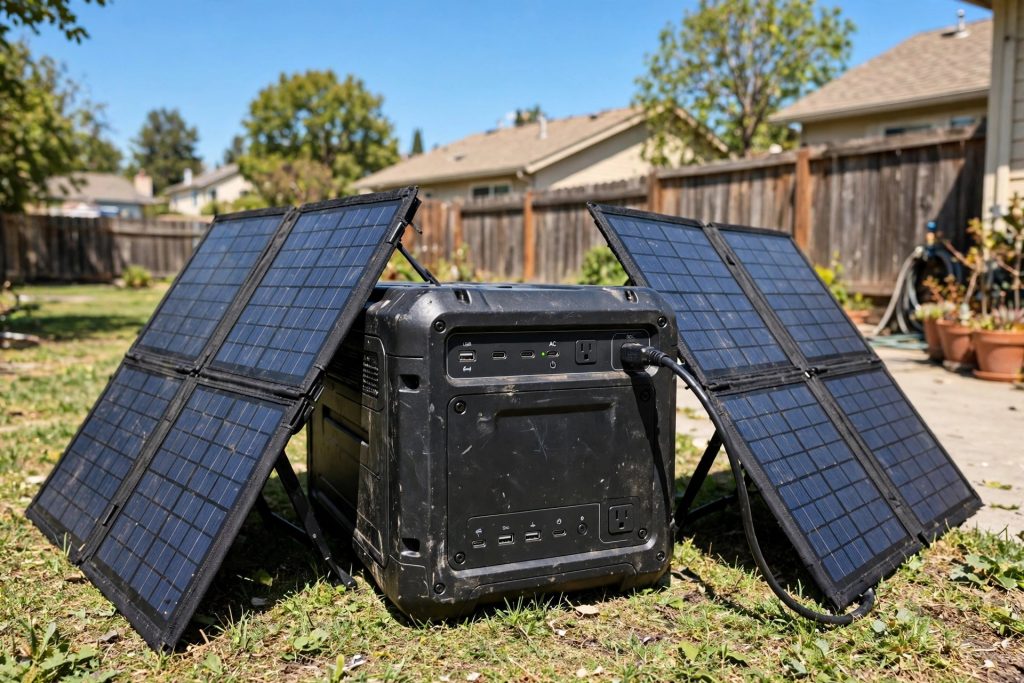
A: To maximize Solar Charging Performance, use high-quality monocrystalline solar panels with a combined wattage close to the DELTA Pro 3’s 1600W input limit. Ensure your panels are clean and positioned for optimal sun exposure, ideally tilting them towards the sun when parked. Using a dedicated MPPT charge controller (which is integrated into the DELTA Pro 3) is key, as it optimizes power transfer from the panels to the battery, even in variable sunlight conditions. Combining roof-mounted panels with additional portable panels can offer greater flexibility.
Q5: How does the DELTA Pro 3 handle standby power drain when not in use during RV storage?
A: The DELTA Pro 3’s LiFePO4 battery chemistry has a very low self-discharge rate. When stored, the unit will naturally lose a small percentage of charge over time due to internal circuitry. EcoFlow recommends recharging it to 80% every 3-6 months if stored for long periods. To minimize drain during prolonged storage, ensure all outputs are turned off and disconnect any peripherals. The robust BMS also helps manage this dormant state efficiently, preserving the battery’s health.
#ECOFLOW #8kWh #Portable #Power #Station #DELTA #Pro