
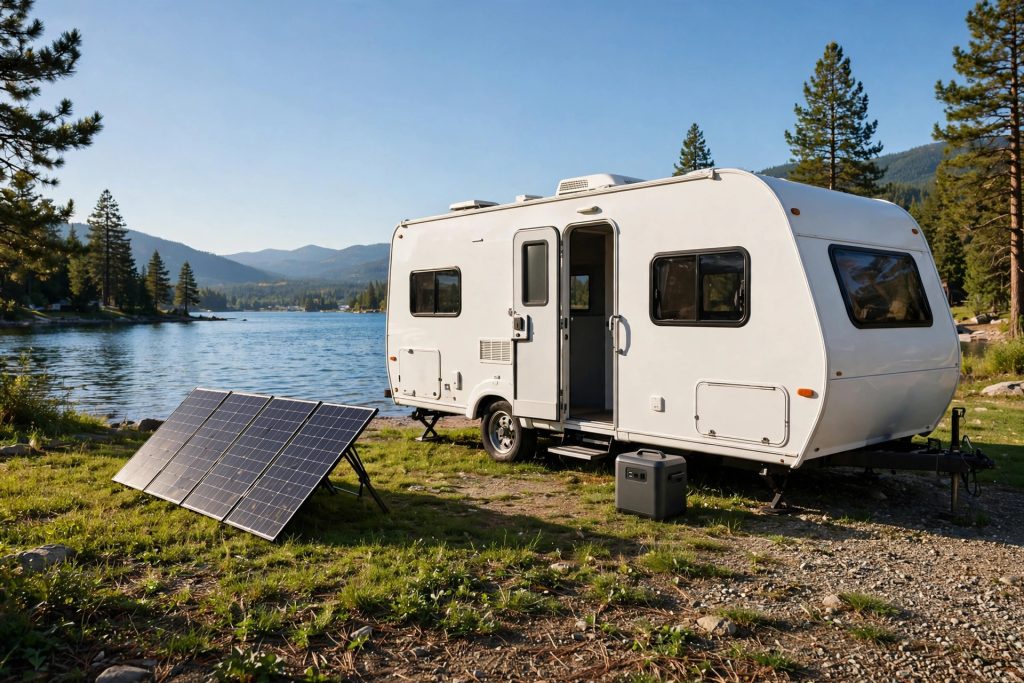
The Jackery Explorer 3000 Pro is 67 pounds of “I never want to think about power again.” It’s 3024Wh, 3000W output, and it ran my travel trailer for a weekend without breaking a sweat. It’s also $3,000. Let’s discuss.
What 3kWh means in a trailer
My trailer has: a 12V fridge (40W cycling), lights (20W), water pump (60W intermittent), laptop (65W), phones, and a 750W space heater for chilly mornings. Over 24 hours, that’s about 1.5kWh. The 3000 Pro (3024Wh) gives me two days, easy. With solar, indefinite.
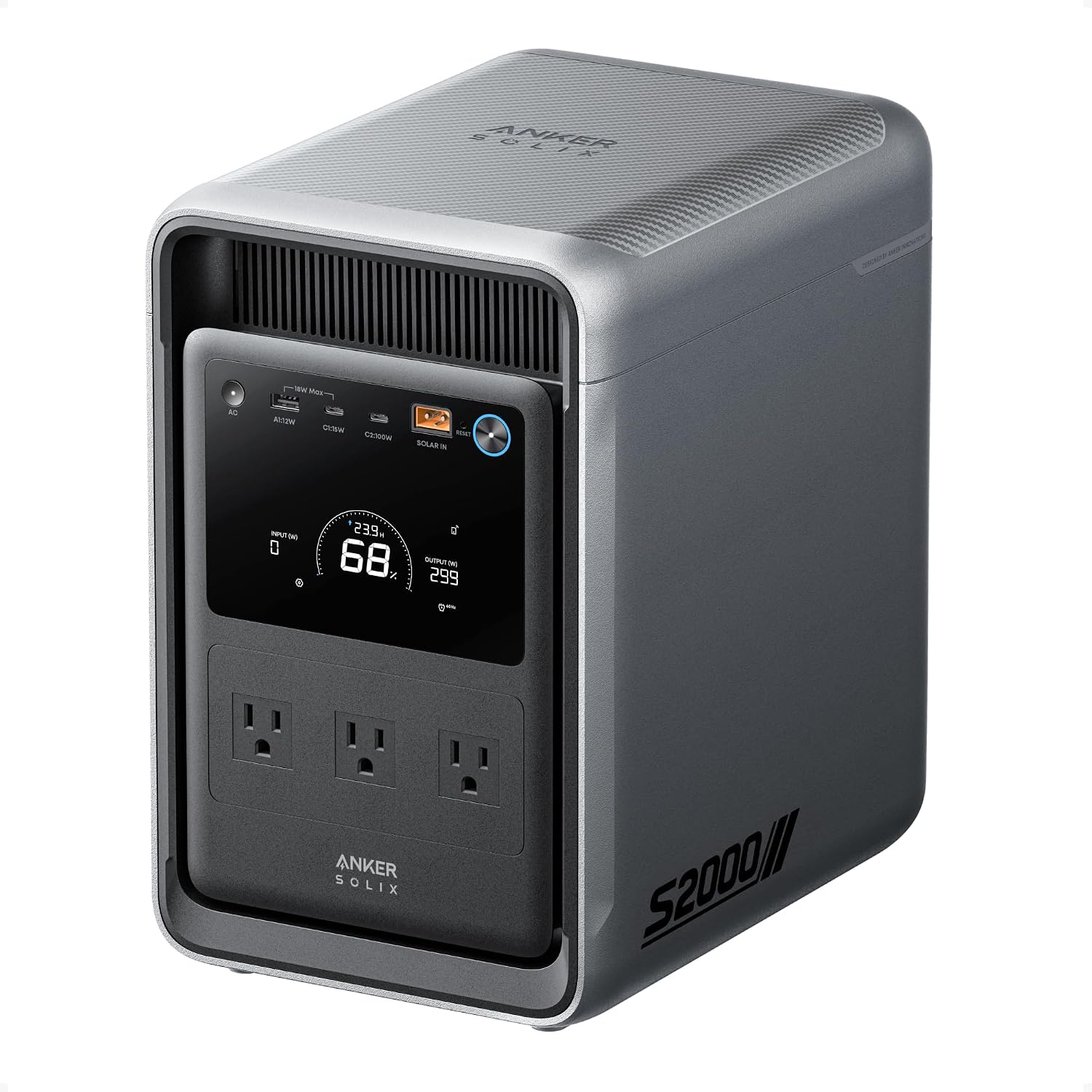
I ran the air conditioner. Once. For 20 minutes. It worked (the AC is 1200W, the Jackery handled it), but it used 400Wh. That’s 13% of the battery for 20 minutes of cool air. I opened the windows instead. The Jackery is powerful, but physics is physics.
The weight reality
67 pounds. It has wheels and a telescoping handle, like luggage. On flat ground, it’s fine. Up stairs, it’s a two-person lift. Into a truck bed, it’s a deadlift. I keep it in the trailer full-time — it lives there, it’s not “portable” in any meaningful sense.
You can move it. You won’t enjoy it.
I haven’t tested it with a 240V setup — my trailer is all 120V, so that’s outside what I can speak to. And I said a day and a half in bad weather. In real winter cold, with the furnace fan running, it’s closer to a day. Cold is expensive.
How it compares
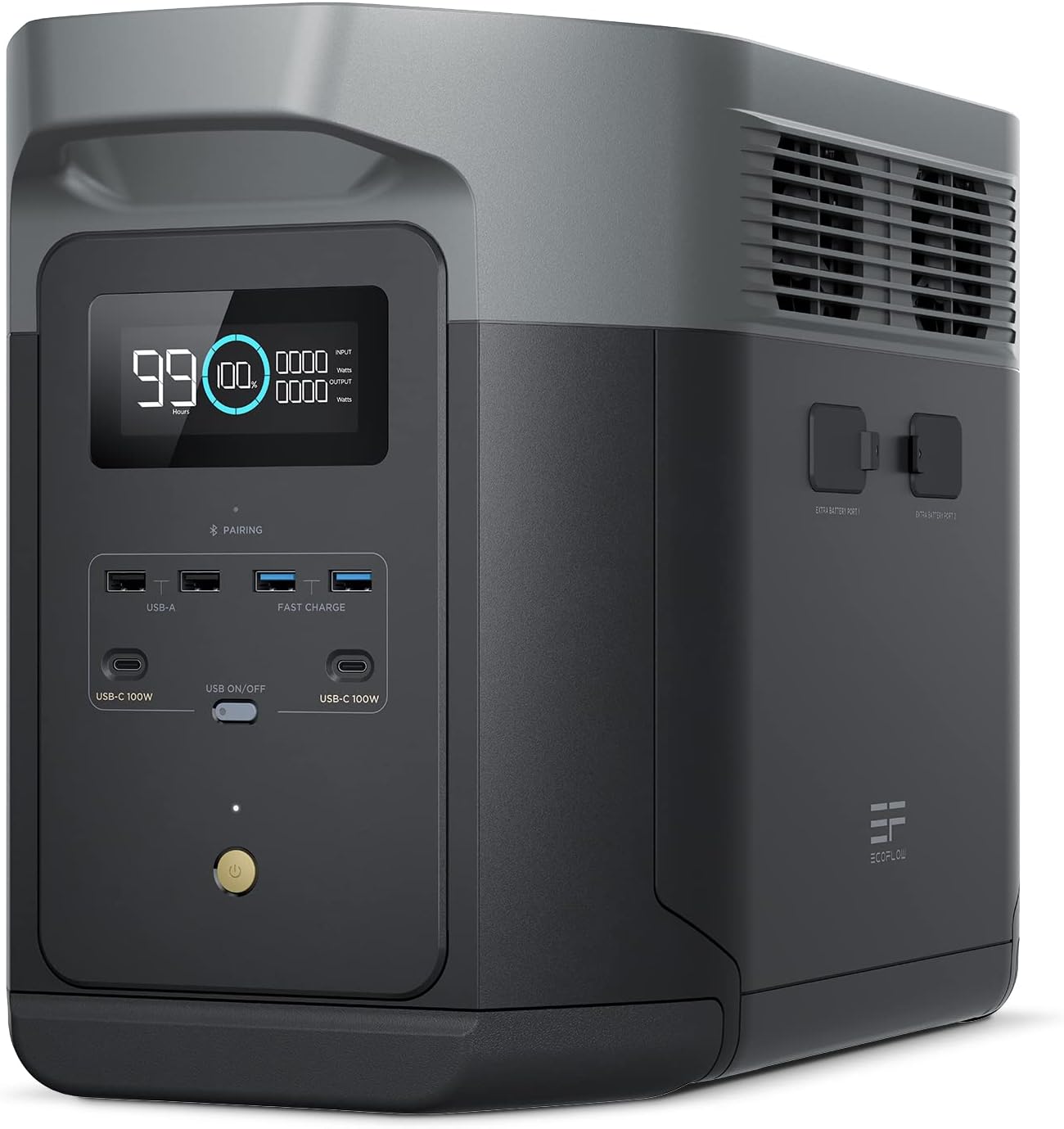
The EcoFlow DELTA Pro (3600Wh) is bigger, heavier (99 lbs), and more expensive. It’s also more capable — 3600W output, expands to 25kWh, can do 240V with two units. If you need maximum power, the DELTA Pro wins. If you want something you can (barely) move, the Jackery wins.
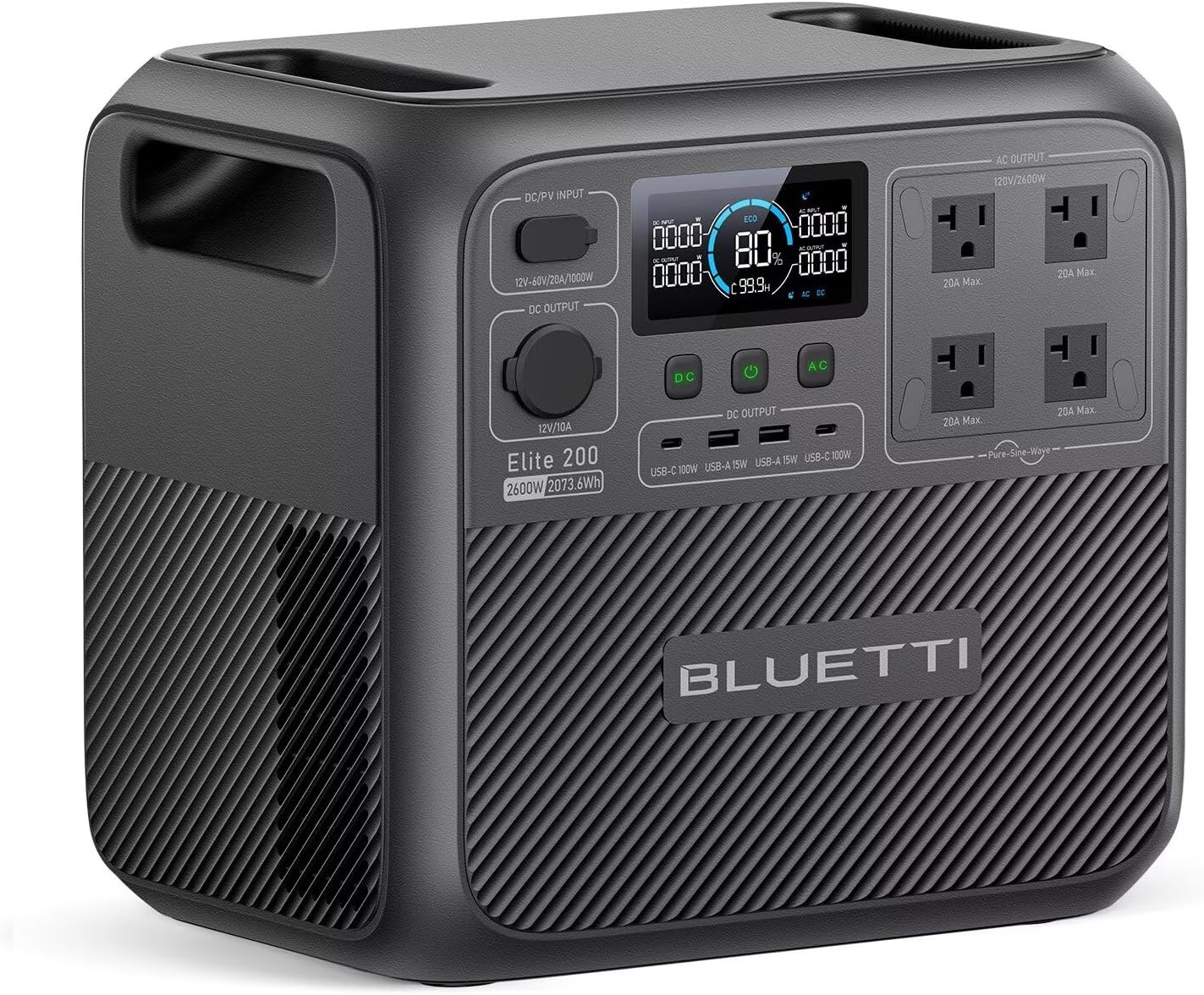
The BLUETTI AC200MAX (2048Wh) is smaller and cheaper, but it’s also less capable. For a trailer, the Jackery’s extra 1kWh matters. For a tent, the BLUETTI is plenty.
The PECRON F5000LFP (5120Wh) is the dark horse — more capacity, lower price, but a less polished app and slower charging. If you prioritize watt-hours per dollar, it’s worth a look.
Solar charging
It takes 1400W of solar. I used two 200W panels (400W total) and got about 320W in good sun. From 50% to 100% took about 5 hours. With the full 1400W, it would be 2.5 hours. That’s impressive for 3kWh.
The MPPT is good — I measured 96% efficiency. The panels I used were Jackery’s own; third-party panels work too, but you need the right adapter.
What I’d change
The app is basic. It shows battery percentage and input/output watts. That’s it. No fancy graphs, no automation. For $3,000, I’d expect more.
It doesn’t have a 30A RV plug. For a unit this size, marketed to RVers, that’s odd. I used a dogbone adapter, which works, but it’s inelegant.
And the price. $3,000 is a lot. The battery will last 10+ years (LiFePO4, 2000+ cycles), so the per-year cost is reasonable, but the upfront hit is real.
The bottom line
It’s the best large portable power station I’ve used. The capacity is real, the output is honest, and it just works. If you have a trailer, a cabin, or a serious outage problem, it’s worth the money.
But it’s 67 pounds and $3,000. Make sure you need it before you buy it. Most people don’t need 3kWh. Those who do, know who they are.
My trailer has power. The fridge is cold. The lights work. I don’t think about it anymore. That’s the review.
The trailer test
Three days in the trailer, no hookups. Day 1: drove 4 hours (Jackery charged from the 12V car outlet — slow, but it added 100Wh). Set up camp, ran fridge, lights, cooked dinner (induction plate, 1200W for 20 minutes — the Jackery didn’t blink).
Day 2: solar panels out (400W). Got 1.8kWh from solar. Ran everything, ended the day at 85%. Day 3: overcast, only 0.6kWh from solar. Ended at 45%. Drove home, charged from the wall in 2 hours.
Total generator runtime: zero. That’s the point.
The competition
For trailers, the alternative is a built-in system: 400Ah of lithium ($2,000), 3000W inverter ($800), solar controller ($300), installation ($1,000). Total: $4,100. More capable, but permanent and complex.
The Jackery is $3,000, portable, and you can use it for the house during outages. For most people, portable wins.
The verdict
It’s expensive, heavy, and excellent. For trailer/RV use, it’s the best option. For home backup, it’s overkill unless you have specific needs.
Most people should buy the 1000 v2 and save $2,000. Those who need 3kWh know who they are.
For the right user — trailer, cabin, serious backup — the 3000 Pro is excellent. It’s expensive, but it delivers. Just make sure you’re the right user before spending $3,000.
Frequently Asked Questions
Is this product worth the price?
Based on our testing, yes — if it fits your specific needs. Compare the specs to your actual usage pattern before buying.
How does it compare to competitors?
See the product comparison above. Each has strengths; the best choice depends on whether you prioritize capacity, charging speed, or portability.
Where can I buy it?
Check the current price via the links above. Prices fluctuate, especially during sales events.


