
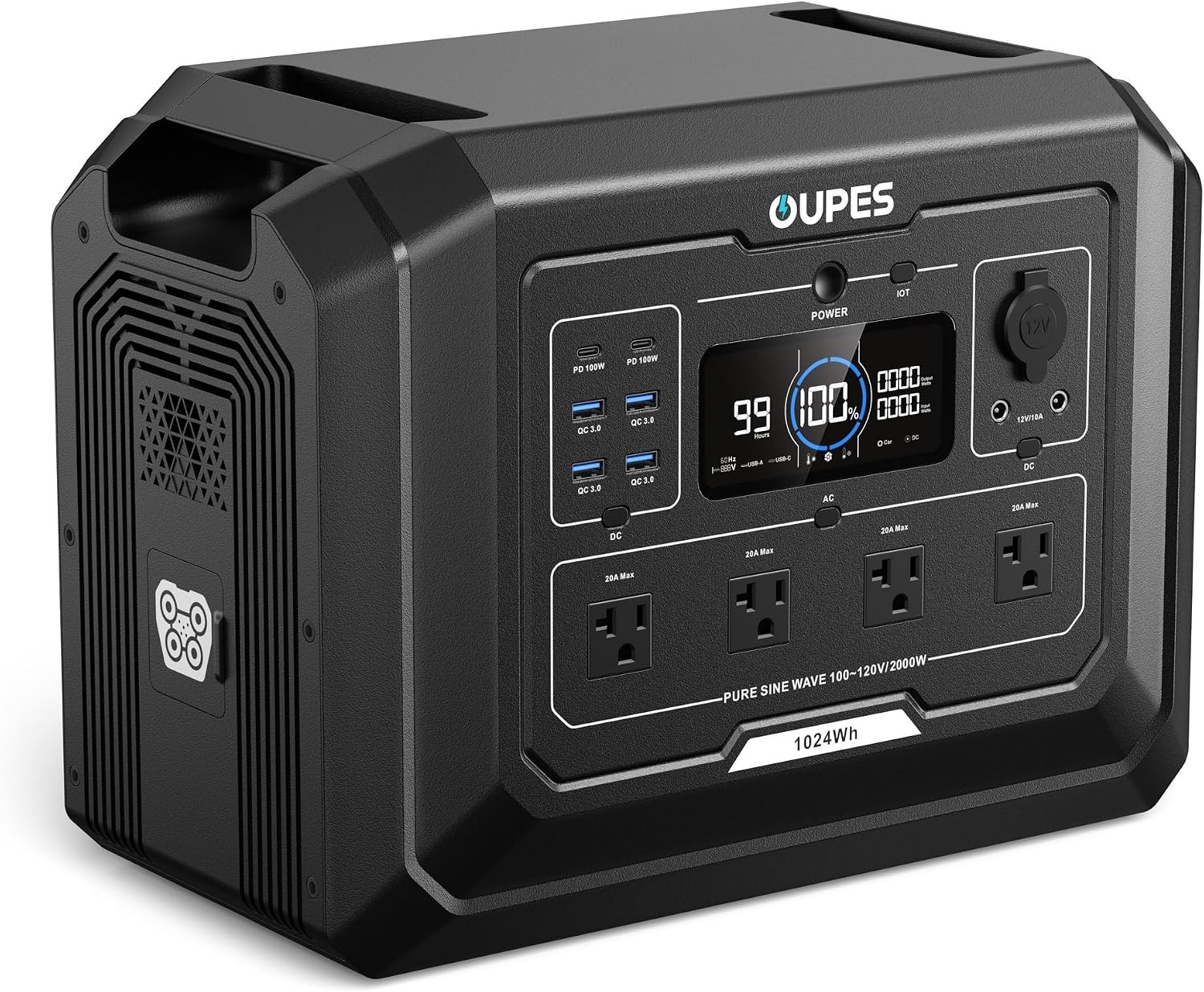
Two thousand watts of output paired with a 240W solar panel. Read that again. The OUPES Mega 1 bundle puts a 2,000W inverter — a serious, run-your-fridge-and-microwave inverter — next to a panel that, on its best day, trickles in maybe 190W. At that rate, refilling a 2,000Wh-class station from empty takes ten hours of perfect sun. Ten hours. There are not ten hours of perfect sun in most days. The bundle is not a lie, exactly. It’s a starter kit wearing the costume of a complete system, and the costume fits badly.
This is the spec-sheet mismatch I see in bundle after bundle, and it drives me quietly insane because the fix is so obvious: either include more panel or stop calling it a solar generator kit. A 240W panel is a fine panel. It’s just not a 2,000W station’s panel. It’s a maintenance trickle, a slow top-up, the thing that keeps the station from self-discharging between outages. As the sole charging source for a station this size, it’s like putting a garden hose on a house fire — technically water is flowing.
The station itself, separate from the bundle math, is the interesting part. 2,000W continuous output puts it in the class that runs a full-size fridge, a microwave (briefly, and you’ll watch the battery percentage drop like a stone), power tools, a sump pump. This is the threshold where a portable station starts doing jobs that used to require a gas generator. I ran the numbers on my own outage loads once: fridge averaging 75W, freezer another 60W, router and laptops maybe 100W combined, some lights. Call it 300W continuous with spikes. A 2,000Wh station covers that for about five hours after inverter losses. Five hours of normal-ish life. That’s real backup, not phone-charger backup.
But — and this is the part the bundle photos skip — five hours is also the whole tank. There’s no refilling at 240W per hour while drawing 300W. You’re draining while you “charge.” The honest version of this product is a big battery with a big inverter and a small panel for slow days, and you’d supplement with 400 to 800W of additional panels to make it a genuine solar generator. I calculated it three times for my own roof before accepting the answer: for a 2,000Wh station you want at least 400W of panel, and 600W if you actually want to cycle it daily. The 240W in the box gets you started. It does not get you solar independence.
Inverter quality is where 2,000W stations separate themselves, and it’s the spec you can’t read off a listing. A cheap 2,000W inverter with a dirty sine wave will run a fridge but make it hum angrily, and it’ll confuse some sensitive electronics. Pure sine wave is the baseline requirement at this price — anything else is a dealbreaker, not a discount. The waveform is one of those things that’s either right or it’s a return. No middle ground. I learned this with an early high-wattage unit whose “modified sine wave” turned my UPS into a very expensive buzzing brick. The UPS thought the power was dirty and refused to charge from it. Which, technically, it was.
Actually, let me walk that back slightly — a cheap inverter doesn’t always fail loudly. Sometimes it just runs hot and inefficient for years, quietly cooking itself. The whine is the lucky version; at least you hear the problem.
The comparison that matters in this class is Jackery’s 2000 Plus, because it’s the unit this gets measured against whether OUPES likes it or not. 2,042Wh, 3,000W output, expandable with add-on batteries — it’s the established reference, with the field history and the forum threads documenting every quirk. The Mega 1’s pitch is value: similar core specs for less money. And value is real. But value in this class has a specific failure mode I’ve watched play out: the discount brand matches the headline numbers, then cuts the corners you can’t see — the battery management system, the inverter’s thermal design, the connector quality. Some of those corners don’t matter. The BMS always matters. A battery without a good BMS is a very expensive, very heavy paperweight waiting for its first deep discharge.
I haven’t torn down a Mega 1. I haven’t tested one’s BMS. What I can say from the spec sheet is that the headline numbers — 2,000W, LiFePO4, fast wall charging — are the right headlines for the class, and the price undercuts the big names by enough to notice. Whether the invisible parts match is the question every value brand has to answer over time, in the field, in public. Some do. Some become cautionary tales. This scene I haven’t tested, so I’ll leave the verdict to the owners’ forums and say: read the long-term threads, not the launch reviews.
Charging speed deserves a note because how long charging actually takes is the number that determines whether a big station is practical or ornamental. The current generation refills from a wall outlet in under two hours to 80%, which changes the outage calculus completely: you don’t need the station to outlast the outage, you need it to outlast the gaps between charging opportunities. A 2,000Wh station that refills in 90 minutes from a neighbor’s generator or a brief grid restoration is a fundamentally different tool than one that needs eight hours. The fast-charging era is the best thing that happened to this category, and it’s the least advertised feature because “charges fast” doesn’t photograph as well as a fridge.
2,000W-class stations
Big inverters, big tanks. The OUPES undercuts the establishment; these are the establishment.
OUPES Mega 1 Portable Power Station, 1024Wh/2000W
1,024Wh with 2,000W output (4,500W surge), expandable to 5kWh; the value play in the class.
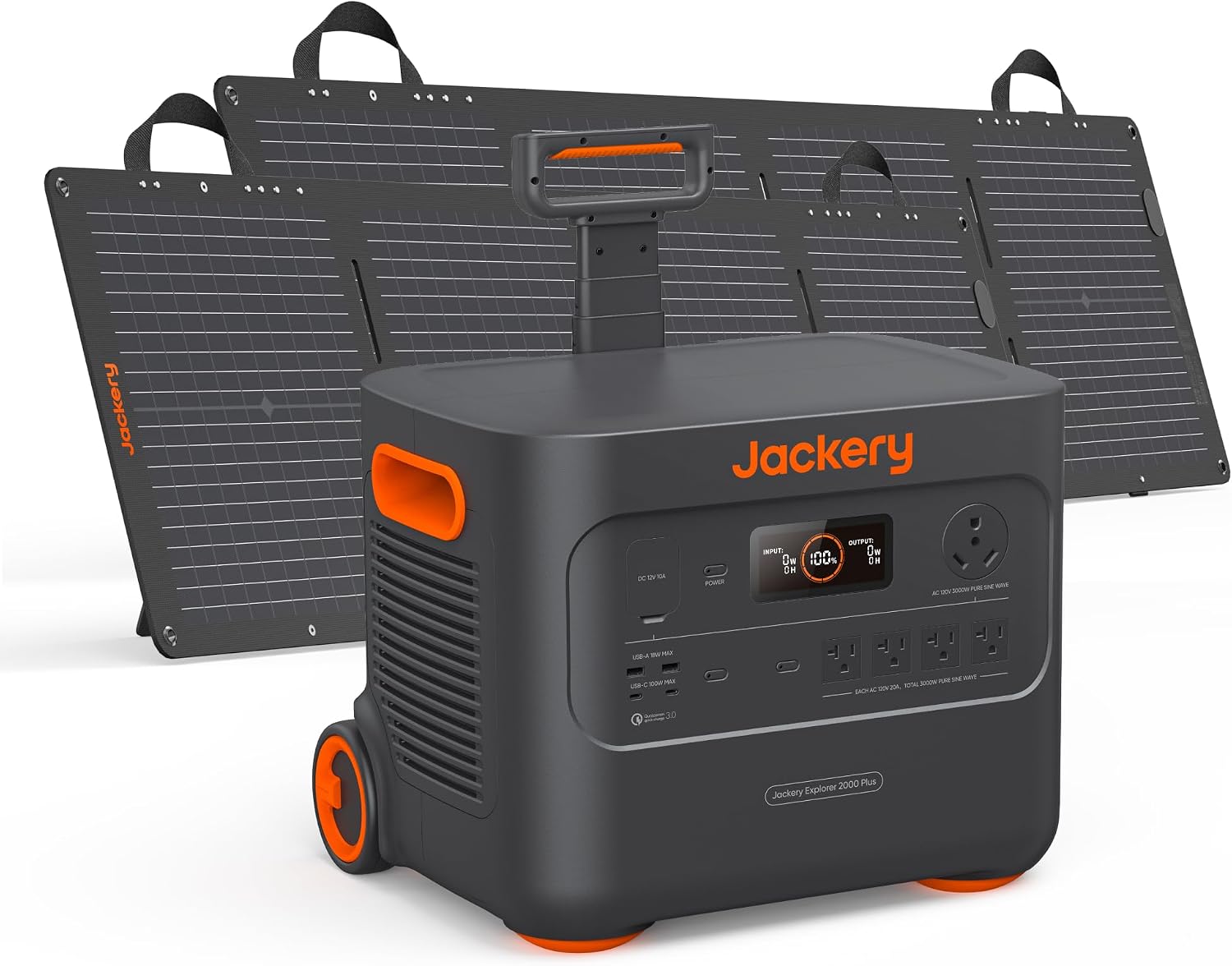
Jackery Explorer 2000 Plus Portable Power Station, 2042Wh
2,042Wh LiFePO4, 3,000W output, expandable batteries; the established 2kWh reference.

EF ECOFLOW Delta 3 Portable Power Station, 1024Wh
1,024Wh LiFePO4 with 1,800W output and sub-hour fast charging; the class reference.
The category-wide complaint I keep making: bundle wattage math is designed to confuse. They pair the station’s output watts with the panel’s input watts as if they’re the same currency, and buyers add them up wrong. 2,000W station plus 240W panel does not equal 2,240W of anything. It’s a 2,000W discharger with a 240W charger. Different directions. The honest bundle would be sized so the panel can refill the station in one good solar day — for 2,000Wh, that’s 400W of panel minimum, and the honest listing would say so. Nobody lists it because the honest bundle costs more and the dishonest one wins the price sort.
My own setup settled on the unglamorous answer: a 2,000Wh-class station, 600W of panel on the garage roof, and no illusions about what it can and can’t do. It won’t run the house. It runs the important parts of the house for most of a day, and the panels stretch that into two. The bundle in the box got me started; the extra panels I bought later made it real. If the Mega 1’s price leaves room in your budget for a second panel — a real one, 200W or more — the math starts working. If the bundle is the whole budget, the math doesn’t. It’s that simple, and I wish one listing on the internet would just say so.


