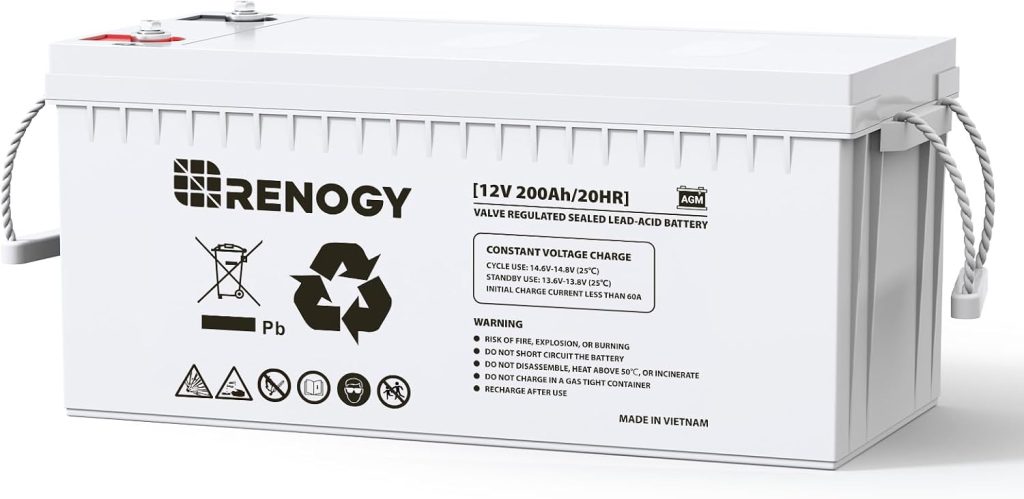
The Renogy 12V 200Ah Deep Cycle AGM Battery is a big, sealed lead-acid block aimed at people who want a serious 12V battery bank without paying lithium money. It’s maintenance-free, spill-proof, and rated 200Ah at the 20-hour rate — numbers that look great on a spec sheet until you remember the rule that governs every deep cycle battery: you only get to use about half of it if you want the thing to last.
That’s the central tension here. This battery holds roughly 2,400Wh nominal, but at a 50% depth of discharge you’re working with about 1,200Wh — enough for a weekend of fridge, lights, fans and device charging, not enough to run an air conditioner or a kettle habit. Compared with a 100Ah LiFePO4 pack with a built-in BMS, the Renogy is cheaper upfront and simpler to charge, but heavier and far shorter-lived. Which one wins depends entirely on how you’ll use it.
Quick Answer
The Renogy 12V 200Ah AGM is the deep cycle battery to buy when the bank stays fixed in an RV, trailer or cabin and upfront cost matters more than weight — about 1,200Wh of honestly usable energy once you respect the 50% discharge rule, a sealed case that never needs watering, and charging that still works in the cold. Read the limits first: it weighs about 129 lb, it is rated around 500 cycles at half discharge, and half its nameplate capacity is off-limits if you want it to last. If you cycle daily or move the battery by hand, the lithium option below delivers similar usable energy at a fraction of the weight; if your loads are genuinely small, the 100Ah AGM further down is the same idea at half the size.
Compare Deep Cycle Batteries
Three ways to store a weekend of power side by side — big AGM, smaller AGM, or lithium.
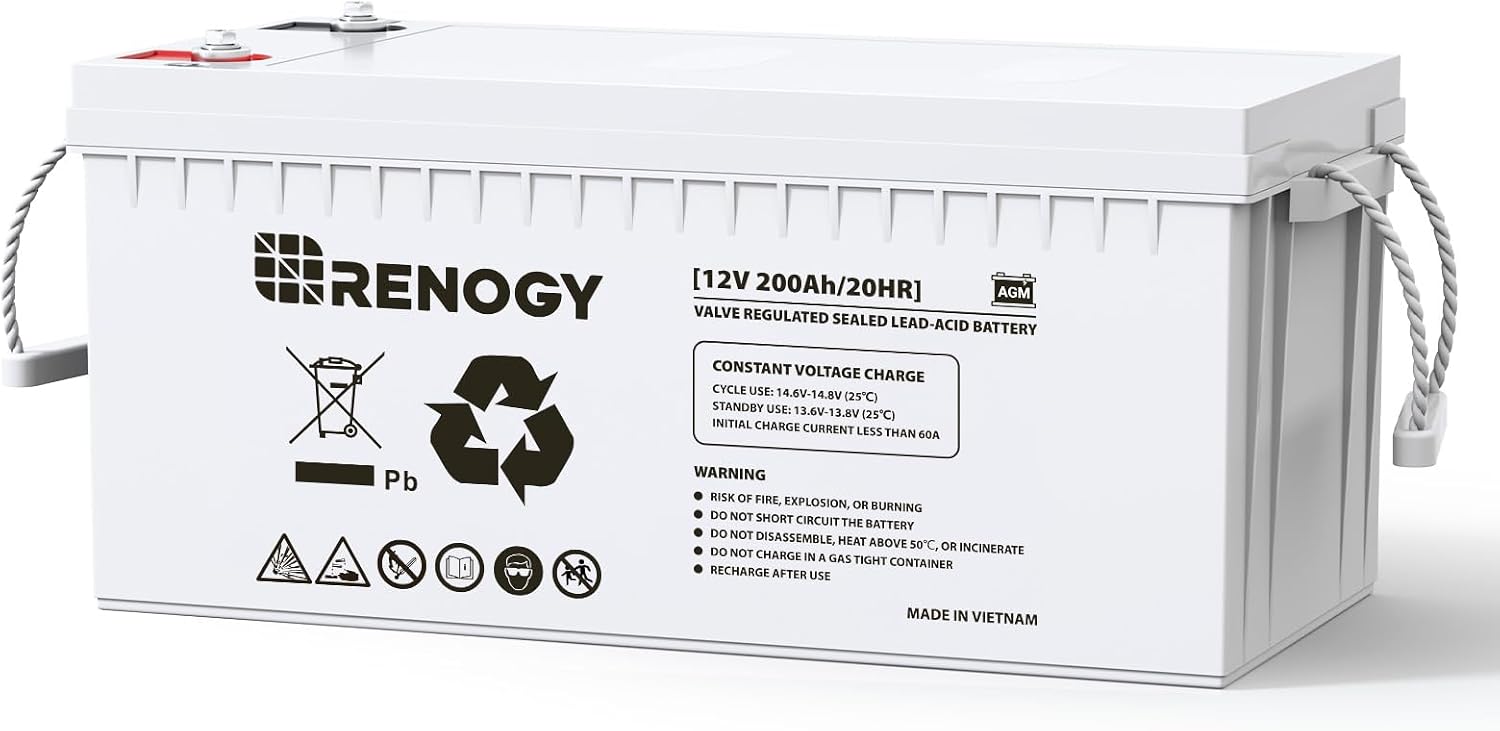
Renogy 12V 200Ah Deep Cycle AGM Battery
200Ah AGM with roughly 1,200Wh usable at the 50% rule — the most lead-acid capacity here, at about 129 lb
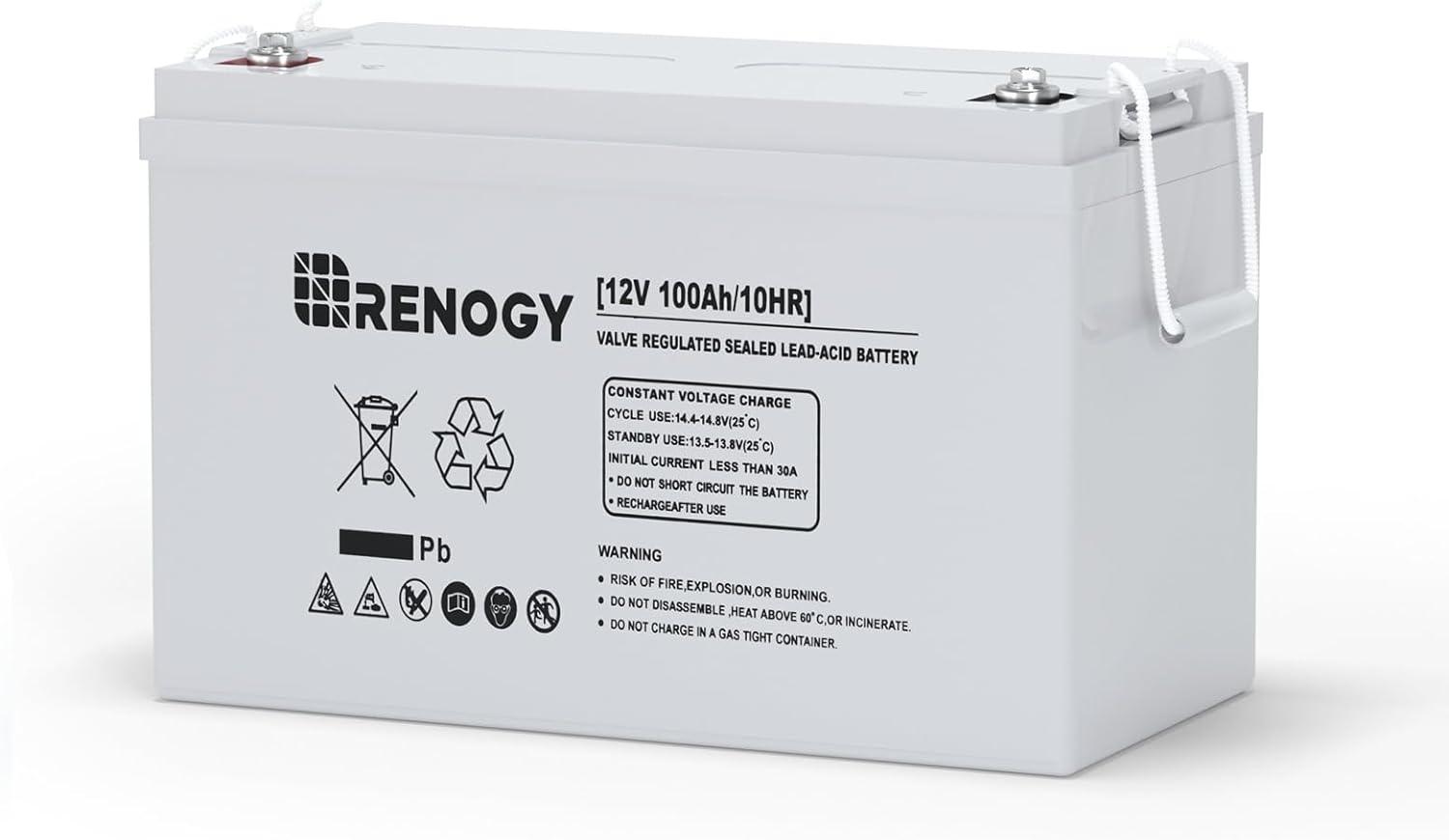
Renogy 12V 100Ah Deep Cycle AGM Battery
Same AGM chemistry at half the capacity and roughly half the weight — for smaller rigs and lighter loads
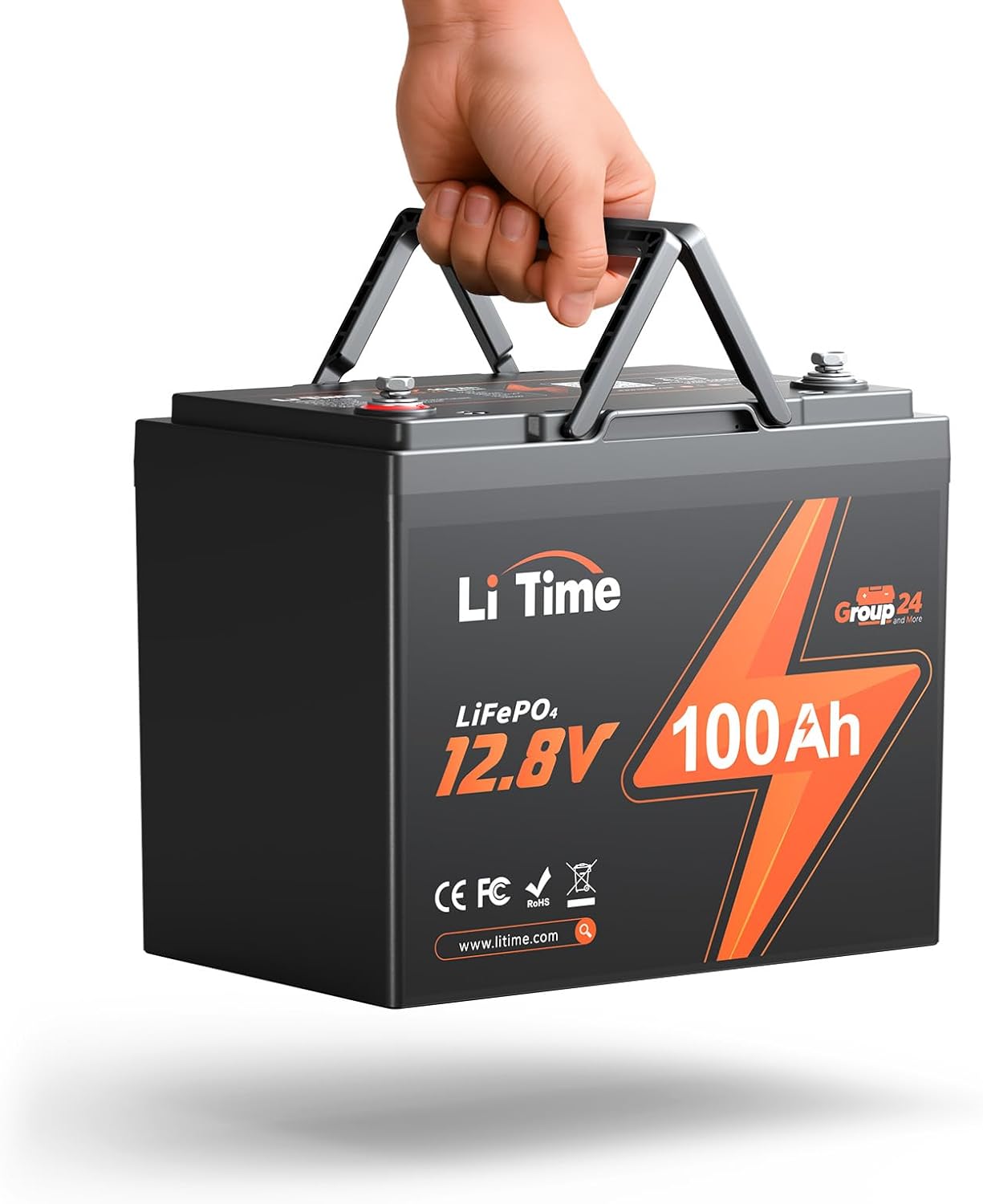
LiTime 12V 100Ah LiFePO4 Battery (Group 24)
Lithium usable energy in the same ballpark as the big AGM at a fraction of the weight — higher upfront tier, no charging below freezing
Prices and availability may vary — tap any product to check the current listing.
What to Look For in Deep Cycle Batteries
Usable capacity and the 50% rule
Nameplate amp-hours are not usable amp-hours. A 200Ah AGM at 12V holds about 2,400Wh nominal, but lead-acid chemistry punishes deep discharges, so the practical figure is roughly half: about 1,200Wh usable. The 100Ah AGM leaves you around 600Wh. That gap matters more than any other spec on the box, because it decides what you can actually run. A 12V fridge, some lights, a couple of fans and phone charging fit comfortably in 1,200Wh across a weekend. An air conditioner or an electric kettle habit does not. If you regularly drain an AGM below half, you’ll be replacing it years sooner than you’d like.
Cycle life and what depth of discharge does to it
Renogy rates this battery at 500 cycles when discharged to 50% depth of discharge. That’s a fair, honest number for AGM — and it’s also the ceiling, not the floor. Push deeper than half on a regular basis and cycle life drops fast. Compare that with lithium, where cycle life is rated in the thousands rather than the hundreds, and the long-term math shifts. If you cycle your bank daily, the AGM’s lower upfront tier gets eaten by replacement sooner than you’d expect. If you cycle it a few weekends a year, 500 cycles is a decade of use.
Weight and installation reality
At about 129 lb (58.5 kg), this is a two-person lift and a fixed installation. It is not portable, and it is not something you haul in and out of a truck bed. Plan where it goes before it arrives, because moving it later is a chore. The 100Ah AGM is roughly half the weight at about 64 lb, and the LiTime lithium is lighter still — roughly a fifth of the 200Ah AGM. If your setup involves carrying the battery any distance, that difference should steer your decision more than capacity does.
Charge voltages and matching your controller or converter profile
The charge voltages are printed right on the case: cycle use 14.6–14.8V, standby use 13.6–13.8V, with a maximum charge current of 60A. Those numbers need to match your solar charge controller, RV converter or alternator setup. The good news is that AGM is a drop-in chemistry — most existing lead-acid profiles already work, and you likely won’t need new charging hardware. Lithium needs its own charging profile, which often means a new controller or converter. That’s a real hidden cost of going lithium, and a real advantage for AGM.
Self-discharge and storage
This battery self-discharges below 3% per month at room temperature, which is respectable for lead-acid. That means a charged bank can sit for weeks without much loss — useful for a cabin or backup setup that goes unused between trips. It’s still worth understanding how self-discharge quietly drains a stored bank over longer periods, because a battery left at low charge for months sulfates and loses capacity permanently. AGM wants to be stored full, and topped up periodically.
Cold-weather behaviour
AGM tolerates charging in cold weather that would block a lithium pack. The operating range here is roughly -4 to 140°F, and lead-acid will accept a charge in conditions where LiFePO4 should not be charged below freezing unless the pack’s protection allows it. If you camp or work in shoulder seasons and rely on solar to recharge, that’s a genuine point for AGM. The trade-off is that cold also cuts usable capacity, so don’t expect full output on a freezing morning from any chemistry.
Who the Renogy 200Ah AGM Actually Fits
The fixed RV or trailer bank on a budget. If the battery goes in once and stays, and you want maximum usable lead-acid capacity for a modest upfront tier, this is a sensible pick. It’s a drop-in for existing converters and controllers, and 1,200Wh usable covers a typical weekend of modest loads.
The cabin or backup bank that sits for weeks. Low self-discharge and cold-tolerant charging suit a setup that idles between visits. Pair it with a maintainer or a small solar panel and it’ll be ready when you are.
The weight-sensitive or daily-cycling camper should skip it. If you carry the battery in and out, count every pound, or cycle the bank every day, AGM is the wrong chemistry. The LiTime 100Ah LiFePO4 delivers usable energy in the same ballpark as this 200Ah AGM, at a fraction of the weight and with thousands of cycles instead of hundreds. Pay the higher upfront tier and stop replacing batteries.
Three Ways to Store the Same Weekend of Power
| Battery | Chemistry | Nominal Energy | Usable Energy (honest) | Weight Class | Best For | Watch-Out |
|---|---|---|---|---|---|---|
| Renogy 200Ah AGM | Sealed AGM lead-acid | ~2,400Wh | ~1,200Wh (50% DoD) | ~129 lb, two-person lift | Fixed RV/trailer/cabin bank | Heavy; ~500 cycles; half capacity off-limits |
| Renogy 100Ah AGM | Sealed AGM lead-acid | ~1,200Wh | ~600Wh (50% DoD) | ~64 lb | Smaller rigs, lighter loads | Half the usable capacity of the 200Ah |
| LiTime 100Ah LiFePO4 | Lithium iron phosphate | ~1,280Wh | ~1,280Wh (deep discharge OK) | ~1/5 of the 200Ah AGM | Daily cycling, portability, weight-sensitive builds | Higher upfront tier; cold-charging limits; needs lithium profile |
The Renogy 200Ah AGM wins on upfront simplicity and cold-weather charging, but you’re paying for 200Ah and only using about 1,200Wh — and hauling 129 lb to do it. The 100Ah AGM is the same idea scaled down: fine for a small trailer or a light load list, but its ~600Wh usable runs out fast if you add a fridge and a few comforts. The LiTime lithium is the one that changes the math: nearly all of its ~1,280Wh is usable, it weighs a fraction as much, and it’ll outlast both AGMs several times over — provided you can stomach the higher upfront tier and don’t need to charge it below freezing.
Questions People Ask Before Buying
Real buyer questions, straight answers
Is a 200Ah AGM battery worth it, or should I just buy lithium?
It’s worth it if the battery stays put and you’re sizing for weekend loads, not daily cycling. The Renogy 200Ah AGM gives you about 1,200Wh of usable energy at the 50% depth-of-discharge rule, and it does that for a much lower upfront cost than an equivalent lithium bank. Where it stops making sense is when you cycle it hard every day, count every pound, or plan to carry it up a set of stairs. Lithium wins those fights on cycle life and weight, but it costs more going in and needs a charger profile your current gear may not have.
How much of a 200Ah AGM battery can I actually use?
Plan on roughly 1,200Wh, not the full 2,400Wh on the label. AGM is lead-acid, and draining it below about half on a regular basis shortens its life fast. The 200Ah rating is measured at the 20-hour rate, so a slow, steady draw gets you close to that number and a big surge load gets you less. Treat 50% as your floor and size your daily consumption under 1,200Wh and you’ll get years out of the battery instead of months.
Renogy 200Ah AGM or two 100Ah AGM batteries — which is better?
One 200Ah battery is simpler; two 100Ah batteries are easier to lift and swap. The 200Ah unit weighs about 129 lb, which is a two-person job and a permanent install in most rigs. Two 100Ah AGMs come in around 64 lb each, so you can carry them one at a time and replace just one if it fails. The catch with parallel banks is that the batteries need to be identical and the same age — mix an old one with a new one and the weak cell drags the pair down.
How long will a 200Ah AGM battery last before it wears out?
Renogy rates it at 500 cycles at 50% depth of discharge, so treat that as your realistic ceiling. Cycle count drops sharply if you routinely run it flat — the deeper the discharge, the fewer cycles you get. A weekend camper who tops up every few months and rarely goes below half might stretch well past that rating in calendar years. A full-timer cycling daily will burn through those 500 cycles in under two years.
Can a 200Ah AGM battery run my RV air conditioner?
No, not for long — a single 200Ah AGM is a poor match for an RV air conditioner. An AC unit pulls a big surge at startup and then holds a heavy load for hours, and 1,200Wh of usable capacity disappears fast under that kind of draw. Even if the inverter can handle the surge, you’d be deep-cycling the battery every time you ran the AC, which is exactly what kills AGM early. Run the generator or shore power for air conditioning and save the battery for lights, fans, and the fridge.
Running a Fixed Battery Bank: Where AGM Works and Where It Breaks
A trailer parked at a seasonal site with solar on the roof. This is the Renogy 200Ah AGM’s home turf. The battery sits in one spot all season, the solar controller keeps it topped up through the day, and your nightly draw — lights, water pump, maybe a fan — stays well under that 1,200Wh usable ceiling. You set the controller to the AGM cycle voltages printed on the case (14.6–14.8V) and mostly forget about it. Weight doesn’t matter because nobody’s lifting it.
A cabin bank that sits unused for weeks between visits. AGM self-discharges at under 3% per month, which sounds great until you realize a stored battery still needs a top-up every few months. Leave it sitting from October to May with no charger and you’ll come back to a sulfated battery that never holds a full charge again. This scenario works if you put a maintainer on it or leave a small solar panel connected. It fails if “out of sight” turns into “out of mind.”
A van build where the battery has to come out for winter. Here’s where the 129 lb becomes the whole story. If your van sits out the cold months and you pull the battery to store it somewhere warm, you’re wrestling a sealed lead-acid brick out of a tight bay twice a year. The LiTime LiFePO4 weighs roughly a fifth as much, which changes the job from a two-person lift to a one-hand carry. AGM still works in a van if the battery stays mounted year-round — but the moment moving it becomes part of your routine, the weight math flips against it.
Common Mistakes Buyers Make With Deep Cycle Batteries
Sizing from the nameplate instead of usable capacity. A 200Ah label reads like 200 amp-hours of freedom, but at the 50% rule you’ve got 100Ah to play with. Buyers who plan their loads around the full number run the battery flat on day one and can’t figure out why it’s dead by noon.
Draining to empty because “it still worked.” An AGM will keep limping along past 50%, past 80%, right down to nothing — and every one of those deep discharges shaves cycles off its life. The battery doesn’t complain until it’s too late. Treat half-full as empty and you’ll double its service life.
Mixing an old and a new battery in parallel. Parallel banks need identical batteries of the same age. Drop a fresh 100Ah next to a three-year-old one and the older battery’s higher internal resistance makes the new one work harder and charge unevenly. Both die sooner than they should.
Leaving the charger on a flooded profile with the wrong voltages. AGM wants 14.6–14.8V in cycle use and 13.6–13.8V on standby, per the case print. A charger stuck on a flooded-lead profile will overcharge and cook the battery, or undercharge and sulfate it. Check your controller or converter has an AGM setting before you connect anything.
Buying a 129 lb battery for a rig where it must be moved by hand. This one bites van and truck-camper builders constantly. The 200Ah AGM is a fixed-install battery — two-person lift, bolted down, left alone. If your build requires pulling the battery out for winter storage or reconfiguring the layout, buy the 100Ah units or go lithium instead.
Why, How, What
AGM still exists in a lithium world for one boring reason: it’s cheap, sealed, and works with the charging gear most people already own. No BMS to fail, no cold-charging lockout, no lithium profile to configure. It’s old technology that does a predictable job.
The 50% rule shapes every sizing decision you’ll make with this battery. Whatever your daily watt-hours are, double them and that’s the AGM capacity you need. Skip that step and you’ll buy a 200Ah battery for a load that really wants 400Ah.
Before you order, check three things on your own rig: the physical size of your battery bay (this thing is big and heavy), whether your charger or solar controller has an AGM voltage profile, and your actual daily watt-hours from a shunt or a kill-a-watt meter. Guess at any of those and you’ll be returning something.
Frequently Asked Questions
Can I charge the Renogy 200Ah AGM with solar panels?
Yes, as long as your charge controller is set to AGM voltages — 14.6–14.8V for cycle use. Match the panel wattage to the battery’s 60A max charge current and you’ll be fine. A controller without an AGM setting will either overcharge or undercharge it.
How often does an AGM battery need maintenance?
It’s maintenance-free in the sense that you never add water — it’s sealed. But it still needs a top-up charge every few months during storage, even with self-discharge under 3% per month. Keep the terminals clean and check the voltage periodically.
Can I wire two Renogy AGM batteries in parallel?
Yes, and parallel wiring keeps the voltage at 12V while doubling capacity. Just make sure both batteries are identical and the same age, and use equal-length cables to balance the draw. Mixing old and new in a parallel bank shortens the life of both.
What charger settings does a deep cycle AGM battery need?
Cycle use wants 14.6–14.8V and standby wants 13.6–13.8V, per the case print. Your charger or converter needs an AGM or sealed-lead profile — a flooded profile runs the voltages too high and will damage it over time.
Is AGM or LiFePO4 better for cold-weather camping?
LiFePO4 shouldn’t be charged below freezing without built-in protection, which is a real limitation for winter campers. AGM handles cold better on the charging side but loses capacity in the cold like any battery. If you camp in sub-freezing temps regularly, AGM is the lower-risk choice.
How should I store an AGM battery over winter?
Charge it fully, disconnect it, and store it somewhere cool and dry. Put a maintainer on it or check the voltage every couple of months and top it up — a stored AGM still self-discharges and will sulfate if left flat for months.
Decision Tree: Which Deep Cycle Battery Fits Your Bank?
Fixed seasonal site, solar on the roof, loads under 1,200Wh a day → Renogy 200Ah AGM
Small loads, tight bay, or you need to lift the battery yourself → Renogy 100Ah AGM
Daily cycling, weight matters, or the battery moves by hand → LiTime LiFePO4
Running an RV air conditioner or big inverter loads for hours → none of these; get a generator
Storing below freezing and charging in the cold → AGM over lithium, or none-of-these if you can’t maintain it
Key Takeaways
The 200Ah label is 2,400Wh nominal, but the 50% rule leaves you about 1,200Wh usable — size to that.
At 129 lb it’s a fixed-install battery; if it has to move, buy the 100Ah units or go lithium.
500 cycles at 50% depth of discharge is the realistic lifespan — deep-cycle it and you’ll cut that short.
AGM needs an AGM charger profile (14.6–14.8V cycle) and a top-up every few months in storage.
Lithium wins on weight and cycle life; AGM wins on upfront cost and cold-weather simplicity.
Final Recommendation
Buy the Renogy 200Ah AGM if the battery lives in one place — a seasonal trailer, a cabin with a maintainer, a fixed bank where nobody’s lifting it — and upfront cost matters more than cycle count. It’s a sealed, maintenance-free workhorse that plays nice with the charging gear you probably already own, and 1,200Wh of usable capacity covers a lot of weekend camping.
Step down to the 100Ah AGM if your loads are genuinely small or your bay is tight. Two of them in parallel get you the same capacity with batteries you can actually carry, and you can replace one without scrapping the pair.
Skip AGM entirely and go with the LiTime LiFePO4 if you cycle daily, count every pound, or will move the battery by hand. It costs more going in and needs a lithium profile, but the cycle life and weight savings pay that back for anyone who isn’t parking the battery permanently. Match the battery to how you’ll actually use it, not to the number on the label.
Compare Deep Cycle Batteries
Three ways to store a weekend of power side by side — big AGM, smaller AGM, or lithium.
Renogy 12V 200Ah Deep Cycle AGM Battery
200Ah AGM with roughly 1,200Wh usable at the 50% rule — the most lead-acid capacity here, at about 129 lb
Renogy 12V 100Ah Deep Cycle AGM Battery
Same AGM chemistry at half the capacity and roughly half the weight — for smaller rigs and lighter loads
LiTime 12V 100Ah LiFePO4 Battery (Group 24)
Lithium usable energy in the same ballpark as the big AGM at a fraction of the weight — higher upfront tier, no charging below freezing
Prices and availability may vary — tap any product to check the current listing.
Affiliate Disclosure: This article contains affiliate links. If you buy through one of these links, we may earn a commission at no extra cost to you.