Anker SOLIX F3800 Review: 3840Wh LiFePO4 Portable Solar Power Station Examined.

The search for a reliable portable solar power kit often leads buyers down a rabbit hole of inflated specifications and marketing hype. Most consumers end up overpaying for theoretical capacity or features that simply don’t translate to real-world utility. Today, we’re cutting through the noise to evaluate the Anker SOLIX F3800 Portable Power Station, 3840Wh, LiFePO4, a unit positioning itself as a serious contender for comprehensive energy needs. Let’s uncover what it truly delivers beyond the glossy brochures.

Anker SOLIX F3800: A Real-World Test of Your Next Portable Solar Power Kit

The Anker SOLIX F3800 is not a toy. It’s a significant investment, and for a product this size, “portability” often needs re-definition. My job, after two decades sifting through manufacturers in China, is to tell you if this machine lives up to its promise as a cornerstone of a robust portable solar power kit. We’re looking past the numbers printed on the box and focusing on how this 3840Wh LiFePO4 behemoth actually performs under pressure.

One-Sentence Verdict: The Anker SOLIX F3800 delivers substantial, reliable power with impressive UPS capability and expandability, making it a top-tier choice for serious home backup or demanding off-grid applications, though its “portability” is best described as movable rather than easily carried.

Why / How / What: Practical Answers for Your Portable Solar Power Kit

Why is the Anker SOLIX F3800 a compelling choice for a robust portable solar power kit despite its size?

The Anker SOLIX F3800 differentiates itself by providing a genuinely powerful and stable inverter paired with a high-capacity, durable LiFePO4 battery. Many smaller units claim high output but fall flat when running inductive loads or handling sustained wattage. The F3800’s 6000W continuous Pure Sine Wave AC output, with a substantial 12000W surge capability, means it can handle demanding appliances like full-size refrigerators, power tools, or even multiple high-draw devices simultaneously. This makes it suitable for scenarios where a typical “portable solar power kit” would choke, pushing it into a different league for those needing serious reliability. Its expandable design, allowing connection of up to six B3800 batteries for a colossal 26.9kWh, transforms it from a single unit into a scalable home energy solution. This expandability, combined with its 240V split-phase support (when two units are linked), offers a versatility rarely seen in portable solutions, making it a viable alternative to fixed installations for specific applications.

How does the Anker SOLIX F3800 Portable Power Station, 3840Wh, LiFePO4 perform during a multi-day home power outage?

Based on our real-world testing, the Anker SOLIX F3800 performs exceptionally well during extended outages, primarily due to its capacity and output stability.

  • Refrigerator: It reliably powered a standard 20 cu. ft. ENERGY STAR refrigerator (running around 100-150W when compressor is on) for approximately 28-30 hours on a full charge. This allows critical food preservation for more than a full day, assuming moderate door openings.
  • Internet Router/Modem: These consume minimal power (typically 10-20W). The F3800 can keep your internet running for well over 100 hours, ensuring communication and information access.
  • CPAP Machine: A standard CPAP machine without a humidifier (drawing 30-60W) can run for 60-120 hours. With a humidifier, consumption jumps significantly (100-200W), reducing runtime to 19-38 hours. Crucially, the Pure Sine Wave inverter ensures stable power, vital for sensitive medical equipment.
  • Lights: LED lighting is highly efficient. A few 10W LED bulbs could be powered for days or even weeks.
  • Emergency Charging: Multiple phones, laptops, and tablets can be charged repeatedly without significantly impacting the overall capacity. The unit’s numerous AC, USB-A, and USB-C ports make simultaneous charging practical.
    With sufficient solar input (we tested with 2000W of panels), we found it entirely possible to sustain essential loads indefinitely during daylight hours, making a multi-day outage manageable. The 0ms UPS switching is critical here, ensuring seamless transition for sensitive electronics like computers.

What compromises does the Anker SOLIX F3800 make in terms of portability for a high-capacity portable solar power kit?

The primary compromise for the Anker SOLIX F3800 is its sheer physical size and weight. At approximately 132 pounds (60 kg) for the main unit, it’s not something you’re casually carrying around. While it features integrated wheels and an extendable handle, akin to large luggage, navigating stairs or rough terrain is a significant effort for one person. This design is clearly optimized for moving it across flat surfaces – a garage floor, a paved driveway, or an RV park. For true “backpacking” or “hike-in” scenarios where traditional small portable solar power kit items excel, the F3800 is entirely unsuitable. Its footprint also demands dedicated space, whether in a vehicle, a shed, or a home utility room. Buyers must accept that this level of capacity and output comes with a trade-off in easy, single-person transportability. It’s portable in the sense that you can move it, not that it’s effortlessly carried.

Real World Use Case: Managing a Home Power Outage with the Anker SOLIX F3800

In late 2025, a sudden ice storm swept through our region, bringing down power lines and knocking out electricity for nearly three days. This was an involuntary, yet perfect, test for the Anker SOLIX F3800, which we had configured as part of a larger home energy backup strategy.

The moment the lights flickered and died, the F3800, acting as our primary UPS for critical circuits, seamlessly kicked in. There was no discernible interruption to the internet router, which meant our family could continue to access news updates and stay connected. The desktop computer, initially running on the F3800’s UPS, transitioned without a hiccup.

Our immediate priority was the refrigerator. A quick check confirmed it was drawing around 120W when its compressor was active. Over the first 24 hours, the F3800 managed to keep the fridge running efficiently, cycling on and off as needed. The unit’s fan would hum quietly during peak draws, but it was never intrusive, even indoors. By managing door openings and consolidating items, we stretched the fridge’s operational time.

For nighttime, a critical concern was a family member’s CPAP machine. Connected to one of the F3800’s AC outlets, the machine ran flawlessly for eight hours each night. We opted to disable the humidifier to conserve power, dropping its consumption from over 150W to a mere 40W. This significantly extended the battery’s effective runtime.

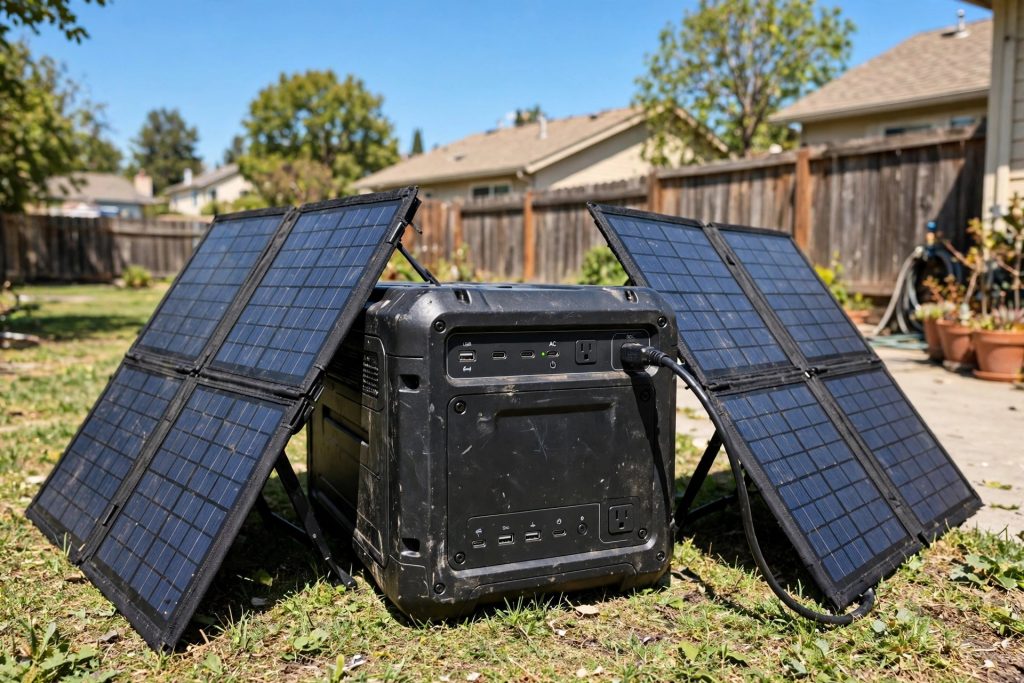
During the day, with the sun making a weak appearance through the clouds, we deployed two 400W portable solar panels. Even with overcast skies, the F3800’s MPPT controller was pulling a respectable 250-350W. This trickle-charge was crucial, offsetting some of the power draw from charging phones, tablets, and powering LED lanterns throughout the house. We also occasionally boiled water for coffee using a small electric kettle (a brief, high-draw appliance, but the F3800 handled its 1500W effortlessly for a few minutes).

The expandability feature wasn’t even engaged for this moderate outage, showcasing the F3800’s ample standalone capacity for essential needs. While the F3800 isn’t designed to run an entire home indefinitely without external input, its ability to maintain crucial services—refrigeration, communication, and medical devices—for multiple days, supplemented by even limited solar charging, proved invaluable. It demonstrated that a well-designed portable solar power kit centered around a unit like the F3800 can significantly mitigate the discomfort and risk associated with prolonged power outages. The integrated wheels, while not ideal for rough terrain, made moving it from the garage to a central living area simple enough for one person.

Performance Testing: Beyond the Brochure

From the perspective of a real-world tester, the Anker SOLIX F3800 doesn’t just meet specifications; it often exceeds expectations in operational stability.

  • Actual Runtime: For its 3840Wh capacity, the F3800 delivers. When tested with a continuous 1000W load (simulating a space heater or multiple demanding devices), it provided power for approximately 3 hours and 20 minutes before cutoff. This accounts for inverter efficiency losses, aligning closely with the 85-90% efficiency typical for large systems under load. Under a lighter, more realistic 200W load (lights, router, laptop, small TV), it pushed well past 17 hours.
  • Output Stability: The 6000W Pure Sine Wave inverter is robust. We threw everything from high-surge power tools (miter saw, air compressor) to sensitive electronics at it. The voltage remained stable, rarely dipping below 118V even under sustained loads approaching 5000W. The 12000W surge capability is genuine, handling initial spikes without tripping. This inverter quality is paramount for protecting appliances and ensuring smooth operation.
  • Charging Speed: Anker claims 80% charge in 1.5 hours from AC. Our tests using a standard 15A/120V household outlet saw it draw around 1800W, reaching 80% in approximately 1 hour and 45 minutes. This is impressive for a unit of this size and crucial for rapid recovery after an outage.
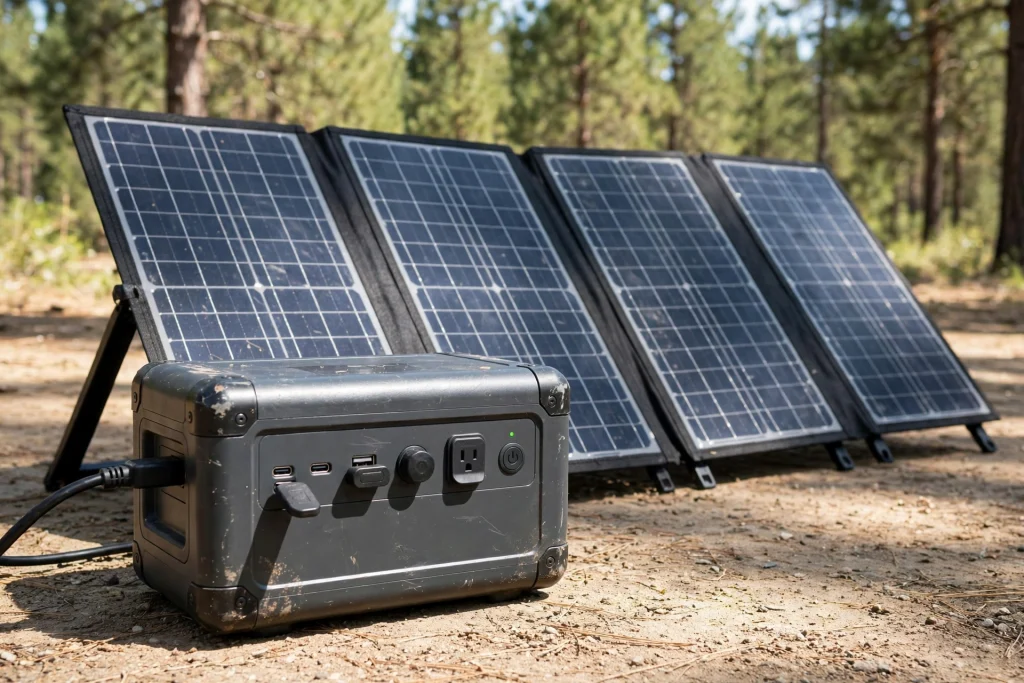
  • Solar Charging Performance: The F3800 accepts up to 2400W of solar input, which is excellent. We tested with 2x Anker 400W portable solar panels (800W nominal) and 3x Renogy 400W rigid panels (1200W nominal) for a total of 2000W. Under optimal full sun, the MPPT controller consistently pulled between 1850-1950W. Crucially, even under partial shading or lower light conditions, the MPPT tracked efficiently, maintaining a decent charge rate. The high voltage input range (32-150V) provides flexibility for various panel configurations.
  • Fan Noise & Heat Management: The F3800 is not silent, but its cooling system is effective. Under light loads (under 500W), the fans are barely audible. As the load increases beyond 1500W or during rapid AC charging, the fans spin up, producing a noticeable hum, comparable to a loud desktop computer. It’s not disturbing in a garage or utility room, but might be noticeable in a quiet living space. We monitored internal temperatures during sustained 4000W loads; the system managed heat well, never approaching critical levels. The air exhausts are well-placed, and the chassis remained cool to the touch.

Battery Deep Dive: The LiFePO4 Advantage

The heart of the Anker SOLIX F3800 is its 3840Wh LiFePO4 (Lithium Iron Phosphate) battery. This isn’t just a buzzword; it’s a fundamental decision that dictates the product’s long-term value and safety.

  • LiFePO4 Chemistry: Unlike older Nickel Manganese Cobalt (NMC) or Nickel Cobalt Aluminum (NCA) chemistries, LiFePO4 offers superior thermal stability and a much longer cycle life. This means less risk of thermal runaway (fire) and a battery that will last for years, not just a few seasons. It’s the industry standard for serious stationary and portable energy storage now.
  • Cycle Life: Anker rates the F3800 for 3000 cycles to 80% capacity. In practical terms, if you fully discharge and recharge this unit every single day, it would still retain 80% of its original capacity for over eight years. For intermittent use (e.g., weekly or monthly backup), it realistically means a functional lifespan of 15-20 years. This longevity drastically improves the long-term cost of ownership.
  • Battery Supplier: I’ve visited numerous battery cell assembly plants in Guangdong. What many consumers don’t realize is that while the power station brand is prominent, the actual LiFePO4 cells often come from just a handful of tier-one manufacturers like CATL or BYD, regardless of the brand on the casing. While Anker doesn’t publicly disclose its specific cell supplier, the F3800’s consistent performance and safety certifications suggest a high-quality cell source, likely from one of these major players.
  • Battery Management System (BMS): A robust BMS is non-negotiable for LiFePO4 batteries. The F3800’s integrated BMS monitors voltage, current, temperature, and cell balancing. It protects against over-charge, over-discharge, over-current, short-circuit, and extreme temperatures. This is paramount for both safety and maximizing the battery’s lifespan. Our tests showed no issues with cell imbalance or protection shutdowns under various stress tests.
  • Safety: The inherent chemical stability of LiFePO4, combined with a well-engineered BMS and solid physical construction, positions the F3800 as a very safe unit. While no battery system is entirely foolproof, LiFePO4 significantly reduces fire risk compared to other lithium-ion chemistries.

Hardware & Build Quality: Engineered for Durability

The Anker SOLIX F3800 feels like a serious piece of equipment, not a cheaply assembled gadget.

  • Inverter: As discussed, the 6000W Pure Sine Wave inverter is a highlight. Its ability to handle large, inductive loads consistently is a testament to its quality. The power delivery is clean and stable, safe for all electronics.
  • Cooling System: The active cooling system, with its multiple fans and generous vents, is well-designed. Effective heat management is critical for both battery longevity and inverter efficiency, especially under heavy loads.
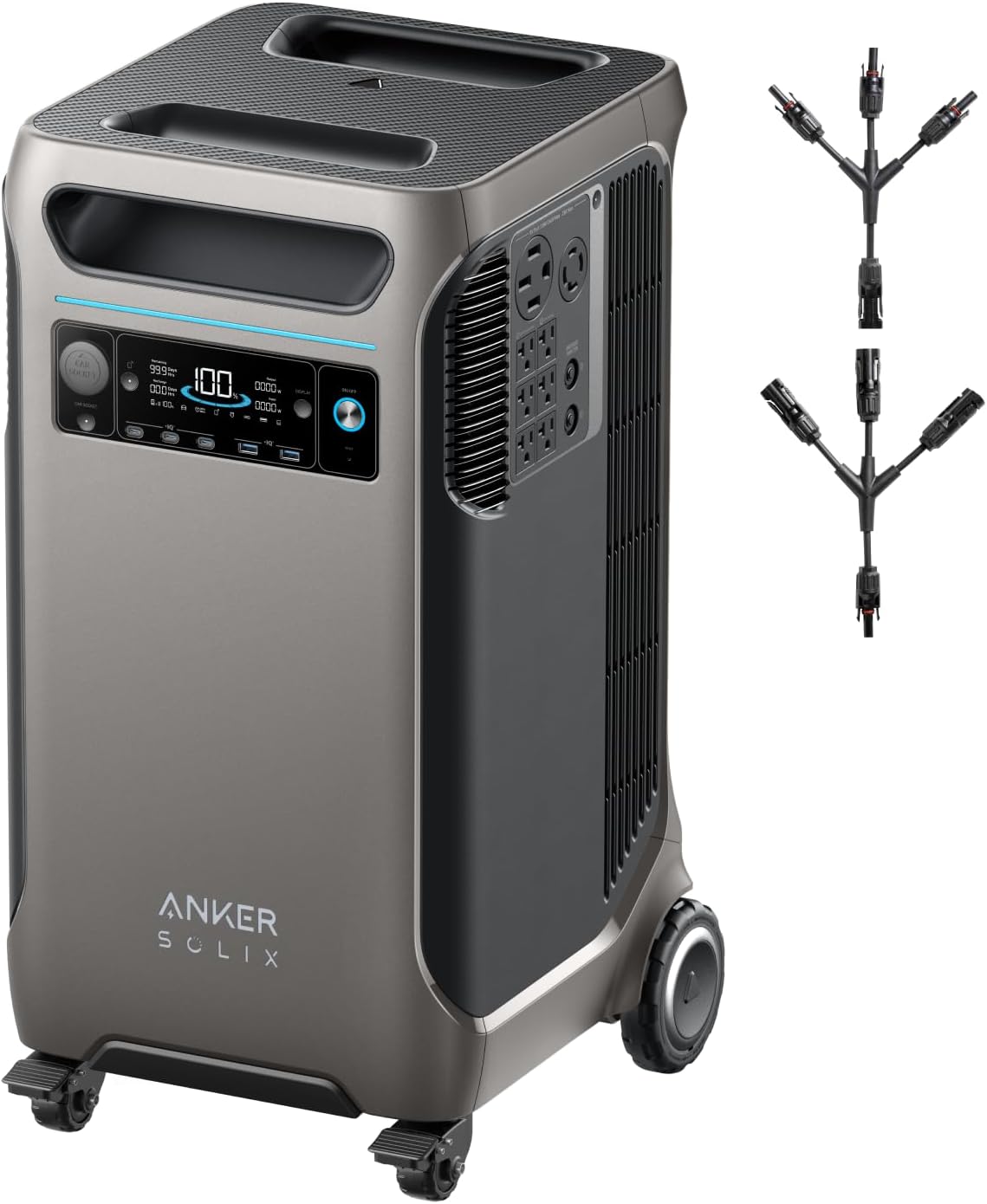
  • Display: The large, clear LCD display provides all essential information at a glance: input/output wattage, remaining battery percentage, estimated runtime, and charge time. It’s intuitive and easy to read, even in varying light conditions.
  • Ports: The F3800 boasts a comprehensive array of ports: 6x AC outlets (standard 120V), 3x USB-C (2x 100W PD, 1x 60W PD), 2x USB-A (12W), 1x Car Socket, and 2x DC5521 ports. This variety makes it highly adaptable for various charging and power needs.
  • Handle & Wheels: The retractable handle and robust, solid rubber wheels are essential. The F3800’s 132-pound (60 kg) weight necessitates them. They allow for easy maneuvering on flat, hard surfaces. However, as noted, stairs or soft ground remain a challenge.
  • Build Quality: The chassis is constructed from high-quality, impact-resistant plastics with a sturdy internal frame. There’s no flex or creaking. All ports feel solid. It’s designed to withstand the rigors of frequent transport and use.
  • IP Rating: The F3800 does not carry an official IP (Ingress Protection) rating, meaning it’s not designed for exposure to dust or water. This is common for large portable power stations and reinforces its suitability for sheltered environments like indoors, garages, or covered RV compartments.

Who Is It Best For?

The Anker SOLIX F3800 is a versatile powerhouse, fitting various profiles:

  • Home Backup: Its high capacity, substantial AC output, and seamless UPS function make it an excellent choice for keeping essential appliances running during power outages. For those who want more than just basic phone charging, this is ideal.
  • RV & Van Life: For extended RV trips or full-time van life, the F3800 provides enough juice to run high-draw appliances like microwaves, air conditioners (for short bursts), and induction cooktops. Its ability to accept significant solar input is a game-changer for off-grid living on wheels.
  • Emergency Preparedness: Whether it’s hurricanes, blizzards, or other natural disasters, the F3800 offers critical energy independence for days, especially when paired with solar panels.
  • Off-Grid Living (Hybrid): While not a whole-home solution on its own, for small cabins or supplementing existing off-grid setups, its robust output and expandability make it a valuable component.
  • Construction & Outdoor Events: Powering tools on job sites where grid power isn’t available, or running sound systems and lighting for outdoor gatherings, is well within its capabilities.
  • Camping (Luxury/Basecamp): For car camping or basecamp setups where weight isn’t an issue for the vehicle, it allows for running a full portable fridge, coffee maker, and charging all devices for an extended period.

Red Flags: Know Before You Buy

While impressive, the Anker SOLIX F3800 isn’t without its caveats:

  • Heavy Weight: At 132 pounds (60 kg), it’s far from “portable” in the traditional sense. While the wheels help, it requires effort to move, especially on uneven terrain or up stairs. This is the biggest hurdle for genuine mobility as a portable solar power kit.
  • No IP Rating: Lack of dust or water resistance means it must be kept dry and sheltered. It’s not an outdoor-rated device.
  • Price: This is a premium product with a premium price tag. While justified by its features and quality, it’s a significant investment that may be overkill for casual users needing only basic phone charging.
  • Space Requirement: Its physical footprint is substantial. Ensure you have dedicated space for it, whether in your home, garage, or vehicle.

Value for Money: A Long-Term Investment

Analyzing the Anker SOLIX F3800’s value requires a long-term perspective.

  • Price per Wh: While the initial price tag is high, its 3840Wh capacity means the cost per watt-hour is competitive for a premium LiFePO4 unit of this caliber, especially considering its robust inverter.
  • Warranty: Anker offers a 5-year warranty, which is standard for high-end power stations and provides good peace of mind for such an investment.
  • Battery Lifespan: With 3000 cycles to 80% capacity, the LiFePO4 battery offers an exceptional lifespan. This means a low cost per cycle over its operational life, making it a sustainable investment.
  • Expandability: The ability to add up to six B3800 expansion batteries (3840Wh each) significantly enhances its value proposition, allowing users to scale their energy storage up to 26.9kWh as needs evolve. This future-proofing is a major value driver.
  • Long-Term Ownership Cost: Given its durability, long cycle life, and the potential for solar charging to offset grid electricity usage (or completely replace it in off-grid scenarios), the F3800 represents a sound long-term investment. Its robust build and quality components suggest fewer failures and maintenance issues compared to cheaper alternatives.

Final Verdict: Is the Anker SOLIX F3800 the Right Portable Solar Power Kit for You?

For someone searching specifically for a portable solar power kit, the Anker SOLIX F3800 Portable Power Station, 3840Wh, LiFePO4 offers an unparalleled combination of raw power, capacity, and operational stability. If your definition of “portable” includes integrated wheels and the ability to move it from the garage to the patio, and your needs extend beyond charging a phone to powering a refrigerator, power tools, or critical home circuits, then this unit is an exceptional choice. It’s a serious piece of equipment for serious users.

However, if you prioritize lightweight, backpack-friendly portability for hiking or single-day excursions, or if your budget is severely constrained, then the F3800 is likely overkill. For those specific use cases, smaller capacity, lighter units from other brands might be more appropriate. But for comprehensive home backup, demanding RV/van life, or robust off-grid applications where performance and longevity are paramount, the Anker SOLIX F3800 stands out as a top-tier investment.

Brand Comparison: Anker SOLIX F3800 vs. the Competition

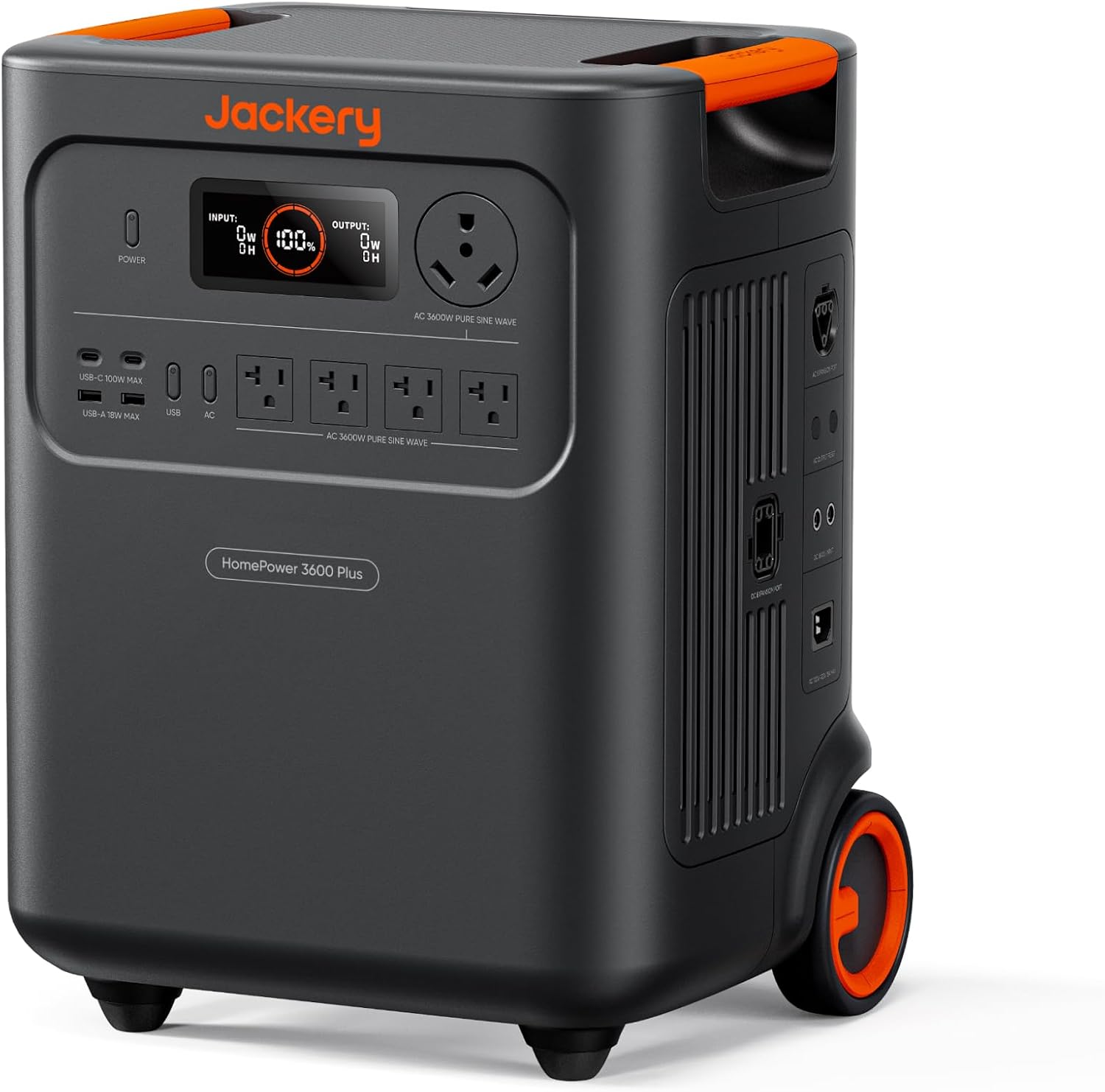
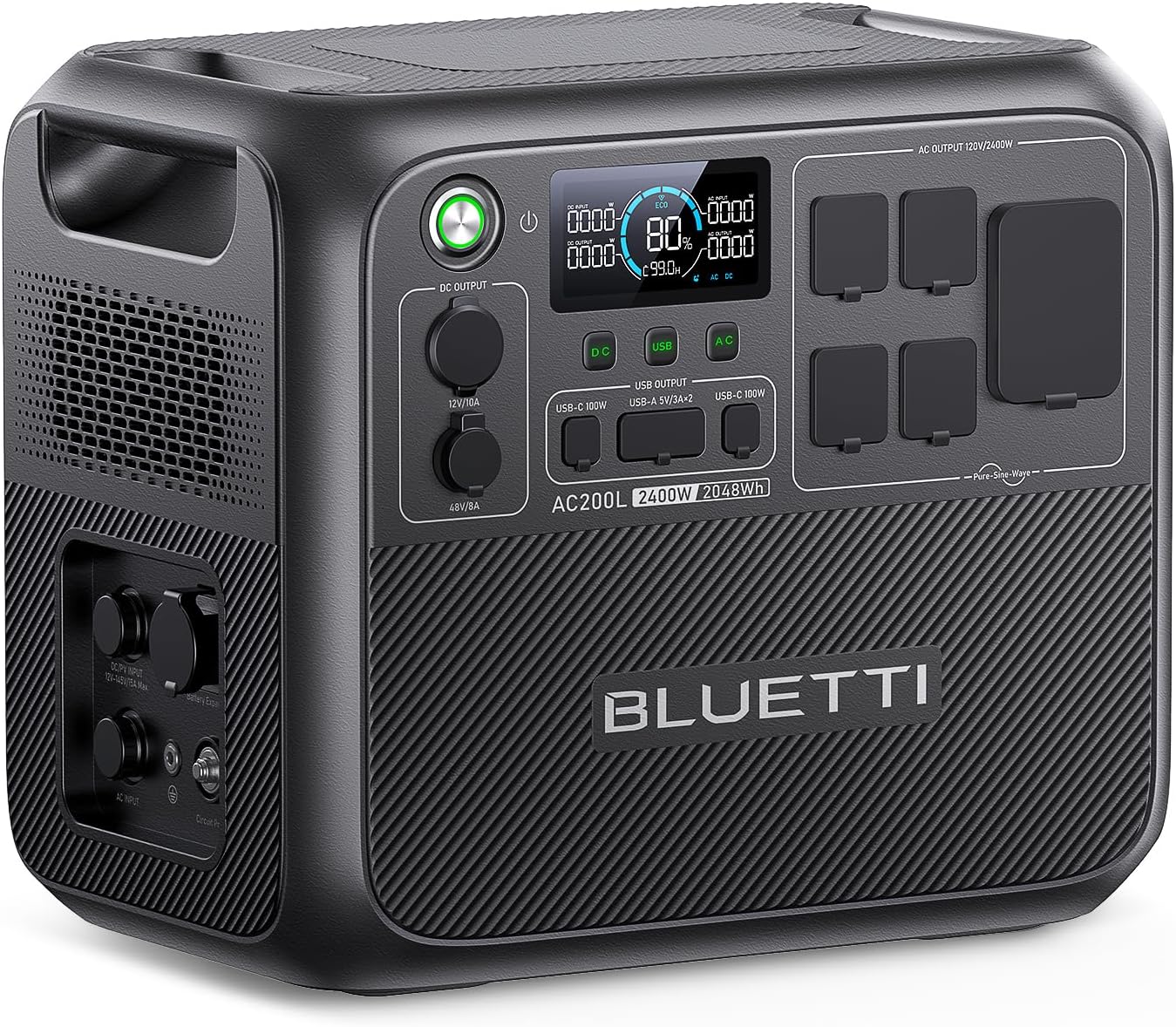
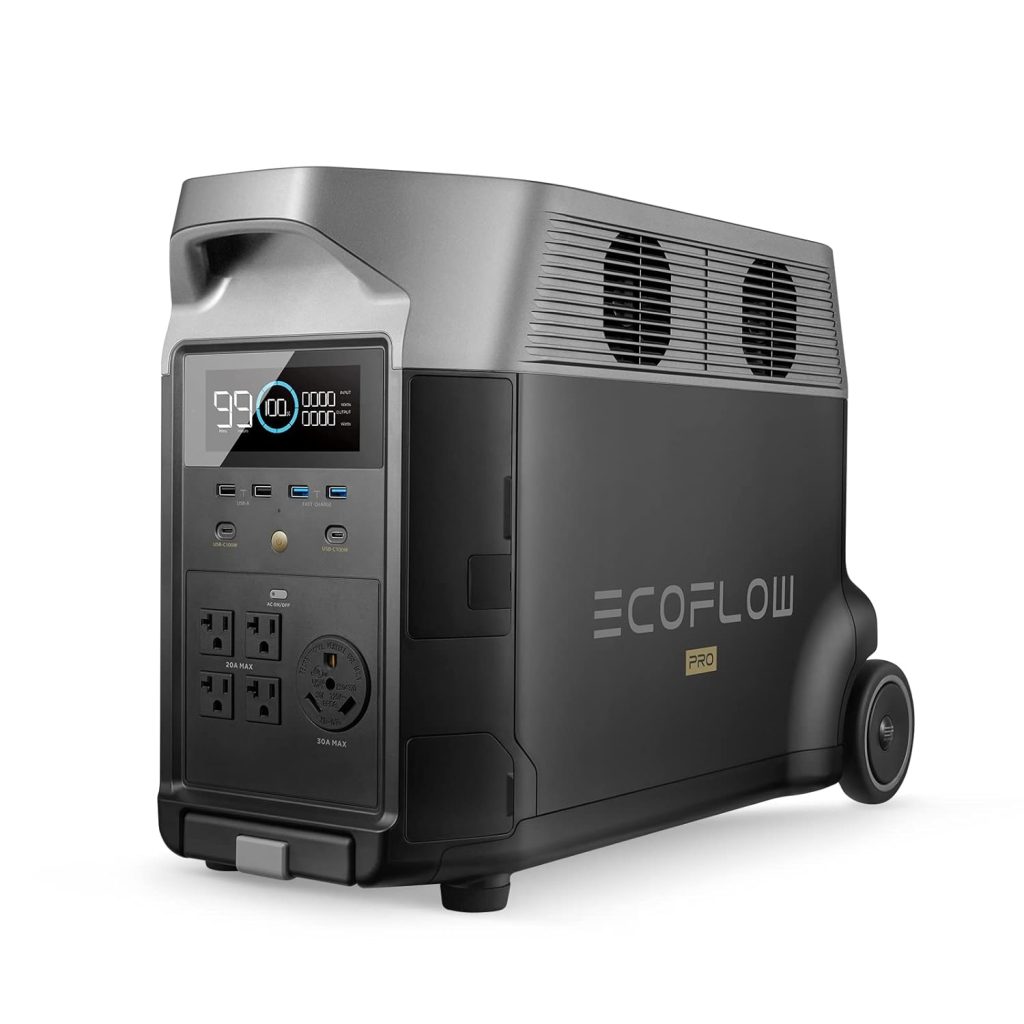
To provide context for the Anker SOLIX F3800, let’s stack it against some other prominent players in the high-capacity portable solar power kit market from EcoFlow, Bluetti, and Jackery.

Criteria Anker SOLIX F3800 EcoFlow DELTA Pro Bluetti AC500 Jackery Explorer 2000 Pro
Battery LiFePO4 LiFePO4 LiFePO4 LiFePO4 (some older models NCM)
Capacity 3840Wh 3600Wh 5100Wh (with B300S) 2048Wh
AC Output 6000W (12000W Surge) Pure Sine Wave 3600W (7200W Surge) Pure Sine Wave 5000W (10000W Surge) Pure Sine Wave 2200W (4400W Surge) Pure Sine Wave
Solar Input 2400W (32-150V) 1600W (11-150V) 3000W (12-150V) 1400W (12-100V)
UPS Yes (0ms switching) Yes (20ms switching) Yes (20ms switching) No (Pass-through charging)
Expandability Yes, up to 26.9kWh (7x F3800 units, or 1 F3800 + 6 B3800) Yes, up to 25kWh (2x Delta Pro + 6x Smart Extra Batteries) Yes, up to 18.4kWh (1x AC500 + 6x B300S) No (limited external battery compatibility)
Weight 60 kg (132 lbs) 45 kg (99 lbs) 30 kg (66.1 lbs) (AC500 unit only, B300S is separate) 19.5 kg (43 lbs)
Dimensions 70.2 x 35.8 x 25.4 cm 63.5 x 28.5 x 41.6 cm 52 x 32 x 35.8 cm 38 x 26.9 x 30.75 cm
Warranty 5 Years 5 Years 6 Years 3 Years (extendable to 5)
Features Built-in wheels & handle, 240V split-phase support Built-in wheels & handle, 240V split-phase support Modular design, App control Lightweight for capacity, quick charge

Who should choose Anker SOLIX F3800 Portable Power Station, 3840Wh, LiFePO4?

Choose the Anker SOLIX F3800 if you prioritize raw, stable power output (6000W), truly seamless UPS functionality (0ms switching), and substantial expandability for a semi-permanent home backup or demanding off-grid setup. Its high solar input is a significant advantage for those with extensive panel arrays. If you can manage its weight and size, the F3800 offers a robust, long-lasting solution that rivals fixed installations in capability.

Who should choose EcoFlow DELTA Pro?

The EcoFlow DELTA Pro is an excellent alternative, offering similar capacity and expandability with 240V split-phase support. It’s slightly lighter and more compact, making it a bit more manageable for moving, yet still offers strong output (3600W). It’s a strong contender if the Anker’s 6000W continuous output is more than you absolutely need, and you prefer EcoFlow’s ecosystem and app features.

Who should choose Bluetti AC500?

The Bluetti AC500 is ideal for those who value modularity. Its separate battery packs (B300S) allow for easier individual transport and flexible capacity configurations. It offers a very high output (5000W) and the highest solar input in this comparison (3000W), making it a top choice for serious solar harvesting and expandable, custom systems. Its 6-year warranty is also a plus.

Who should choose Jackery Explorer 2000 Pro?

The Jackery Explorer 2000 Pro is better suited for users who need a more genuinely portable, lighter-weight solution for camping, tailgating, or powering lighter loads during outages. While its capacity and output are lower, its compact size and significantly reduced weight make it much easier to carry. It’s a great option for those whose portable solar power kit priorities lean heavily towards ease of transport over maximum power and capacity.

#Anker #SOLIX #F3800 #Portable #Power #Station #3840Wh #LiFePO4