
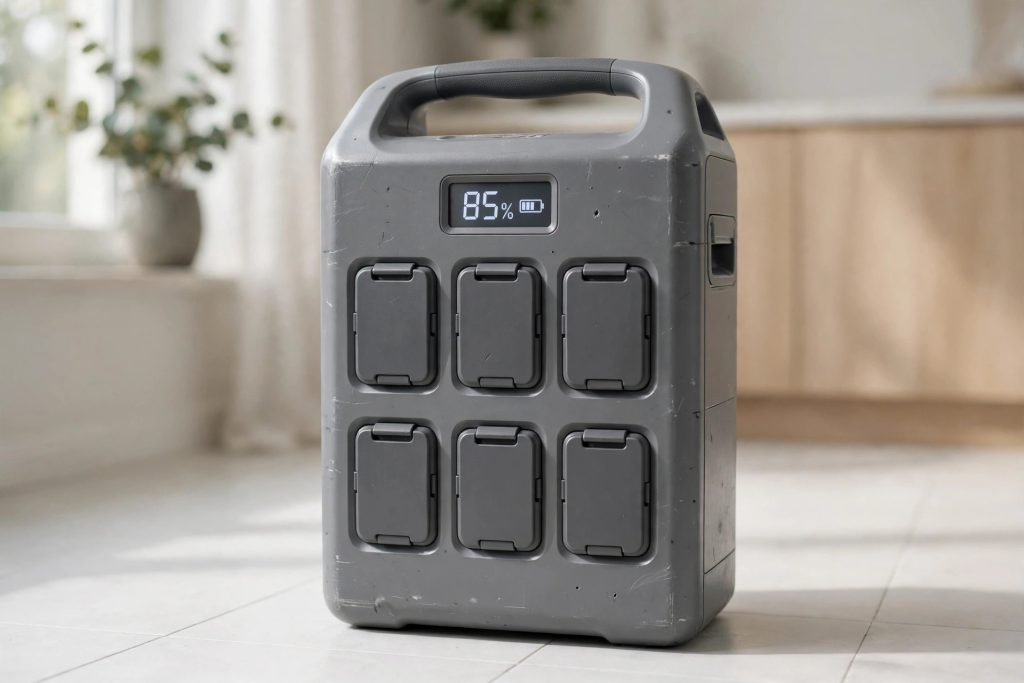
Anker SOLIX C1000 Gen 2 Review: Is a 1kWh Power Station Worth It?
A 1kWh power station is the line in the sand. Below it, you’re running phones and laptops. Above it, you’re backing up a fridge, a router, and a night of real living. This Anker SOLIX C1000 Gen 2 guide is written for anyone standing on that line — outage preppers, RV travelers, and anyone tired of wondering whether their backup is actually enough.
Here’s the honest frame: a unit like the C1000 Gen 2, with roughly 1024Wh of capacity and a 2000W AC output, costs meaningfully more than the small 300Wh boxes everyone starts with. So the only question that matters is whether the jump pays for itself in your real life. That’s what this guide answers — not just “is it good,” but “is it worth it for you, versus the smaller station or the gas generator you already own.”
Quick Answer
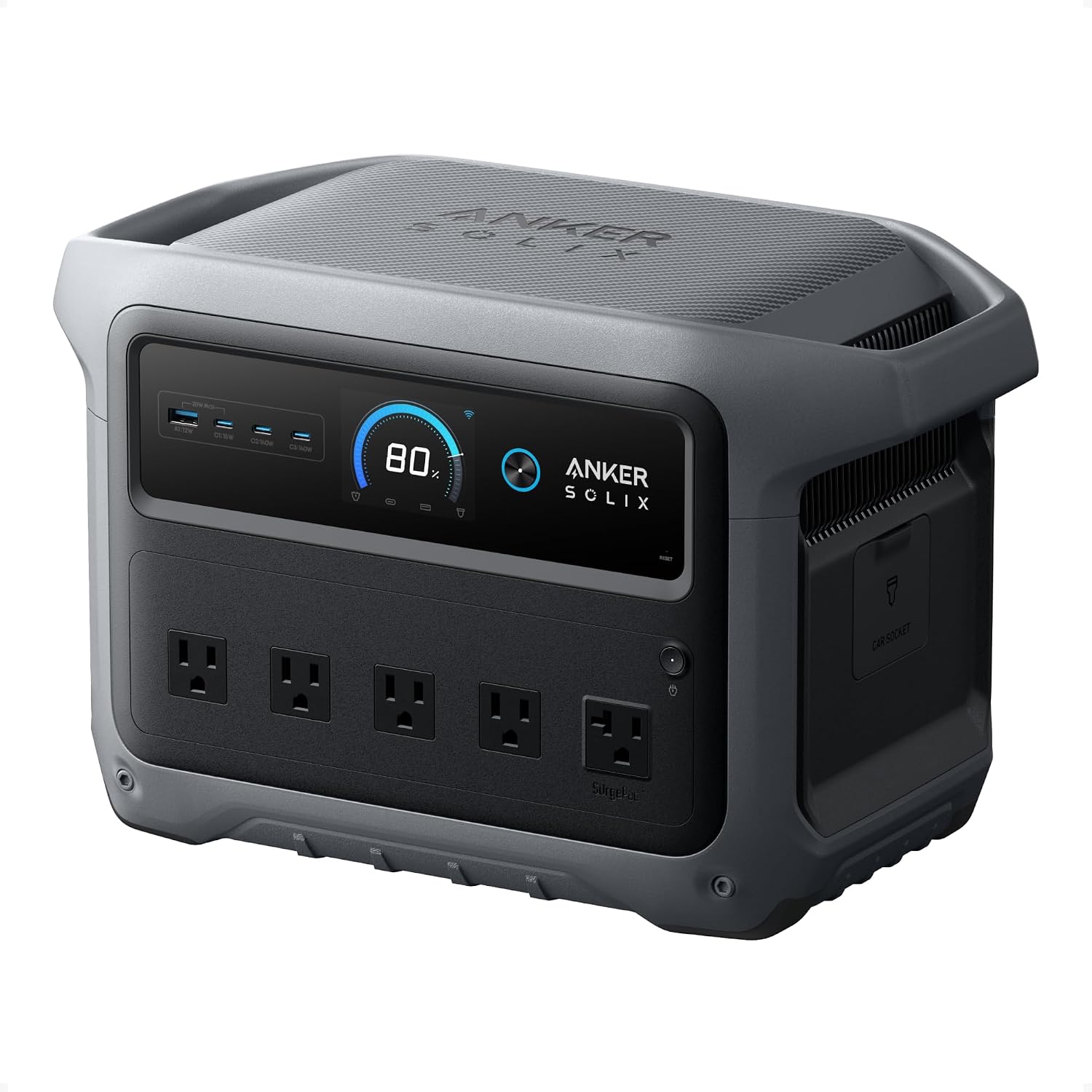
The Anker SOLIX C1000 Gen 2 sits in the 1kWh class with 2000W of AC output and a notably fast AC recharge (around 49 minutes from empty to full on a wall outlet). If you need genuine outage coverage — fridge, internet, lights, a night’s sleep with the CPAP — it’s the tier where a portable station stops being a gadget and starts being infrastructure. If you only charge phones and laptops, a 300Wh unit does that job for far less money.
Compare Top 1kWh Power Stations
Three proven picks side by side — choose the one that fits your needs.
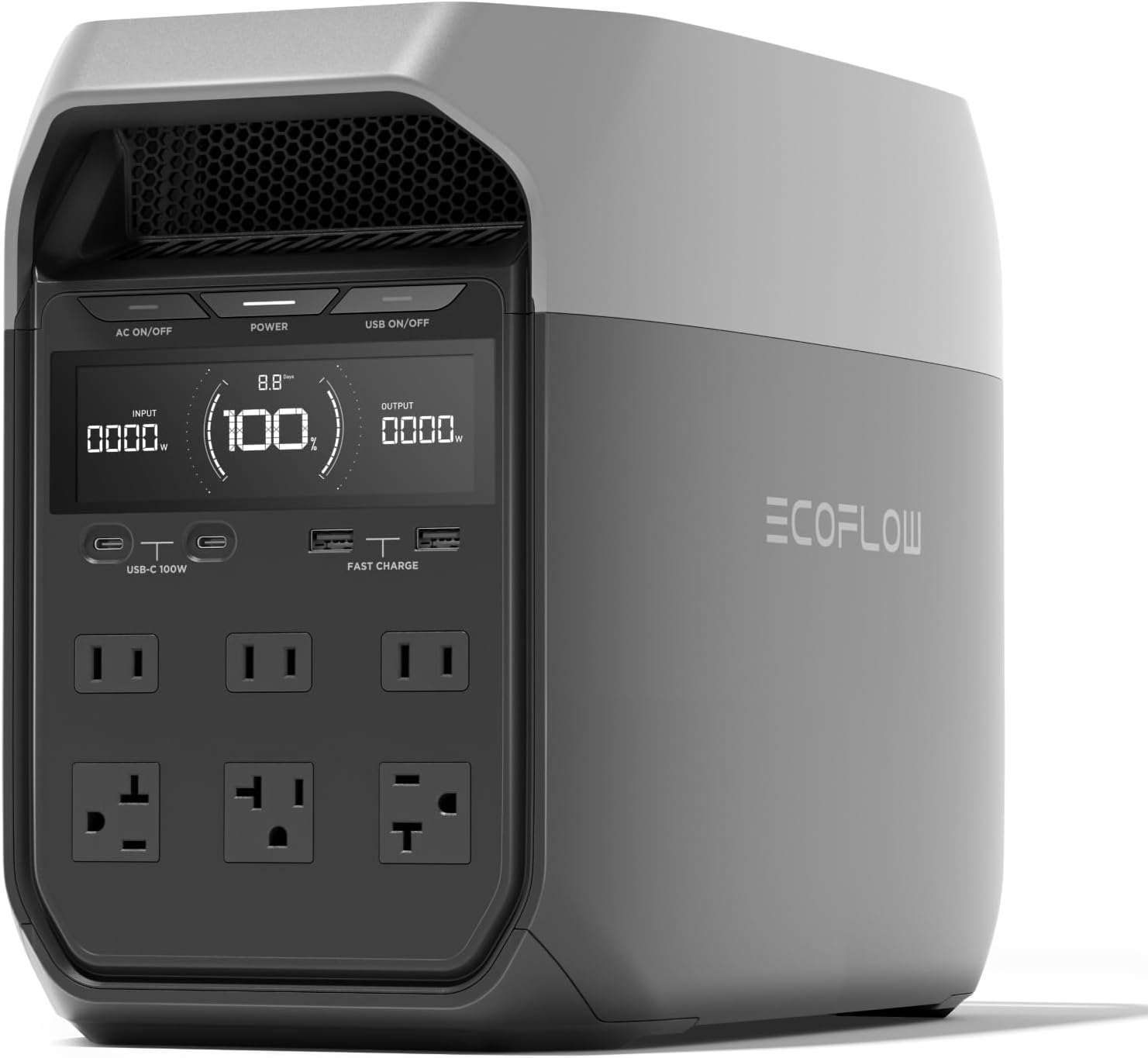
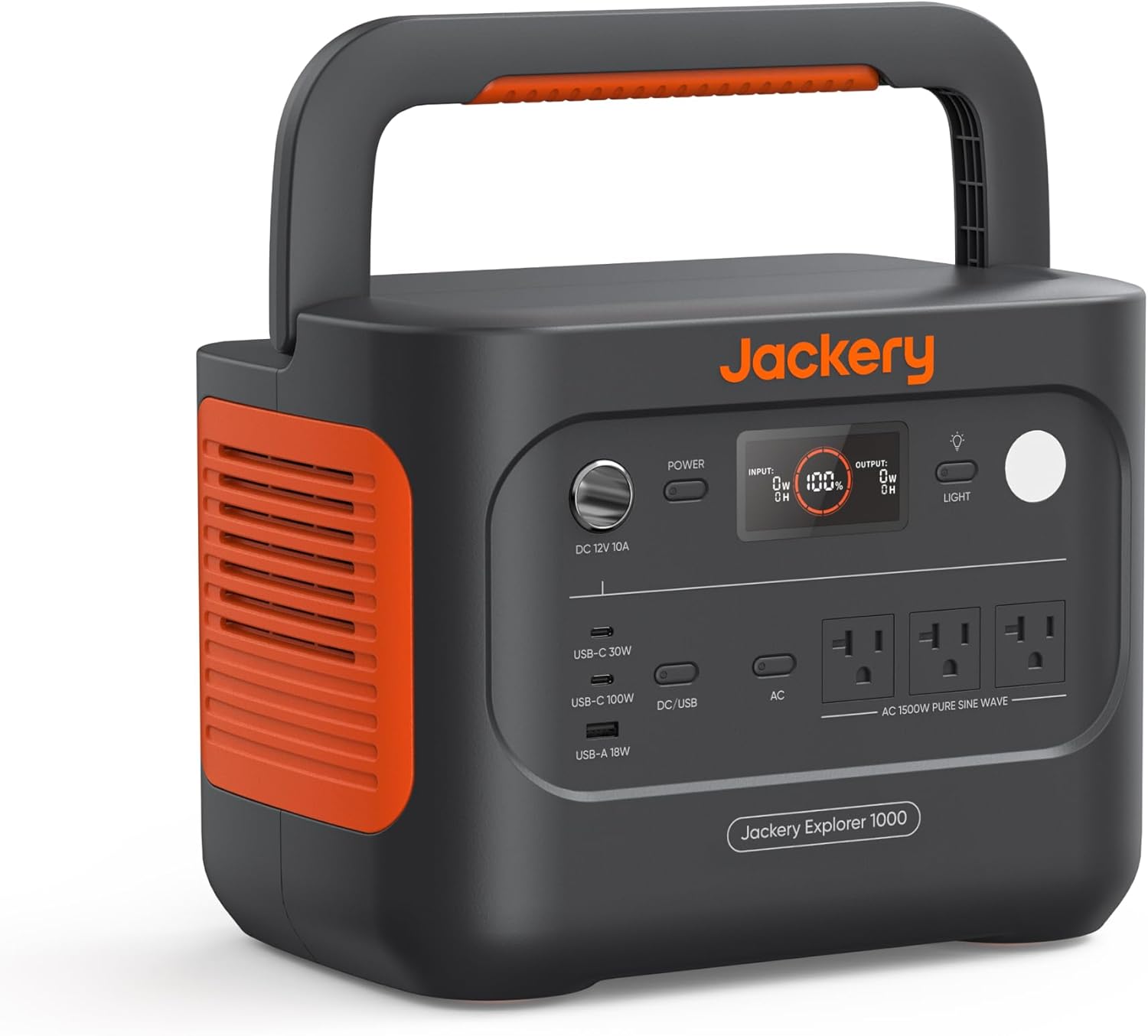
Prices and availability may vary — tap any product to check the current listing.
Still comparing? Our reviews of the BLUETTI AC180 and the EcoFlow RIVER 2 Max cover the two closest rivals in this class.
What to Look For in a 1kWh Power Station
Capacity numbers get all the attention here, and they’re honestly the least interesting part. What separates a 1kWh station you’ll rely on from an expensive paperweight is everything around the battery: how much it can push at once, how fast it recovers, whether it’ll still be healthy in year six. The Anker SOLIX C1000 Gen 2 is a good lens for all of it.
Capacity: one kilowatt-hour is a threshold, not just a number
A typical full-size fridge draws roughly 100–150W while running, and Wi-Fi gear barely sips power. Stack a fridge, a router, a few LED lights, and phone chargers together, and a 1kWh station covers about a day of careful use — or a comfortable night plus morning with margin to spare.
That’s the threshold. A 300Wh station can’t do this job — it runs out before the night does. The trade-off is real money and real weight. Don’t buy 1kWh for bragging rights. Buy it because you’ve listed the devices you’d need during a 24-hour outage, and the list actually needs it.
Output wattage: 2000W is what keeps you out of trouble
Capacity is how long you can run things. Wattage is what you’re allowed to run at all. A 2000W AC output means the C1000 Gen 2 can handle most kitchen appliances and a microwave in a pinch — devices that would trip a 1000W unit instantly.
People chronically underestimate surge draw. Motors — fridges, pumps, power tools — pull a spike when they start that’s multiples of their running wattage. A generous output ceiling absorbs those spikes instead of shutting down at the worst moment. The caveat: 2000W still isn’t whole-house power, and heating elements eat any battery alive. Know the difference between “can run” and “can run for long.”
Recharge speed: the spec you’ll feel on every single trip
Fast recharge is the spec you feel most. The C1000 Gen 2’s headline — roughly 49 minutes from empty to full on AC — sits in a different league from the 4–6 hour waits that used to be normal.
Why does it matter so much? Because a power station is only as useful as its turnaround time. Power comes back for an hour, you grab a full charge. Quick stop at a powered campsite, you’re topped up. Fast charging changes how you use the thing — you’re more willing to drain it hard knowing it recovers quickly. The trade-off is heat and cell wear, so treat rapid charging as a feature for when it counts, not a daily habit.
Battery chemistry: LiFePO4 is the quiet longevity story
Lithium iron phosphate — LiFePO4 — is the chemistry you want in anything you plan to own for years. It handles far more charge cycles than older lithium-ion formulations, runs more thermally stable, and degrades gracefully instead of falling off a cliff.
In plain terms: a LiFePO4 station that gets cycled regularly should still hold useful capacity many years from now, where an older chemistry would already feel tired. This is the spec that quietly determines whether your purchase is a one-decade appliance or a two-year gadget. When you’re paying 1kWh money, chemistry is arguably the biggest thing you’re buying — bigger than the brand on the shell.
Weight and portability: heavy enough that you should care
A 1kWh station is not a backpack item. Expect something in the mid-20s of pounds — fine to carry from garage to kitchen, not something you’d hike with. “Grab-and-go for the car,” not “grab-and-go for the trail.”
This is the real lifestyle fork against the 300Wh class. Small stations live in a closet and come out for camping; 1kWh units want a semi-permanent home — near the fridge, by the home office, in the RV’s storage bay. If your fantasy is tossing it in a daypack, you’ve picked the wrong tier. If your reality is “outage hits, I carry it to the kitchen,” the weight is a non-issue.
Expandability: plan for the backup you don’t need yet
Some stations in this class accept extra battery packs; others are sealed at whatever capacity they shipped with. Expansion isn’t a must-have on day one — but it’s the cheapest way to future-proof. Your needs grow. Medical devices enter the picture.
The flip side: extra batteries cost real money for a “someday” that might never come. I’ve watched people overspend on expandable ecosystems they never expanded. My rule of thumb — buy the capacity you need now with a small margin, and only pay the expansion premium if your device list is clearly growing within a year or two.
Matching the Power Station to Your Life
Forget the spec sheet for a minute. Two people buy 1kWh stations, and they want almost opposite things from them. Figure out which one you are — the answer makes the worth-it math easy.
The home outage prepper
You live somewhere the grid hiccups — storms, heat waves, an aging transformer down the block. For you, a 1kWh station like the C1000 Gen 2 is the night-shift worker: it quietly keeps the fridge, router, and a lamp alive until morning, then recharges in under an hour when power flickers back.
Pair it with a solar panel and you’ve got a genuinely resilient setup for multi-day outages. The honest limit: this doesn’t run the HVAC, the electric stove, or the water heater. Size your expectations around the essentials, and 1kWh feels generous.
The RV road-tripper
You’ve got wheels and a horizon. For RVers, the station replaces the noisy generator at rest stops and the sketchy hookup at dry campsites — running a portable fridge, charging laptops and cameras, keeping the fan going on a hot night. Silent, fume-free, usable inside the rig.
Recharge is what makes it work on the road: plug into a powered site for lunch and you’re most of the way back, or trickle-charge from roof panels while you drive. Just don’t expect it to replace a built-in RV battery bank for full-time off-grid living — this tier is for weekenders and long-weekend warriors.
How the Tiers Compare
Portable power stations cluster into four rough tiers, and each one is really a different answer to “how much do I actually need.” The 1kWh class is where the value conversation gets interesting.
| Type / Tier | Best For | Price Tier | Key Feature | Watch Out |
|---|---|---|---|---|
| ~300Wh | Day trips, phones, laptops | Budget-friendly | Light and genuinely portable | Can’t touch a fridge; one small appliance at a time |
| ~500Wh | Weekend camping, CPAP, portable fridges | Mid-range | Balanced size-to-power ratio | Awkward middle — often not enough for home backup |
| ~1kWh | Home outage backup, RV use | Premium | 2000W-class output; runs real appliances | Heavy; overkill if you only charge small devices |
| 2kWh+ | Multi-day outages, job sites, full-timers | Premium-plus | Serious whole-home-adjacent capacity | Pricey, heavy, and expandable ecosystems add up fast |
The 300Wh tier is the gateway — cheap, light, and honest about what it is. The 500Wh tier is the danger zone: it costs meaningfully more than 300Wh without quite unlocking home backup, so a lot of buyers land here and still feel short. The 1kWh tier is where the job actually gets done for outages and RV life, which is why it’s the worth-it sweet spot for most serious buyers. And 2kWh+ is for people whose needs are genuinely big — multi-day autonomy, construction tools, full-time off-grid — where skimping would just mean buying twice.
Home Outages: What 1kWh Actually Covers
It’s 9 p.m., the grid drops, and the forecast says “restoration unknown.” With a 1kWh station and a 2000W ceiling, your night looks like this: fridge on its normal cycle, Wi-Fi up, a few LED lights on, phones charging, laptop available. You go to bed annoyed instead of anxious.
Fridges cycle — they don’t draw rated wattage constantly, they coast most of the hour and kick on briefly. Over 12 hours, that lands around half the battery for the fridge, the rest for everything else. Two straight days with zero recharge? That’s pushing it. But outages rarely give you zero recharge chances — the grid flickers, you run a quick solar top-up, or power returns for an hour and that 49-minute fast charge does its magic.
What it won’t do: air conditioning, electric heating, the dryer. Heating and cooling are energy monsters, and no portable station in this class pretends otherwise. If your backup plan includes climate control, you’re in generator territory. For everything else a household runs at night, 1kWh is enough.
RV Life: Why 1kWh Is the Sweet Spot on the Road
Ask around any dry-camping circle and you’ll hear the same arc: people start with a small station, outgrow it by the second trip, and land on 1kWh as the permanent answer. The road forces you to run a fridge full-time, and that one device quietly eats small stations alive.
A 12V portable fridge sips power, but it sips 24 hours a day. Over a long weekend, that’s most of a small station’s capacity before you’ve charged a single phone. The 1kWh class absorbs that baseline and still has headroom for laptops, lights, and the fan that makes August bearable.
Recharge on the road is the other half. Roof solar trickles in while you drive, shore power at a campground gives you a near-full charge over a meal stop, and the fast AC input means you’re not chained to a pedestal all afternoon. The weight? You barely notice it when it lives in a storage bay. This is the one tier where “heavy” stops being a criticism.
Common Mistakes Buyers Make
1. Buying watt-hours instead of buying a use case
The classic error. People compare 1024Wh vs 1002Wh vs 1056Wh like they’re picking a winner, when the real question is “what will this run on my worst day.” Two stations with near-identical capacity can feel completely different because of output wattage, port layout, and recharge speed. Start with your device list. Let the list pick the station.
2. Ignoring the output ceiling
This one bites hard. You buy for capacity, bring it home, plug in the microwave — and it trips instantly because your 1000W unit can’t handle the surge. Wattage is the gatekeeper; capacity is just the duration. In the 1kWh class, a 2000W-class output is what makes the capacity usable for real appliances. Skimp on wattage and you’ve bought a big battery you can’t fully use.
3. Forgetting that recharging is half the product
A station that takes six hours to recharge is a station you can’t use twice in one day. Fast AC recharge isn’t a luxury spec — it’s what turns a battery into a system during multi-day outages or back-to-back camping days. Put recharge time next to capacity in your mental spreadsheet. It deserves equal weight.
4. Expecting it to replace a gas generator
It won’t, and that’s fine. A gas generator runs all day on fuel; a battery station runs until it’s empty and then needs time to refill. The station wins on silence, indoor safety, zero maintenance, and instant power — the generator wins on raw endurance and heating loads. Buyers who understand the trade-off are happy. Buyers who don’t end up arguing with physics.
Questions People Ask Before Buying
These are the questions that actually decide purchases in the 1kWh class — the fridge question, the generator question, the recharge question, and the two brand showdowns. Straight answers, no marketing fog.
Can a 1kWh power station run a refrigerator?
Yes — a full-size fridge is exactly what this tier is built for, and it’s the most common reason people step up from smaller stations. A typical household fridge draws roughly 100–150W while its compressor runs, but it cycles on and off, so over 24 hours it consumes somewhere around a third to half of a 1kWh battery, leaving room for lights, phones, and a router. The catch is duration: you’re covered for a day or so of careful use, not a week. For multi-day outages, plan on recharging — from a solar panel, a wall outlet during brief power windows, or your car.
Is a portable power station better than a gas generator?
For most homeowners, yes — with one big caveat about heating loads. A battery station is silent, safe to use indoors, needs zero maintenance, and delivers power instantly with no fumes or fuel runs; a gas generator runs indefinitely on fuel and handles heavy heating appliances that would drain any battery in an hour. So the honest answer is that they’re different tools for different emergencies: the station covers fridges, electronics, lights, and medical devices beautifully — everything you need at 2 a.m. — while the generator covers the furnace, the water heater, and week-long grid failures. If you only get one, pick the one that matches your most likely outage.
How long does the Anker SOLIX C1000 Gen 2 take to recharge?
From a standard wall outlet, the C1000 Gen 2 recharges from empty in roughly 49 minutes — one of the fastest AC recharge times in its class, and a genuine practical advantage, not just a spec-sheet win. That speed changes how you use the station: a brief return of grid power or a lunch stop at a powered campsite becomes a full tank. Solar charging is slower and depends on panel wattage and sunlight — a few hundred watts of panels tops you up meaningfully over a full sunny day, but don’t expect wall-outlet speeds from the sun.
Anker SOLIX vs EcoFlow DELTA 3 — which should I buy?
Both are strong 1kWh-class stations, and the choice comes down to priorities rather than quality. The Anker SOLIX C1000 Gen 2 leans on output and recharge speed — a 2000W AC ceiling and that roughly 49-minute wall recharge make it the pick for running heavier appliances and bouncing back fast between uses. The EcoFlow DELTA 3 answers with expandability: if your needs are clearly growing, being able to bolt on extra battery capacity later is a real advantage. So the rule of thumb is simple: buy the Anker for maximum usable power and speed out of the box, and lean toward the EcoFlow if you suspect a year from now you’ll wish you’d bought more capacity.
Can I add more battery capacity later?
It depends on the model, and this is a spec worth checking before you buy rather than after. Some 1kWh stations accept add-on battery packs that stack capacity for multi-day outages or growing device lists, while others are sealed units — what you buy is what you get. The practical question is whether you’ll actually need it: most households never outgrow a 1kWh base unit for overnight outages and weekend trips. If you’re staring down medical equipment or a move toward off-grid living, expansion support is worth paying for upfront.
Why, How, What: Quick Answers
Why does output wattage matter more than capacity in this class?
Because wattage decides what you’re allowed to plug in, and capacity only decides how long it runs. A 1kWh station with a weak output is like a big fuel tank on a car that can’t climb hills — the energy is there, you just can’t use it when it counts. In this tier, where buyers specifically want to run fridges and kitchen appliances, a 2000W-class ceiling unlocks the whole category’s promise. Capacity without wattage is a battery. Capacity with wattage is a backup system.
How do you size a power station for your actual needs?
List the devices you’d run on your worst outage day, note each one’s wattage and hours of use — then multiply watts by hours for watt-hours, and buy roughly 1.5x that number as margin. The 1.5x isn’t paranoia; it covers inverter losses, battery aging, and the optimism everyone brings to their first estimate. Under 700Wh, save your money and buy smaller. Near or over 1000Wh, this tier is the evidence-based answer.
What does the 49-minute recharge really change?
It turns the station from a single-use battery into a reusable tool. Slow-recharging stations get used once per day — you drain it, then it’s dead weight until tomorrow. A station that refills in under an hour can cycle twice in a day: drain it overnight, top up during a morning power window, drain it again. During rolling blackouts or active travel days, that second cycle is worth more than extra capacity you can’t refill.
Frequently Asked Questions
Is 1kWh enough for a full day without power?
For essentials, yes. A fridge on its normal cycle, Wi-Fi, LED lights, and phone charging fit comfortably within 1kWh over 24 hours of careful use. Add a microwave session or an electric kettle and the margin shrinks fast — heating elements are the budget-killers.
Can I use it indoors during an outage?
Yes — that’s a main advantage over a gas generator. Battery stations produce no fumes, no carbon monoxide, and no noise, so they sit happily in the kitchen or bedroom. Keep it ventilated and away from heat sources while it runs or charges.
Does it work with third-party solar panels?
Generally yes, as long as the panel’s voltage sits within the station’s solar input range and you have the right adapter cable. Matching brands usually means plug-and-play cables and fewer adapter headaches on a windy afternoon.
How long will the battery last before it degrades?
LiFePO4 cells typically handle thousands of full cycles before dropping to 80% of original capacity — many years of regular use. Occasional outage duty barely dents that. The realistic limiting factor is whether the ports and your needs are still relevant a decade from now.
Can it run a CPAP machine overnight?
Easily. With the heated humidifier off, most CPAP machines sip gently enough that a 1kWh station covers a full night with margin to spare. Turn the heating on and consumption jumps, but you’d typically still get through the night.
Is it too heavy to take camping?
For car camping, no — you carry it trunk-to-tent like a cooler, then it stays put. For backpacking, yes, it’s the wrong tier entirely; that’s 300Wh territory. Your trip style answers the weight question for you.
Not sure what fits your setup? Our guide to choosing the right size power station walks through the real-world math.
Final Recommendation
So, is the Anker SOLIX C1000 Gen 2 worth it? For outage preppers and RV travelers who need real appliance-level backup — yes, and it’s the tier where the decision is clearest. Roughly 1024Wh covers the essentials for a day, the 2000W output means the fridge and kitchen appliances actually run, and that sub-hour recharge turns the station into a tool you can cycle again and again. LiFePO4 underneath means it’s a long-term appliance, not a two-year gadget.
Skip it if your reality is phones, laptops, and a weekend tent — a 300Wh station does that honestly and for far less. And if your device list is clearly growing toward multi-day autonomy, weigh the expandable alternatives before you commit. But for the household that wants to sleep through a blackout, or the RVer who wants to stop thinking about power? This is the tier, and the C1000 Gen 2 is a strong way to buy into it.
Decision Tree: Is 1kWh Worth It For You?
→ Need to keep a fridge running through an outage? Yes → this tier is the answer.
→ RV or car camping with a portable fridge? Yes → strong candidate.
→ Only charging phones, laptops, cameras? A 300Wh station is cheaper and lighter.
→ Running heating, AC, or multi-day whole-home loads? You need a generator or a much bigger system.
Key Takeaways
• The 1kWh class is the first tier that covers real outage essentials — fridge, internet, lights — instead of just small electronics.
• Output wattage matters as much as capacity: 2000W is what lets the appliances on your list actually run.
• Fast recharge (sub-hour) turns the station into a reusable tool you can cycle twice a day, not a single-use battery.
• Size for your actual worst-day device list — buy 300Wh for gadgets, 1kWh for backup, 2kWh+ for multi-day autonomy.

