
Quick Answer
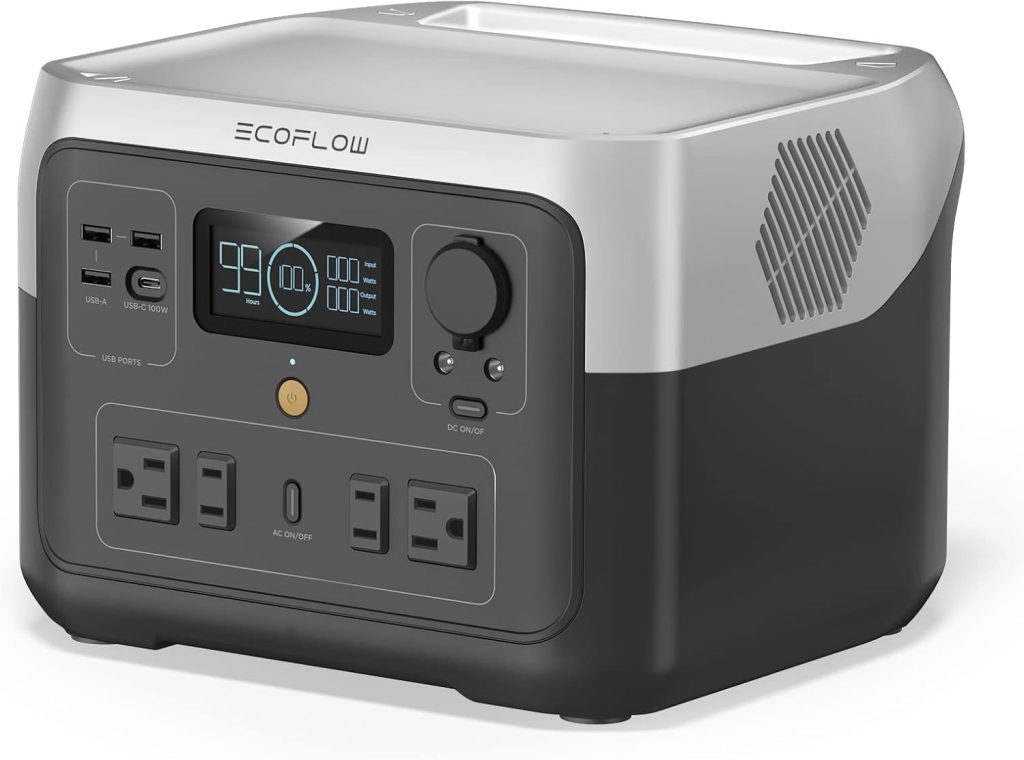
The EcoFlow RIVER 2 Max is one of the most well-rounded portable power stations in the 500Wh class — and the clear winner for campers who hate waiting. A 512Wh LiFePO4 battery, a 1000W output ceiling (with X-Boost for brief surges), and a full wall recharge in about an hour make it the fastest, most future-proof option here. The Jackery Explorer 500 costs less but takes all night to recharge and uses an older battery chemistry; the Anker 535 PowerHouse gives you four AC outlets but only 500W of output. Verdict: buy the RIVER 2 Max if you want speed and longevity; buy the Jackery 500 only if budget is the deciding factor.
Top 3 Portable Power Stations for Camping (500Wh Class)
Same capacity class, very different strengths — pick by what matters to you
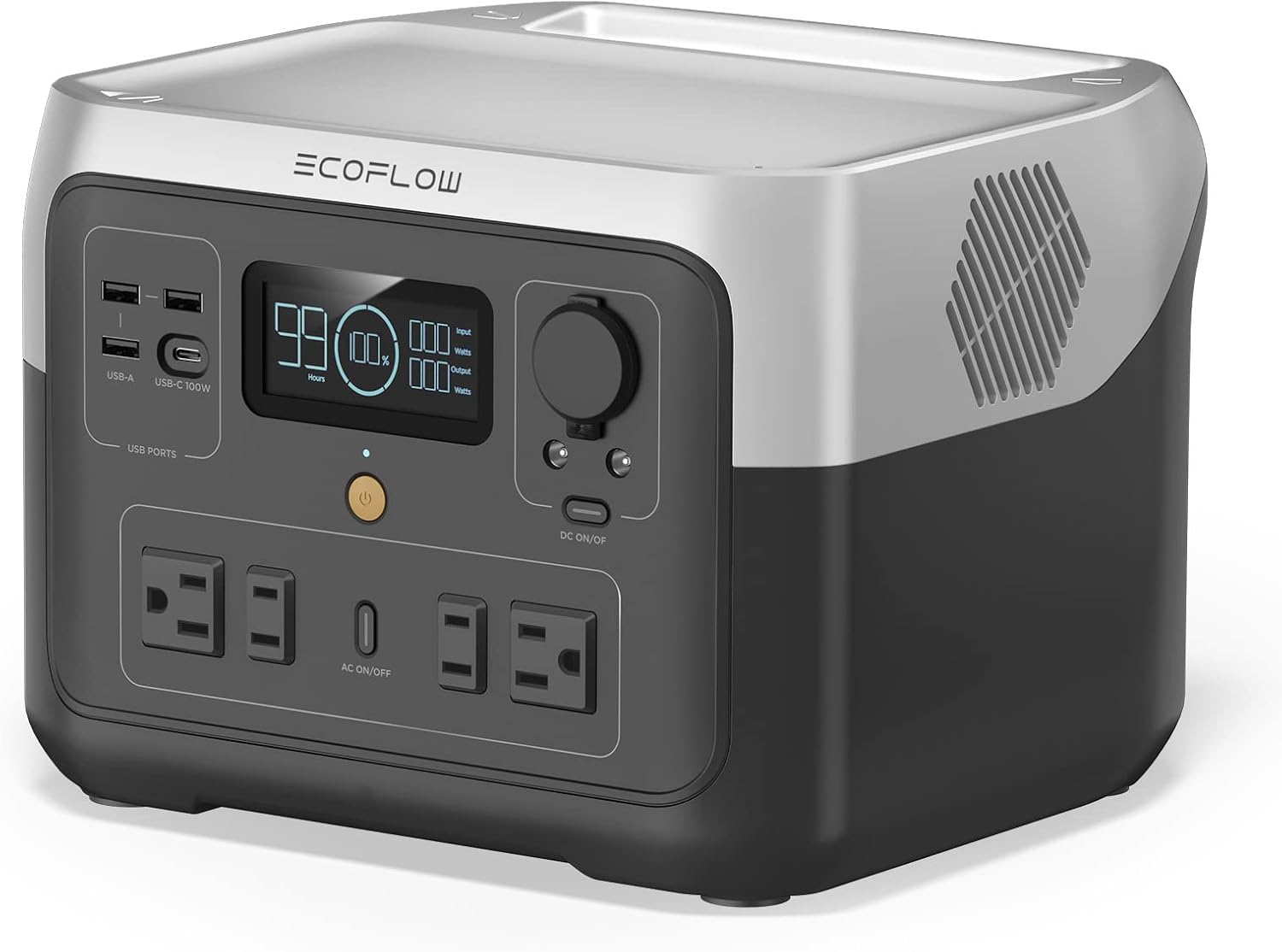
EcoFlow RIVER 2 Max
Fastest recharge in this size class with 1-hour wall charging and 1000W output
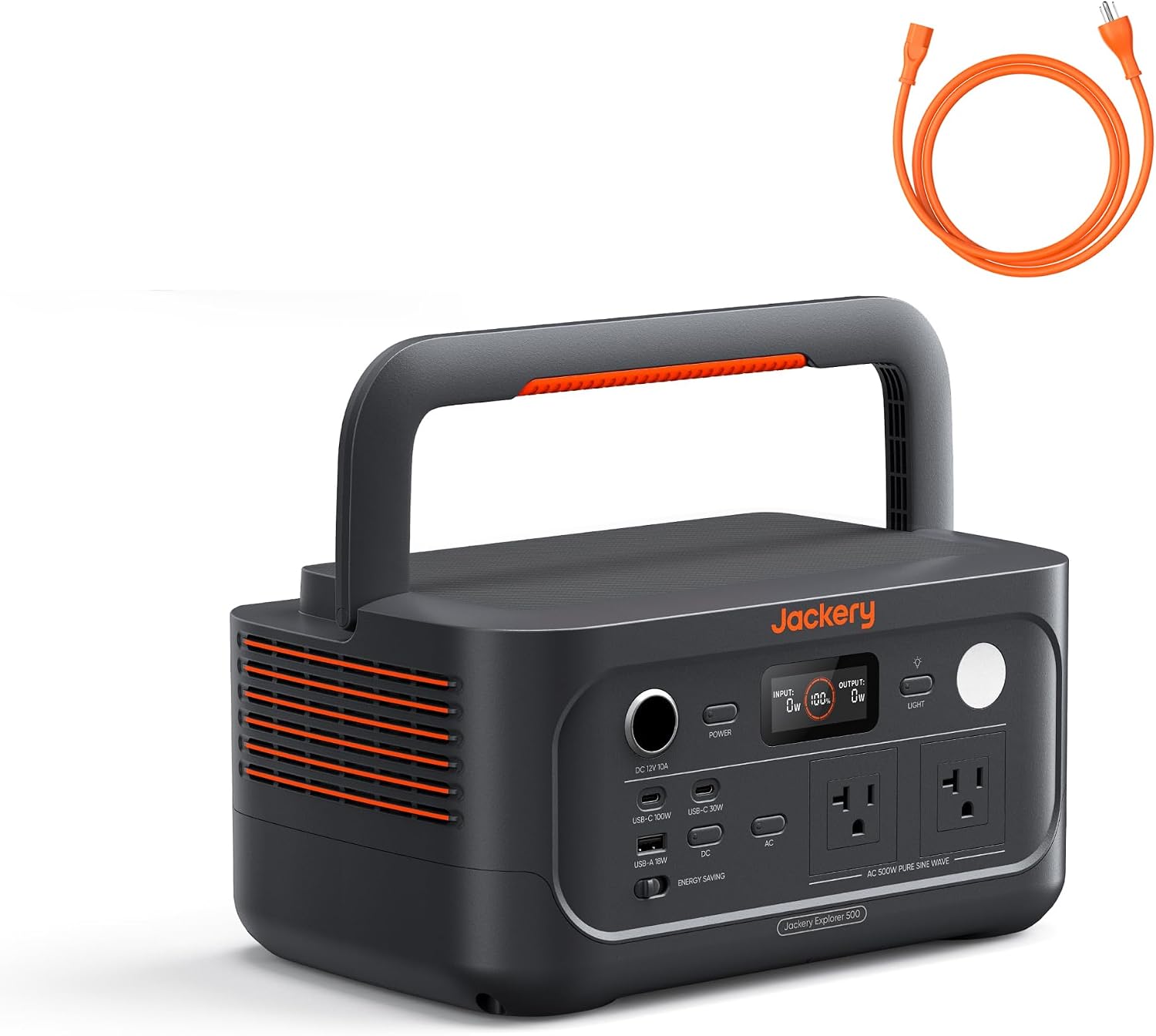
Jackery Explorer 500
Longest-running budget classic, but slower to recharge and only one AC outlet
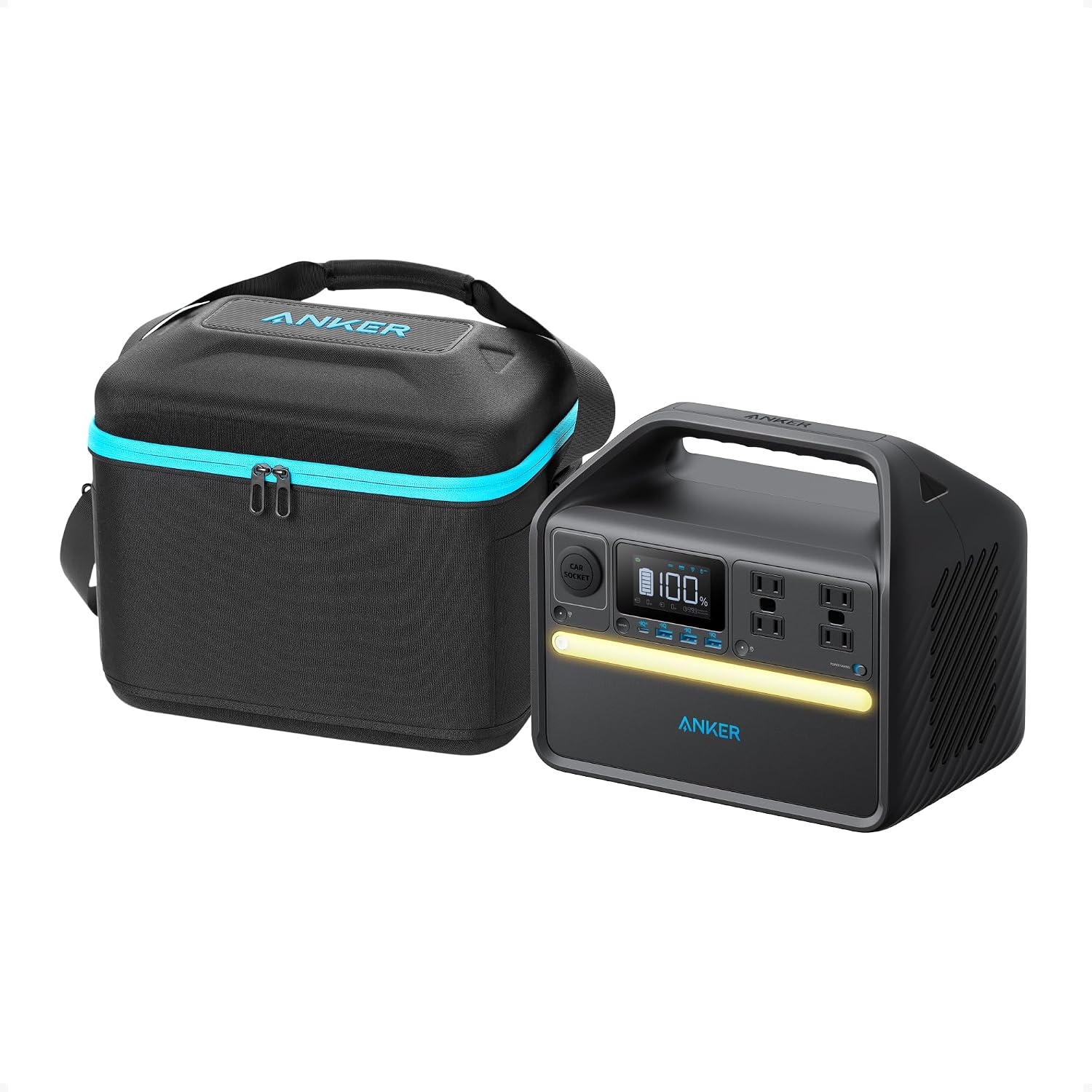
Anker 535 PowerHouse
Four AC outlets and LiFePO4 at 500W — best outlet count of the three
Prices and availability may vary — tap any product to check the current listing.
Shopping for a portable power station feels easy until you actually compare two of them. Same “500Wh” number, wildly different prices, and spec sheets that assume you already know what X-Boost, LiFePO4, and cycle life mean. So here is the plain-English version.
The EcoFlow RIVER 2 Max is a 512Wh portable power station built around a lithium iron phosphate (LiFePO4) battery, and its headline trick is speed: EcoFlow rates it for a full recharge from a standard wall outlet in about one hour — while rivals like the Jackery Explorer 500 take most of a day. It is not the cheapest way to get 500 watt-hours, though. Below: what it does well, where it falls short, and how it stacks up against the two alternatives campers actually buy.
Still comparing? Our reviews of the Anker SOLIX C1000 Gen 2 and the EcoFlow RIVER 3 cover the two closest rivals in this class.
What to Look for in a Portable Power Station
Before you compare models, it helps to know which specs actually matter at a campsite. Portable power stations all look alike in photos. The differences that matter show up at 9 PM when your devices are dying and the sun is gone.
Capacity (Wh): how much energy it holds
Capacity, measured in watt-hours, is the size of the fuel tank. A 500Wh-class station can charge a smartphone dozens of times, run LED camp lights for many evenings, or power a small 12V camping fridge for about a day (real-world numbers shift with temperature and insulation, but that is the right ballpark). It will not run heating appliances — kettles and induction cooktops draw 1000W+ and would drain the tank in half an hour. Rule of thumb: 500Wh suits electronics, lights, fans, and a small fridge; go 1000Wh+ for microwaves or multi-day full-size fridge duty.
Output (W): what it can run at once
Output is the size of the pipe, not the tank: a 500W station cannot run an 800W device, no matter how full the battery. This is where the RIVER 2 Max stands out — its 1000W AC output (with X-Boost for brief surges) is roughly double most 500Wh-class rivals, so it can start a small blender, an electric cooler, or a power tool that a 500W station would refuse. One caveat: 1000W of load drains 500Wh in about half an hour, so high output buys capability, not endurance.
Battery chemistry: LiFePO4 vs older lithium-ion
The sleeper spec most buyers ignore. The RIVER 2 Max’s LiFePO4 cells are rated for 3,000+ charge cycles before significant capacity loss; older lithium-ion designs like the Jackery Explorer 500’s are typically rated around 500–800 cycles. In practice, a LiFePO4 station charged a couple of times a week can plausibly last a decade, while an older-chemistry unit may fade after a few heavy seasons. Camp often? LiFePO4 is worth paying for. Camp twice a year? It matters much less.
Recharge speed: the most underrated feature
Most buyers fixate on capacity and ignore how the thing refills — backwards. A slow-charging station punishes you every trip: forget to plug it in overnight and you are out of luck. The RIVER 2 Max refills from a wall outlet in about an hour; the Jackery Explorer 500 needs roughly 7.5 hours. Also check solar input specs against the panel you own or plan to buy — an undersized input turns a full day of sun into a half charge.
Outlets, weight, and the boring-but-important stuff
Count your devices, then count the ports — the Anker 535’s four AC outlets are genuinely useful when two people need to plug in. All three stations here weigh around 13 pounds, an easy one-person carry for car camping (weight matters more if you are hiking with it). And note the warranty: the RIVER 2 Max’s 5-year coverage is notably longer than the industry norm — a quiet signal of how long the battery is expected to last.
EcoFlow RIVER 2 Max, Up Close: What’s Good and What’s Not
Now the main event. Here is an honest accounting of the RIVER 2 Max — strengths first, then the real limitations, each with the reason it matters at camp.
What it does well
1-hour wall charging changes how you use it. This is the single best reason to buy this station. A full recharge takes about an hour, so you stop planning trips around charging — top it off while packing the car or over lunch instead of needing a full night plugged in.
LiFePO4 battery rated for 3,000+ cycles. Practically speaking, the battery will outlast your actual camping seasons — a genuine durability edge over the Jackery Explorer 500’s older lithium-ion cells, not marketing fluff.
1000W output in a 500Wh body. Most stations this size cap out around 500W, ruling out blenders, electric coolers, and many power tools. The RIVER 2 Max’s higher ceiling (plus X-Boost for surges) starts devices its rivals simply cannot — a big deal for car campers who want one box that does everything.
About 13.4 lbs — genuinely portable. Light enough to carry one-handed from car to tent, small enough (roughly a shoebox) for the passenger footwell.
App control and a 5-year warranty. The companion app shows charge level and toggles outputs from your phone — handy when the unit is buried in the trunk — and the 5-year warranty is among the longest in the business.
Where it falls short
512Wh will not run power-hungry appliances for long. Physics, not a flaw — but buyers get burned by it: a 400W electric cooler drains it in roughly an hour and a quarter. It is ideal for phones, laptops, lights, camera gear, and a small 12V fridge — not a generator substitute for heating appliances or multi-day full-fridge duty.
Only two AC outlets (typical for the class, but the Anker 535 has four). If you regularly charge two laptops plus a camera battery plus a fan, you will be swapping plugs or bringing a power strip. The Anker 535 PowerHouse wins this round outright.
Solar panel sold separately — and solar is slower than wall charging. A full solar recharge takes several hours of good sun with a properly sized panel, and the panel is not included. Budget for it and set expectations accordingly.
Who Should (and Shouldn’t) Buy the RIVER 2 Max
Weekend car campers. This is the core audience. Phones, a laptop, string lights, a fan, maybe a small fridge — it covers a 2–3 day trip comfortably and recharges in an hour when you get home. If that sentence describes you, stop reading and buy it.
Van-lifers and road trippers. Fast recharge matters even more on the road — cafes, campsites, rest stops. The light weight and compact size fit van life, and the app control helps when the unit is stowed.
Emergency home backup for the essentials. It keeps a Wi-Fi router, phones, LED lamps, and a laptop alive for many hours — but not a full-size refrigerator for a full day. Sized right, it is an excellent blackout companion.
Who should skip it? If your camping style revolves around electric cooking — kettles, induction hobs, portable ovens — you need a bigger station (1000Wh+) or a different power strategy entirely. And if you camp twice a year and just need to keep phones alive, the cheaper Jackery Explorer 500 gets the job done for less money.
Side-by-Side: RIVER 2 Max vs Jackery Explorer 500 vs Anker 535 PowerHouse
All three sit in the same 500Wh capacity class, but they were designed with different priorities. Here is how they actually differ.
| Feature | RIVER 2 Max (Our Pick) | Jackery Explorer 500 (Smart Pick) | Anker 535 PowerHouse (Also Great) |
|---|---|---|---|
| Capacity | 512Wh | 518Wh | 512Wh |
| Battery chemistry | LiFePO4 (3,000+ cycles) | Lithium-ion (~500 cycles) | LiFePO4 (3,000 cycles) |
| AC output | 1000W (X-Boost for surges) | 500W (1000W surge) | 500W (750W surge) |
| AC outlets | 2 | 1 | 4 |
| Full wall recharge | About 1 hour | About 7.5 hours | About 2.5 hours |
| Weight | About 13.4 lbs | About 13.3 lbs | About 16.8 lbs |
| Best for | Fast recharge and longevity | Lowest entry cost | Most AC outlets |
The three differences that actually decide it:
Recharge speed. The RIVER 2 Max’s knockout punch — about 1 hour vs 7.5 hours for the Jackery and 2.5 hours for the Anker. Arrive at camp half-dead and you will feel the difference.
Battery chemistry. The RIVER 2 Max and Anker 535 both use LiFePO4 cells rated for thousands of cycles; the Jackery 500 uses an older lithium-ion chemistry with a much shorter rated lifespan. For frequent campers, this alone justifies skipping the Jackery.
Outlet count vs output power. The Anker 535 is the pick if you need to plug in lots of things at once (four AC outlets, plus a handy LED light bar). But its 500W output ceiling means it cannot run the bigger devices the RIVER 2 Max’s 1000W output handles. More plugs, less muscle — choose accordingly.
Where It Shines: 3 Real-World Scenarios
Scenario 1: The long-weekend basecamp
Two adults, three days: a 12V fridge, two phones, a laptop, LED string lights. The RIVER 2 Max runs the fridge day and night, tops up everything else, and still has reserve by Sunday — with a solar panel trickling in daytime charge, even more so. This is the scenario it was built for.
Scenario 2: The remote-work road trip
Working from a national park for a week: the RIVER 2 Max keeps a laptop charged through full workdays (a 50–70Wh laptop battery means many charges per fill), powers a mobile hotspot, and recharges in an hour at any cafe or visitor center. Fast recharge is the whole game here — a slow-charging station would chain you to outlets for entire afternoons.
Scenario 3: The overnight power outage
Storm knocks out power at 8 PM. The RIVER 2 Max keeps the Wi-Fi router up, phones charged, a couple of LED lamps on, and a laptop running — comfortably through the night and into the next day. It is silent, emits no fumes, and sits safely indoors. It will not keep a full-size fridge cold for 24 hours, but for the essentials that make an outage bearable, it is exactly right.
Common Mistakes People Make Buying a Portable Power Station
Mistake 1: Buying on capacity alone. Two stations can both say “500Wh” while one recharges in an hour and the other takes all night, one lasts 3,000 cycles and the other 500. Capacity is the least informative number on the box — speed, chemistry, and output tell you more.
Mistake 2: Assuming it can run anything with a plug. Heating appliances are the classic trap — a 1500W kettle needs triple the output of most 500Wh stations and would drain 500Wh in about 20 minutes anyway. Match the station to low-draw devices and you will be happy; expect it to replace your kitchen and you will be disappointed.
Mistake 3: Forgetting about recharge time until the first trip. Many first-timers charge the night before, use it all weekend, then discover their “quick top-up” takes 7+ hours. Fast charging is not a luxury — it is the difference between a tool and a chore.
Mistake 4: Skipping the solar panel math. “Solar compatible” does not mean “any panel works.” Match the panel to the station’s input wattage and voltage range — an undersized panel on a big station is like filling a bathtub with a teaspoon.
Key Takeaways
Speed is its superpower. About 1-hour wall recharging vs 7.5 hours for the Jackery 500 — nothing else in this class refills this fast.
LiFePO4 means it lasts. A 3,000+ cycle rating puts it (and the Anker 535) in a different longevity league than the Jackery 500’s older cells.
1000W output doubles your options. Blenders, power tools, and electric coolers that 500W stations cannot start are all fair game — briefly, since capacity is still 512Wh.
Know its limits. Perfect for electronics, lights, and a small fridge; not a generator replacement for heating appliances or multi-day full-fridge duty.
Decision Tree: Which One Should You Buy?
Want the fastest recharge and longest-lasting battery → EcoFlow RIVER 2 Max.
Need to plug in the most devices at once → Anker 535 PowerHouse (four AC outlets).
Just need the cheapest way to keep phones and lights alive → Jackery Explorer 500.
Need to run a full-size fridge or electric cooking gear → skip this class; look at 1000Wh+ stations.
Questions People Ask Before Buying
Real buyer questions, straight answers
Is the EcoFlow RIVER 2 Max powerful enough for my camping fridge?
Yes, for most 12V camping fridges. Their small continuous draw means a 512Wh station typically keeps one running around a day — longer with a solar panel trickling in power. It cannot run a full-size household fridge for days, or the fridge plus cooking gear simultaneously.
Can the RIVER 2 Max really recharge in one hour?
Yes, from a standard wall outlet — EcoFlow’s headline spec and the station’s biggest real-world edge. Top it off while packing the car or over lunch instead of planning an overnight charge. Solar takes several hours of good sun with a properly sized panel, so do not expect one-hour speeds off-grid.
What’s the difference between LiFePO4 and the batteries in older power stations?
LiFePO4 (lithium iron phosphate) cells last far longer — the RIVER 2 Max is rated for 3,000+ charge cycles versus roughly 500 for older lithium-ion designs like the Jackery Explorer 500’s. They handle heat better and degrade more slowly. Camp often and it is the most important spec on the box; camp twice a year and it matters less.
Can I charge the RIVER 2 Max with a solar panel?
Yes, it accepts solar input, and EcoFlow sells compatible panels. The key is matching: check the station’s solar input specs and buy a panel that fits — an undersized or incompatible panel charges painfully slowly or not at all. Budget for the panel separately; it is not included.
Should I buy the RIVER 2 Max or the Jackery Explorer 500?
Buy the RIVER 2 Max for fast recharging, a longer-lasting LiFePO4 battery, and double the output — the better station for frequent campers. Buy the Jackery Explorer 500 only if budget decides and you can live with an all-night recharge and older battery chemistry.
Frequently Asked Questions
How long does the RIVER 2 Max last on a camping trip?
It depends on the load. Phones, tablets, and LED lights sip power — you will get many days. A 12V camping fridge draws steadily and uses most of the 512Wh in about a day. High-draw devices drain it fast. For a typical mixed-use weekend, expect 2–3 days, more with a solar panel adding daytime charge.
Can it charge a laptop while camping?
Easily. A typical laptop battery holds 50–70Wh, so 512Wh delivers many full laptop charges plus phones and accessories. The 1000W output ceiling means even power-hungry workstation laptops charge at full speed — something 500W stations sometimes struggle with.
Does it work as emergency backup during a power outage?
Yes, for the essentials. It keeps a Wi-Fi router, phones, LED lamps, and a laptop running for many hours — enough for most short outages. It is silent and safe indoors (no fumes, unlike a gas generator). It will not run a full-size refrigerator for a full day, though — that needs a much larger station.
Is it safe to use indoors?
Yes. Unlike gas generators, battery stations produce no carbon monoxide or fumes, so indoor use is safe. Common sense still applies: do not block the cooling vents, keep it dry, and do not charge it on flammable materials. LiFePO4 is also among the most thermally stable battery chemistries available.
What can’t the RIVER 2 Max run?
Anything that draws sustained high power: electric kettles, induction cooktops, space heaters, hair dryers, and full-size microwaves are all off the table — they exceed the output or would drain 512Wh in minutes. It’s designed for electronics, lights, fans, small fridges, and brief high-draw tools, not for replacing your kitchen appliances.
How is the RIVER 2 Max different from the smaller RIVER 2?
It is the middle child: roughly double the capacity of the base RIVER 2 (512Wh vs the ~256Wh class) and a higher 1000W output ceiling. The smaller one is a “keep phones and lights alive” box; the Max is a “run a fridge and a laptop all weekend” box.
Not sure what fits your setup? Our sizing guide walks through the real-world math.
Final Recommendation
Bottom line, no hedging: the EcoFlow RIVER 2 Max is the best 500Wh-class portable power station for most campers. The 1-hour recharge is a genuine quality-of-life upgrade, the LiFePO4 battery will outlast rivals by years, and the 1000W ceiling starts devices they cannot. All based on published specs, not marketing.
Not the cheapest — the Jackery Explorer 500 costs less and works fine for light, occasional use, and the Anker 535’s four outlets win for multi-device setups. But for the camper who wants one station that charges fast, lasts long, and runs nearly everything a campsite needs? This is the one.
Worth buying: yes — if you camp regularly, value fast recharging, and want a battery that lasts for years. Skip it: if you need electric cooking power (go bigger) or camp twice a year on a tight budget (the Jackery 500 will do).

