
EcoFlow RIVER 3 Review: 245Wh LiFePO4 Power Station with 1-Hour Fast Charging
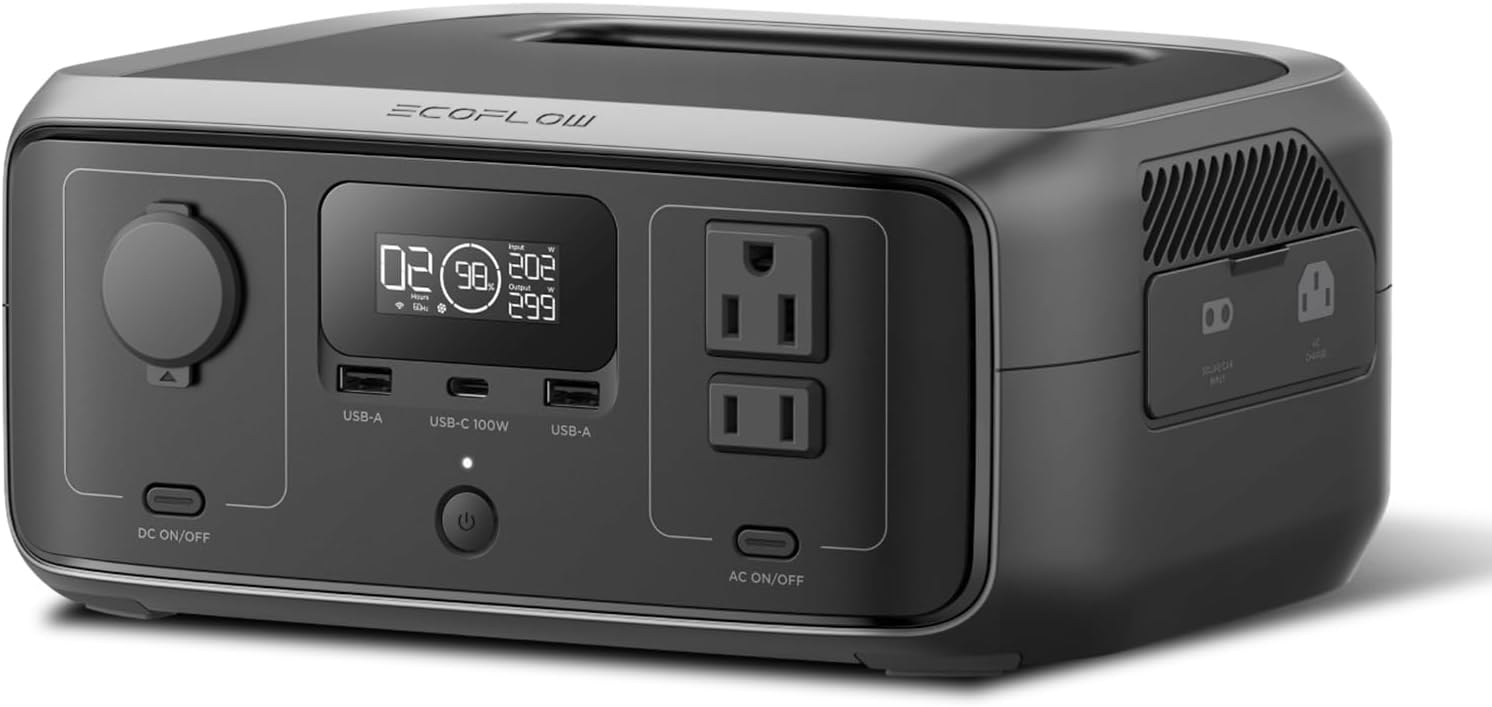
The EcoFlow RIVER 3 is the kind of power station you buy because you’re tired of your phone dying at the worst possible moment. It’s a compact LiFePO4 unit built for everyday carry: camping weekends, desk backup, and the odd outage that lasts hours rather than days. This review digs into what a small station can genuinely do, where its limits are, and how it compares to the two rivals shoppers cross-shop most.
Here’s the question that decides everything: are your loads small enough for 245Wh to matter? Phones, laptops, LED lights, camera batteries, a CPAP for one night — yes. A fridge, a kettle, anything that heats — no. Get that distinction right and this little unit is one of the handiest things you’ll own. Get it wrong and you’ll be disappointed by physics, not by the product.
Quick Answer
The EcoFlow RIVER 3 is a compact 245Wh LiFePO4 station with roughly one-hour wall recharging — ideal for phones, laptops, camp lights, and short outage backup. It’s light enough to carry one-handed and cheap enough to be an easy yes. It won’t run a fridge or heating appliances, so size up if those are on your list.
Compare Top Compact Portable Power Stations
Three proven picks side by side — choose the one that fits your needs.
Prices and availability may vary — tap any product to check the current listing.
Still comparing? Our reviews of the EcoFlow RIVER 2 and the EcoFlow RIVER 2 Max cover the two closest rivals in this class.
What to Look For Before Buying a Compact Power Station
Small stations live or die on fit. A 2kWh unit forgives sloppy planning; a compact one doesn’t. The criteria shift — less about surviving the apocalypse, more about earning trunk space.
Capacity honesty: what 245Wh really covers
Translate the number: a smartphone holds roughly 15Wh, so 245Wh is about fifteen phone charges — plenty for a long weekend. A laptop takes 45–65Wh per charge: three to four charges. LED camp lights barely register. A CPAP for one night? Comfortable, humidifier off.
The other side: anything that makes heat is a capacity vampire — kettle, hair dryer, space heater drains this battery shockingly fast. That’s the category, not a flaw.
Recharge speed: the feature that changes how you use it
The standout trick: a full wall recharge in roughly an hour. Forgot to charge before the trip? Plug it in while you pack — rolling time means ready time. That speed turns it from a planned accessory into a grab-and-go tool.
Off-grid you’re on solar or the car outlet, both slower — but a modest panel genuinely refills 245Wh, where it would barely dent a 2kWh station. Solar is practical at this scale.
Battery chemistry and lifespan
LiFePO4 matters even more here. A compact station gets cycled hard — drained on the trip, charged at home, drained again. Lithium-ion fades fast under that; LiFePO4 shrugs it off for thousands of cycles.
This category solves a real annoyance — the dead-device panic at the worst moment. A station that dies after two years of weekend use isn’t solving anything.
Output and the X-Boost trick
The AC output handles small electronics with room to spare, and X-Boost lets it run some devices briefly above rated output — a small blender, a low-wattage kettle in a pinch. It works by lowering voltage: fine for simple heating elements, not for motors.
Not “it can run anything” — it can’t. But it widens the list meaningfully: mini projector, small fan, drone charger alongside the laptop. That’s the difference between a one-trick box and a camp hub.
Ports and the everyday details
Check three things: USB-C wattage (100W charges modern laptops at full speed), AC outlet count (two is the practical minimum for sharing), and a 12V car socket. I’ve seen people overspend on battery size while ignoring the ports they’ll touch daily.
Weight and noise: where compact wins outright
The RIVER 3 carries one-handed — daypack, kayak hatch, trunk corner. No planning, no hand truck. Fan noise is minimal: silent under light loads, a soft hum under heavier ones.
Match the RIVER 3 to Your Situation
The weekend camper
Two-night trips at drive-up sites: phones, cameras, string lights, a speaker, a drone battery. The RIVER 3 covers it all with room to spare, charges in an hour before you leave, and weighs nothing in the scheme of camp gear.
The home-office backup seeker
Short outages — two, four, six hours — and your nightmare is losing a workday to a dead laptop and router. The RIVER 3 sits under the desk and keeps both alive through a typical outage. Not a multi-day solution, but the right-sized answer for the common brief blackout.
The “one box for everything” optimist
You’d like to run the fridge, the kettle, and the portable AC off something lunchbox-sized. Physics doesn’t negotiate, and 245Wh won’t do it — wrong tool, not bad product. Step up to the 1kWh class. Honest sizing beats hopeful sizing every time.
Compact Portable Power Stations Compared
| Type / Tier | Best For | Price Tier | Key Feature | Watch-Out |
|---|---|---|---|---|
| Ultra-compact LiFePO4 (RIVER 3) | Phones, laptops, lights, short outages | Budget-friendly | One-hour recharge, featherweight | Too small for fridges or heating appliances |
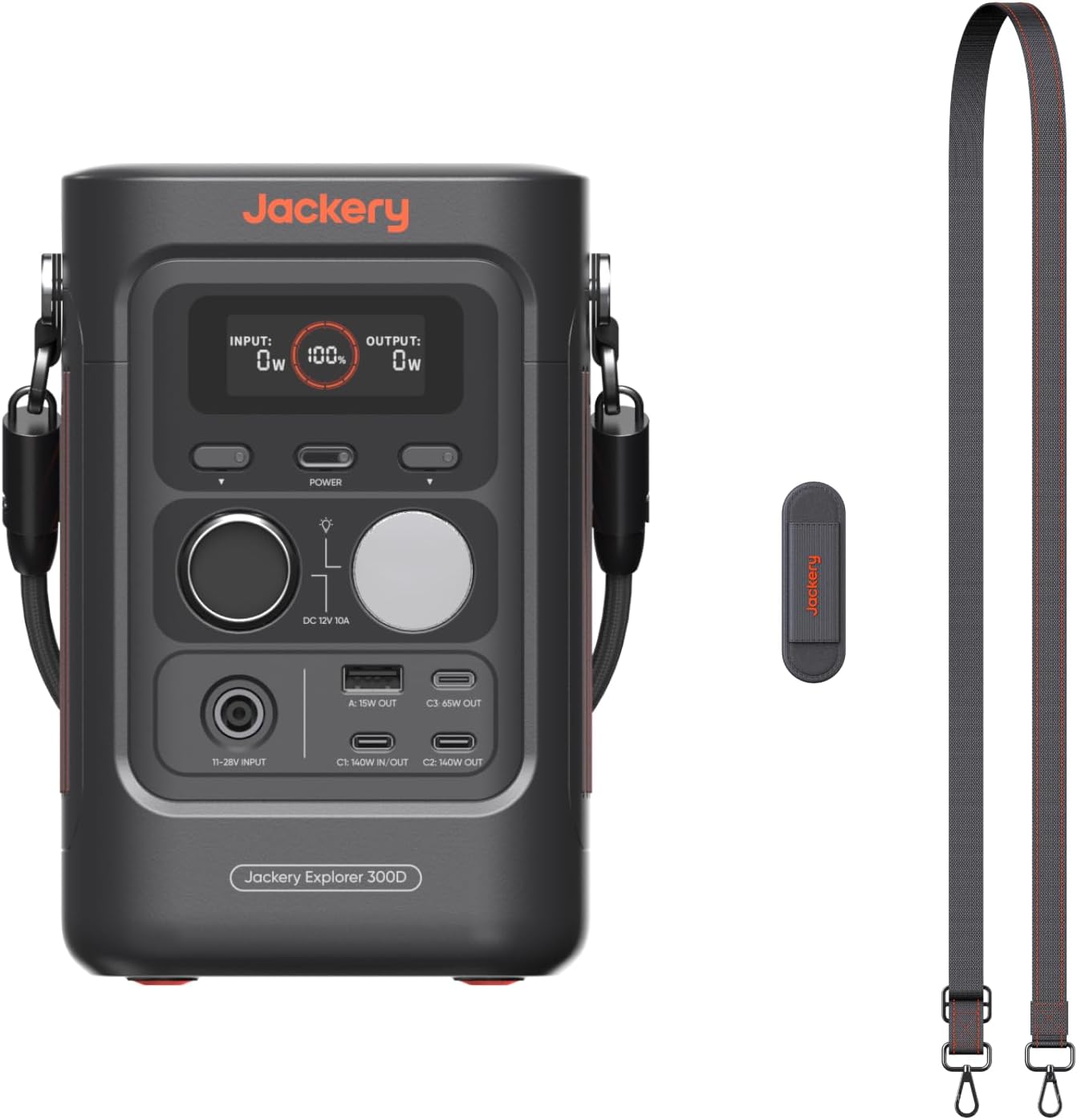
| Compact 300Wh-class (Explorer 300 Plus) | Same loads, longer runtime | Budget-friendly | More capacity and AC headroom | Bulkier for marginal gains |
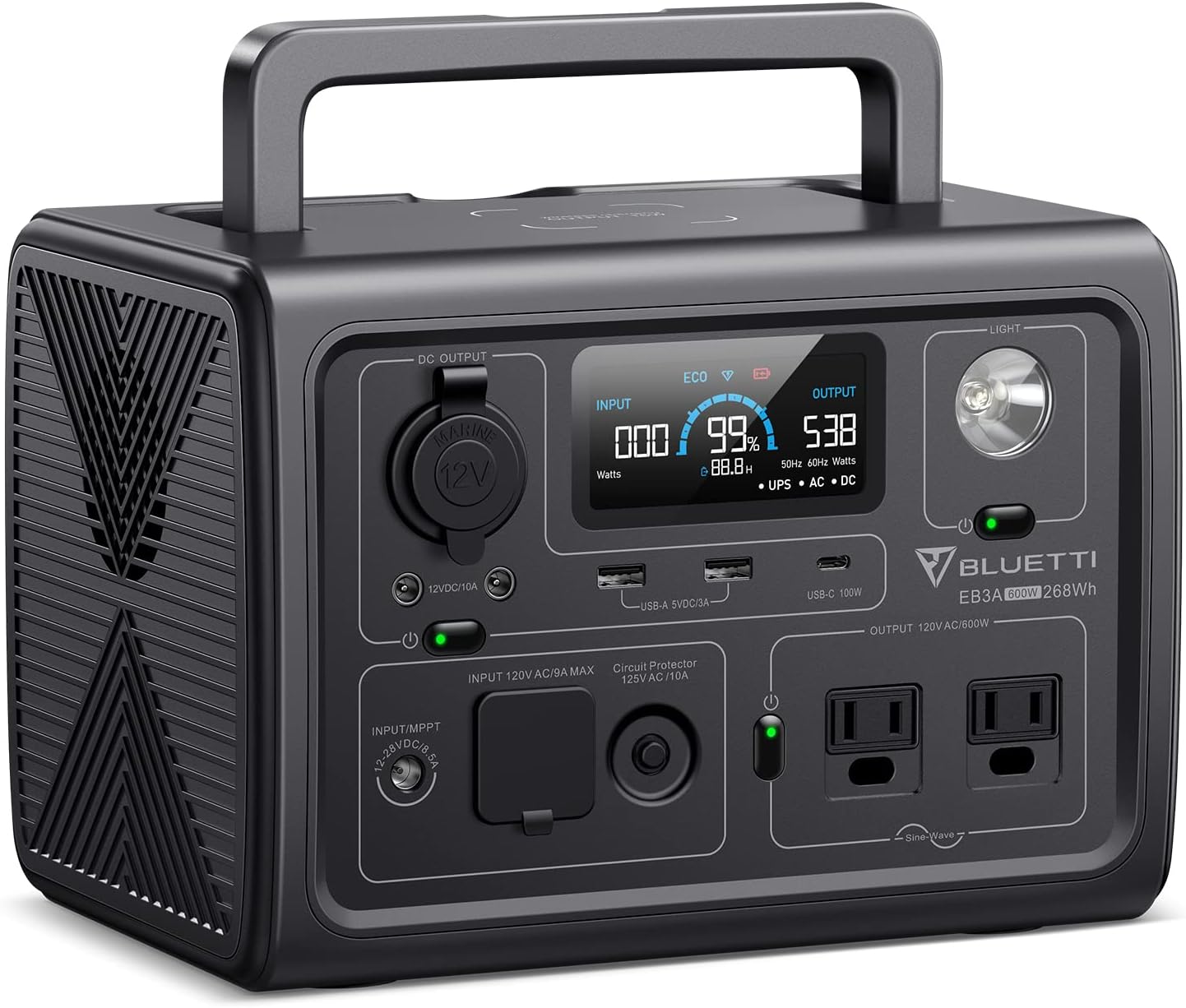
| Compact fast-charge (EB3A) | Small appliances, quick turnaround | Budget-friendly | Very fast recharging, higher AC output | Shorter cycle life than LiFePO4 rivals |
| 1kWh-class mid-size | 12V fridges, CPAP for days | Mid-range | Real appliance capability | Heavy and pricey — a different category |
Ultra-compact LiFePO4 is the sweet spot for electronics — grab-and-go convenience bigger stations can’t match. The 1kWh class is where appliances enter: a genuine step up in capability and weight.
Three Scenarios That Fit the RIVER 3
The Friday-evening dash
Plans solidify at 5 p.m.; you’re leaving for the lake at 7. The station sits at 40% since last month. Plug it in while you load the car — an hour later it’s full. A slower station would have left you rationing power all weekend.
The work-from-anywhere day
Cabin, deadline, questionable grid. The RIVER 3 lives under the desk: laptop on USB-C, router on AC, phone on the spare USB. A four-hour outage becomes a non-event — calls keep going and nobody knows. This is where a compact station quietly pays for itself.
The photographer’s long day
Dawn shoot, midday drone flights, dusk shoot, backups at camp. The RIVER 3 handles the whole charging rotation and weighs less than a long lens — you never ration shots over a dying battery.
Common Mistakes Buyers Make
Expecting it to run a fridge. The number one disappointment in this category — a 12V camping fridge drains 245Wh in well under a day. Fridge on the list? You need the 1kWh class, full stop.
Buying on price alone. The cheapest compact cuts what matters most: battery chemistry and recharge speed. A bargain unit that takes eight hours to charge will annoy you out of using it.
Forgetting the panel. “Solar-ready” doesn’t mean “solar-included” — buy the panel with the station if off-grid recharging matters.
Leaving it in the hot car. An August trunk is brutal on any battery, LiFePO4 included. Store shaded, keep it partially charged, top up every few months.
Why, How, and What — Straight Answers
Why is fast recharging such a big deal on a small station?
It changes the ownership pattern. A slow-charging station demands planning — charge it the night before, every time, or it’s useless. A one-hour station forgives forgetfulness. Over a year, that’s the difference between a station you reach for and one that gathers dust.
How do I know if 245Wh is enough for my trip?
Do the napkin math: add up devices in watt-hours — phone ~15, laptop ~60, camera battery ~15, drone battery ~40 — times charges needed. Under 200Wh, you’re golden. Over, you’re cutting devices or sizing up. Be honest about the “maybe” items.
What should I not plug into the RIVER 3?
Anything designed to make heat: kettles, hair dryers, space heaters, coffee makers. Anything with a big motor: power tools, large fans, pumps. And the full-size fridge — not happening. When in doubt, check the wattage label before plugging in.
Key Takeaways
The RIVER 3 is a grab-and-go 245Wh LiFePO4 station for phones, laptops, lights, and short outages — not fridges or heat-making appliances.
One-hour wall recharging is the killer feature: top it up while packing, and forgetfulness stops mattering.
LiFePO4 survives thousands of cycles — a compact station gets cycled hard, and this chemistry takes it.
A modest solar panel genuinely refills 245Wh in a day of decent sun — solar is practical at this scale.
Size honestly: do the watt-hour math. Fridge on the list means the 1kWh class, not this one.
Decision Tree: Is the RIVER 3 Right for You?
Phones, laptops, lights, cameras — a long weekend of exactly this? Easy yes.
Desk backup for short outages — a few hours of laptop and router? The right-sized answer.
12V fridge or heating appliance — stop here. Look at the 1kWh-class options instead.
Want more runtime — the 300Wh-class rivals trade a little portability for capacity.
Questions People Ask Before Buying
Questions People Ask Before Buying
Is the EcoFlow RIVER 3 worth buying?
Yes, if you want the smallest, lightest backup for phones, laptops, and camp lights, because the ultra-fast one-hour recharge and LiFePO4 battery make it a genuinely useful everyday carry — but if you need to run a fridge or anything with a heating element, it’s simply too small and you should size up. The worth-it math is frequency: a unit this portable gets used constantly.
EcoFlow RIVER 3 vs Jackery Explorer 300 Plus — which is better?
Pick the RIVER 3 if fast one-hour recharging and the lightest possible footprint matter most to you; pick the Jackery Explorer 300 Plus if you want slightly more capacity, more AC headroom for small appliances, and one of the most user-friendly control apps in the category. It comes down to temperament: the “charge it while I pack” crowd versus the “I want more buffer” crowd.
How long does the EcoFlow RIVER 3 take to recharge?
From a wall outlet, roughly an hour — that’s the RIVER 3’s standout trick and it’s genuinely faster than most rivals in its class; from a car outlet it takes several hours, and from solar panels it depends entirely on panel wattage, sun angle, and weather, ranging from a few hours to most of a day.
Can the RIVER 3 run a 12V car fridge?
Not comfortably for long — the small battery and modest output mean a 12V camping fridge would drain it in well under a day, and the compressor startup surge can trip protection on some units; it’s fine for topping up a pre-chilled cooler box for a few hours, but a dedicated mid-size station is the realistic choice for fridge duty. Remember: 245Wh is not a fridge battery.
Does the EcoFlow RIVER 3 support solar charging?
Yes — it pairs with portable solar panels for off-grid recharging, and the efficient MPPT controller squeezes usable power even in mediocre light; just size your panel realistically, since the small battery means you’ll want at least a 100-watt panel or more to see meaningful recharge rates during a typical afternoon. The nice thing about a small battery: solar actually keeps up.
Frequently Asked Questions
Can I take the RIVER 3 on an airplane?
No — at 245Wh it’s well over the 100Wh airline limit for carry-on batteries, and it can’t go in checked bags either. This is a car, campsite, and home unit.
Can I charge the RIVER 3 from my car’s 12V outlet?
Yes — the classic road-trip top-up: drive a few hours and arrive at camp fuller than you left. Slower than wall charging, so treat it as a supplement.
Does the RIVER 3 have a UPS mode for my computer?
It offers a fast switchover mode that keeps a desktop or router alive through brief flickers. Not a replacement for a dedicated UPS where power quality is constantly poor.
How many devices can I charge at once?
Several — USB ports plus AC outlets handle a laptop, two phones, and a camera battery at once. The practical limit is total draw, not port count; small electronics sip power.
Is the fan noisy?
Barely — at these power levels the fan rarely spins up, and when it does it’s a soft hum. In a tent at night you won’t notice it over normal campsite sounds.
Can I use it to jump-start my car?
No — power stations aren’t built for the massive current a starter motor demands, and trying risks damaging the station. A dedicated jump starter is made for that job.
Not sure what fits your setup? Our what size portable power station you need walks through the real-world math.
Final Recommendation
The EcoFlow RIVER 3 is the right buy when your power life is small-scale: weekend camping, desk backup, photography days, van-life electronics. The one-hour recharge and featherweight form mean it actually gets used.
The only wrong way to buy it is for the wrong job — fridge, kettle, heater is a different class. But if your list fits in a backpack of electronics, the RIVER 3 is one of the easiest yeses in portable power.

