
Renogy 200W Portable Solar Suitcase Review: Foldable Panel Kit with 20A Charge Controller
A foldable solar suitcase promises a simple trade: unfold it, aim it at the sun, and keep your camping battery topped up without drilling a single hole in your roof. The Renogy 200W Portable Solar Suitcase sits near the top of most shoppers’ shortlists in that category, sold as an all-in-one bundle with a 20A charge controller already in the box. This guide breaks down what that combination actually buys you, where a 200W suitcase setup genuinely shines, and the spots where it falls short. It’s for campers weighing this kit against smaller foldable panels and higher-efficiency alternatives.
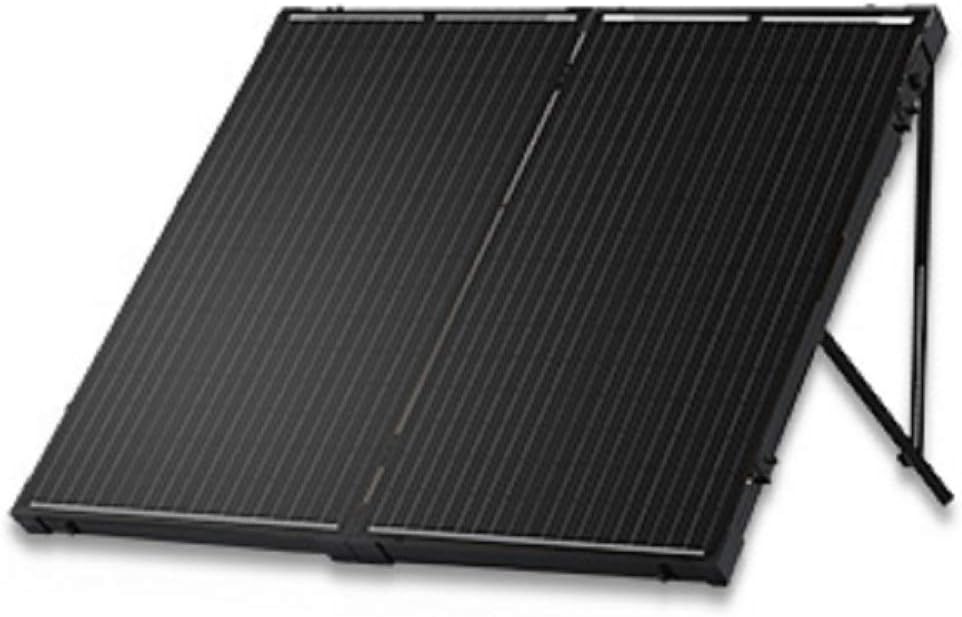
Quick Answer
The Renogy 200W Portable Solar Suitcase makes sense when you want a ready-to-go setup with the controller question already answered — unfold, connect, charge. It harvests noticeably more usable power than 100W foldable options in decent sun, though it’s bulkier and heavier than the leaner alternatives below. If convenience beats watts per pound, this kit earns its shortlist spot.
Compare Top Portable Solar Panels
Three proven picks side by side — choose the one that fits your needs.
Renogy 200W Solar Suitcase
200W foldable kit · 20A charge controller included
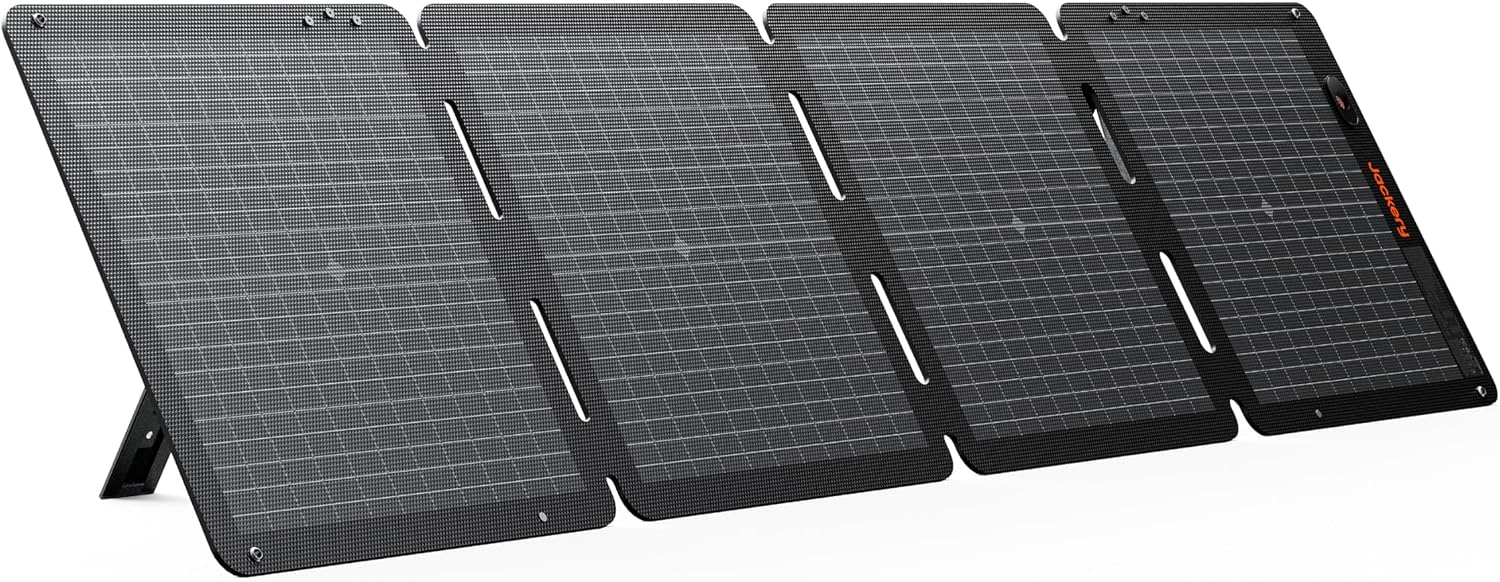
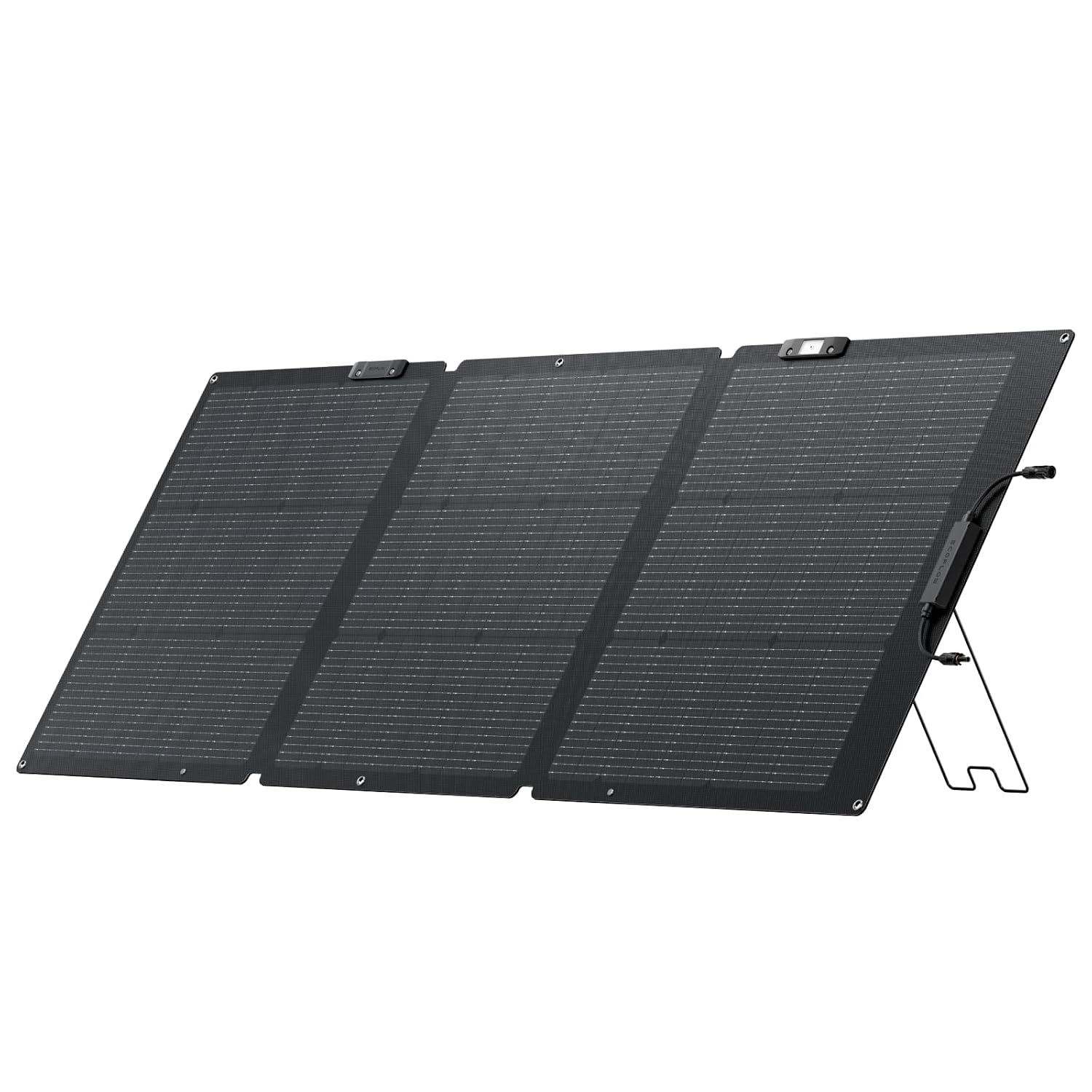
Prices and availability may vary — tap any product to check the current listing.
Shopping around? We have also tested the Renogy 100W suitcase and the Jackery SolarSaga 200W — both worth a look before you decide.
What to Look For in a Foldable Solar Suitcase
Suitcase panels all look alike in photos — two dark rectangles hinged like a briefcase. The differences that matter hide in the details. Here’s what moves the needle.
Usable Wattage, Not Sticker Wattage
Two hundred watts is a laboratory number: cool panels, direct overhead sun, clean air. Camp is never a laboratory. Heat, dust, and a drifting sun angle all shave output. A bigger panel fixes none of that — but it starts from a higher floor, so the same percentage loss leaves more usable power than a smaller panel would. That’s the honest case for 200W: headroom — at the cost of more glass, more frame, more weight.
The Charge Controller Question
Some foldables ship bare. This kit arrives with a 20A charge controller in the box, and that matters more than it sounds. The controller sits between panels and battery, stepping voltage down to battery-safe levels. The trade-off: bundled controllers are usually simple PWM types, a touch less efficient than pricier MPPT units. A fair swap — safety and simplicity beat a few extra percent you’ll only notice on paper.
Cell Type and Real Efficiency
Nearly everything in this tier uses monocrystalline silicon — the dark, uniform rectangles you’ve seen everywhere. Newer bifacial designs (one of the alternatives below) squeeze extra energy from reflected light hitting the panel’s back — worth knowing, though on grass or gravel the gain is modest. What matters more: genuine monocrystalline cells rather than cheaper polycrystalline stock.
Fold, Weight, and the Lugging Factor
A suitcase folds flat, latches shut, carries by a handle. Trivial — until you’re the one hauling it. Heavier kits feel sturdier: thicker frames, real glass instead of flimsy laminate. Two hundred watts of glass has real heft. For car camping and RV life the carry is measured in yards, not miles — be honest about yours. Hinges and latches don’t fail in season one. They fail in season four.
What It Connects To
The included controller is built around 12V systems — the deep-cycle and AGM batteries most RVs already carry, plus lithium where the controller’s settings allow. Own a portable power station? Read its manual first. Many stations have charging electronics built in, so you’d bypass the suitcase’s controller. Don’t run two controllers in series — more below. Either way, confirm connectors. Most kits use MC4-style plugs, and adapters exist for nearly everything.
Kickstands, Cables, and the Small Stuff
Adjustable legs let you tilt toward the sun instead of laying panels flat and hoping. Cable length decides whether panels sit in full sun while the battery hides in shade — and shade on part of one panel tanks the whole string’s output. Longer cables help, but thin long cables waste power as heat. No ideal answer, just the usual camping compromise. Don’t learn about the stands on the first windy day.
Match the Panel to Your Situation
The weekend RV camper. You roll out Friday and want the house battery healthy by Sunday night. A 200W suitcase is arguably the sweet spot — enough to recover a weekend of lights, water pump, and phone charging without a generator.
The off-grid boondocker. You’re out a week or more, running a 12V fridge and charging laptops. Two hundred watts is your floor, not your ceiling. This kit works as the core, with controller headroom to add a second panel later. Just don’t expect one suitcase to run an air conditioner. Nothing portable does.
The first-time solar buyer. You’ve read three guides, watched two videos, still don’t trust your wiring. The all-in-one pitch is the whole pitch: panel, controller, cables, stands — one box, one afternoon. You pay a small premium over buying pieces separately. Call it tuition you don’t pay twice.
How Foldable Solar Panels Compare
| Type / Tier | Best For | Price Tier | Key Feature | Watch-Out |
|---|---|---|---|---|
| Foldable suitcase kit (200W + controller) | Campers who want one box that does everything | Mid-range | Unfolds and connects in minutes | Heaviest option per watt |
| Lightweight foldable panel (100–160W, no controller) | Minimalists and power-station owners | Mid-range to premium | Easy to carry and reposition | Smaller daily energy harvest |
| Rigid roof-style panel | Permanent RV or van installations | Budget-friendly | Lowest cost per watt | Not portable at all |
| Bifacial high-efficiency panel | Squeezing maximum output from limited space | Premium | Captures reflected light from both faces | Pricier for the same footprint |
The suitcase kit wins on convenience — nothing gets a beginner from box to electrons this fast.
The lightweight foldable wins on portability, but you’ll feel the smaller harvest during cloudy stretches.
The rigid panel wins on pure economics, assuming you never need to move it again.
The bifacial panel wins on output per square foot — at a price that only makes sense when space is tight.
Scenario: Running a Camp Fridge Through the Weekend
A 12V compressor fridge separates serious solar from decoration — it cycles all day and works hard on hot afternoons. In decent sun, the suitcase keeps pace with a modest fridge while topping up the battery. Key word: modest. Pre-cool at home, park the fridge in shade, pair it with real battery capacity.
Scenario: Cloudy Days and Low-Angle Autumn Sun
Nobody buys panels for cloudy days, but they happen anyway — output drops to a fraction of clear-sky numbers. A bigger panel degrades gracefully because it started higher. Tilt matters enormously when the sun rides low; flat panels in October donate watts to the sky. The adjustable stands are the difference between a trickle and a useful charge. Three gray days still beat any portable setup.
Scenario: Charging a Portable Power Station at Basecamp
Silent power, no fumes — pairing a suitcase with a power station is the modern camping move. Most stations accept solar through their own charging circuitry, so the included controller gets bypassed. Fine. Check your station’s input voltage window first, and size the station to the panel: a tiny one fills by noon and wastes the afternoon.
Common Mistakes Campers Make With Solar Suitcases
Aim it once, forget it. The sun moves a fist-width an hour. A panel aimed at 9 a.m. is decoration by 2 p.m. Nudge it at lunch — thirty seconds, real watts.
Stacking two controllers. The suitcase includes one; your power station probably has one built in. Both in series can leave you with less power, not more. Pick one path.
Parking half the panel in shade. A guyline shadow across one corner can cost most of a series-wired panel. Scout before you unfold.
Expecting nameplate watts all day. That 200W figure is a peak, not a promise. Budget around a fraction of it.
Why, How, What: The Questions Nobody Answers Honestly
Why does this kit include a charge controller? Because a raw panel’s voltage swings with the sun, and batteries are picky. The controller is the translator — it takes whatever the panels produce and delivers a steady, battery-safe charge. Bundling means the compatibility math is done for you. Buying separately saves a few dollars and costs an afternoon of research — plus lingering doubt.
How do you hook it up? Unfold the panels, connect the controller to the battery first — controllers want to see the battery before the sun — then connect panels to the controller. Tilt the stands toward the sun. Bypassing for a power station? Panel leads straight to the station’s solar input. Either way: battery side first, sun side second. Always.
What does 20A mean for a beginner? Think of it as the controller’s appetite limit for charging current to your battery. One 200W suitcase won’t trouble that limit, which is exactly the point: headroom to add a second panel later without new electronics. Future-proofing baked into the box. Not exciting. Just practical.
Key Takeaways
✅ A 200W suitcase with an included controller is the fastest route from box to working solar for a beginner.
✅ The extra watts over 100W buy headroom — the same percentage loss leaves more usable power.
✅ Power-station owners will bypass the included controller; that’s normal, not a defect.
⚠️ Heaviest option per watt — right for car camping, wrong for backpacking.
Decision Tree: Which Foldable Panel Fits You?
→ Simplest possible start? The 200W suitcase kit — controller included.
→ Travel light with a power station? A leaner 100–160W foldable.
→ Maximum output, tight footprint? A bifacial panel — premium price accepted.
→ Never moving it again? Skip portable — mount a rigid panel and be done.
Questions People Ask Before Buying
Is the Renogy 200W solar suitcase worth it over a 100W panel?
Yes, if you run anything beyond lights and phones — the extra capacity means real headroom on cloudy mornings and shorter charging windows, so a fridge or laptop setup stays viable where a 100W panel would fall behind, which is exactly when the extra watts earn their keep. That margin decides whether your battery survives the weekend. The trade-off is weight and bulk: for minimalists charging only phones, the smaller panel is the smarter buy.
Can I use the Renogy 200W solar suitcase with a portable power station?
Yes — most portable power stations accept solar input through their own built-in charging circuitry, so you connect the panel leads directly to the station and bypass the suitcase’s included controller, which is one of the most popular ways these kits actually get used. Confirm your station’s solar input voltage window matches the panels first.
Do I need the included charge controller, or can I skip it?
You need a charge controller whenever you charge a 12V battery directly — but if your portable power station has charging electronics built in, you can bypass the included one entirely, since the station already handles voltage regulation on its own safely. The controller exists to protect the battery from voltage swings, so never connect raw panel leads straight to a bare battery. Pick one path and commit — doubling up confuses the system.
How long does the 200W suitcase take to charge a camping battery?
There’s no single answer — it depends on the battery’s size, how empty it is, and the sun — but a typical weekend-size 12V battery can recover from a night of normal use during one solid sunny day, assuming you’re not running heavy loads at the same time. Oversized batteries or back-to-back cloudy days stretch that timeline considerably. Treat the panels as a daily top-up engine, not a fast charger.
Is 200W enough to run a fridge while camping?
Yes, for a modest 12V compressor fridge in decent sun — the panels can generally keep pace with the fridge’s daytime draw while leaving some charge for the battery, though hot afternoons and partial shade shrink that margin fast, so shade and pre-cooling matter more than you’d think. Pre-cooling at home and parking the fridge in shade tilt the math in your favor; heavy extra loads are when you start thinking about a second panel.
Frequently Asked Questions
Does the Renogy 200W solar suitcase work on cloudy days?
It still produces power, just far less — heavy overcast can cut output to a fraction of clear-sky numbers. The 200W size helps: a fraction of 200 beats a fraction of 100. For multi-day gray stretches, size your battery to bridge the gaps.
Can I add more panels to this kit later?
The 20A controller leaves headroom beyond a single 200W suitcase, so expansion is realistic without new electronics. Match the added panel’s voltage characteristics to the existing ones. Mixing wildly different panels is where trouble starts.
What kind of battery works with the included charge controller?
It’s built for 12V battery systems — the deep-cycle and AGM batteries common in RVs and trailers, plus lithium where the controller’s battery-type settings allow. Set the battery type correctly before connecting lithium.
Is the solar suitcase waterproof?
Water-resistant, not waterproof. Light rain is fine; don’t leave the controller in a puddle or hose the kit down. When the sky opens up, fold it and wait — panels are patient.
How heavy is a 200W solar suitcase, really?
Heavier than the photos suggest — two glass panels plus a frame add up. Fine for car camping; for backpacking, look at lightweight mats instead. This category was never meant for your back.
Do I need to buy extra cables or adapters?
The kit covers the basics. An extension cable is the most common add-on — panels in full sun while the battery stays shaded. Adapters exist for nearly every connector mismatch.
Not sure what fits your setup? Our Jackery SolarSaga 100W walks through the real-world math.
Final Recommendation
If your camping involves a fridge, a power station, or multi-day stays, the 200W suitcase kit is the rational default — the included controller removes the biggest beginner question mark and the wattage headroom covers real-world losses. If you travel light and already own a power station, save the weight and money with a leaner 100–160W foldable.
Buy the panel for the worst weather you’ll camp in, not the best — and unfold it at home first. Learn the setup in your driveway, not at dusk in a rainstorm.
OUR TOP PICK
Renogy 200W Solar Suitcase
200W foldable kit · 20A charge controller included


