
Jackery SolarSaga 200W Review: Bifacial Solar Panel with IP68 Weatherproofing
Bifacial panels catch light on both faces — direct sun on the front, ground bounce on the back. The Jackery SolarSaga 200W pairs that two-sided trick with IP68 weatherproofing, pitching itself as the panel you don’t baby when weather turns. Do bifacial gains and serious sealing actually matter for campers, or just flatter the brochure? Choosing between this and conventional foldables? Start here.
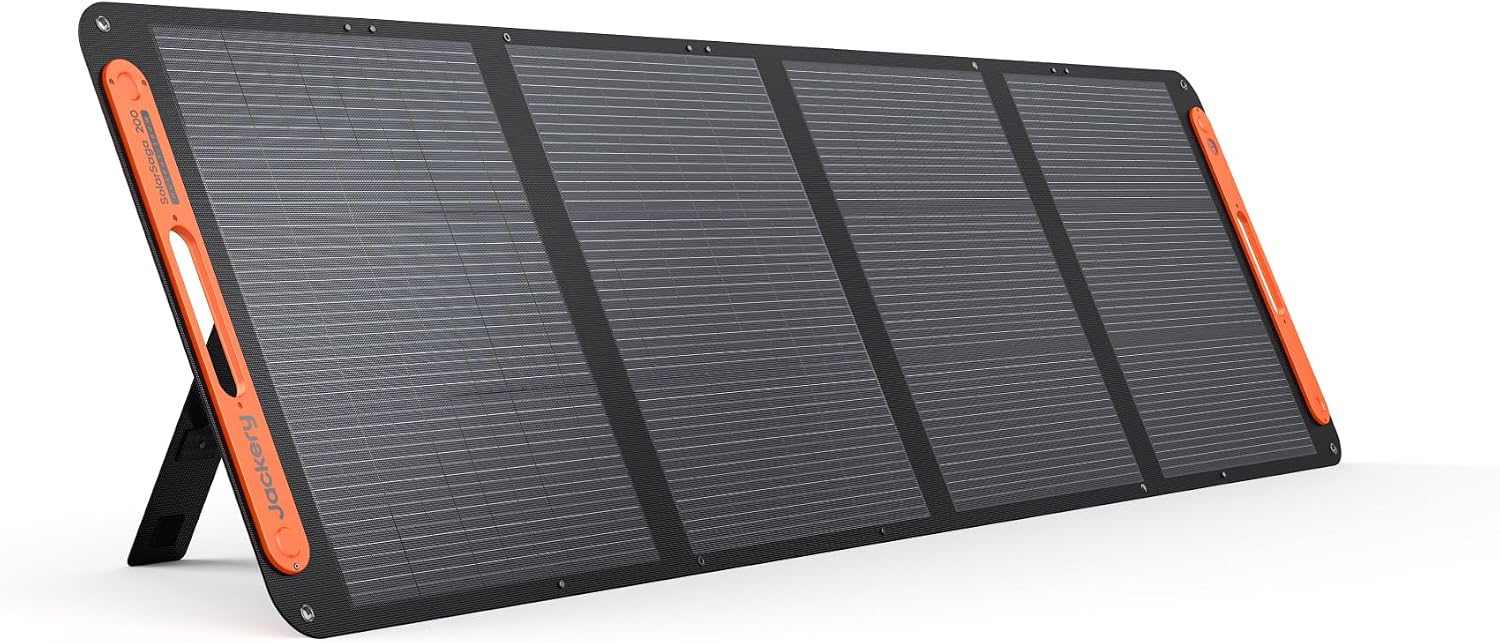
Quick Answer
The Jackery SolarSaga 200W earns its keep on reflective ground — sand, snow, pale gravel — where the back face genuinely contributes. The IP68 sealing means rain stops being a packing emergency. On dark forest floors in fair weather, though, you’re paying for advantages you’ll rarely use.
Compare Top Portable Solar Panels
Three proven picks side by side — choose the one that fits your needs.
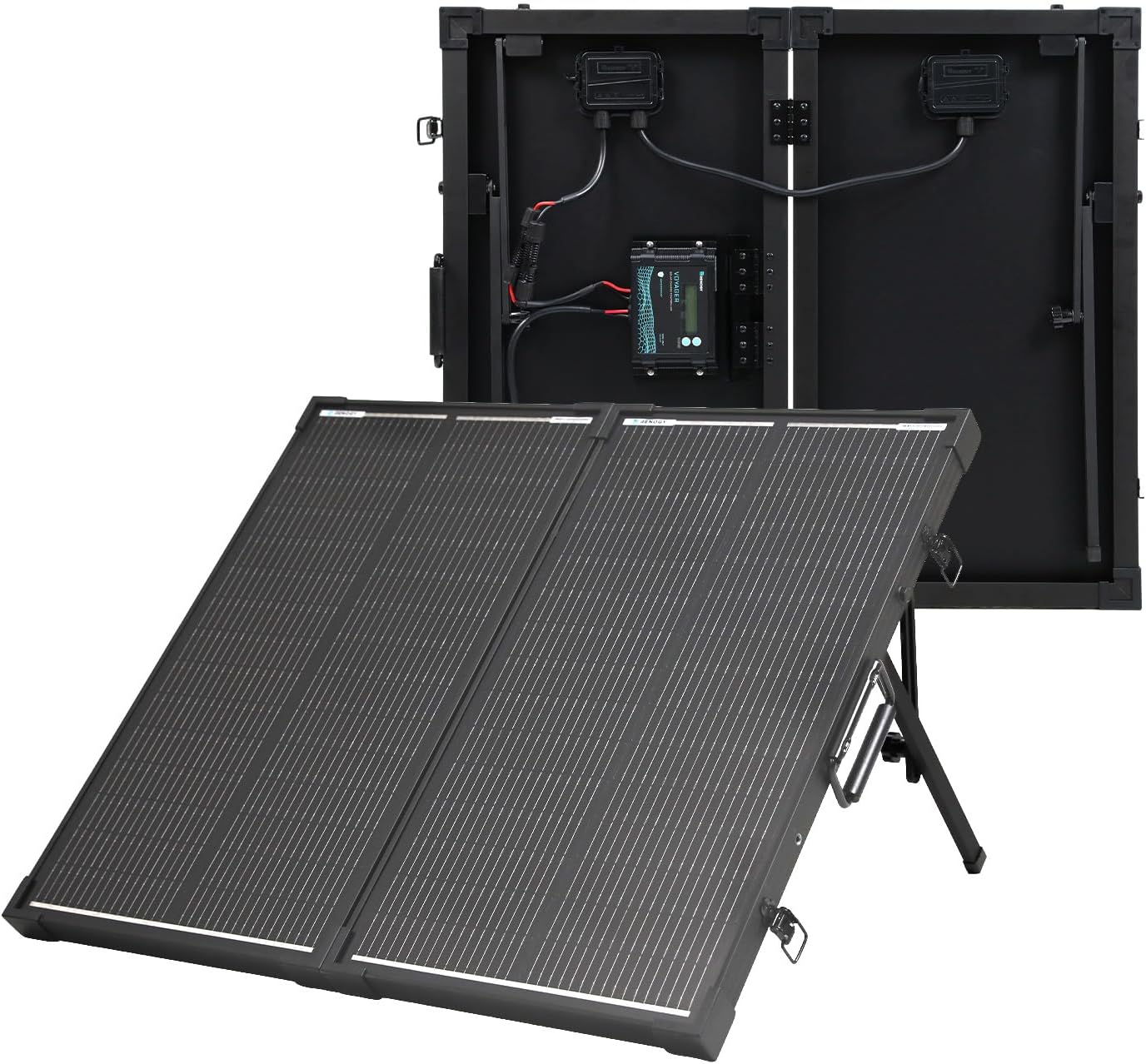
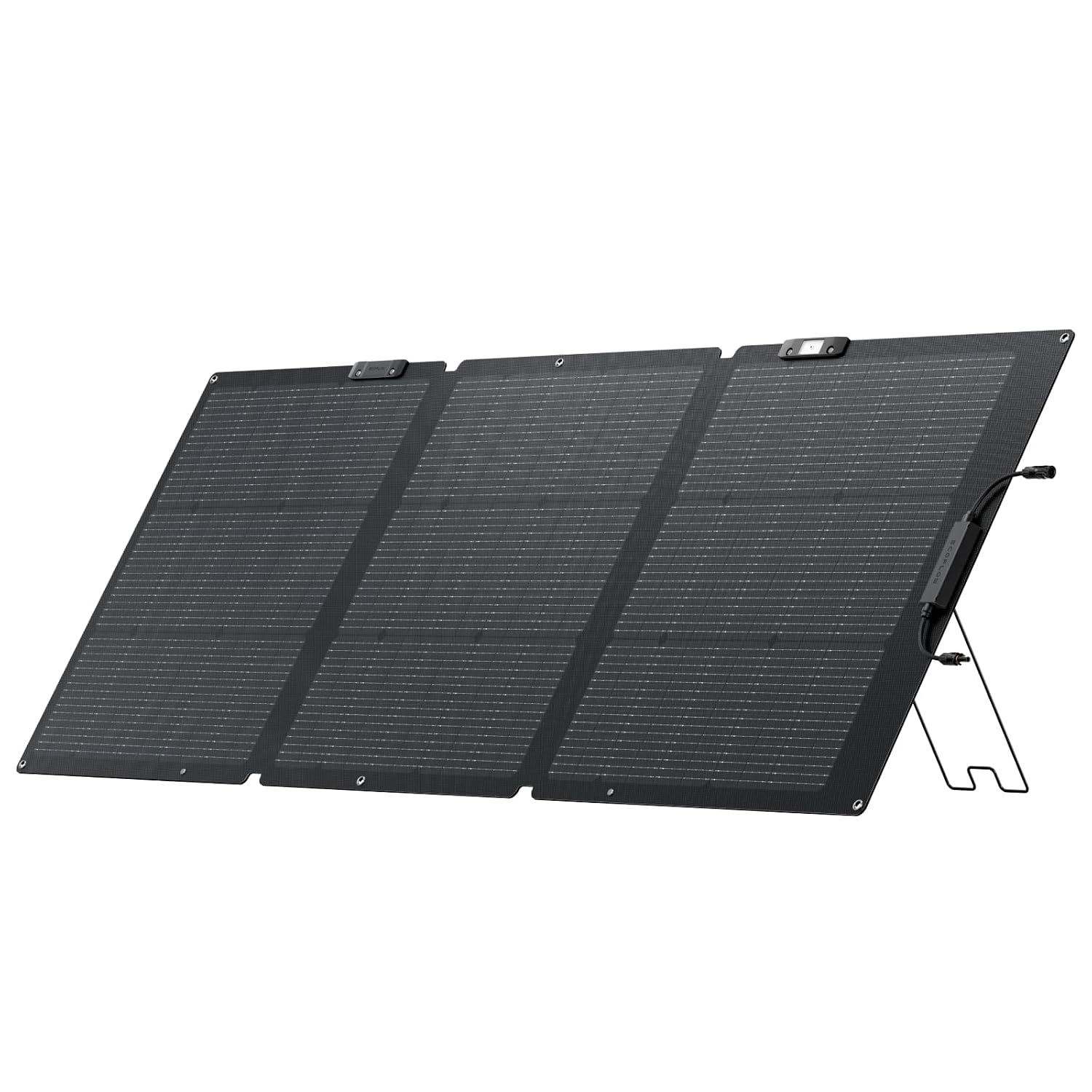
Prices and availability may vary — tap any product to check the current listing.
Shopping around? We have also tested the Renogy 200W solar suitcase and the Jackery SolarSaga 100W — both worth a look before you decide.
What to Look For in a Bifacial Portable Panel
Bifacial is real technology, not a marketing sticker — but it comes with conditions. Understanding both keeps you from paying for watts you’ll never harvest.
How Bifacial Gains Actually Work
A conventional panel has a dead back — opaque backing, nothing to see. A bifacial panel exposes cells on the rear face too, converting light the ground reflects instead of wasting it. The physics is honest. The catch: the back face only earns its keep when the ground cooperates. Bright sand, fresh snow, and pale concrete throw serious light back up; dark soil and pine needles barely whisper. The bifacial premium pays off in inverse proportion to how photogenic your campsite is.
Weatherproofing Ratings, Decoded
IP68 is about as sealed as portable gear gets. The first digit means dust can’t meaningfully intrude; the second means the unit survives immersion well beyond a rainstorm. Translation: rain stops being an emergency, and desert dust stops being a slow killer. The trade-off: IP68 describes the panel body — connectors deserve the same common sense as any electrical gear. Don’t leave connections sitting in a puddle.
Efficiency vs. Usable Output
High conversion efficiency sounds like the whole game. It’s maybe a third of it. Efficiency says how much hitting light becomes electricity — not how much light hits your panel on a hazy Tuesday. Angle, shade, heat, and dirt swing real output more than a few efficiency points ever will. A moderately efficient panel aimed well beats a premium panel aimed lazily. Every time.
Weight and Fold Design
Bifacial panels carry extra engineering — the rear face needs protection that doesn’t block light, usually glass or transparent backing on both sides. That adds weight compared to single-face foldables. The fold mechanism matters just as much: suitcase-style hinges, magnetic closures, carry handles. You’ll open and close this thing hundreds of times; cheap hinges announce themselves in year two. Seasoned campers check the fold hardware in real product photos first.
Power Station Pairing
Most buyers plug this straight into a portable power station, not a bare battery. Stations handle the charge electronics internally, so you connect panel leads to the station’s solar input and skip any separate controller. Check the station’s input voltage window against the panel’s output — a mismatch means weak charging or no charging at all. And size honestly: a 200W panel wants a station with enough capacity to store a full day of harvest.
Stands, Angles, and the Ground Beneath
The part marketing skips: the rear face needs light, and light needs a path. Lay the panel flat on dark ground and the bifacial feature is decoration. Raise it on its stands over something reflective and it starts earning. Angle serves double duty — better sun on the front, more bounce on the back. Some campers lay a cheap reflective emergency blanket under the panel — ridiculous looking, and it works. Most people overlook ground choice entirely, which is exactly why bifacial gains disappoint them.
Match the Panel to Your Situation
The beach and snow camper. Your trips happen on sand, snow, or pale hardpan — nature’s reflectors, the bifacial sweet spot. The rear face harvests a genuine bonus all day, and the IP68 sealing shrugs off salt spray and blowing grit. For you, the premium over a conventional panel is arithmetic, not luxury.
The shoulder-season adventurer. You camp in spring rain and autumn murk, where the sealing is your headline feature — rain stops dictating your charging schedule. Keep expectations honest: no panel manufactures sun.
The power-station kit builder. You own a station and want the strongest solar input it can take. The weatherproofing lets the panel live outside while the station stays dry in the tent. Confirm the station’s max solar input first.
How Portable Solar Panels Compare
| Type / Tier | Best For | Price Tier | Key Feature | Watch-Out |
|---|---|---|---|---|
| Bifacial foldable (200W) | Reflective campsites and rough weather | Premium | Two-sided harvest plus serious sealing | Heavier; gains depend on ground |
| Conventional foldable suitcase (200W) | All-round camping with simple setup | Mid-range | One-box convenience, controller often included | No rear-face bonus |
| Lightweight foldable (100–160W) | Minimalists and power-station owners | Mid-range to premium | Easy to carry and reposition | Smaller daily harvest |
| Rigid roof-style panel | Permanent RV or van installs | Budget-friendly | Lowest cost per watt | Not portable; single-face only |
The bifacial foldable wins when the ground reflects — sand, snow, and pale gravel turn the rear face into free watts.
The conventional suitcase wins on simplicity — the controller question already answered.
The lightweight foldable wins on portability, but gives up harvest on the gray days when watts matter most.
The rigid panel wins on pure economics — for anyone who never moves it.
Scenario: Beach Days and Snow Trips
This is where the SolarSaga 200W stops being a spec sheet and becomes a strategy. Sand reflects a serious share of incoming light; fresh snow even more. On stands, the rear face drinks the bounce — meaningfully more daily energy than a single-face panel in the same spot. Salt spray and blowing sand punish lesser panels; the IP68 sealing does quiet work here too. Rinse the salt off after the trip.
Scenario: A Rainy Week at Basecamp
Rain changes the solar math twice: less light from above, and most campers frantically packing panels away. The sealing removes the second problem — it sits out through showers and keeps trickling. That trickle matters over a week. Without it, three rainy days means zero input and a sliding battery. With it, you’re still harvesting diffuse light. Not much — but “not much” beats “nothing” across a long trip.
Scenario: Van-Life Daily Driver
Full-timers use panels daily and casually — parking lots and trailheads, not pristine campsites. Durability becomes the headline spec. The sealed construction handles road dust, the fold hardware survives daily cycles, and 200W keeps a house battery healthy through lights, fans, and laptop charging. The bifacial bonus comes and goes with the parking surface — asphalt gives little, pale gravel more. The front face does the heavy lifting; the back is a bonus, not a plan.
Common Mistakes Campers Make With Bifacial Panels
Expecting rear-face gains on dark ground. Pine needles and dark soil reflect almost nothing — the bifacial feature idles. It still works as a conventional 200W front-face panel; you just didn’t get the bonus you paid for.
Laying it flat. Flat is the worst of both: bad sun angle on the front, zero bounce on the back. Use the stands. Every time.
Piling gear behind it. Coolers, bags, and camp chairs stacked behind a bifacial panel shade the rear face you’re paying extra for. Give the back breathing room and something bright to face.
Treating IP68 as invincible. The rating covers the panel body against dust and water — it doesn’t bless sloppy cable management. Keep connectors out of standing water. Ratings are tested in labs; campsites are not labs.
Why, How, What: The Questions Nobody Answers Honestly
Why do bifacial panels need reflective ground? Because the rear cells only convert light that reaches them, and down there the only light is what the ground throws back up. A white surface can bounce a large share of sunlight upward; dark earth bounces almost nothing. The panel doesn’t know or care — it converts whatever arrives. Your campsite decides — the same panel performs like two different products in two different places.
How should you angle a bifacial panel? Aim the front face at the sun like any panel — tilt toward the sun’s position, adjusting through the day. The rear face takes care of itself as long as it’s raised and unobstructed. The stands do double duty: angle for the front, clearance for the back. At midday in summer, a steeper tilt than you’d expect often works — high sun plus ground bounce feeds both faces.
What does IP68 actually protect? The “6” means dust-tight — no meaningful dust intrusion, which matters in deserts and on dirt roads. The “8” means protected against continuous immersion deeper than a meter, far beyond any rainstorm. Translation: rain is a non-event, dust storms survivable, and an accidental dunk while launching kayaks probably won’t kill it. It doesn’t mean the panel enjoys being stored wet — dry it before folding.
Key Takeaways
✅ Bifacial gains are real — but they live and die by your ground’s reflectivity.
✅ IP68 sealing removes weather anxiety: rain stops being a packing emergency.
✅ Pair with a power station sized for a full day of harvest.
⚠️ Dark forest floors, fair weather: you’re paying for advantages you’ll rarely use.
Decision Tree: Is Bifacial Right for You?
→ Sand, snow, or pale gravel? Bifacial — the rear face pays for itself.
→ Mostly rain and rough weather? This panel for the sealing; bifacial is a bonus.
→ Dark forest, fair weather, tight budget? A conventional foldable — skip the premium.
→ Lightest thing possible? A smaller single-face foldable.
Questions People Ask Before Buying
Is the Jackery SolarSaga 200W worth it over a regular 200W panel?
Yes, if you camp on reflective ground or in rough weather — the bifacial rear face adds a genuine bonus on sand, snow, and pale gravel, while the IP68 sealing removes rain from your list of worries entirely, a combination that’s hard to beat for beach, desert, and shoulder-season trips. On dark forest floors in fair weather, the advantages idle and a conventional panel delivers the same result for less. Match the panel to your campsite, not the spec sheet.
Does the bifacial back actually add power?
Yes, measurably — but only when the ground cooperates, since the rear cells convert whatever light the surface beneath bounces upward, with bright sand and fresh snow delivering a meaningful bonus while dark soil and pine needles deliver almost nothing in practice. Think of the rear face as a conditional extra, not a guaranteed second panel.
Can the SolarSaga 200W really handle rain?
Yes — the IP68 rating means the panel body is dust-tight and protected against immersion well beyond any rainstorm, so rain stops being a packing emergency, and it can sit out through showers harvesting diffuse light while lesser setups get folded away. Keep connectors dry and don’t fold it wet. Sealed isn’t maintenance-free.
Does it work with power stations from other brands?
Generally yes — solar panels and power stations connect through standard solar inputs, so any station whose input voltage window matches the panel’s output will charge from it, but check your station’s solar input specs before buying since a mismatch means weak charging or none at all. Size the station to the panel: enough capacity to store a full day of harvest.
Is 200W bifacial enough for off-grid weekends?
Yes, for typical weekend loads — lights, phones, a modest 12V fridge, laptop top-ups — a 200W bifacial panel in decent sun keeps a sensibly sized battery healthy through a long weekend, and the bifacial bonus stretches that further on reflective ground. Size your battery to one good solar day and you’ll rarely run dry.
Frequently Asked Questions
What does IP68 mean for a solar panel?
The 6 means dust-tight — no meaningful dust gets in. The 8 means protected against continuous immersion deeper than a meter, far beyond any rainstorm. In practice: rain is a non-event and dust storms are survivable. The rating covers the panel body — keep connectors out of puddles.
Do I need a charge controller with this panel?
Not with a portable power station — its built-in electronics handle charge regulation, so you connect the panel leads straight to the solar input. Charging a bare 12V battery directly? You need a controller between panel and battery. Never wire panel leads straight to a bare battery.
How much extra power does the back face add?
It varies wildly with the ground — that’s the honest answer. Reflective surfaces like sand, snow, and pale concrete give the rear face plenty to work with; dark soil gives it almost nothing. On stands over bright ground, the bonus is genuinely noticeable. Laid flat on dark earth, consider the rear face decorative.
Can it charge in winter?
Yes — cold air actually helps solar cells run more efficiently, and snow on the ground is one of the most reflective surfaces a bifacial panel can ask for. The enemy in winter is the short day and the low sun angle, not the temperature. Tilt steeply toward the low sun, brush snow off the front face, and let the white ground feed the back.
Is it heavier than regular foldable panels?
A little — the rear face needs transparent protection instead of opaque backing. For car camping the difference is a non-issue; for backpacking, a lightweight single-face mat is the better call.
What surfaces work best underneath a bifacial panel?
Bright, reflective ones: sand, snow, pale gravel, light concrete. The paler the better. Dark soil, grass, and pine needles reflect little, so the rear face contributes almost nothing there. Some campers lay a reflective emergency blanket underneath — improvised, and it works.
Not sure what fits your setup? Our EcoFlow 220W bifacial solar panel walks through the real-world math.
Final Recommendation
Buy the SolarSaga 200W if your camping happens on reflective ground or punishing weather — that’s where the bifacial cells and IP68 sealing pull their weight. Dark forest floors in fair weather? A conventional foldable gives the same practical result for less.
Whichever way you go: angle beats specs, shade kills output, and the ground beneath matters more than the brochure admits.


