ICECO GO20 Review: 21QT Dual Zone 12V Fridge Freezer with SECOP Compressor
Shopping for a 21QT dual zone 12V fridge freezer means sweating small differences — they matter a lot here. The ICECO GO20 is a compact compressor fridge promising a real freezer and a real fridge in one box, powered by your car or a portable power station. This guide covers what actually matters when choosing one, who the GO20 suits, and how it stacks up against the budget-friendly Alpicool C30 and the battery-ready BougeRV CRH20.
Quick Answer
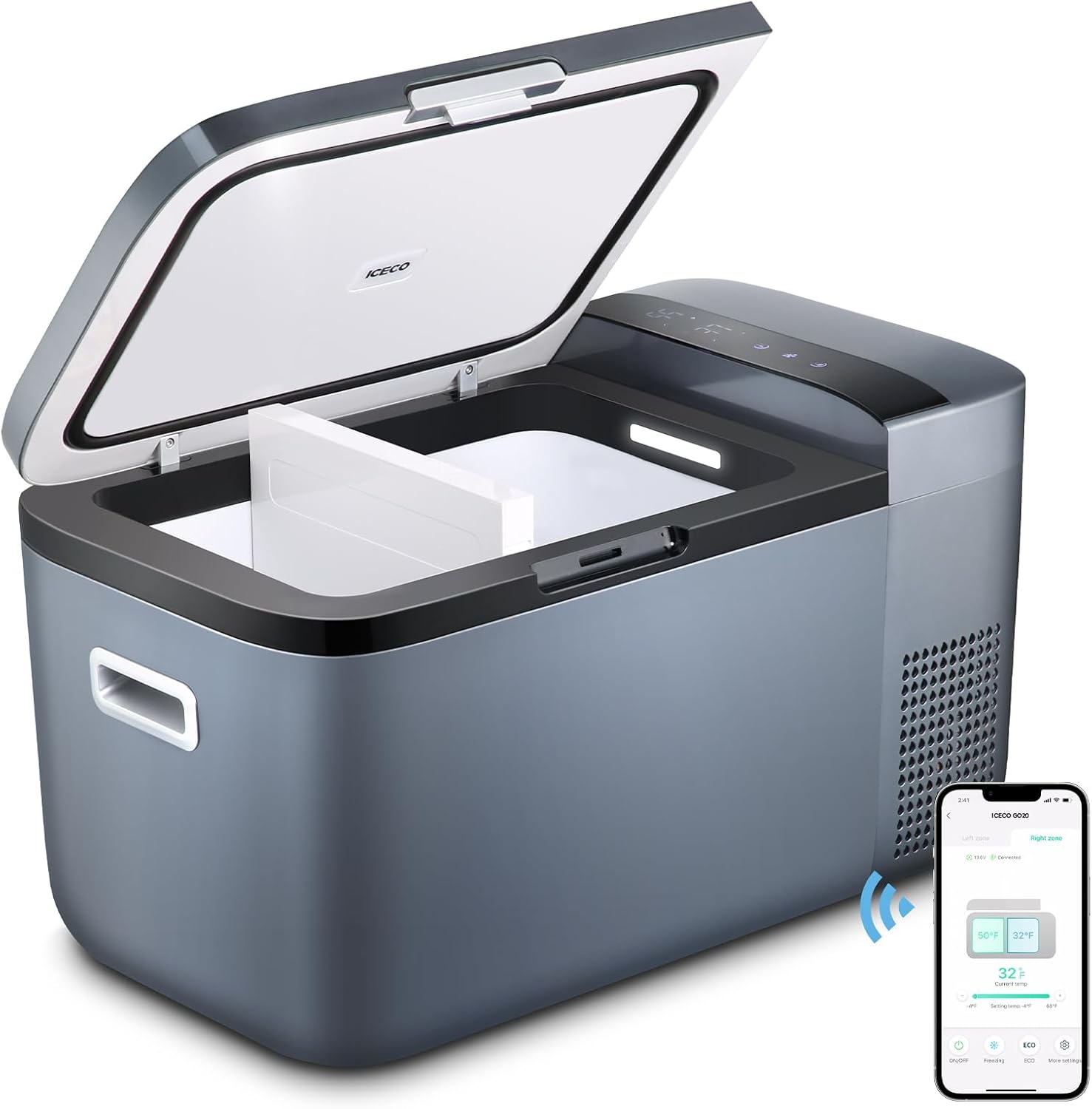
The ICECO GO20 is a 21-quart dual zone 12V fridge freezer built around a SECOP compressor — the same compressor architecture you’ll find in fridges costing considerably more. It’s a strong match for couples and small families who want frozen goods and fresh food in one compact box that fits a sedan trunk. Need maximum cold space on a tight budget? The single-zone Alpicool C30 gives you more room for less money.
Compare Top 12V Portable Fridge Freezers
Three proven picks side by side — choose the one that fits your needs.
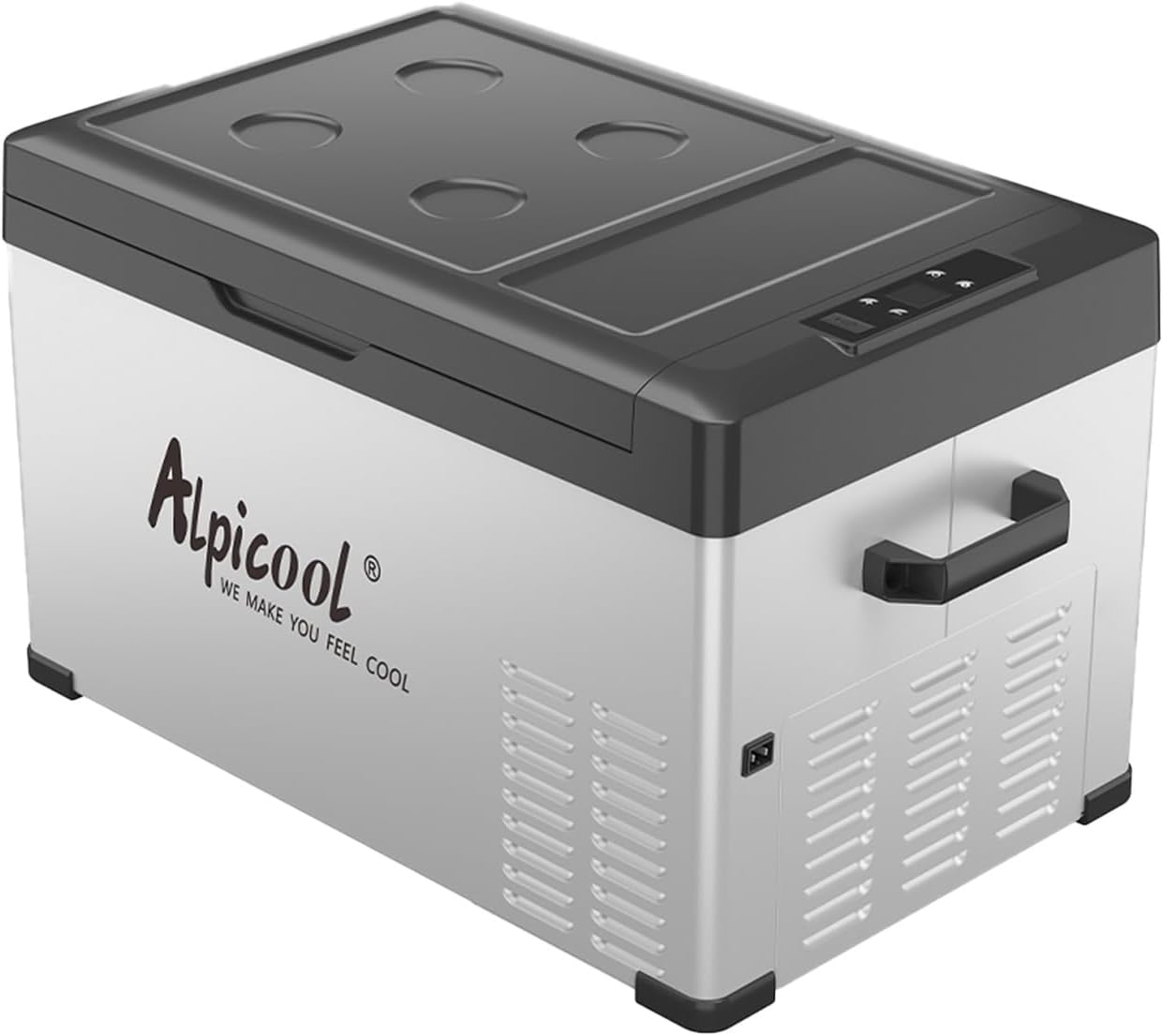
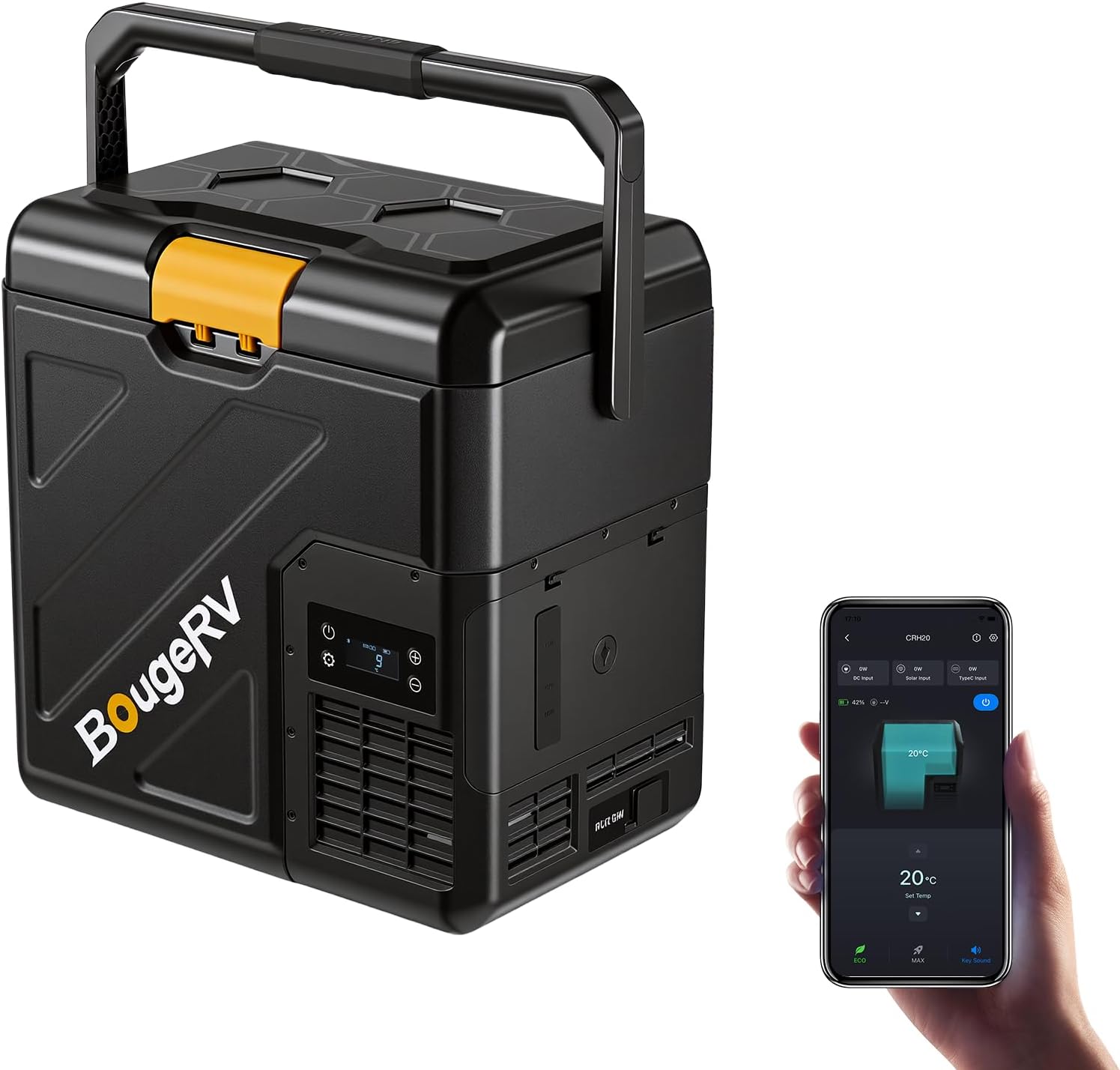
Prices and availability may vary — tap any product to check the current listing.
For context, we have reviewed the Alpicool C30 and the BougeRV CRH20 in the same portable-fridge category.
What to Look For in a 12V Portable Fridge Freezer
A 12V fridge is one of those purchases where the spec sheet lies by omission. Here’s what experienced buyers actually check.
The Compressor Does the Heavy Lifting
The compressor is the engine of the whole purchase. The GO20 uses a SECOP compressor — the same architecture found in expedition fridges costing considerably more — which means genuine freezing and a unit built to run for years. Cheaper thermoelectric coolers use a Peltier chip instead: they cool a fixed number of degrees below ambient, which works on a mild day and fails on a scorching one.
Dual Zone vs Single Zone — the Honest Math
Dual zone sounds like twice the fridge. It isn’t — a 21-quart box splits into two genuinely small compartments. What you gain is independence: freezer temps on one side, fridge temps on the other, simultaneously.
A single-zone fridge like the Alpicool C30 gives you one bigger 28-quart cavity — freeze or chill, not both at once. So ask whether your trips involve frozen food: anglers, hunters, and parents of popsicle-obsessed kids want dual zone; everyone else gets more mileage from one big compartment.
Power Draw and 12V Compatibility
Every 12V fridge in this class runs off your vehicle’s 12-volt outlet plus a wall plug. The compressor works hard pulling down to temperature, then cycles to maintain it — pre-cool at home on wall power and you’ll spare your battery a serious workout.
Battery protection is the feature nobody brags about until it saves them — the fridge shuts down before stranding you. Running off a portable power station? Recharge it from solar panels by day and the loop runs indefinitely.
Build Quality — It Lives in Your Trunk
These things get thrown around — rattling in trunks, baking in parked cars, rained on at campsites. Sturdy housings and solid latches outlast flimsy shells, noticeably. The GO20’s build lands closer to the expedition tier than the budget tier, right where a mid-range compressor fridge should.
Check the small stuff: lid seals that actually seal, handles rated for a loaded box, hinges that don’t wobble. I’ve seen people curse a lid that won’t stay shut on washboard roads.
Controls, Display, and the App Question
A digital display with temperature presets is table stakes. The GO20 adds app control — handy when the fridge is buried under gear, but a convenience, not a reason to buy.
Size, Weight, and the Trunk Test
Twenty-one quarts fits in a sedan trunk — that’s the GO20’s pitch. Still, measure your actual cargo floor with gear loaded: a packed 12V fridge is heavier than you’d guess. Two adults, no drama; solo over rough ground, you’ll feel it.
Matching the Fridge to Your Situation
The right fridge depends on your trip pattern more than any feature list. Three buyers keep showing up in this category — see which one sounds like you.
The Weekend Car Camper With Kids
You load the car Friday night and need cold milk plus frozen treats for two or three days. Dual zone was made for this: dairy and produce at fridge temps on one side, ice cream and frozen burgers on the other. No ice runs, no soggy sandwiches.
Watch the capacity ceiling: with two adults and two kids, 21 quarts fills fast — plan on a cheap passive cooler for drinks alongside it.
The Long-Haul Road Tripper
You drive all day and sleep wherever the day ends. The fridge becomes a rolling pantry: cold drinks, safe leftovers, no restaurant markup at every exit. Plug into the 12V outlet while driving; battery protection covers the overnight stops.
Dual zone matters less here unless you travel with frozen goods — some road trippers get more from the bigger single-zone Alpicool C30. Check your menu before paying for two zones.
The Commuter and Grocery Runner
Plenty of 12V fridges never leave the city — hot groceries in a parked car are a real summer problem, and a compact compressor fridge solves it. Twenty-one quarts is about right: big enough for a grocery run, small enough to live in the trunk.
Daily drivers should care most about battery protection and lid seals — a fridge that drains the starter battery turns convenience into a jump-start. Enable protection mode every time.
12V Cooling Options Compared
| Type / Tier | Best For | Price Tier | Key Feature | Watch-Out |
|---|---|---|---|---|
| Compressor 12V fridge-freezer, dual zone (GO20 class) | Couples needing fridge + freezer in one box | Mid-range | True freezing with no ice needed | Split compartments shrink usable volume |
| Compressor 12V fridge, single zone (C30 class) | Families maximizing cold space per dollar | Budget-friendly | Big single cavity for the price | Freezes or chills — can’t do both at once |
| Thermoelectric cooler | Short day trips from a powered vehicle | Budget-friendly | Simple, light, no compressor to fail | Struggles badly in real summer heat |
| Passive ice chest | Occasional campers with easy ice access | Budget-friendly | Dead simple, needs zero power | Melting ice means soggy food and daily refills |
Dual-zone compressor: the sweet spot for campers who hate compromise — real freezing, no ice logistics, one trunk-friendly box.
Single-zone compressor: where the value lives — more room, less money, but you can’t freeze and chill at once.
Thermoelectric: a shrinking niche — fine for mild-weather day trips, hopeless in real summer heat.
Passive ice chest: nothing breaks and no battery dies, but the daily ice tax adds up fast.
Three Scenarios Where the GO20 Earns Its Keep
Car Camping With Kids
Kids run on cold drinks and frozen treats. With the GO20, the freezer side holds popsicles and ice cream while the fridge side keeps milk, fruit, and leftovers safe — no ice runs, no mystery puddle in the cooler.
With a family of four, you’ll pack it tight — keep the GO20 for perishables, stash drinks in a cheap passive cooler, and set battery protection before the first night.
Long Road Trips and Tailgates
On the highway it plugs into the 12V outlet and disappears into the background: cold drinks at every rest stop, safe leftovers instead of another drive-through. At a tailgate, it’s the most popular thing in the parking lot.
One more thing to haul from the car — but for a box that replaces a cooler, a bag of ice, and a store run, the weight stops mattering by the second outing.
Power Outage Backup at Home
During an outage, the GO20 holds the perishables that matter most — dairy, medicines, a few days of food — off a portable power station recharged from solar panels by day. Twenty-one quarts won’t replace your kitchen fridge, but it saves the expensive stuff from the trash.
This is where the solar angle gets real: a compressor fridge plus a power station plus a panel is a small off-grid food-preservation system. Outages are getting longer, not shorter. Food security in a box.
Common Mistakes Buyers Make
Shopping by quart number alone. Two 21-quart fridges can hold very different loads — compartment shape, lid depth, and divider placement all eat into usable space. Pack a test load at home. Seriously.
Ignoring battery protection. It only works if you turn it on — somebody learns this lesson every year at 2 a.m. in a trailhead parking lot.
Expecting instant cold. A compressor fridge pulls down over a few hours, not minutes. Pre-cool at home on wall power.
Paying for dual zone when single zone fits. Two zones are only worth it if you actually freeze things. Buy the fridge for the trips you take, not the trips you imagine.
The Essentials, Answered
Why does a compressor 12V fridge cost more than a thermoelectric cooler?
It’s a different machine. A compressor fridge pumps heat out and holds a set temperature in any weather; a thermoelectric cooler is a fan across a Peltier chip, good for a fixed drop below ambient. In a heatwave, that’s cold food versus a science experiment — and that’s what you’re paying for.
How do you power a 12V fridge at a campsite with no hookups?
While driving, the 12V outlet handles it. At camp, a portable power station covers a weekend — recharge it from solar panels by day and the loop runs indefinitely. Battery protection shuts things down before the starter battery drains.
What does “dual zone” actually mean in a 21-quart box?
Two independently controlled compartments in one 21-quart shell — a smaller freezer, a larger fridge. Each compartment is modest and tall items won’t fit: perfect for a couple’s long weekend, not a family-sized solution. If volume beats versatility, the single-zone C30’s 28-quart cavity swallows loads the GO20’s split zones can’t.
Key Takeaways
A compressor fridge holds a set temperature in real heat; a thermoelectric cooler merely cools below ambient and gives up in summer.
Dual zone buys versatility, single zone buys volume — pick based on your menu. Pre-cool at home, enable battery protection, measure your trunk.
Decision Tree: Which 12V Fridge Should You Buy?
Frozen food on your trips? Get the dual-zone GO20 — one box, two temperatures, no ice.
Maximum cold space for minimum spend? Get the single-zone Alpicool C30. Detachable-battery option? Get the BougeRV CRH20.
Questions People Ask Before Buying
Is the ICECO GO20 worth it for camping?
Yes — if you camp as a couple or small family and want a genuine freezer alongside a fridge in one trunk-friendly box, the GO20’s dual-zone layout and proven compressor architecture make it one of the most sensible mid-range buys in the 12V category right now. Not the cheapest box, and a family of four fills it fast — but if you’d otherwise juggle two coolers or keep buying ice, it earns its keep within a season.
Is a dual zone 12V fridge better than a single zone?
Only if your menu includes frozen food — dual zone wins the moment you need ice cream, frozen meat, or bait at freezer temps while keeping fresh food cold, but single zone wins on raw capacity because one big compartment holds noticeably more than two small ones of equal total size. Hunters, anglers, and popsicle-loving parents get real value from dual zone; everyone else usually gets more from a single-zone box like the Alpicool C30.
How long can the GO20 run on a car battery?
There’s no single number — it depends on your battery’s size and health, the outside temperature, and your set points — but with the built-in low-voltage protection enabled, most campers get through an overnight stop without trouble and simply let the drive home recharge everything. For multi-day off-grid stays, add a portable power station recharged by solar panels — that setup runs indefinitely.
Should I buy the ICECO GO20 or the Alpicool C30?
Buy the GO20 if you want a freezer zone and the proven compressor lineage in a compact box; buy the C30 if you want maximum cold space for minimum money — its single 28-quart cavity swallows family-size loads that the GO20’s split compartments simply can’t fit. No wrong answer, just a trade between versatility and volume — be honest about what you pack and the choice makes itself.
Can a 12V fridge replace my full-size fridge during a power outage?
For the essentials, yes — 21 quarts comfortably covers the dairy, medicines, and perishables that matter most, and running the fridge from a portable power station or your vehicle’s battery keeps everything safely cold for as long as the outage lasts. It won’t hold a whole kitchen’s worth of food — prioritize ruthlessly, and recharge the station from solar by day.
Frequently Asked Questions
Does the GO20 need ice?
No — that’s the point of a compressor fridge. It makes its own cold and never needs a bag of ice.
Can I run it while driving?
Yes — plug into the 12V outlet and the alternator powers it while topping up the battery. Just enable battery protection for when you park.
How much food fits in 21 quarts?
Think a couple’s long weekend: drinks, dairy, produce, and frozen items across two zones. A family of four will feel the squeeze.
Is it noisy?
Compressor fridges hum quietly and cycle on and off — most people sleep nearby without noticing. It’s far quieter than a generator, roughly on par with a mini-fridge.
Can it run on solar panels?
Not directly — panels feed a portable power station, and the station runs the fridge. A modest panel setup keeps that loop going through a sunny weekend.
Will it drain my car battery overnight?
Not with battery protection enabled — it shuts the fridge down before the battery gets too low to start the car. For multi-day stops without driving, use a portable power station.
Final Recommendation
The ICECO GO20 is the right call for campers who want a genuine freezer and a fridge in one compact, trunk-friendly box — especially couples and small families done with the ice routine.
Need volume on a budget? The single-zone Alpicool C30 is smarter. Want a detachable battery? The BougeRV CRH20. For the classic dual-zone camper, the GO20 is hard to argue with.