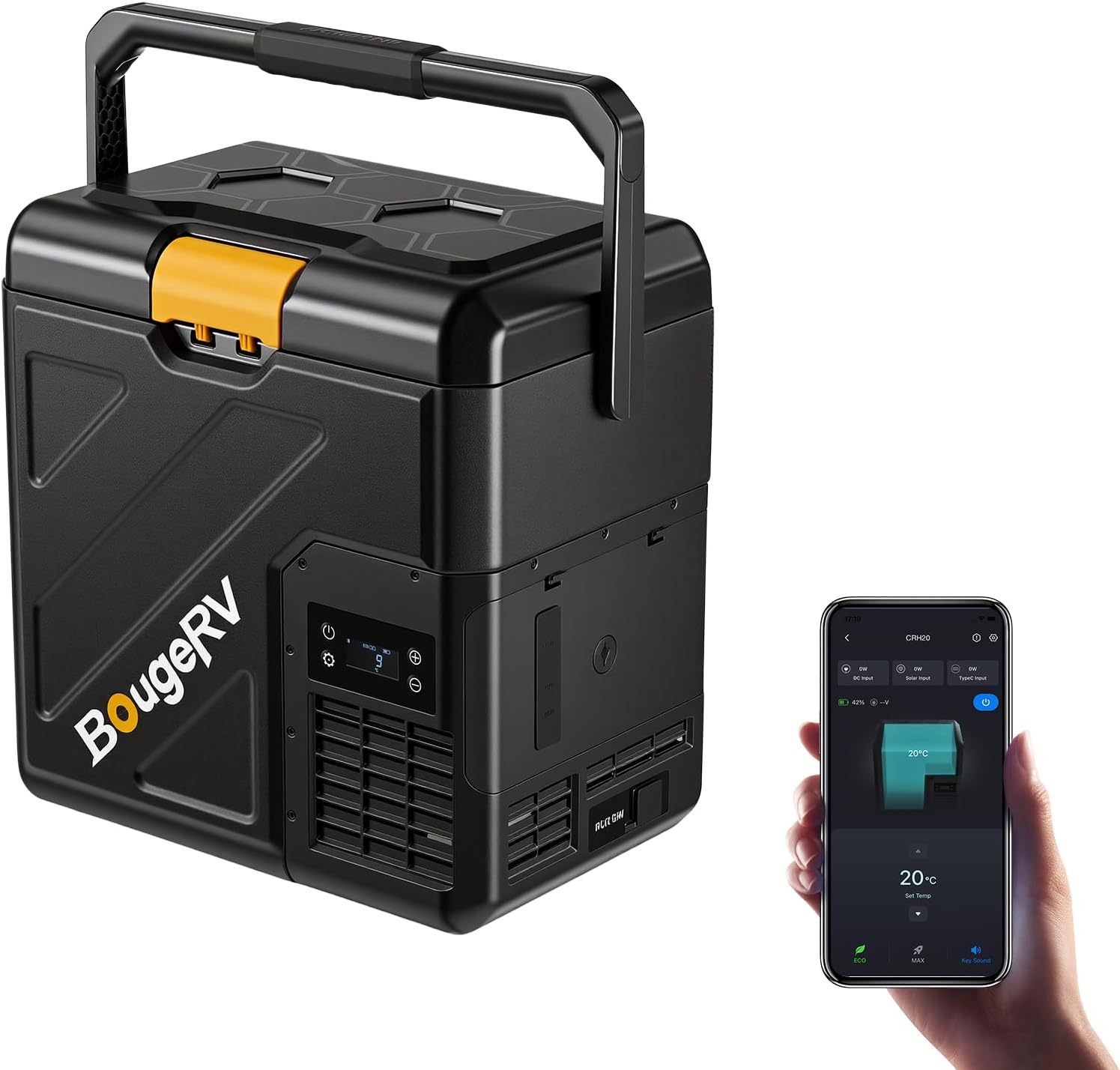
BougeRV CRH20 Review: 21QT 12V Portable Car Refrigerator With a Detachable Battery Option
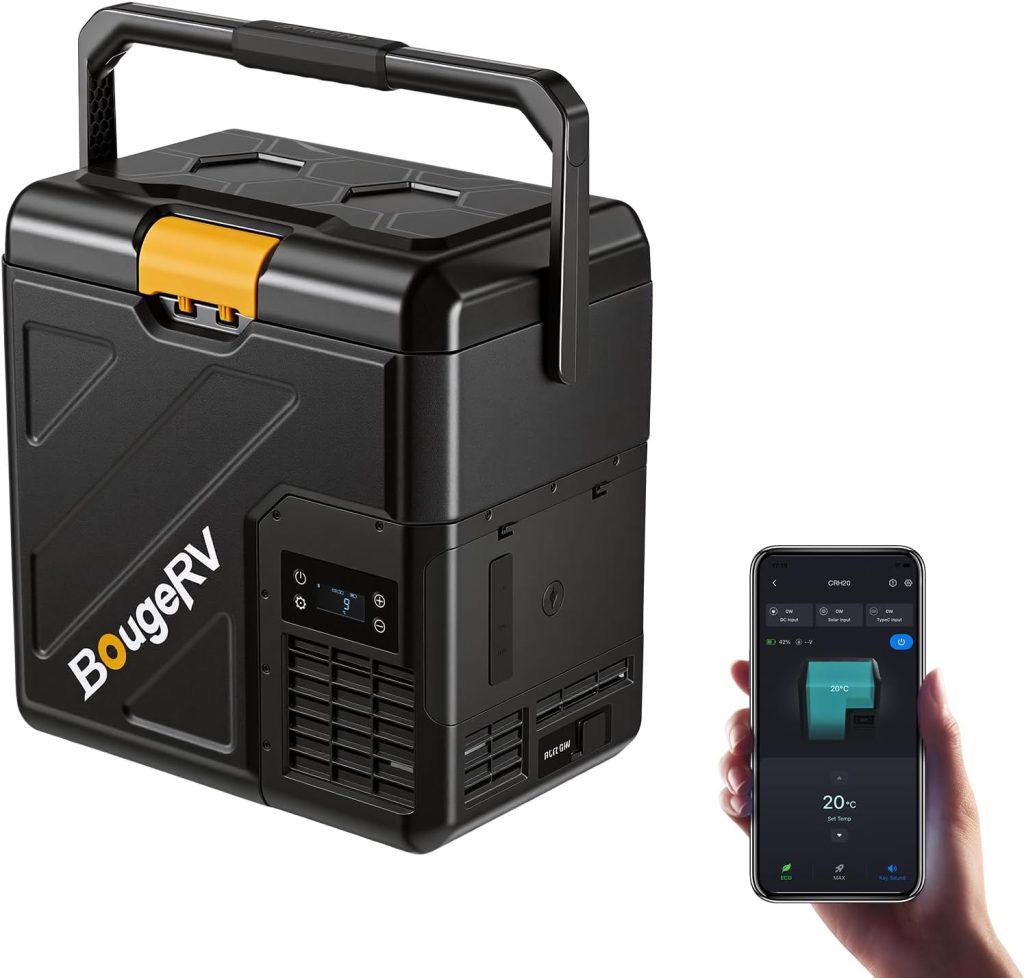
The BougeRV CRH20 is a 21-quart 12V portable car refrigerator built for campers who are done with ice runs. It cools and freezes off a vehicle’s 12V outlet, and its headline feature is an optional detachable battery that keeps it running when the car is off. This guide covers what the CRH20 does well, where rivals like the larger ICECO VL35 ProS and the dual-zone SetPower PT35 make more sense, and how to size a 12V fridge to your real trips.
Quick Answer
The BougeRV CRH20 is a compact 21-quart 12V car refrigerator for short trips and one-to-two-person camping. Its optional detachable battery keeps food cold off-grid without draining your car — the feature that separates it from most budget boxes. Families and week-long overlanders will outgrow it; a larger dual-zone model fits those trips better.
Compare Top 12V Portable Car Refrigerators
Three proven picks side by side — choose the one that fits your needs.
BougeRV CRH20 12V Portable Car Refrigerator (21QT)
Our pick for short trips: compact 21-quart class with an optional detachable battery for off-grid cooling.
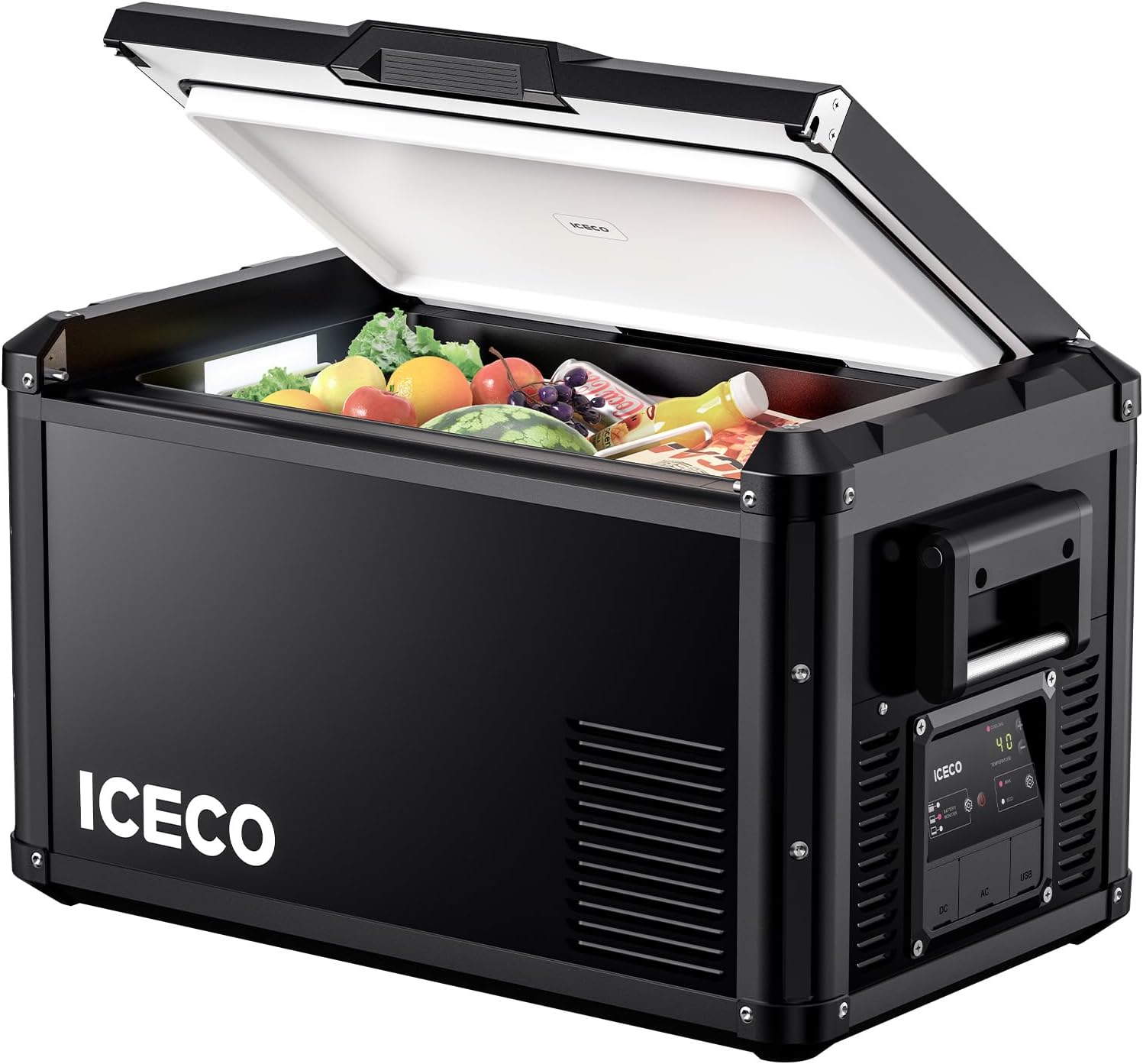
ICECO VL35 ProS 12V Portable Refrigerator (37QT)
Bigger 37-quart class with a German SECOP compressor and long compressor warranty — steadier cooling, but bulkier and pricier.
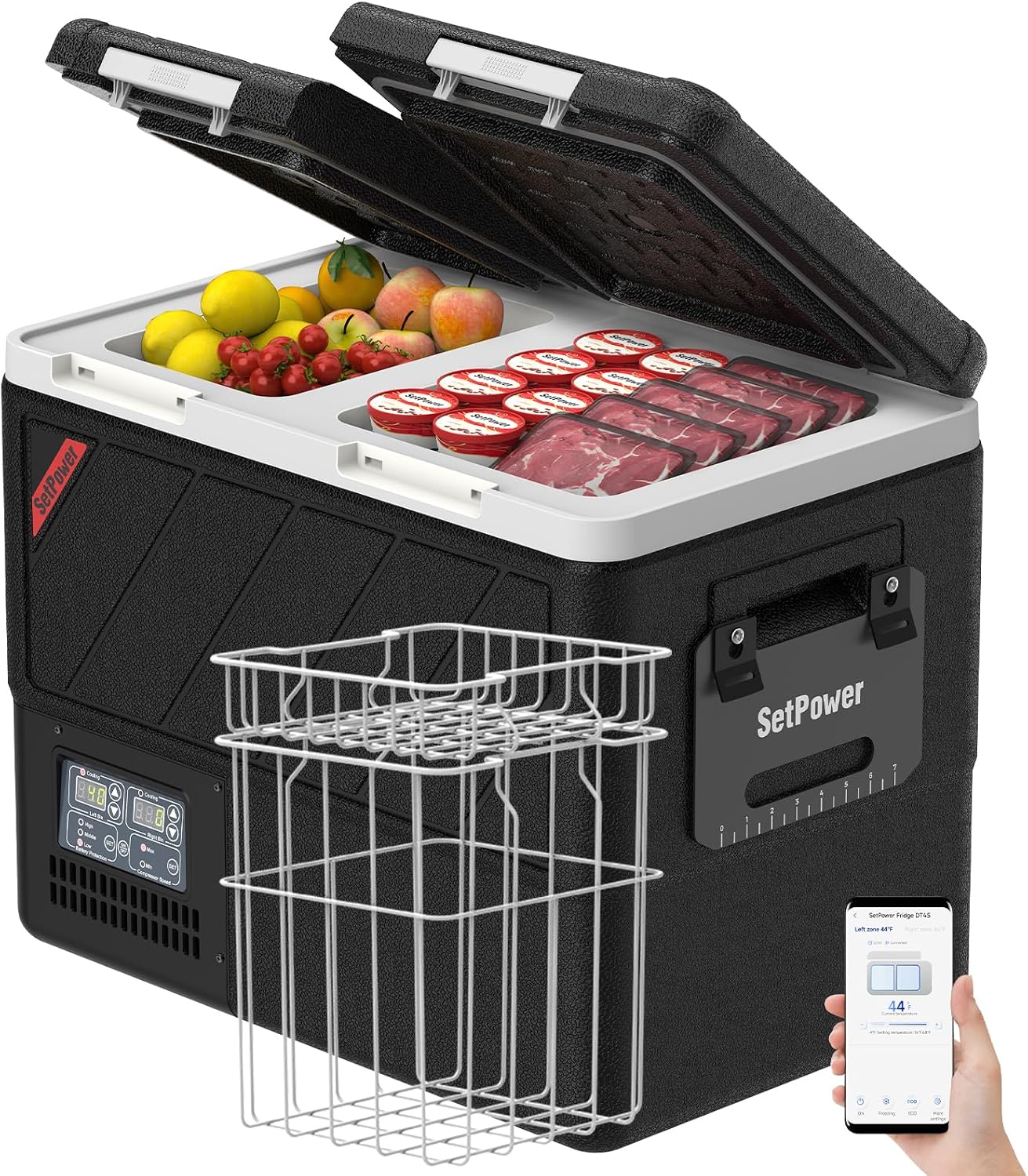
SetPower PT35 12V Car Refrigerator (35L Dual Zone)
Dual-zone 35-liter layout with app control and anti-vibration design — more room, but needs external power outdoors.
Prices and availability may vary — tap any product to check the current listing.
For context, we have reviewed the Alpicool C30 and the ICECO GO20 in the same portable-fridge category.
What to Look For in a 12V Portable Car Refrigerator
Buy wrong and the fridge nags you every trip — too small, too thirsty, or humming beside your tent at 2 AM. Six things to settle before choosing between the CRH20 and anything else.
1. The Compressor Is the Whole Game
A compressor fridge is a shrunken kitchen fridge: refrigerant cycles, heat gets dumped outside, the box gets properly cold — including freezing. Cheap thermoelectric coolers only chill a fixed margin below the surrounding air, so they fold in a hot car. That gap is what makes the CRH20 a fridge instead of a fancy cooler. The trade-off: premium compressors (like the German SECOP unit in the ICECO VL35 ProS) run steadier and quieter over the years, but cost a tier more. Genuine compressor, mainstream price — that’s the CRH20’s lane.
2. Capacity Honesty
Twenty-one quarts holds a couple days of food for one or two people — drinks, sandwich supplies, some fruit, ice cream you’re not sharing. It fills fast once condiments and leftovers join in. So look at what you actually pack, not the expedition you keep imagining. If your weekend kit half-fills a standard cooler, the CRH20’s class fits. Already playing Tetris with milk jugs? Step up to the 35-liter class — no packing trick fixes a box that’s simply too small.
3. Power Draw and the Battery Question
Every 12V fridge sips power when the compressor cycles and nearly nothing between cycles. The CRH20’s headline feature — the optional detachable battery — answers the big fear: what happens when the car is off? Attached, the fridge keeps cooling at camp without touching your starter battery, and the maker advertises well over a day of off-grid runtime. Reality depends on heat, settings, and lid discipline. Don’t romanticize the add-on, though — it costs extra and adds weight. Parked next to a running car all weekend? Skip it. Hiking away all day? It earns its keep.
4. Insulation and Controls
Thick insulation is the unsung hero: it decides how long cold survives between compressor cycles, which decides power draw. The CRH20’s compact size helps here — less air to cool, less cold lost per lid-open. Bigger boxes look impressive but drink more power holding temperature in heat. Controls should be simple: a panel readable in sunlight, settings that hold. Dual-zone models like the SetPower PT35 run fridge and freezer sides at once — nice, until you realize you’re paying for capacity and power draw you might not need.
5. Noise
Compressors make noise. Physics — a small motor kicking on and off. The CRH20 sits in the typical band for its class: noticeable in dead silence, forgettable everywhere else. Placement solves most of it: keep it in the car or a vestibule, not inside the tent. Light sleeper doing long overland trips? Premium-compressor models genuinely run softer. One more reason the ICECO costs more.
6. Build Quality and Warranty
A camp fridge lives hard: trunk tosses, dirt roads, sun-baked afternoons. You want solid latches, a lid seal that seals, handles that don’t flex. The CRH20’s simple chest build is a feature — fewer gimmicks, fewer break points. Warranties split the serious from the sketchy: premium boxes sometimes back the compressor for years (the VL35 ProS is known for it); budget boxes cover less. The CRH20 sits mainstream-middle. I’ve seen people overspend on features they never touch — and people buy the cheapest box and replace it in eighteen months. The middle is usually where the value lives.
How to Match a Portable Fridge to Your Situation
Specs only matter in context. Three people, three trips, three answers.
The Weekend Warrior Couple
Out Friday after work, home Sunday. Drinks, breakfast stuff, grill meat for Saturday night — the CRH20 is basically built for this. Twenty-one quarts covers a couple’s weekend without breaking a sweat, and the detachable battery means no babysitting the car battery overnight. Small enough to fit behind the seat. Done.
The Solo Overlander
A week out, bouncing between trailheads, sometimes days from a plug. Honestly? You want more capacity and steadier cooling than the CRH20 offers. A larger SECOP-compressor box like the ICECO VL35 ProS earns its price here — bigger food stores, steadier temps in heat, a compressor warranty that matches your mileage. Pair it with a portable power station or a solar panel and you’re genuinely self-sufficient.
The Road-Trip Family
Two kids, a dog, five days of driving. Drinks cold, snacks reachable, ice cream that survives Kansas. This is dual-zone territory — something like the SetPower PT35, fridge side for the kids’ stuff, freezer side for real food. The CRH20 would be the overflow box here, not the main event. And that’s fine. Not every fridge needs to be everything.
Key Takeaways
The CRH20’s sweet spot: short trips, one to two people, real compressor cooling without the premium-compressor tax.
The detachable battery is the differentiator — it solves the dead-car-battery fear that keeps people on ice coolers.
Capacity is the hard limit: 21 quarts won’t stretch to family trips or week-long hauls, however cleverly you pack.
Larger rivals earn their premium on longer, hotter, harder trips: dual-zone layouts (PT35), steadier compressors (VL35 ProS).
Decision Tree: Which One Should You Get?
1–2 day trips, 1–2 people, want off-grid without a power station → BougeRV CRH20 with the detachable battery. Home turf.
Family trips or longer outings, need fridge + freezer at once → a dual-zone 35-liter-class model like the SetPower PT35.
Week-long overlanding, hot climates, reliability over years → a premium SECOP-compressor box like the ICECO VL35 ProS.
Cold drinks for day trips on a tight budget → the CRH20 off the 12V outlet, no battery add-on needed.
Comparing 12V Fridge Tiers: Which Class Fits You
Forget brand loyalty for a minute. The market breaks into four tiers, and picking the right tier matters more than picking the right logo.
| Type / Tier | Best For | Price Tier | Key Feature | Watch Out |
|---|---|---|---|---|
| Compact single-zone (~20QT class, like the CRH20) | Solo campers and couples on short trips | Budget-friendly to mid-range | Small footprint, low power draw, easy to move | Runs out of room on longer trips |
| Mid-size dual-zone (~35L class, like the SetPower PT35) | Families and longer outings | Mid-range | Fridge and freezer zones at the same time | Needs serious power when the car is off |
| SECOP-compressor premium (~37QT class, like the ICECO VL35 ProS) | Overlanders and hot-climate camping | Premium | Steadier cooling, long compressor warranty | Bigger, heavier, costs noticeably more |
| Basic budget compressor boxes (Alpicool-style) | Occasional use on a tight budget | Budget-friendly | Real compressor cooling at the lowest price | Noisier, thinner insulation, shorter warranty |
The compact single-zone tier is the CRH20’s home: genuine freezing and low power draw without hauling a chest the size of a coffin — ideal when trips are short and packing is light.
The mid-size dual-zone tier answers “but where does the ice cream go” — freezer zone plus fridge zone at once is a real upgrade, at the cost of size and power appetite.
Trips measured in weeks and temperatures in triple digits call for the SECOP premium tier; the steadier compressor and long warranty are insurance you hope to never need.
On a tight budget, the basic tier gets you in the door, but thin insulation and short warranties mean you may buy twice — fine for testing whether you like fridge camping, risky as a long-term plan.
Three Real Scenarios
Scenario 1: Three Days Off-Grid, No Hookups
Friday to Sunday at a dispersed site, hot afternoons, no power. The CRH20’s audition. Battery attached, sensible fridge setting (not deep-freeze), everything pre-chilled at home — and you sail through the weekend without touching the car. Keep the lid closed like it costs money. In battery terms, it does. Day three is where the limit shows: condiments and leftovers crowd the box, and the battery wants a recharge plan. For three days, though? Totally workable.
Scenario 2: Daily-Driver Duty and Grocery Runs
Plot twist: plenty of these fridges spend weekdays as trunk fridges. Groceries in August, cold drinks for the commute. The CRH20’s compact size shines — it doesn’t eat the whole trunk, and normal driving keeps it topped off. Here the battery add-on matters less; the 12V outlet does the work. One rule: don’t leave it running overnight on the starter battery. Just don’t.
Scenario 3: The Kids’ Tournament Weekend
Saturday: four games, 90 degrees, a cooler of melted ice by noon. Sound familiar? A 12V fridge ends the ice-run ritual. But honesty matters: 21 quarts is tight for a family with thirsty kids. It’s the drinks-and-snacks box; the full meal kit wants a bigger dual-zone unit. Some families run two boxes — small one up front for access, big one in back for storage. Overkill? Maybe. Nobody’s buying gas-station ice anymore, though.
Common Mistakes Buyers Make With 12V Car Refrigerators
Mistake 1: Sizing for fantasy trips instead of real ones. Everyone pictures a two-week expedition; everyone actually does weekends. A fridge sized for the fantasy is dead weight 90% of the time — heavier, thirstier, harder to fit. Size for the trips you take monthly, not the one you take yearly.
Mistake 2: Forgetting that 12V isn’t free energy. The compressor draws power whenever it cycles. Leave the fridge on the car overnight without a cutoff or external battery and you may meet a very quiet morning. The CRH20’s detachable battery exists precisely to prevent this. Use it — or at least respect the risk.
Mistake 3: Loading warm food, then blaming the fridge. A compressor fridge maintains temperature; it doesn’t flash-chill thirty warm sodas. Pre-chill at home. Freeze what you’ll freeze. Your battery will thank you, and the fridge will seem twice as good as any spec sheet promises.
Mistake 4: Skipping the tape measure. A fridge that doesn’t fit your trunk, back seat, or drawer system becomes a very expensive paperweight. The CRH20’s compact footprint is a genuine advantage — it fits where bigger boxes won’t — but “compact” still needs measuring, not optimism.
Why, How, What: The Short Version
Why do campers keep ditching ice coolers for 12V fridges? Ice is a subscription you never signed up for — every trip starts with a gas-station stop, and by day two your food is swimming. A compressor fridge holds a set temperature for days, freezes on demand, and never turns sandwiches into soup. The upfront cost stings once. But the ice tax stings forever.
How does a 12V compressor fridge actually stay cold? Like your kitchen fridge: a compressor squeezes refrigerant, coils dump the heat, the cold side chills the box, and a thermostat cycles it to hold your setting. That’s why these boxes freeze in a 100-degree car while thermoelectric coolers surrender — real refrigeration beats “slightly cooler than ambient” every time.
What size should you buy? Rough rule: a couple on a weekend trip is comfortable in the ~20-quart class like the CRH20. A family of four on a long weekend wants the ~35-liter dual-zone class. Week-long overlanding in heat? Go bigger and go premium on the compressor. When in doubt, go one size up from instinct — but only one.
Questions People Ask Before Buying
Questions People Ask Before Buying
Is the BougeRV CRH20 worth buying over a cheaper cooler?
If you camp more than a few weekends a year, the CRH20 is worth it over a basic ice cooler — the detachable battery means it keeps food genuinely cold for days without ice runs, which saves money and hassle over time, but if you only camp twice a summer, a regular cooler still makes more sense.
A couple of ice bags per trip, several trips a season, plus the food you toss when the ice gives up early — it adds up faster than people expect. The CRH20 replaces that ritual with a box that simply holds temperature. Casual once-a-year campers won’t break even. Regulars will wonder why they waited.
How is the CRH20 different from the ICECO VL35 ProS?
The main differences are size, compressor pedigree, and price: the ICECO VL35 ProS is a bigger 37-quart-class box with a German SECOP compressor and a long compressor warranty, while the CRH20 is a compact 21-quart-class fridge with an optional detachable battery at a lower price.
Think of it as a fork in the road. The ICECO is the buy-it-for-a-decade overland fridge — bigger, steadier in heat, backed longer. Meanwhile the CRH20 is the nimble weekend fridge — easier to carry, easier on the wallet, and its detachable battery is something the ICECO doesn’t match in the same plug-and-play way. Long hauls and hot climates favor the ICECO; short trips and tight budgets favor the CRH20.
What size portable fridge do I need for a family of four?
For a family of four, the CRH20’s 21-quart capacity is almost certainly too small as your only fridge — you’d want a 35-liter-class dual-zone model instead, with one zone for daily drinks and snacks and a freezer zone for the real food, because kids generate an astonishing volume of snack demand.
Many families run two boxes: a big dual-zone unit (like the SetPower PT35) in back for storage, a compact single-zone up front for grab-and-go drinks. Own the big one already? The CRH20 makes a fine second fridge. Shopping your first and only family fridge? Go bigger from the start.
Can a 12V fridge really run on battery power for days?
Yes, but with honest limits: the CRH20’s optional detachable battery is advertised to keep it cooling well over a day off-grid, though real runtime depends on outside heat, your temperature setting, and how often the lid gets opened, so treat multi-day claims as optimistic rather than guaranteed.
Three things stretch runtime dramatically: pre-chilling everything at home, choosing a fridge setting over deep-freeze, and keeping the box shaded. A fridge in a shaded car sips power; the same box baking in a black trunk works overtime. For genuinely multi-day off-grid trips, most people eventually pair the fridge with a portable power station or solar panel.
Should I get the detachable battery or just use my car?
Get the battery if you regularly park away from the vehicle or sleep with the engine off — it keeps the fridge running without any risk to your starter battery; skip it if the fridge mostly lives plugged into a running car, since you’ll be paying for a feature that rarely leaves the box.
Simple test: on your last three trips, was the car ever more than a few steps away while food needed to stay cold? Hiking all day, tenting away from the vehicle, tailgating with the engine off for hours — that’s battery territory. Driving site to site with the fridge plugged in? The 12V outlet handles it.
Frequently Asked Questions
Does the CRH20 need the battery pack to work?
No. It runs off a standard 12V vehicle outlet, and off wall power with the right adapter. The detachable battery is purely optional — a range extender for when the car is off or far away, not a requirement. Plenty of owners never buy it and never miss it.
Will it drain my car battery if I leave it plugged in overnight?
It can — like any 12V appliance, it draws power whenever the compressor cycles. Many fridges have a low-voltage cutoff, but don’t treat that as a guarantee. Overnight at camp, run it on the detachable battery or a portable power station, or just unplug it. A jump start at dawn ruins trips fast.
Can it actually freeze food, or just keep things chilled?
It genuinely freezes — that’s the point of a compressor fridge over a thermoelectric cooler. One catch: it’s single-zone, so the whole box is one temperature. No freezing the ice cream while merely chilling the drinks — dual-zone models exist for that, bigger and pricier.
How loud is it, really?
Typical for its class: a low hum when the compressor kicks on, silent when it cycles off. Noticeable in a dead-quiet tent, forgettable everywhere else. Light sleepers should keep it in the car or vestibule. Near-silent operation exists in premium-compressor models — at a premium price.
Compressor fridge vs. thermoelectric cooler — which wins?
The compressor fridge, and it’s not close in real heat. Thermoelectric coolers only chill a fixed margin below ambient air, so in a hot car they basically surrender. A compressor fridge holds your set temperature — fridge or freezer — whatever the weather. Different product category pretending to compete.
What should I know about warranty and reliability?
The CRH20 sits mainstream-middle: standard category coverage, nothing exotic. Premium rivals sometimes back compressors for years, which matters at high mileage. For weekend use, standard coverage is fine. Whatever you buy: register the warranty, keep the receipt, and don’t leave the fridge rattling loose in the truck bed — vibration kills electronics faster than heat.
Final Recommendation
The BougeRV CRH20 is the right fridge for a specific, common camper: one or two people, mostly weekend trips, wanting real refrigeration — including freezing — without the premium-compressor tax. The detachable battery is genuinely useful, not a gimmick, because it answers the one fear keeping people on ice: what happens when the car is off.
It’s the wrong fridge for feeding a family of four, overlanding for weeks, or baking through serious heat — those trips want more capacity, steadier cooling, and longer warranty coverage, which is exactly what the larger rivals in the comparison cards are for. Match the fridge to your actual trips, not your fantasy ones.
OUR TOP PICK
BougeRV CRH20 12V Portable Car Refrigerator (21QT)
Our pick for short trips: compact 21-quart class with an optional detachable battery for off-grid cooling.