
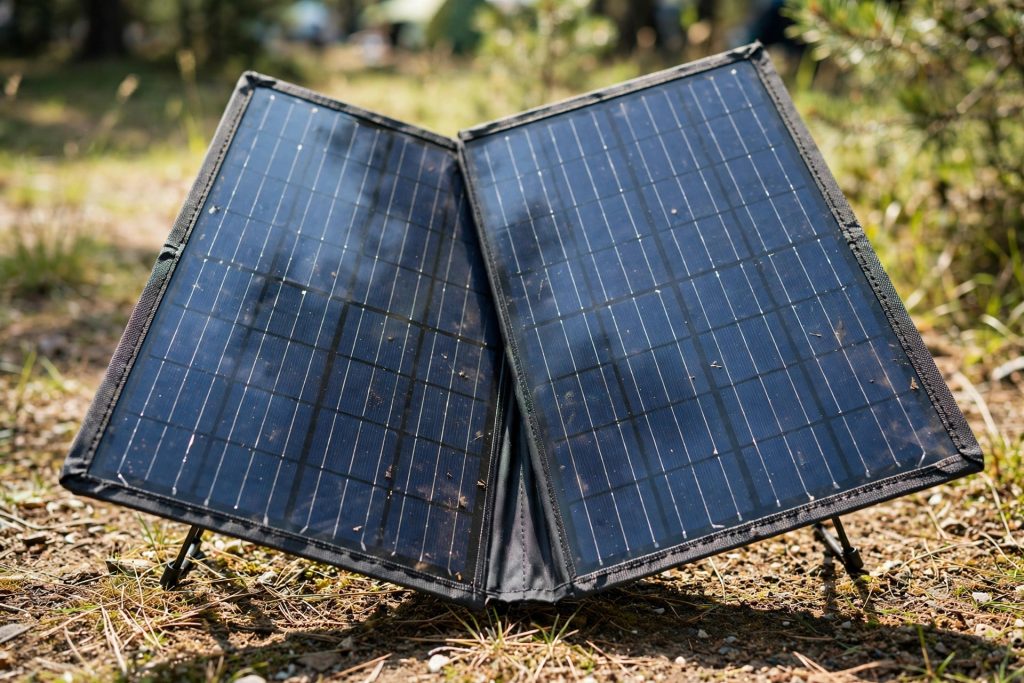
Jackery SolarSaga 100W Review: 23% Efficiency Foldable Solar Panel
Camping without shore power used to mean rationing your phone battery like it was the last chocolate bar. The Jackery SolarSaga 100W promises a way out: a foldable 100-watt monocrystalline panel that unfolds at the campsite and feeds your power station straight from the sun. This guide digs into what that 23% efficiency rating actually buys you, whether a foldable panel is worth the premium over a rigid one, and — most importantly — whether this panel fits the way you camp.
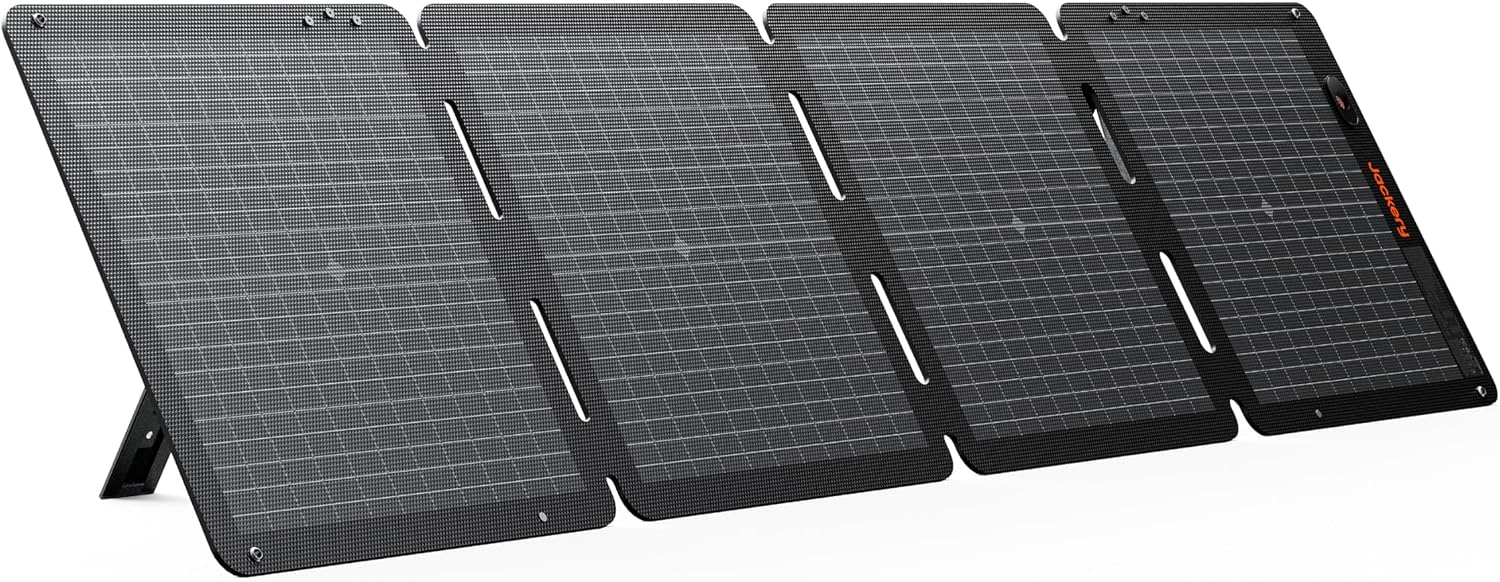
Quick Answer
The SolarSaga 100W is one of the easiest solar setups a camper can buy. Its high-efficiency monocrystalline cells deliver strong output for the folded size, and the bifacial design picks up bonus watts from light reflected off the ground.
The catch? You’re paying portable-panel prices — noticeably more per watt than a rigid rooftop panel — so this purchase makes sense only if you’ll actually carry it places a rigid panel can’t go.
Compare Top Portable Solar Panels
Three proven picks side by side — choose the one that fits your needs.
Prices and availability may vary — tap any product to check the current listing.
Shopping around? We have also tested the Renogy 100W solar suitcase and the Jackery SolarSaga 200W — both worth a look before you decide.
What to Look For in a Foldable 100W Solar Panel
Buying a portable panel is nothing like buying a rooftop array. The priorities flip: watts per square foot beat total watts, folded size beats everything, and the connector on the cable matters more than the brand on the box. Here’s what actually separates the keepers from the regrets.
Cell efficiency: what the 23% on the box really means
Efficiency is the share of sunlight a cell converts into electricity. On a rigid rooftop panel, a couple of percentage points barely register — the panel is enormous anyway. On a foldable, efficiency is the entire game, because the footprint is fixed by what you can comfortably carry.
The SolarSaga’s 23% rating puts it near the top of the portable class — more watts from the same lunch-tray-sized fold than a cheaper panel could manage. The trade-off is cost: high-efficiency cells are a big reason premium foldables charge premium prices.
One caveat: that 23% is measured under laboratory conditions — perfect angle, cool cells, standardized light. Real campsites are messier, so you’ll rarely see nameplate output in the wild. True of every panel, not just this one.
Foldable vs rigid: the worth-it question, answered honestly
Here’s the uncomfortable math: a rigid 100W panel for a fixed install — van roof, shed, cabin — typically costs far less per watt than any foldable. If your panel will live in one place, rigid wins on value every single time.
Foldables earn their price in exactly one scenario: when the panel needs to move. Campsite to beach to tailgate. Chasing the sun across the site as the afternoon shadows creep in. A rigid panel can’t do that; it’s bolted down or it’s in the way.
So the worth-it question is really about you. Will you actually reposition it and deploy it in three different places this summer? If yes, the premium pays for itself. If it would sit in one sunny spot all season, save your money and buy rigid.
Charge controllers: the unsexy part that protects your battery
A solar panel should never feed a battery directly — not if you want that battery to survive the summer. The charge controller sits between them, taming the panel’s raw output into a safe, staged charge. Skip it and you’ll cook a 12V battery on a bright afternoon.
PWM controllers are simple, affordable, and fine for small 12V setups. MPPT controllers extract more energy from the same panel — especially in partial shade or cold mornings — and cost more for the privilege.
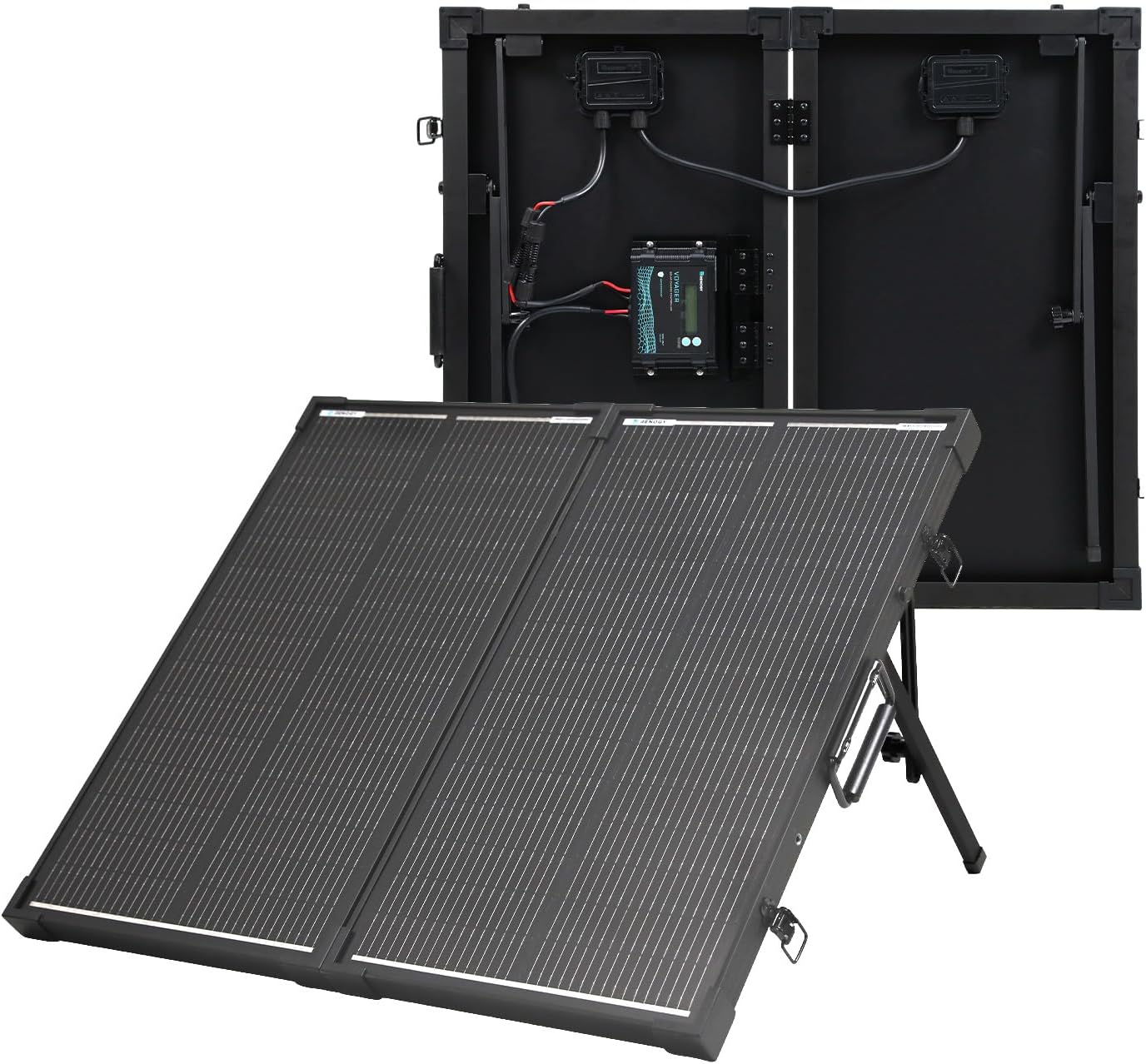
Here’s the interesting part: the Renogy 100W Solar Suitcase ships with a 20A controller in the box. The SolarSaga targets power-station owners, and most modern power stations already have a controller built in — so Jackery doesn’t bundle one. Just know which camp you’re in before you buy.
Portability: the folded reality, not the marketing photo
Marketing photos show panels floating in alpine meadows. Reality is a trunk full of coolers, tents, and someone’s guitar. A typical 100W foldable weighs somewhere in the low double digits of pounds and folds down to roughly the size of a large briefcase.
That sounds manageable until it’s day three of a road trip and you’re tired. Honestly, this is where the SolarSaga earns its reputation — the bifold design keeps the folded footprint compact, and the built-in handle and kickstand mean you’re not improvising a setup with rocks and tent poles.
Ultra-light flexible panels exist, but they give up efficiency and durability to get there. Around ten pounds for 100 watts is the honest middle ground of this category.
Weather resistance: coatings, ratings, and real rain
Solar panels live outside. That’s the job description. The SolarSaga uses an ETFE laminated surface — tougher and more scratch-resistant than the older PET coatings on budget panels — and carries a solid weather-resistance rating for rain and dust.
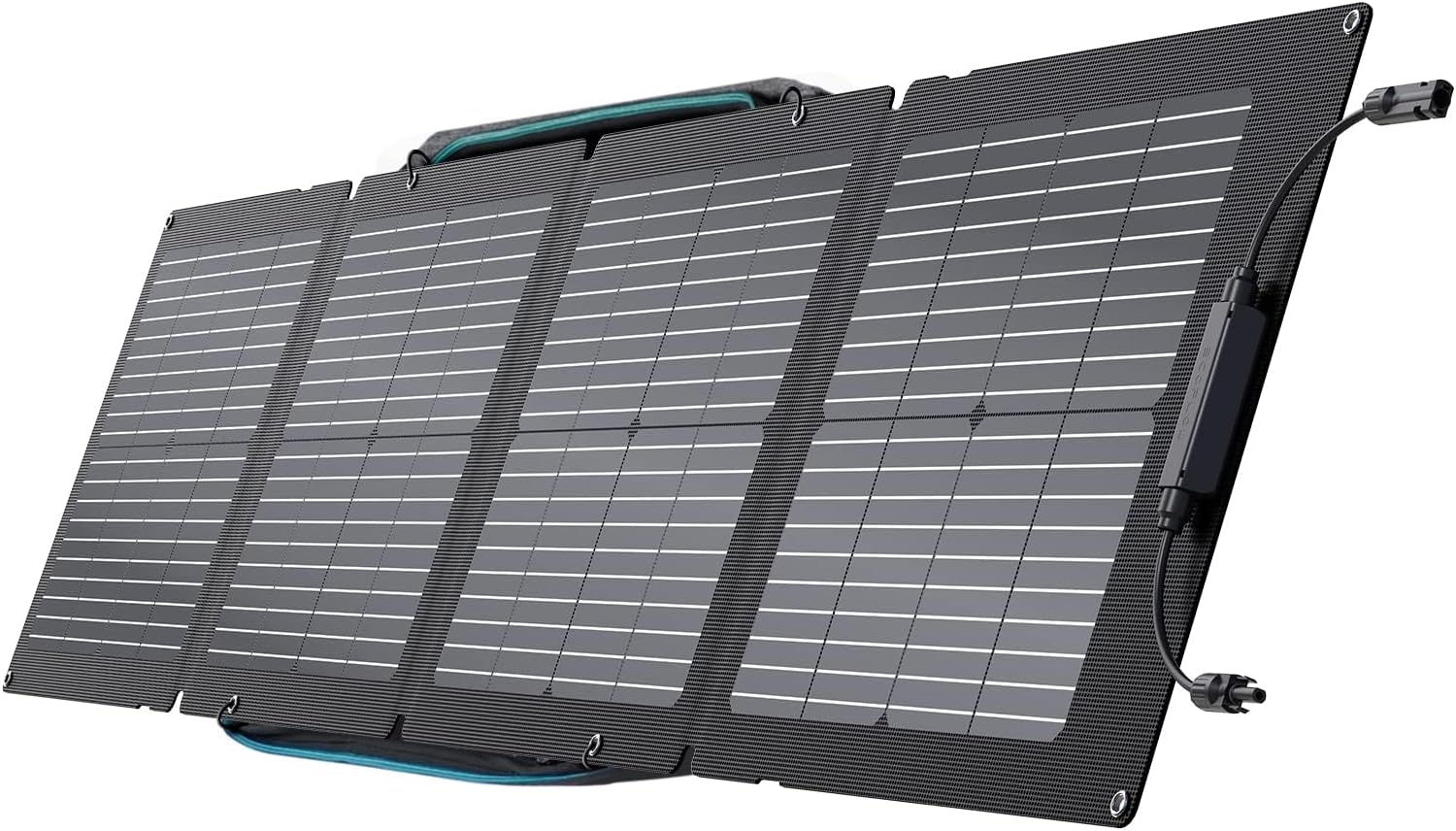
EcoFlow’s 110W panel pushes this further with an IP68 rating, meaning it shrugs off serious water exposure. That’s genuinely useful for kayakers and anyone who camps where the weather turns mean without asking permission first.
Still, weatherproof isn’t weather-indifferent: hail, branches, and careless boots can damage any panel, and no rating fixes the physics — heavy cloud cover slashes output regardless.
Compatibility: will it plug into what you already own?
This question ruins more solar purchases than any other. Jackery panels use the standard barrel-style connector on Jackery power stations — plug and play if you own one; other brands usually need a simple adapter cable.
The Renogy suitcase, by contrast, speaks fluent 12V: clips and ring terminals for direct battery charging, right in the box. If your setup revolves around a power station, the SolarSaga’s native connection is the path of least resistance. If it’s a deep-cycle battery in an RV or on a boat, the Renogy’s included wiring saves you a separate shopping trip.
Match the Panel to Your Life
Panels don’t have lifestyles. You do. The two buyers who show up most often for a 100W foldable look like this.
The weekend camper
Friday afternoon. Car packed, cooler loaded, power station sitting at 60% and dropping. You need phones charged, a fan running, and the string lights on by dark.
For this person, the SolarSaga is close to ideal. Unfold it facing the afternoon sun, plug it into the power station, and forget about it until dinner. A few hours of decent sun meaningfully refills a small-to-mid station — enough to cover the evening’s draws and then some.
The limitation: one 100W panel won’t run a full campsite’s worth of gear and refill a large station in a single day. But weekend campers rarely need it to. Size the panel to the trip, not to the fantasy trip.
The RV off-gridder
You park off-grid for a week. The house battery bank is your lifeline — lights, water pump, vent fan, phone charging. Shore power is a distant memory.
A single 100W foldable helps, but serious boondockers usually want 200W or more, often rigid on the roof. The SolarSaga shines as the supplement: the portable panel you aim at the sun while the rig sits in the shade. Shade for you, sun for the panel.
For mostly-12V RV life, the Renogy suitcase with its included controller is arguably the more complete kit. The SolarSaga wins when a power station is the heart of your setup.
How the Tiers Compare
Portable solar isn’t one product — it’s a ladder. Knowing which rung you’re standing on saves real money.
| Type / Tier | Best For | Price Tier | Key Feature | Watch Out |
|---|---|---|---|---|
| Foldable premium (SolarSaga class) | Campers who carry their power | Mid-range | Compact bifold, high-efficiency cells | Highest cost per watt |
| Suitcase with controller (Renogy class) | Direct 12V battery charging, RVs | Mid-range | 20A controller included, rugged frame | Bulkier to store and carry |
| Rigid rooftop panel | Fixed installs: vans, cabins, sheds | Budget-friendly | Lowest cost per watt | Needs mounting; not portable at all |
| Flexible thin-film | Curved surfaces, boats, tents | Budget-friendly | Ultra-light and bendable | Lower efficiency, shorter lifespan |
The foldable premium tier is the one you buy when the panel has to travel with you and pack flat.
The suitcase tier trades some portability for completeness — controller and battery wiring included, aimed at 12V systems.
Rigid panels are the value kings for anything that doesn’t move; paying foldable prices for a fixed install is just burning money.
Flexible thin-film fills genuine niches on curved surfaces, but its lower efficiency and shorter service life make it a specialist tool, not a default.
Scenario: Topping Up a Power Station on a Long Weekend
Two nights, three days, one mid-size power station, and the SolarSaga 100W. Saturday morning you angle the panel at the sun while coffee brews; by the time camp wakes up, the station has clawed back a meaningful chunk of charge.
Reality check: expect meaningful but not miraculous refills. In solid sun, a 100W panel can replace a large share of a small station’s capacity over a full day — enough to run lights, phones, and a laptop through the evening. Clouds, tree cover, and a late start all take their cut.
Plan for the average day, not the perfect one. Campers who love this setup aren’t chasing energy independence — they’re buying the quiet confidence of waking to a fuller station.
Scenario: Keeping an RV Battery Alive Between Trips
Your RV sits in the driveway all week. The house battery slowly self-discharges, and you’d rather not drag the shore-power cord across the yard for the fifth time this month.
A 100W panel in maintenance mode is quietly brilliant here. It offsets the parasitic draws from CO detectors and standby electronics, so the battery is actually full when Friday arrives instead of merely hopeful.
The least glamorous, most practical use of a portable panel: no drama, just a battery that works when you need it. A suitcase panel with its own controller, like the Renogy, is tailor-made for this job.
Common Mistakes Buyers Make
1. Buying watts instead of buying sunlight hours
The priciest panel in the world produces nothing at midnight. Buyers obsess over wattage and ignore the other half: how many hours of good sun their site actually gets. A shaded campsite turns any 100W panel into a 20W one. Scout your sun before blaming your gear.
2. Laying the panel flat on the ground
Flat is convenient. Flat is also wrong for most of the day. Tilting the panel toward the sun — even roughly, using the built-in kickstand — makes a bigger difference than upgrading to a fancier panel. The kickstand isn’t a gimmick; it’s free watts.
3. Skipping the controller on a 12V battery
Plug a bare panel straight into a lead-acid battery and you’ll overcharge it on sunny days. Power stations handle this internally, which lulls people into thinking controllers are optional everywhere. They’re not. If your setup is a bare 12V battery, a controller is mandatory — which is exactly why the Renogy suitcase includes one in the box.
4. Expecting the nameplate number
100W is a laboratory figure — heat, haze, dust, angle, and aging all shave it down. Real-world output is typically a healthy fraction of the rating: easy to plan around once you know it, maddening if you expected the full hundred. Size expectations first, then the system.
Questions People Ask Before Buying
The questions shoppers actually type into search bars before buying a portable panel — answered straight, with no hedging.
Is a 100W solar panel enough for camping?
For most weekend camping setups, yes — a 100W panel comfortably keeps phones, LED lanterns, a laptop, and even a small 12V cooler topped up over a two-to-three-day trip, as long as you get a few decent hours of direct sun each day. It feels small when refilling a large power station from empty in a single day, or when tree cover eats half your sunlight. Pair realistic expectations with a mid-size station and 100W covers the classic weekend beautifully.
Monocrystalline vs polycrystalline — which is better for portable panels?
Monocrystalline wins for portable panels, full stop — its higher conversion efficiency means more watts from the same folded footprint, which is exactly what you need when the panel has to stay small enough to carry, and that’s why nearly every reputable foldable uses mono cells. Polycrystalline still shows up on budget rigid panels where space doesn’t matter. For anything you fold up and carry, mono is the only serious choice.
Do solar panels work on cloudy days?
They do, but at a fraction of their rated output — heavy overcast can cut a panel’s production to a tenth or less of its nameplate rating, so a 100W panel that sings in full sun might only keep a phone alive on a truly gray day. Light or patchy clouds are far kinder; output dips and recovers as clouds pass. Size your system for average weather, not brochure weather, and treat sunny-day surplus as a bonus.
What size solar panel do I need for my power station?
A 100W panel is the sweet spot for power stations up to around 500Wh — it can meaningfully recharge one over a full sunny day — while larger stations of 1000Wh and up really want 200W or more unless you’re patient enough to spread the recharge across several days. Check your station’s maximum solar input voltage before buying; exceeding it can damage the unit. When in doubt, one 100W panel now plus the option to add a second later is the flexible path.
Jackery vs Renogy solar panels — which should I buy?
Buy the Jackery SolarSaga 100W if portability is your priority — it’s lighter, folds smaller, and pairs naturally with Jackery power stations — and buy the Renogy 100W Solar Suitcase if you’re charging 12V batteries directly, since its included 20A controller and higher-efficiency cells make it the more complete standalone kit. There’s no universal winner here, only a better fit for your battery type. Power-station owners lean Jackery; 12V battery owners lean Renogy.
Why, How, What: Quick Answers
Why do foldable panels cost more per watt than rigid ones?
The cells are higher-efficiency silicon, the lamination must survive hundreds of fold cycles, and production runs are far smaller than commodity rooftop panels. You’re paying for engineering, not just watts — worth it only if you’ll actually use the folding part.
How should you angle a portable panel for the best output?
Face it toward the sun and tilt it roughly to match the sun’s height in the sky — steeper in winter, flatter in summer. Close enough beats perfect: within 15 degrees of ideal costs you almost nothing. The kickstand handles the tilt; a free compass app handles the direction. Done.
What does the 20A controller on the Renogy suitcase actually do?
It stands between the panel and your 12V battery and manages the charge in stages — bulk, absorption, float — so the battery fills quickly without overcharging. The 20A rating is generous headroom for a 100W panel, which produces well under 10A in practice, so the controller runs cool and could handle a second panel down the road. It’s the part of the kit you’d otherwise have to research and buy separately.
Frequently Asked Questions
Can I plug the SolarSaga 100W straight into my power station?
If you own a Jackery power station, yes — the connector is designed for exactly that, no adapter needed. For other brands’ stations, check the solar input port type and voltage limits first; a simple adapter cable usually bridges the gap. Never exceed your station’s maximum solar input voltage.
Is the SolarSaga 100W waterproof?
It’s built to handle rain and dust at the campsite, with weather-resistant lamination and sealed edges. That said, it’s a portable panel, not a submarine — don’t leave it sitting in puddles or submerge it. If your trips involve kayaks, boats, or genuinely extreme wet conditions, the EcoFlow 110W’s IP68 rating is the tougher option.
How long does it take to recharge a power station with a 100W panel?
There is no single answer, because sun hours, panel angle, and the station’s size all matter. As a rough planning figure, a full day of good sun can replace a large portion of a small-to-mid station’s capacity. Think in terms of days, not hours — solar is a slow, steady refill, not a wall outlet.
Can I connect two 100W panels together?
Usually yes, in parallel, as long as your power station or controller supports the combined wattage and the voltage stays within limits. Doubling panels roughly doubles your harvest on sunny days and noticeably helps on marginal ones. Check your station’s max solar input specs first — that’s the number that decides.
Will the panel still work in winter or partial shade?
Winter sun is weaker and lower, so output drops — cold air actually helps cell efficiency slightly, but the short, hazy days dominate the math. Partial shade is the bigger enemy: even a small shadowed section can disproportionately cut a panel’s output. Park the panel, not the shade.
How should I clean and store a foldable panel?
Wipe the surface with a soft damp cloth; dust and pollen quietly steal output over a season. Avoid abrasive cleaners and pressure washers. For storage, fold it dry, keep it somewhere it won’t get crushed under heavier gear, and don’t stack sharp objects on top. A little care here adds years to the panel’s life.
Not sure what fits your setup? Our EcoFlow 160W NextGen panel walks through the real-world math.
Final Recommendation
So: is the Jackery SolarSaga 100W worth it? For the camper or road-tripper with a power station, yes — it’s the rare portable panel that disappears into your packing routine and earns its keep every sunny day. For the RVer charging bare 12V batteries, look hard at the Renogy suitcase first; its included controller makes it the more complete kit. And if your panel will never move, buy rigid and pocket the difference.
Decision Tree: Should You Buy It?
→ Mainly camping with a power station? Yes → strong candidate.
→ Charging bare 12V batteries directly? Look at the Renogy suitcase — the included controller makes it the more complete kit.
→ Will the panel live in one fixed spot? Buy a rigid panel instead and save the difference.
→ Need serious water resistance? The EcoFlow 110W’s IP68 rating is worth a look.
Key Takeaways
• A 100W foldable is the sweet spot for weekend power-station top-ups — portable enough to carry, strong enough to matter.
• You’re paying for portability, not watts: if the panel won’t move, rigid wins on value every time.
• Match the panel to your battery type — power stations want the right plug, bare 12V batteries want a controller.


