
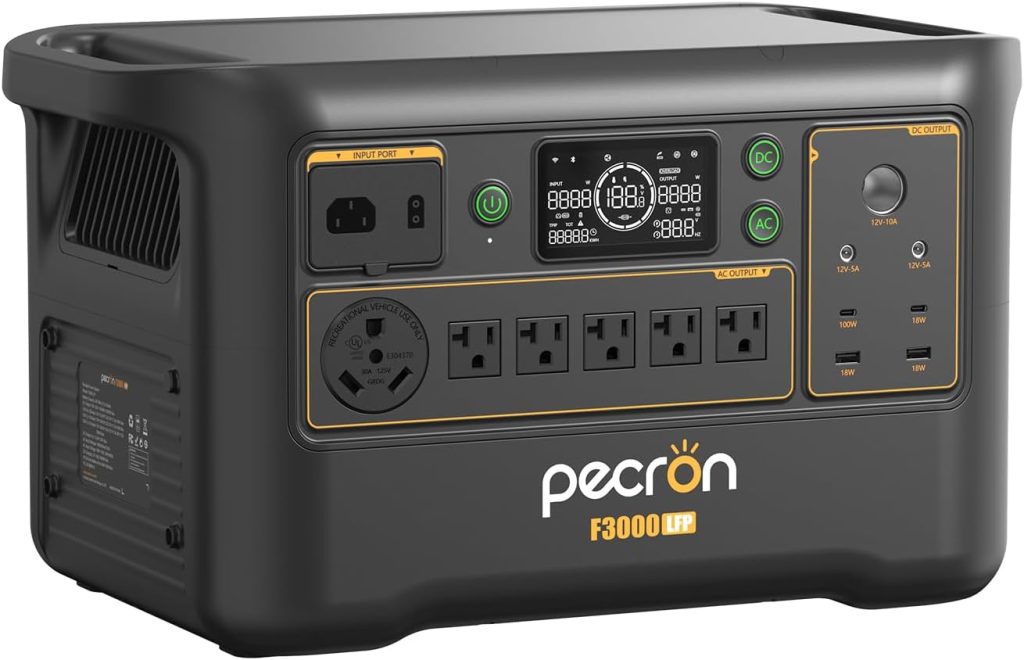
“Runs your refrigerator for 48 hours!” I stared at that claim for a while. 3072Wh on the label. My fridge: 1.5kWh a day. That’s two days, mathematically, if the fridge is the only thing plugged in and the inverter is 100% efficient and the ambient temperature is a mild 70°F and nobody opens the door.
In other words: 48 hours in the same universe where my diet starts Monday. The real number is closer to 36, and that’s still good! But “36 hours” doesn’t fit the banner ad.
Shame.
Quick Answer
The PECRON F3000LFP is a 3072Wh LiFePO4 station with 3600W output — serious home-backup capacity at a price that undercuts the big brands. It’ll run essentials for a day and a half, handle high-wattage appliances, and expand further. The value proposition is real; the brand is newer than the competition. Buy the specs, accept the trade.
Compare Top 3kWh Power Stations
Three proven picks side by side — choose the one that fits your needs.
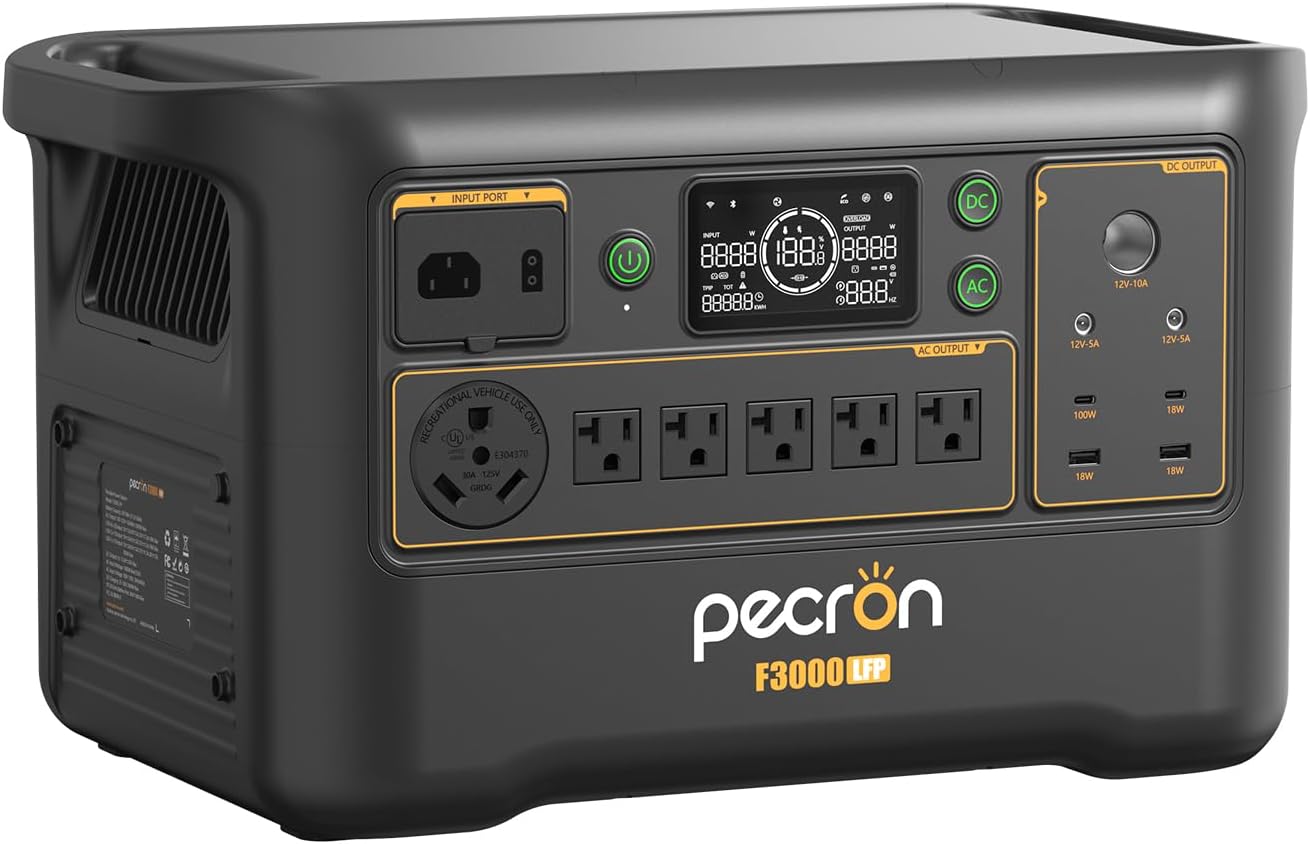
Prices and availability may vary — tap any product to check the current listing.
Three kilowatt-hours. That’s the threshold where a power station stops being a camping accessory and starts being furniture. 3072Wh runs my critical loads — fridge, freezer, internet, lights — for about a day and a quarter. Add the expansion battery and you’re at two and a half days. That’s not “get through the night” territory. That’s “wait out the utility company” territory.
The 3600W output is what caught my eye, honestly. Most 3kWh stations give you 3000W or less, which is fine until your well pump starts while the fridge compressor is running. 3600W covers the overlap. I’ve run a table saw off a 3600W station — briefly, for a cut — and the difference between “handles it” and “overload light” is the difference between finishing the job and driving to the store. Not that I’m recommending job-site use. I’m just saying the headroom is real.
PECRON: who are these guys?
The question everyone asks, fairly. PECRON isn’t EcoFlow or BLUETTI — it’s a newer brand, online-native, building a following on aggressive pricing and specs that look too good for the money. I’ve watched this movie before. Sometimes the new brand is the next big thing (EcoFlow was the new brand once). Sometimes it’s a spec sheet with a short warranty.
What I can verify: LiFePO4 cells, which is the right chemistry. 3600W output, which matches the label in owner testing I’ve seen. Expandable with extra batteries. An app that exists. What I can’t verify: where this company is in five years. That’s the discount you’re getting — the price gap between PECRON and the established brands is partly a risk premium, and you’re the one underwriting it.
My framework for these buys: credit card, register the warranty immediately, and don’t buy the expansion battery until you’ve lived with the base unit for a month. Jackery’s 2kWh offering costs more per watt-hour but comes with a service network. Budget expandable units are cheaper still. The F3000LFP sits in the middle: big-brand specs, challenger-brand price, challenger-brand history.
The 3kWh class: who actually needs it?
Not campers. I keep saying this and people keep buying 3kWh for tent trips — it’s 70+ pounds, it lives in the truck bed, and you use 20% of it. For camping, 1kWh is plenty and your back will thank you.
Home backup: yes. Homeowners with a fridge, a freezer, and outage PTSD — this is your class. The fridge math finally works in your favor: 3072Wh minus inverter losses is ~2450Wh usable, which is a day and a half of fridge plus the small stuff. That’s the difference between “we need a plan” and “we’re fine until tomorrow.” Huge psychological gap. Worth real money.
Work sites and food trucks: also yes. 3600W runs serious tools, and the LiFePO4 chemistry handles daily cycling without the degradation anxiety of the old lithium-ion units. I’ve seen these on job sites replacing the little gas generators, and the silence alone is worth it. Nobody misses the 7 AM generator warm-up. Nobody.
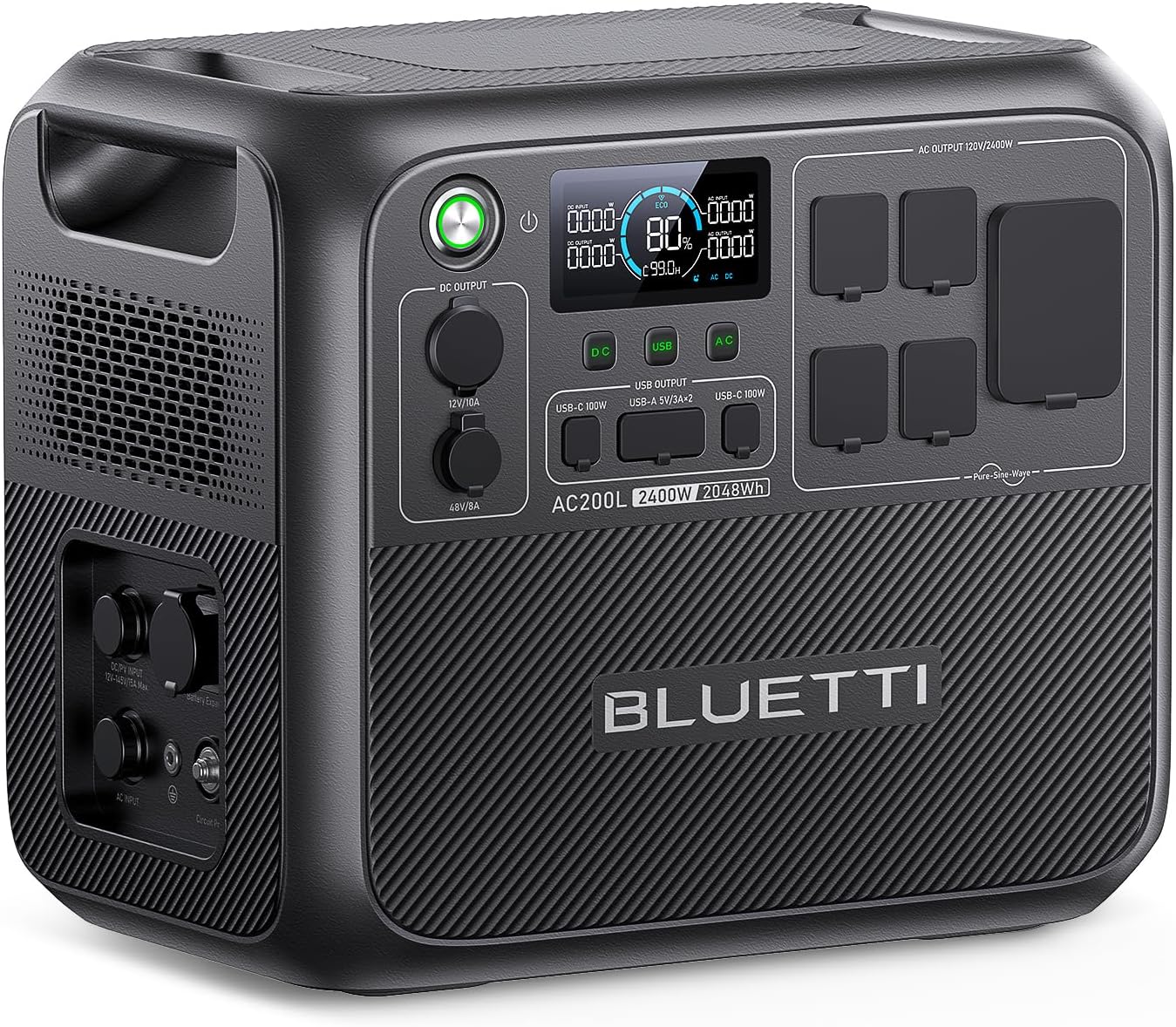
BLUETTI AC200L — the 2kWh step-down option
Charging: the underrated spec
Big batteries are useless if they charge slowly. The F3000LFP takes high-wattage AC input — the “fast charge” claims in this class generally mean 0-80% in about an hour, full in under two. That matters more than people think. When the grid flickers back during an outage, you get a window — an hour, maybe two — and the station that refills in that window is worth twice the one that doesn’t.
Solar input is generous too — enough for a real array, not a token panel. Four 400W panels in good sun push this from empty to full in a day. That’s the off-grid math working: panels by day, battery by night, and the generator in the shed gathering dust. I haven’t quite gotten there — my array is smaller, my ambitions bigger — but the path is clear.
What the reviews won’t tell you
It’s heavy. Seventy-plus pounds. The wheels help, the handle helps, but stairs are a two-person job and your back will file a complaint. Every 3kWh station has this problem — physics doesn’t do sales. Plan where it lives before it arrives, because “I’ll figure it out” means it lives in the box for a month. Ask me how I know.
Don’t.
The fan noise under heavy load is real. At 3000W+ output, the cooling fans spin up and it’s noticeable — not generator-loud, but not silent. In a living room during an outage, you hear it. In a garage, you don’t. Location matters, which is another vote for planning the spot in advance.
And the display — every brand’s display lies a little about remaining time. It extrapolates from current load, so it says “12 hours” when the fridge is idling and “4 hours” when the compressor kicks. It’s not lying, exactly. It’s just optimistic at the wrong moments. I’ve learned to read it as a mood indicator rather than a clock.
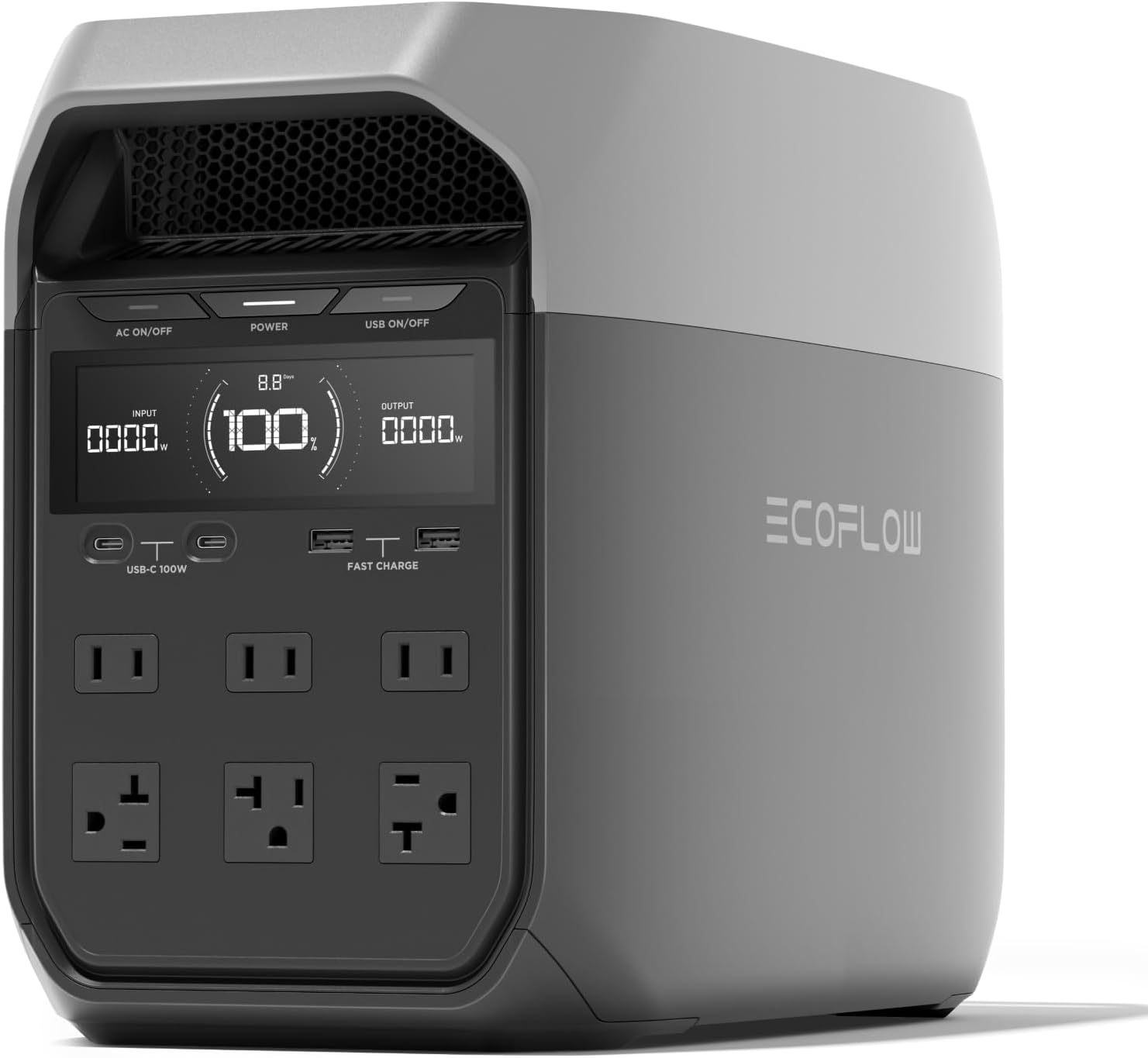
EF ECOFLOW Delta 3 — the 1kWh lightweight of the trio
Would I buy it? At the current street price, for home backup, with a credit card and registered warranty — yes. The math works: 3kWh of LiFePO4, 3600W output, expansion path, for hundreds less than the establishment. The brand risk is real but bounded — the worst case is you’re your own service department, and the cells will outlast the company anyway. Batteries don’t care about corporate drama. Actually the worst case is the company vanishes and the app stops updating. The station still works. Downgrade “worst” to “annoying.”
Mine would go in the garage, next to the panel, at 80%, checked monthly. The same spot the current station occupies. The same ritual. The fridge would run for a day and a half, the internet would stay up, and the next time the transformer blows on a Tuesday, I’d hear the neighbors’ generators cough awake while my house just… stayed on. That’s the dream. It’s an expensive dream. But it’s a good one.
I haven’t lived with the F3000LFP for a full year — my long-term notes are on the category, not this specific unit.
Frequently Asked Questions
How long will the F3000LFP run a refrigerator?
About 36 hours for a typical full-size fridge — roughly a day and a half — after accounting for inverter losses. Marketing claims of 48 hours assume ideal conditions with nothing else plugged in.
Is PECRON a trustworthy brand?
It’s a newer online-native brand with competitive specs and pricing, but a shorter track record than EcoFlow, BLUETTI, or Jackery. Buy with a credit card, register the warranty, and go in with open eyes.
Can it run high-wattage appliances?
Yes — 3600W continuous handles microwaves, power tools, well pumps, and even brief space-heater use. Runtime on heavy loads is short, but the output headroom prevents the overload shutdowns smaller stations suffer.
How heavy is it?
Over 70 pounds. It has wheels and a handle for flat surfaces, but stairs need two people. Plan its permanent location before it arrives.
Can I expand it with more batteries?
Yes, it accepts expansion batteries for extended runtime. Don’t buy the expansion upfront — live with the base unit for a month first, then decide if you’ve actually run out of power.


