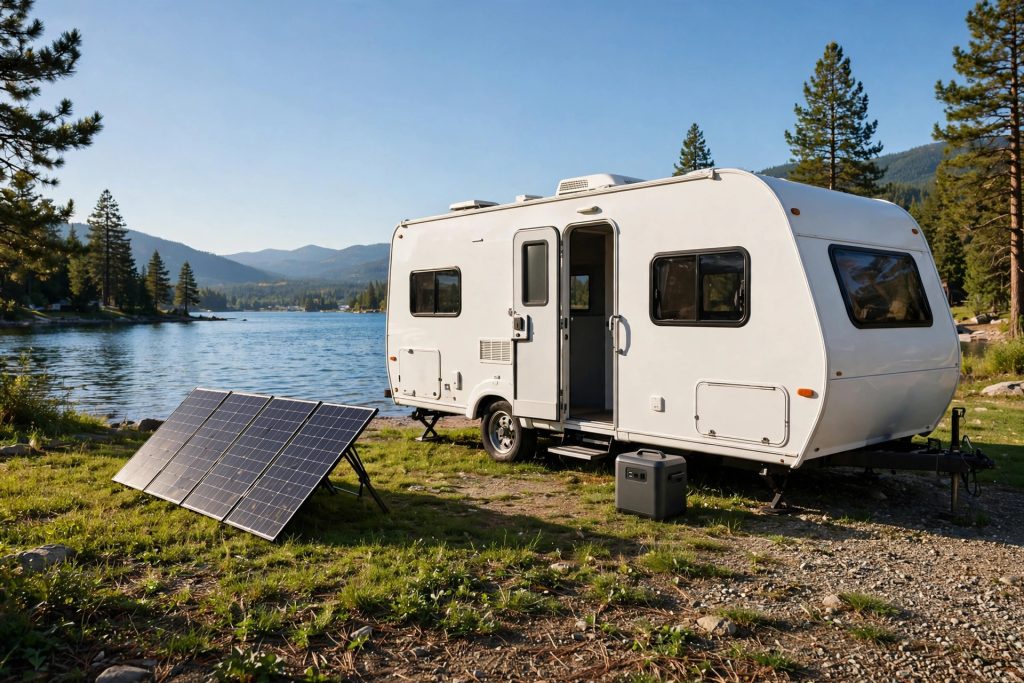
The ice storm took our power at 6:40 on a Tuesday evening, and by nine the fridge was the only thing I cared about in the whole house. I had a 500Wh station back then, bought mostly for camping, and I did the math on my phone with 4% battery left. Fridge draws about 150W when the compressor runs, cycles maybe a third of the time, so call it 50W average. 500Wh divided by 50 is ten hours. Easy night. What I didn’t know, and what the box never told me, is that the 500Wh printed on the label is not 500Wh you can actually use.
That station died at 2 a.m. The fridge was warm by morning. I threw out maybe forty dollars of food and spent the next week angry at a number.
Still angry.
Three years and two stations later I can do this math in my sleep, which is good, because the industry’s favorite trick is making the math look simpler than it is. A power station for home backup is sold on one big number, the watt-hours on the box, and that number was measured in a lab, at room temperature, drained slowly to zero, in conditions your garage will never reproduce. What you actually get is somewhere around 80% of it. The inverter eats the rest, and nobody puts that on the front of the box.
The 20% the box doesn’t mention
Every station loses energy turning DC battery power into the AC your fridge wants. Roughly 15 to 20% vanishes as heat in the inverter, which means a 2048Wh station delivers something like 1650Wh to your actual appliances. I learned this the expensive way, obviously. The manual mentions “conversion efficiency” on page forty-something, in a font size my father would need glasses for. The box says 2048Wh in letters you can read from across the store.
This is the part that bothers me most about the whole category, honestly. Not the loss itself, losses are physics, I get that. What bothers me is the effort that goes into not saying it. The marketing shows a fridge, a TV, a string of lights, all running happily, with a little asterisk pointing at nothing. “Powers 99% of home appliances” is my favorite. Ninety-nine percent of appliances by count, sure, because phone chargers count as appliances. Your well pump counts too, and good luck with that one. I have started reading these claims the way I read fishing stories. There might be a real fish in there somewhere, but I am not planning dinner around it.
And then there is the surge game. A fridge rated 150W can pull 600W for a split second when the compressor kicks on, and some well pumps pull five times their running watts. A station with a 2000W inverter handles the fridge fine and chokes on the pump, and the listing will still say “2000W output” like that number means one thing. It means two things, running watts and surge watts, and the one that matters for your house is usually the second one. The surge is what you size first. Capacity comes second. I got this backwards on my first purchase and I paid for it in spoiled milk.
What actually has to stay on
When I finally sat down and listed what mattered during an outage, the list was shorter than my anxiety had made it. Fridge, obviously. A few lights, because stumbling around a dark house gets old by hour three. The Wi-Fi router, which my teenager informed me is “basically non-negotiable infrastructure,” and he is not wrong, since the phone is also the flashlight and the news. Phone chargers rounded it out. No TV, no microwave, no space heater, because the space heater alone would eat a 2000Wh station in about an hour and anyone telling you otherwise is selling something.
Here is where the kid surprised me, actually. This is the digression, but it matters to me. When the power died that Tuesday, my son’s first question was not about the fridge or the heat. It was whether the router would stay up. He was fifteen. His whole social life, his homework, his connection to the fact that the world was still out there, all of it ran through that little blinking box. I had spent a week researching which station could save two hundred dollars of groceries, and he just wanted to know if he could text his friends. We kept the router on the whole outage after that, all three outages since. It draws maybe 15W. Best 15 watts in the house, and I almost didn’t count it because I was too busy doing fridge math. The numbers people forget are not always the big ones.
So the real essentials budget: fridge averaging 50W, lights 30W for six hours, router 15W around the clock, phones 20W total. That is roughly 130W continuous, call it 150W with slop. Over 24 hours that is 3,600Wh of wall-clock energy, but the fridge cycles, the lights go off at midnight, and realistically you are looking at 2,000 to 2,500Wh of delivered energy per day. Divide by 0.85 for the inverter tax and you need a station rated around 2,500 to 3,000Wh. Which is why the 3600Wh class exists. It is not overkill. It is one comfortable day with margin, and margin is the whole point of backup.
How the outage numbers work out in practice
The math is simple once you stop fighting it. Your essentials watts times the hours you want to cover, divided by 0.85. A 300W load for 12 hours: 300 times 12 divided by 0.85 is about 4,235Wh. That single line of arithmetic kills most undersized purchases before they happen, and I wish someone had written it on my first station’s box instead of the camping photos.
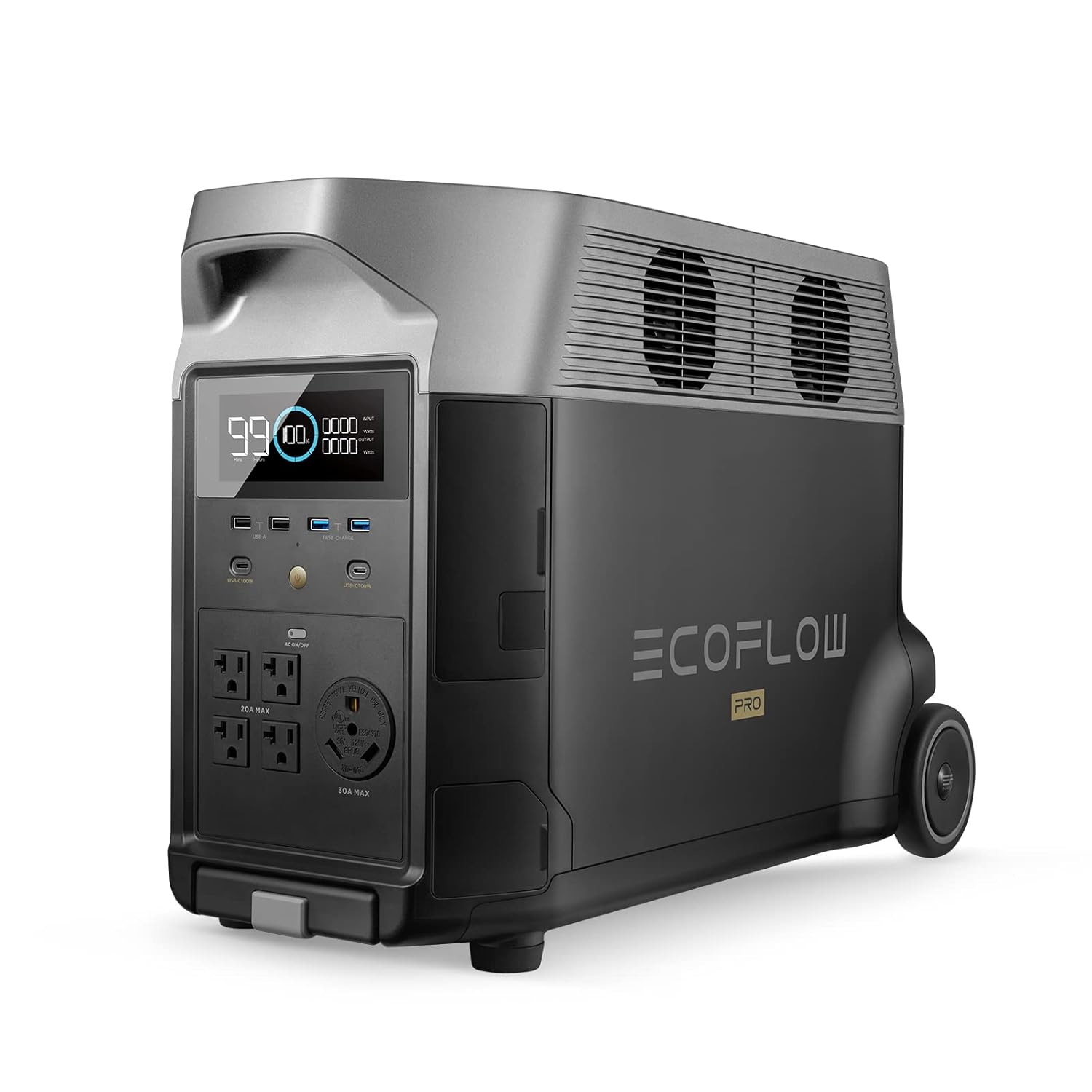
Now the DELTA Pro case study, since that is the 3600Wh flagship everyone asks about. A 300W load running flat-out for 24 hours needs roughly 8,470Wh, which is more than any portable station holds, and anyone who tells you different is confused. But duty cycles save you. The fridge cycles at roughly one-third duty, the lights run six hours not twenty-four, the phones sip power. A realistic 24-hour essentials budget is 2,000 to 2,500Wh delivered, and the DELTA Pro’s roughly 3,060Wh usable covers it with 20 to 50% headroom. One DELTA Pro is about one comfortable day of essentials, two careful days if you ration and the weather cooperates. Most outages last under 12 hours anyway. I used to think you should buy double what the math says. No wait. That was my second-station thinking, when I was still mad about the ice storm. These days I think you should buy what the math says plus about a third, because double is how you end up with a very expensive garage decoration, and I have seen that garage. It was mine.
Still deciding between size classes? The smaller end is covered in our guide to what size portable power station you need, and if the fridge is your whole question, can a solar generator power a refrigerator goes deeper on the surge problem.
Top 3 Home-Backup Power Stations
2000Wh-class flagships — three different strengths, pick by what matters to you.
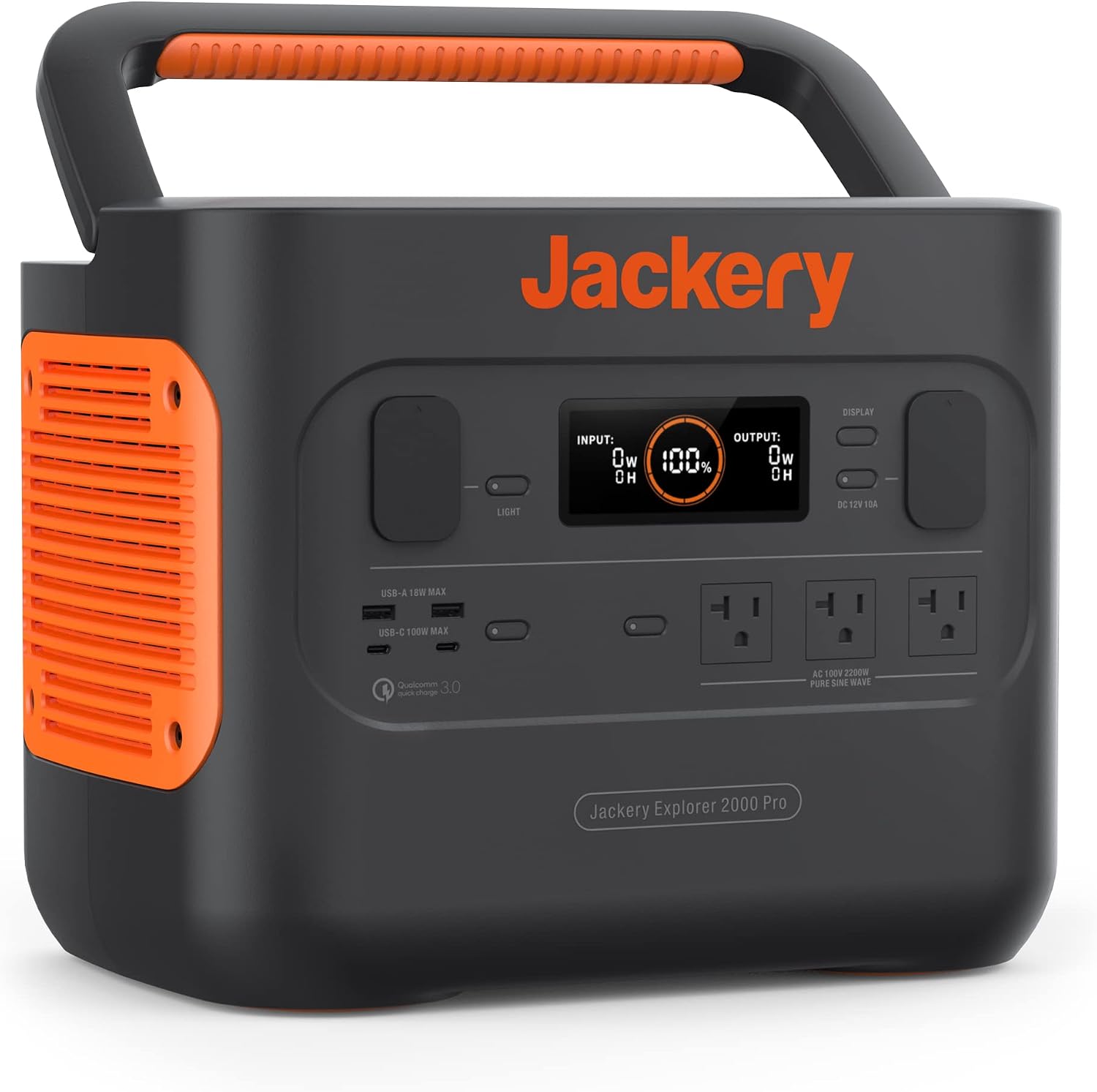
Jackery Explorer 2000 Pro
2160Wh flagship with a 5-year warranty — the quiet, simple pick for essentials backup
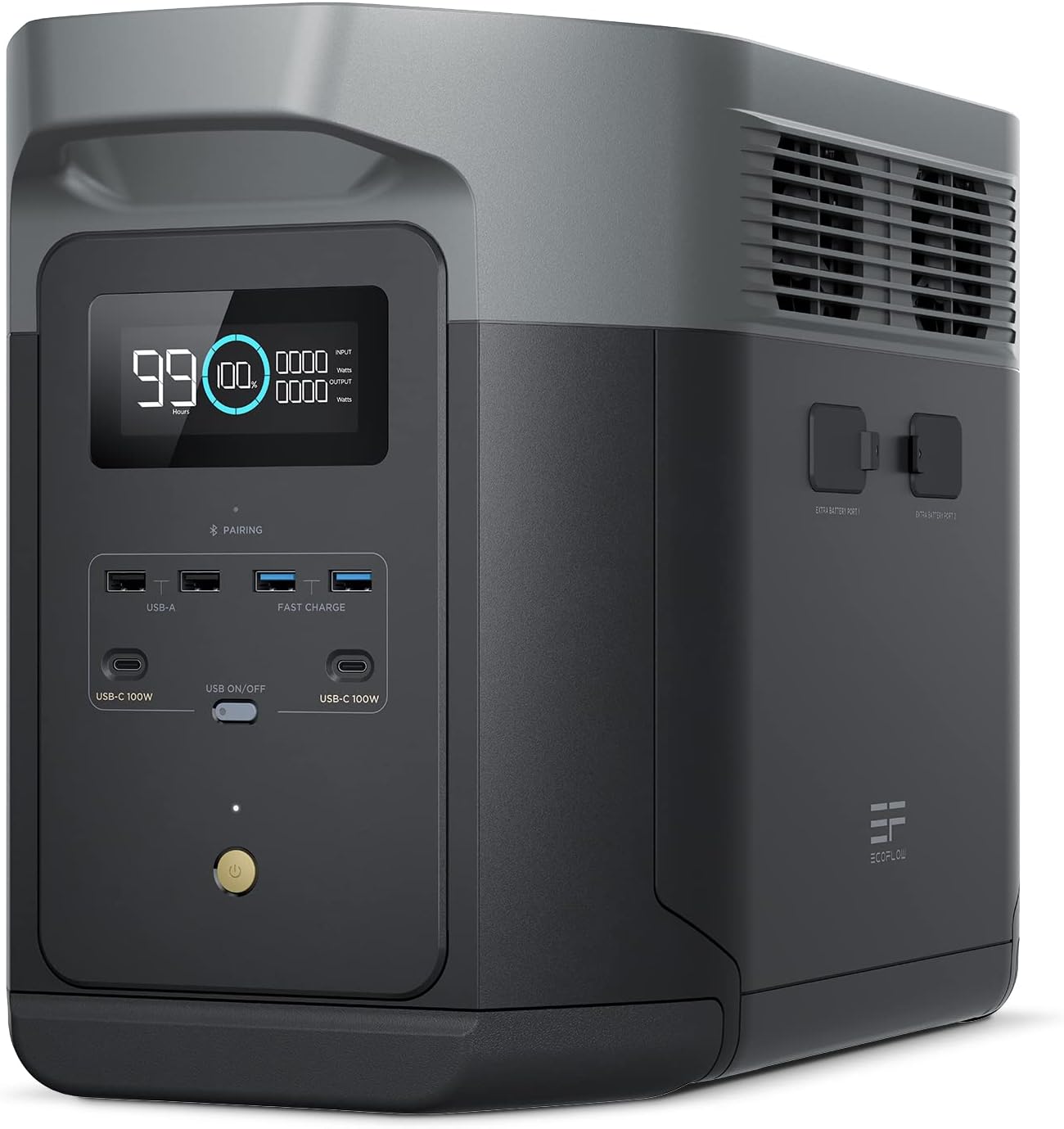
EcoFlow DELTA 2 Max
2048Wh with the fastest wall recharge in its class — back to full before the next storm
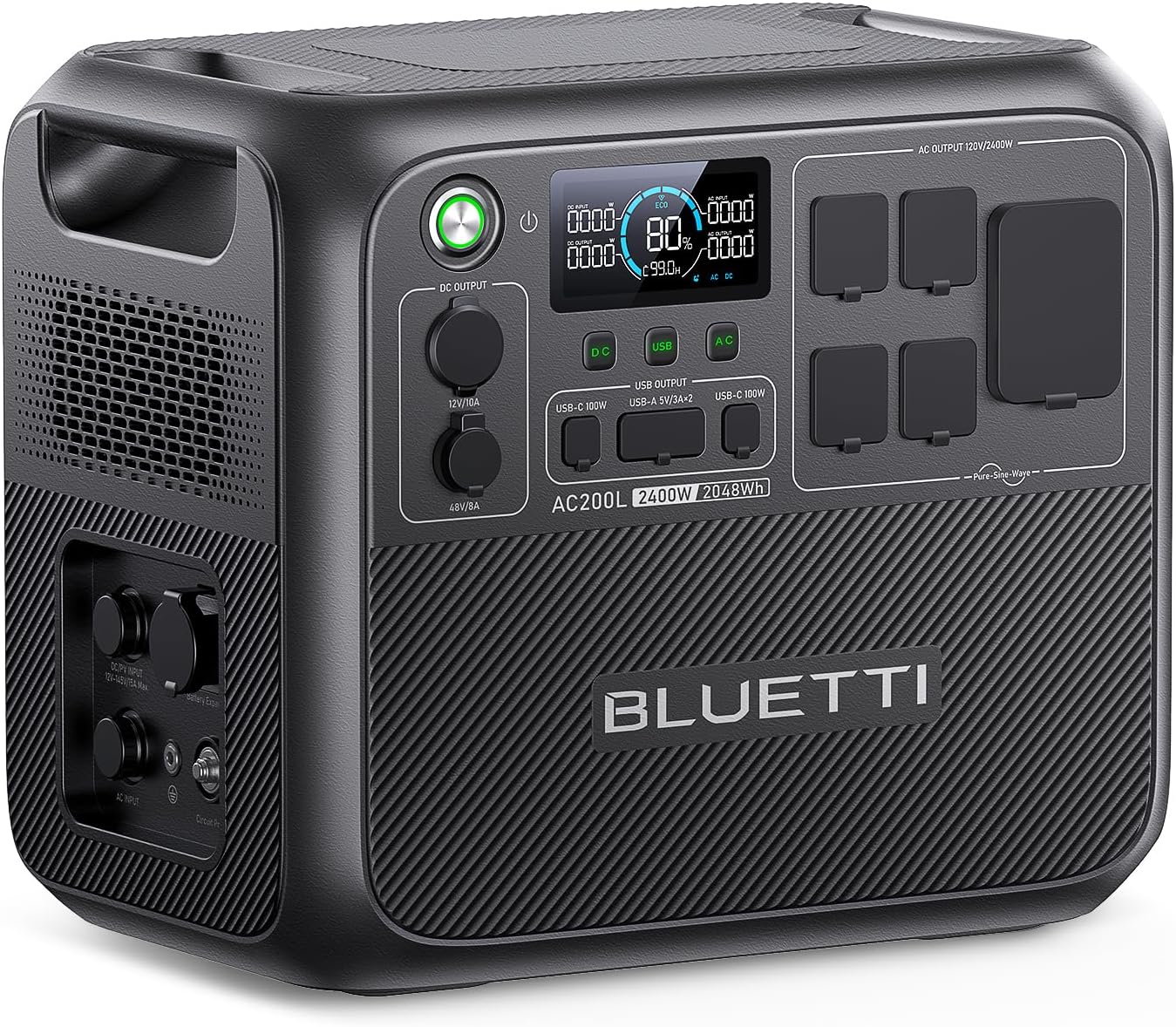
BLUETTI AC200L
2048Wh LFP workhorse with 2400W output — the value pick that still clears a fridge surge
Prices and availability may vary — tap any product to check the current listing.
The hidden cost nobody puts on the box
Solar recharging is the part of the brochure I trust the least. A 400W panel array in perfect noon sun will refill a 2000Wh station in about six hours, and I have never once seen perfect noon sun during an outage. Ice storms come with clouds. Hurricanes come with clouds. The week my neighborhood lost power in August, it rained for three days straight, and my panels produced roughly enough to charge a phone. Maybe two phones.
Two phones.
This is not the panels’ fault. It is the sky’s fault. Nothing to do about that.
On a gray day, a 200W panel might give you 30 to 50W, which means recharging a big station from solar alone takes days, not hours. I am not saying skip the panels. I am saying the panels are a trickle charger no matter what the brochure says, and your actual recharge plan is probably the wall outlet before the storm, or the car, or a friend’s house with power. Anyone sizing a home backup system around “unlimited solar recharging” has not lived through a week of overcast. I say this as someone who owns the panels. They are on my roof right now, doing nothing, because it is November and gray.
The other cost is weight and space, which sounds trivial until you own one. A 3600Wh station weighs around 100 pounds. You are not carrying it upstairs. You are deciding, once, where it lives, and then it lives there. Measure the spot. I didn’t, and mine spent its first month blocking the water heater access, which my plumber found hilarious and I did not. The 2000Wh class, around 45 to 50 pounds, is the largest thing one person can realistically move without planning ahead. There is a reason that size sells. It is the biggest station that still behaves like a portable object instead of furniture.
The expansion battery math nobody does
The DELTA Pro can expand to 25kWh with extra batteries, and that number is doing a lot of marketing work. Each extra battery costs roughly what the main unit costs, or close to it, which means “expandable” really means “buy two or three of these.” I have nothing against the concept. If you have the money and the space, a wall of batteries is genuinely comforting. But most people hear “expandable to 25kWh” and file it under future-me’s problem, and future me never buys the battery, because future me just spent the battery money on the electrician to wire the transfer switch.
There is also the slow-drain problem nobody mentions. Every extra battery connected to the system sips a little power just sitting there, keeping its own management system alive. It is small, a few watts, but over a month of sitting at 80% waiting for an outage, it adds up, and then your “ready” batteries are at 72% when the storm hits. I top mine up every couple of months, or I try to. Everyone forgets sometimes. The manual says every three to six months. Nobody does it that often.
My honest take after three years: buy the capacity you need now, not the capacity you might need later. Expansion sounds flexible. In practice it is a second purchase you will postpone until the outage that makes you wish you had not. If the math says you need 5000Wh, and it sometimes does for well pumps or medical devices, buy the bigger unit or the battery on day one. This is the one place where buying once and crying once actually applies, and I say that as someone who cried twice.
Frequently Asked Questions
2048Wh rated for 10 hours on my fridge. Mine died in 4. Where did the power go?
The inverter ate part of it, and you miscalculated the load for the rest. A 2048Wh label leaves about 1650Wh usable after inverter losses, that is the first cut. The second cut is the fridge’s real draw: the 150W you assumed might be the compressor’s running watts, but defrost cycles and door openings push the daily average higher. I measured an old fridge once at nearly 2kWh a day. Subtract both and 4 hours makes sense. Nothing is broken. There is just a gap between the label and reality, and these days I discount everything by 0.8 before doing the math. Puts my mind at ease.
My 200W panel only made 30W on a cloudy day. Normal or broken?
Normal, and 30W on a cloudy day is actually decent. Panels live on light intensity, and overcast skies deliver maybe 10-20% of clear-sky irradiance, so 30W from a 200W panel tracks exactly. The panel is fine. The sky is the sky. These days I plan around one-seventh of rated output and treat anything above that as a bonus. If you are counting on solar to recharge during an outage, size the array at five times your daily use. Anything less is just comfort.
Will a 3600Wh DELTA Pro get my house through a 3-day outage?
A day and a half comfortable, two days if you ration, three only with solar help. My essentials math says 2000-2500Wh of delivered energy per day, and the DELTA Pro holds about 3060Wh usable. Day one ends with something left. Day two means rationing: half the lights off, fridge two degrees warmer, phones unplugged when full. Day three is out unless the sun gives you 1000Wh back. Everyone I know who bought 3600Wh expecting three days ended up buying an expansion battery. Buying once sounds expensive. Buying twice costs more.
Fridge surge is 600W and my 2000W inverter still can’t start it. Broken?
Probably not broken, probably stacked surges. A compressor surge lasts a few hundred milliseconds and can hit five times running watts on an old fridge. But if the inverter was also carrying lights and the router at that moment, the combined spike trips overload protection, and it looks like the machine cannot handle it. Happened to me once. The fix was putting the fridge on its own circuit and adding the rest after startup. Depends on your actual gear, which I have not tested.
I still check the sky every morning during storm season, which is a habit the ice storm gave me and no station has cured. The DELTA Pro sits in the garage at 80%, the panels are on the roof, the fridge hums along. Somewhere out there the next outage is already scheduled. It always is.
This site contains affiliate links. We may earn a commission on qualifying purchases.