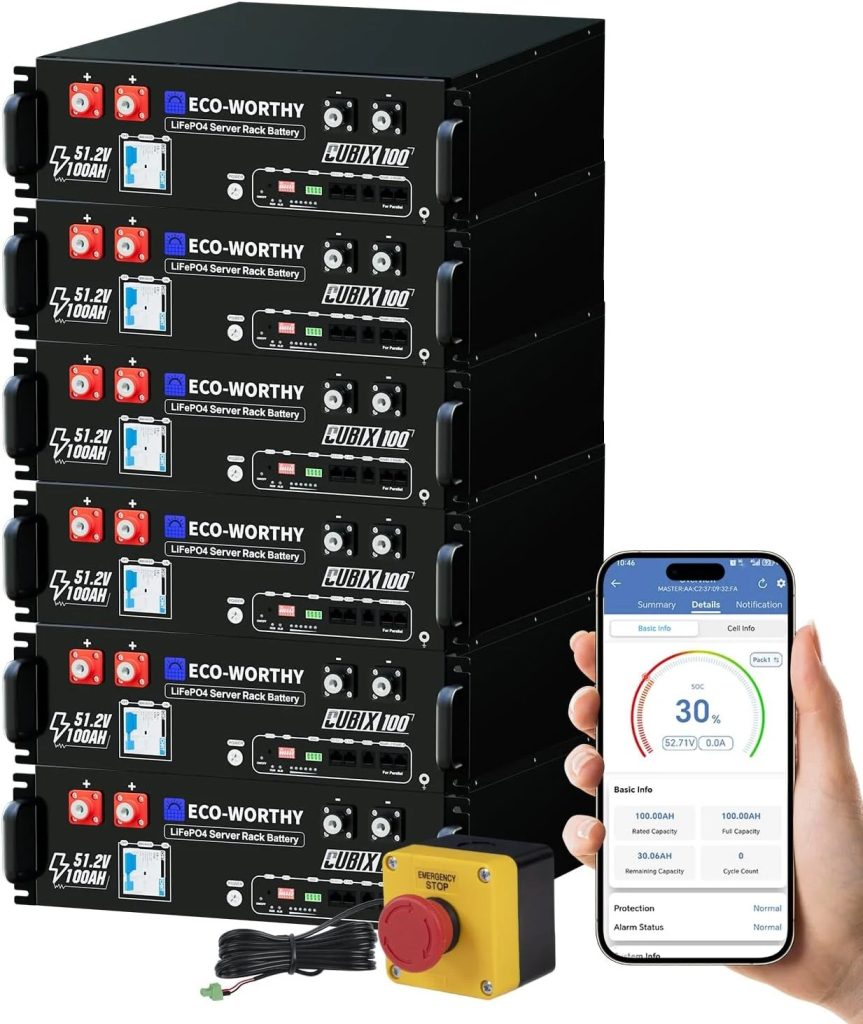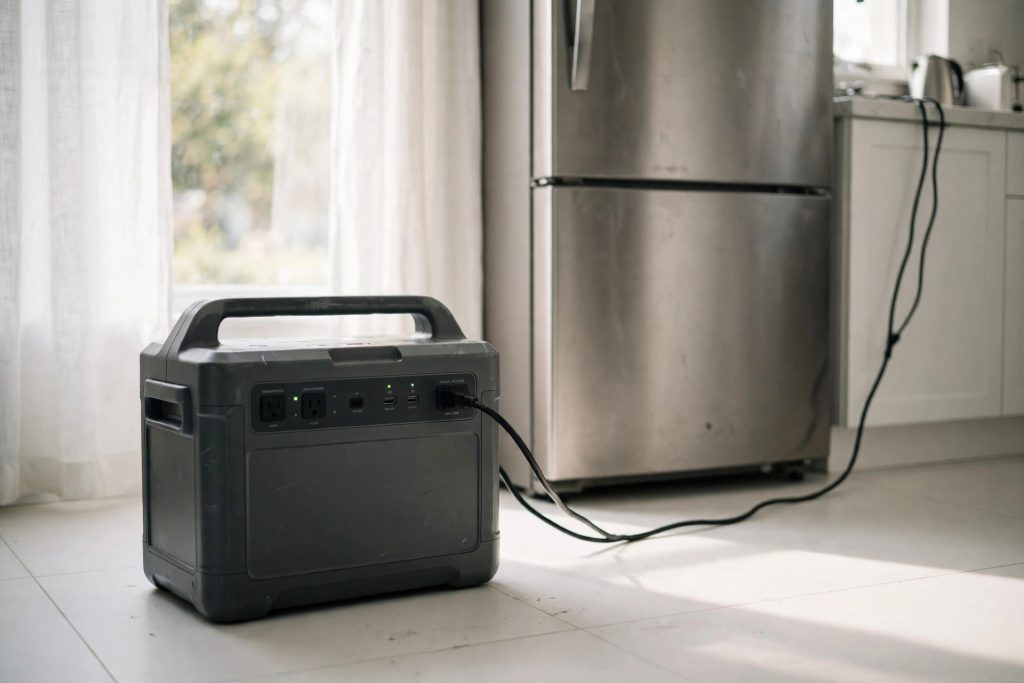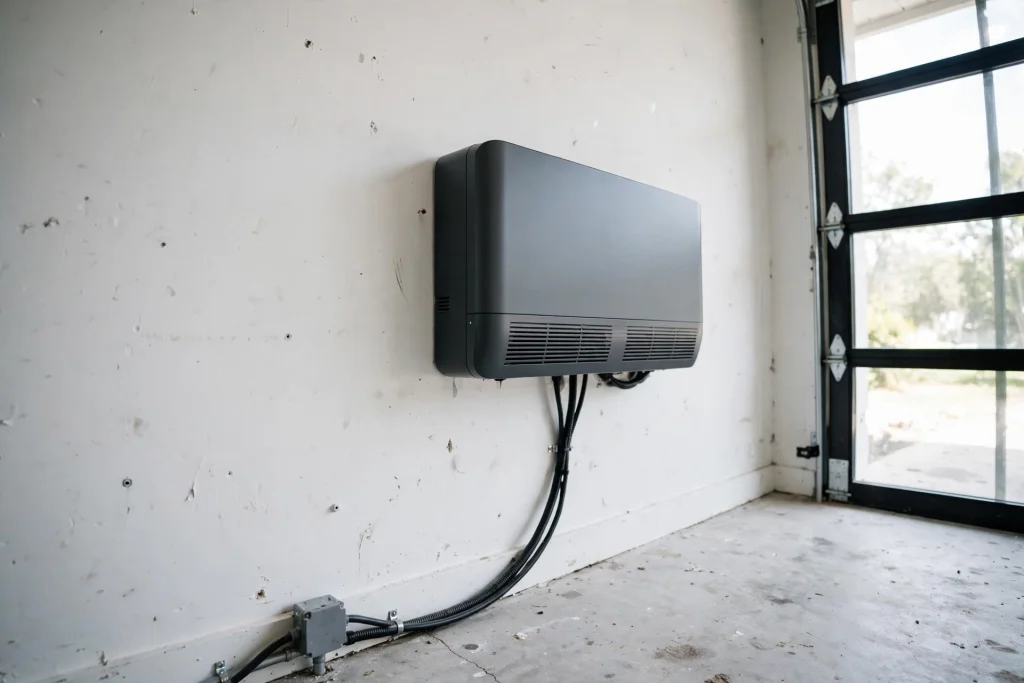
I used to think battery storage was the expensive part of a home power setup. Then I added up what the small stuff costs over five years: the dead AAs in the junk drawer, the 9Vs in the smoke detectors that chirp at 3 AM, the rechargeable 18650s I can never find when I need one. The big battery is a line item. The small batteries are a slow leak.
This article covers two things that do not belong together, and I am going to review them together anyway, because they live in the same drawer of my life. The first is a battery organizer box with a built-in tester, the kind that holds AA, AAA, C, D, 9V, and the coin cells. The second is the Battery Vault home energy storage system, a 10 kWh LiFePO4 wall of serious power. One costs less than a pizza. The other costs as much as a used car. Bear with me. There is a connection.
The connection is knowing what charge you actually have.
The organizer: boring, useful, slightly humbling
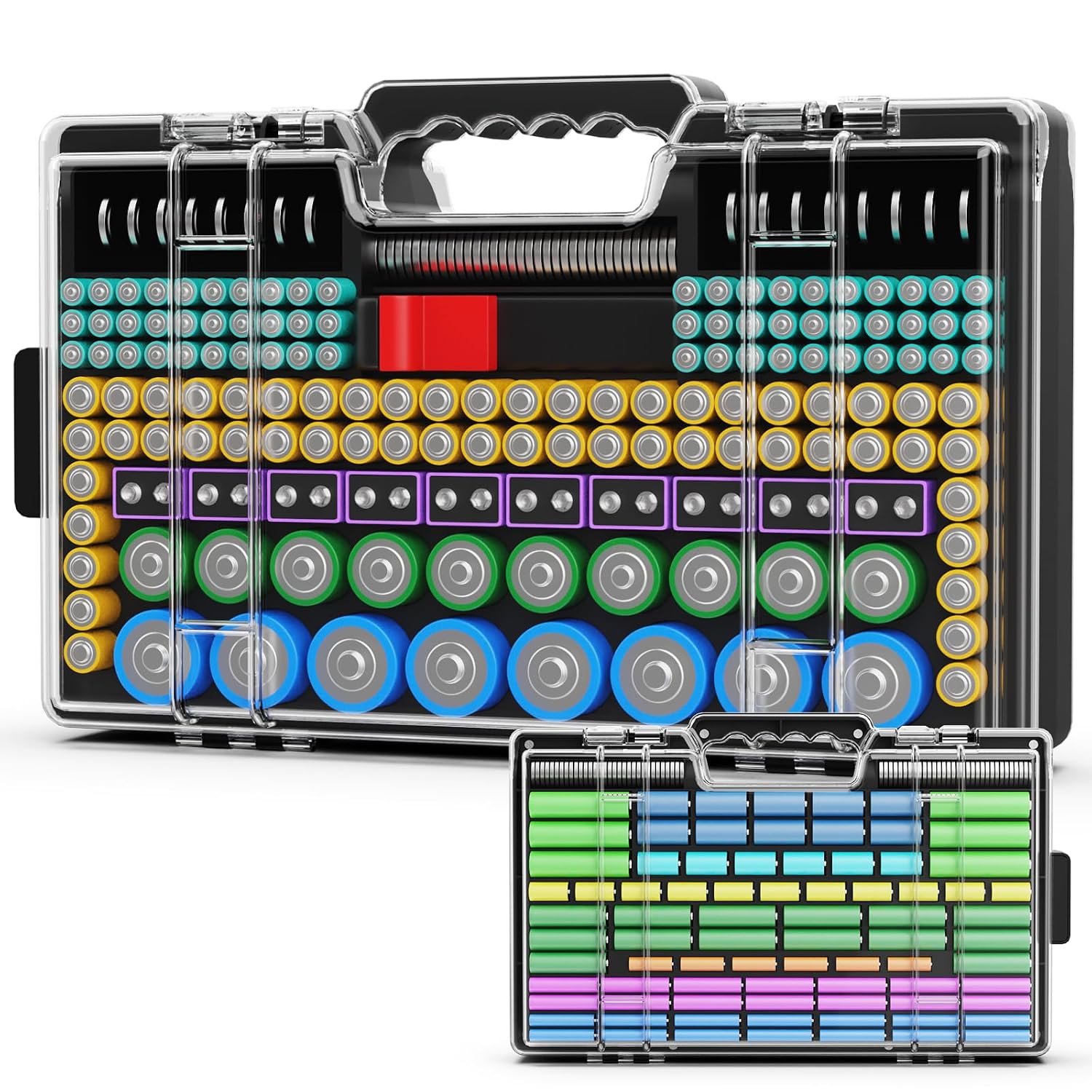
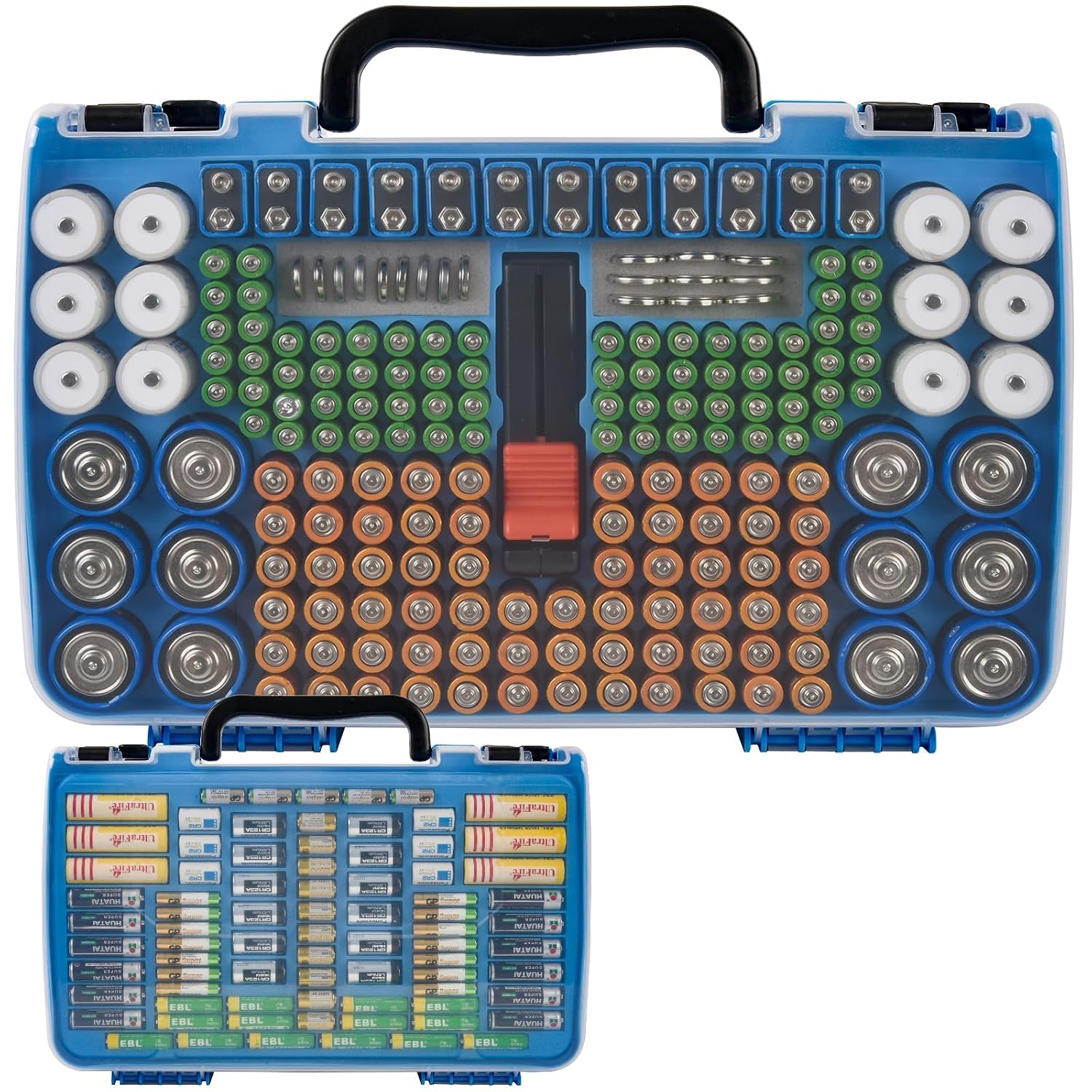
The organizer case holds a couple hundred batteries in labeled slots, both sides, with a little tester built into the lid. You pop a battery into the tester, it shows you good or dead. Simple. The reason this exists is that every house has a drawer where batteries go to be forgotten, and half the batteries in that drawer are dead, and nobody knows which half. I know this because I had that drawer. Past tense. The case fixed it, and I resent how satisfying that was.
Here is the honest math on the tester. A battery tester works by putting a small load on the cell and reading the voltage under that load. That load drains the battery slightly every time you test. Test a half-dead AA ten times out of curiosity and you have made it deader. I mention this because I tested the same AA six times in a row the first night, watching the needle, like a person conducting important science. The science said: stop testing and use the battery.
The case itself is molded plastic with a handle, water-resistant enough for a garage shelf, not for a boat. It holds the common sizes plus the odd ones: 18650s for flashlights, CR123As for the cameras nobody uses anymore, coin cells for the kitchen scale. Two hundred and eighty slots sounds absurd until you realize how many devices in a modern house take batteries. Smoke detectors, remotes, thermostats, wall clocks, the kids toys that each take a different size out of spite. I counted once. We had eleven different battery types in the house. Eleven.
Not glamorous. Just true.
The Vault: the other end of the same idea
The Battery Vault is a 10 kWh LiFePO4 home storage unit, expandable to 40 kWh, with 7.6 kW of continuous output and 15 kW of surge. The transfer switch flips in under 20 milliseconds, which means your computer does not notice the outage. The hybrid inverter runs above 97% efficiency and takes solar on either DC or AC coupling. It carries UL 9540 and UL 1741 certifications, which are the ones your inspector and your insurance company actually care about.
Now the numbers that matter to a buyer. Ten kilowatt-hours at, say, a thousand dollars a kilowatt installed — the range I keep seeing is $800 to $1,200 per usable kWh once you include the inverter, the electrician, the permits, and the afternoon the inspector finds something to flag — puts a single Vault unit in the neighborhood of ten grand. That is real money. For that money you get roughly a third of a typical American home’s daily electricity, or a full day of careful usage, or about six hours of running everything like nothing happened. I have run all three scenarios on paper. The paper where you run everything normally is the most expensive and the least honest with yourself.
Actually, let me correct that. I said ten kilowatt-hours is a third of a daily 30 kWh home. That is the brochure framing. The honest framing is that during an outage you are not running the dryer and the oven. You are running the fridge, the furnace blower or a mini-split, lights, internet, and phones. That is maybe 8 to 12 kWh a day if you are disciplined. So one Vault unit is genuinely a full day of disciplined backup. Disciplined is doing a lot of work in that sentence. Ask my family how disciplined we were during the last outage. Go ahead. I will wait.
The 15 kW surge rating is the spec that separates serious units from toys. Your well pump, your AC compressor, your sump pump all surge on startup, three to five times their running watts. A storage system that cannot absorb the surge trips offline exactly when you need it most, which is the cruelest possible failure mode. The Vault handles it. I have not personally load-tested a Vault unit at 15 kW surge because I do not own one and my test bench is not that brave. That is outside my experience and I am not going to pretend otherwise.
The category problem, both ends of it
Here is my complaint about the whole home battery industry, and it applies from the hundred-dollar power station to the ten-thousand-dollar wall unit. The industry sells independence and delivers arithmetic. Every brochure shows a house with solar panels and a glowing battery icon and the word resilience, and none of them show the spreadsheet where you discover that resilience costs more per kilowatt-hour than the grid will ever charge you. Batteries are not an investment. They are insurance. Insurance you can touch. Once I reframed it that way, the prices stopped offending me. You do not buy insurance because it pays for itself. You buy it because the alternative is sitting in the dark.
And my complaint about the small end: the battery organizer market is full of cases that hold 48 batteries when the average house needs 200, testers that lie to make you feel good, and lids that crack in a year. The one reviewed here at least sized the problem correctly. Two hundred and eighty slots is not a random number. It is someone who counted.
Unrelated, but I want to tell you anyway. Last month I found a battery in my old junk drawer — the drawer the organizer replaced — with a date code from 2019. A 9V. It had been sitting there for seven years, through two moves, in a drawer I opened weekly. I tested it. Dead, obviously. But the date code made me laugh, because in 2019 I had definitely told myself I would organize the batteries this weekend. This weekend took seven years. The organizer took twenty minutes. I am not proud of the ratio.
Who each of these is actually for
The organizer is for anyone with a junk drawer, which is everyone. If you have kids, double that. The Vault is for a homeowner with solar or the plan for solar, in an area with real outage risk or time-of-use rates that punish evening usage, who can stomach a five-figure install for the ability to ignore the grid. It is not for renters. It is not for someone hoping the battery pays for itself in eighteen months. I have done that math too, the payback math, and unless your utility charges you like you insulted them personally, the payback is measured in resilience, not dollars. Say that out loud before you sign anything.
On lifespan, the LiFePO4 cells in the Vault are rated for thousands of cycles, and how long solar batteries last in practice comes down to heat, depth of discharge, and whether the BMS is doing its job. A garage install in a hot climate will age faster than the brochure admits. Every battery ages faster than the brochure admits. The brochure is not a weather forecast. It is a wish.

This site contains affiliate links. We may earn a commission on qualifying purchases.
Questions I keep getting asked
Does a battery organizer actually save money?
It stops you from buying batteries you already own, which over a few years adds up to more than the case costs. The built-in tester settles the eternal question of which drawer batteries are dead. Just do not test the same cell ten times for fun. The tester puts a small load on the battery, and curiosity drains it.
How much backup does the Battery Vault system really provide?
The base unit holds 10 kWh of LiFePO4 storage, expandable to 40 kWh, with 7.6 kW continuous and 15 kW surge output. In practice that is about a full day of disciplined outage usage for a typical home: fridge, some lights, internet, phones. Installed cost runs roughly $800 to $1,200 per usable kilowatt-hour once you count the inverter, electrician, and permits.
Will my computer stay on when the grid drops?
The transfer switch flips in under 20 milliseconds, which is fast enough that most electronics never notice. The 15 kW surge rating also means motor startups, like a well pump or fridge compressor, will not trip the system offline at the worst possible moment. That is the spec that separates serious storage from toys.
The organizer sits on my garage shelf now, latched shut, labeled. The Vault I do not own, but I have the quote saved in my email, and I open it sometimes the way people open real estate listings for houses they cannot afford. Someday, maybe. The grid flickered twice last week. Both times under a second. Both times I looked at the shelf, then at the quote in my inbox, then back at the shelf. The small batteries are handled. The big decision is still sitting there, blinking, waiting for me to stop doing math and just decide.