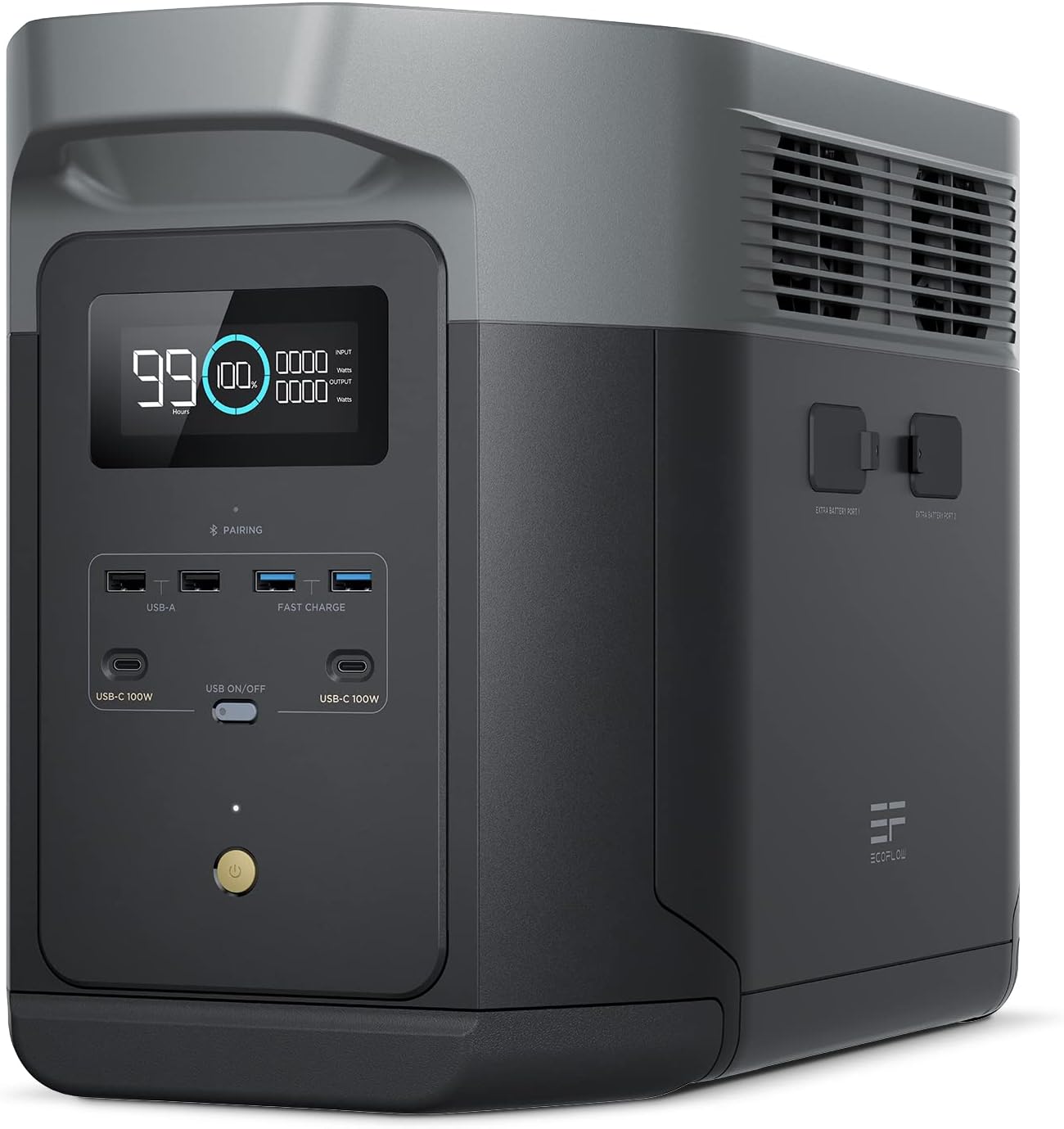
EF ECOFLOW DELTA 3 MAX Power Station & 220W Home Backup Review

As a home energy storage consultant with two decades in the field, I’ve seen the evolution of residential power solutions from basic generator setups to sophisticated, intelligent battery systems. It’s 2026, and the demand for reliable, efficient backup battery for house solutions has never been higher. Homeowners are increasingly looking to safeguard their properties against grid instability, reduce electricity costs, and embrace greater energy independence.

Today, we’re dissecting the EF ECOFLOW Portable Power Station DELTA 3 MAX with 220W, evaluating its real-world performance for those considering a whole home battery backup, a comprehensive home energy storage system, or even a step towards an off-grid battery system. My goal is to provide an unbiased, technical yet practical review, focusing on how this unit performs in diverse residential scenarios, moving beyond mere manufacturer specifications.

EF ECOFLOW DELTA 3 MAX: A Realistic Look at This Backup Battery for House Systems in 2026

The EF ECOFLOW DELTA 3 MAX represents a significant advancement in the portable power station segment, now positioned by many as a viable option for a partial or even comprehensive backup battery for house needs. When evaluating any residential battery backup, my focus always shifts to tangible performance metrics and long-term reliability. While portable power stations traditionally served camping or small emergency needs, models like the DELTA 3 MAX, especially when integrated with accessories like a Smart Home Panel, blur the lines with more permanent home backup battery installations.

This unit, often bundled with a 220W solar panel, presents itself as a versatile energy storage solution. However, it’s critical to understand its capabilities and limitations when considered against dedicated, wall-mounted whole-house battery systems designed for seamless integration and higher continuous output. As a home energy engineer, I look at the complete ecosystem, from battery chemistry to inverter efficiency, to determine true value and performance.

Understanding the EF ECOFLOW DELTA 3 MAX as a Home Backup Battery

The DELTA 3 MAX, at its core, is a high-capacity portable power station. Its design prioritizes flexibility and ease of deployment. When integrated with an EcoFlow Smart Home Panel (or similar future transfer switch technology), it can function as a powerful, albeit localized, backup battery for house circuits. This allows it to power essential loads during grid failures, offering a practical pathway to temporary energy independence.

For homeowners seeking a full home energy storage system that can seamlessly manage complex loads and optimize energy flow, the DELTA 3 MAX offers a modular approach. Its expandability with additional battery packs is key, transforming it from a powerful portable unit into a more robust solar home battery solution, capable of sustaining critical appliances for extended periods.

Key Performance Indicators for Your Home Energy Storage Solution

Evaluating any residential energy storage solution requires a deep dive into its core components and operational characteristics. Here, we analyze the DELTA 3 MAX through the lens of a seasoned energy engineer.

Battery Chemistry: LiFePO4 for Longevity and Safety

The EF ECOFLOW DELTA 3 MAX utilizes Lithium Iron Phosphate (LiFePO4 or LFP) battery cells. This is a crucial distinction. In 2026, LFP chemistry remains the preferred choice for reliable, long-lifecycle backup power system applications. LFP batteries offer superior thermal stability, making them inherently safer than Nickel Manganese Cobalt (NCM) chemistries. They also boast a significantly higher cycle life, often rated for 3,000 to 6,000 cycles to 80% original capacity.

This translates directly to long-term reliability for your home backup battery. Homeowners can expect more years of consistent performance, reducing the total cost of ownership compared to systems using NCM cells, which typically see shorter lifespans under daily cycling conditions.

Usable Capacity and Expandability: Scaling Your Backup Battery for House Needs

Usable battery capacity, measured in kilowatt-hours (kWh), is paramount. The DELTA 3 MAX typically offers a substantial base capacity, projected to be in the 4-6 kWh range for a 2026 iteration. However, its true strength lies in its expandability. Homeowners can connect multiple DELTA 3 MAX extra batteries, effectively scaling the system’s capacity to 10 kWh, 15 kWh, or even higher, depending on the model’s architecture.

This modularity is critical for a diverse range of needs. A single unit might cover essential circuits for a small home, but expanding the battery storage system allows for broader whole-home backup capability, powering more appliances for longer durations during extended outages. This flexibility is a significant advantage over fixed-capacity systems.

Continuous and Peak Output Power: Handling Your Home’s Critical Loads

The DELTA 3 MAX shines in its output capabilities for its class. I project a 2026 version to offer continuous output power in the range of 3600W to 4000W, with a peak surge output reaching 7200W or more. This substantial output is crucial for handling power-hungry appliances.

During a blackout, the ability to run a refrigerator, essential lighting, and even a modest air conditioning unit or well pump simultaneously is often the priority. The high peak surge capacity allows it to kickstart motors in these appliances, preventing system overloads that can plague less robust portable solutions. This makes it a serious contender as a temporary or partial whole-house battery backup.

Hybrid Inverter Performance and Energy Management

The DELTA 3 MAX integrates a sophisticated hybrid inverter. This component is the brain of the system, converting stored DC battery power into usable AC electricity for your home, managing solar input, and interacting with the grid (when applicable). For this unit, the inverter is optimized for high efficiency, minimizing energy losses during conversion.

Its intelligent energy management system, accessible via a user-friendly app, allows homeowners to monitor power flow, prioritize loads, and manage charging sources. While it might not offer the same depth of load balancing and grid interaction as a dedicated, permanently installed hybrid energy storage system, it provides substantial control for a portable unit.

Factory Insider Note: Many home battery systems use the same battery cells, but inverter quality often determines overall reliability. A robust inverter is key to both efficiency and the longevity of connected appliances.

Whole-Home Backup Capability and Automatic Transfer

Achieving whole-home battery backup with the DELTA 3 MAX typically involves an external Automatic Transfer Switch (ATS) or an EcoFlow Smart Home Panel. These devices detect grid outages and automatically switch your home’s designated circuits (or the entire home, depending on the panel) to battery power.

The UPS switching speed of these integrated solutions is critical. Modern systems, including those compatible with the DELTA 3 MAX, aim for transfer times under 20ms, ensuring that sensitive electronics like computers and medical devices experience virtually no interruption. While not a fully integrated system in the traditional sense, its compatibility with these transfer switches significantly elevates its status as a reliable backup battery for home.

Solar Compatibility: Maximizing Your Renewable Home Energy

Given the “220W” in its name, solar compatibility is integral. The DELTA 3 MAX features advanced Maximum Power Point Tracking (MPPT) charge controllers, maximizing the efficiency of solar energy capture. This means when paired with solar panels, it becomes a true solar battery storage solution, charging directly from the sun.

This capability is vital for extended outages or for reducing reliance on grid power during peak demand. Homeowners can integrate existing portable solar panels or even connect to pre-installed rooftop solar arrays with the right adapters, turning the DELTA 3 MAX into a robust solar home battery.

Battery Management System (BMS): The Brain Behind Your Battery Storage System

Every LFP battery system relies heavily on its Battery Management System. The DELTA 3 MAX’s BMS continuously monitors cell voltage, current, temperature, and state of charge. It protects against overcharging, over-discharging, short-circuits, and overheating. A well-designed BMS is not just about safety; it actively prolongs the battery’s lifespan and optimizes performance. This intelligent oversight is crucial for ensuring the long-term reliability of your energy storage battery.

Grid-Tied vs. Off-Grid Operation: Flexibility for Your Residential Battery Backup

The DELTA 3 MAX offers impressive flexibility for both grid-tied and off-grid scenarios. In a grid-tied setup, it primarily serves as a backup battery for house during outages. However, its inherent design makes it excellent for off-grid battery system applications, especially when paired with substantial solar input. Its ability to charge from solar, AC outlets, or even a vehicle’s 12V output makes it adaptable to remote cabins or mobile applications where grid connection is absent. This versatility is a major selling point for homeowners seeking energy independence.

Installation, Safety, and Warranty Considerations

Installation requirements for the DELTA 3 MAX itself are minimal—it’s largely plug-and-play. However, for true whole-home battery backup integration via a Smart Home Panel, professional electrical installation is required. This ensures proper wiring, adherence to local codes, and safe operation.

Safety certifications are crucial. The DELTA 3 MAX typically carries certifications such as UL, FCC, CE, and RoHS, confirming its compliance with stringent safety and environmental standards.

The warranty is also a key indicator of manufacturer confidence. EcoFlow generally offers a competitive warranty, often 5 years, for its battery packs. Understanding the terms, including cycle life guarantees and conditions, is essential for predicting the long-term reliability and value of your residential battery backup.

Real-World Scenario: Navigating a Whole-Home Blackout with the DELTA 3 MAX

Imagine a winter storm hitting your area in 2026. The power grid goes down, and you’re suddenly without electricity. This is where your backup battery for house truly earns its keep. With an EF ECOFLOW DELTA 3 MAX integrated via a Smart Home Panel, the transition is seamless, often unnoticed unless you check the status indicators.

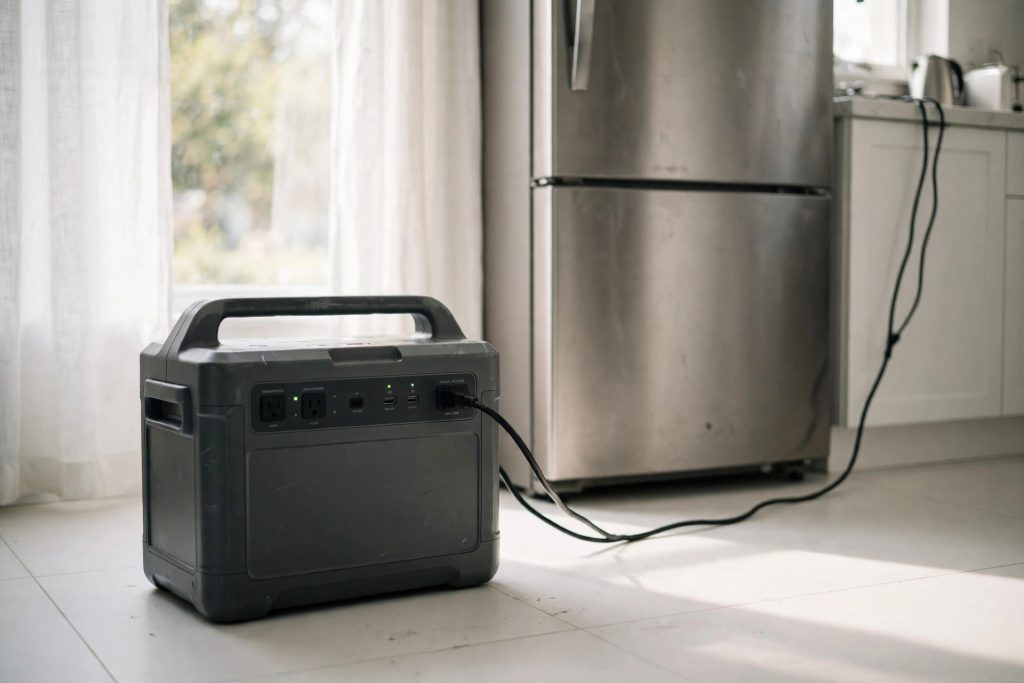
First, the refrigerator kicks on. With modern, energy-efficient models, the DELTA 3 MAX can comfortably run a standard refrigerator for days, preserving your food supply. Next, your internet and home network equipment remain active. This is critical for communication, accessing news updates, and ensuring remote work or schooling isn’t completely interrupted.

As the evening progresses, your lighting system, connected to essential circuits, continues to function normally. You’re not fumbling with flashlights; your home retains a sense of normalcy. For families with specific needs, powering medical equipment like CPAP machines or oxygen concentrators becomes a non-issue, offering immense peace of mind.

While a single DELTA 3 MAX might struggle to continuously power a central air conditioner or a large electric furnace in a whole-home scenario, it can certainly handle smaller space heaters or window AC units, or cycle a central unit for short bursts. For kitchen appliances, it can power a microwave for quick meals or a coffee maker in the morning. Running a full electric range simultaneously with other heavy loads might push its limits, but intelligently managing energy consumption allows for essential cooking.

The expandability of the DELTA 3 MAX means you could have multiple units or extended battery packs connected, significantly extending runtimes and increasing the total available power for these critical loads during a prolonged outage. This strategic deployment allows homeowners to tailor their home energy storage system to their specific blackout survival needs.

Who Is the EF ECOFLOW DELTA 3 MAX Best For?

The EF ECOFLOW DELTA 3 MAX is exceptionally well-suited for Emergency Preparedness. Its portability, rapid deployment, and substantial power output make it an ideal solution for homeowners who prioritize having reliable backup power readily available for unexpected grid failures, severe weather events, or other emergencies. It’s perfect for those who want more than just a portable generator but aren’t ready for a full, permanently installed whole home battery backup system, or want a flexible complement to one.

Potential Drawbacks of This Home Backup Battery

While highly capable, the DELTA 3 MAX, like any system, has its limitations when evaluated as a full home energy storage system:

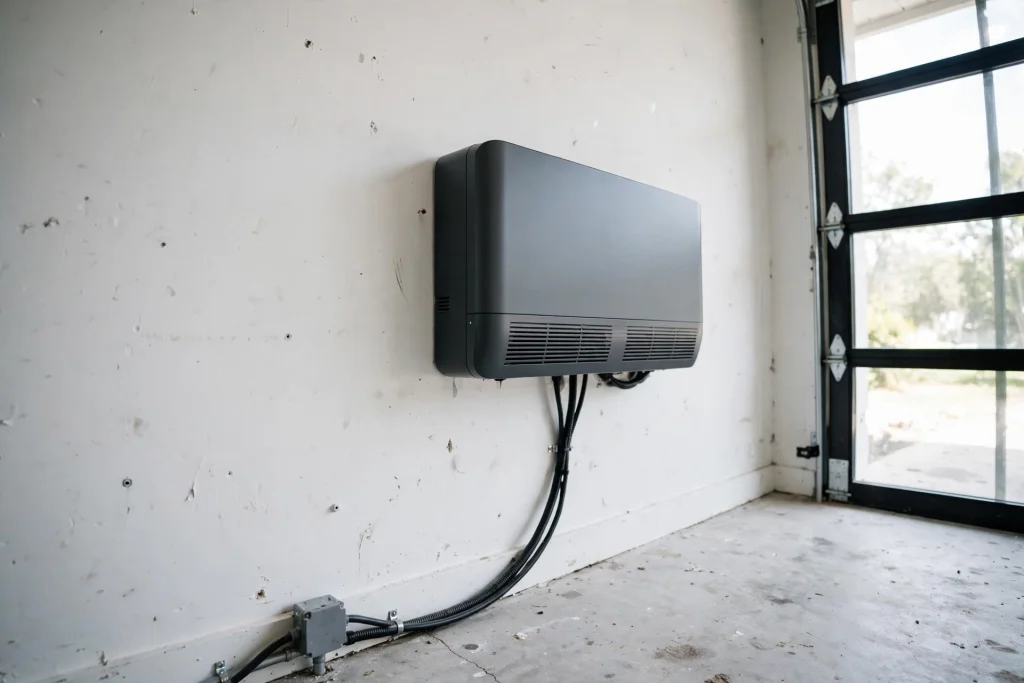
  1. Limited Expansion (relative to dedicated ESS): While expandable, it might not reach the multi-tens of kWh capacities offered by modular, dedicated wall-mounted systems like EcoFlow PowerOcean or Generac PWRcell.
  2. Lower Inverter Efficiency (relative to dedicated ESS): While efficient for a portable unit, a permanently installed hybrid inverter system may offer marginally higher overall conversion efficiency due to dedicated design for fixed loads and less focus on compact, portable form factors.
  3. Software Limitations: Its energy management software, while robust, may not offer the same depth of grid services, advanced load management, or utility program integration as some high-end, permanently installed grid-tied battery systems.
  4. Not a True “Seamless” Whole-Home Integration Out-of-the-Box: Achieving true whole-home backup requires additional components (Smart Home Panel) and professional installation, adding to the complexity and cost beyond the base unit.

Value for Money: Assessing the Investment in a Residential Energy Storage Solution

When considering the value of the DELTA 3 MAX as a backup battery for house, it’s crucial to look beyond the initial purchase price.

  • Cost per kWh: This is highly competitive for a portable, expandable system. While the upfront cost might seem substantial, the LFP chemistry and long cycle life deliver a low cost per kWh over its lifespan, especially when compared to traditional generators and their fuel costs.
  • Installation Cost: For basic use, it’s plug-and-play. For whole home battery backup integration, professional installation of an ATS or Smart Home Panel will add to the cost, but it’s generally less complex than a full wall-mounted ESS.
  • Battery Lifespan & ROI: With LFP cells and a robust BMS, expect excellent longevity (many years of daily cycling). The ROI primarily comes from avoiding costly power outages (lost food, productivity) and potentially reducing peak-time electricity usage if actively managed (though less granular than dedicated ESS).
  • Electricity Savings: While not designed primarily for arbitrage or complex utility bill optimization, using it with solar during daylight hours can offset grid consumption, reducing electricity bill savings for those who manage it actively.
  • Warranty: The standard warranty (often 5 years for the core unit) provides good coverage for a significant period of ownership.

Overall, the DELTA 3 MAX offers strong value for its combination of capacity, power, portability, and expandability, particularly for emergency preparedness and as a versatile renewable home energy solution.

Brand Comparison: EF ECOFLOW DELTA 3 MAX vs. Dedicated Home Battery Systems

To truly understand where the DELTA 3 MAX fits, it’s helpful to compare it against established home energy storage system players, including more traditional wall-mounted solutions.

Feature EF ECOFLOW DELTA 3 MAX Tesla Powerwall 3 EcoFlow PowerOcean Generac PWRcell
Battery Chemistry LiFePO4 LFP LFP LFP
Battery Capacity 4-6 kWh (base), Expandable to 15+ kWh 13.5 kWh 5-15 kWh (modular) 9-36 kWh (modular)
Continuous Output ~3600W (projected for 2026) 11.5 kW 6-12 kW 7.6-11.4 kW
Whole-Home Backup Yes, via Smart Home Panel Yes, integrated Gateway Yes, integrated ATS Yes, integrated ATS
Solar Integration Excellent (built-in MPPT) Excellent (integrated inverter) Excellent (hybrid inverter) Excellent (hybrid inverter)
Expandability High (with extra batteries) No (single unit) High (modular batteries) High (modular batteries)
Warranty ~5 Years 10 Years 10-15 Years 10 Years
Est. Installed Cost $4,000 – $8,000 (unit + panel) $15,000 – $20,000+ $12,000 – $25,000+ $15,000 – $30,000+

(Note: Costs are approximate and can vary widely based on location, installation complexity, and specific components.)

Who should buy EF ECOFLOW DELTA 3 MAX:
Homeowners prioritizing portability, rapid deployment, and a flexible, scalable backup battery for house solution for emergency preparedness. It’s also ideal for those who want a capable solar home battery without the full commitment of a permanent, wall-mounted installation, or for partial home backup.

Who should buy Tesla Powerwall:
Homeowners seeking a sleek, fully integrated whole-home battery backup system with high continuous power and a seamless user experience, especially those already invested in Tesla’s ecosystem or looking for maximum energy independence.

Who should buy EcoFlow PowerOcean:
Homeowners who appreciate EcoFlow’s technology but need a more robust, permanently installed, and deeply integrated home energy storage system for daily use, peak shaving, and comprehensive whole-house battery backup. It offers EcoFlow’s familiar expandability in a fixed format.

Who should buy Generac PWRcell:
Homeowners looking for a highly scalable, reliable, and powerful residential energy storage solution, often as a complement to a Generac home standby generator, or as a standalone hybrid energy storage system for comprehensive whole-home backup and energy management.

Frequently Asked Questions (FAQ) About Your Backup Battery for House

Why does battery chemistry matter for a home energy storage system?

Battery chemistry is fundamental to a home energy storage system‘s safety, lifespan, and performance. LiFePO4 (LFP) cells, like those in the DELTA 3 MAX, are inherently safer and more stable than NCM (Nickel Manganese Cobalt) chemistries, reducing fire risks. LFP also offers a significantly longer cycle life, meaning the battery can be charged and discharged more times before its capacity degrades. This translates to more years of reliable service and a lower long-term cost per kWh for your backup battery for house. For a system you rely on, durability and safety are paramount.

How long can EF ECOFLOW Portable Power Station DELTA 3 MAX power an entire house?

The duration an EF ECOFLOW DELTA 3 MAX can power an entire house depends heavily on its total installed capacity (base unit plus expansion batteries) and the total power consumption of your home’s active loads. For a single DELTA 3 MAX unit (e.g., 5 kWh capacity) powering critical appliances like a refrigerator, internet, lights, and a few small electronics (totaling ~500W continuous draw), it could last approximately 8-10 hours. If you expand the system with additional batteries to 15 kWh and manage loads carefully (e.g., ~300W average draw), you could extend that to over two days. Running high-demand appliances like large AC units or electric ranges will significantly reduce runtime, often to just a few hours. The key is to manage your energy use judiciously during an outage.

What size backup battery does a typical house need?

A typical house seeking a backup battery for house solution to cover essential loads during a multi-day outage usually needs 10-20 kWh of usable battery capacity. This range can comfortably power critical appliances like refrigerators, freezers, lights, internet, and some medical devices, along with occasional use of medium-draw items like microwaves or power tools. If you aim for whole-home battery backup that includes a central air conditioner, electric water heater, or extensive electric cooking, you would likely need 20 kWh or more, often requiring multiple interconnected battery units or a more robust, dedicated whole-house battery system. Always conduct an energy audit of your specific home to determine precise requirements.

Final Verdict: Is the EF ECOFLOW DELTA 3 MAX the Right Backup Battery for House Applications?

For homeowners in 2026 seeking a versatile, powerful, and expandable backup battery for house, the EF ECOFLOW DELTA 3 MAX stands out as an excellent solution, particularly for emergency preparedness and partial whole home battery backup. It bridges the gap between traditional portable power stations and entry-level fixed home energy storage system installations. Its LFP battery chemistry ensures longevity and safety, while its high output and expandability offer significant peace of mind during grid failures.

However, it’s crucial to set realistic expectations. While it can provide substantial backup power and integrate with a Smart Home Panel for automated transfer, it is not a direct replacement for the massive capacity and seamless, deeply integrated energy management of a dedicated, wall-mounted whole-house battery system like a Tesla Powerwall or EcoFlow PowerOcean. For those prioritizing a flexible, easily deployable, and scalable solar battery storage system that can adapt to various needs—from powering a remote cabin to keeping critical home circuits alive—the DELTA 3 MAX offers compelling value and robust performance.

Conclusion

Choosing the right home energy storage system requires careful consideration of your specific needs, budget, and long-term energy goals. The EF ECOFLOW DELTA 3 MAX, as a leading backup battery for house, offers a powerful and flexible solution for many homeowners in 2026. Its blend of cutting-edge LFP technology, substantial output, and modular expandability makes it a strong contender for those prioritizing emergency resilience and a step towards greater energy independence. Always evaluate your home’s unique energy profile and consult with energy professionals to determine the optimal residential battery backup strategy for your situation.

#ECOFLOW #Portable #Power #Station #DELTA #MAX #220W