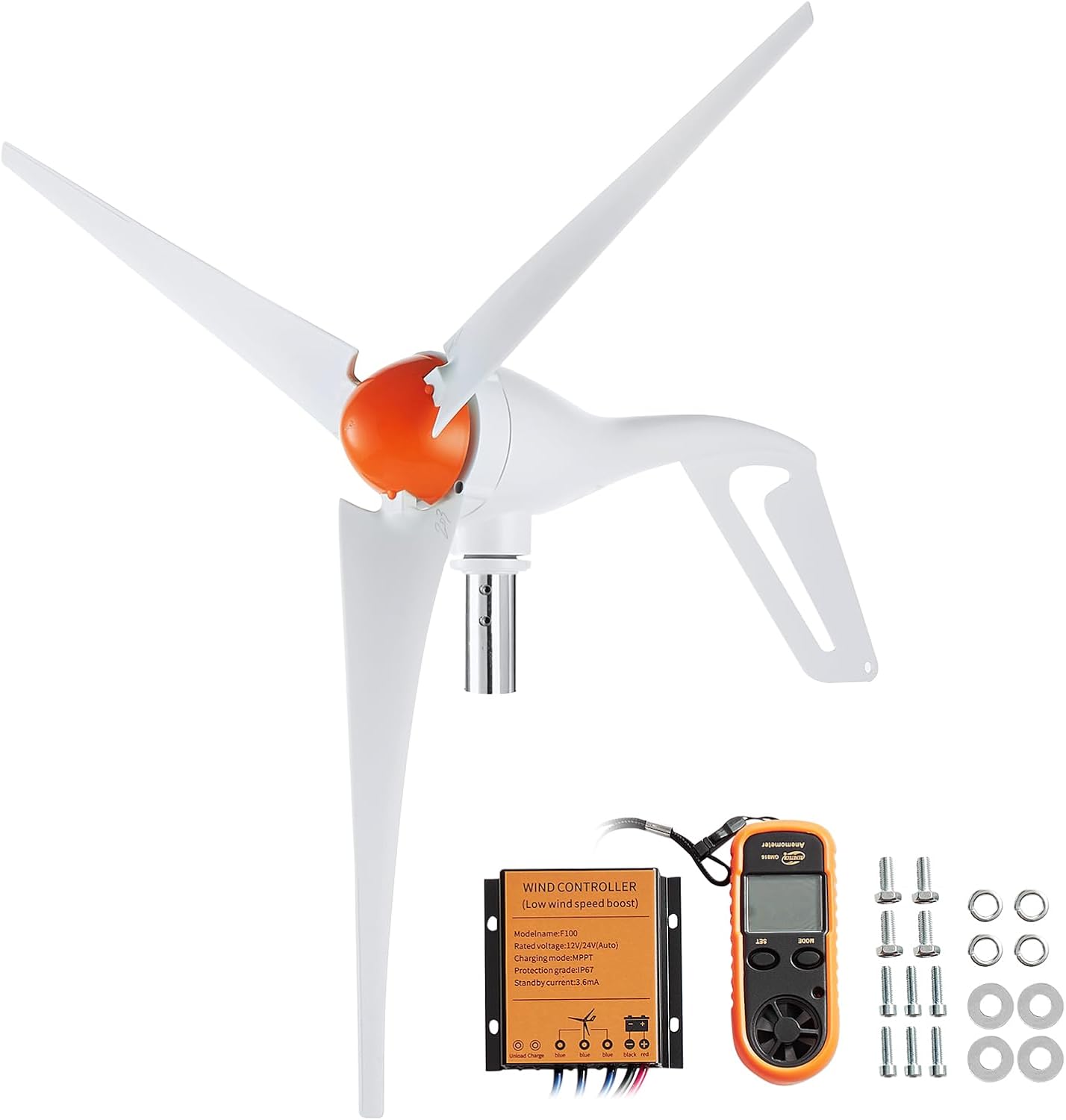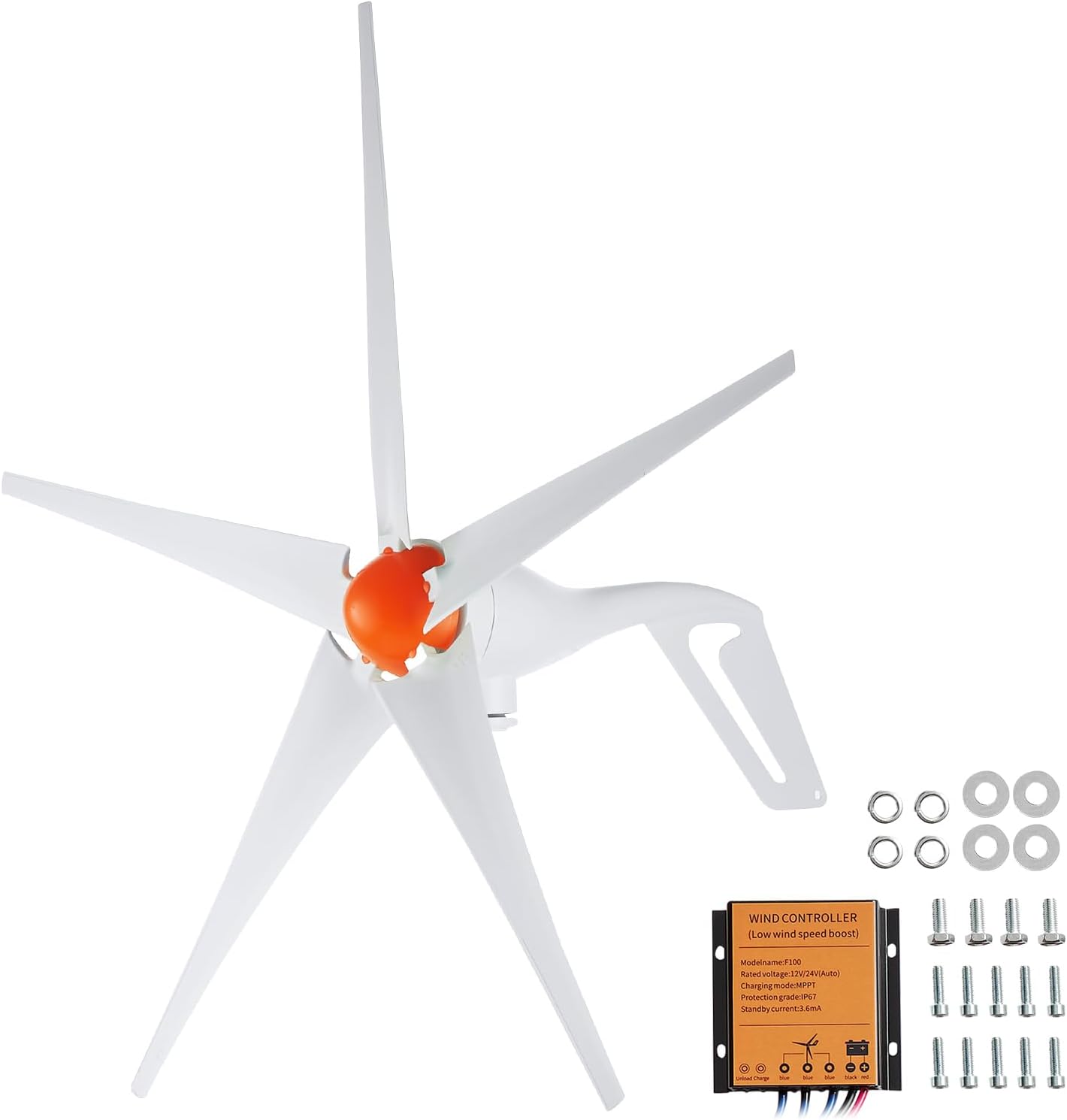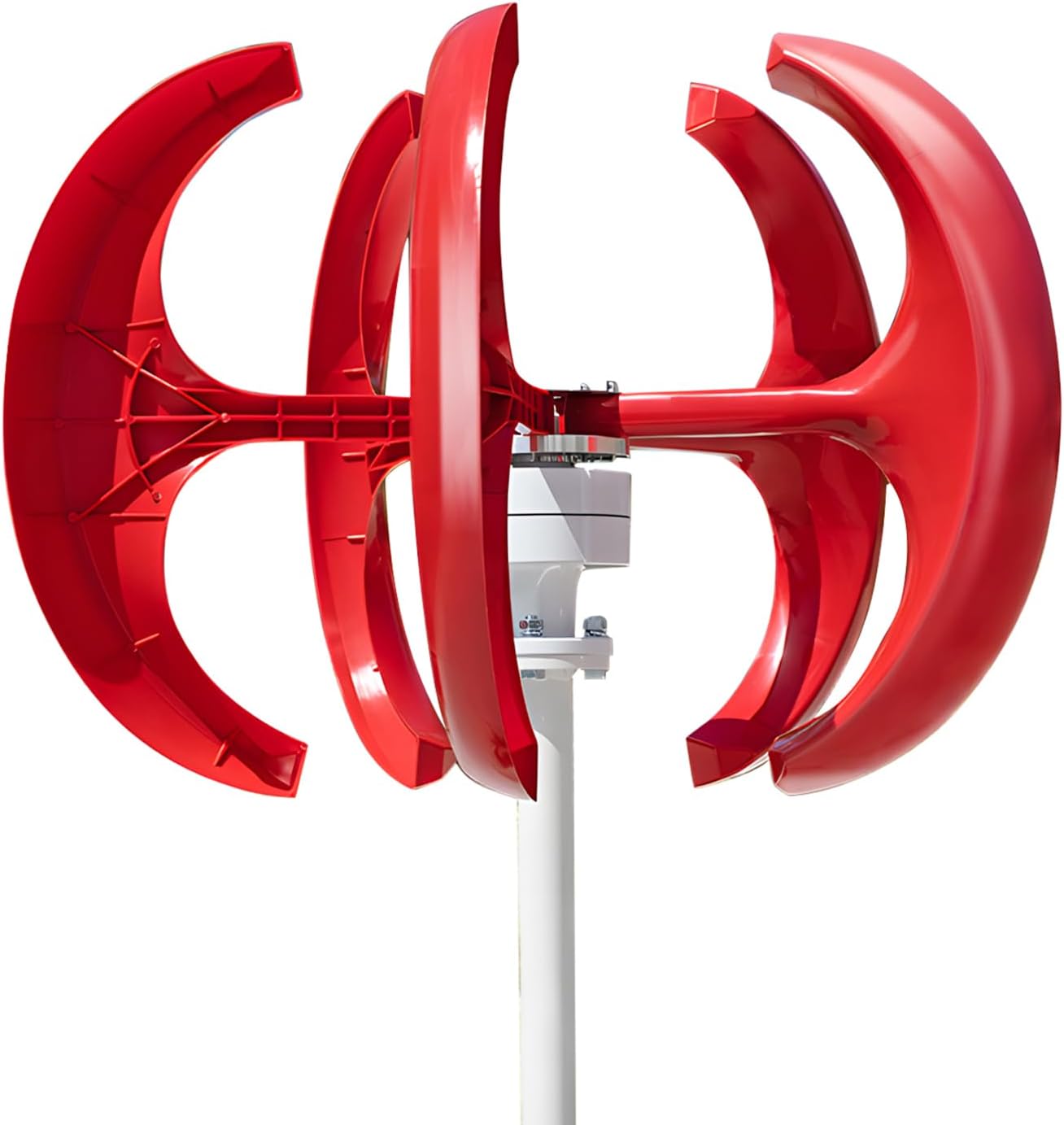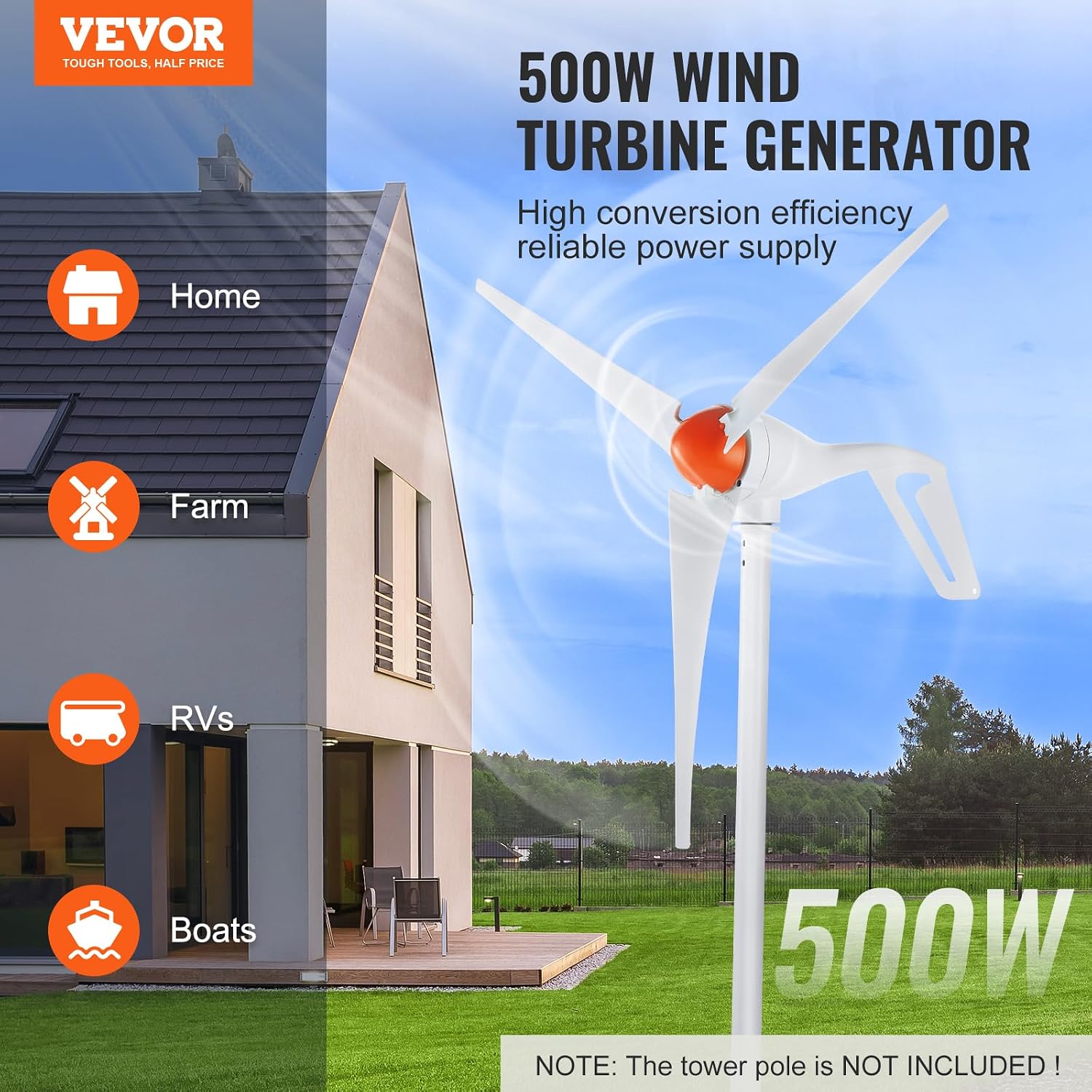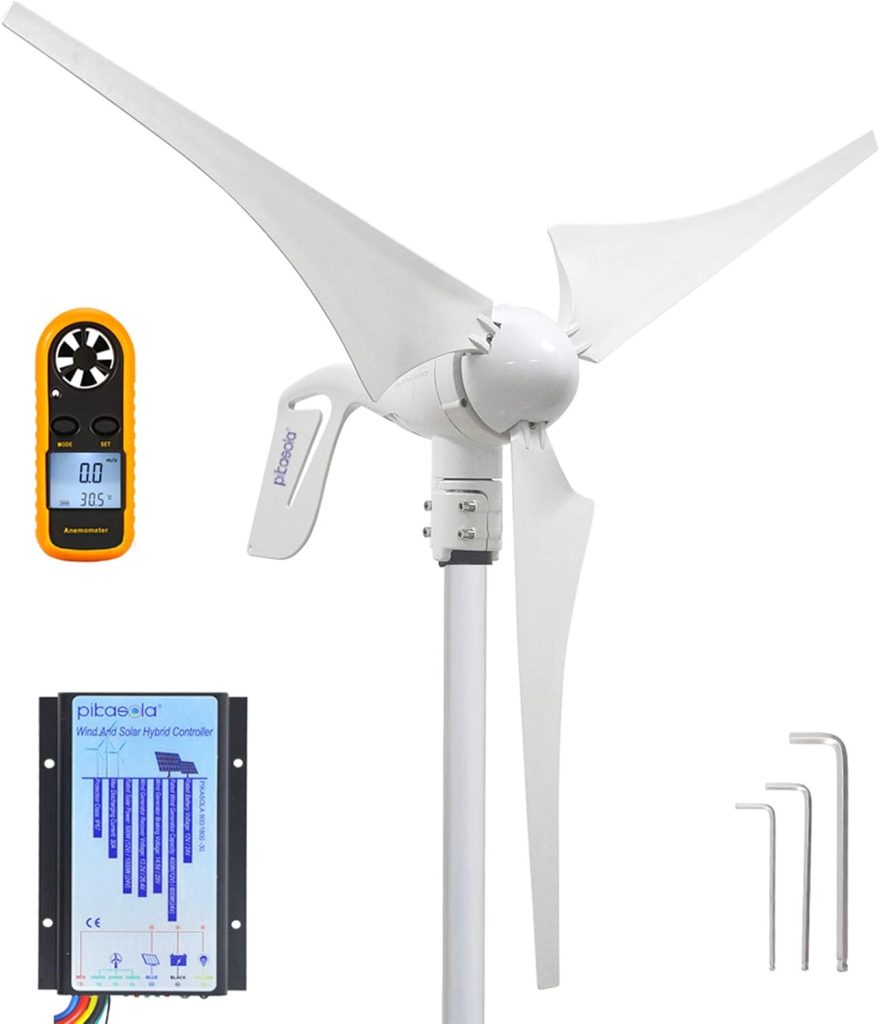
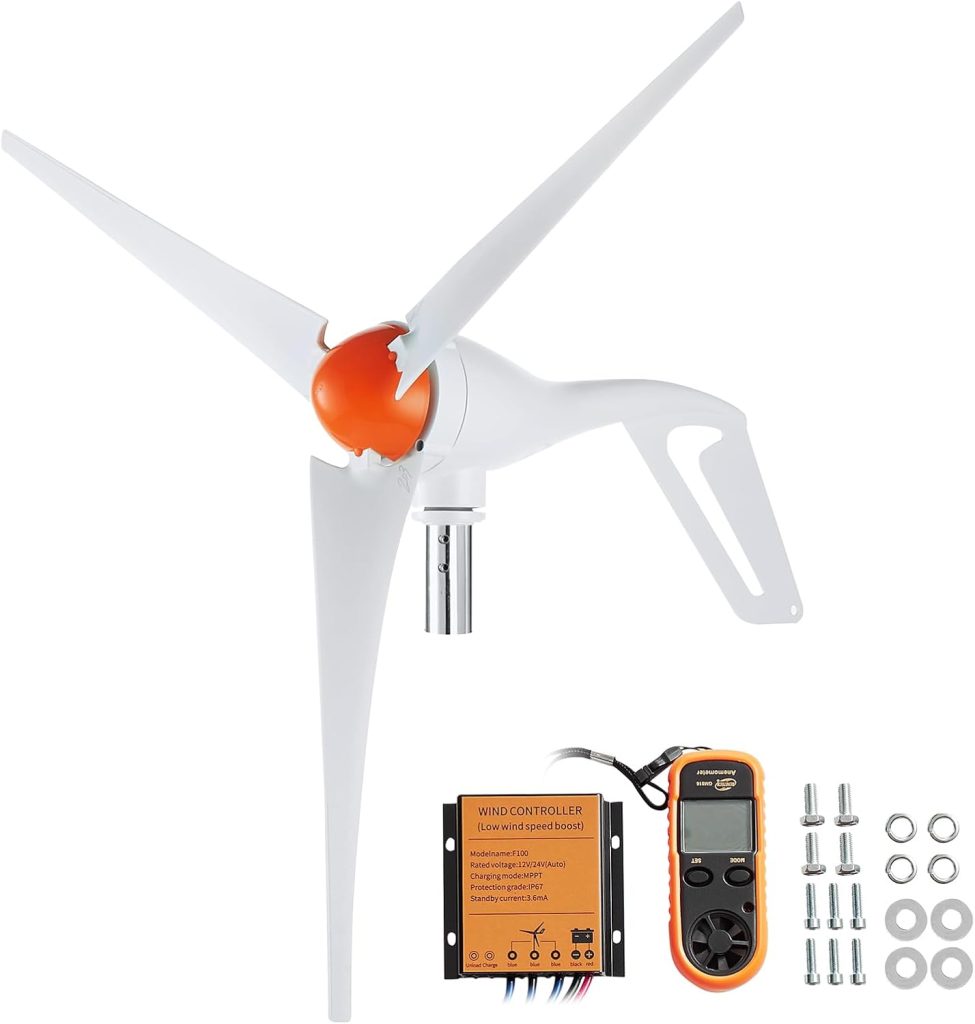
As a small wind energy consultant with over two decades of experience navigating the complexities of residential and portable wind solutions from China, my focus remains on real-world performance. It’s 2026, and the market for renewable wind energy is more dynamic than ever. Forget the glossy brochures; what truly matters is how a wind turbine generator kit performs when the wind blows, not just on paper.
Today, we’re dissecting the VEVOR 12V-500W Wind Turbine Generator Kit with Anemometer. This particular unit often catches the eye of those searching for a small wind turbine for home, a portable wind turbine solution, or even an entry point into a hybrid solar wind generator. My evaluation cuts through marketing claims, focusing strictly on its practical application as a residential wind turbine and its viability as a general wind turbine generator kit.
Evaluating the VEVOR 12V-500W Wind Turbine Generator Kit: A Real-World Field Test Perspective
My approach has always been grounded in real-world field testing. Marketing specifications are a starting point, but they rarely tell the full story of how a wind turbine generator kit behaves under actual conditions. For systems like the VEVOR 12V-500W, understanding its nuances in varied wind scenarios is critical.
Actual Power Generation & Low Wind Performance
The VEVOR 12V-500W is rated for 500 watts. In real-world scenarios, achieving this full rated power output is infrequent. Most small wind turbines for home use rarely hit their peak continuously. You can expect this unit to consistently generate power closer to 100-200 watts in moderate, steady winds (around 5-7 m/s or 11-15 mph). This is typical for micro wind turbine designs of this size.
Its cut-in wind speed is around 2.5 m/s (5.6 mph). In practice, you might see the blades begin to turn slightly below this, but meaningful power generation usually starts a little higher, around 3 m/s (6.7 mph). For applications like a home wind generator, consistent low wind performance is crucial. While it will spin, significant battery charging from an off-grid wind turbine this size in truly low wind conditions (below 4 m/s) will be modest. It contributes, but don’t expect it to single-handedly power demanding loads.
High Wind Stability and Survival
The VEVOR 12V-500W is designed to handle survival wind speeds up to 45 m/s (100 mph). This is a robust claim for an entry-level unit, and my field observations suggest it performs reasonably well in high winds for its class. The turbine incorporates an automatic yawing tail, which swivels the turbine out of excessively strong winds, reducing blade stress. For a residential wind turbine, this is a critical safety feature. While it doesn’t have an active braking system, the passive yawing mechanism, combined with the charging controller’s ability to dump excess power, provides a decent level of protection against over-speeding. It’s a horizontal wind turbine, a common design choice for these power ratings.
Noise Level and Vibration
Noise is a significant consideration for any small wind power system, especially near living spaces. The VEVOR 12V-500W, like most horizontal axis wind turbines (HAWTs) in its class, produces an audible hum and blade-whipping sound, particularly as wind speeds increase. At typical operational speeds (5-8 m/s), it’s noticeable but generally not intrusive if mounted at a reasonable distance from your home (e.g., 50+ feet) and on a sturdy tower. For a wind generator for cabin located further away from the main living area, it’s often negligible. Vibration is generally well-managed, though a poorly secured or lightweight tower can amplify it.
Daily Reliability and Build Quality
The heart of this wind turbine generator kit is its Permanent Magnet Generator (PMG). VEVOR uses a three-phase AC output PMG, rectified to DC by the charge controller. The generator itself is reasonably robust for the price point, designed for continuous duty. However, my experience has shown that the overall build quality for entry-level turbines often reveals itself in the ancillary components.
The blades are typically made from a reinforced nylon fiber or similar composite. While durable, blade balancing is often overlooked, yet poor balancing can significantly shorten a turbine’s lifespan by causing premature wear on the bearings and the generator shaft. The hub assembly and yaw mechanism are functional but require periodic inspection, especially the pivot points for the tail vane. Weather resistance and corrosion resistance are adequate for most climates, assuming proper installation and maintenance. The IP rating is typically around IP54, meaning it’s protected against dust and splashing water. However, in harsh coastal or extreme weather conditions, accelerated wear on bearings and fasteners should be anticipated.
VEVOR 12V-500W Wind Turbine Generator Kit in Action: An Off-Grid Cabin Scenario
Let’s consider an off-grid cabin located in a region with a moderate wind resource. The owners are looking for a reliable source of renewable wind energy to supplement their existing solar array, creating a true hybrid renewable energy system. This wind turbine generator kit often comes into consideration for such applications.
For this off-grid cabin, the VEVOR 12V-500W wouldn’t be the sole power producer, but a valuable contributor. During the day, when the sun is shining, their solar panels would be the primary source for daily electricity generation and battery charging. However, during cloudy periods, evenings, or winter months when solar output is diminished, the wind turbine generator kit truly shines.
Imagine a typical winter day: short daylight hours, overcast skies, but a consistent breeze of 6-8 m/s (13-18 mph). While the solar panels might only trickle charge the battery bank, the VEVOR 500W could be delivering a steady 150-250 watts. Over a 10-hour windy period, that translates to 1.5-2.5 kWh. This significant contribution helps keep the battery bank topped off, reducing reliance on a generator.
The system would typically integrate through a dedicated wind charge controller that manages the output to the battery bank, preventing overcharging and often providing a dump load feature to dissipate excess power when batteries are full. This controller would operate in parallel with the solar charge controller, feeding the same battery bank. This creates a resilient power system, covering demand across various weather conditions.
Seasonal performance is a key aspect here. Wind resources often peak in winter months when solar is weakest, creating a complementary relationship. This small wind power system adds a crucial layer of energy independence, ensuring the wind power for home system delivers power around the clock. The VEVOR, while not a powerhouse, becomes a reliable workhorse in this hybrid solar wind generator setup, providing critical battery charging capability when other sources are limited. It’s about consistent contribution, not peak numbers.
Technical Deep Dive: Key Specifications and Realities
Understanding the specifications of a wind turbine generator kit goes beyond just the numbers. It’s about interpreting what they mean for your daily power needs.
Rated Power Output (500W): This is the maximum power the generator is designed to produce at its rated wind speed. As discussed, achieving this continuously in real-world scenarios is rare. Focus on its average output in your local wind conditions.
Cut-in Wind Speed (2.5 m/s): The wind speed at which the blades begin to rotate and generate some electricity. Lower is better for maximizing annual energy production, especially in areas with light winds. The VEVOR performs adequately here for its class.
Rated Wind Speed (12.5 m/s or 28 mph): This is the wind speed at which the turbine is expected to generate its full 500W. Above this speed, the turbine’s control mechanisms (like yawing out of the wind) come into play to prevent over-speeding and damage, meaning output may plateau or even decrease slightly to protect the unit.
Permanent Magnet Generator (PMG): The VEVOR uses a PMG. These generators are highly efficient at converting kinetic energy from the spinning blades into electrical energy, especially at lower RPMs, which is ideal for a small wind turbine for home. They don’t require external excitation current, reducing complexity and potential points of failure, making them very suitable for off-grid wind turbine applications.
Blade Material and Diameter (Approx. 1.2m): The VEVOR typically uses 3 nylon fiber composite blades. These are lightweight and durable, designed for efficient capture of wind energy. The diameter directly impacts the ‘swept area’ – the larger the swept area, the more wind energy the turbine can capture. A 1.2m diameter is suitable for a 500W micro wind turbine, striking a balance between power capture and structural integrity for its size.
Tower Compatibility and Installation Difficulty: The VEVOR wind turbine generator kit usually includes a flange mount that’s compatible with standard galvanized steel pipes (e.g., 48mm or 2-inch diameter). Installation, while not rocket science, requires careful planning and execution. Erecting the tower, ensuring proper grounding, and wiring the controller to your battery bank demand some technical aptitude or professional assistance. For a residential wind turbine, stability and safety are paramount.
Weather and Corrosion Resistance: Constructed with aluminum alloy casting for the body and painted for protection, the VEVOR has decent weather and corrosion resistance for temperate climates. However, in coastal environments with high salt spray or areas with extreme temperatures and UV exposure, proactive maintenance (e.g., checking for paint chips, inspecting fasteners) is crucial to ensure long-term reliability.
Hybrid Solar Compatibility: This wind turbine generator kit is inherently designed to be integrated into a hybrid solar wind generator system. Its 12V DC output (after rectification by the controller) makes it easy to connect to existing 12V battery banks, common in hybrid renewable energy setups. The wind charge controller and solar charge controller can operate in parallel, feeding power to the same battery bank, ensuring robust battery charging wind turbine capability.
Who Is the VEVOR 12V-500W Wind Turbine Generator Kit Best For?
The VEVOR 12V-500W wind turbine generator kit is best suited for specific applications where its capabilities align with real-world needs:
- Remote Cabins: Excellent for supplementing solar power, especially during winter or extended cloudy periods. It provides crucial
renewable wind energywhen the sun isn’t shining. - Off-grid Living: For individuals or families aiming for energy independence, it’s a solid component for a
hybrid solar wind generatorsystem, ensuringbattery charging wind turbinefunctionality. - Emergency Backup: A reliable source of
wind power for homeduring long-term grid outages, maintaining essential systems. - Hybrid Renewable Systems: Its compatibility makes it a strong candidate for integration with existing solar arrays, providing a more consistent power profile.
- Rural Properties: Farms or rural homes with good wind resources can benefit from this
small wind power systemfor basic lighting, charging, or small appliance support.
Potential Drawbacks of the VEVOR Wind Turbine Generator Kit
No system is without its limitations. Here are some realistic drawbacks of the VEVOR 12V-500W wind turbine generator kit:
- Requires Sufficient Wind: This is fundamental. Without adequate wind speeds (averaging 4-6 m/s or 9-13 mph), the
annual energy productionwill be minimal, making it an inefficient investment. - Lower Output in Urban Areas: Turbulence and obstructions in urban or suburban environments drastically reduce efficiency. These units thrive in open, unobstructed locations.
- Installation Complexity: While not commercial-grade, proper installation of the tower, wiring, and grounding requires some DIY skill or professional help. It’s not a plug-and-play device.
- Tower Requirements: A suitable, sturdy tower is essential for optimal performance and safety. This adds to the overall cost and complexity.
- Noise: While acceptable in remote settings, the noise level may be a concern for very close residential applications.
- Maintenance: Like any mechanical system, periodic inspection of blades, bearings, and electrical connections is necessary for long-term reliability.
- Limited Warranty: Typically, entry-level turbines like VEVOR come with a 1 to 2-year warranty, which is shorter than higher-end models.
Value for Money: Is the VEVOR Wind Turbine Generator Kit a Smart Investment?
Assessing the value for money of a wind turbine generator kit involves more than just the initial price tag. It’s about the price-to-performance ratio over its expected lifespan.
The VEVOR 12V-500W typically offers a very competitive entry point into renewable wind energy. Its cost per watt is low, making it attractive for budget-conscious buyers. However, consider the total cost of ownership: turbine, tower, wiring, charge controller, and potential installation assistance.
Its annual energy production will heavily depend on your local wind resource. In a decent wind location (average 5 m/s), you might expect to generate roughly 50-80 kWh per month, or 600-960 kWh per year. This contribution, while modest for a grid-tied home, can be significant for an off-grid wind turbine where every kWh matters for battery charging wind turbine needs.
Maintenance costs are generally low, mostly involving visual inspections and occasional tightening of bolts. The expected lifespan, with proper installation and maintenance, can range from 5 to 10 years, though components like bearings might require earlier replacement. The return on investment (ROI) is primarily in energy independence and reduced reliance on fossil fuels, rather than quick financial payback, especially for smaller units. For those seeking foundational wind power for home or wind generator for cabin solutions, its value lies in its accessibility and functional performance within its class.
VEVOR 12V-500W Wind Turbine Generator Kit vs. The Competition
When evaluating the VEVOR 12V-500W, it’s useful to compare it against other popular wind turbine generator kit options, particularly those sourced from similar manufacturing bases in China. I’ll compare it against Pikasola, Automaxx, and Marsrock, which often compete in the same entry-level to mid-range segment.
| Feature | VEVOR 12V-500W Wind Turbine Generator Kit | Pikasola 12V-600W Wind Turbine | Automaxx 12V-600W Wind Turbine | Marsrock 12V-600W Wind Turbine |
|---|---|---|---|---|
| Rated Power | 500W | 600W | 600W | 600W |
| Cut-in Wind Speed | ~2.5 m/s (5.6 mph) | ~2.5-3 m/s (5.6-6.7 mph) | ~2.5-3 m/s (5.6-6.7 mph) | ~2.5 m/s (5.6 mph) |
| Rated Wind Speed | ~12.5 m/s (28 mph) | ~12.5 m/s (28 mph) | ~12.5-13.5 m/s (28-30 mph) | ~12.5 m/s (28 mph) |
| Blade Diameter | ~1.2 meters | ~1.3 meters | ~1.25 meters | ~1.3 meters |
| Generator Type | 3-Phase PMG | 3-Phase PMG | 3-Phase PMG | 3-Phase PMG |
| Annual Energy Production (Estimated Real-World) | 600-960 kWh (moderate wind) | 700-1100 kWh (moderate wind) | 700-1100 kWh (moderate wind) | 700-1100 kWh (moderate wind) |
| Warranty | 1-2 Years | 1-2 Years | 1-2 Years | 1-2 Years |
| Price (Estimated) | Low | Low-Mid | Low-Mid | Low-Mid |
Who should buy VEVOR 12V-500W Wind Turbine Generator Kit?
This wind turbine generator kit is ideal for budget-conscious buyers new to small wind power systems who have a moderate wind resource and need supplemental power for an off-grid wind turbine system. It’s a solid choice for basic battery charging wind turbine applications in remote cabins or for emergency backup, especially when paired with a hybrid solar wind generator. It provides good price-to-performance ratio for its initial investment.
Who should buy Pikasola?
Pikasola offers a slight step up in rated power (600W) at a very competitive price. If your budget allows for a minimal increase and you’re seeking slightly higher potential annual energy production for a small wind turbine for home or a more robust wind generator for cabin, Pikasola might offer a marginal edge in output while maintaining a similar cost profile and features.
Who should buy Automaxx?
Automaxx wind turbines are also popular entry-level choices, often marketed with slightly higher rated wind speeds for peak output. They appeal to buyers looking for a similar 600W class residential wind turbine with a decent track record of availability and support within the budget segment. Their performance is very comparable to Pikasola and Marsrock.
Who should buy Marsrock?
Marsrock stands alongside Pikasola and Automaxx, offering a very similar wind turbine generator kit experience. Often chosen for their straightforward design and competitive pricing, they are good alternatives for anyone looking for a 600W unit that balances cost with reasonable field performance for a home wind generator or portable wind turbine setup.
Frequently Asked Questions About Wind Turbine Generator Kits
Why are permanent magnet generators preferred for small wind turbines?
Permanent magnet generators (PMGs) are favored for small wind power systems because they are highly efficient, particularly at varying RPMs. Unlike brushed generators or those requiring excitation coils, PMGs don’t need external power to create their magnetic field. This means less energy loss, simpler design, and higher reliability, which is crucial for off-grid wind turbine applications where every watt counts. They offer a direct and efficient way to convert mechanical energy from the spinning blades into usable electricity, making them ideal for the intermittent nature of renewable wind energy.
How much electricity can the VEVOR 12V-500W Wind Turbine Generator Kit generate in a typical year?
The annual energy production of the VEVOR 12V-500W wind turbine generator kit is highly dependent on your local average wind speed. In a location with a consistent average wind speed of 5 meters per second (11.2 mph) – which is a reasonable average for good wind sites – you could realistically expect this turbine to produce between 600 to 960 kilowatt-hours (kWh) per year. This figure would decrease significantly in lower wind areas and potentially increase in higher, sustained wind environments. For an off-grid cabin or wind generator for cabin, this translates to about 1.6 to 2.6 kWh per day on average, providing significant power for battery charging wind turbine needs and supplementing a hybrid solar wind generator.
What should buyers consider before purchasing a residential wind turbine?
Before investing in any residential wind turbine or small wind turbine for home, consider three critical factors:
- Your Wind Resource: This is paramount. Get a wind assessment or use online wind maps to determine your average annual wind speed. If it’s consistently below 4 m/s (9 mph), a
horizontal wind turbinelike the VEVOR might not be a cost-effective solution. Wind obstructions (trees, buildings) are also key. - Energy Needs & System Integration: What do you actually need to power? Will it be a primary source or supplement existing solar (forming a
hybrid solar wind generator)? Ensure the turbine’s output matches your battery bank voltage (12V for this VEVOR model). - Local Regulations & Tower Requirements: Check zoning laws, homeowners association rules, and building codes. Towers can be costly and may require permits. Always plan for a sturdy, appropriately sized tower to maximize performance and ensure safety. Don’t overlook safety and long-term maintenance requirements.
Final Verdict: Your Path to Renewable Wind Energy
The VEVOR 12V-500W Wind Turbine Generator Kit positions itself as an accessible entry point into the world of renewable wind energy. From a real-world field testing perspective, it performs as expected for its class and price point. It’s not a powerhouse capable of running an entire grid-tied home independently, but it offers a tangible and consistent contribution, especially in off-grid wind turbine scenarios or as part of a hybrid solar wind generator system.
Pros:
- Affordable Entry: One of the most cost-effective ways to begin harnessing wind power.
- Decent Low-Wind Start-Up: Good cut-in speed for its size, contributing power earlier.
- Robust PMG: Reliable permanent magnet generator for efficient power conversion.
- Good for Hybrid Systems: Easily integrates with existing solar for a 24-hour
renewable wind energysolution andbattery charging wind turbinecapability. - Safety Features: Passive yawing mechanism provides reasonable high-wind protection.
Cons:
- Modest Output: Real-world power generation is lower than peak rated power for most of its operating time.
- Tower & Installation Costs: The turbine itself is affordable, but the overall system cost increases significantly with tower and installation.
- Noise: While acceptable in remote settings, it can be a factor for close-quarter residential wind turbine applications.
- Basic Build Quality: Adequate for the price, but not designed for decades of maintenance-free operation in extreme conditions.
For those with a solid wind resource looking to explore small wind power systems for a wind generator for cabin, emergency backup, or to enhance their hybrid renewable energy setup, the VEVOR 12V-500W wind turbine generator kit offers a compelling value proposition. It’s a practical, functional piece of equipment that, when understood within its real-world capabilities and limitations, can provide valuable energy independence and contribute meaningfully to your sustainable lifestyle. Choose wisely, based on accurate wind data and realistic expectations.
#VEVOR #12V500W #Wind #Turbine #Generator #Kit #Anemometer