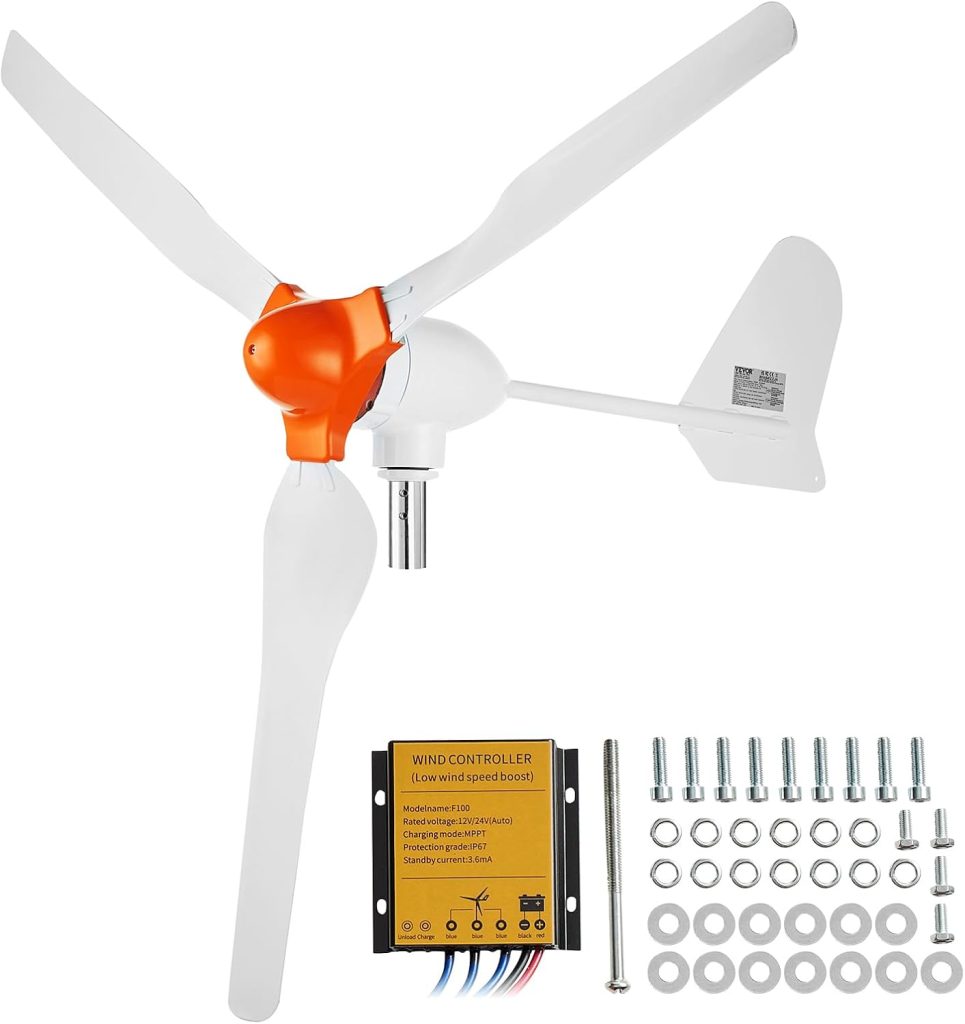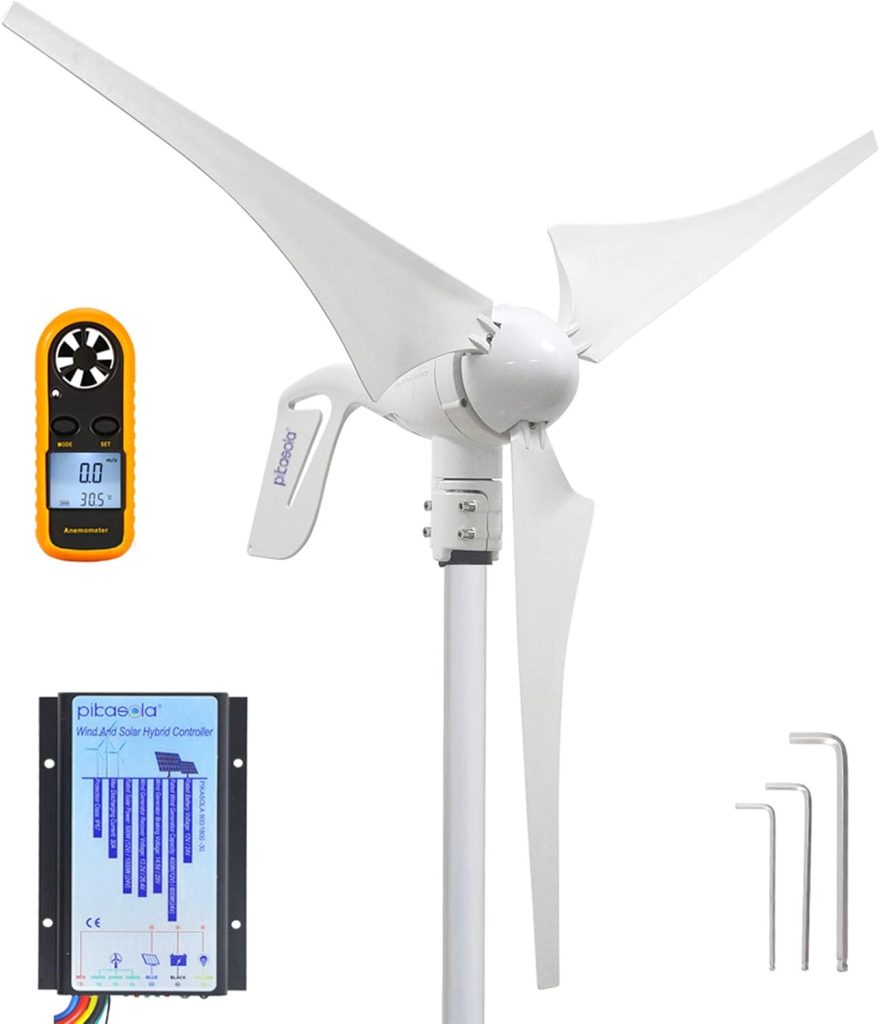
Compare two numbers. The listing says 400W. My spreadsheet says 47W. Same turbine. Both numbers are, technically, true.
That is the whole game with small wind. The 400 watts happens at the rated wind speed, which for this class of turbine is usually around 12 meters per second. Twelve meters per second is a serious wind. That is the kind of wind where your patio furniture is migrating. Where I live, the average wind speed at rooftop height is somewhere around 4 to 5 meters per second on a good day, and I am not sure about the exact figure because my little weather station is mounted badly and I know it. Power from wind scales with the cube of wind speed, which is the cruelest equation in all of renewable energy. Halve the wind, get one-eighth the power. At 6 m/s instead of 12, your 400W turbine makes 50W. Not 200. Fifty.
I ran that calculation the day the box arrived. Then I ran it again, slower, hoping I had made an error. I had not.
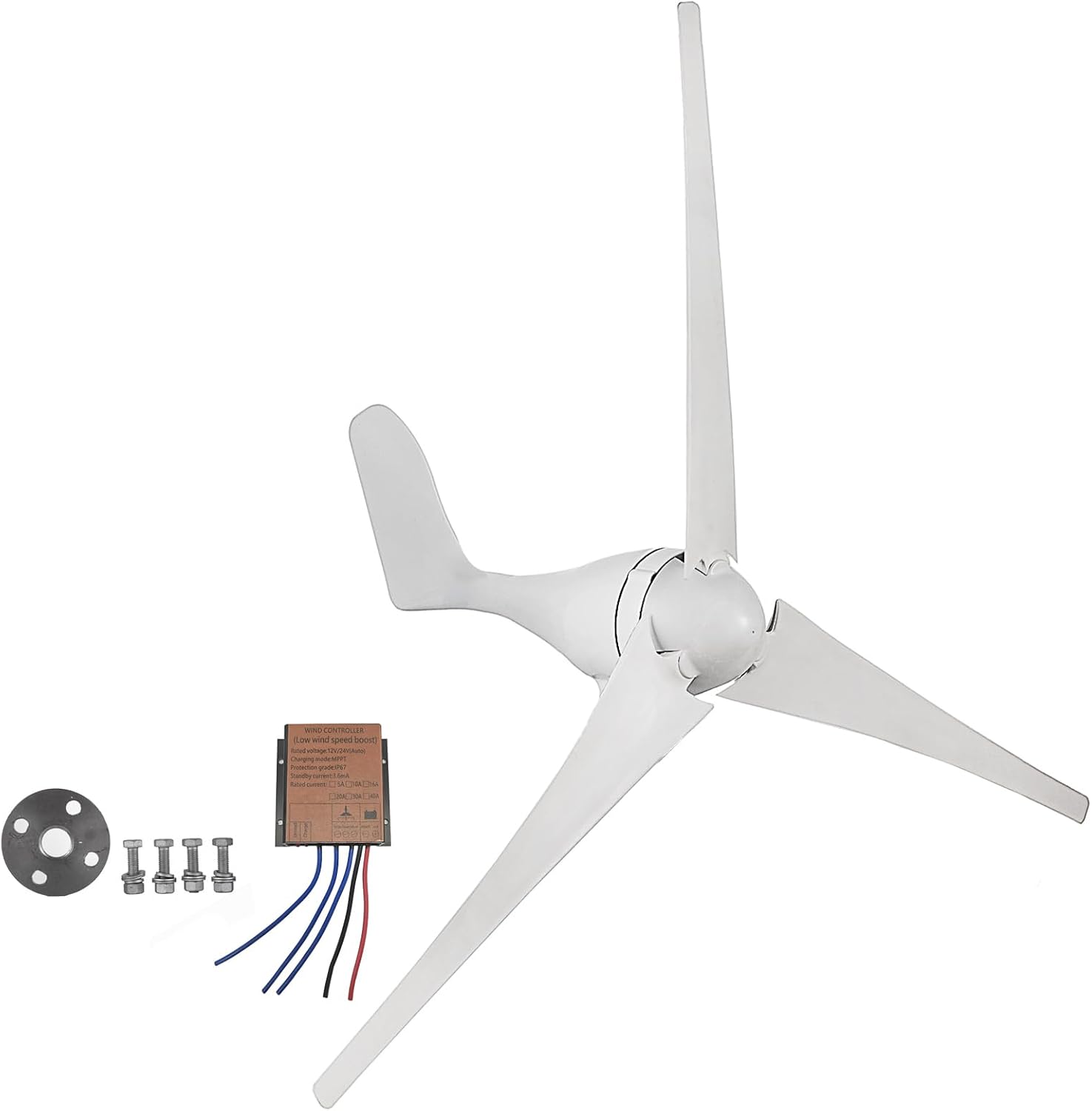
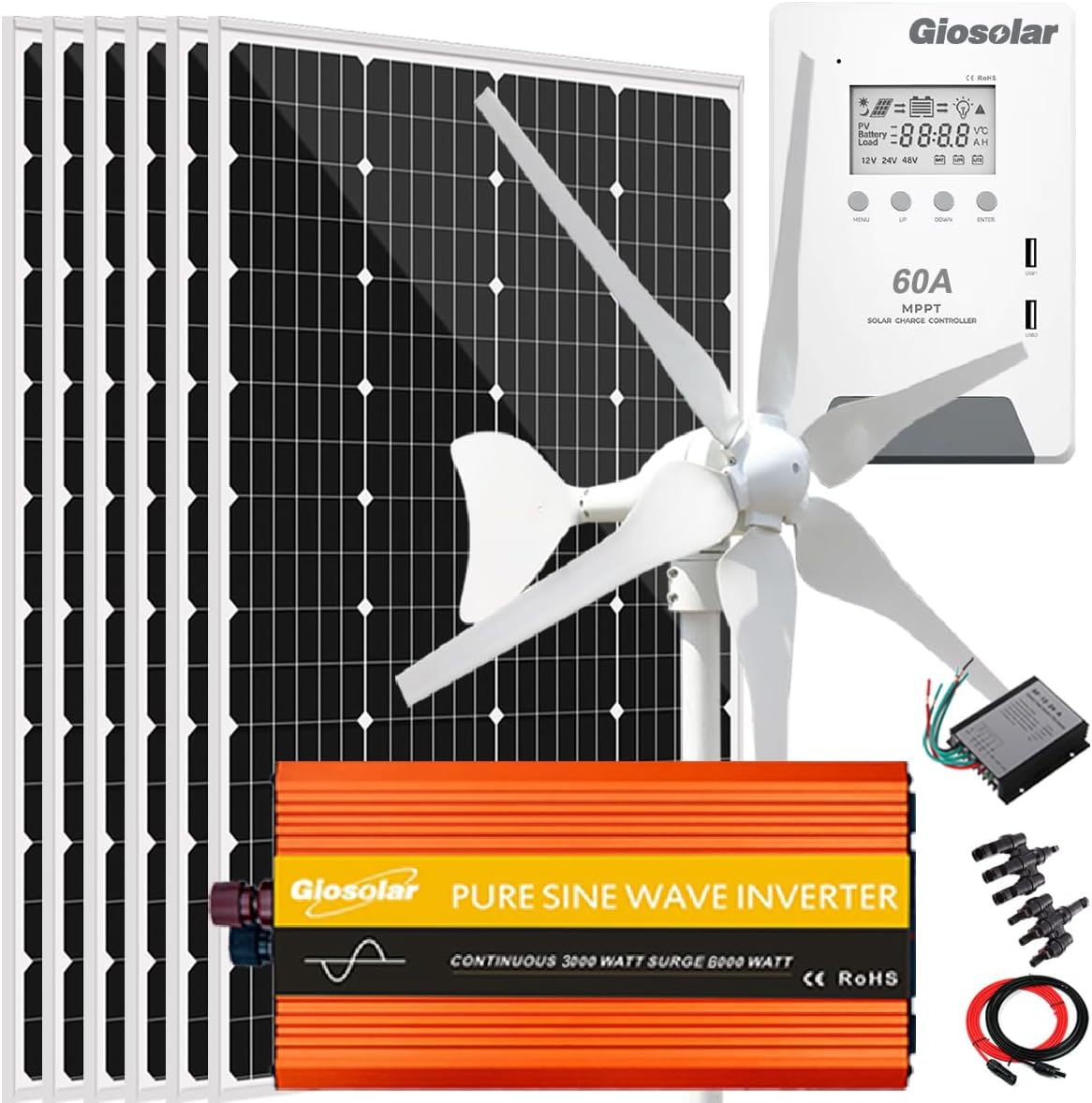
The turbine itself is what you would expect at this price: a small three-blade unit, 12V output, with a 30A hybrid charge controller in the box. Thirty amps at 12 volts is 360 watts of charging, which means the controller is sized fine for the turbine. The hybrid part means it also takes solar input, which matters more than the wind part, and I will come back to that. The blades are nylon or fiberglass depending on the batch, the body is metal, and the whole thing weighs little enough to mount on a pole one person can raise. That portability is the real selling point, even though the word portable does a lot of heavy lifting here. Portable means you can move it. It does not mean it makes much power wherever you put it.
The wind map is the whole review
Here is what nobody selling these tells you: the location is the product. A 400W turbine on a windy ridge in West Texas is a different machine than the same turbine in a suburban backyard in Ohio surrounded by two-story houses and oak trees. Turbulence kills output. Trees kill output. Mounting it ten feet above your roof instead of thirty feet above your roof kills output. Every small wind installation I have seen that actually worked had two things: clean airflow and a tall tower. The tower costs more than the turbine. Sit with that for a moment.
The cut-in speed is around 2.5 to 3 meters per second, which is the wind speed where the blades start turning. Starting to turn and making power are different jobs. Between cut-in and about 8 m/s, this thing trickles. You will see 20, 40, maybe 80 watts on the controller display. On a gusty day it will spike to 200 or 300 for a few seconds and you will feel a little thrill, and then it will drop back to a trickle, and that thrill is the most expensive emotion in renewable energy. I say that as someone who has felt it. More than once.
Actually, let me correct something I said above. I said the average at my site works out to about 47W. That number came from my first month of logging, which happened to be a windy month. The three-month average was worse. I do not remember the exact figure and I am not going to invent one. Somewhere in the thirties. Call it 35 watts average, which over a day is about 840 watt-hours. That is real energy. It is also roughly what a single 200W solar panel makes before lunch on a clear day.
Right.
So why do I keep the thing
Because of the hybrid controller, honestly. The 30A unit in the box takes the turbine on one input and solar panels on the other, and it dumps both into the same battery bank. Wind blows at night. Solar works in the day. On paper they complement each other, and on grey stormy days when the panels are doing nothing, the turbine is the only thing earning its keep. My panels sat at 40 watts in a November drizzle while the turbine pushed 150. That was the one day this year the turbine out-produced my entire solar array, and I will admit I felt vindicated out of all proportion to the actual numbers.
This is also where I should complain about the category, because small wind deserves it. The entire market rates its products at wind speeds that almost no residential site ever sees, prints the big number on the box, and lets buyers discover the cube law on their own. It is the same trick as the solar industry used to play with STC ratings, except solar panels at least make something on a cloudy day. A wind turbine in still air is a lawn ornament. A very earnest, spinning lawn ornament.
But I will also turn the complaint around, because I earned this one. I bought my first small turbine before I understood the cube law. I mounted it too low, behind a tree line, because the tall pole looked ugly and my spouse vetoed it. I got exactly the output I deserved, which was almost nothing, and I blamed the turbine for a year before I blamed the installation. Buyers do this constantly. We buy the machine and skip the site assessment, which is like buying running shoes and skipping the running.
Let me tell you about something unrelated. Last spring I watched my neighbor try to fly a big box kite with his kids in our cul-de-sac. No wind at ground level, plenty of wind thirty feet up. The kite kept crashing into a maple tree. The kids were furious. He was furious. The maple tree was unbothered. I stood there with my coffee thinking: that is every suburban wind turbine installation I have ever seen. The resource is up there. We keep trying to harvest it down here, where the trees are.
The maintenance nobody mentions
Small turbines have moving parts, and moving parts wear. Bearings, slip rings, blade balance. After a year or two in real weather, things loosen. You will be climbing that pole with a wrench, or paying someone to. Solar panels have no moving parts and a 25-year warranty, and that comparison is unfair, and I am making it anyway, because it is the comparison every buyer should make. If your site gets decent sun, put your money in panels first. If you have already maxed out your solar and you get real night wind, then a turbine like this earns a place as the second source. That is the honest order of operations, and it is the opposite of how these kits are marketed.
If you are sizing the rest of the system around one, the 800W horizontal turbine review on this site walks through a bigger unit with similar physics, and the 1400W hybrid controller guide covers what happens when you scale the controller side up. The pattern is the same at every size: the wind decides, not the sticker.
This site contains affiliate links. We may earn a commission on qualifying purchases.
Questions I keep getting asked
How much power does a 400W wind turbine really produce?
The 400W rating happens at the rated wind speed, usually around 12 meters per second, which is serious wind. Because wind power scales with the cube of wind speed, halving the wind gives you one-eighth the power. At a typical suburban site with 4 to 6 m/s winds, expect tens of watts on average, with spikes on gusty days. The wind map of your site matters more than the sticker on the box.
What does the 30A hybrid charge controller do?
It takes input from both the turbine and solar panels and charges one battery bank from both. Thirty amps at 12 volts caps charging at about 360 watts. The hybrid part is genuinely useful: wind blows at night when solar does nothing, so the two sources cover each other's weak hours.
Is a small wind turbine worth buying?
Only if your site has clean airflow and you can mount it on a tall tower, and only after you have maxed out solar, which makes more power per dollar with no moving parts. As a second source on a windy site, a small turbine earns its place. As a first purchase on a calm suburban lot, it becomes a lawn ornament.
The turbine is still up there. It spins when the wind blows, which is not as often as the brochure implied and more often than my cynical moods predict. Some nights I hear it humming through the bedroom wall, a low sound, and I do a quick mental calculation of watts I will never verify. It is not the machine I thought I bought. It is the machine the wind allows. I am still deciding how I feel about that.