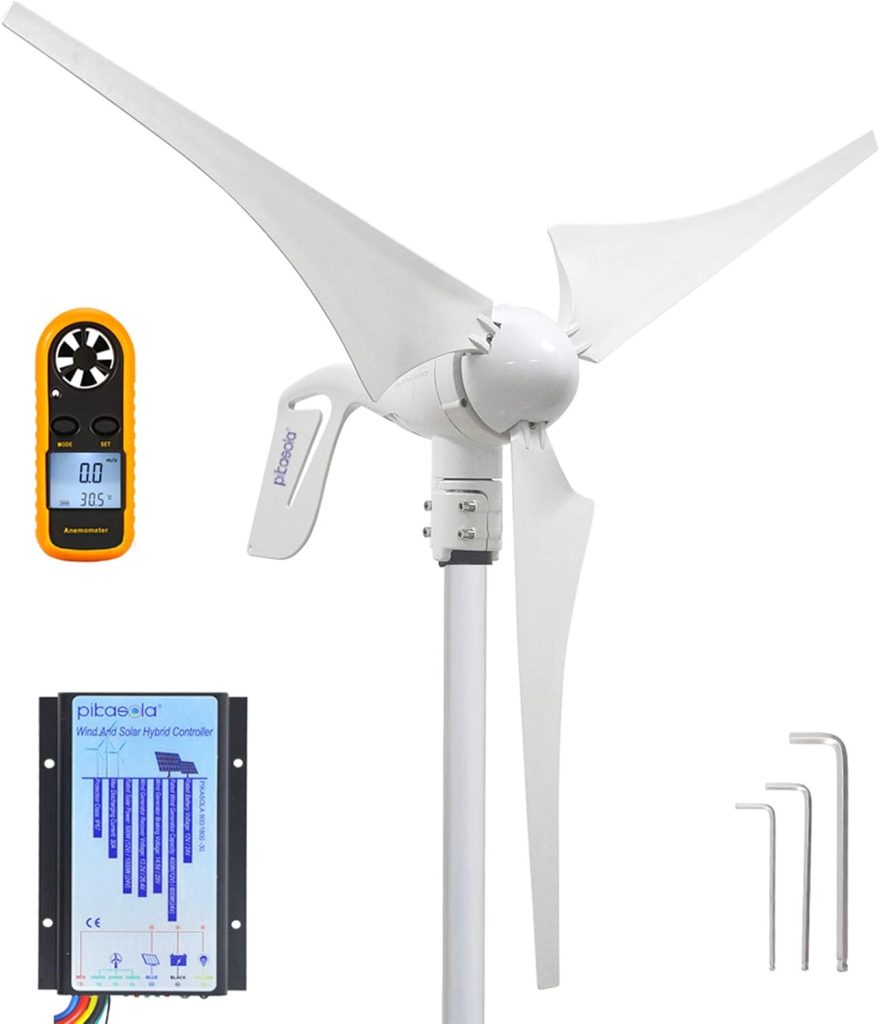
800 watts. Six blades. 12V/24V output. The listing reads like a serious piece of equipment.
Then you find the rated wind speed: 11 meters per second. Twenty-five miles per hour. And you realize the 800W number describes a weather event, not your backyard.
I’ve been through the small-wind disappointment cycle once already. This is the review I needed back then.
Do the Cubic Math Before Anything Else
Power from wind scales with the cube of wind speed. At the rated 11 m/s, 800W. At 5.5 m/s — half the wind, a genuinely breezy day — output drops to roughly 100W. At 4 m/s, an ordinary afternoon, you’re looking at 40W. At 3 m/s, the blades spin and the battery gets a trickle it barely notices.
I keep a little table taped inside my head now: rated speed gives rated power, half speed gives an eighth, third speed gives a twenty-seventh. Every small turbine obeys it. Every listing hopes you don’t.
The honest question isn’t “is 800W enough” but “how many hours a year does my site see 8-plus m/s.” For most suburban sites, the answer is: not many. For a hilltop farm or a coastal property, the answer can be: plenty. The turbine is the same. The wind isn’t.
Six Blades: Easier Starts, Lower Ceiling
This unit runs six nylon blades, and the blade count is a real design choice with real consequences. More blades catch light wind better — the listing claims startup at just 1.0 m/s, and low-wind startup is genuinely where multi-blade designs earn their keep.
The price is top-end efficiency. Six blades create more drag at high wind than three would, so the power curve flattens earlier. You get energy sooner in light air and less at the top. For a site with mostly moderate wind, that’s the right trade. For a site with screaming coastal wind, three blades would harvest more.
Nylon composite blades, by the way, are the right material for this class — lighter than the old fiberglass, tougher than cheap ABS. They’ll survive weather. They won’t survive being unbalanced, so check the blade bolts seasonally. A wobbling turbine eats its own bearings.
12V/24V and the Controller in the Box
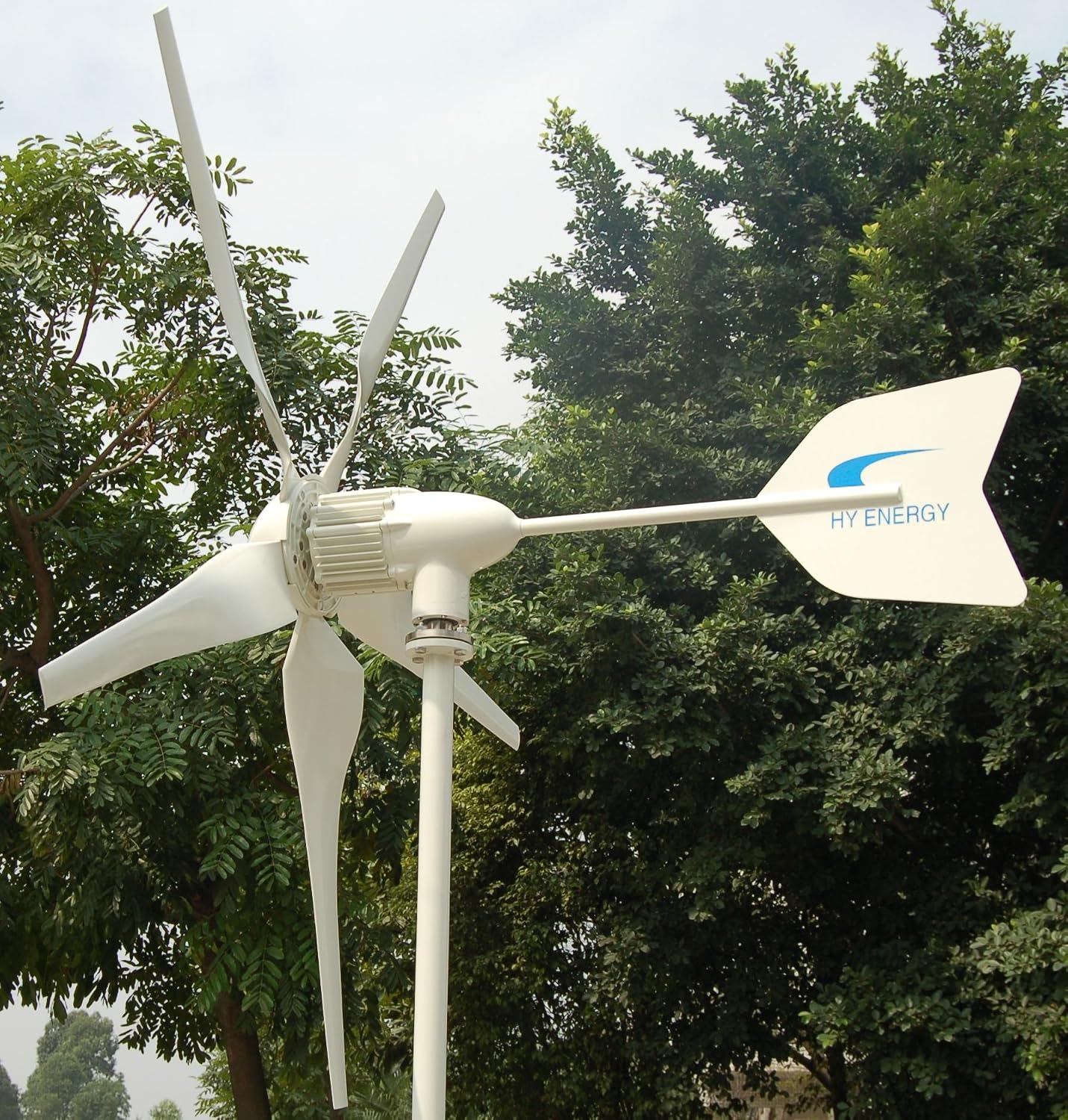
The kit includes a controller with 12V/24V output, which matters more than it looks. Wind turbines make wild AC that has to be rectified, regulated, and dumped somewhere safe when the batteries are full. The included controller handles braking and load diversion — without it, a gusty day can cook a battery bank or, in the worst case, let the turbine run away.
Runaway is the word that should be in every turbine review. An unloaded turbine in high wind spins faster and faster until something mechanical gives. The brake — electromagnetic or mechanical — is a safety device first and a power device second. Confirm it exists. Confirm it works. Then talk about watts.
I haven’t personally stress-tested this controller in a storm — that scenario I haven’t measured, and I won’t pretend otherwise. The spec sheet lists the protections. The design is conventional. That’s the honest extent of what I can tell you.
Where Small Turbines Actually Belong
Let me draw the map. Good sites: farms with open fetch, hilltops, coastal bluffs, large lakesides, boats at anchor, remote cabins above the treeline. The common thread is laminar wind — smooth, sustained, unobstructed for hundreds of meters upwind.
Bad sites: subdivisions, anywhere with trees taller than the tower, rooftops, courtyards, anywhere the listing photo shows a turbine next to a house with the caption “home use.” Turbulence from buildings and trees doesn’t just reduce output — it hammers the turbine with gusty, direction-shifting air that wears bearings and produces almost nothing.
Tower height is the cheat code. Wind speed increases with height, and the difference between a 20-foot tower and a 40-foot tower can double your harvest. Most disappointing installs I read about share one trait: the turbine sits barely above the roofline, in the dirtiest air on the property. Height first, turbine second.
The Sailboat That Sold Me (Then Unsold Me)
Sideways story. Years ago I crewed on a friend’s sailboat for a week, and it had a small wind turbine on the stern rail — one of those marine units, spinning away at anchor, keeping the house batteries topped. It was the most romantic piece of equipment on the boat. Silent-ish, constant, free energy from the sea breeze.
I came home and priced a turbine for the house. Then I looked at my wind data — 3.8 m/s average, remember — and the romance evaporated. The boat worked because it sat in clean ocean wind 24 hours a day. My house sits in suburban soup. Same physics, different air.
I still think about that turbine humming on the stern rail. It’s the reason I can’t dismiss small wind entirely, even after the math told me no. Some technologies are right for exactly the right site, and wrong everywhere else, and the tragedy is that the listings sell them like they’re right everywhere.
The Small-Wind Playbook of Overstatement
Move one: the rated-power headline at a wind speed your site never sees. 800W at 11 m/s. Technically true. Practically a rumor. I’ve said this about the 1200W class too, and I’ll keep saying it until the listings lead with “expected annual kWh at 5 m/s average” instead.
Move two: “up to” language. “Up to 800W” is true at every output from zero to 800, which makes it the least informative true sentence in the listing.
Move three: the off-grid cabin photo. Gorgeous A-frame, turbine spinning, mountains behind. The photo doesn’t mention that the cabin sits on a ridge at 6,000 feet where the wind never stops. Your cabin in the woods is not that cabin. The turbine doesn’t know the difference, but your batteries will.
And my own move, the buyer’s contribution: I once nearly bought a turbine because the price was good, before measuring my wind. Price is not a reason. Wind is the only reason. Everything else is shopping.
What About the Competition?
Three small turbines, same warning on all of them: measure your wind first. The 1200W 5-blade wind generator review covers the bigger sibling in this class — same cubic math, more blades.
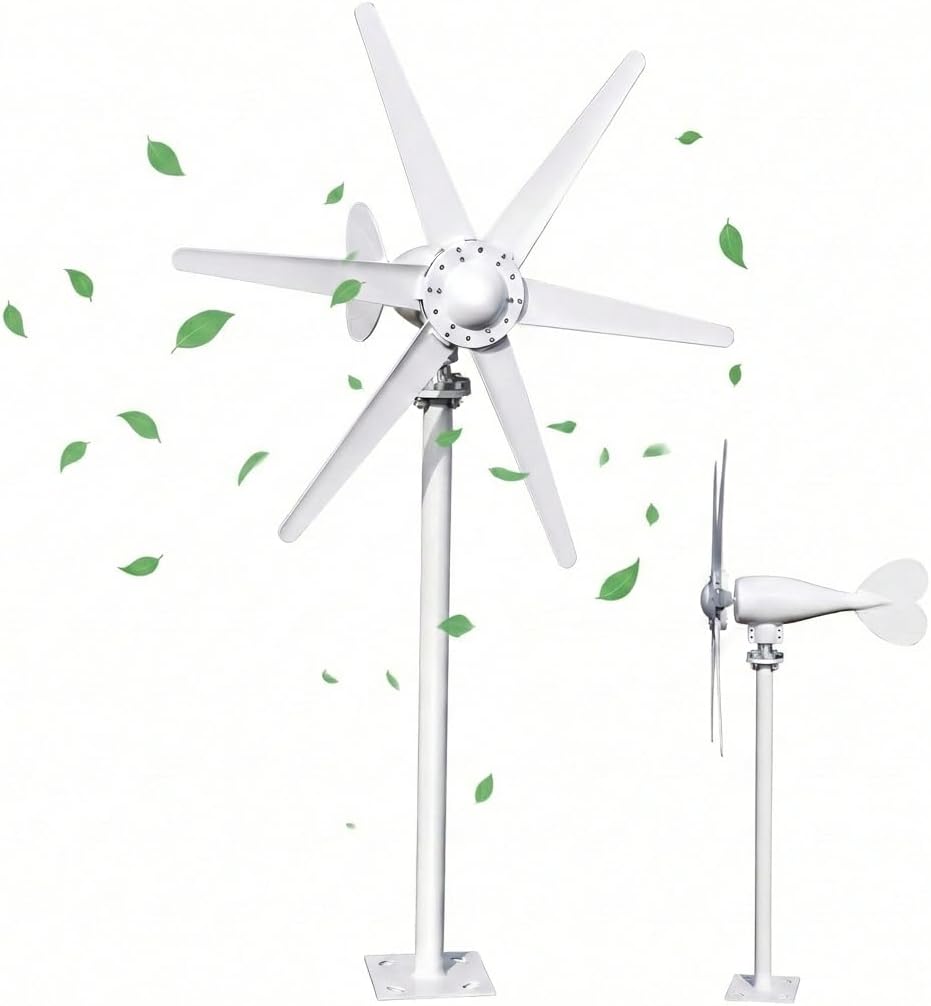
800W Horizontal Wind Turbine Generator
800W, 6 blades, 12V/24V with controller. Easy low-wind startup, accessible price.
Windmax HY1000-5 Wind Generator Kit
1000W 5-blade kit. The older documented design in small residential wind.
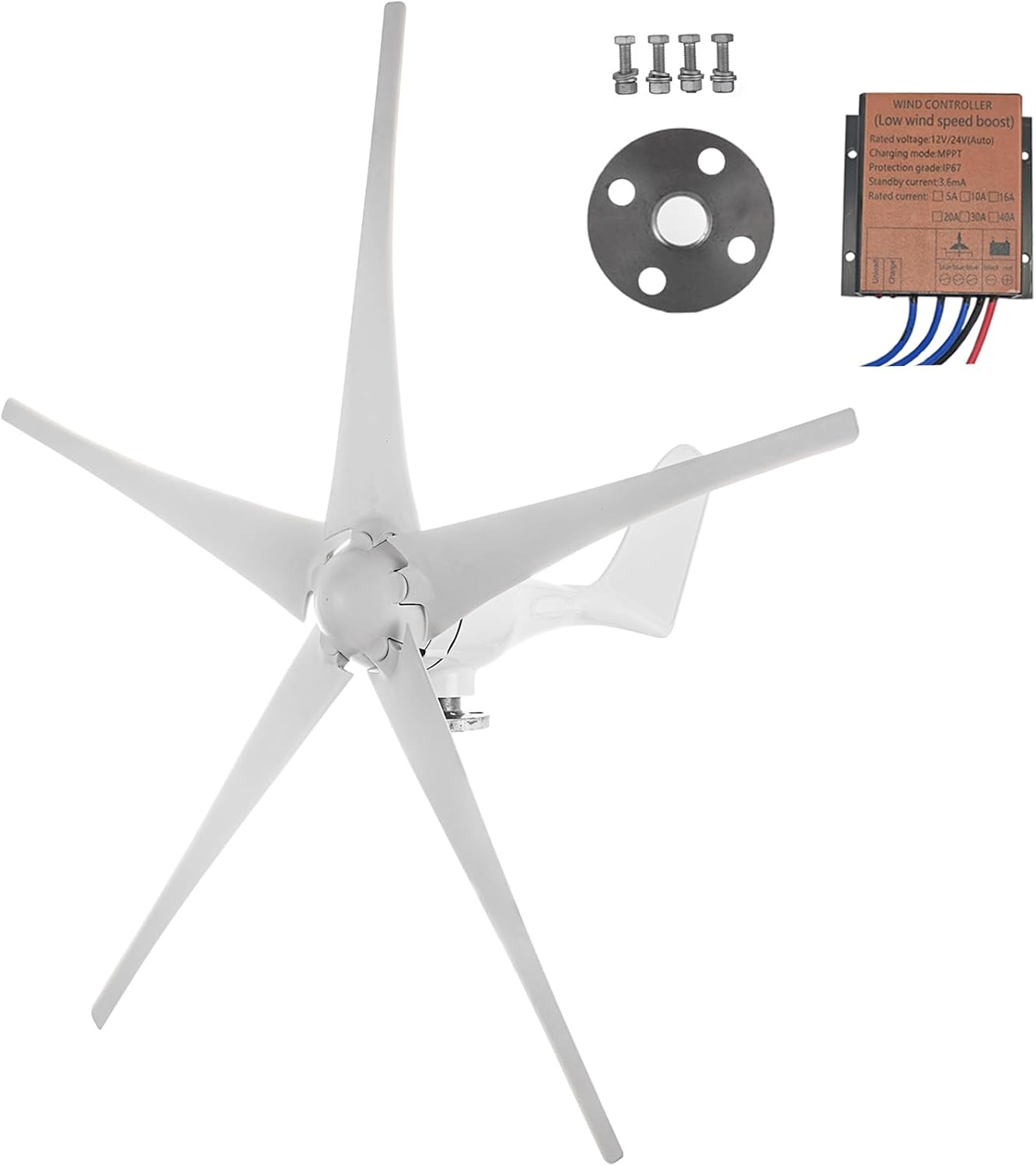
Enrienn 1200W Wind Turbine Generator
1200W, 5 blades, MPPT controller in the box. For genuinely windy, open sites.
Consider the 800W horizontal unit if your site has steady moderate wind — six blades for easy low-wind startup, 12V/24V controller included, the accessible entry point. Consider the Windmax 1000W kit if you want more headroom and the older documented design. Consider the Enrienn 1200W if your site is genuinely windy and you want the MPPT controller in the box. For the big end of the category, my 18kW wind turbine kit review covers what changes when the tower gets serious.
Skip all three if you’re in a subdivision with trees. No turbine harvests turbulence, and the disappointment is expensive.
The anemometer data from my roof is three years old now and I still check it when the wind picks up, out of habit. Gusts to 9 m/s today, the trees thrashing. For about an hour, a turbine would have earned its keep. Then the air went back to soup. I closed the tab on the turbine listing — again — and went back to watching the solar numbers, which don’t need the wind’s permission for anything.
This site contains affiliate links. We may earn a commission on qualifying purchases.