
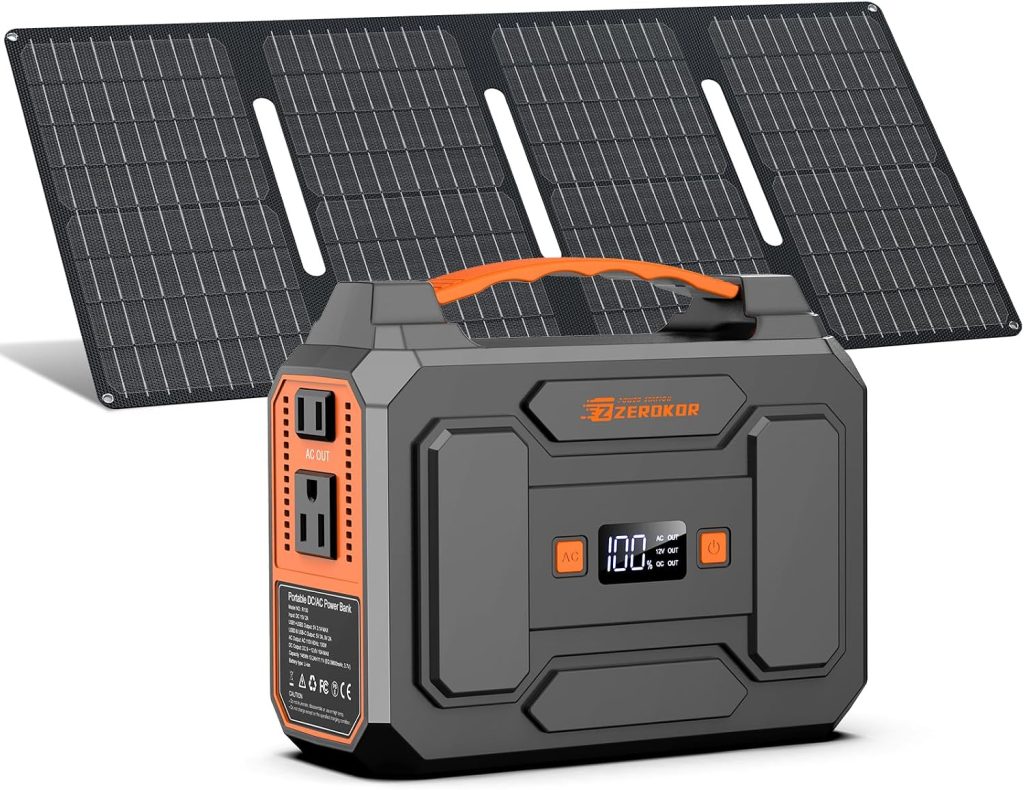
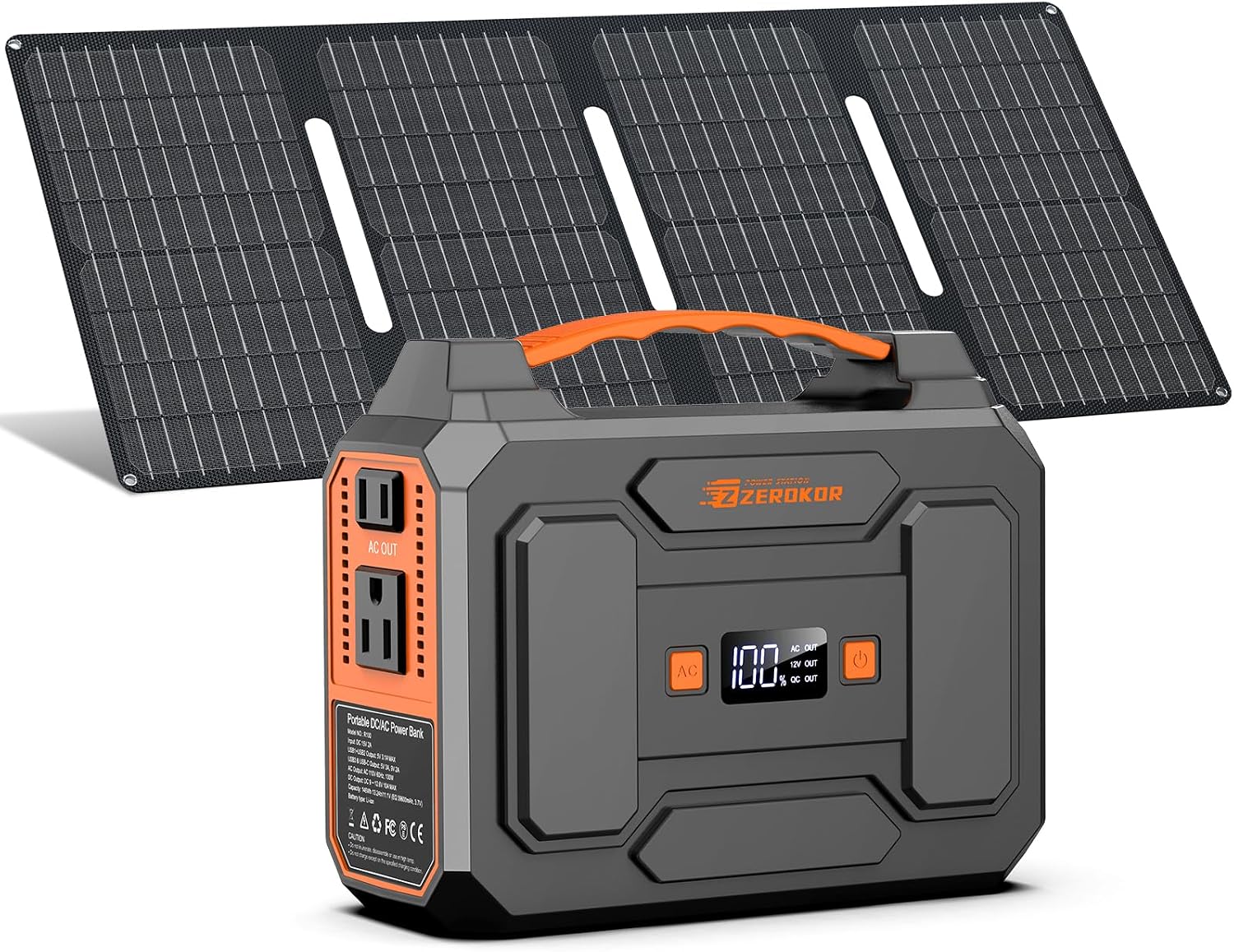
The outage hit during a video call. Screen froze, router died, and I sat there in the sudden quiet listening to the UPS in the corner beep itself to death in about ninety seconds. Ninety seconds of backup. That was the whole plan, and the plan was a joke. I ordered the ZeroKor kit that night — 100W station, 40W folding panel in the box — because I wanted the next outage to go differently, and because the kit promised everything in one package with no assembly required. I was new to all of this. The marketing knew it. I knew it.
What I wanted to know was simple: what can it actually run? Not the box claims. The real list. So I made one, by testing. Two phones charging: fine. Laptop: fine, draws about 60W, the station’s 100W AC output handles it with room. LED desk lamp: fine. Router: fine, sips power. All of these together: fine, right up until I added a space heater “just to see.” The heater pulled 900W. The station shut off instantly, the way a bouncer removes someone. No drama, just off. That’s the 100W ceiling doing its job.
Compare 100W Portable Solar Kits
Three compact kits for outages and camping.
Prices and availability may vary — tap any product to check the current listing.
The ceiling is the whole product, really.
146Wh of capacity. After inverter losses, call it 120 usable. That’s two full laptop charges, or a phone charged eight times, or a router running for most of a day. I kept a little log the first week — yes, a spreadsheet, I’m that person now — and the numbers landed where the derated math said they would. Nothing surprised me, which after my UPS experience felt like a luxury.
The 40W panel is where my beginner optimism met reality. In the box, in the photos, it looks like a real power source. Unfolded in my backyard on a clear afternoon, it fed the station about 25 watts. Twenty-five. The station takes hours to fill from empty on solar alone — most of a sunny day, and that’s with me repositioning the panel twice to chase the sun like a sunflower with anxiety. I computed the full-sun recharge time three times because I kept hoping I’d divided wrong. I hadn’t. A 40W panel and a 146Wh station are just slow dance partners. That’s physics, not a defect.
Slow. But it works.
What the kit is actually good at surprised me. It’s the outage-night kit: router, phones, a lamp, and the weird peace of mind that comes from watching the battery percentage drop slowly instead of watching your phone die. During a four-hour outage last month, it kept the internet alive the whole time — the router plus the fiber box together pull under 20W, so the station barely noticed them. I worked through the outage. My neighbor knocked to ask if my power was out too. “Internet’s fine,” I said, which confused him, because his router was dead and he’d assumed the whole street was dark. Same street. Different ninety seconds.
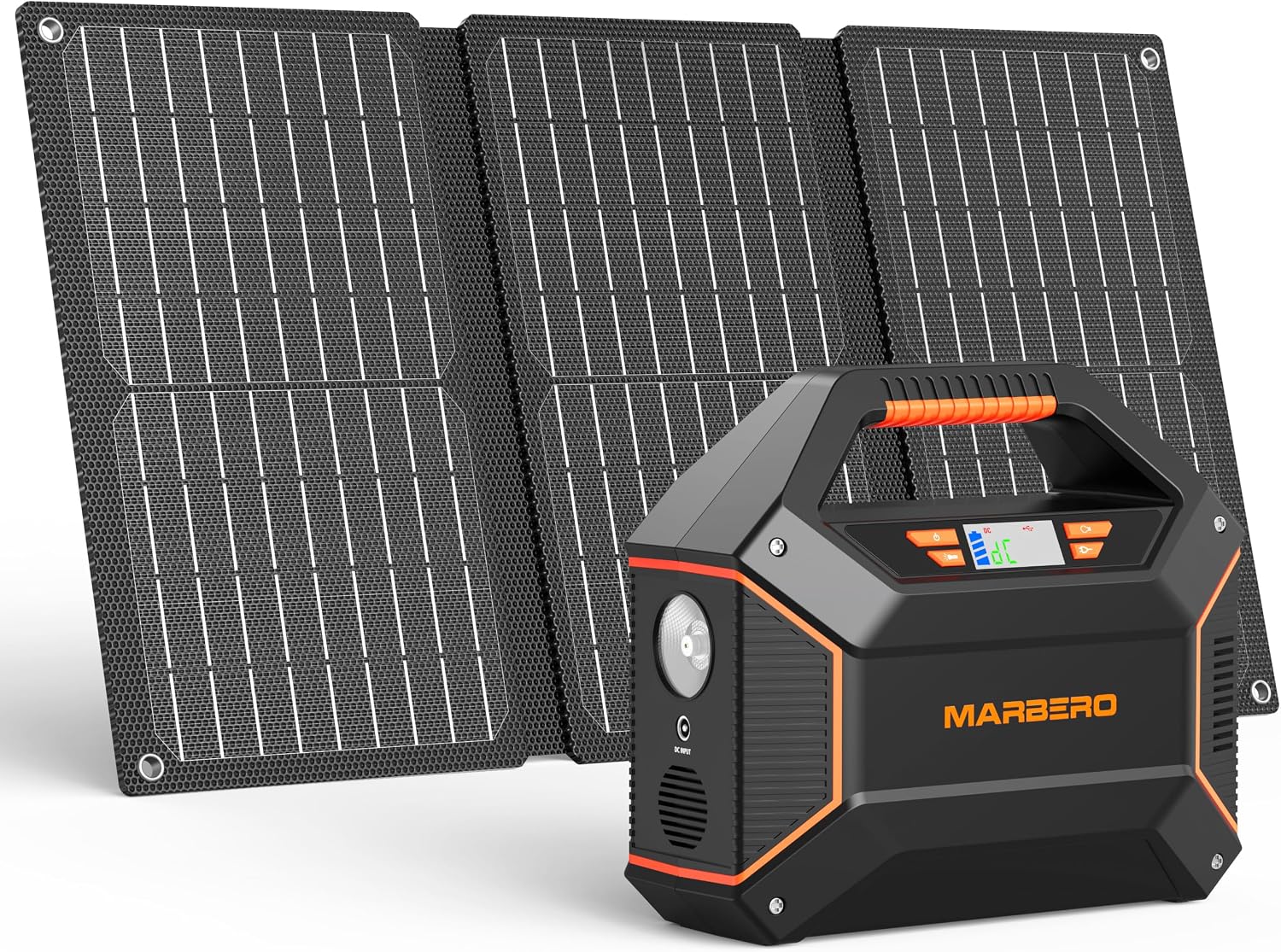
The category has a honesty problem I didn’t see coming as a beginner. “Solar generator” — the phrase itself. There’s no generation happening in the box. It’s a battery with an inverter and a panel sold alongside it. The generation happens on your lawn, slowly, weather permitting. I bought the phrase before I understood the physics, and I’m not embarrassed about it — the marketing is designed to work on people exactly like me — but I wish the box had printed the derated numbers instead of the lab numbers. 146Wh at the cells. Less at the outlet. Just say it.
Camping use: it’s fine for car camping where the car does the heavy lifting and this handles the small stuff. Phones, camera batteries, a string of lights, a small fan. It’s light enough to toss in the trunk without thinking. I haven’t taken it on a real backcountry trip — the panel’s too slow to be your only power for days, and I don’t trust weather that far out. That scenario I haven’t tested, and the kit’s honest weight class is “weekend,” not “expedition.”
Two AC outlets, USB ports including USB-C, a little flashlight with SOS mode. The flashlight is brighter than I expected. Small thing, but during the outage it was the thing I used most, which tells you something about how outages actually go — it’s never the big dramatic loads, it’s the small comforts. Light. Phone. Internet. The kit handles the small comforts, and the small comforts are the whole game.
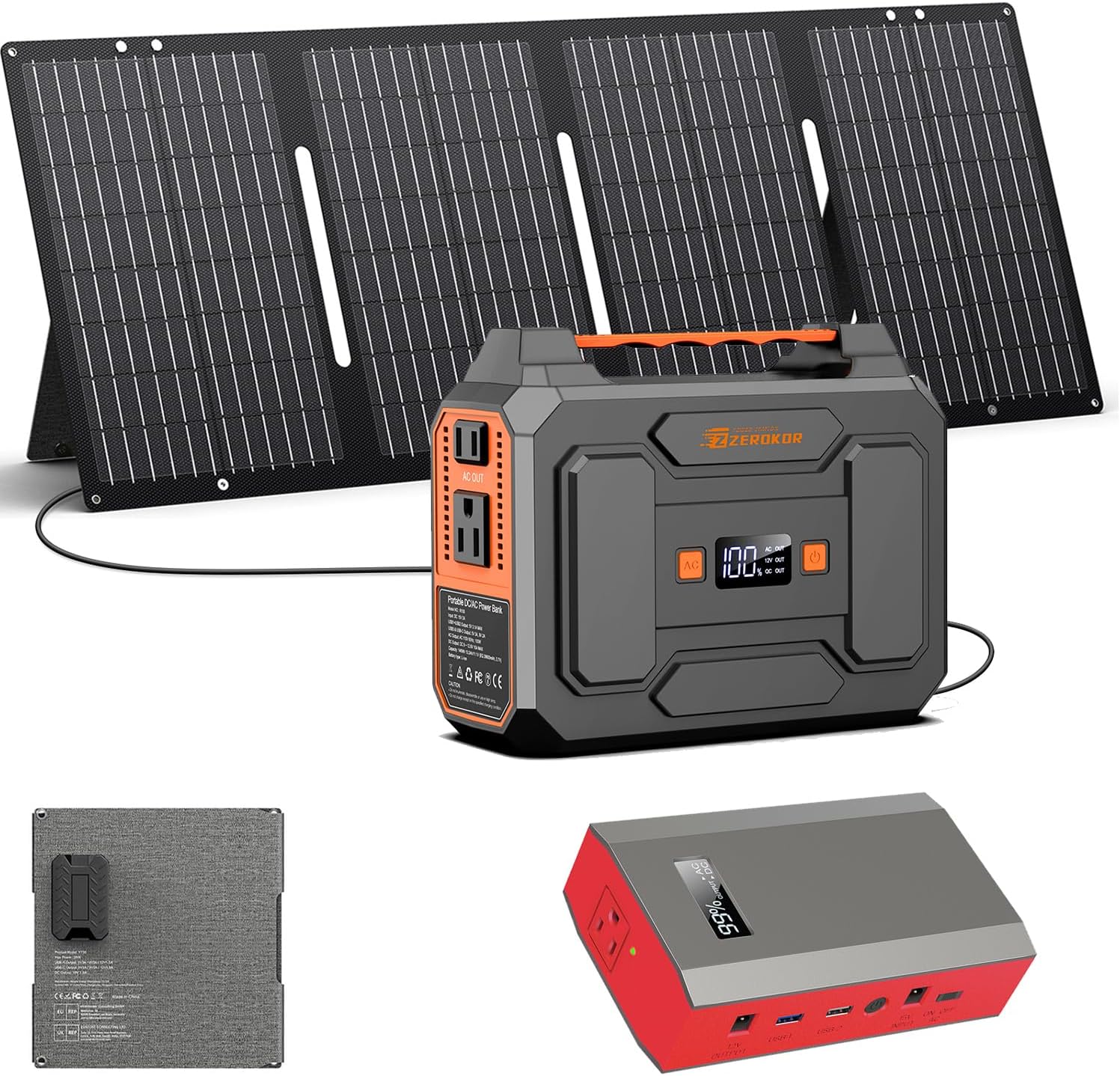
The UPS in the corner still beeps. Ninety seconds. I keep meaning to replace it with something real. The ZeroKor sits next to it now, charged, waiting. Different ninety seconds. Better ones.


