CyberPower CP1500PFCLCD PFC Sinewave UPS Review: Home & Whole-House Power Solutions

As a home energy storage consultant with over two decades of experience designing residential battery backup systems and evaluating complex power solutions, I’ve witnessed firsthand the evolution of home energy storage. We’re in 2026, and the landscape for whole home battery backup systems has matured significantly, offering unparalleled reliability and energy independence. Homeowners today are searching for robust solutions, not just for convenience, but for genuine security and economic benefit.

This review aims to cut through the marketing jargon and provide a practical, engineer-focused evaluation of what truly constitutes a whole home battery backup system, and crucially, to clarify common misconceptions when evaluating products like the CyberPower CP1500PFCLCD PFC Sinewave UPS Battery Backup and. While the CyberPower unit serves a specific, valuable purpose, it’s critical to understand its limitations when seeking comprehensive residential battery backup or a full home energy storage system.

Understanding the CyberPower CP1500PFCLCD: A Critical Look at Its Role in Home Backup

When homeowners begin their search for a backup battery for house solutions, they often encounter a spectrum of products. The CyberPower CP1500PFCLCD PFC Sinewave UPS Battery Backup and is a popular choice, and for good reason—within its intended operational envelope. However, it’s essential to classify this device accurately.

Product Overview and Intended Use

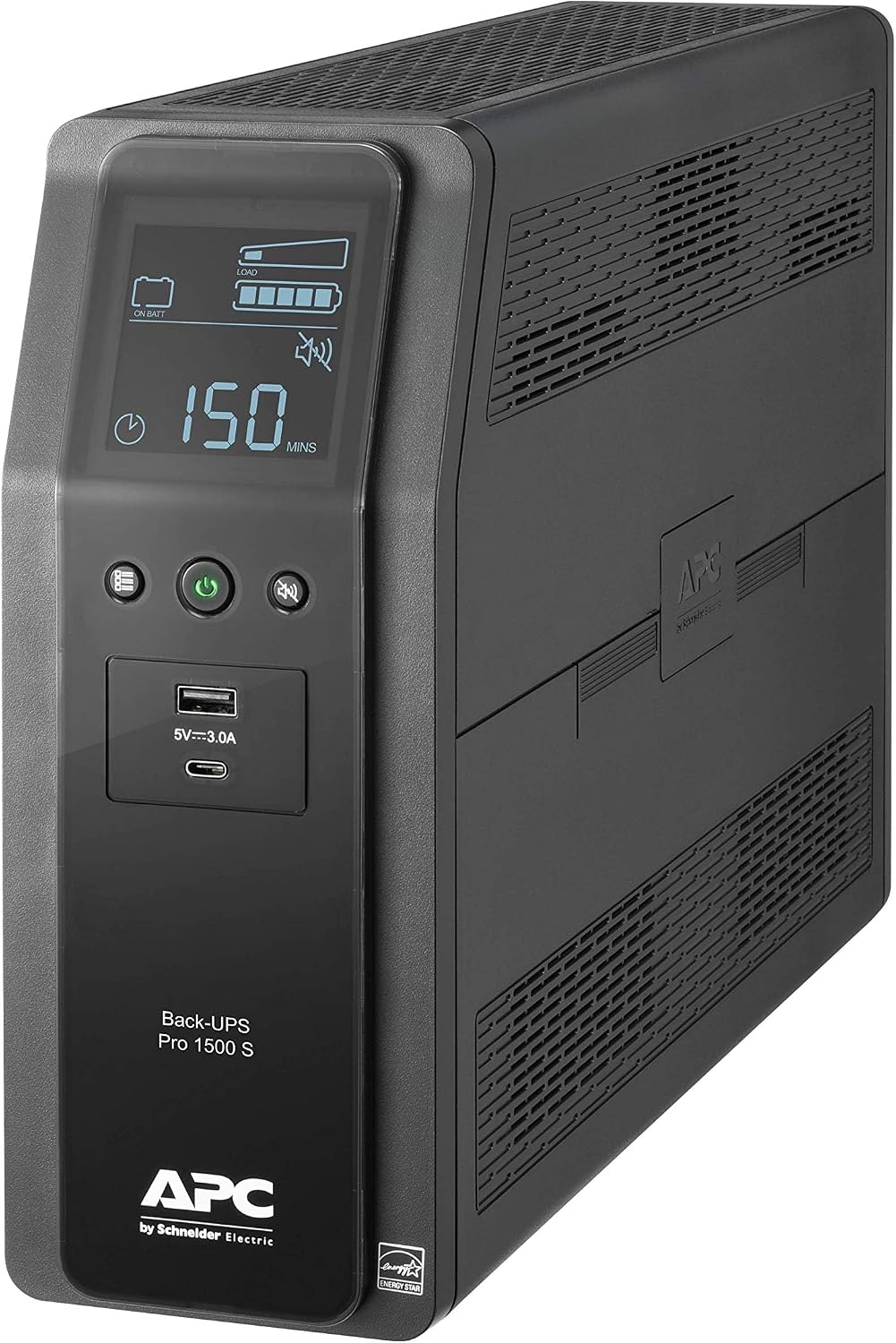
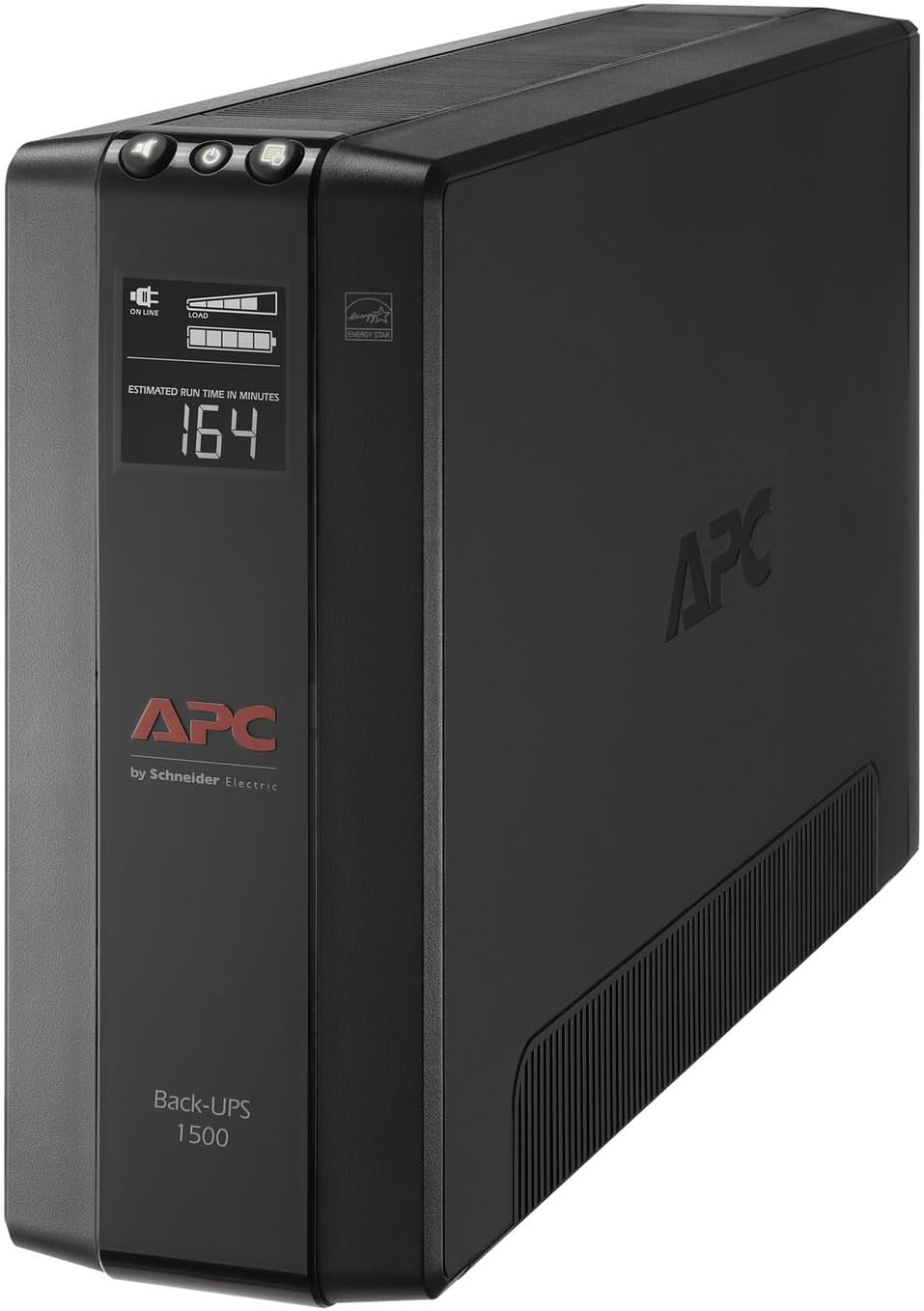
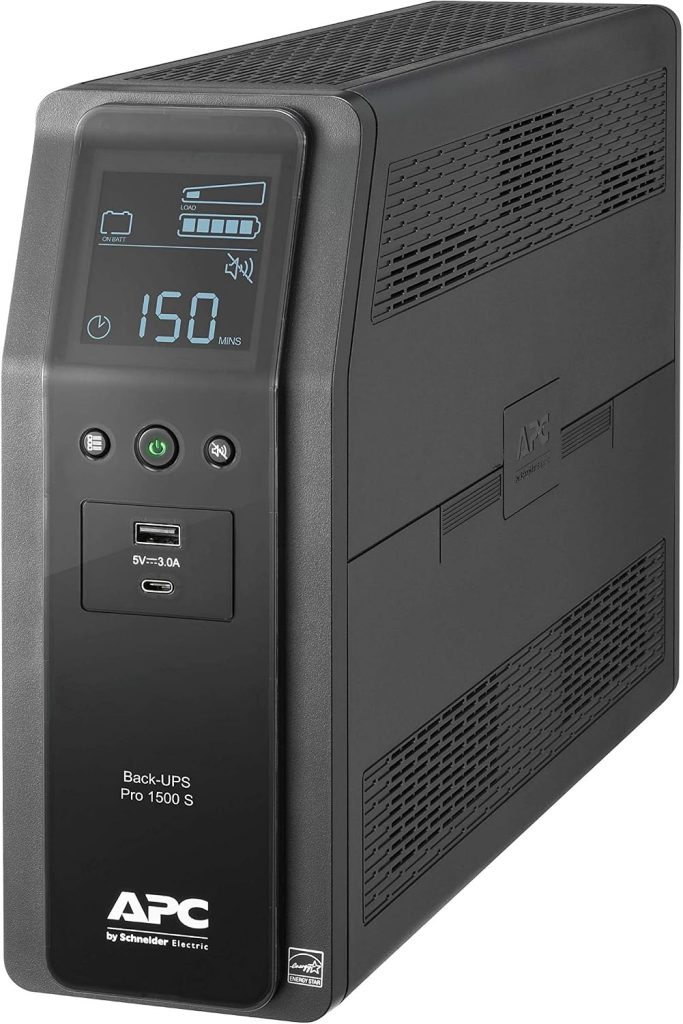
The CyberPower CP1500PFCLCD is a Uninterruptible Power Supply (UPS). Its primary function is to provide immediate, short-term battery power to sensitive electronics during utility outages and to protect against power fluctuations, surges, and sags. It’s designed for desktop computers, networking equipment, home theater systems, and small office electronics.

  • Internal Battery Chemistry: Typically, these units utilize sealed lead-acid (SLA) batteries. While cost-effective, SLA batteries have a significantly lower cycle life and depth of discharge compared to modern lithium chemistries like LiFePO4 or NCM, making them unsuitable for daily deep cycling or solar battery storage applications.
  • Usable Battery Capacity: The CP1500PFCLCD typically offers about 1.2 kWh of internal battery capacity. This is sufficient to gracefully shut down a computer or keep a router powered for an hour or two. However, for a whole-house battery scenario, this capacity is negligible.
  • Continuous and Peak Output Power: With a continuous output of 900W and a peak surge capability of 1500VA (which translates to 1500 watts for pure sine wave loads, though for mixed loads, the 900W is the practical limit), it can power a few smaller devices. This output is entirely inadequate for major household loads like refrigerators, air conditioners, or even multiple lights.
  • UPS Switching Speed: This is where the CyberPower excels. Its near-instantaneous transfer time (often 2-4 milliseconds) ensures sensitive electronics remain powered without interruption, preventing data loss or system crashes. This is a critical feature for its intended use.

Why the CyberPower CP1500PFCLCD Falls Short for Whole Home Battery Backup

To be unequivocally clear: the CyberPower CP1500PFCLCD PFC Sinewave UPS is not a whole home battery backup system. Its design, capacity, and power output fundamentally limit its application to point-of-use protection, not comprehensive home power.

  • Lack of Whole-Home Backup Capability: It cannot be wired into your home’s main electrical panel to power multiple circuits or the entire house. It requires individual devices to be plugged directly into its outlets. There’s no integrated automatic transfer switch (ATS) to seamlessly disconnect from the grid and power your home.
  • Battery Chemistry Limitations: As discussed, SLA batteries are not built for the demands of a home energy storage system. They degrade rapidly with deep discharges and have a relatively short lifespan (3-5 years) compared to lithium-ion alternatives (10+ years).
  • No Solar Compatibility: The unit has no inputs for solar panels, nor does it possess the necessary inverter technology to manage solar generation. It cannot serve as a solar battery storage solution or integrate into a hybrid energy storage system.
  • No Hybrid Inverter: A true whole home battery backup relies on a sophisticated hybrid inverter to manage power flow between the grid, solar panels, batteries, and home loads. The CyberPower unit only has a basic inverter for converting DC battery power to AC for connected devices.
  • Not Expandable: The internal battery is not designed for expansion with external battery modules, limiting its capacity permanently. Scalability is zero.
  • Installation Requirements: It’s a plug-and-play device; there are no complex electrical installation requirements typical of a whole-house battery system. While convenient, this underscores its limited role.
  • Warranty and Long-Term Reliability: The warranty for these units is usually 3-5 years, covering the unit and often a shorter period for the internal SLA battery. This is far less than the 10-year warranties common for dedicated residential battery backup systems. Its long-term reliability for a whole-home application is non-existent because it’s not designed for it.
  • Cost per kWh: While the initial purchase price is low, its effective cost per kWh for meaningful backup (if you somehow string multiple together, which isn’t feasible) would be exceptionally high due to limited lifespan and inefficiency for large loads.

What Defines a True Whole Home Battery Backup System in 2026?

A genuine whole home battery backup system is a sophisticated energy storage solution designed to power your entire house, or a significant portion of it, autonomously during grid outages, or to optimize energy usage daily. As a home energy engineer, my focus is on systems that offer real resilience and intelligent energy management.

Core Components of a Comprehensive Energy Storage Solution

  1. Battery Chemistry (LiFePO4 vs. NCM): In 2026, Lithium Iron Phosphate (LiFePO4 or LFP) dominates the residential battery backup market.
    • LiFePO4: Offers superior thermal stability, making it inherently safer against thermal runaway. It boasts a higher cycle life (typically 6,000-10,000 cycles to 80% DoD) and can tolerate deeper discharges. It’s the preferred choice for long-term, high-performance home energy storage system applications due to its safety and longevity.
    • NCM (Nickel Manganese Cobalt): While offering higher energy density (meaning more kWh in a smaller footprint) and better performance in very cold temperatures, NCM batteries are less thermally stable and generally have a lower cycle life (3,000-6,000 cycles). For whole-house battery systems, the emphasis on safety and durability often leads to LiFePO4 as the default.
  2. Usable Battery Capacity (kWh): This is the net energy your backup power system can deliver. For a whole-house battery, capacities typically range from 10 kWh to upwards of 40 kWh, depending on your home’s size, energy consumption patterns, and desired backup duration. An average home might need 20-30 kWh to power critical loads for 1-2 days.
  3. Continuous and Peak Output Power:
    • Continuous Output: The steady power (in kW) the inverter can provide to your home. Crucial for running multiple appliances simultaneously. For whole home battery backup, you’re looking for 5 kW to 12 kW or more, sufficient for major loads like a well pump (2-3 kW), refrigerator (0.2 kW), and lights (0.5 kW).
    • Peak Surge Output: The inverter’s ability to handle brief, high power demands, like motor startup currents (e.g., HVAC units, washing machines). This can be 2-3 times the continuous rating for short durations.
  4. Whole-Home Backup Capability & Automatic Transfer Switch (ATS): A true whole home battery backup system integrates directly into your home’s main electrical panel. An Automatic Transfer Switch (ATS) is non-negotiable. It senses grid outages, disconnects your home from the utility, and seamlessly switches to battery power within milliseconds or seconds, ensuring continuous operation of connected loads.
  5. UPS Switching Speed: While the instantaneous switching of desktop UPS units like CyberPower is impressive, whole-house battery systems with an ATS typically switch within tens of milliseconds (e.g., <20ms). This is fast enough to prevent most household electronics from resetting, providing a smooth transition during grid failures.
  6. Solar Compatibility & Hybrid Inverter Performance: A modern home energy storage system is often paired with solar. A hybrid inverter is central to this. It intelligently manages solar power (converting DC to AC), charges batteries, powers your home, and interacts with the grid. High-performance hybrid inverters are efficient (96-98% conversion efficiency), have multiple Maximum Power Point Trackers (MPPTs) for solar optimization, and offer flexible operating modes (self-consumption, time-of-use arbitrage, backup).
    • Factory Insider Note: Many home battery systems use the same battery cells, but inverter quality often determines overall reliability and system efficiency.
  7. Expandable Battery Capacity & Scalability: Most quality residential battery backup solutions are modular. You can start with a base battery capacity (e.g., 10 kWh) and add more battery modules later as your needs or budget allow, ensuring your backup power system grows with you.
  8. Battery Management System (BMS): An advanced BMS is the brain of the battery bank. It monitors cell voltage, temperature, current, and state of charge. Crucially, it protects the battery from overcharging, over-discharging, overheating, and short circuits, ensuring safety and maximizing the lifespan of your solar battery bank.
  9. Grid-Tied vs. Off-Grid Operation:
    • Grid-Tied: The most common configuration, where the energy storage solution remains connected to the utility grid, providing backup during outages, optimizing energy use, and sometimes feeding excess solar back to the grid.
    • Off-Grid: Requires a larger, more robust system designed to be completely independent of the utility grid. This demands meticulous sizing for daily loads, seasonal variations, and often includes generator compatibility for extended poor weather. A true off-grid battery system is a different beast entirely.
  10. Installation Requirements & Safety Certifications: Whole home battery backup systems require professional installation by certified electricians. Components must meet stringent safety standards (e.g., UL 9540, IEEE 1547) for battery storage and grid interaction.
  11. Warranty & Long-Term Reliability: Reputable manufacturers offer 10-year warranties for their whole-house battery systems, covering performance and capacity retention. This reflects confidence in long-term reliability.
  12. Cost per kWh: This metric helps evaluate the true value. Divide the total installed cost by the usable battery capacity. Compare this across systems, factoring in warranty and expected lifespan to get a real sense of long-term investment.

Real-World Performance: Navigating a Whole-Home Blackout with a Proper Whole Home Battery Backup

Imagine a severe winter storm in 2026. The grid goes down unexpectedly in the middle of the night. With a robust whole home battery backup system, the transition is seamless—you might not even notice a flicker.

Whole-Home Blackout Scenario:

At 2:00 AM, the lights go out. Your whole home battery backup system’s ATS instantly detects the grid failure and disconnects your home from the utility. Within milliseconds, the powerful hybrid inverter kicks in, drawing power from your residential energy storage batteries to energize your critical circuits.

  • Refrigerator & Freezer: Crucial for food preservation, these appliances continue to run, cycling on and off as needed, thanks to the battery’s sustained output. Your food supply remains safe, a core component of emergency preparedness.
  • Air Conditioner/Heating (HVAC): Depending on your system’s capacity and your load management settings, your central AC or heat pump can continue to operate. Modern home energy storage system software allows you to prioritize loads. You might run the AC for a few hours, then scale back to essential cooling, or run the heater just enough to maintain comfort, ensuring energy management is optimized.
  • Internet & Communication: Your modem, router, and Wi-Fi access points remain powered, keeping you connected to critical information, news, and family. This ensures communication devices are operational.
  • Medical Equipment: For households relying on essential medical devices (CPAP machines, oxygen concentrators), the continuous, clean power from the battery system is non-negotiable. It provides peace of mind and family safety during emergency situations.
  • Lighting: All household lighting remains functional. You’re not fumbling for flashlights, enhancing safety and comfort during an outage.
  • Kitchen Appliances: While large resistive loads like electric ovens or cooktops might be temporarily curtailed by intelligent load balancing, smaller kitchen appliances like microwaves, coffee makers, and toaster ovens can typically be used, allowing for relatively normal daily routines.

This scenario highlights the stark contrast with a CyberPower UPS. While the UPS might keep your internet running for an hour, it would do nothing for your refrigerator, HVAC, or the majority of your home’s lighting and appliances. A true whole-house battery system ensures comprehensive resilience.

Selecting the Right Residential Energy Storage Solution: Who Is It Best For?

A whole home battery backup system is a significant investment, but its value is immense for specific homeowner profiles.

Who Is It Best For? Whole-home Backup

This type of comprehensive energy storage solution is ideal for:

  • Homeowners in Outage-Prone Areas: Regions frequently hit by storms, grid instability, or extreme weather events (hurricanes, ice storms). The peace of mind and safety provided by continuous power is invaluable.
  • Families with Critical Medical Needs: Ensuring essential medical equipment always has power.
  • Individuals Seeking Energy Independence: Those who wish to reduce reliance on the utility grid, especially when paired with solar battery storage.
  • Homeowners with High Time-of-Use (TOU) Electricity Rates: The system can charge during off-peak hours (when electricity is cheap) and discharge during peak hours (when electricity is expensive), leading to significant electricity bill savings.
  • Solar Homeowners: Maximizing self-consumption of renewable home energy by storing excess solar generation for use at night or during peak demand.
  • High-Value Properties: Protecting sensitive electronics and ensuring comfort in luxury homes.

Potential Drawbacks of Investing in a Whole Home Battery Backup System

While the benefits are substantial, it’s important to acknowledge the realistic disadvantages of installing a whole home battery backup.

  • High Upfront Installation Cost: The primary barrier for many. A complete residential battery backup system, including batteries, hybrid inverter, ATS, and installation, can range from $10,000 to $35,000 or more, depending on capacity and complexity.
  • Professional Installation Required: This isn’t a DIY project. It requires certified electricians and often specialized contractors for system design and integration. This adds to the overall cost.
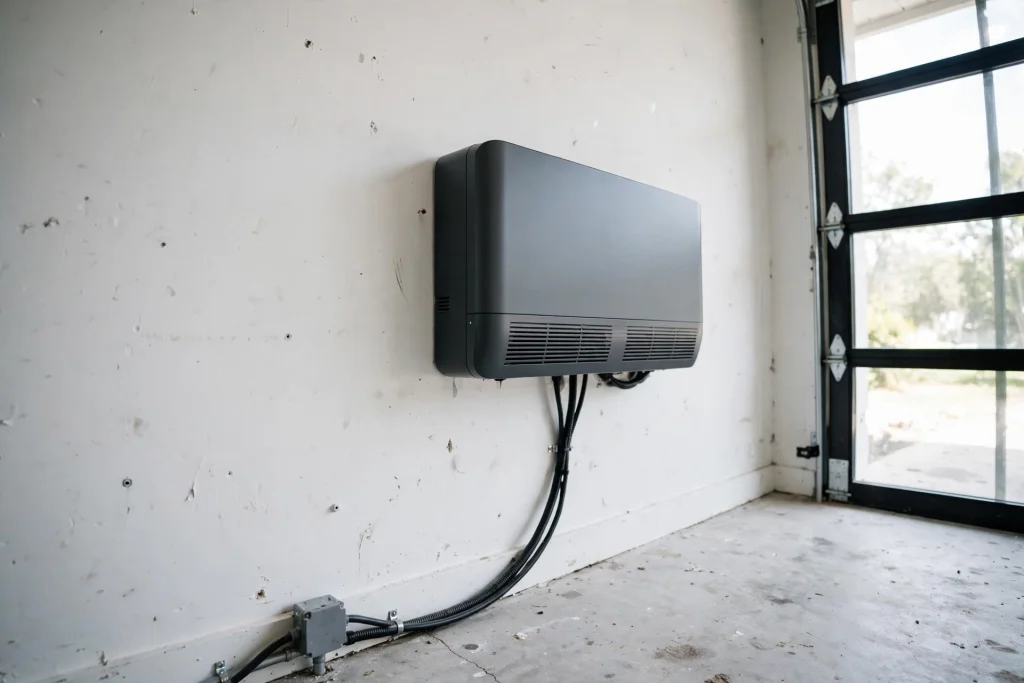
  • Heavy and Bulky Equipment: Battery modules and inverters are substantial. They require dedicated space in a garage, utility room, or outdoor pad, and a suitable foundation or wall mounting.
  • Limited Expansion (for some models): While many are modular, some entry-level systems might have limited scalability beyond a certain point.
  • Software Limitations/Learning Curve: The energy management software, while powerful, can sometimes have a learning curve for optimizing settings for peak shaving or self-consumption.
  • Lower Inverter Efficiency (relative): While modern inverters are very efficient (96-98%), there are still energy losses in converting DC battery power to AC home power, and vice-versa during charging.
  • Long ROI Period: While electricity bill savings are real, the return on investment can take many years, primarily justified by energy independence, resilience, and increased home value rather than purely financial gains.

Value for Money: Analyzing the Return on Investment for a Home Battery Backup

Evaluating the value of a home backup battery system goes beyond the initial price tag. It’s a long-term investment.

  • Cost per kWh: A key metric. For a full whole home battery backup system, aiming for an installed cost of $800-$1200 per usable kWh is a reasonable benchmark in 2026. This is dramatically different from the nominal cost per kWh of a small UPS like the CyberPower.
  • Installation Cost: Typically 20-40% of the total system cost. It’s crucial to get multiple quotes from reputable, certified installers.
  • Battery Lifespan & Warranty: A 10-year warranty (covering 70-80% capacity retention) for LiFePO4 batteries is standard. A well-maintained system can often exceed this lifespan, meaning 15-20 years of useful life.
  • Electricity Savings (ROI): For solar home battery owners, this is tangible through peak shaving and time-of-use optimization. Depending on your utility rates, annual savings can range from hundreds to over a thousand dollars, which contributes to the ROI over the system’s lifespan.
  • Long-Term Ownership Cost: Beyond initial purchase and installation, consider potential monitoring fees, software upgrades, and periodic maintenance. However, modern systems are largely maintenance-free.

The true value for money often lies in the intangible benefits: energy security during outages, the environmental contribution of using renewable home energy, and the increased resale value of your home.

Comparative Analysis: CyberPower CP1500PFCLCD vs. Leading Whole Home Battery Backup Systems

To further illustrate the distinction, let’s place the CyberPower CP1500PFCLCD alongside actual whole home battery backup solutions prevalent in 2026. It’s crucial to understand that we are comparing a dedicated point-of-use UPS to comprehensive residential energy storage solutions.

Feature CyberPower CP1500PFCLCD Tesla Powerwall 3 EcoFlow PowerOcean (Modular) Generac PWRcell (Modular)
Battery Chemistry Sealed Lead-Acid (SLA) LiFePO4 LFP (LiFePO4) LiFePO4
Battery Capacity ~1.2 kWh (internal, non-usable for whole home) 13.5 kWh base, up to 40.5 kWh 4.8 kWh base, up to 45 kWh 9 kWh base, up to 36 kWh
Continuous Output 0.9 kW 11.5 kW 4.8 kW (base) – 9.6 kW (hybrid) 4.5 kW (base) – 9 kW (hybrid)
Whole-Home Backup No (point-use for electronics) Yes, via integrated ATS Yes, via ATS Yes, via PWRcell ATS
Solar Integration No Yes (DC-coupled inverter) Yes (AC/DC-coupled hybrid) Yes (DC-coupled inverter)
Expandability No Yes, multiple units Yes, modular battery packs Yes, modular battery packs
Warranty 3-5 Years (unit/battery) 10 Years 10 Years 10 Years
Est. Installed Cost $250 – $400 (for unit only) $12,000 – $30,000+ $8,000 – $25,000+ $10,000 – $35,000+

This table vividly demonstrates why the CyberPower unit is not in the same category as a whole home battery backup. The disparity in capacity, power, chemistry, and functionality is immense.

  • Who Should Buy CyberPower CP1500PFCLCD?
    Homeowners or small office users who need reliable, instantaneous backup for individual desktop computers, sensitive electronics, networking equipment, or small home theater systems. It’s excellent for preventing data loss or interruptions for specific devices.

  • Who Should Buy Tesla Powerwall?
    Homeowners seeking a highly integrated, aesthetically pleasing solar battery storage solution, especially those with existing Tesla solar or electric vehicles. It offers robust performance, sophisticated energy management, and a streamlined installation process focused on seamless whole-house battery integration and maximum self-consumption.

  • Who Should Buy EcoFlow PowerOcean?
    Ideal for homeowners looking for a modular, flexible home energy storage system that can be easily expanded. EcoFlow’s approach often appeals to those who value ease of installation, portability (within the modular design), and a user-friendly interface for managing their residential battery backup.

  • Who Should Buy Generac PWRcell?
    Best for homeowners prioritizing comprehensive whole home battery backup with generator integration for extended outages. Generac’s systems are designed for maximum resilience, allowing for flexible load management and robust support for large household loads, often appealing to those in severe weather zones.

Frequently Asked Questions about Whole Home Battery Backup Systems

Why does battery chemistry matter for a whole home battery backup?

Battery chemistry is fundamental to a whole home battery backup system’s safety, longevity, and performance. LiFePO4 (Lithium Iron Phosphate) is preferred for residential energy storage due to its superior thermal stability, which significantly reduces the risk of thermal runaway (fire). It also offers a much higher cycle life (how many times it can be charged and discharged) compared to older chemistries like sealed lead-acid. This translates to a longer lifespan (often 10-15 years versus 3-5 years for SLA) and safer operation for your whole-house battery.

How long can a true whole home battery backup power an entire house during an outage?

The duration a whole home battery backup can power a house depends entirely on the system’s usable battery capacity (kWh) and your home’s actual energy consumption (loads) during the outage. A typical household might consume 20-30 kWh per day. A system with 20 kWh of usable capacity could power essential loads for about a day. By implementing load shedding (turning off non-essential appliances like electric dryers or certain HVAC zones) and practicing careful energy management, you can extend this duration significantly, often for several days. It’s all about matching system size to your specific energy needs and backup duration goals.

What should homeowners consider before installing a home battery backup?

Before installing a home backup battery, homeowners should:

  1. Conduct an Energy Audit: Understand your average daily energy consumption and identify critical loads that must remain powered during an outage. This helps in properly sizing the system.
  2. Define Your Goals: Are you seeking basic backup for essentials, whole-home battery resilience, solar battery storage optimization, or off-grid battery system capabilities? Your goals dictate the system’s complexity and cost.
  3. Assess Your Budget: Residential battery backup systems are a significant investment. Understand the total installed cost, potential incentives (tax credits, rebates), and long-term value.
  4. Evaluate Solar Integration: If you have solar panels or plan to install them, ensure the energy storage solution is seamlessly compatible with a robust hybrid inverter.
  5. Choose a Reputable Installer: Professional installation is paramount for safety, performance, and warranty validity. Vet contractors for certifications, experience, and strong references.

Final Verdict: Making an Informed Decision on Your Whole Home Battery Backup Investment

As a veteran in this field, my ultimate advice is clarity over convenience. The CyberPower CP1500PFCLCD PFC Sinewave UPS Battery Backup and is a highly effective product for its designated purpose: protecting sensitive electronics from power disturbances. However, it is unequivocally not a whole home battery backup system. Searching for a whole home battery backup requires a completely different class of product, one that is purpose-built for comprehensive residential energy storage.

For homeowners seeking genuine resilience, energy independence, or to maximize their renewable home energy investment, you need a dedicated whole-house battery solution. Focus on systems that offer advanced LiFePO4 battery chemistry, robust hybrid inverters, seamless ATS integration, and expandable capacity. Conduct thorough research, define your specific needs, and always consult with experienced home energy engineers and certified installers to design a backup power system that truly meets your expectations for safety, performance, and long-term value. Investing in a proper whole home battery backup is an investment in your home’s future resilience and energy security.

#CyberPower #CP1500PFCLCD #PFC #Sinewave #UPS #Battery #Backup