
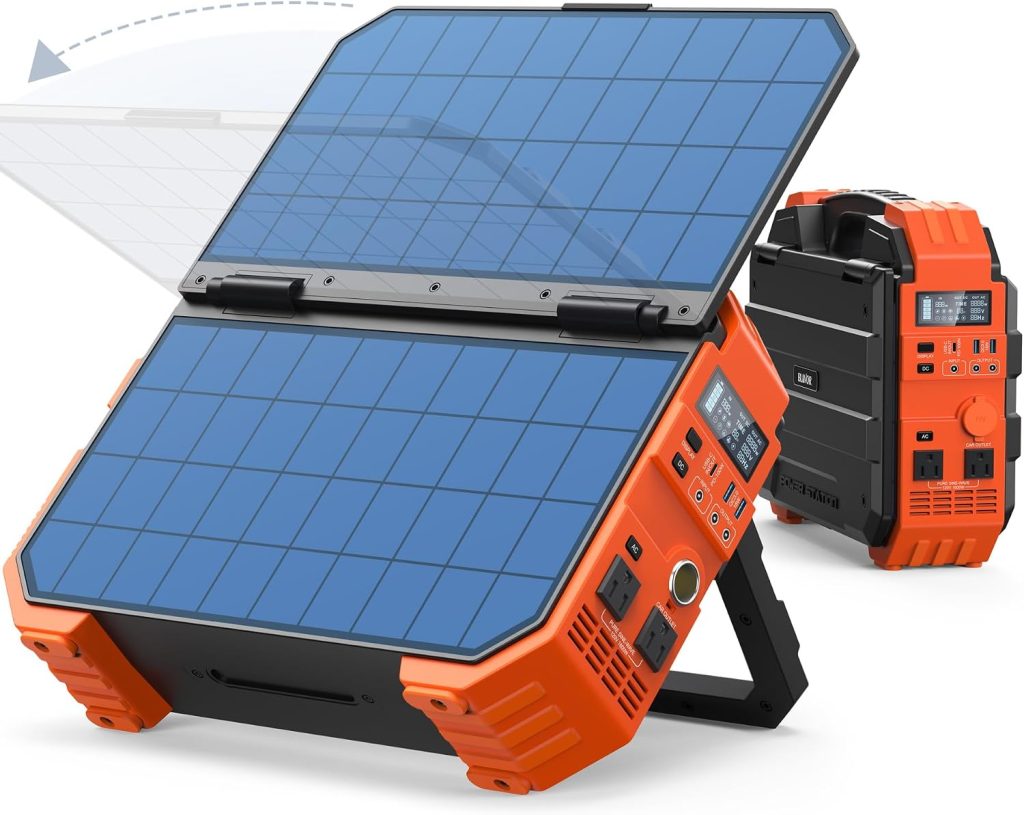
“Powers your refrigerator for hours!” the listing shouted. So I did what I always do now — the division. 1024Wh on the label. Knock off 20% for the inverter tax: 820 usable. My fridge: 1.5kWh a day, which is 62Wh an hour if you squint and it never cycles hard.
Thirteen hours. Not “hours” plural-vague. Thirteen. And that’s with nothing else plugged in — no phone, no light, no router. The listing wasn’t lying, exactly. It was just letting your imagination do the lying for it.
Quick Answer
The BLAVOR 1600W is a 1024Wh station with 1600W output and a built-in 40W solar panel in the lid — a genuinely clever trickle feature, not a real charging source. It’s a solid mid-size backup for essentials. But read every runtime claim with a calculator in hand, because the marketing is doing arithmetic you’d never accept from a contractor.
Compare Top 1kWh Solar Generators
Three proven picks side by side — choose the one that fits your needs.
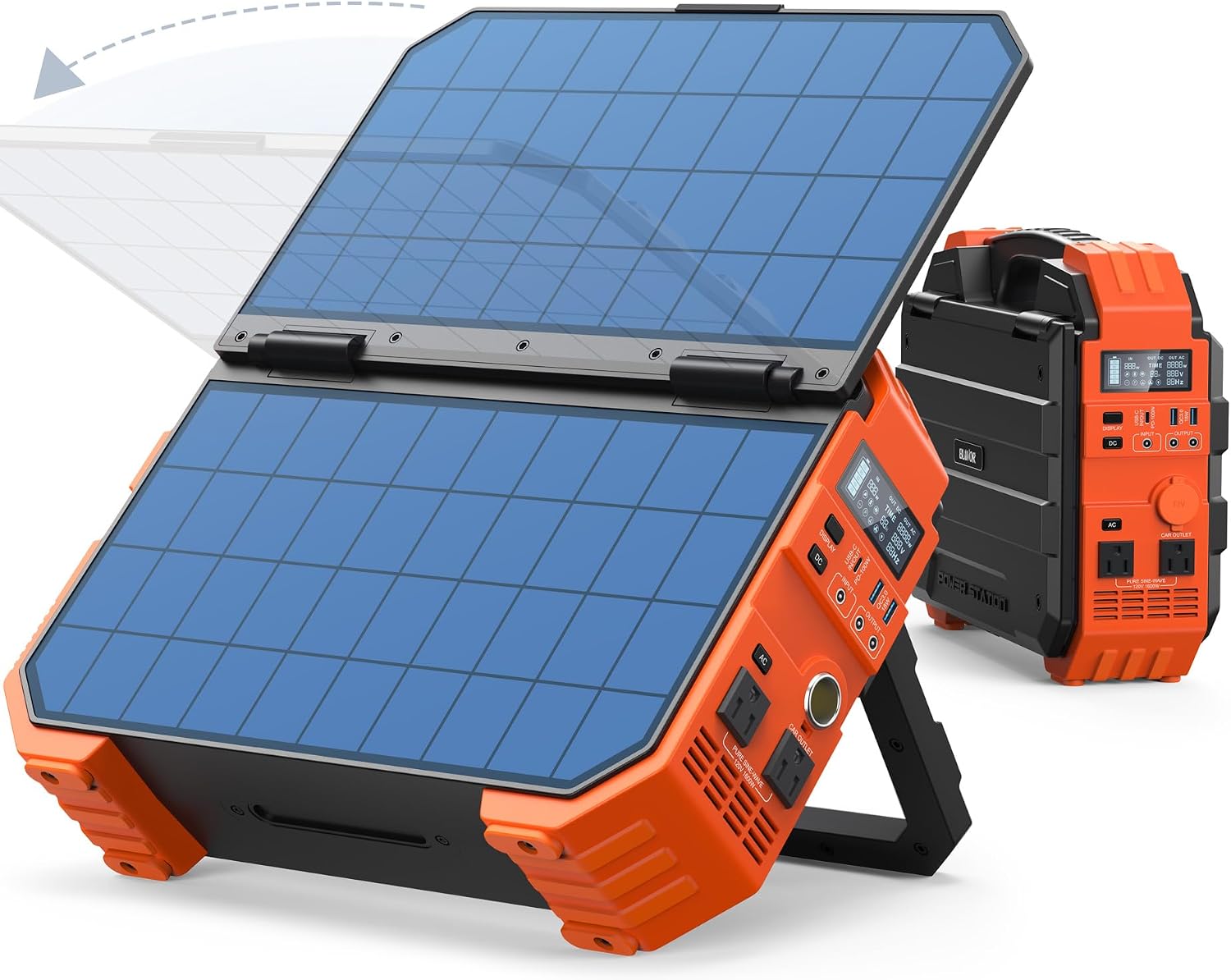
Prices and availability may vary — tap any product to check the current listing.
I’ve been burned enough times that I now treat every power station listing like a used car ad. “1600W!” — okay, that’s the output, fine. “1024Wh!” — fine. “Solar generator!” — with a 40W panel built into the lid, which in full sun makes 40 watts, which recharges the 1024Wh battery in… twenty-five hours of perfect sun. The built-in panel is a trickle maintainer wearing a superhero costume. I don’t hate it — trickle maintenance is useful, and it’s always there, no setup. But let’s not pretend it’s a charging solution. It’s a battery-life-extender. There’s a difference, and the difference is about 24 hours.
Wait, let me redo that — 1024Wh ÷ 40W is 25.6 hours. I said 25 earlier. Fine. Twenty-five and a half.
Big difference.
That said — and this is where I get annoyed at myself — the built-in panel is actually smart design. Every station I’ve owned has slowly self-discharged in storage, and I’ve found every one of them at 40% when I needed 80%. A panel that lives on the unit, always sipping sun through the garage window, fights exactly that. It’s solving a real problem. I just wish the marketing said “keeps itself topped off in storage” instead of implying you can live off it. Honesty doesn’t photograph as well, I guess.
The 1kWh class is where the lies get dense
One kilowatt-hour is the most competitive, most lied-about segment in portable power. Every brand has one. They all claim fast charging, long runtime, and emergency readiness. Here’s the truth about 1kWh: it runs your fridge for half a day. It runs your CPAP for two nights — CPAP users actually love this size, because a CPAP sips 30-60W and 1kWh is genuinely plenty. It runs a laptop for a workday. It does not run your life. It’s a really good “important things” battery, and the industry can’t leave it at that because “important things” doesn’t move units.
1600W of output, though — that’s legitimately useful. Most 1kWh stations top out at 1000-1200W. The extra headroom means a microwave (briefly), a power tool (yes), a coffee maker (the 800W kind, not the 1500W diva). Output watts are the spec I actually shop by now, because capacity is just “how long” and output is “whether at all.”
BLAVOR: the brand question
Let’s address it. BLAVOR is not EcoFlow. It’s not Anker. It’s an online-native brand, and buying from online-native brands is a calculated risk I’ve taken before — sometimes it pays off, sometimes the warranty email bounces in year two. The unit itself: LiFePO4 cells, which is the right chemistry, and the fit and finish in owner photos looks respectable. Not premium. Respectable.
My rule for these brands: buy with a credit card, register the warranty day one, and assume you’re your own service department. If that sentence makes you nervous, pay the premium for the big names. Jackery’s 2kWh units cost more for a reason, and the reason is partly “they’ll answer the phone.”
Price is the whole argument here. When the BLAVOR’s on sale — and it’s on sale the way car dealerships have “sales,” i.e., always — it undercuts the big brands by 30-40% for similar specs. That’s real money. Whether it’s worth it depends on your risk tolerance and how much you trust a stranger’s online review. I trust them exactly as far as I can verify them, which is to say: specs yes, longevity claims no.
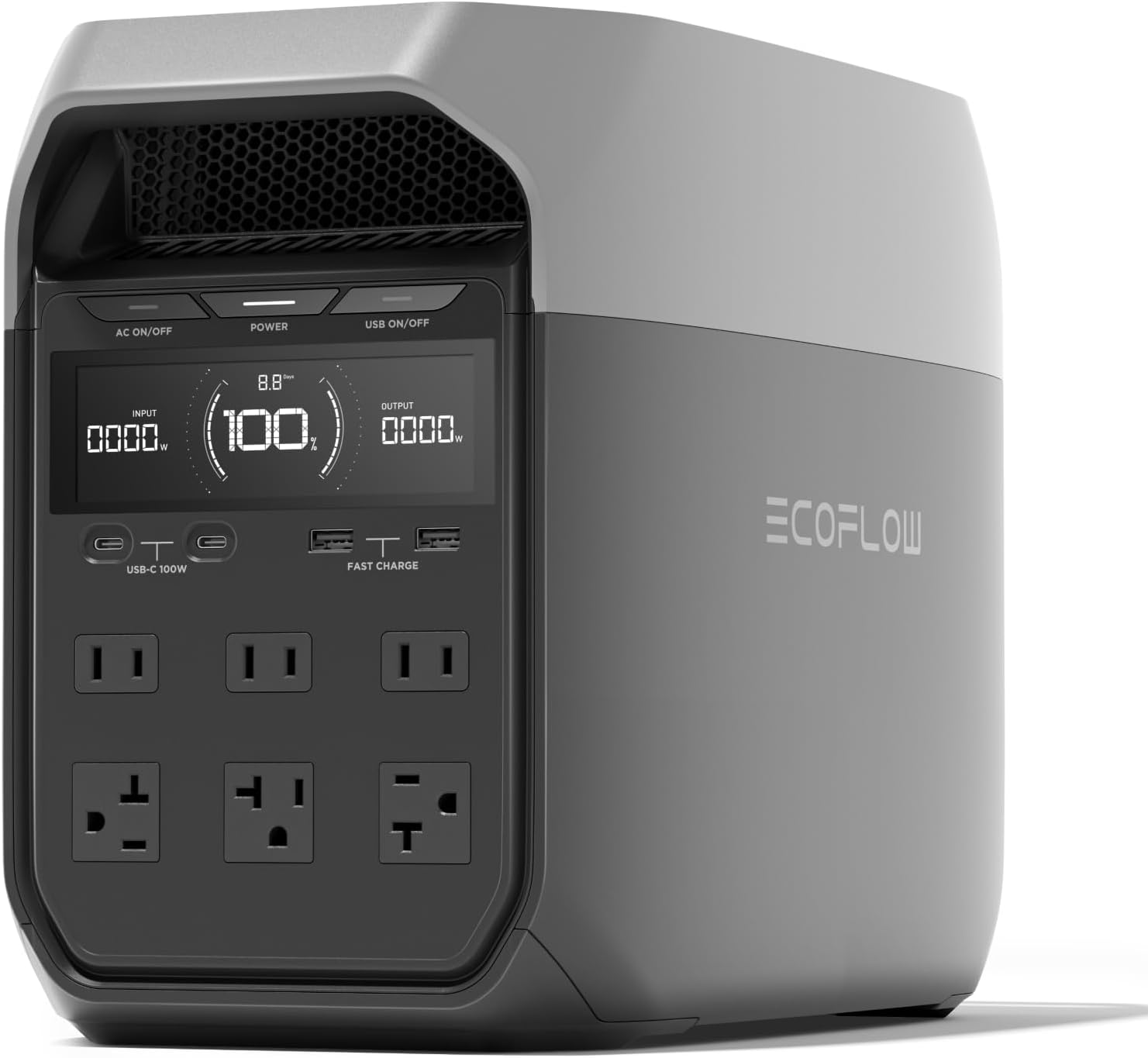
EF ECOFLOW Delta 3 — the big-brand 1kWh alternative
What “solar generator” even means anymore
The term has been stretched beyond recognition. A “solar generator” is a battery with an inverter that can accept solar input. That’s it. There’s no generation happening inside the box — the generation happens on the roof, or in the yard, or in the lid with its little 40W panel trying its best. Calling it a generator is marketing’s victory over physics, and we’ve all just agreed to go along with it.
I go along with it. But every time I type “solar generator” I feel a small betrayal of my high school physics teacher. Mr. Henderson. He’d have opinions.
Strong ones.
The runtime table I’d actually print
Forget the brochure. Here’s 1024Wh in my house, real numbers: Fridge, 13 hours. CPAP (no humidifier), 2 nights. Laptop + monitor, one full workday plus. Phone charging, roughly forever — phones are rounding errors. LED lights, days. Microwave, 40 minutes of total heat time, which is like eight reheated dinners. Space heater, 40 minutes, then darkness — heaters are battery murder, every time.
Notice the pattern: everything with a heating element is a disaster, everything electronic is fine. That’s the whole buying guide, right there. If your emergency plan involves heat, you need 3kWh minimum or a gas plan. If it involves staying connected and fed, 1kWh does the job.
How long do these things last?
The cells are rated for thousands of cycles — the lifespan question is really about the electronics and the brand’s survival. LiFePO4 doesn’t die of old age the way the old lithium chemistries did; it dies of being cycled hard, stored at 100% in a hot garage, or outliving its manufacturer’s app. My oldest LiFePO4 station is four years in and holds charge like day one. The app got worse, though. They always make the app worse.
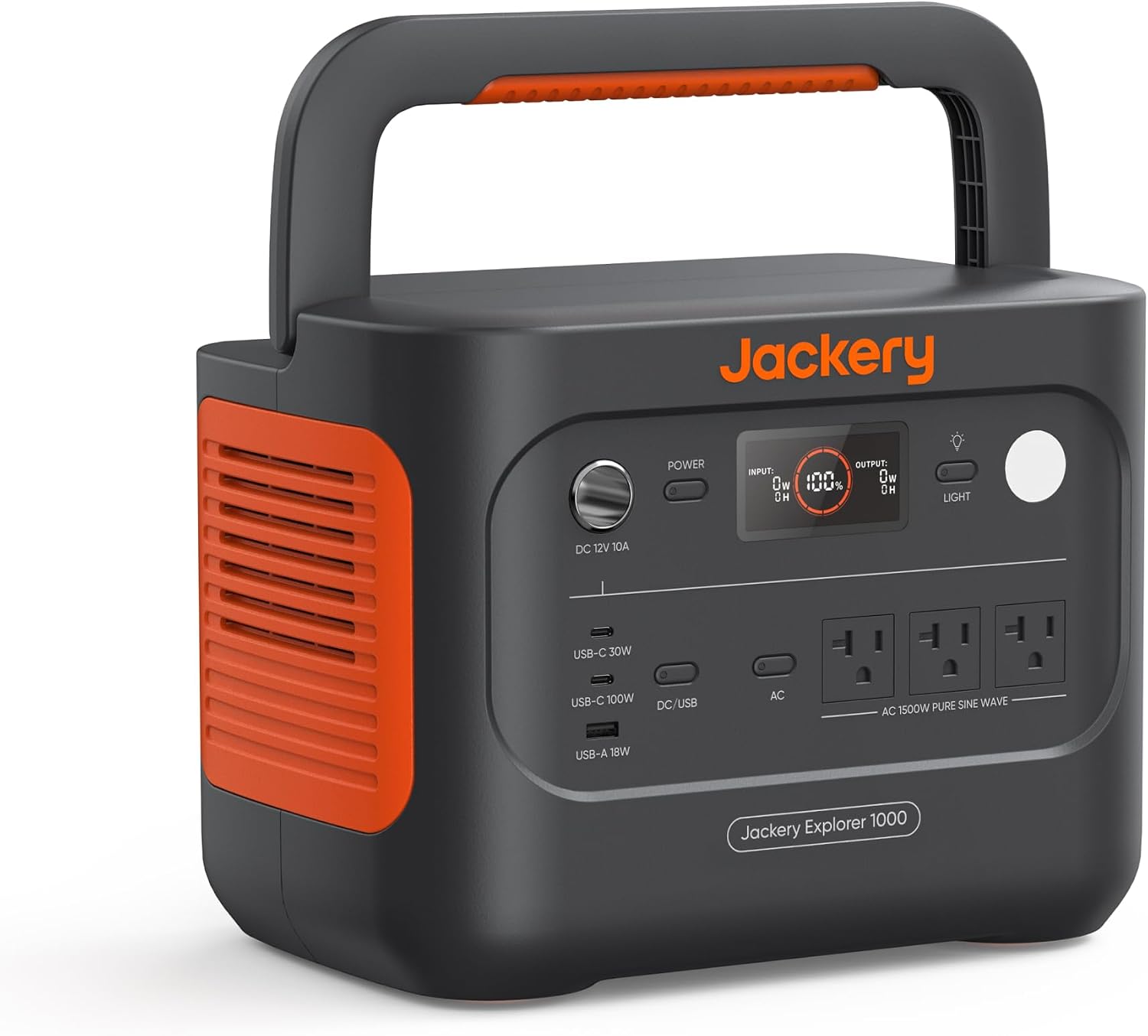
Jackery Explorer 1000 v2 — the established name in this class
So where does that leave the BLAVOR? It’s the value play in a class full of premium pricing. The built-in panel is a genuinely thoughtful touch wrapped in dishonest marketing. The brand is a question mark wearing a good spec sheet. If it were my money — and my risk tolerance, which has been calibrated by several warranty emails that bounced — I’d buy it on sale, register everything, and keep my expectations at “13 hours of fridge.” Which, on the night the power goes out and the ice cream is at stake, is exactly enough. Barely. But enough.
I haven’t run the BLAVOR through a full summer of daily cycling — my notes are from the specs and a month of light use.
Frequently Asked Questions
How long will the BLAVOR 1600W run a refrigerator?
About 12-13 hours for a typical full-size fridge, after accounting for inverter losses — and with nothing else plugged in. “Hours” in the marketing means low teens, not days.
Does the built-in 40W solar panel recharge it?
Not meaningfully — 40W would need 25+ hours of perfect sun to fill 1024Wh. It’s a trickle maintainer that fights self-discharge in storage, which is genuinely useful, just not a charging solution.
Is BLAVOR a reliable brand?
It’s an online-native brand without the track record of EcoFlow, Jackery, or Anker. The specs are competitive and the price is lower. Buy with a credit card, register the warranty immediately, and go in with open eyes.
Can it run a microwave or power tools?
Yes — 1600W output handles most microwaves (briefly), circular saws, and coffee makers. Runtime is short for high-wattage loads: a 1000W microwave drains the battery in under an hour of cumulative use.
How does it compare to the Jackery Explorer 1000 v2?
Similar 1kWh class, similar output. The Jackery has the stronger brand and service network; the BLAVOR usually costs less and adds the built-in trickle panel. Specs are close enough that price should decide.


