
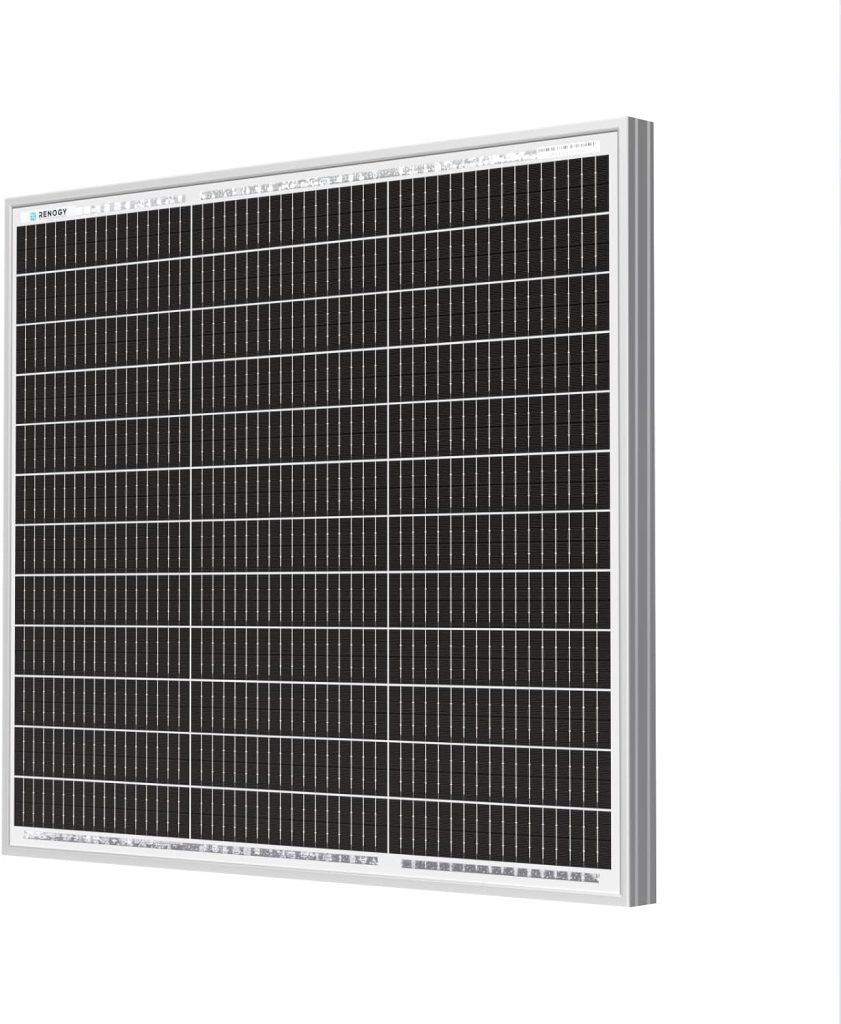
I bought a 50W panel thinking it would keep my truck camper’s battery topped up indefinitely. Free power from the sky, forever, no more worrying. That was the fantasy. The reality arrived on the first cloudy weekend, when the panel produced roughly enough electricity to charge my phone. Slowly.
Here’s what I got wrong: 50 watts is not a lot of power. It’s a trickle with good PR.
Great PR, though.
Quick Answer
A 50W solar panel makes 200-250Wh on a good day — enough to maintain a battery, run LED lights, and charge small devices. It won’t run a fridge or recharge a depleted house battery. The new N-type Renogy 50W squeezes a few percent more from the same footprint than older mono panels. Buy it for maintenance duty, not for power.
Compare Top 50W Solar Panels
Three proven picks side by side — choose the one that fits your needs.
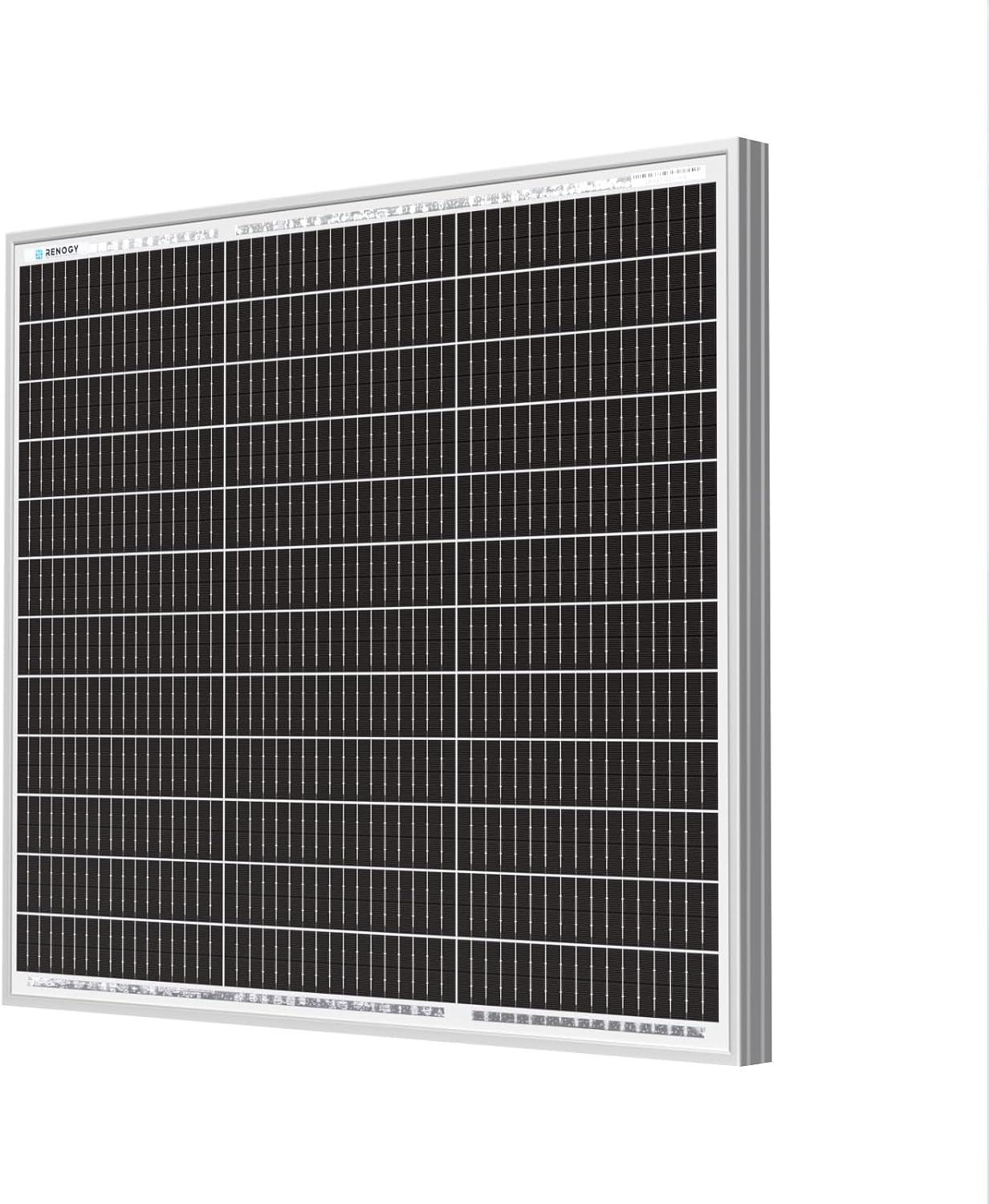
Prices and availability may vary — tap any product to check the current listing.
Let me do the math I should have done in the parking lot. 50W × 5 peak sun hours = 250Wh. That’s the perfect day. My truck camper’s parasitic draws — CO detector, stereo memory, the fridge’s control board — eat about 100Wh a day just existing. So on a good day, the panel covers the parasites and banks 150Wh. On a bad day, it covers nothing and the battery slides backward. A 50W panel doesn’t power your camper. It slows the bleeding.
And that was the useful reframe, once I stopped being annoyed. Slowing the bleeding is genuinely valuable. Before the panel, my battery would be half-dead after two weeks parked. After, it held. The panel paid for itself the first time I didn’t have to buy a new battery. Which, at $150 a pop every couple years, is the actual economics of small solar.
N-type vs. old mono: should you care?
The new Renogy 50W uses N-type cells at a claimed 25% efficiency. The older mono version sits around 21-22%. On a 50W panel, that 3-4% gap is — let me do this — about 2 watts. Two watts! The marketing makes it sound like a revolution. It’s two watts.
But. N-type cells degrade slower and handle heat better, which over five years adds up to more than two watts. The price difference between old and new stock is usually $10-15. For that money, take the N-type. Not for the two watts. For the slower aging. I bought the old one first because it was cheaper. Then I did the degradation math. Then I bought the N-type. Learn from my wallet.
What 50W actually does
Maintains a 12V battery through storage. Runs a couple of LED strips in a shed. Charges phones, tablets, a laptop (slowly — a laptop wants 60W and the panel makes 50 on its best day, so “charges” means “charges while off”). Powers a small 12V fan. Keeps a deer feeder’s battery alive, if that’s your life. It does not run a 12V fridge — a fridge wants 400-600Wh a day and the panel makes 250 on a perfect day. The math doesn’t care about your plans.
It never does.
Two of them in parallel, though — now you’re at 100W, 500Wh a day, and the fridge conversation gets interesting. A single 100W panel is usually cheaper than two 50s, but 50s fit where 100s don’t. Small roofs, weird spaces, the top of a truck toolbox. Form factor is a real reason.
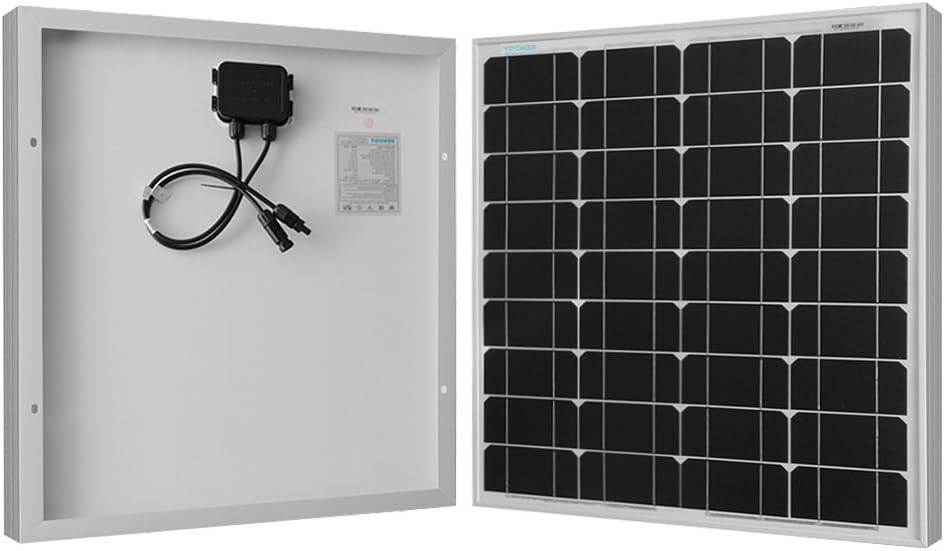
Renogy 50W mono — the older, cheaper classic
The controller question nobody asks
A 50W panel needs a charge controller. Not optional. Without one, the panel will cheerfully overcharge a small battery on a sunny day and drain it at night through reverse current. A basic 10A PWM controller costs $15 and does the job. MPPT on a 50W panel is — I ran the numbers — a $40 controller to gain 5 watts. The payback period is approximately forever.
Okay, that’s an exaggeration. It’s about six years. Still not worth it.
Buy the PWM. Spend the savings on wire thick enough to not waste your two watts. I’m only half joking. Voltage drop on a long thin wire run will eat more power than the N-type cells gained you. Ten feet of 16-gauge at 3 amps is fine. Twenty feet, go thicker. This is the boring stuff that actually determines whether your setup works.
Why the category bugs me
Small panel listings are all photographed in deserts at noon and all reviewed by people on their first week of ownership. “Works great! Five stars!” — of course it works great, it’s July and the panel is new. Come back in November. Come back when it’s dusty. The one-star reviews, when they appear two years later, are all the same: output dropped, junction box filled with water, mounting holes corroded. Buy from a company that’ll be around — Renogy, for all my grumbling, answers emails.
And the “high efficiency!” arms race. 25% vs 23% on a panel the size of a doormat. The difference, in real electricity, is a phone charge per week. The industry markets it like it matters because there’s nothing else to differentiate a rectangle of glass. What actually matters: the frame doesn’t leak, the junction box is sealed, the company honors the warranty. Boring. Unmarketable. True.
Where mine lives now
Shed roof. South-facing, slight tilt, wired to a 10A PWM controller and an old Group 24 battery that runs two LED strips and a USB charger. It’s been there three years. The battery’s still healthy, which is the whole point — the panel’s job was never to make power, it was to keep the battery from dying of neglect. For real power needs, the math starts at 200W and goes up. But for maintenance? For keeping things alive while you’re not looking? Fifty watts is exactly enough. Funny how that works.
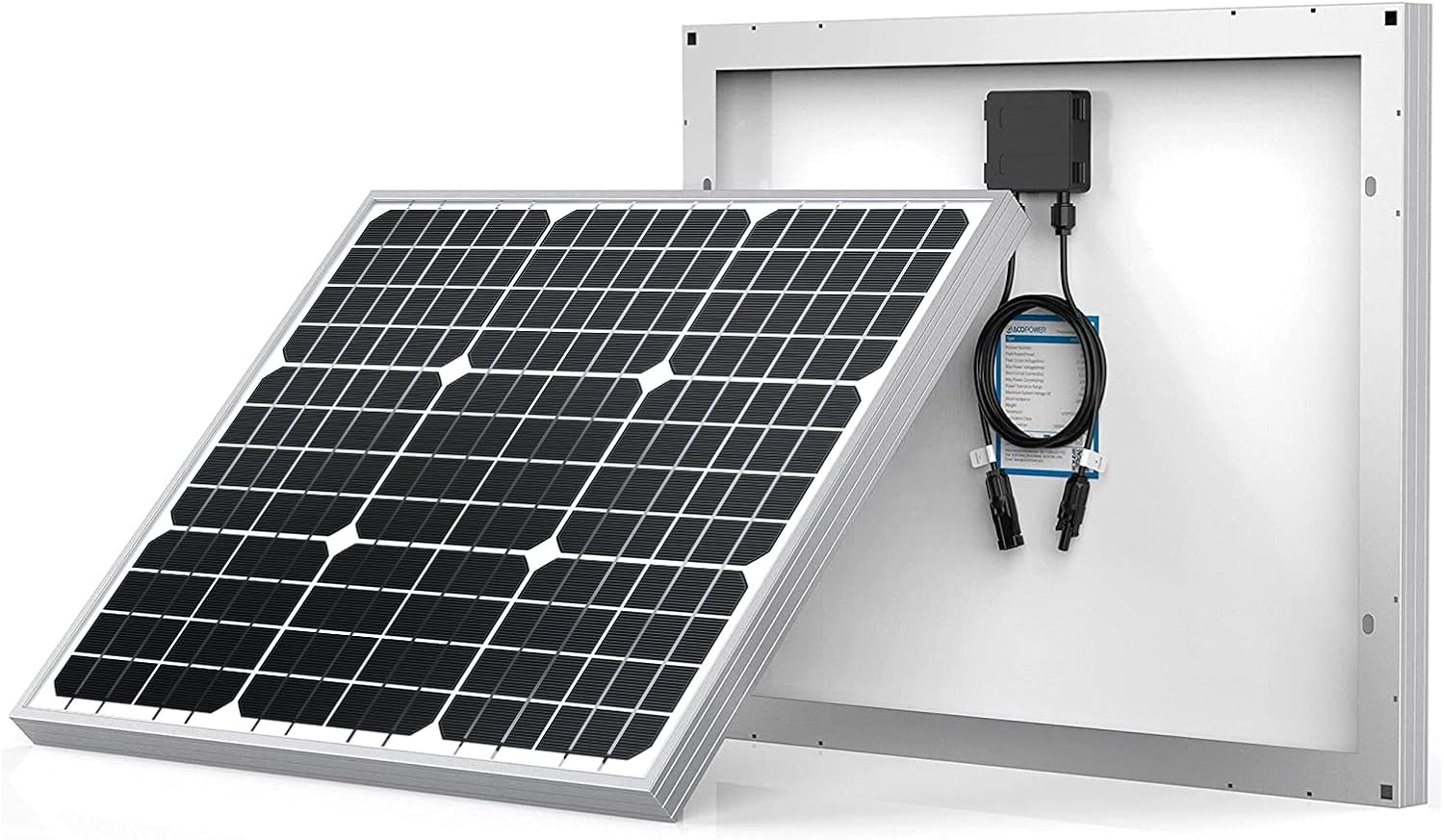
ACOPOWER 50W — the budget alternative
Last month I added a second 50W next to it — the N-type, because I’d talked myself into it — and wired them in parallel. The shed now makes 500Wh on a good day, which is absurd overkill for two LED strips. I don’t care. Watching the controller’s little LCD climb past 90W in the morning sun is one of my small daily pleasures. The neighbor thinks I’m weird. The neighbor’s shed battery died last winter. Who’s weird now, Gary.
I haven’t tried the flexible panel versions — mine are all glass. Flex ages differently and I’m not speculating.
Frequently Asked Questions
Can a 50W solar panel run a 12V fridge?
No. A 50W panel makes 200-250Wh on a good day; a 12V fridge needs 400-600Wh. The panel can help, but it can’t carry a fridge alone. You’d need 100W minimum, ideally 200W.
Do I need a charge controller for a 50W panel?
Yes. A basic 10A PWM controller ($15 or so) prevents overcharging and blocks reverse current drain at night. MPPT isn’t worth it at this size — the gains are a few watts.
What’s the difference between N-type and older mono 50W panels?
N-type cells are a few percent more efficient and degrade slower in heat. On a 50W panel the daily difference is tiny, but the slower aging makes N-type worth the small price premium.
How much power does a 50W panel make on a cloudy day?
10-25% of rated — so 5-12W, or 40-100Wh over the day. Enough to slow battery drain, not enough to charge anything meaningful. Plan for it.
Renogy or ACOPOWER for a 50W panel?
Both are established budget brands. Renogy has the stronger warranty support network; ACOPOWER is often cheaper for similar specs. VEVOR’s 100W is another budget option if you’re sizing up.


