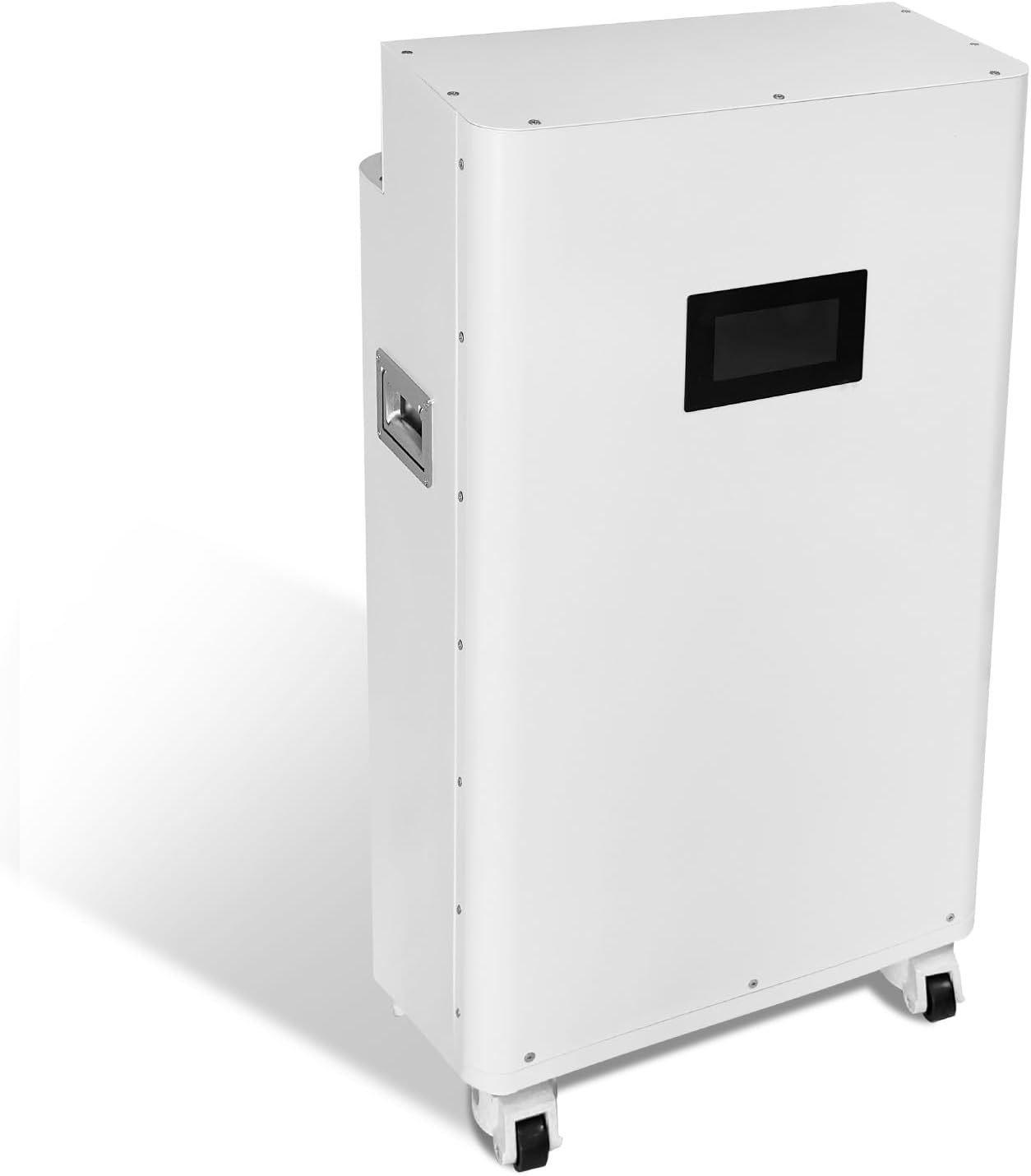
The listing advertises a 16kWh battery at a price that made me do a double take. Then a triple take. Then I read the fine print: “Cells Excluded.” The cabinet, the BMS, the busbars, the breakers — all included. The sixteen 314Ah cells that actually store the 16kWh? Those are another $1,500-2,000. The 16kWh is — well, it’s implied.
Welcome to DIY battery economics, where the headline price is the cover charge and the cells are the drinks.
Read the fine print.
Quick Answer
A 16kWh 48V DIY battery box (cabinet + BMS, cells sold separately) plus sixteen 314Ah LiFePO4 cells builds you a ~16kWh home battery for roughly half the cost of a prebuilt unit — if you’re comfortable with wiring, torque specs, and top-balancing. If any of those words made you nervous, buy prebuilt.
Compare Top 48V Battery Options
Three proven picks side by side — choose the one that fits your needs.
Prices and availability may vary — tap any product to check the current listing.
Let me lay out the real math, because the DIY forums are full of people who priced the box and stopped there. Cabinet with 200A JK BMS and hardware: a few hundred dollars. Sixteen 314Ah LiFePO4 cells: $1,500 to $2,000 depending on the month and your tolerance for Alibaba. Total: roughly $2,000-2,500 for 16kWh. A prebuilt 16kWh server-rack battery: $3,500-5,000. The savings are real — 30 to 50%. The question is what your time and risk tolerance are worth.
16kWh, by the way, is a serious number. My house idles at 600W overnight. Sixteen kilowatt-hours is 26 hours of that — more than a full day of essentials, no sun, no grid. With modest solar input during the day, it’s indefinite for critical loads. This is the size where “backup power” stops being a slogan and starts being a plan. I run a 48V system myself — not this exact box, a rack setup I built two years ago — and the jump from 12V thinking to 48V thinking is the single biggest upgrade in DIY storage. Higher voltage, lower current, thinner wires, less heat. The physics just works better.
What “cells excluded” actually involves
You order sixteen LiFePO4 cells — 3.2V each, 314Ah, wired in series for 51.2V nominal. They arrive at different states of charge, because of course they do. You top-balance them: wire all in parallel, charge to 3.65V, wait. And wait. This takes a day or two and it’s the most boring critical step in the whole build. Skip it and your BMS spends its life fighting imbalance, cutting off early, giving you 14kWh instead of 16. I skipped it on my first build. I got 14kWh. I don’t skip it anymore.
Lesson learned.
Then: compression. LiFePO4 cells swell slightly as they cycle, and the manufacturers spec a compression fixture — threaded rod, end plates, the works. The DIY box includes the structure. Torque the busbars to spec — too loose and you get hot spots, too tight and you strip the aluminum terminals. Aluminum terminals. On a $100 cell. Ask me how I know about stripped terminals. Actually, let’s just say I know.
The BMS is the brain; respect the brain
The included 200A JK BMS is the part that keeps your $2,000 pile of cells from becoming a story. 200A at 51.2V is about 10kW — plenty for a house’s critical loads, and the overcurrent, overvoltage, undervoltage, and temperature protections are what stand between you and a very bad day. JK’s BMS has an active balancer, which is genuinely better than the passive bleed resistors in cheap units. It moves charge between cells instead of burning it off as heat. Elegant. I like elegant in safety equipment.
Wire the BMS correctly. Then check it. Then check it again. The manual’s wiring diagram is translated from Chinese by someone who was in a hurry — cross-reference with the DIY Solar forum’s diagrams, which are better. This is the step where overconfidence causes fires, and I’m not being dramatic. I’ve seen the photos.
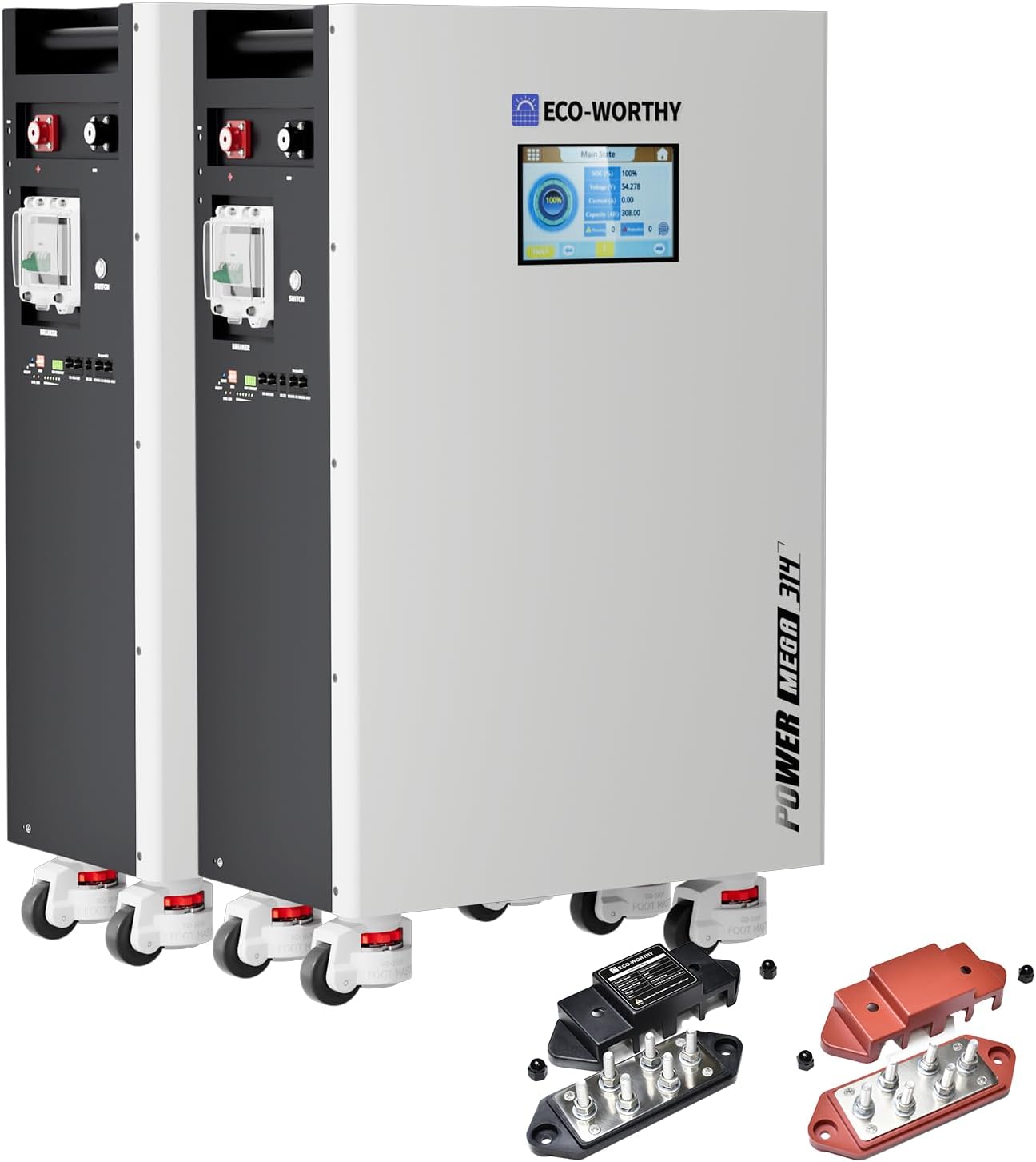
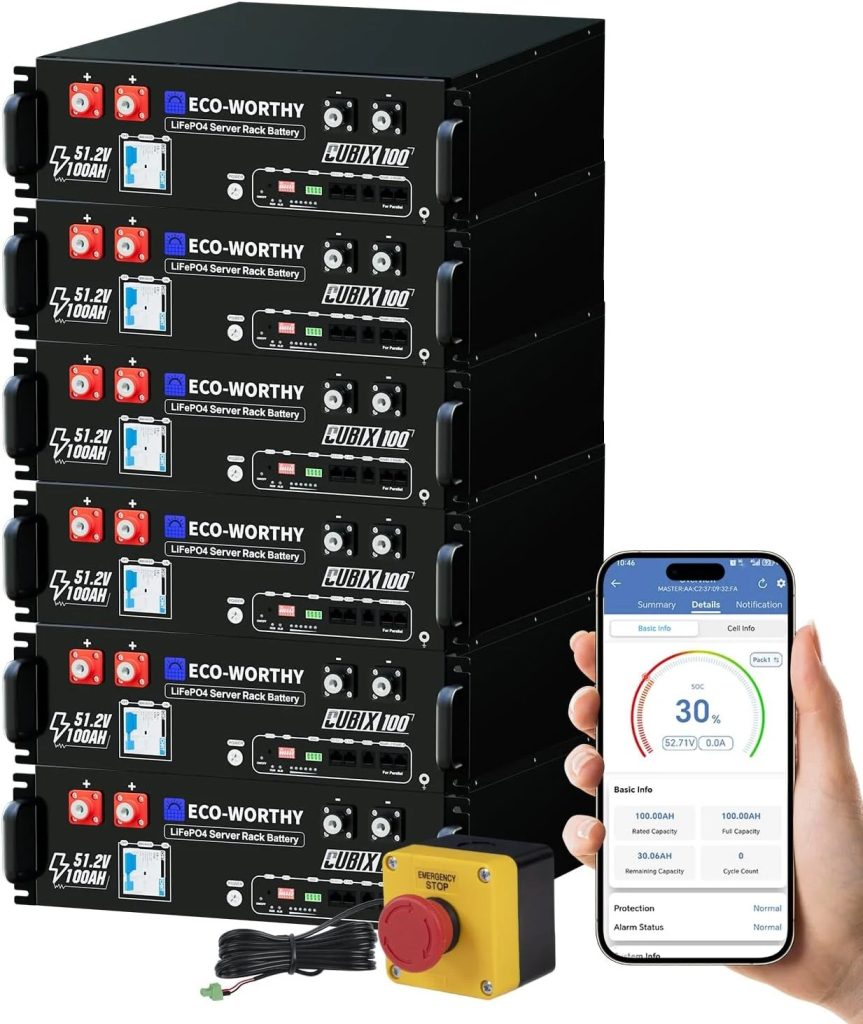
ECO-WORTHY Powermega — prebuilt 48V 314Ah, UL1973 listed
DIY vs. prebuilt: the honest accounting
DIY saves $1,500-2,500. DIY costs a weekend, a top-balancing wait, and the small but real risk that you wire something wrong. DIY gives you a system you understand deeply — when something acts up in year three, you’ll know exactly which cell is drifting, because you built it. Prebuilt gives you a warranty, a phone number, and UL listing, which your insurance company and your local inspector care about more than you think.
The permitting question is real. Some jurisdictions want UL-listed batteries for anything hardwired. A DIY box in a garage, feeding an inverter, existing in a gray area — that’s between you and your AHJ. I’m not your electrician. Actually I used to do low-voltage work. Not the same thing. Don’t take permit advice from me. But I’ve seen inspectors shrug at portable setups and frown at hardwired ones, and the line between them is thinner than you’d hope.
My take: if this is your first battery, buy prebuilt. The lifespan math is the same — quality LiFePO4 cells last 10+ years either way — and you’ll learn the system by using it. If this is your second or third, and you’ve already got opinions about BMS brands, the DIY box is the obvious move. You know who you are.
The 48V ecosystem
One more thing the box listing won’t tell you: 48V is where the grown-up equipment lives. Inverters are cheaper per watt, charge controllers handle more panel with less copper, and everything runs cooler. A 48V 300Ah battery feeding a 5kW hybrid inverter — sized right — is the standard DIY whole-home backup recipe for a reason. The 12V world is for RVs and small cabins. If you’re building 16kWh, you’re not in the 12V world anymore.
Communication matters too: RS485, CAN, RS232 on the BMS means it can talk to your inverter — state of charge, alarms, the works. Closed-loop communication is the difference between a system that manages itself and a system you manage. Set it up once, check the app when you’re curious, otherwise forget it exists. That’s the goal. Batteries should be boring.
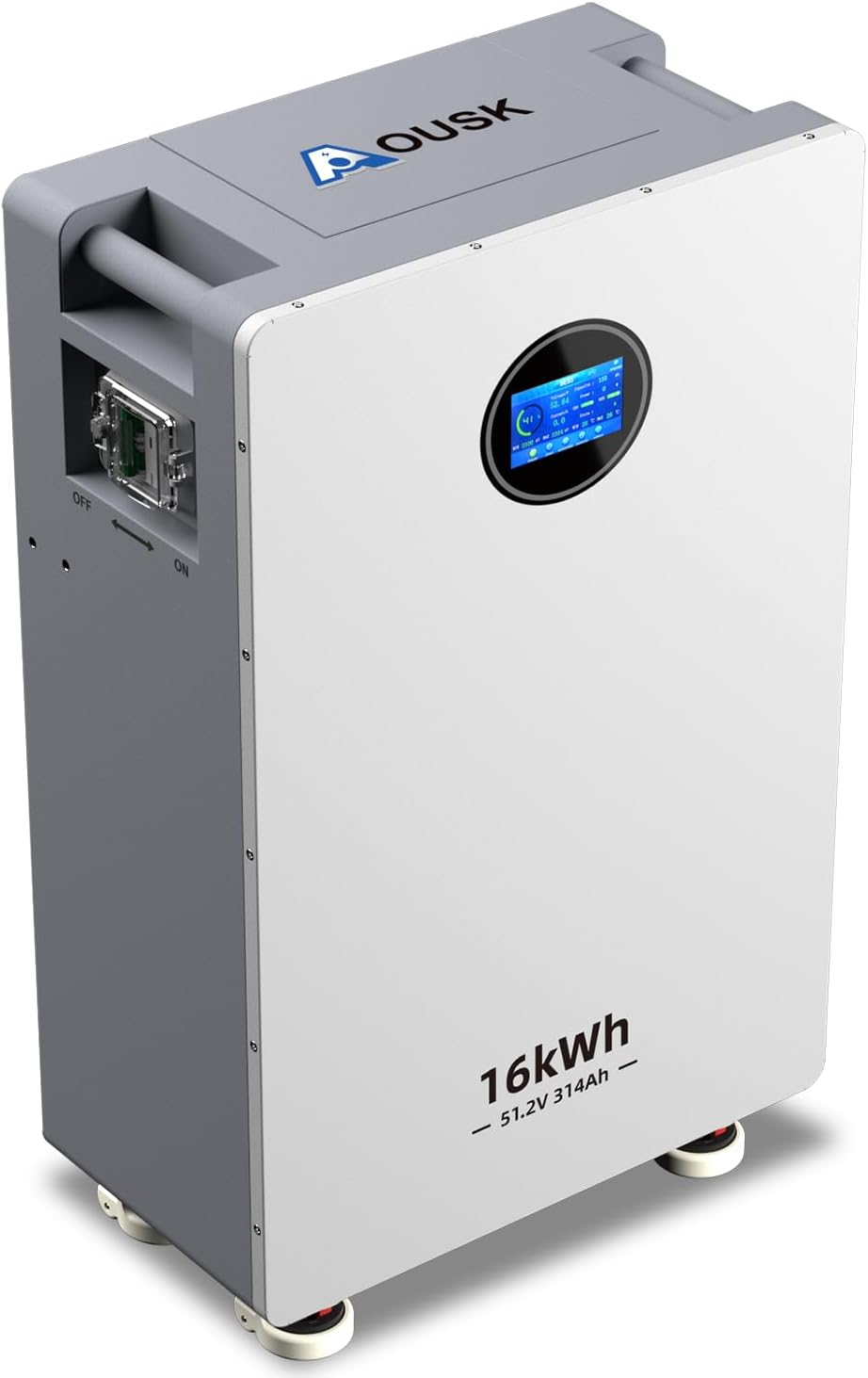
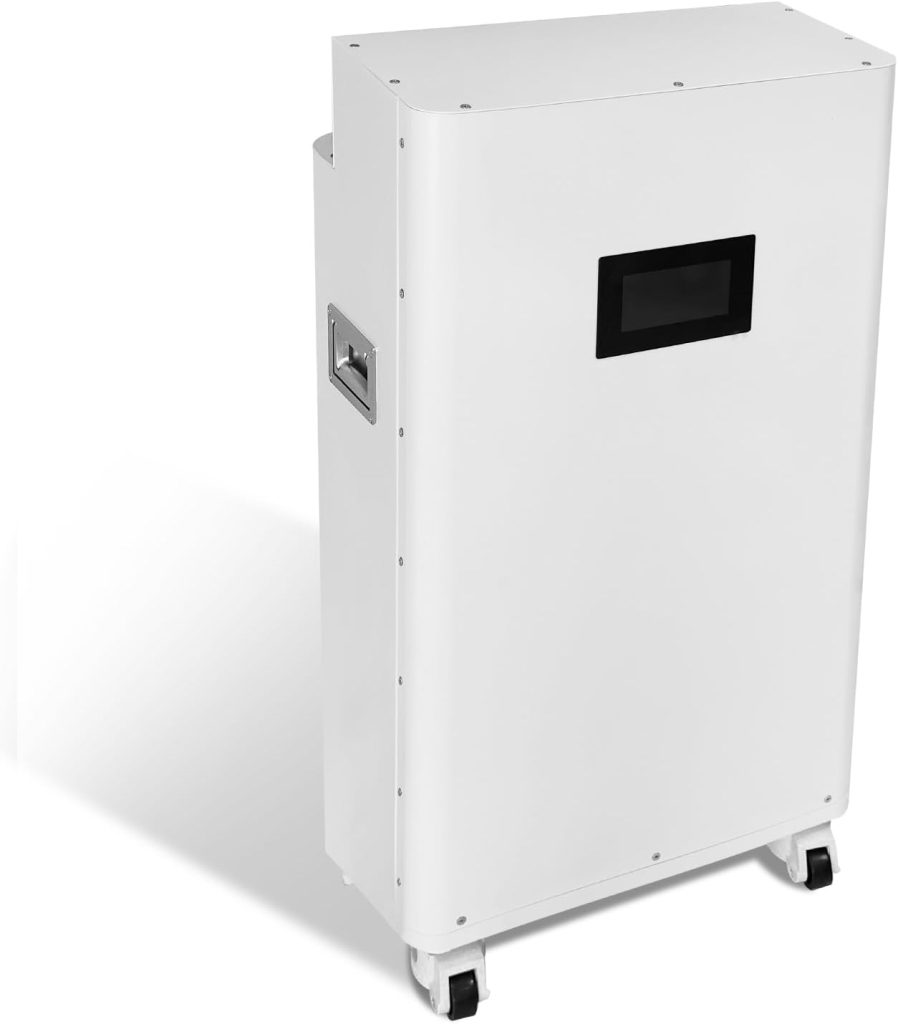
AOUSK 51.2V 314Ah — prebuilt 16kWh with 200A BMS
Mine’s been running two years now — different box, same recipe. Sixteen cells, a JK BMS, a hybrid inverter, and a monitoring app I check with the same frequency I check my home’s foundation: rarely, but with deep satisfaction when everything’s fine. Last month the grid went down for six hours and I found out from a neighbor’s text, because my house never noticed. That’s the whole point. Not the savings, not the hobby, not the forum bragging rights. The house not noticing. Sixteen kilowatt-hours of not noticing, sitting quietly in the corner of the garage, doing its job. Boring is the goal. Boring is beautiful.
I haven’t built with this exact cabinet — mine’s a rack setup. Same recipe, but I won’t pretend I torqued these specific busbars.
Frequently Asked Questions
What does “cells excluded” mean?
The box includes the metal cabinet, 200A JK BMS, busbars, breakers, and wiring accessories — but not the sixteen 3.2V 314Ah LiFePO4 cells. Budget an additional $1,500-2,000 for cells.
How much does a complete 16kWh DIY build cost?
Roughly $2,000-2,500 total: a few hundred for the box/BMS kit plus $1,500-2,000 for sixteen 314Ah cells. A comparable prebuilt 16kWh battery runs $3,500-5,000.
Is DIY battery building safe?
It can be, with care: top-balance cells, torque busbars to spec, use compression, and double-check BMS wiring. But mistakes can cause fires. If you’re not comfortable with DC wiring fundamentals, buy prebuilt.
How long will 16kWh run my house?
Essentials (fridge, lights, internet, ~600W continuous): over 24 hours. With air conditioning or electric heat: 4-8 hours. With daytime solar input, critical loads can run indefinitely.
What’s the difference between the DIY box, the ECO-WORTHY, and the AOUSK?
The DIY box is a cabinet kit (cells excluded) for builders who want maximum savings and control. The ECO-WORTHY Powermega and AOUSK are prebuilt 51.2V 314Ah batteries — ready to use, with warranties, at higher cost.