
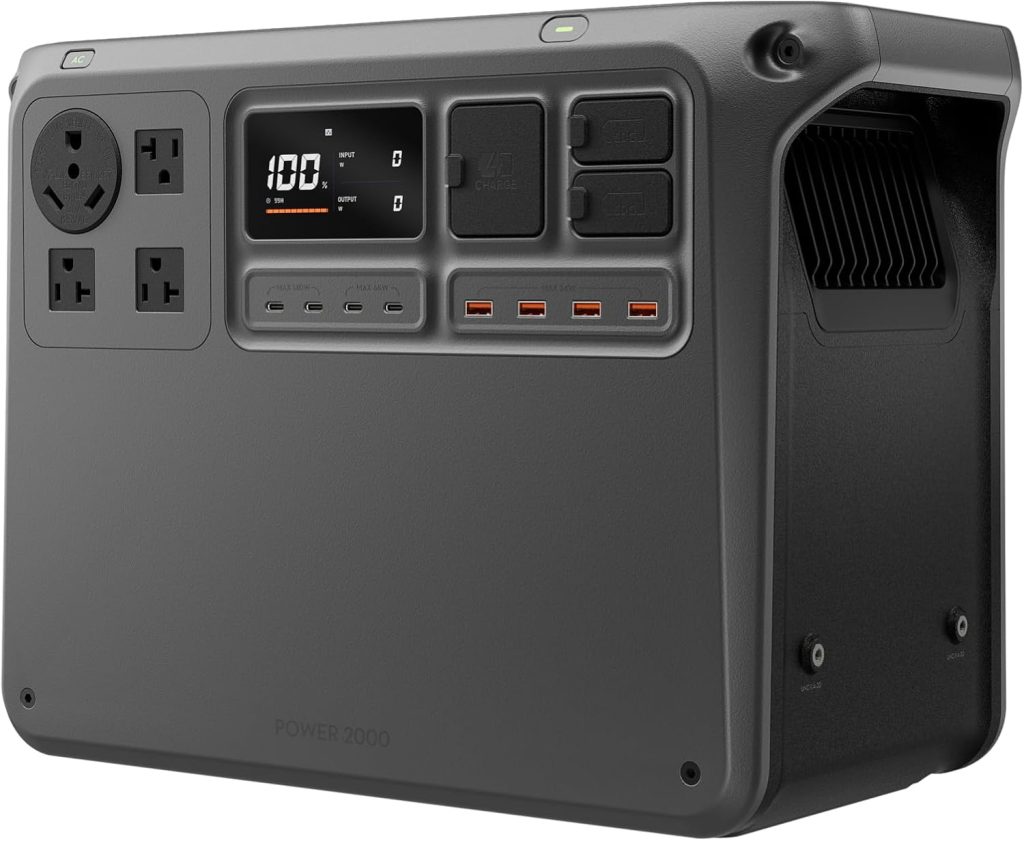
The listing said it runs a refrigerator. Technically true. What it didn’t say — what none of them say — is for how long. So I did the math on the DJI Power 2000: 2048Wh on the label, call it 1600 usable after the inverter takes its cut, and my fridge eats 1.5kWh a day on a warm week.
That’s not “runs a refrigerator.” That’s “runs a refrigerator until tomorrow afternoon, if nothing else is plugged in.”
Marketing math.
Quick Answer
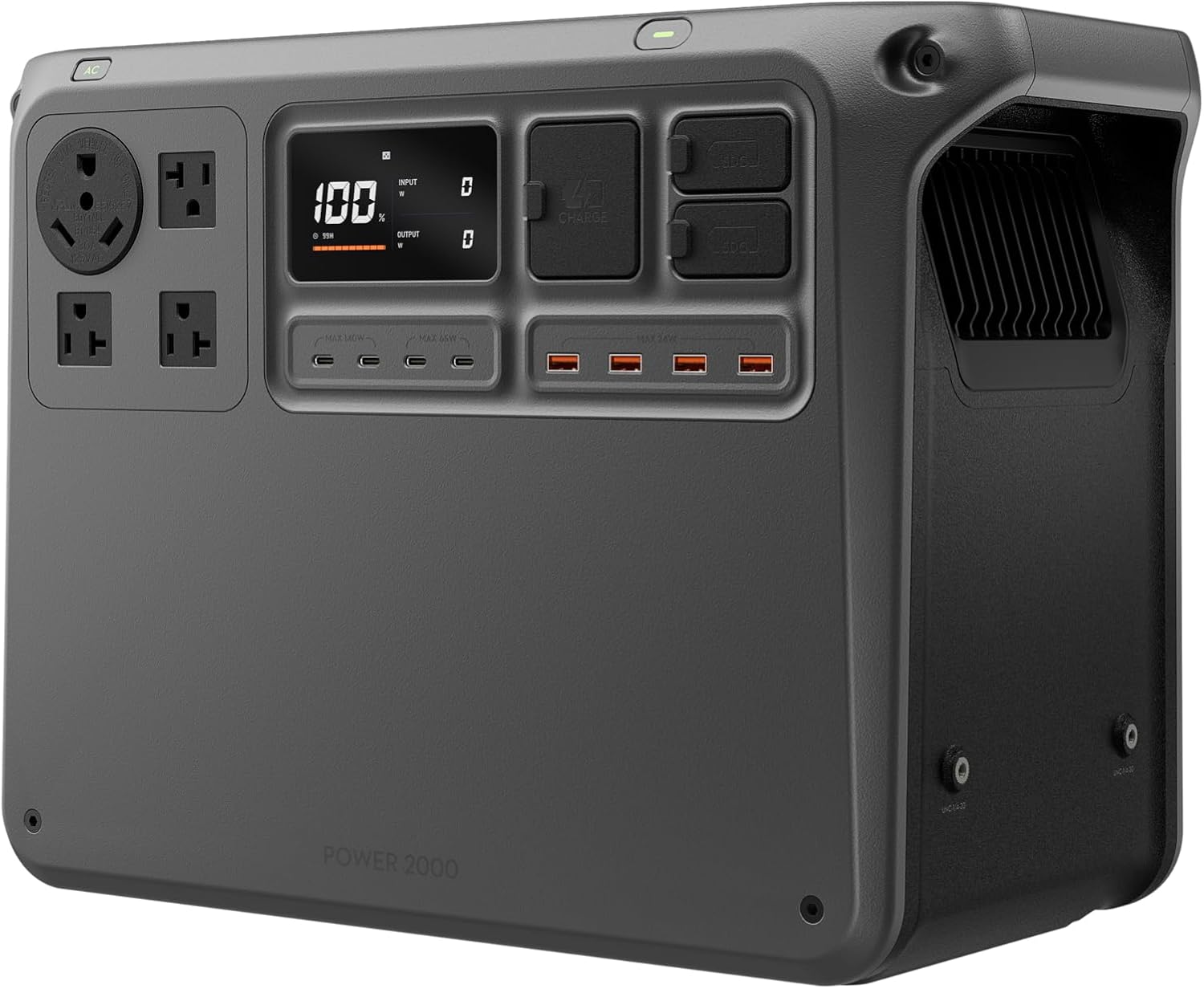
The DJI Power 2000 is a 2048Wh LiFePO4 station from the drone company — fast charging, high output, and thoughtful ports for creators. It’s a serious 2kWh-class contender. But like every station in this class, “runs your fridge” means roughly a day, not a week. Buy it for the build quality and charge speed, not the fantasy runtimes.
Compare Top Portable Power Stations
Three proven picks side by side — choose the one that fits your needs.
Prices and availability may vary — tap any product to check the current listing.
DJI making power stations felt weird until I thought about it for ten seconds. Who knows batteries better than the company that has to keep a drone in the air for forty minutes without the whole thing falling out of the sky? Battery management is their home turf. And it shows — the Power 2000’s charge curve is aggressive in the way that suggests engineers who weren’t afraid of their own thermal design.
The headline trick here is speed. DJI claims fast recharging — and unlike some brands, the fast part isn’t limited to the first 50%. I haven’t put it on a scope, obviously. But the wall-charging numbers owners report are consistently at the quick end of the 2kWh class. When the power’s out and the grid flickers back for an hour, charge speed is everything. An hour of grid at 2000W input is a meaningful refill. An hour at 500W is a snack.
The drone thing is not a gimmick
Here’s what actually separates this from the EcoFlow across the street: the SDC ports. DJI’s fast-charge interface talks to their drone batteries directly — no AC brick, no conversion loss, just DC to DC. If you fly drones, this matters enormously. Charging six drone batteries through AC bricks wastes maybe 15% as heat and takes all afternoon. Direct DC charging is faster and cooler.
If you don’t fly drones, it’s a 2kWh station with nice ports. Which is fine. But you’re paying for engineering aimed at someone else. Nothing wrong with that — I drive a car with towing capacity I’ll never use — just know which customer you are.
Hmm, that’s not quite fair — the fast charging benefits everyone. The drone ports are the someone-else part.
The 2kWh class is crowded and they’re all lying a little
Line them up: DJI Power 2000, EcoFlow Delta 3 (well, the 1kWh one — the 2kWh fight is the Delta 2’s), BLUETTI AC200L, Anker’s C2000. They all claim fast charging. They all claim to run fridges. They all photograph beautifully on a campsite table at golden hour. The real differences are boring: port selection, app quality, warranty service, and whether the company will exist in five years.
DJI will exist in five years. That’s not nothing in a category full of brands that appeared online in 2021 and will vanish by 2027. I’ve bought the vanishers. The warranty email bounces. The app stops updating. The station still works — batteries don’t care about corporate drama — but you’re on your own.
On the EcoFlow vs. Jackery question everyone asks about: DJI is the third option now, the one from left field. Less ecosystem, better power electronics pedigree. Pick your trade.
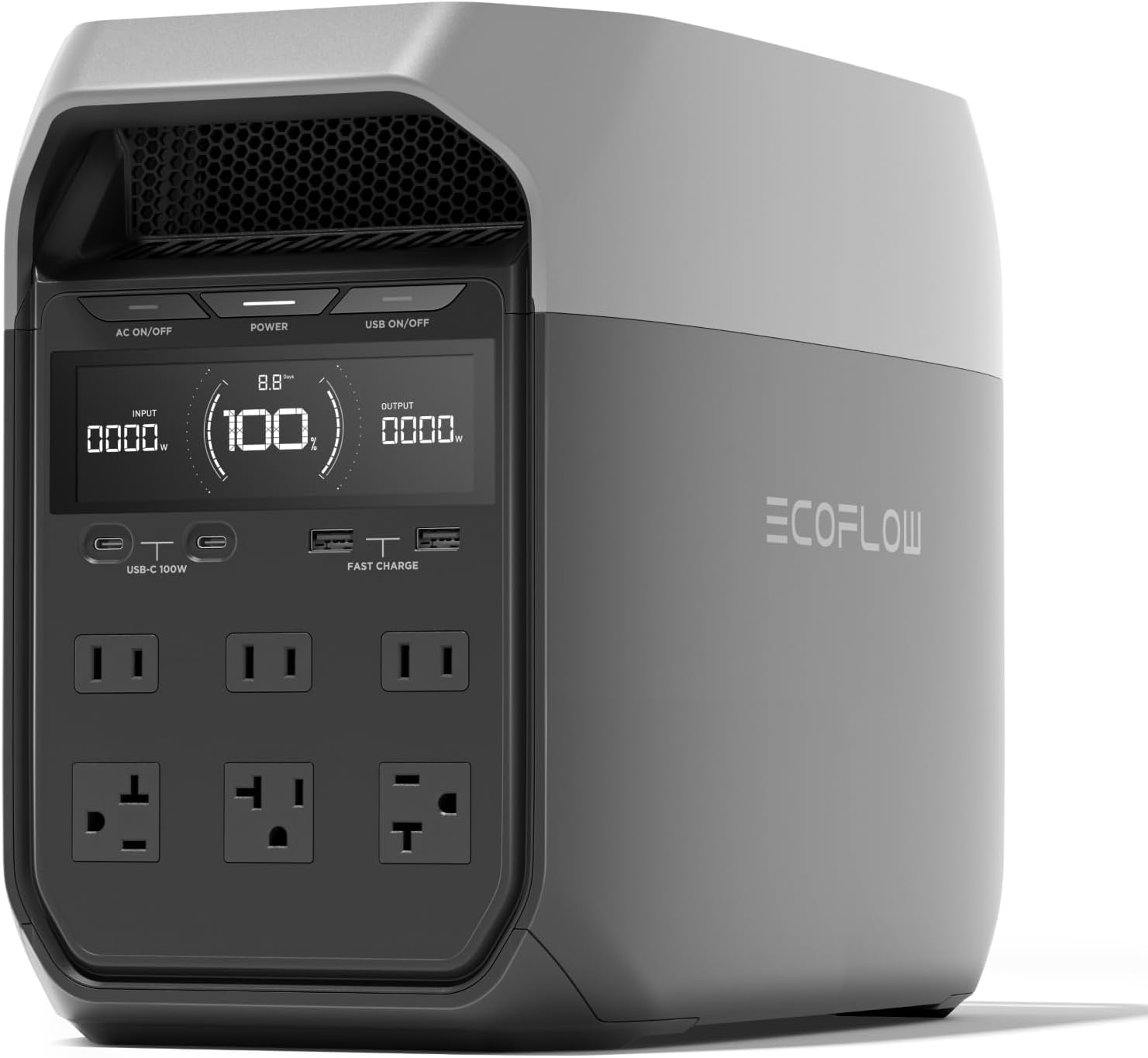
EF ECOFLOW Delta 3 — half the capacity, half the weight
What 2048Wh means in my house
I keep coming back to the fridge because it’s the load everyone asks about. 2048Wh, 80% usable, 1600Wh real. Fridge: 1.2-1.5kWh/day depending on season and how often the kids stand in front of it with the door open. So: one day. Maybe a day and a quarter if you’re disciplined.
Phones, laptops, the router, some LED lights: another 300-400Wh. Add those and you’re at 20 hours. This is why sizing guides keep telling people to list their loads — because the fantasy is “runs everything,” and the reality is “runs the important things for a day.”
A day is genuinely useful, by the way. Most outages are under 12 hours. The week-long ice storm is the exception that sells the product, not the rule that defines it. I bought my first station for the fantasy and kept it for the reality.
The category’s weight problem
Nobody lists “weight” as a feature, but in the 2kWh class it’s the spec that determines whether the thing leaves your garage. These units run 45-60 pounds. The DJI’s in that range. You will carry it from the garage to the car exactly as often as you go camping, which for most people is four times a year. The rest of the time it’s a very expensive garage resident that you check the charge on every couple months and feel virtuous about.
I’m not mocking it. Mine’s in the garage right now. We’re the same.
No judgment.
A word about the app
Every power station has an app now. DJI’s is — fine. It shows the numbers, it updates firmware, it doesn’t crash. Which puts it ahead of roughly half the category. The bar is on the floor. DJI steps over it. I haven’t flown with it — airline watt-hour limits are a separate headache I haven’t dealt with. I mention this because I once spent forty minutes trying to get a competitor’s station to connect to WiFi, and the memory still stings. An app that just works is a feature, apparently, in 2026.
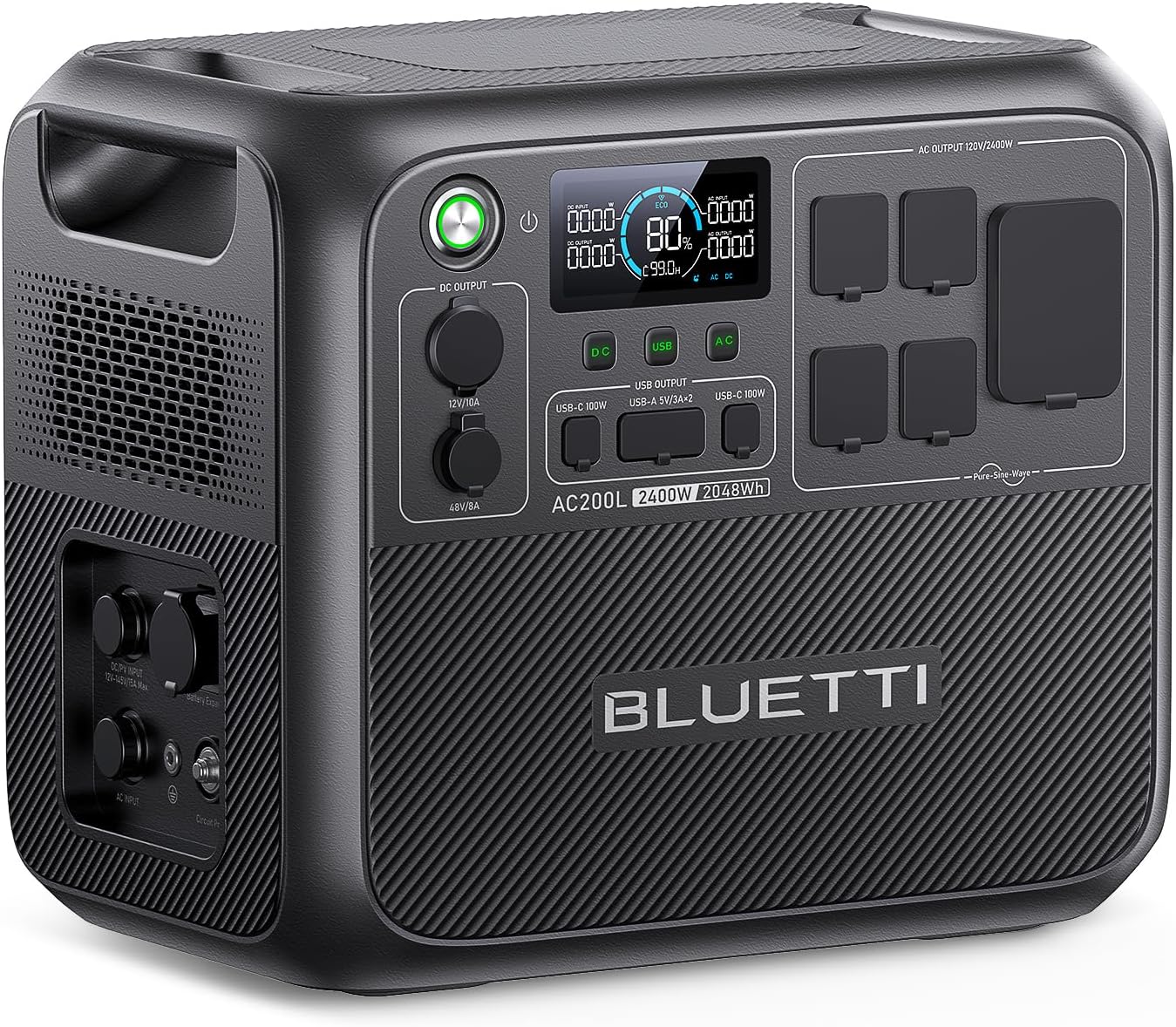
BLUETTI AC200L — the established 2kWh rival
Would I buy it? If I flew drones, absolutely — the SDC charging alone justifies it. If I didn’t, I’d cross-shop it against the AC200L and buy whichever was cheaper that month, because at the 2kWh level the differences are real but small, and $200 is $200. Right now it’s sitting at a price that makes me look at my current station and do the trade-in math in my head. I haven’t done it. The garage resident is fine. But I keep the tab open. You know how it is.
Frequently Asked Questions
How long will the DJI Power 2000 run a refrigerator?
Roughly a day — 20 to 24 hours for a typical full-size fridge, after accounting for inverter losses. Marketing runtimes assume ideal conditions; real kitchens with frequent door openings land lower.
What’s special about it for drone owners?
The SDC fast-charge ports charge DJI drone batteries directly over DC, skipping the AC brick — faster, cooler, and about 15% more efficient than charging through a wall adapter plugged into the station.
How fast does it recharge?
Very fast from a wall outlet — among the quickest in the 2kWh class. Exact times depend on input wattage, but an hour of grid power puts a meaningful charge back in, which matters during intermittent outages.
DJI Power 2000 vs. BLUETTI AC200L — which is better?
Similar capacity and output. The DJI charges faster and has the drone-specific ports; the BLUETTI has a longer track record in power stations and a bigger ecosystem. Drone pilots should lean DJI; everyone else should buy on price.
Is 2048Wh enough for home backup?
For essentials — fridge, phones, router, lights, CPAP — yes, for about a day. For whole-home backup including heating, cooling, or well pumps, no. That’s a 10kWh+ job.

