
Jackery Explorer 2000 Plus: 2kWh of LiFePO4 Power, Expandable to 12kWh
The Explorer 2000 Plus is a 2042Wh LiFePO4 power station with 3000W of continuous output and expandability to 12kWh — a dependable home-backup and RV unit whose premium price and lack of UPS are the main things to weigh against rivals.
Two specs define this unit: the battery chemistry and the expandability. LiFePO4 cells rated at 4000 cycles to 70% mean a decade-plus of service instead of the 2–3 years typical of older NMC packs. And up to five additional Battery Pack 2000 Plus modules take total capacity to 12kWh, which moves it from “portable emergency unit” to “serious home backup.” Everything else — the 3000W inverter, 1200W solar input, wheels and retractable handle — supports those two strengths.
Key Specifications
| Capacity | 2042Wh (expandable to 12kWh with 5 extra packs) |
| AC output | 3000W continuous, 6000W surge (pure sine wave) |
| Battery chemistry | LiFePO4 |
| Cycle life | 4000 cycles to 70% capacity |
| Solar input | Up to 1200W (MPPT) |
| AC charging | ~1500W input, 0–100% in ~2 hours |
| Weight | 27.5 kg (60.6 lbs), with wheels and retractable handle |
| Warranty | 3 years, extendable to 5 with registration |
| UPS function | No |
| Ports | 3× AC (120V), 2× USB-A (QC 3.0), 2× USB-C (PD 100W), 1× car port, 2× DC solar inputs, 2× expansion ports |
Battery: LiFePO4 Is the Core of Its Value
LiFePO4 chemistry — 4000 cycles to 70% — is what justifies the price: daily full cycling would still leave it above 70% capacity after 10+ years, versus under 2 years for an NMC pack cycled the same way.
Compared with older nickel manganese cobalt (NMC) cells, LiFePO4 offers far longer cycle life and better thermal stability, meaning lower fire risk from overheating. The trade-offs are higher upfront cost and slightly more weight per watt-hour — both visible here at 27.5 kg. Jackery doesn’t publish its cell supplier; the cells in this class generally come from major Chinese manufacturers such as CATL, EVE, or BYD, but what matters for lifespan is the pack assembly and battery management system, which monitors cell voltage, current, and temperature against overcharge, over-discharge, over-current, short-circuit, and temperature extremes.
Runtime: What 2042Wh Actually Powers in an Outage
Expect roughly 24–48 hours of critical loads (fridge, router, lights, phone charging) from the base unit after ~15–20% inverter and conversion losses — and multi-day coverage once expanded.
Usable capacity is always less than the nameplate: plan on 15–20% losses to inverter conversion, temperature, and parasitic draw. With that derating, realistic figures (estimates from rated capacity):
- Modern refrigerator (~150W running, cycling): roughly 2–3 days, 24–36 hours minimum on the base unit
- Internet router/modem (10–30W): days of continuous operation
- Laptop (50–100W): 20–40 full charges
- CPAP without humidifier (30–60W): 30–60 hours; with humidifier (150–200W): 10–14 hours
- 600W space heater: about 2.5–3 hours
- LED lamps (5–10W each): days
It won’t run central air conditioning or an electric oven — that’s not what a 2kWh portable unit is for. It covers selective, critical backup: refrigeration, connectivity, lighting, medical devices, and device charging.
Charging: 2 Hours on AC, Strong Solar Input
AC charging at ~1500W fills the unit in about 2 hours — competitive but not class-leading — while the 1200W solar input is genuinely strong for off-grid and extended-outage use.
Wall charging from 0–100% takes roughly 2 hours. Jackery prioritizes battery health over maximum charge speed here, which fits the LiFePO4 longevity story. On solar, the MPPT controller accepts up to 1200W; with multiple 200W panels in good sun, 900–1100W of real input is achievable, meaning a full solar recharge in 2–3 hours. During a multi-day outage, that solar throughput turns the unit from a finite battery into a self-replenishing generator — provided the sun cooperates. Pass-through charging is supported: you can run AC, DC, and USB outputs while the unit charges from AC or solar.
Inverter and Cooling: Stable 3000W, Fans Under Heavy Load
The 3000W pure sine wave inverter holds voltage and frequency steady under switching loads, and the 6000W surge handles motor startups — but expect audible fan noise above ~1000W of output.
Pure sine wave output keeps sensitive electronics, appliance motors, and medical devices running without the hum or stress of modified sine wave inverters. The 6000W surge rating covers refrigerator compressors and power-tool startups. Cooling uses temperature sensors and variable fans: silent or off at low loads, a steady noticeable hum under heavy loads (1000W+ output or 800W+ solar input). That’s a reasonable trade for heat management, which directly affects inverter and cell lifespan.
Build and Portability: Heavy, but Designed to Roll
At 27.5 kg this is not a carry-it-far unit — the wheels and retractable handle make it movable around a home, campsite, or RV, not backpackable.
The casing is robust, well-assembled plastic with good fit and finish, suited to outdoor knocks. The LCD shows input/output wattage, battery percentage, and estimated runtime. The port selection covers most needs, including 100W USB-C PD for fast laptop and phone charging. Note: Jackery doesn’t publish an IP rating for the Explorer series, so keep it sheltered from rain and dust — standard for this category.
Who Should Buy It
- Home backup: reliable outage coverage for essential appliances, especially expanded with extra battery packs
- RV travel: 3000W output and strong solar input run RV appliances (microwave, careful hairdryer use) and charge everything
- Car camping and outdoor events: wheels make the weight manageable where a vehicle gets you close
- Emergency preparedness: LiFePO4 longevity and safety suit long-term kits powering communications, lighting, and medical devices
- Job sites: corded tools or charging tool batteries where there’s no grid access
- Small-scale off-grid: cabins or sheds when paired with substantial solar
Drawbacks Worth Knowing
- Heavy: 27.5 kg — wheels help, but you won’t casually carry it.
- No UPS function: unlike some rivals, it can’t switch over in milliseconds, so it’s unsuitable for servers or medical equipment that can’t tolerate even a brief interruption. Pair it with a separate UPS for those loads.
- Premium price: sits at the high end of its capacity class; competitors may offer UPS or similar capacity for similar money.
- No IP rating: not designed for direct rain or dust exposure.
Value: Price per Wh Misses the Point — Lifespan Is the Math
The upfront price per Wh looks high, but a 4000-cycle LiFePO4 battery that lasts 10–15 years usually costs less over a decade than replacing cheaper NMC units twice.
The 3-year warranty (5 with registration) is solid and standard for the class. Expandability to 12kWh adds real value: you can start with the base unit and scale up instead of replacing the whole system as needs grow.
Explorer 2000 Plus vs. EcoFlow DELTA Pro vs. Bluetti AC200MAX
| Criteria | Jackery Explorer 2000 Plus | EcoFlow DELTA Pro | Bluetti AC200MAX |
| Battery chemistry | LiFePO4 | LiFePO4 | LiFePO4 |
| Capacity | 2042Wh | 3600Wh | 2048Wh |
| AC output | 3000W (6000W surge) | 3600W (7200W X-Boost) | 2200W (4800W surge) |
| Solar input | 1200W | 1600W (with adapter) | 900W (1400W dual input) |
| AC charging | 1500W | 3000W (X-Stream) | 500W |
| UPS | No | Yes (20ms) | Yes (20ms) |
| Weight | 27.5 kg | 45 kg | 28.1 kg |
| Expandability | Up to 12kWh | Up to 25kWh | Up to 8192Wh |
| Warranty | 3–5 years | 5 years | 4 years |
Choose the Jackery Explorer 2000 Plus if you want ease of use, a strong brand, a rollable form factor, and 12kWh expandability without needing the biggest single-unit capacity.
Choose the EcoFlow DELTA Pro if you need much larger base capacity (3600Wh), 3000W fast AC charging, 3600W output, true UPS, and up to 25kWh expansion — at significantly more weight and cost.
Choose the Bluetti AC200MAX if you want similar capacity and weight to the Jackery plus UPS functionality and versatile dual-input charging, with moderate expandability.
Keep reading:
- MARBERO 150W/150Wh Portable Solar Generator Kit Review
- BLUETTI AC180 Solar Power Station & 200W Panel Bundle Review
Frequently Asked Questions
Can the Explorer 2000 Plus power my entire house?
Not all circuits at once. The base 2042Wh unit covers critical loads — fridge, internet, lights, charging — for roughly 24–48 hours. Expanded toward 12kWh, it handles more appliances for longer, but central AC and electric ovens remain out of reach. Think selective critical backup, not grid replacement.
How do I charge it with solar panels?
Connect compatible panels directly to the DC input ports; the built-in MPPT controller optimizes input automatically. It accepts up to 1200W of solar, so several 200W panels can recharge it in 2–3 hours of good sun.
Is it good for long-term storage?
Yes — LiFePO4 self-discharges slowly. Store at 60–80% charge in a cool, dry place and check every 3–6 months.
Can I use it while it’s charging?
Yes. Pass-through charging lets you run AC, DC, and USB outputs while recharging from AC or solar — useful for continuous daytime solar operation during an outage.
Why doesn’t it have a UPS function?
Jackery omitted the millisecond-switchover bypass this unit would need for seamless failover. If you have loads that can’t tolerate any interruption (servers, some medical equipment), add a separate UPS downstream of the Explorer 2000 Plus.
Final Verdict
If you prioritize long-term reliability, battery safety, and strong solar charging in a well-built, expandable system, the Explorer 2000 Plus is a strong pick for home backup, serious RV use, or extended off-grid power — and its price makes sense over a 10+ year lifespan. If integrated UPS is non-negotiable or the budget is tight, look at the DELTA Pro or AC200MAX instead.
Top picks: the 2000 Plus and its closest rivals
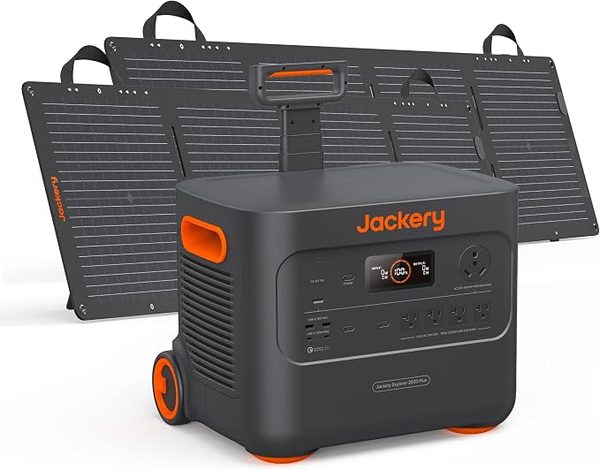
Jackery Explorer 2000 Plus (with 2×100Wmini Solar Panels)
The reviewed 2042Wh / 3000W unit itself — this in-stock bundle pairs it with two 100Wmini panels so you can solar-charge from day one.
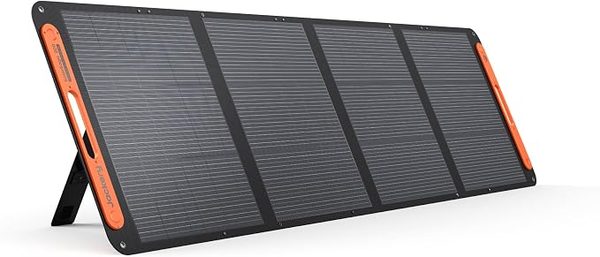
Jackery SolarSaga 200W Bifacial Solar Panel
The matching 200W bifacial panel — the fastest way to recharge the 2000 Plus when you are off-grid.
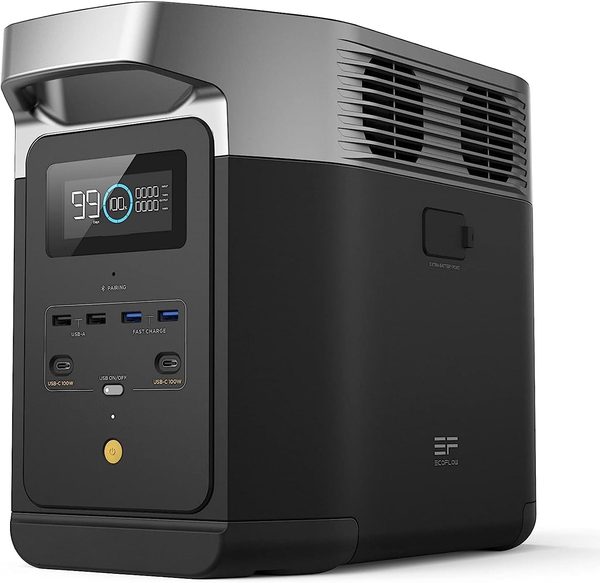
EF ECOFLOW DELTA 2 Portable Power Station
The closest rival: 1024Wh of LiFePO4 power from a different brand, in a smaller and cheaper package.
Common Questions About Jackery Explorer 2000 Plus
Quick Answers
Straight answers to the questions people ask most about this topic.
Is the Jackery Explorer 2000 Plus worth it?
Yes — if you need 2042Wh in this form factor, the Jackery Explorer 2000 Plus is a strong contender based on the hands-on detail in this review.
On solar, the MPPT controller accepts up to 1200W; with multiple 200W panels in good sun, 900–1100W of real input is achievable, meaning a full solar recharge in 2–3 hours.
How does the Jackery Explorer 2000 Plus perform in real-world use?
In everyday use it performs in line with its 2042Wh rating — no dramatic over- or under-delivery versus the spec sheet.
It accepts up to 1200W of solar, so several 200W panels can recharge it in 2–3 hours of good sun.
What are the downsides of the Jackery Explorer 2000 Plus?
The trade-offs are the usual ones for this category — size, weight, or charging time rather than anything fundamentally broken.
The trade-offs are higher upfront cost and slightly more weight per watt-hour — both visible here at 27.5 kg.
How does the Jackery Explorer 2000 Plus compare to similar options?
Against direct rivals it competes on 2042Wh; the real decision usually comes down to price, warranty, and ecosystem rather than headline specs.
Spec sheets in this segment look similar across brands. Prioritize charging speed, port selection, and after-sales support — those matter more day to day than small capacity gaps.
Who should buy the Jackery Explorer 2000 Plus?
Buyers whose needs line up with 2042Wh and the use cases in this review — that's who gets the most value from the Jackery Explorer 2000 Plus.
If you need much more or much less capacity, step up or down a size instead of forcing this one to fit. Matched to the right job, it's a straightforward buy.


