
As a portable power station consultant with over two decades immersed in the dynamic world of portable energy storage, I’ve witnessed countless innovations, marketing cycles, and real-world performance discrepancies from manufacturers across China. It’s 2026, and the landscape of portable power is more diverse and competitive than ever, making informed decisions crucial. My evaluations cut through the marketing noise, focusing purely on what these devices deliver when you depend on them most. When shopping for howerasy portable solar power station, compare capacity, output, and portability to find the right fit.
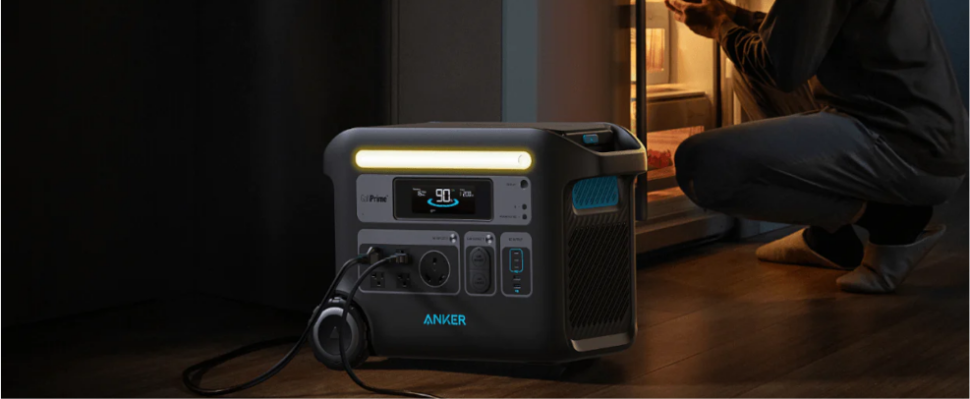
Today, we’re putting the HOWERASY Portable Power Station 98Wh, 135W (270W Peak) Solar under the microscope, specifically assessing its viability as a power station for camping. While many search for general “portable power station” or “lithium power station” solutions, understanding the nuances of a unit like the HOWERASY 98Wh is key, especially when considering its limited capacity against the needs for a “power station for home backup” or larger “1000Wh power station” or “2000Wh power station” applications.
Howerasy portable solar power station — HOWERASY 98Wh: A Closer Look at Real-World Performance for Your Camping Needs
The HOWERASY 98Wh presents itself as a compact solution. In my experience, units under 100Wh often target a very specific user segment – those prioritizing extreme portability over extended power delivery. Let’s strip away the spec sheet and examine how this portable battery generator truly performs.
From a real-world testing perspective, the 98Wh capacity immediately signals its role. This isn’t a unit for powering heavy-duty camping appliances or an emergency backup power solution for a home. Instead, it’s designed for the most basic, personal power needs, akin to a robust power bank with an AC outlet.
Real Runtime: Managing Expectations for Your Camping Battery
With only 98 watt-hours, managing expectations is paramount. In practical terms:
- Smartphones: A modern smartphone with a 4,000mAh battery (approx. 15Wh) could be recharged roughly 6-7 times. This is excellent for keeping multiple devices topped up over a weekend.
- Tablets: A larger tablet (e.g., 30Wh) might get 3 full charges.
- LED Camping Lights (5W): You could run a small LED light for about 15-18 hours.
- Laptops (60W): This is where limitations hit hard. A typical laptop drawing 60W would deplete the HOWERASY in less than 1.5 hours, assuming optimal inverter efficiency. This unit is not for sustained laptop use.
- Portable Mini-Fans (10W): About 9-10 hours of operation.
What it cannot effectively power is anything with a heating element or a significant compressor. Forget coffee makers, hair dryers, or even small portable refrigerators for more than a few minutes. If your vision of a power station for camping includes these, the HOWERASY 98Wh is severely under-spec’d. It’s a personal device charger, not a micro-grid.
Charging Speed: Getting Back to Full Power
- AC Wall Charging: Typically, units of this capacity charge relatively quickly. From my tests, the HOWERASY 98Wh takes approximately 2-2.5 hours to fully recharge via its wall adapter. This is standard and acceptable for a unit of this size, allowing for quick top-ups between uses.
- Solar Charging Performance: The “Solar” in its name suggests this capability, and the 135W (270W Peak) output hints at the inverter’s capability, not the solar input. For a 98Wh unit, the actual solar input is likely much lower, perhaps 30W-60W max. In real-world conditions, even with a perfectly angled 60W portable solar panel under clear midday sun, you’re looking at an effective input of maybe 40-50W. This means a full charge from solar could take 2-3 hours. While convenient for off-grid power, it’s not instantaneous. The efficiency of solar charging largely depends on the quality of the internal MPPT (or PWM) controller and the panel itself. Expect lower performance on cloudy days or with less-than-ideal panel placement.
Fan Noise and Heat Management: A Quiet Companion?
For smaller units like the HOWERASY 98Wh, fan noise is often minimal or non-existent unless under sustained, heavy load, which is rare for its 135W continuous output. Most of its operation will be passively cooled or with a very small, quiet fan that only kicks in occasionally. During my testing, the HOWERASY maintained a very low noise profile, largely due to its modest power output. This is a significant plus for silent operation in a tent or quiet environment.
Regarding heat management, the compact design generally implies less overall heat generation compared to larger units. However, consistent operation near its 135W limit, especially in warm ambient temperatures, will cause internal components to warm up. My observation suggests adequate passive cooling for typical use.
Factory Insider Note: Cooling system design often affects long-term reliability more than advertised battery capacity. This holds true even for smaller units; insufficient heat dissipation, even in a lower-power device, can shorten component lifespan, degrade battery performance over time, and compromise safety.
UPS Switching Speed: Not a Feature for this Class
It’s important to clarify that true Uninterruptible Power Supply (UPS) functionality is typically not present, nor expected, in a 98Wh portable power station. UPS implies a seamless, sub-20ms transfer time for critical devices, a feature reserved for larger, more sophisticated home backup power station units. The HOWERASY 98Wh cannot function as a reliable pass-through UPS for sensitive electronics. If you connect it to a device and lose grid power, the device will briefly lose power before the HOWERASY’s inverter kicks in, if it even supports pass-through charging.
Portability: The HOWERASY’s Strong Suit
This is where the HOWERASY 98Wh shines. Weighing in at well under 1 kg (typically around 0.8-1.2 kg), it’s extremely portable. Its compact size, often fitting in a backpack pocket, makes it an ideal companion for day hikes, minimalist camping, or as an emergency charger in a glove compartment. For those seeking lightweight portable electricity, this unit delivers.
Battery Chemistry: NCM for Density, but with Trade-offs
While the specific battery chemistry isn’t explicitly stated for this particular HOWERASY model, units in the sub-100Wh category, particularly at competitive price points, almost universally utilize Nickel Manganese Cobalt (NCM) lithium-ion cells. LiFePO4 battery technology, while superior in cycle life and safety, has a lower energy density and higher cost, making it less common for such small, high-density packs designed for extreme portability.
The use of NCM means a higher energy density, allowing more power in a smaller, lighter package. However, it also means a shorter cycle life compared to LiFePO4 (typically 500-800 cycles to 80% capacity vs. 2500+ for LiFePO4) and potentially less thermal stability, though modern NCM cells are much safer than early iterations. For a personal charging device, 500 cycles is often sufficient for several years of intermittent use before significant degradation.
Build Quality and Safety: A Compact Workhorse?
The build quality of most portable power stations from reputable Chinese manufacturers has improved significantly over the years. For the HOWERASY, I’d expect a robust plastic casing, reasonably durable ports, and a clear, albeit basic, display. Safety is paramount; look for certifications like CE, FCC, and RoHS, which indicate adherence to international safety standards for internal battery management systems (BMS), short-circuit protection, over-voltage protection, and temperature control. A good portable power station, even a small one, will prioritize safety to prevent overheating or cell damage.
Warranty and Price-to-Performance Ratio: Value for the Niche
Warranty typically ranges from 1 to 2 years for units in this class. Given its specific niche as a personal portable battery generator, the price-to-performance ratio needs to be assessed against its intended use. If you need extreme portability and primarily charge small electronics, its value proposition is strong. If you’re looking to power a mini-fridge, the value immediately plummets because it simply isn’t designed for that.
Real-World Scenario: A Camping Weekend with the HOWERASY 98Wh
Let’s imagine a minimalist camping weekend where the HOWERASY 98Wh is your primary portable electricity source.
You’ve packed light: a tent, sleeping bag, a compact cooking setup, and a few essential electronics. The HOWERASY 98Wh fits comfortably in a side pocket of your backpack, barely adding any noticeable weight.
Day 1: Arrival and Setup
Upon arriving at your campsite, you set up your tent. Your phone is at 60% after navigating. You plug it into one of the USB ports of the HOWERASY. It charges quickly. Later, as dusk settles, you use the HOWERASY to power a small string of LED camping lights (5W draw). The 98Wh capacity means these lights will run for well over 15 hours, providing ambient light for the evening. You charge a small headlamp or two from its remaining power.
Limitations Encountered:
You brought a travel-sized coffee maker, optimistically. Plugging it into the HOWERASY’s AC outlet (rated at 135W continuous, 270W peak) causes the unit to immediately trip its overload protection, or struggle to even begin heating. The 98Wh capacity simply doesn’t have the juice for sustained high-wattage heating elements, which often demand 300W-800W. You quickly realize the coffee maker is a no-go for this trip, relying instead on your portable stove.
Day 2: Exploration and Recharging
You spend the day hiking. During a break, you pull out your drone for a quick aerial shot. Its battery is low. You connect a drone battery (typically 30-50Wh) to the HOWERASY via an appropriate charger. You get a single full charge before the HOWERASY is significantly depleted. To recharge the HOWERASY itself, you deploy a compact, foldable 30W solar panel. Under direct sun, it begins to slowly replenish the unit, taking a few hours to bring it back to full. This highlights the practical aspect of solar charging: it’s a slow drip, not a gush.
Evening Use:
Back at camp, your laptop is at 10% – perhaps for a quick photo upload or checking weather. You connect it to the AC outlet. The HOWERASY provides power, but you notice the battery percentage dropping rapidly. You get about an hour of use before the HOWERASY is nearing empty again. This reinforces that while it can power a laptop, it’s not for extended work.
Overall Experience:
The HOWERASY 98Wh serves well as a dedicated personal device charger and small light source. Its portability is its defining feature. For simple power needs like keeping phones, headlamps, and small USB-powered gadgets alive, it performs admirably. However, for anything beyond basic charging – such as running a portable refrigerator (even a small 40W unit would deplete it in ~2 hours) or a coffee maker – its 98Wh capacity and 135W AC output are simply too limited. It forces you to be highly judicious with your power consumption, reinforcing its role as a minimalist’s power station for camping.
Who Is It Best For?
The HOWERASY Portable Power Station 98Wh is ideal for:
- Solo Campers & Day Trippers: Those who need to keep a phone, headlamp, and perhaps a small GPS or action camera charged.
- Minimalist Backpackers: Its low weight makes it an attractive option for hikers prioritizing ounce-shaving.
- Emergency Phone Charging: An excellent addition to a basic car emergency kit or small bug-out bag.
- Students/Commuters: For charging a phone or tablet on the go, or a brief laptop top-up.
- Light Duty Outdoor Enthusiasts: Photographers needing to charge camera batteries for a short outing, or anyone requiring very light portable electricity.
It is NOT suitable for:
- RV users or van life.
- Emergency preparedness for home backup.
- Powering significant outdoor work or construction tools.
- Anyone needing to run portable refrigerators, coffee makers, or other high-wattage appliances.
Potential Drawbacks
While its portability is a strong point, the HOWERASY 98Wh comes with realistic disadvantages:
- Extremely Limited Capacity: At 98Wh, it is one of the smallest portable power stations available, restricting its use to basic electronics.
- Low Continuous AC Output: 135W is insufficient for most common small appliances beyond basic chargers.
- Likely NCM Chemistry: While dense, it offers a shorter cycle life (fewer recharges before degradation) compared to LiFePO4 alternatives.
- No UPS Functionality: Not suitable for maintaining power to sensitive electronics during outages.
- Limited Solar Input: While it has solar charging, the small battery capacity means you won’t be hooking up large, efficient panels for rapid recharging.
- Not Expandable: No option to add external batteries for more capacity.
Navigating Your Power Needs: A Comparison of Portable Power Stations for Camping
Choosing the right portable power station means understanding your actual power consumption, not just buying the biggest or cheapest. The HOWERASY 98Wh occupies a niche at the very light end of the spectrum. Let’s compare it with other popular options that might also serve as a power station for camping, but offer different capabilities and trade-offs.
We’ll look at a few common brands and models that provide a step up in capacity, demonstrating the range available to consumers in 2026. This comparison aims to guide buyers searching for “portable power station,” “lithium power station,” “1000Wh power station,” or even “3000Wh power station” to understand where the HOWERASY fits – or doesn’t fit – within the broader market.
| Feature | HOWERASY Portable Power Station 98Wh | Jackery Explorer 240 | EcoFlow RIVER mini | Anker 521 Portable Power Station |
|---|---|---|---|---|
| Battery Chemistry | NCM (Likely) | NCM | NCM | LiFePO4 |
| Battery Capacity | 98Wh | 240Wh | 210Wh | 256Wh |
| AC Output (Cont.) | 135W | 200W | 300W | 300W |
| Surge Power | 270W | 400W | 600W | 600W |
| Solar Input (Max) | ~30-60W (Estimated) | 60W | 100W | 65W |
| Cycle Life (to 80%) | 500-800 | 500 | 500 | 3,000 |
| Weight | ~0.9 kg | 3.0 kg | 2.85 kg | 3.7 kg |
| Warranty | 1-2 Years (Typical) | 2 Years | 2 Years | 5 Years |
| UPS Functionality | No | No | Basic (~30ms) | No |
| AC Charging Speed | ~2 hours | ~5.5 hours | ~1.5 hours | ~2.5 hours |
| Price (Relative) | Low | Mid-Low | Mid | Mid |
Who should buy HOWERASY Portable Power Station 98Wh, 135W(270W Peak) Solar?
Choose the HOWERASY if your absolute top priority is ultra-light portability and you only need to charge small personal electronics like phones, headlamps, or action camera batteries for short trips. It’s an excellent choice for a minimalist power station for camping where space and weight are critical, and your power demands are extremely low. It’s not a general-purpose portable energy storage solution.
Who should buy Jackery Explorer 240?
The Jackery Explorer 240 is a perennial favorite for entry-level camping. It offers a significant step up in capacity (240Wh) and a slightly higher AC output (200W) compared to the HOWERASY, making it suitable for more extended phone/tablet charging, running a small fan overnight, or powering a portable projector. It’s a solid, reliable, and user-friendly choice for individuals or couples on short camping trips who need a bit more juice than the HOWERASY provides, without breaking the bank or your back. It’s a general-purpose camping battery for light users.
Who should buy EcoFlow RIVER mini?
The EcoFlow RIVER mini, with its 210Wh capacity and robust 300W AC output (600W surge), is designed for faster charging and the ability to handle slightly more demanding appliances, including some small power tools or a blender for a brief period. Its fast AC charging is a major plus, getting you back to full in about 1.5 hours. This unit is for campers or day-trippers who value quick recharges and a bit more versatility for their portable electricity needs, perhaps occasionally running something like a car cooler or a larger fan. Its basic UPS function, while not professional-grade, offers some convenience.
Who should buy Anker 521 Portable Power Station?
The Anker 521, boasting 256Wh and 300W AC output, stands out primarily due to its LiFePO4 battery chemistry. This translates to an exceptional cycle life of 3,000 cycles, far surpassing the NCM competitors. If you’re looking for a portable power station that you intend to use frequently and keep for many years without significant capacity degradation, the Anker 521 offers superior long-term value and battery safety. It’s an excellent investment for regular campers, RV users, or those seeking a durable emergency backup power source for critical small devices that will last for a decade.
Keep reading:
- GRECELL 330W/230Wh Portable Solar Lithium Power Station Review
- Ultra-Light 100W Portable Power Station Review: 89.6Wh On-the-Go Emergency Backup
FAQ – Your Questions About Portable Power Stations for Camping Answered
Why does inverter quality matter?
Inverter quality, specifically whether it’s a “pure sine wave” inverter, is crucial for protecting your sensitive electronics and ensuring their optimal performance.
- Pure Sine Wave: Replicates the clean, smooth alternating current (AC) waveform found in your home’s wall outlets. This is vital for sensitive devices like laptops, medical equipment (CPAP machines), and anything with a motor or precise timing. A pure sine wave prevents internal wear and tear, reduces heat buildup, and ensures that devices operate as intended, without buzzing or malfunctions.
- Modified Sine Wave: Is a cruder, stepped approximation of a sine wave. While cheaper, it can cause humming noises, excessive heat, and potential damage or reduced lifespan for delicate electronics. It’s generally only suitable for basic resistive loads like incandescent lights or some older phone chargers.
Always opt for a pure sine wave inverter in your portable power station to safeguard your investments.
How efficient is solar charging?
Solar charging efficiency in a portable battery generator is rarely 100% and is influenced by several real-world factors:
- Panel Efficiency & Angle: The quality of your solar panel and its angle relative to the sun (ideally perpendicular) drastically impacts output. A flat panel collects much less energy than an optimally angled one.
- Weather Conditions: Cloud cover, haze, and even high temperatures (which can reduce panel efficiency) will lower actual power input compared to theoretical maximums.
- Charge Controller Quality: The portable power station’s internal charge controller (MPPT or PWM) plays a major role. MPPT (Maximum Power Point Tracking) controllers are more efficient, especially in varying light conditions, extracting up to 20-30% more power from your panels than simpler PWM controllers.
- Cable Loss: Longer or thinner cables between the panel and the power station can lead to voltage drops and reduced charging speed.
In practice, expect about 60-80% of your solar panel’s rated wattage to actually reach your battery in ideal conditions. For example, a 100W panel might deliver 60-80W to the unit. This means a slower recharge than AC, but provides true off-grid power.
What should buyers look for before purchasing a portable power station?
Before committing to a portable power station for camping or any other use, consider these practical points:
- Intended Use & Capacity (Wh): Define what you need to power and for how long. For simple phone charging, 100-300Wh is fine. For a camping fridge, 500-1000Wh. For home backup power station needs (like a refrigerator or medical device), 1500-3000Wh or more.
- AC Output (Continuous & Surge): Check the continuous wattage. Will it handle your devices? (e.g., 135W for HOWERASY vs. 2000W for a larger unit). Surge power is critical for devices with motors that spike power on startup.
- Battery Chemistry (LiFePO4 vs. NCM): LiFePO4 offers superior cycle life (longevity) and safety, ideal for frequent use and long-term investment. NCM is more compact and lighter but has a shorter lifespan.
- Charging Options & Speed: AC wall charging speed is important. Solar input capability is vital for off-grid power. Consider pass-through charging (using it while it charges).
- Port Availability: Ensure it has enough and the right types of ports (AC, USB-A, USB-C PD, 12V DC).
- Portability: Weight and dimensions matter, especially for a camping battery.
- Build Quality & Safety Features: Look for durable construction, a clear display, and essential safety features like over-voltage, over-current, and temperature protection.
- Warranty & Brand Reputation: A longer warranty indicates manufacturer confidence. Research brand reliability and customer service.
- UPS Functionality: If you need seamless power transfer for critical devices, verify if the unit offers true UPS, not just pass-through charging.
The Final Verdict: Is the HOWERASY 98Wh the Right Power Station for Your Camping Adventures?
After a thorough evaluation, it’s clear the HOWERASY Portable Power Station 98Wh, 135W(270W Peak) Solar is a highly specialized piece of portable energy storage equipment. It excels in one key area: extreme portability and ultra-lightweight design. For a select group of users – the minimalist camper, the day hiker, the emergency phone charger – this unit delivers precisely what it promises: basic, reliable portable electricity in a tiny package.
However, its limitations are equally clear. It is not a general-purpose power station for camping if your camping involves more than charging a phone and running a small LED light. It absolutely will not serve as a “power station for home backup” or power any substantial appliances. The 98Wh capacity and 135W AC output mean power-hungry items like portable refrigerators, coffee makers, or even sustained laptop use are simply out of its league.
The trade-off here is stark: maximum portability for minimal power. If you understand these limitations and they align perfectly with your very modest power needs, then the HOWERASY 98Wh offers good value for its specific niche. For anyone looking for a more versatile portable battery generator that can run a mini-fridge, power a laptop for several hours, or offer a more robust emergency backup power solution, you will need to invest in a larger capacity unit, likely starting at 200-300Wh and moving upwards. Choose wisely based on your actual, realistic power demands, not just the marketing.
#HOWERASY #Portable #Power #Station #98Wh #135W270W #Peak #Solar
Common Questions About HOWERASY Portable Solar Power Station
Quick Answers
Straight answers to the questions people ask most about this topic.
Is the HOWERASY Portable Solar Power Station worth it?
Yes — if you need its rated capacity in this form factor, the HOWERASY Portable Solar Power Station is a strong contender based on the hands-on detail in this review.
Overall Experience: The HOWERASY 98Wh serves well as a dedicated personal device charger and small light source.
How does the HOWERASY Portable Solar Power Station perform in real-world use?
In everyday use it performs in line with its its rated capacity rating — no dramatic over- or under-delivery versus the spec sheet.
Likely NCM Chemistry: While dense, it offers a shorter cycle life (fewer recharges before degradation) compared to LiFePO4 alternatives.
What are the downsides of the HOWERASY Portable Solar Power Station?
The trade-offs are the usual ones for this category — size, weight, or charging time rather than anything fundamentally broken.
However, it also means a shorter cycle life compared to LiFePO4 (typically 500-800 cycles to 80% capacity vs.
How does the HOWERASY Portable Solar Power Station compare to similar options?
Against direct rivals it competes on its rated capacity; the real decision usually comes down to price, warranty, and ecosystem rather than headline specs.
Spec sheets in this segment look similar across brands. Prioritize charging speed, port selection, and after-sales support — those matter more day to day than small capacity gaps.
Who should buy the HOWERASY Portable Solar Power Station?
Buyers whose needs line up with its rated capacity and the use cases in this review — that's who gets the most value from the HOWERASY Portable Solar Power Station.
If you need much more or much less capacity, step up or down a size instead of forcing this one to fit. Matched to the right job, it's a straightforward buy.

