Streamlight Super Siege Review: 1100-Lumen Rechargeable Lantern with USB Power Bank
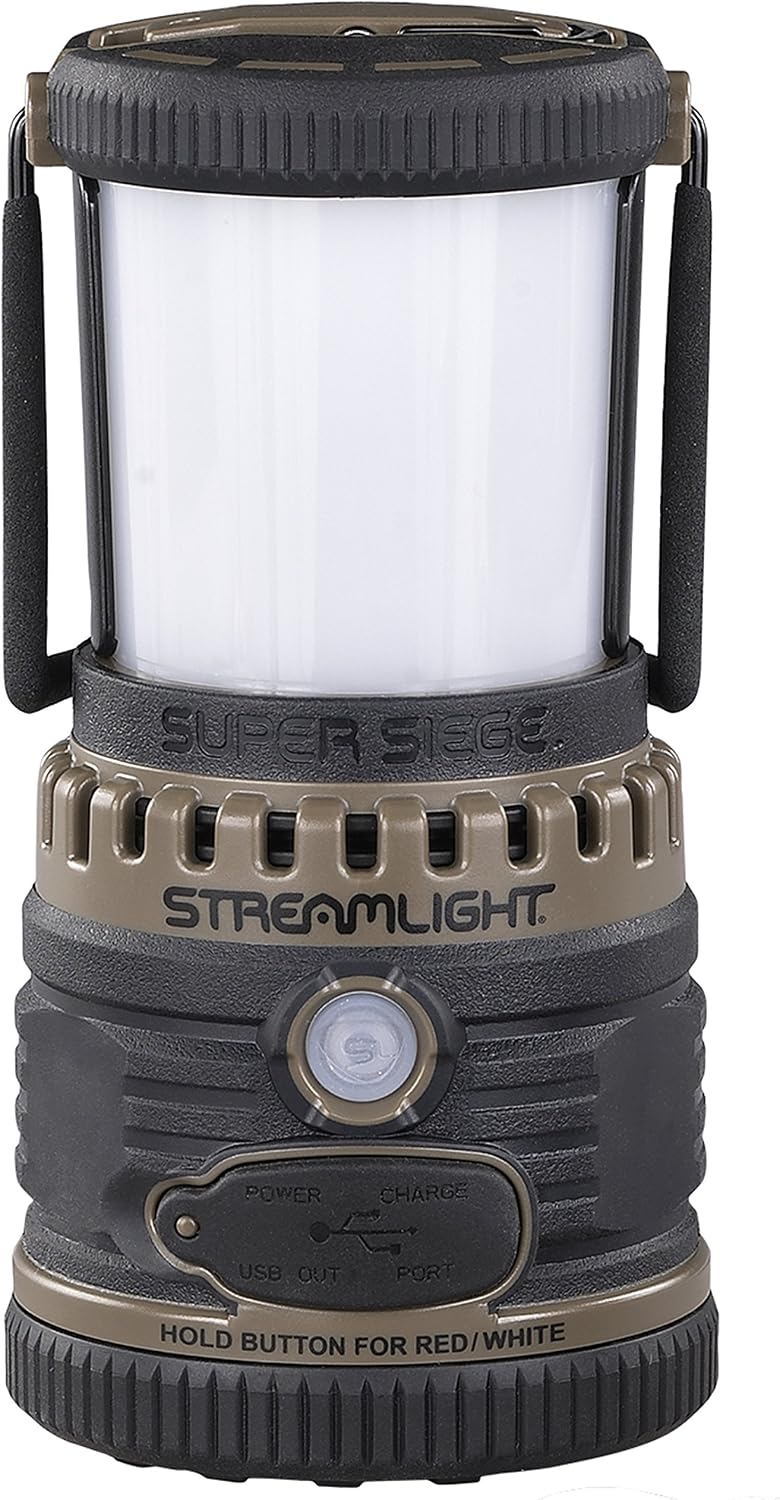
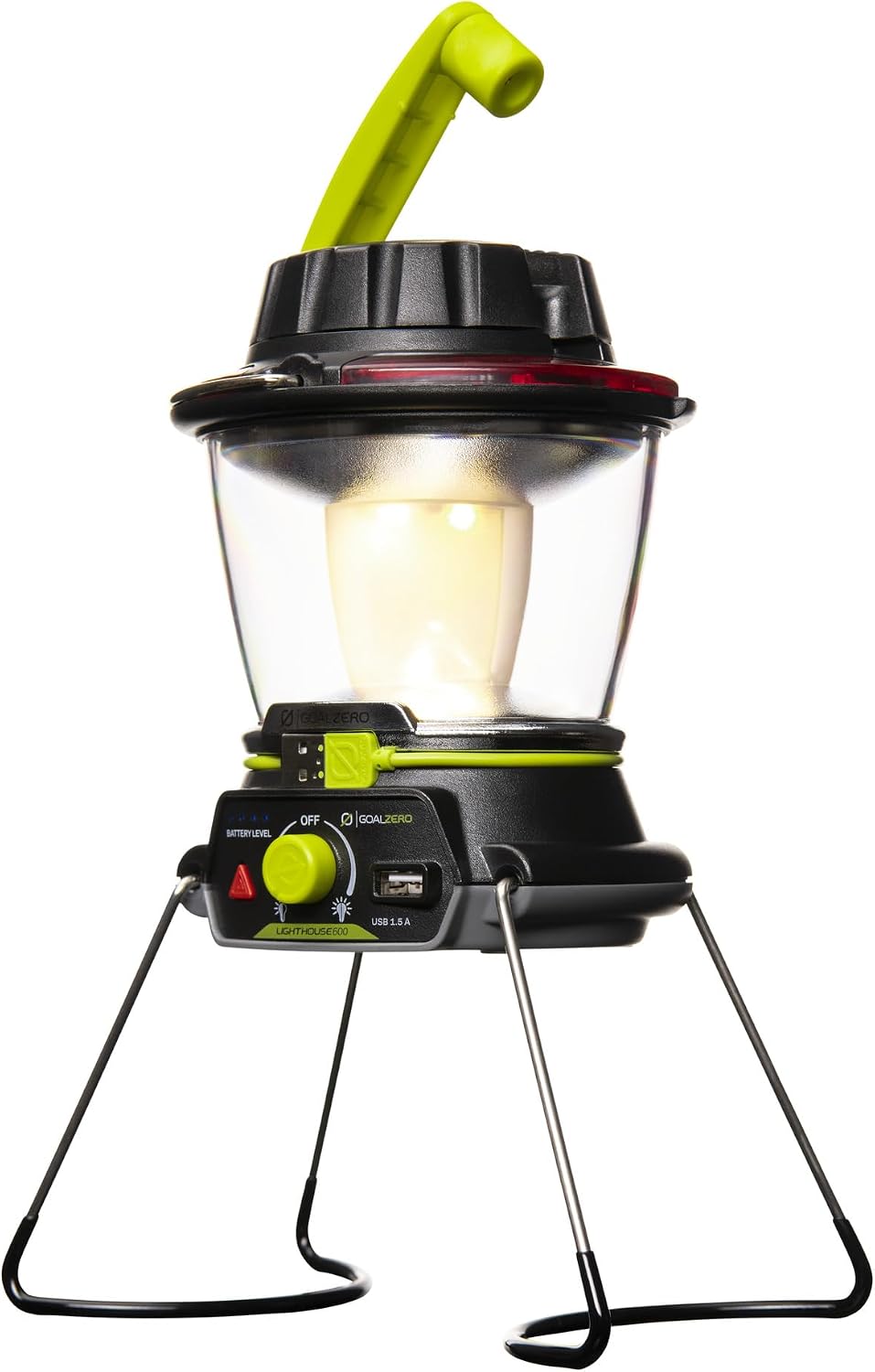
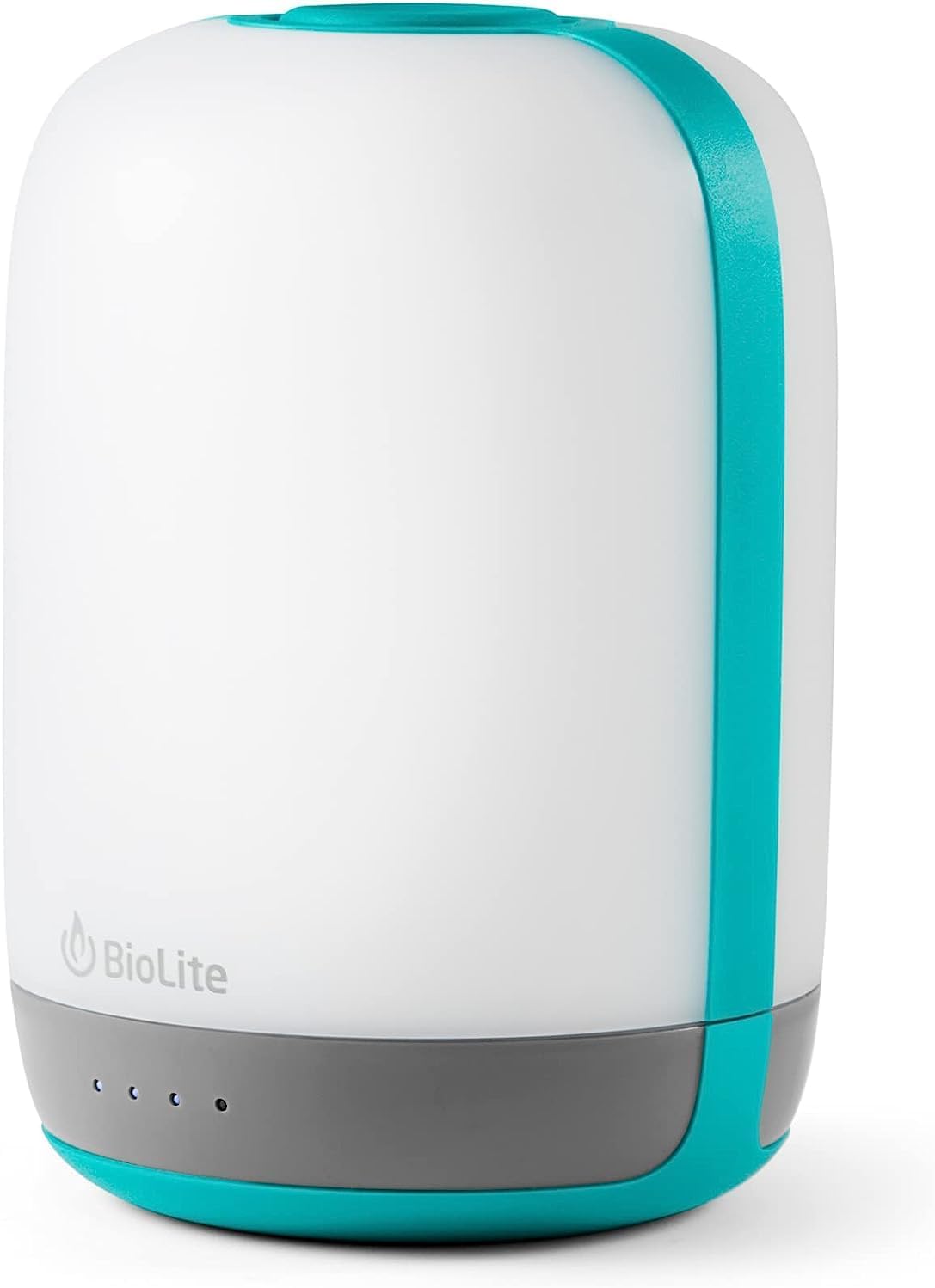
Shopping for a rechargeable camping lantern usually means choosing between “bright enough” and “lasts long enough” — the Streamlight Super Siege refuses to make you choose. This 1100-lumen lantern pairs serious output with a rechargeable battery and a USB port that tops up your phone. This guide covers what actually matters in a camping lantern, who the Super Siege suits, and how it compares to the Goal Zero Lighthouse 600 and the BioLite AlpenGlow 500.
Quick Answer
The Streamlight Super Siege is an 1100-lumen rechargeable lantern built for people who want real light, not mood lighting — it illuminates a whole campsite, recharges over USB, and doubles as a power bank for your phone. It’s the pick for car campers and emergency preppers. If you want a lighter, warmer-glow lantern for backpacking, the Goal Zero Lighthouse 600 or BioLite AlpenGlow 500 may suit you better.
Compare Top Rechargeable Camping Lanterns
Three proven picks side by side — choose the one that fits your needs.
Prices and availability may vary — tap any product to check the current listing.
We have also reviewed the Goal Zero Lighthouse 600 and the BioLite AlpenGlow 500 if you want to compare lantern options.
What to Look For in a Rechargeable Camping Lantern
A lantern is simple until you actually need one at midnight in the rain. Here’s what separates a tool from a toy.
Brightness and Modes
Lumens tell you the ceiling, not the experience. The Super Siege’s 1100-lumen high mode floods a campsite — cooking, repairs, finding the tent zipper at 2 a.m. But you’ll spend most of your time on low and medium, where the battery stretches across a whole weekend. Multiple modes matter more than the max number: high for tasks, low for hanging out. A lantern with one blinding setting and nothing else gets annoying fast.
Battery and Real-World Runtime
Published runtimes assume conditions you’ll never replicate. The honest way to read them: high mode burns through a charge in hours, low mode sips for days. A big internal battery buys you margin — you stop doing battery math and just use the thing. Rechargeable beats disposable here by a mile: no midnight battery swaps, no drawer full of half-dead AAs.
Charging and the Power Bank Feature
The Super Siege charges over USB and can charge your phone back — that two-way flow is the feature that justifies the size. At camp, your lantern becomes the household outlet: light at night, phone top-ups by day. One caveat — charging a phone drains the lantern’s battery, obviously. It’s a backup, not a power station. Manage expectations accordingly.
Durability and Weather Resistance
Lanterns live outside. They get dropped on rocks, rained on, and knocked off picnic tables by dogs. Streamlight builds for first responders, and it shows: the Super Siege feels like it was designed by people who’ve broken cheaper lanterns. Polycarbonate body, sealed against dust and rain, happy to be abused. The trade-off is weight — this is not an ultralight. It’s a tank.
Size, Weight, and Portability
Here’s the honest trade: the Super Siege is chunky. It lives in a car trunk or a base camp, not a backpack. If you’re counting ounces, the BioLite AlpenGlow 500 is the better call — smaller, lighter, still plenty for a tent. But for car camping, the size is a non-issue. Bigger battery, bigger light, bigger presence. Pick your poison.
Light Quality and Color Temperature
Harsh blue-white light kills the vibe. Warmer light feels like a campfire; cooler light feels like a parking lot. The Super Siege leans toward the practical end — bright, clear, slightly cool. Great for cooking and tasks. Less cozy for late-night conversations. Some campers pair a bright workhorse with a small warm-glow lantern for ambiance. Honestly? That’s the pro move.
Matching the Lantern to Your Situation
Three buyers keep showing up for this category. Find yourself below.
The Car Camper
You drive to the site, so weight doesn’t matter — brightness and battery do. The Super Siege is built for exactly this: light up the whole camp kitchen, recharge from the car or a power station, and top up phones overnight. One lantern replaces a headlamp, a string of fairy lights, and a portable charger.
The Emergency Prepper
Your lantern lives in a closet until the power dies. Then it needs to work — brightly, for hours, with zero fuss. Rechargeable matters here: you can keep it topped up from a solar panel or power station indefinitely, no battery stockpile required. The USB output charges the phones the whole family is panicking about. Keep it charged. Check it twice a year.
The Backpacker
You count ounces, so the Super Siege is probably not your lantern. The BioLite AlpenGlow 500 or Goal Zero Lighthouse 600 give you warm, pleasant light at a fraction of the weight — enough for a tent, a trail, a late dinner. Brightness per gram is the metric here, and the tank loses to the featherweight. Nothing wrong with that.
Rechargeable Lantern Types Compared
| Type / Tier | Best For | Price Tier | Key Feature | Watch-Out |
|---|---|---|---|---|
| 1100-lumen workhorse (Super Siege class) | Car campers and emergency kits | Mid-range | Serious brightness + USB power bank | Bulky — not a backpacking lantern |
| Mid-size USB hub lantern (Lighthouse 600 class) | Balanced camp and home use | Mid-range | Solid brightness with device charging | Less max output than the workhorses |
| Compact ambient lantern (AlpenGlow 500 class) | Backpackers and tent life | Mid-range | Light, warm glow, phone charging | Won’t light up a whole campsite |
| Budget battery lantern | Kids’ rooms and glove boxes | Budget-friendly | Cheap enough to own several | Disposable batteries, dim, fragile |
The 1100-lumen workhorse class is for people who treat light as infrastructure — bright, durable, and ready to charge your phone when the grid can’t.
The mid-size USB hub class splits the difference — enough light for real tasks, light enough to toss in a bag, with device charging built in.
The compact ambient class is about atmosphere and ounces — warm tent light that backpackers actually carry.
The budget battery class still exists because it’s cheap — but the light is dim, the batteries die at the worst moment, and you’ll replace it within a season.
Three Scenarios Where the Super Siege Earns Its Keep
Car Camping With a Group
One bright lantern changes group camping. Hang it from the canopy and the whole kitchen is usable after dark — cooking, cards, cleanup. Phones charge off the USB port while everyone eats. No headlamp tan lines. No squinting.
Power Outage at Home
This is where 1100 lumens stops being a camping spec and becomes a household asset. One Super Siege lights a living room well enough to read by. The USB port keeps two phones alive through a multi-day outage. Pair it with a solar panel or power station and you’ve got light indefinitely — the exact scenario emergency preppers buy it for.
Worksite and Garage Duty
Streamlight’s first-responder DNA shows here. Working under a car, fixing a fence at dusk, a breaker panel in a dark basement — the Super Siege is bright enough to work by and tough enough to get knocked around. It earns a permanent spot on the workbench, not just the camp bin.
Common Mistakes Buyers Make
Buying lumens, not modes. A 1100-lumen max is useless if the low mode is still blinding. Check that the dimmest setting is actually dim — that’s where you’ll live.
Forgetting to recharge. Rechargeable only helps if you charge it. Top it up after every trip. A dead rechargeable lantern is just a paperweight.
Expecting a power station. The USB output is a backup phone charger, not a whole-device solution. One or two phone top-ups, then the lantern needs recharging itself.
Choosing by weight for car camping. Ounces matter on trails, not in trunks. Don’t buy the featherweight lantern for car camping and then complain it’s dim — buy the bright one.
The Essentials, Answered
Why do rechargeable lanterns beat disposable-battery ones?
Because the battery is the whole product. A rechargeable lantern with a big internal cell runs longer, costs nothing per use, and recharges from the same USB and solar gear you already own. Disposable-battery lanterns are cheaper upfront and then tax you forever — in money, in midnight battery swaps, in landfill guilt. The math flips within a season of regular use.
How do you keep a lantern charged off-grid?
Three routes, all simple. Charge from your car’s USB port while driving. Charge from a portable power station at camp. Or charge the power station from solar panels by day and run everything off it. The lantern sips power compared to a fridge or a laptop, so even a modest panel keeps it topped up indefinitely. Set the routine once and forget it.
What does “1100 lumens” actually mean at a campsite?
It means you can cook, read, and work under it comfortably — a whole campsite lit well enough for real tasks. For context, it’s dramatically brighter than the 100-300 lumen lanterns most people grew up with. Inside a tent, it’s overkill on high; you’ll use low and medium. The brightness is for the outdoors, where light has somewhere to go.
Key Takeaways
1100 lumens is worksite-grade light — enough to cook, work, and read by, not just find the tent zipper.
Rechargeable plus USB output turns the lantern into a two-way device: light at night, phone charger by day.
Weight is the honest trade — the Super Siege is a car-camping and emergency-kit lantern, not a backpacking one.
Decision Tree: Which Rechargeable Lantern Should You Buy?
Maximum brightness and toughness? Get the Streamlight Super Siege — 1100 lumens, built like a tank, charges your phone.
Lighter and warmer for trail and tent? Get the Goal Zero Lighthouse 600 or BioLite AlpenGlow 500.
Cheapest possible backup? A budget battery lantern works — just know you’ll replace it within a season.
Questions People Ask Before Buying
Is the Streamlight Super Siege worth it?
Yes — if you camp by car or keep an emergency kit, the Super Siege’s 1100-lumen output, rechargeable battery, and USB phone-charging make it one of the most capable lanterns in its class, and its first-responder-grade durability means it survives the drops and downpours that kill cheaper lanterns. It’s overkill for backpacking — too heavy, too bright for a tent on high. But for base camp and blackouts, it’s the lantern that makes other lanterns look like candles.
How many lumens do you need in a camping lantern?
For general camp use, 300 to 600 lumens covers cooking, socializing, and tent life comfortably, while 1000-plus lumens like the Super Siege earns its keep when you need to light a whole campsite, work after dark, or illuminate a room during a power outage. More lumens isn’t always better — inside a tent, anything over a few hundred is blinding. Buy for your brightest use case, then use the low modes for everything else.
Can a camping lantern really charge your phone?
Yes — lanterns like the Super Siege, Lighthouse 600, and AlpenGlow 500 include USB output that tops up a phone, though it’s a backup solution rather than a power station: expect one or two full charges before the lantern itself needs recharging. In an outage, that one charge is the difference between a working phone and a dead one. Manage expectations and it’s genuinely useful.
Streamlight Super Siege vs Goal Zero Lighthouse 600 — which should I buy?
Buy the Super Siege if maximum brightness and toughness matter most — its 1100-lumen output and first-responder-grade build outclass the Lighthouse 600 for worksites and blackouts — and buy the Lighthouse 600 if you want a lighter, more packable lantern with a warmer glow for tent life and trail use. Same price tier, different philosophies: workhorse versus all-rounder. Car campers lean Super Siege; backpackers lean Lighthouse.
Are rechargeable lanterns better than battery-powered ones?
For anyone who camps or preps more than a couple of times a year, yes — rechargeable lanterns run longer per use, cost nothing to refuel, and recharge from USB, car ports, or solar panels, while disposable-battery lanterns keep taxing you in money and midnight battery swaps. The only case for disposables: a glove-box lantern you might use once a year, where a rechargeable would self-discharge between uses anyway.
Frequently Asked Questions
How long does the Super Siege last on a single charge?
It depends entirely on the mode — high burns through a charge in hours, low stretches across days. For typical camp use mixing modes, a full charge comfortably covers a long weekend.
Can I use it while it’s charging?
Yes — it runs while plugged in, which makes it a solid tent-side or workbench light at home. Off-grid, charge it from a power station by day and run it by night.
Is it waterproof?
It’s built to handle rain and splashes without complaint — Streamlight designs for first responders, not fair weather. Don’t submerge it, but don’t baby it either.
Can it charge devices besides phones?
Anything that charges over USB — headlamps, earbuds, small fans. Just remember every milliamp you give away is light you’re not getting later.
Is 1100 lumens too bright for inside a tent?
On high, absolutely — you’ll blind yourself. That’s what the low and medium modes are for. Use high outdoors, low in the tent.
Can I charge it from a solar panel?
Yes, through a portable power station or a USB solar charger — the lantern just sees USB power. A modest panel keeps it topped up indefinitely on sunny trips.
Final Recommendation
The Streamlight Super Siege is the right lantern for people who want real light — car campers, emergency preppers, anyone who’s ever squinted at a dim lantern and wished for more. It’s bright, tough, rechargeable, and it charges your phone.
Want lighter and warmer for the trail? The Goal Zero Lighthouse 600 or BioLite AlpenGlow 500. But for base camp, blackouts, and worksites, the Super Siege is the one.