
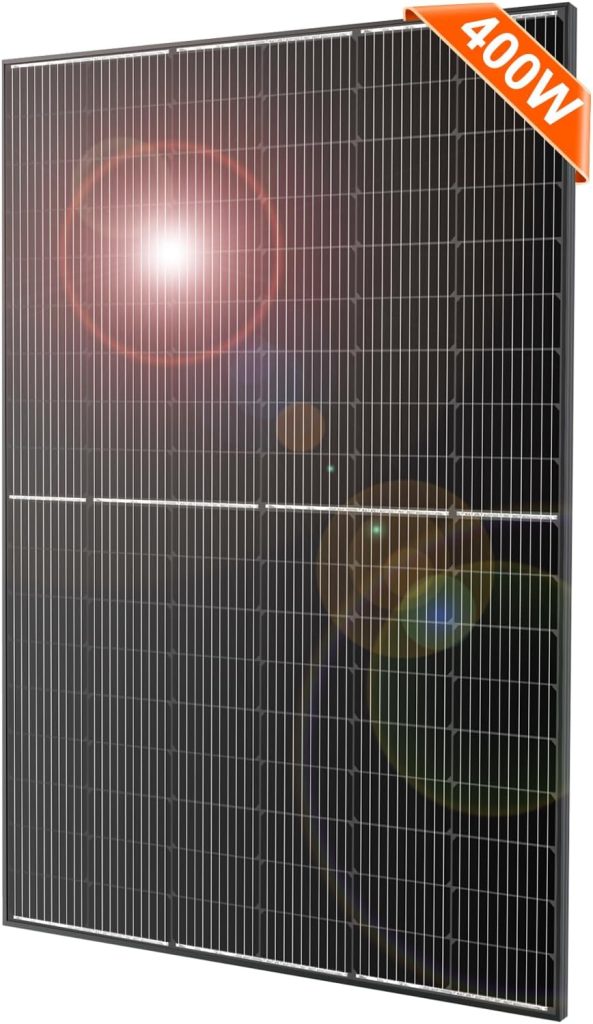
Grey Tuesday. The kind of flat white sky that makes you squint without sunglasses. My 400W panel — the DOKIO, 31 volts, monocrystalline, mounted on the shed roof — was putting out 58 watts.
Fifty-eight. Out of four hundred.
I stared at the charge controller for a while. Then I did what every solar owner eventually does: I stopped being angry at the panel and started being angry at my own expectations.
400W Means 400W in a Lab
The STC rating — standard test conditions, 1000W per square meter of sunlight, 25 degrees cell temperature — describes a Tuesday in the Sahara, not a Tuesday in Ohio. In the real world, a 400W panel makes 400W for a few golden hours around solar noon on clear cool days, and something like 280 to 320W the rest of a decent afternoon.
Heat derates panels, which surprises everyone once. A panel baking at 60 degrees Celsius loses roughly 12 to 15 percent versus its lab number. So your best summer day is also your hottest panel day, and the two effects fight each other to a draw. Spring and fall, cool and clear, are the secret high season. Nobody’s brochure leads with October.
I estimated my annual yield per 400W panel at roughly 500 to 600 kWh, location being everything. That number — not the 400W headline — is the one that matters for payback math and for answering how many solar panels you need for your home.
Why 31V for a 24V System
The DOKIO’s 31-volt operating point confused me at first. A “24V panel” that makes 31V? The answer is that panels are current sources with opinions, and the voltage has to sit above the battery’s charging voltage for current to flow at all. A 24V battery bank charges at 28 to 29V. The panel needs headroom above that, plus margin for heat derating and wire losses.
31V gives you that margin without going so high you need an expensive high-voltage controller. It’s the sweet spot for 24V systems the way 18V panels are the sweet spot for 12V. Not an accident. Just good electrical manners.
Wire it wrong, though — say, series into a 12V PWM controller that can’t handle it — and you’ll learn about voltage limits the expensive way. Match the controller to the panel’s open-circuit voltage, not the nominal. The Voc is the number that kills controllers.
One Big Panel vs Four Small Ones
I used to run four 100W panels. Then I did the connection math and switched to single 400W units. Every MC4 connection is a small resistance and a future corrosion point. Four panels means branch connectors, extra cable runs, more roof penetrations, more places for a squirrel to start a career.
One 400W panel: two MC4 connections, one cable run, done. Fewer joints, fewer losses, faster install. The downside is shade — lose part of one big panel and you lose a bigger chunk of total output than losing one of four small ones. With bypass diodes doing their job, partial shade costs you a third of the panel instead of the whole thing. Without them, one leaf shadow can take down the entire panel, and I mean an actual leaf.
For a shed or RV roof with predictable sun, big panels win. For a roof with a chimney shadow sweeping across it daily, smaller panels in parallel waste less. Shade pattern decides. Walk your roof at 10am, noon, and 3pm before you buy anything.
MPPT Earns Its Keep on Days Like That Tuesday
On the grey Tuesday — 58W out of 400 — the MPPT controller was the only thing keeping the system honest. The longer version of this story lives in do solar generators work on cloudy days. A PWM controller just connects the panel to the battery and takes what it gets. MPPT constantly hunts for the panel’s maximum power point, which wanders all over the voltage curve as clouds move.
The difference runs 15 to 30 percent in variable light, smaller on perfect days. On perfect days you don’t need it. On grey Tuesdays it’s the difference between 58W and 40W, and over a winter that gap compounds into real kilowatt-hours.
MPPT controllers cost more. I resisted for a year. The year I switched, December production went up enough that I noticed it on the bill. I don’t resist anymore.
The Shed Roof Saga
Completely sideways, but it’s the reason the panel is on a shed and not the house. I got three quotes for a roof install on the house. Then the HOA sent a letter about “aesthetic guidelines.” Then I measured the shed roof — south-facing, no shade, eight feet off the ground — and realized I could do the whole thing myself in a weekend with Z-brackets and a tube of sealant.
The shed array has now outproduced my expectations for two years, mostly because I can walk up to it with a hose and wash the pollen off in ten minutes. Ground-accessible beats roof-optimal every time if it means you actually clean the things.
Dust and pollen steal 5 to 10 percent before you notice. A ten-minute wash gives it back. The fanciest panel in the world underperforms a clean cheap one. Maintenance beats technology, again, forever.
The Panel Industry’s Quiet Habits
First habit: the wattage creep. Every year the same physical size gains 5 to 10W from better cells, and every year the marketing resets around the new number like the old panels were defective. They’re not. A 2022 380W panel and a 2026 400W panel are the same glass and aluminum with slightly better silicon. Buy on price per watt, not on the shiniest number.
Second: efficiency percentages without context. “High efficiency!” — high compared to what? 21 percent versus 23 percent on a 400W panel is 8W of difference, which is a rounding error wrapped in a banner ad. Efficiency matters when roof space is limited. Otherwise it’s watts per dollar, full stop.
Third, and this one’s aimed at me: I spent a month researching panel brands and about ten minutes on the wire gauge. Voltage drop in undersized cable ate more of my production than any brand difference would have. The boring parts — wire, fuses, grounding — are where systems actually lose power. I know this now. The research order was backwards.
What About the Competition?
Three panels in the 100 to 400W range, depending on whether the build is big or portable.
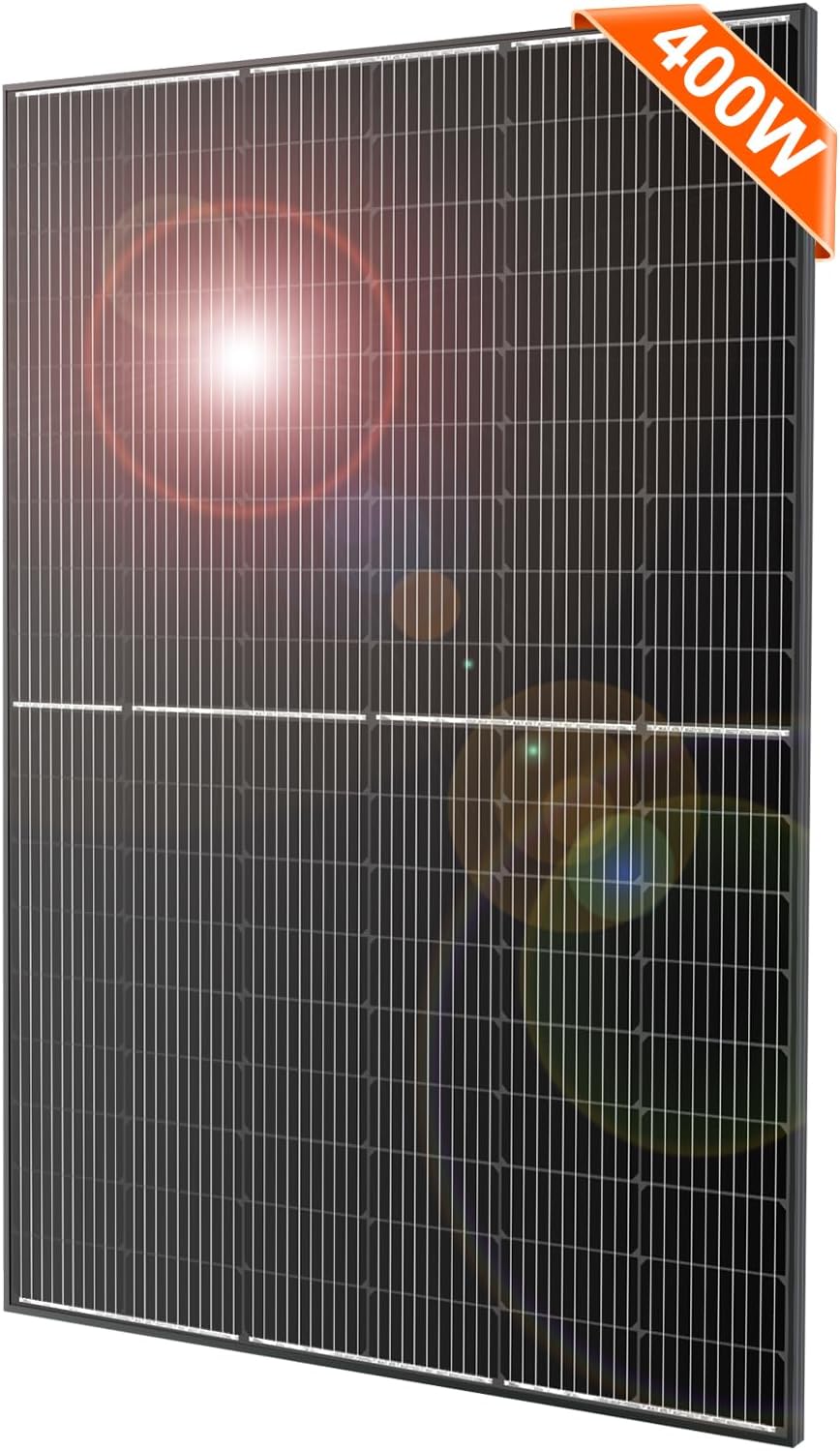
DOKIO 400W 31V Solar Panel
400W at 31V for 24V systems. One panel instead of four, fewer joints and losses.
Renogy 100W N-Type Solar Panel Kit
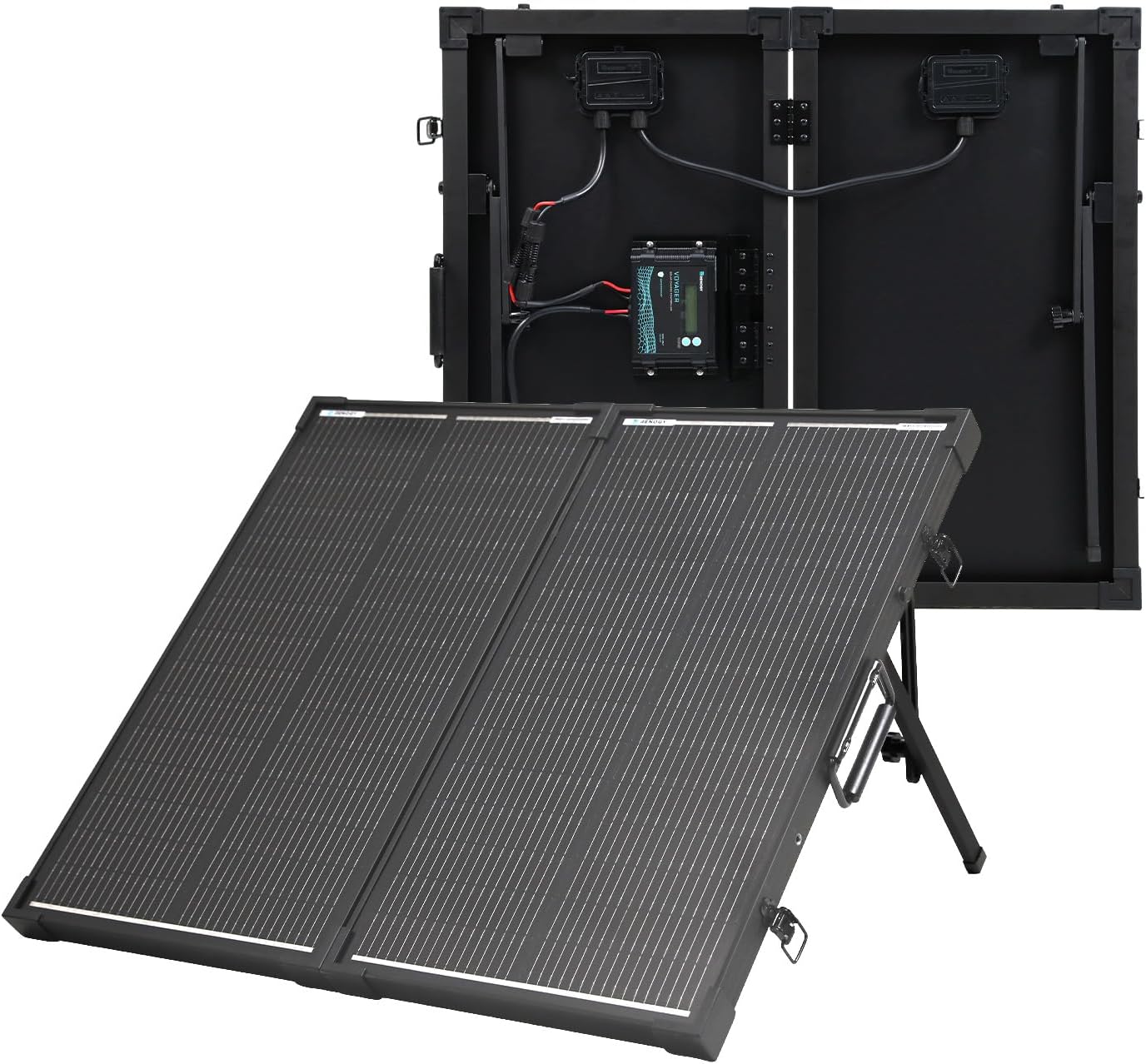
100W N-type kit with 20A controller. A complete 12V charging system in a suitcase.
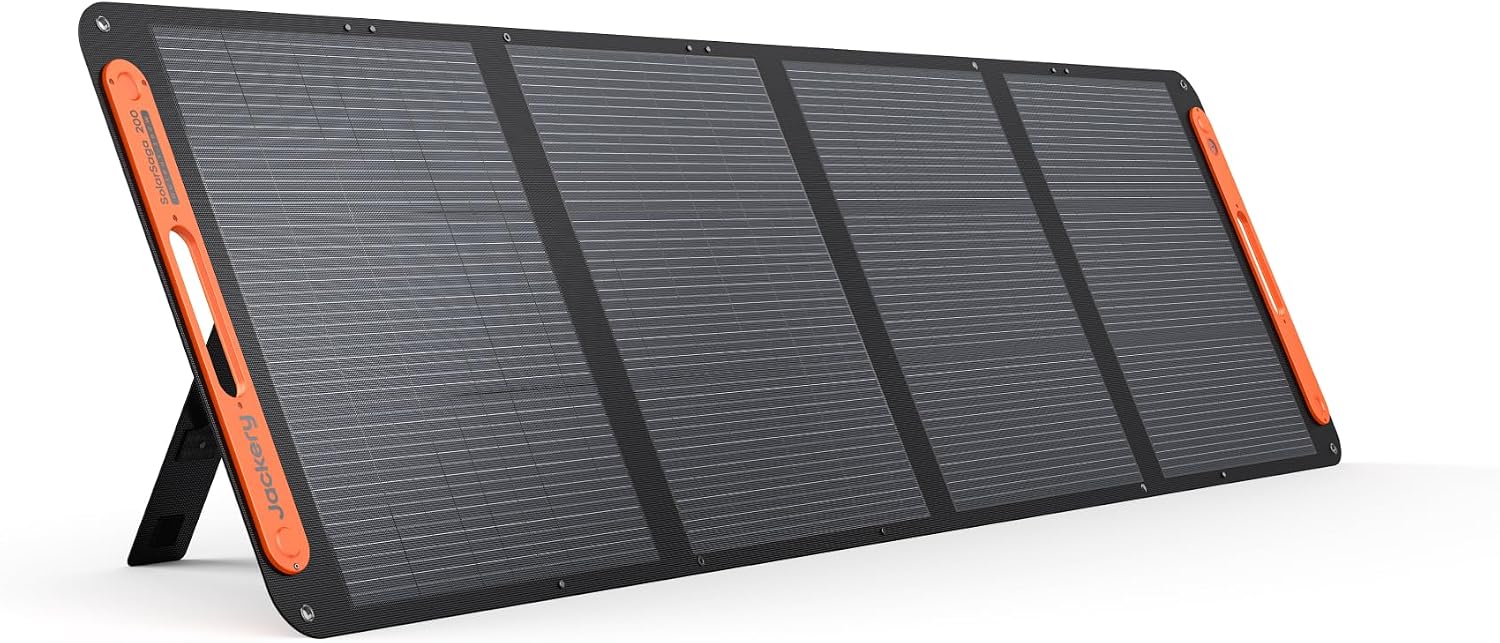
Jackery SolarSaga 200W
200W bifacial folding panel. Double the harvest for bigger stations.
Buy the DOKIO 400W if you’re wiring a 24V off-grid setup — shed, cabin, RV roof — and want one panel instead of four. Buy the Renogy 200W suitcase if portability matters more than raw watts; it folds, it carries, it just works. Buy the Jackery SolarSaga 200W if your power station is the load and you want the panel brand matched to it.
Skip the big rigid panel if your site has moving shade all day. No panel outsmarts a chimney shadow, and a smaller parallel array wastes less.
That grey Tuesday ended at 61W, by the way. The sky never cleared. The batteries still got their trickle, the shed light ran that night, and I washed the pollen off the following weekend. Fifty-eight watts felt like an insult at noon. By evening it felt like the system doing its job — quietly, in bad weather, without asking me for anything.
This site contains affiliate links. We may earn a commission on qualifying purchases.


