
Gray sky over the lake, panel propped against the cooler at what I estimated was a good angle, charge controller reading 22 watts. Twenty-two watts from a 100-watt panel. I sat there doing the division in my head, 22%, and wondering if I’d been scammed or if this was just how it worked. Turns out it was just how it worked, and nobody had told me, because “100W” is a lab number and lakes are not labs.
That was my introduction to the Renogy 100W N-type panel, and honestly the introduction was unfair, because the panel was fine. The sky was the problem. A week later, same panel, clear October sun, tilted properly toward the south: 84 watts. Eighty-four out of a hundred, which after conversion losses and the panel heating up in the sun is about as good as it gets. I wrote both numbers in a notebook. I still have the notebook. The gray day says 22W, the clear day says 84W, and between those two numbers is everything you need to know about owning a small solar panel.
Here’s the math I can now do in my sleep. A 100W panel, five decent sun hours, times 0.75 for real-world losses: about 375 watt-hours a day. Call it 400 on a generous day, 150 on a gray one, zero when it rains. My power station is a 500Wh unit, so one good day of sun fills it from half to full. That’s the actual use case for a 100W panel. Not “power your cabin.” Top up the battery box while you fish.
What N-type actually means for you
The N-type label refers to the cell technology, and the practical difference versus the older panels is temperature behavior and degradation. Panels lose output as they heat up, all of them do, but N-type loses less. On a 95-degree afternoon with the panel baking on a dark roof, that might be the difference between 70 watts and 78 watts. Not life-changing. But over a whole summer, it adds up, and the degradation story is better too: N-type panels lose capacity more slowly over the years, so in year ten yours is still pulling its weight while the old-tech panel next door has faded.
I can’t verify the ten-year claim. Nobody can, not yet, not for this specific panel. What I can verify is that after one season of being hauled in and out of my truck bed, rained on, and once dropped corner-first onto gravel, it still hits 84 watts on a clear day. The aluminum frame has a dent. The glass doesn’t.
Good enough.
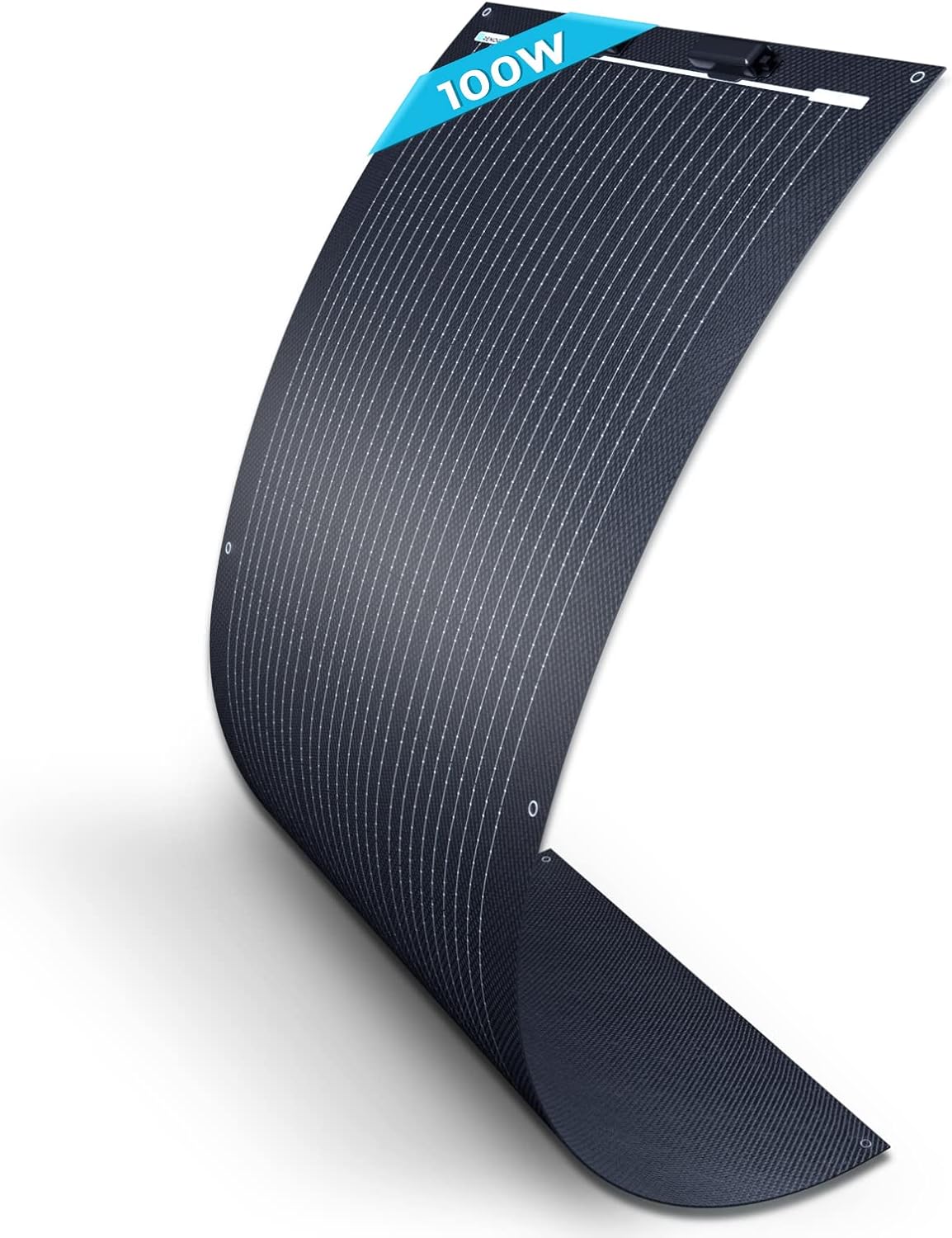
Would it survive permanent marine mounting, salt spray every day? I haven’t tested that scenario. Mine lives on land and gets hosed off twice a year. The junction box is sealed and the frame is anodized, which is promising, but promising isn’t tested.
This site contains affiliate links. We may earn a commission on qualifying purchases.
The beginner trap I walked straight into
When I started, I bought this panel and a cheap PWM charge controller, because the bundle was cheap and I didn’t know the difference. PWM controllers are simple: they connect the panel straight to the battery and clip the voltage down, wasting the excess as heat. With a 100W panel and a 12V battery, I was leaving maybe 15% of the power on the table. I only learned this when a guy at the campground, the kind of guy who has opinions about wire gauge, looked at my setup and sighed audibly.
MPPT controllers cost more and actually track the panel’s maximum power point, squeezing out that extra 15%. I upgraded. The difference on a gray day was the difference between 22 watts and 26 watts, which sounds like nothing, but over a week of marginal weather it’s the difference between a charged battery and a dead one. If you’re buying one panel and one controller, get the MPPT. The PWM savings are false economy. I know because I paid for the lesson.
My off-topic confession: I originally bought this panel to charge my laptop while “working from the lake,” which was supposed to be a lifestyle and turned out to be me squinting at a spreadsheet through glare, getting nothing done, while my out-of-office reply insisted I was “offline and recharging.” The panel recharged. I did not. I now leave the laptop home and bring a book. The panel charges the power station, the power station charges my phone, and the phone stays in the dry bag. This is the correct hierarchy.
One panel or two
The question everyone asks: is 100W enough? For a weekend warrior with a small power station, yes, with the caveat that you’re managing energy, not ignoring it. You check the battery level. You don’t run the electric cooler on max. You learn what things draw, which is genuinely useful knowledge that transfers to everything else in this hobby.
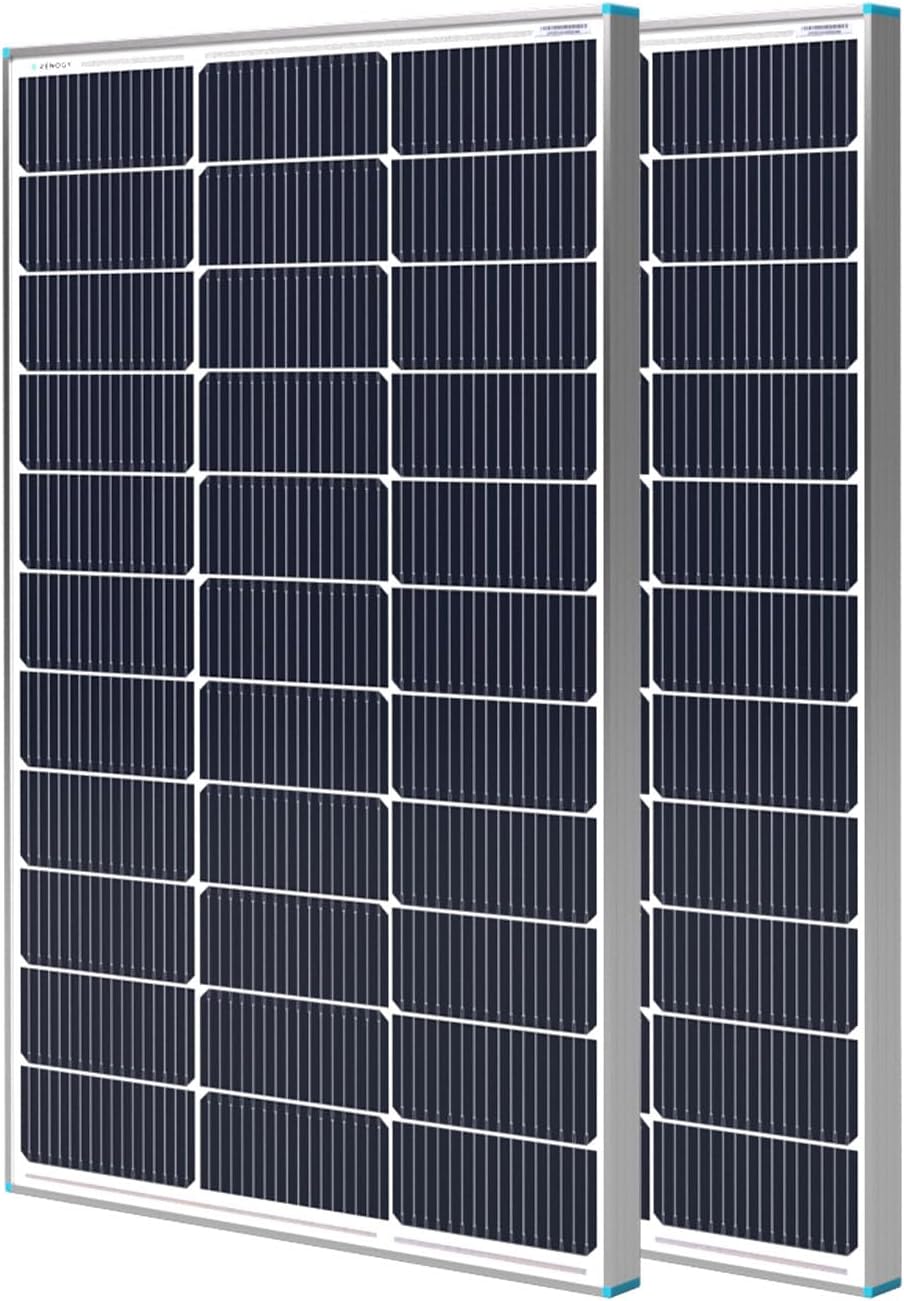
Two panels in parallel double the harvest and halve the anxiety, and Renogy sells these as pairs for exactly that reason. I ran a single panel for a season, then added a second, and the second one was the moment solar stopped feeling like a science project and started feeling like infrastructure. One panel is a trickle. Two is a system.
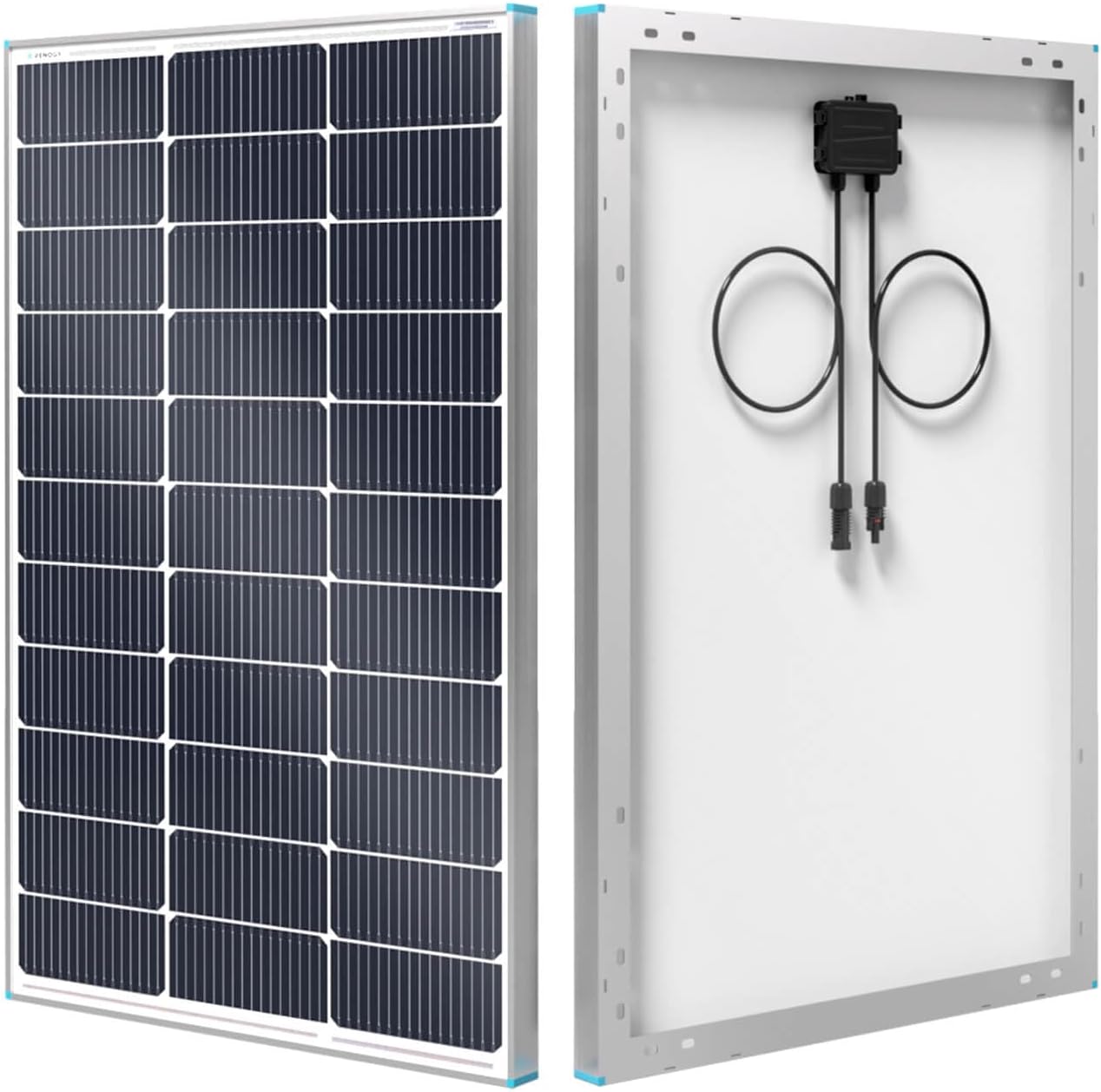
Would I recommend this specific panel? It’s a 100W rigid panel from the biggest name in the small-solar world. The build quality is solid, the specs are honest, 25% efficiency is genuinely good for this size, and it survived my truck bed. There are cheaper 100W panels. There are no cheaper 100W panels I’d trust on a roof for a decade. That’s the whole calculation, and it’s the same calculation I make for everything I bolt to something I sleep under.


