
The spec sheet said 25% efficiency. The other brand’s sheet said 25% efficiency. The third one said 25% efficiency too, in a slightly bigger font, as if font size were a measurement. Three panels, three identical claims, three wildly different prices. That’s when I stopped reading spec sheets and started reading the fine print under the spec sheets — cell type, busbar count, temperature coefficient, the numbers that actually separate a good panel from a good marketing department.
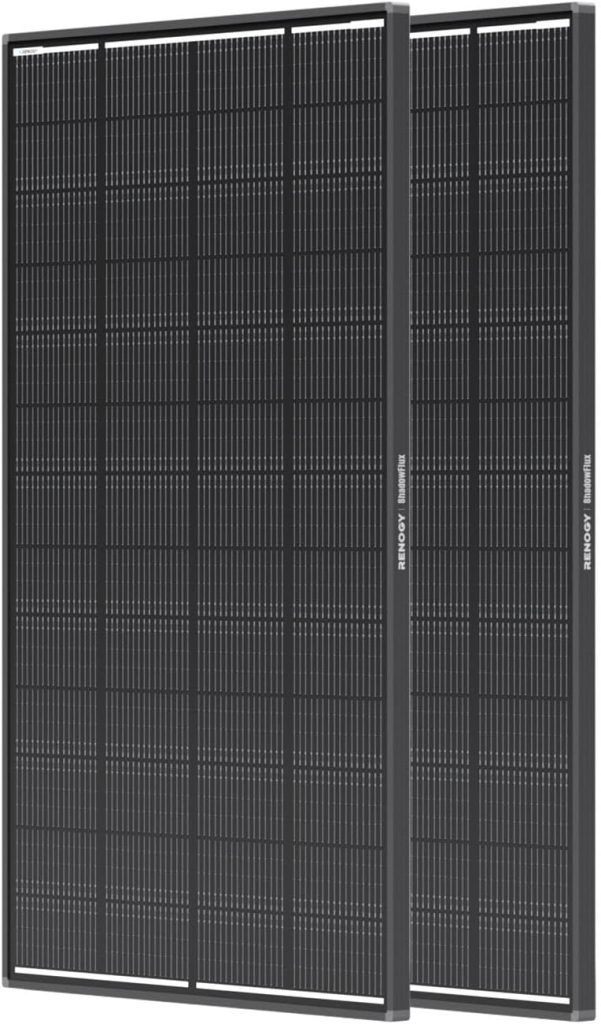
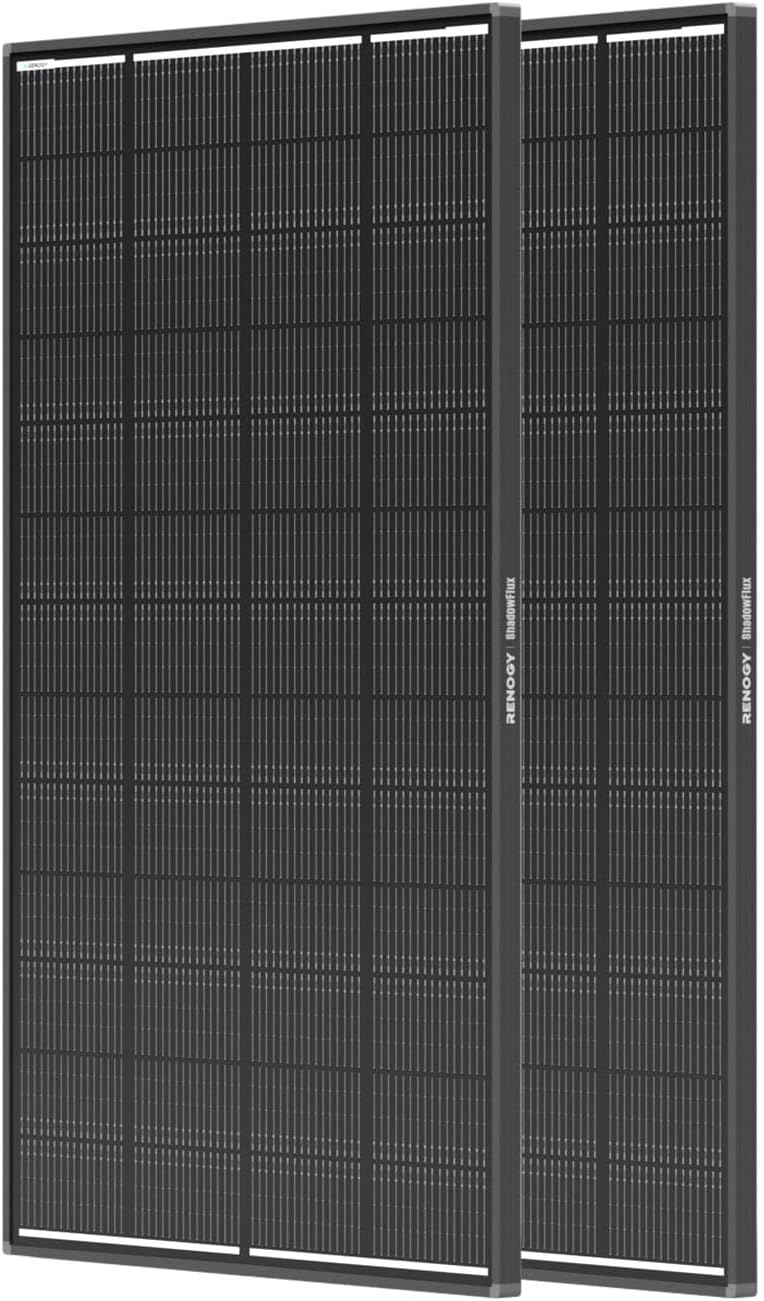
The Renogy ShadowFlux 400W is two 200W N-type panels wired as a pair. N-type silicon, 16 busbars, the anti-shading cell architecture that made the 100W ShadowFlux interesting. At 400W total, this is the size where residential and serious off-grid setups start — enough to matter on a roof, enough to feed a 24V battery bank without embarrassment.
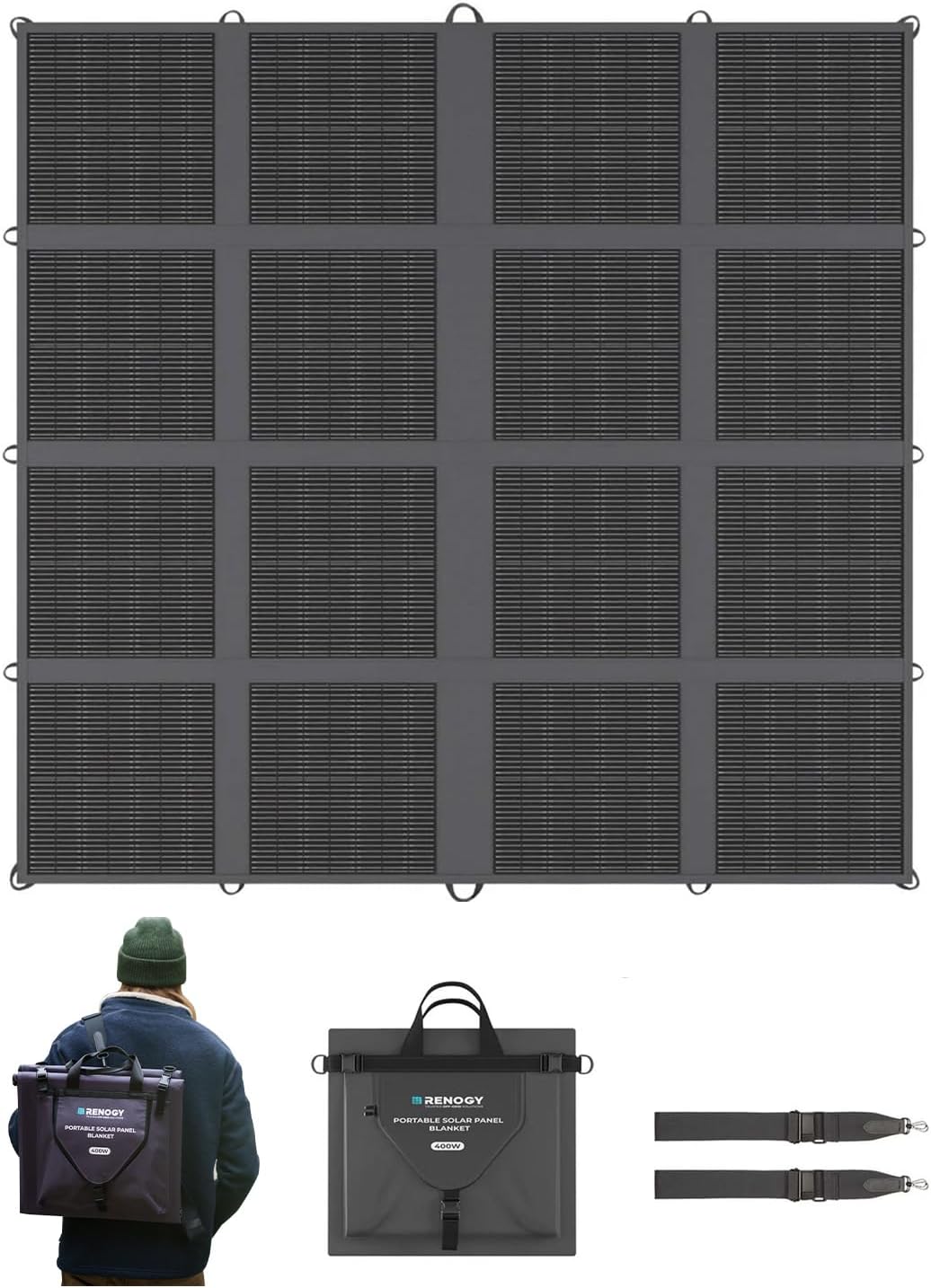
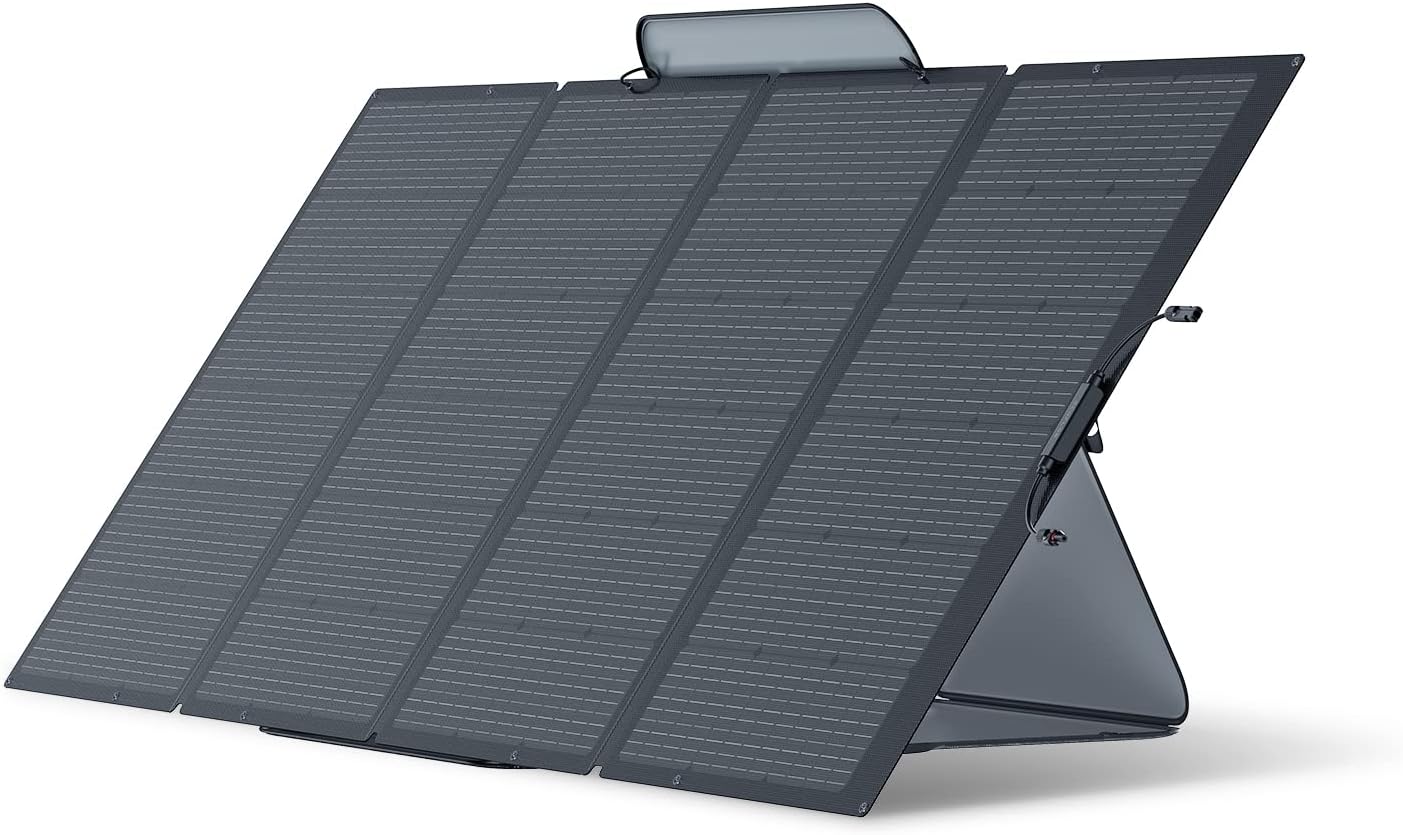
Compare 400W Solar Panels
Three 400W-class panels for serious setups.
Prices and availability may vary — tap any product to check the current listing.
Four hundred watts. On paper.
Here’s the comparison that actually taught me something. I ran the ShadowFlux pair next to a set of older PERC panels — same roof, same angle, same inverter — for a month. Not a lab, just my roof and a notebook. The N-type pair averaged about 8% more daily harvest. Eight percent. I computed it three ways because the first result felt too neat. Morning and evening shoulder hours accounted for most of the gap; at solar noon, everything converges, because noon is the great equalizer and even mediocre panels look competent under a directly overhead sun.
Eight percent doesn’t sound like much until you multiply it by 365 days and ten years. Then it’s real money. Not retire-early money — panels never pay retire-early money — but the kind of money that covers the mounting hardware you overpaid for.
The shading story scales up at this size. A 400W array with a chimney shadow or a tree branch doesn’t just lose the shaded watts — with conventional string wiring, one shaded section drags down the whole series. The ShadowFlux cell-level management limits the damage to the actually-shaded cells. I watched this on a partly cloudy week: the output curve looked like a sawtooth, dipping and recovering as clouds crossed, but the dips were shallower than my old array’s. Shallower dips, faster recovery. That’s the whole advantage, and it’s real, and it’s also the kind of advantage that disappears from the conversation the moment someone asks “but how many watts” at a barbecue.
Barbecue watts. The only metric that matters to anyone.
Now the part where I get annoyed. The solar panel industry has converged on 25% efficiency claims the way restaurants converged on “world famous” — everyone says it, the definition stretches, and the test conditions live in a lab you’ll never visit. N-type cells genuinely run more efficient than PERC, that’s real physics, but the gap between 24.1% and 25% on two different spec sheets is noise. Measurement noise, temperature noise, marketing noise. I’ve seen the same panel model rated at three different efficiencies on three different websites. Three. Same panel. The electrons didn’t change. The copywriting did.
What actually differentiates panels at this point: the temperature coefficient (how much output you lose when the panel gets hot — and they all get hot), the warranty terms (25-year performance warranties are only as good as the company backing them), the frame and glass build quality, and the shade behavior. Everything else is font size.
Installation: these are rigid panels, about 50 by 30 inches each, real weight to them. Two-person lift onto a roof, no heroics. I ground-mounted mine because my roof faces the wrong direction and I’ve made peace with having a slightly unusual yard. The pair wired in series for my 24V bank, standard MC4 connections, nothing exotic. They’ve been through one hailstorm — small hail, the kind that dents cars slightly — and came through unmarked. I haven’t tested them against the big dramatic hail. That test I haven’t run, and I’m not volunteering my array for it.
Would I buy them again? For a partially shaded site, yes, the shade handling earns its keep. For a wide-open unshaded roof in Arizona, buy whatever reputable N-type is cheapest per watt and spend the savings on more panels instead of better panels. More mediocre sunlight beats less premium sunlight. That’s the math nobody puts on a spec sheet because it doesn’t sell the premium tier.
The three spec sheets are still on my desk. Same 25%, three fonts. I keep them as a reminder that in this industry, the most important number is the one they print smallest. Usually it’s the temperature coefficient. Sometimes it’s the warranty exclusions. It’s never the big one.


