
October. Overcast. The kind of gray sky that makes you question every life choice involving solar panels. My multimeter read 4 watts coming off a 20W panel. Four. I stood there in the driveway doing the math nobody wants to do: at this rate, my RV battery would reach full charge sometime next spring.
That’s the thing about trickle chargers. They work — right up until the weather has opinions. And then you’re learning, the slow way, what 20 watts actually means.
Four watts.
Quick Answer
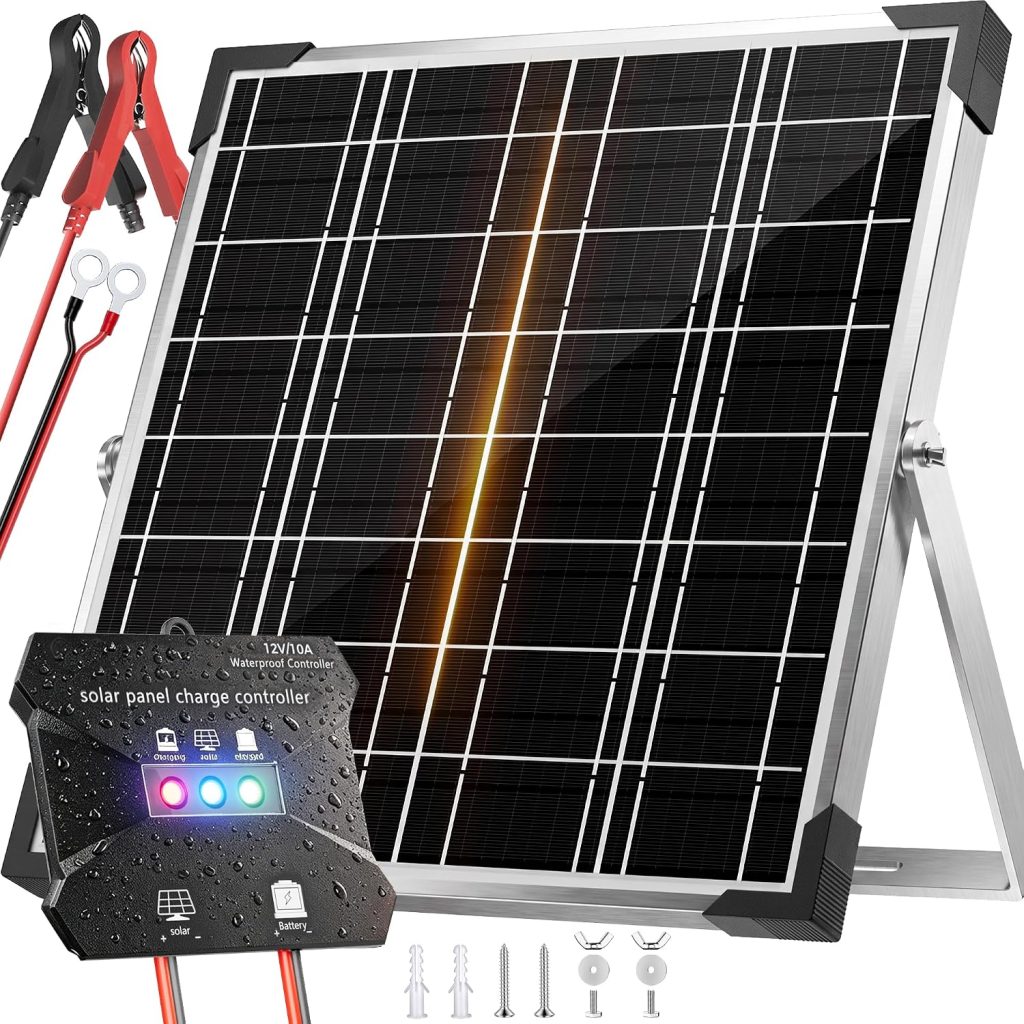
A 20W solar trickle charger keeps a parked RV, boat, or car battery topped off — it doesn’t recharge a dead one. The Voltset kit’s MPPT controller squeezes a bit more from weak sun than basic PWM versions. Expect maintenance, not miracles.
Compare Top Solar Trickle Chargers
Three proven picks side by side — choose the one that fits your needs.
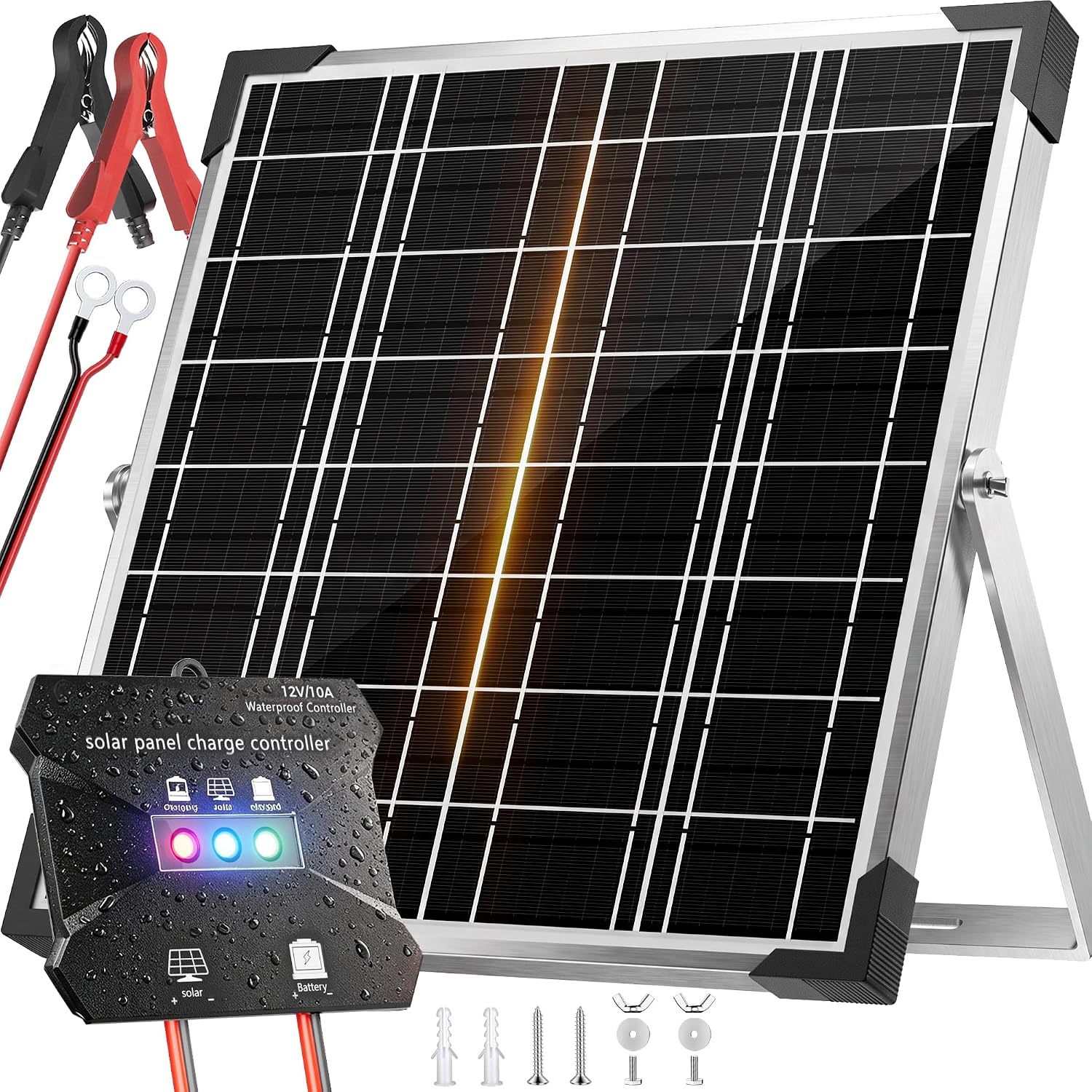
Prices and availability may vary — tap any product to check the current listing.
Twenty watts. Let me put that in perspective, because I didn’t have perspective when I bought my first one. A typical RV house battery holds around 100Ah at 12V — call it 1200Wh. A 20W panel in perfect sun makes maybe 100Wh a day. That’s the good day. The October day gave me 4 watts, which over eight gray hours is 32Wh, which is basically a rounding error with aspirations.
So what are these things actually for? Maintenance. A parked battery loses charge sitting there — parasitic draws, self-discharge, the CO detector you forgot about. A trickle charger offsets that slow bleed. It does not resurrect a battery you drained running the furnace fan all night. I learned this distinction the expensive way, which is to say I learned it at all.
MPPT on a 20W panel — marketing or meaningful?
The Voltset kit advertises a “smart MPPT controller,” and I’ll admit my first reaction was eye-roll. MPPT on a panel this small feels like putting racing tires on a golf cart. But here’s the annoying part: it kind of matters. In weak light — exactly the conditions where a trickle charger lives or dies — MPPT extracts 20 to 30% more than the dumb PWM controllers. Twenty percent of almost nothing is still almost nothing. But over a month of gray days, it adds up to the difference between a battery at 12.4V and one at 12.1V. That 0.3V is the difference between “starts right up” and “click click click.”
Not even close to a miracle. Just slightly less dismal.
I’ll take it.
What the box doesn’t mention: placement is everything
A trickle charger only works if the panel sees the sky. Sounds obvious. Then you park the RV under a tree. Or the boat cover goes on. Or you lay the panel flat on the dashboard and wonder why it’s underperforming — because flat panels at the wrong angle in winter sun lose half their output before the clouds even show up. I mounted mine with the included bracket, tilted south, and output roughly doubled versus flat. The bracket is the most important part of the kit. Nobody reviews the bracket.
Also: suction cups. The kit comes with them, they work for about a week, and then physics wins. Screw it down or bungee it. Portable chargers for camping have the same problem — the panel is only as good as where you put it.
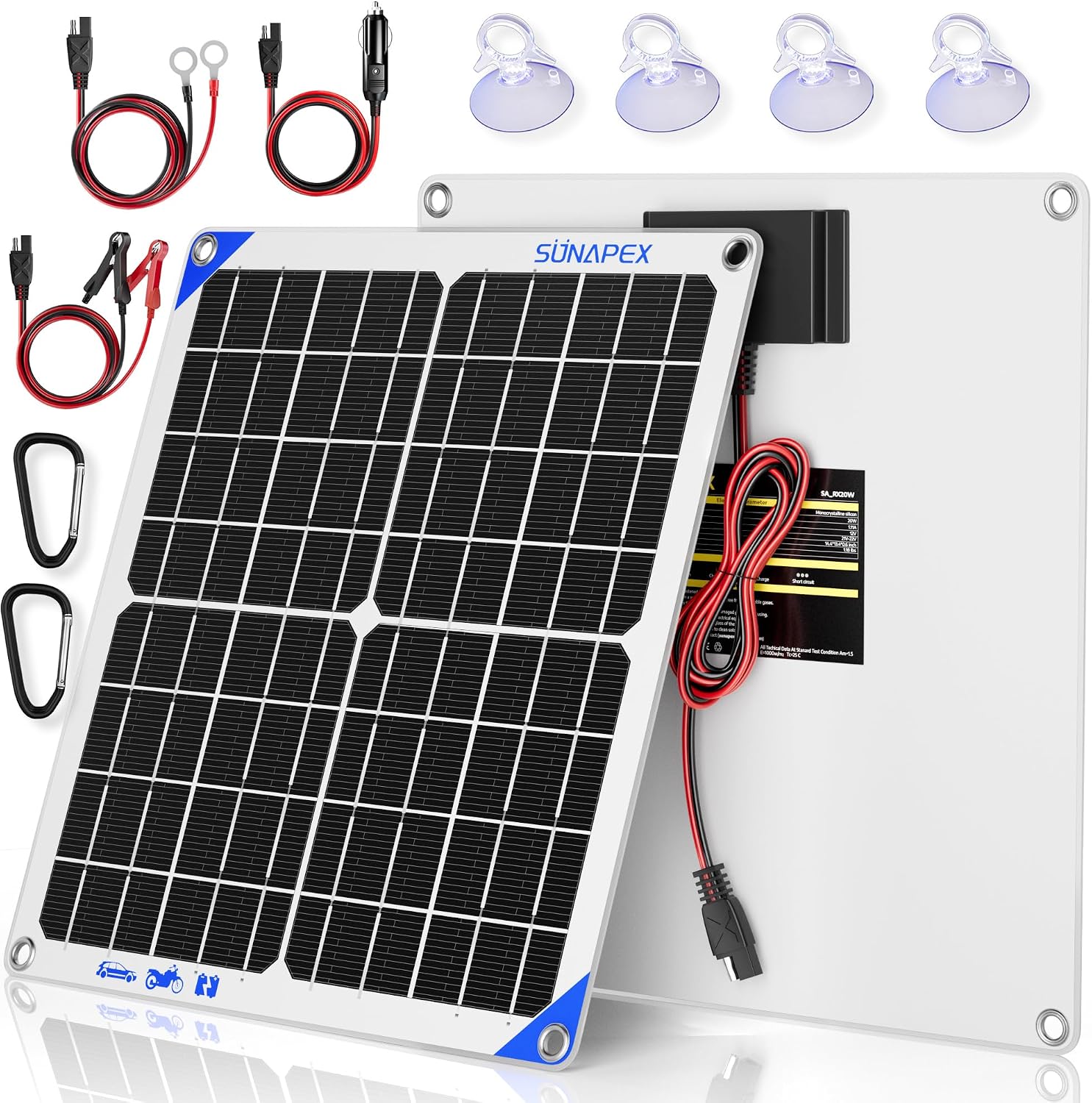
SUNAPEX 20W — the simpler PWM-controller alternative
The whole category, honestly
Trickle charger marketing lives in a fantasy world where every day is sunny and every battery is healthy. Real batteries are sulfated, real skies are gray, and real RVs have parasitic draws the brochure never heard of. The honest pitch would be: “This $40 panel might save you from buying a $150 battery every two years instead of every three.” That’s a real value proposition! But it doesn’t fit on the box, so instead you get “20W HIGH EFFICIENCY” and a picture of a desert at noon.
I’ve bought the cheap ones. The $25 no-name with the controller that’s just a diode in a plastic box. It “worked” in the sense that the panel produced voltage. Whether any of it reached the battery in a useful way is a question I never got answered, because the LED was always green. Green means charging. Green also means the LED has power. Draw your own conclusions.
Well — actually, the manual says green means charging. The manual also says 20W. Believe half of it.
A detour: the boat
My neighbor — different neighbor, boat guy — leaves his trickle charger on all winter. Swears by it. His batteries last five years. Mine lasted two, back when I just disconnected and hoped. Is the difference the panel? The battery quality? The fact that his boat’s in a slip with southern exposure and mine sat behind the garage? I haven’t controlled for any of that. But five years versus two is hard to argue with, so now I leave mine on too. Correlation, causation, whatever. My batteries are happier.
I haven’t tested these on a boat — salt air is a different beast, and I’m not guessing about corrosion.
What to actually check before buying
Controller type matters more than panel watts at this size. A real charge controller — even a basic one — prevents the panel from draining the battery at night, which cheap panels absolutely will do without blocking diodes. Ask me how I know. Actually don’t, it’s embarrassing.
Waterproofing matters because this thing lives outside. IP67 on the Voltset means rain isn’t a concern. The ZOUPW-style flexible ones are lighter but I’ve seen the ETFE coating cloud over after two summers. Glass panels last longer. They’re also heavier and more breakable. Pick your compromise.
And size your expectations: if you’re trying to figure out real solar needs, a 20W trickle charger isn’t the answer — it’s the footnote. It maintains. It doesn’t power.
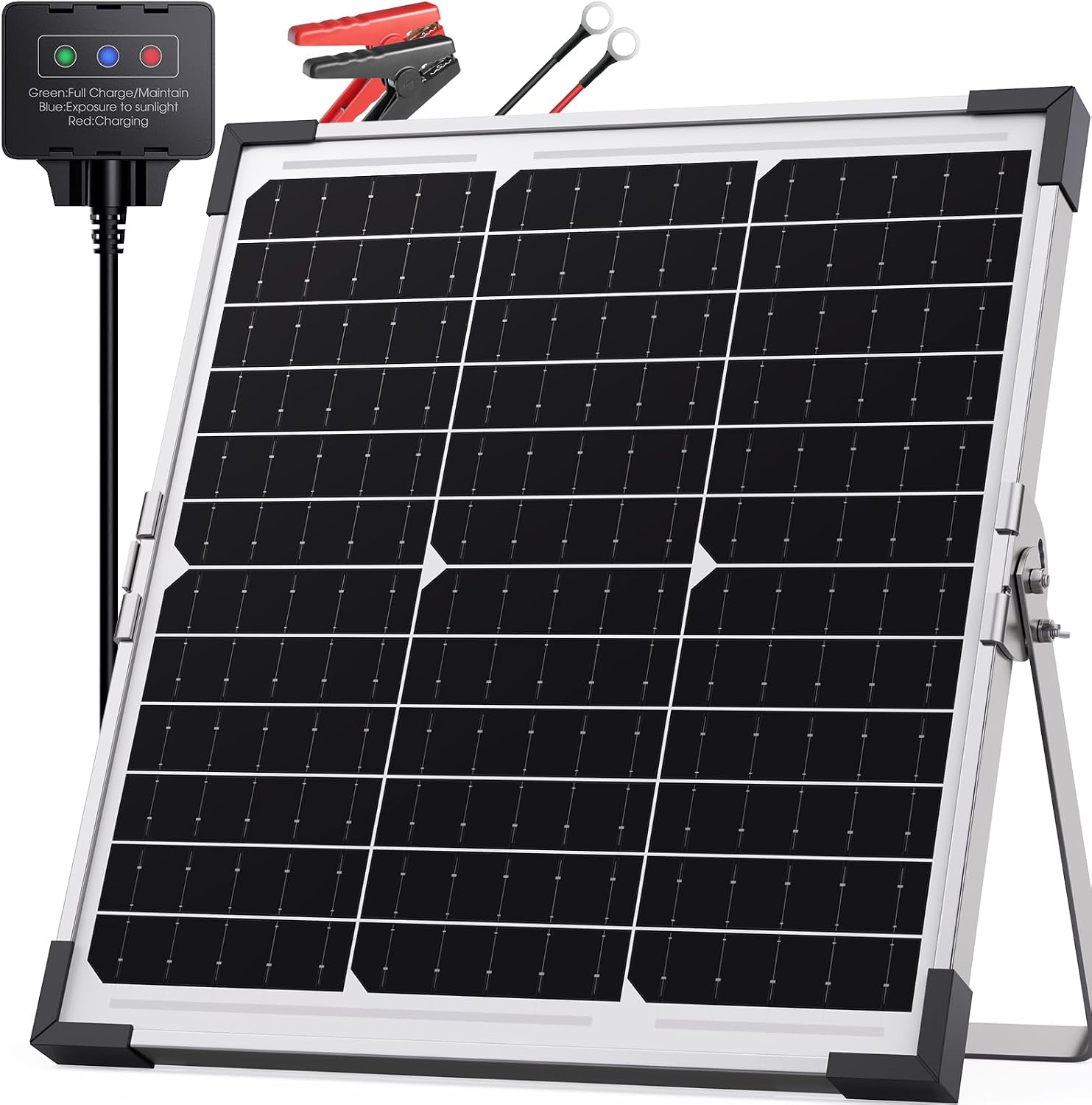
Callsun 20W — IP68-rated for permanent outdoor mounting
Mine’s still on the RV right now, tilted south, LED doing whatever it does. Battery read 12.6V last weekend. Good enough. The sky’s been gray for a week and I keep checking the voltage like it’ll change if I stare hard enough. It won’t. That’s the deal with solar in October — you take what the sky gives you, which today is four watts and a lesson in humility.
Frequently Asked Questions
Will a 20W solar panel recharge a dead RV battery?
No. A 20W trickle charger maintains a healthy battery against slow self-discharge — it can’t meaningfully recharge a depleted 100Ah battery. For recharging, you need 100W or more of panel.
Does MPPT matter on such a small panel?
Somewhat. MPPT controllers extract 20-30% more power than basic PWM in weak light — exactly the conditions trickle chargers face most. It’s a modest but real advantage. Nothing more.
Can I leave it connected all winter?
Yes, that’s the main use case. A proper charge controller prevents overcharging and blocks reverse current drain at night. Just make sure the panel actually sees the sky — under a cover or snow, it does nothing.
What’s the difference between the Voltset, SUNAPEX, and Callsun kits?
All three are 20W 12V maintenance kits with similar output. The Voltset uses an MPPT controller; the SUNAPEX and Callsun use simpler controllers with LED status indicators. Real-world difference is small — mounting position matters more than brand.
Do I need a charge controller for a 20W panel?
Yes. Without one, the panel can drain the battery at night through reverse current, and there’s no overcharge protection. Every kit worth buying includes one.


