
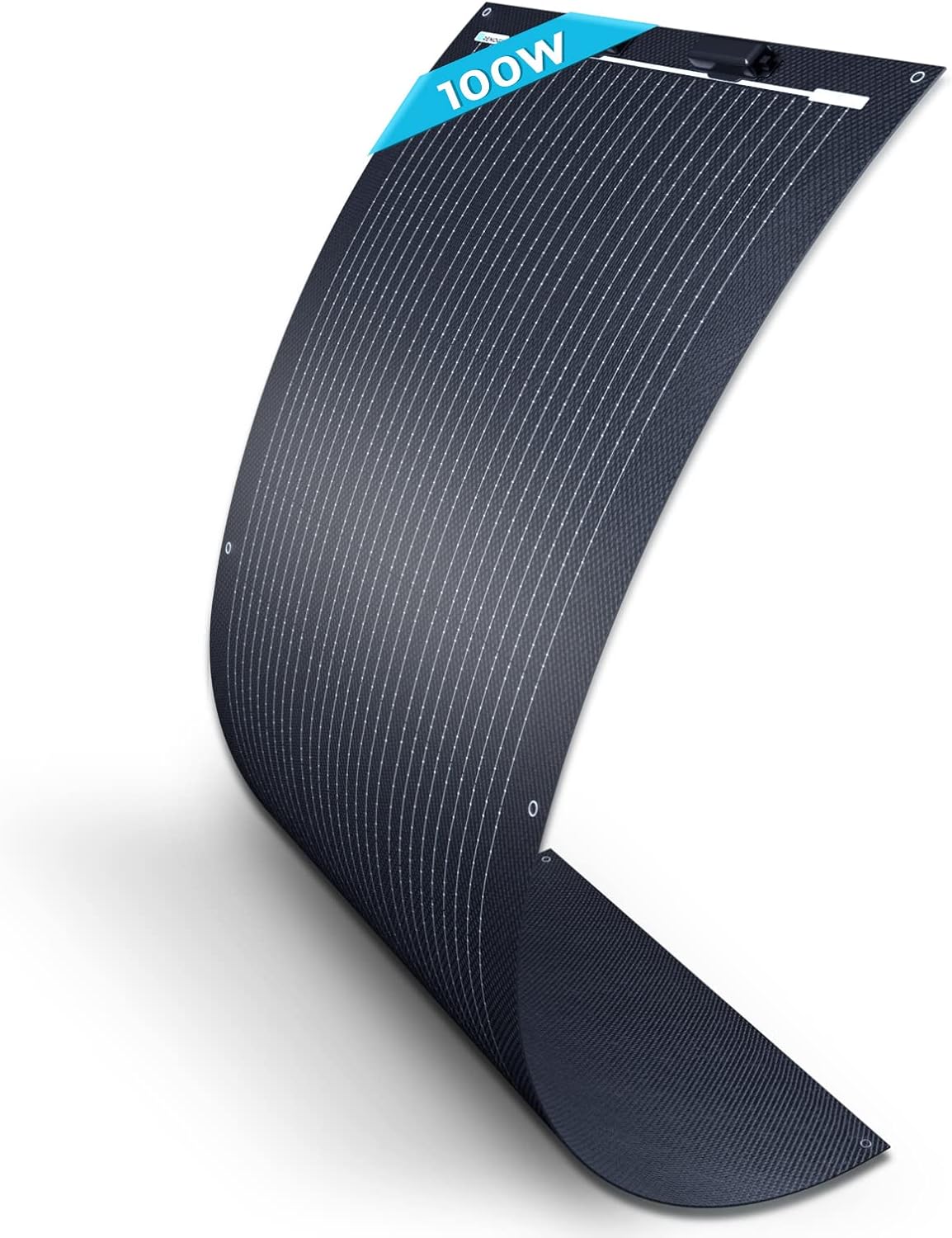
I bought a 100W foldable panel because I believed, genuinely believed, that I could work from anywhere. The listing showed a laptop plugged into a panel on a mountaintop, some influencer’s dream of the digital-nomad life, and I did the math: laptop draws 65W, panel makes 100W, therefore infinite work from a meadow. The math was technically correct and practically useless, and it took one actual trip to learn why.
Here’s what happened. I unfolded the panel on the picnic table, plugged in the laptop via the USB-C port, and watched the battery percentage. It held steady. Not charging, holding. The panel was making maybe 70W in the midday sun, the laptop was using 65W, and the remaining 5W was fighting a losing battle against the screen brightness. Then a cloud came, output dropped to 25W, and the laptop started draining. The dream of the meadow office lasted about forty minutes.
What I learned, and what the listing will never tell you: a 100W foldable panel is not a laptop power supply. It’s a battery maintainer that occasionally flirts with being more. The right way to use it is panel to power station, power station to laptop, with the battery as a buffer smoothing out the clouds. Direct panel-to-laptop works in perfect sun and fails the moment conditions get real. The buffer is the whole game.
What it’s actually good at
Paired with a small power station, this panel is genuinely useful. My setup now: panel feeds a 500Wh station all day, station charges everything at night. On a good day, the panel puts 350 to 400Wh into the station, which covers the fridge’s daytime draw plus a laptop charge. On a gray day, 100Wh, which covers the phones. The panel didn’t get worse. My expectations got honest.
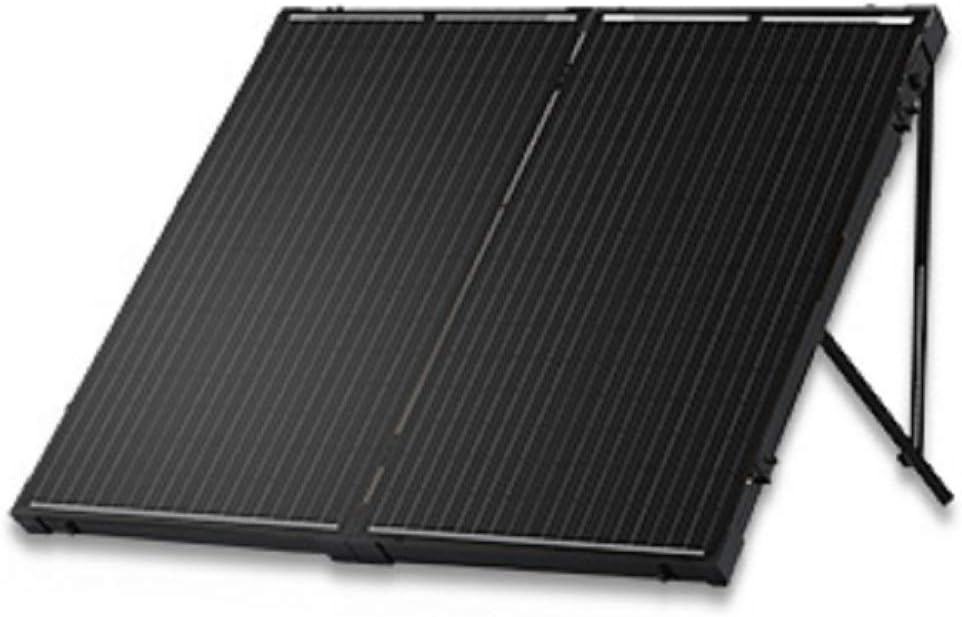
The foldable form factor is the reason to buy this over a rigid 100W panel. Folded, it’s the size of a laptop bag insert, maybe 20 by 26 inches, a couple inches thick, weighs around 10 pounds. It lives behind my truck seat permanently. The rigid panel I owned before lived in the garage, because carrying a 4-foot glass slab is a commitment, and commitments don’t survive busy mornings. I’ve said it before: the best panel is the one you actually bring.
USB outputs on the panel itself: USB-A and USB-C, direct device charging without a battery. I use the USB-C for the phone on day hikes, leaving the panel on the dashboard. It works. It’s slow. It’s fine. Don’t plan your energy budget around it.
Slow is honest.
This site contains affiliate links. We may earn a commission on qualifying purchases.
The durability question
Foldable panels are fabric-laminated, not glass, and this is the tradeoff nobody quantifies. Less output than rigid, more vulnerable to long-term UV degradation, can’t just leave it out in the rain for a month. Mine has survived a season of being folded and unfolded, stuffed behind seats, rained on twice (my fault), and it still hits 75W in good sun. The stitching on the carrying handle is fraying. The cells are fine. It’s a consumable with a long life, not a permanent installation. Price it accordingly in your head.
My tangent: I met a guy at a trailhead with the same panel, and his was duct-taped to the roof of his van with the cable running through a cracked window. “Permanent install,” he said, completely serious. It had been up there for two years. It still worked. I think about him whenever I’m tempted to over-engineer my setup. The panel doesn’t care about your cable management. It cares about photons.
The laptop question, answered honestly
Can you run a laptop directly off it? Yes, in full sun, with the screen dimmed, doing light work. Can you do it reliably, all day, through passing clouds? No. The voltage sags, the laptop switches to battery, the panel recovers, repeat. It’s maddening. Use the power station as a buffer. This is the answer. It’s always been the answer. I wish the listings showed the buffer setup instead of the meadow fantasy, but meadows photograph better than batteries.
For charging power stations, the math is simple: 100W panel, five sun hours, 75% real-world factor, 375Wh per day. That’s most of a small station, half of a medium one. Two of these panels in parallel, and you’re in business for a weekend. One panel is a trickle. One panel plus realistic expectations is a system.
Would I buy it again? For the truck-seat use case, absolutely. It’s the panel that’s always there, which makes it the panel that actually gets used. Just don’t buy it for the meadow office. The meadow office was a lie I told myself, and the panel was kind enough to expose it in under an hour.
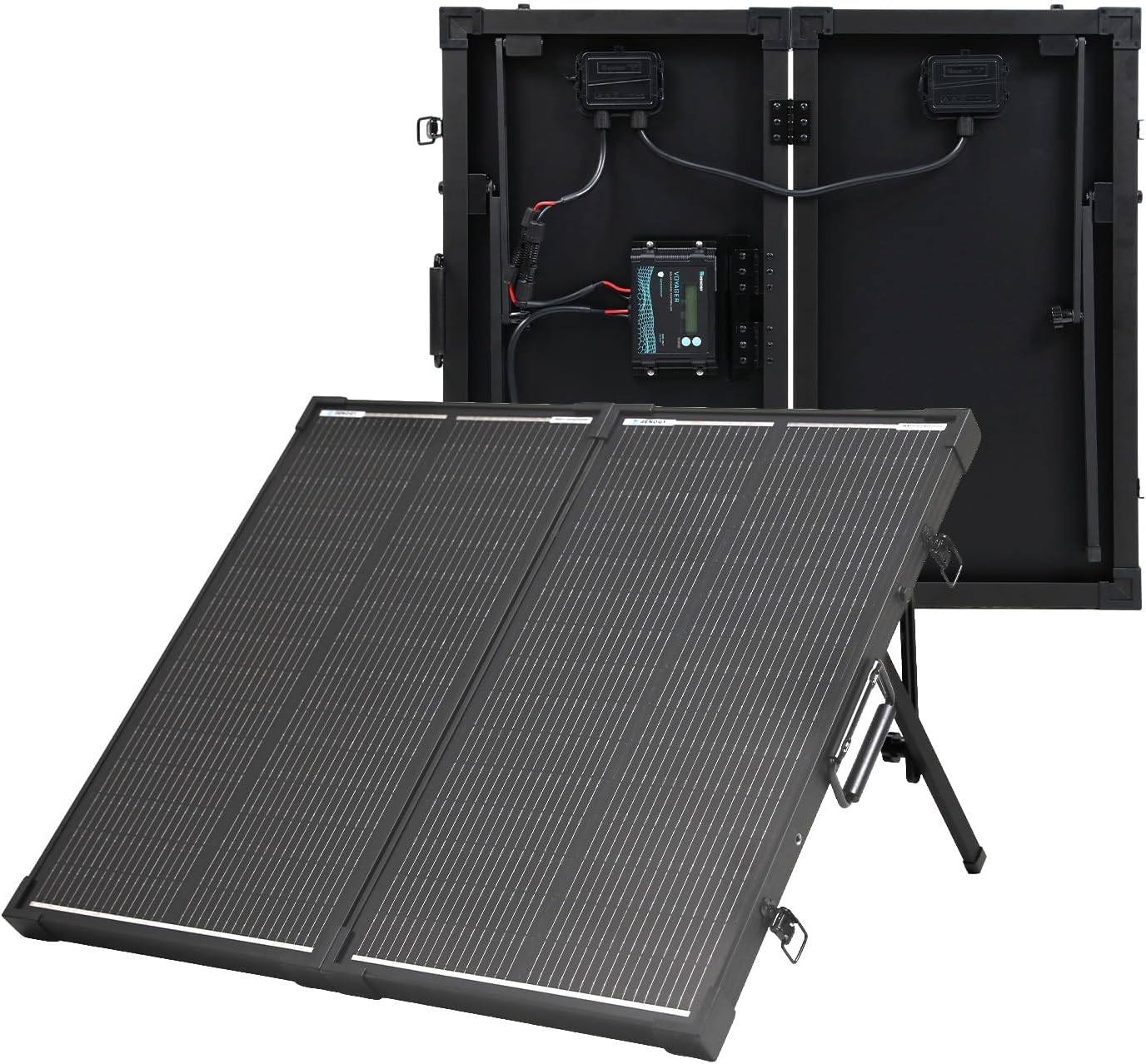
I haven’t tested the USB-C PD output against a full 65W load in heat, by the way. The port is rated for it, but sustained high-draw in direct sun with the panel baking is the scenario that worries me, and I default to the power station buffer instead. Maybe it handles it fine. Maybe. The buffer doesn’t care about maybe.


