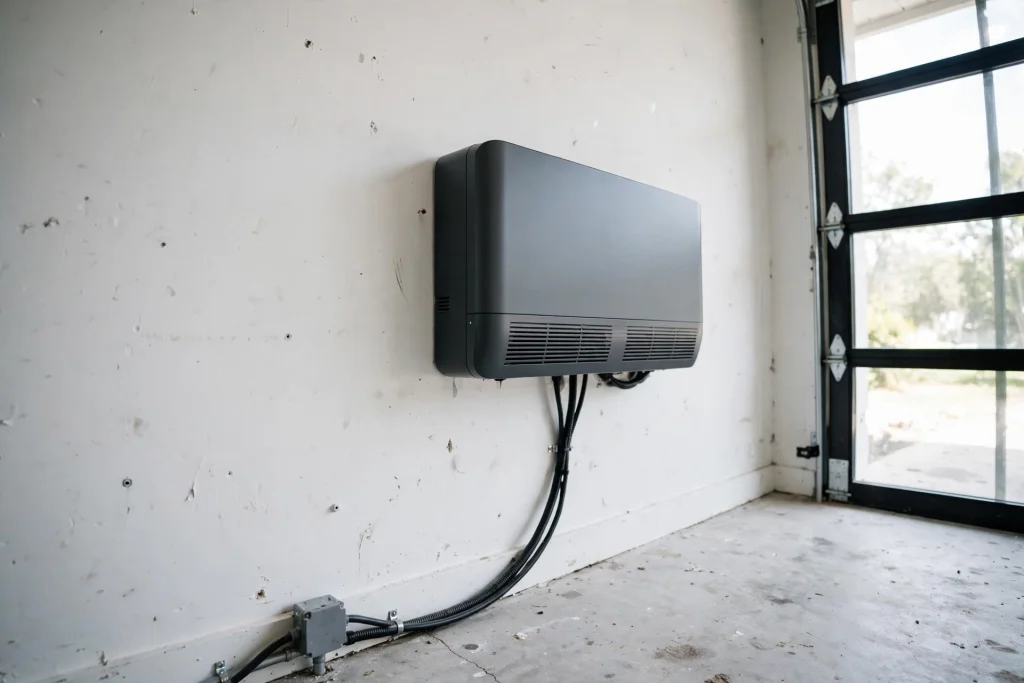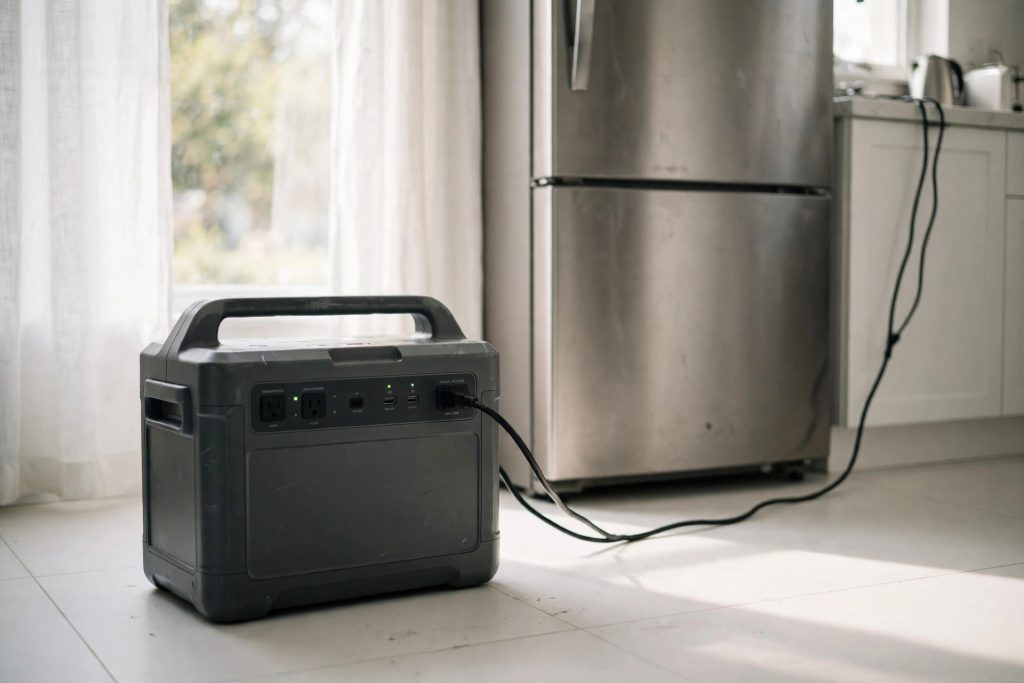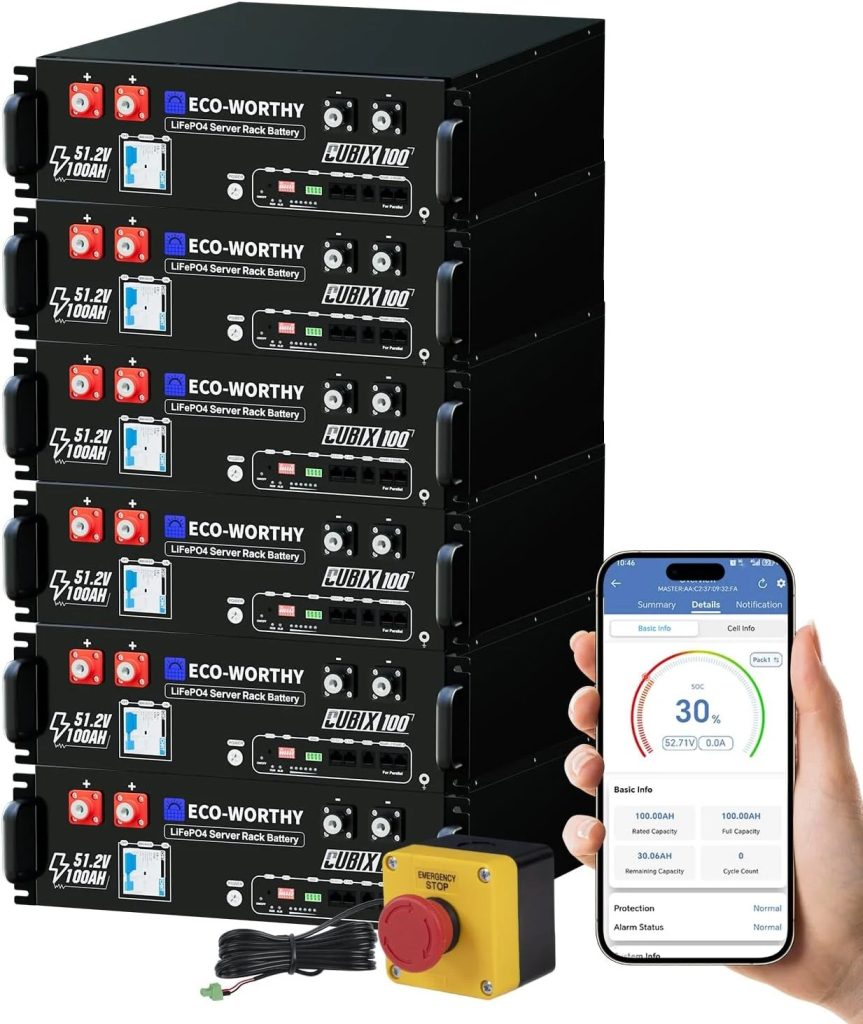
When I first looked at a 48V 100Ah LiFePO4 battery, I thought five kilowatt-hours would carry my house through a day of no grid. That number looked big on paper. I did the math on a napkin at my kitchen table and the number shrank. Then I did it again, properly, and it shrank a little more.
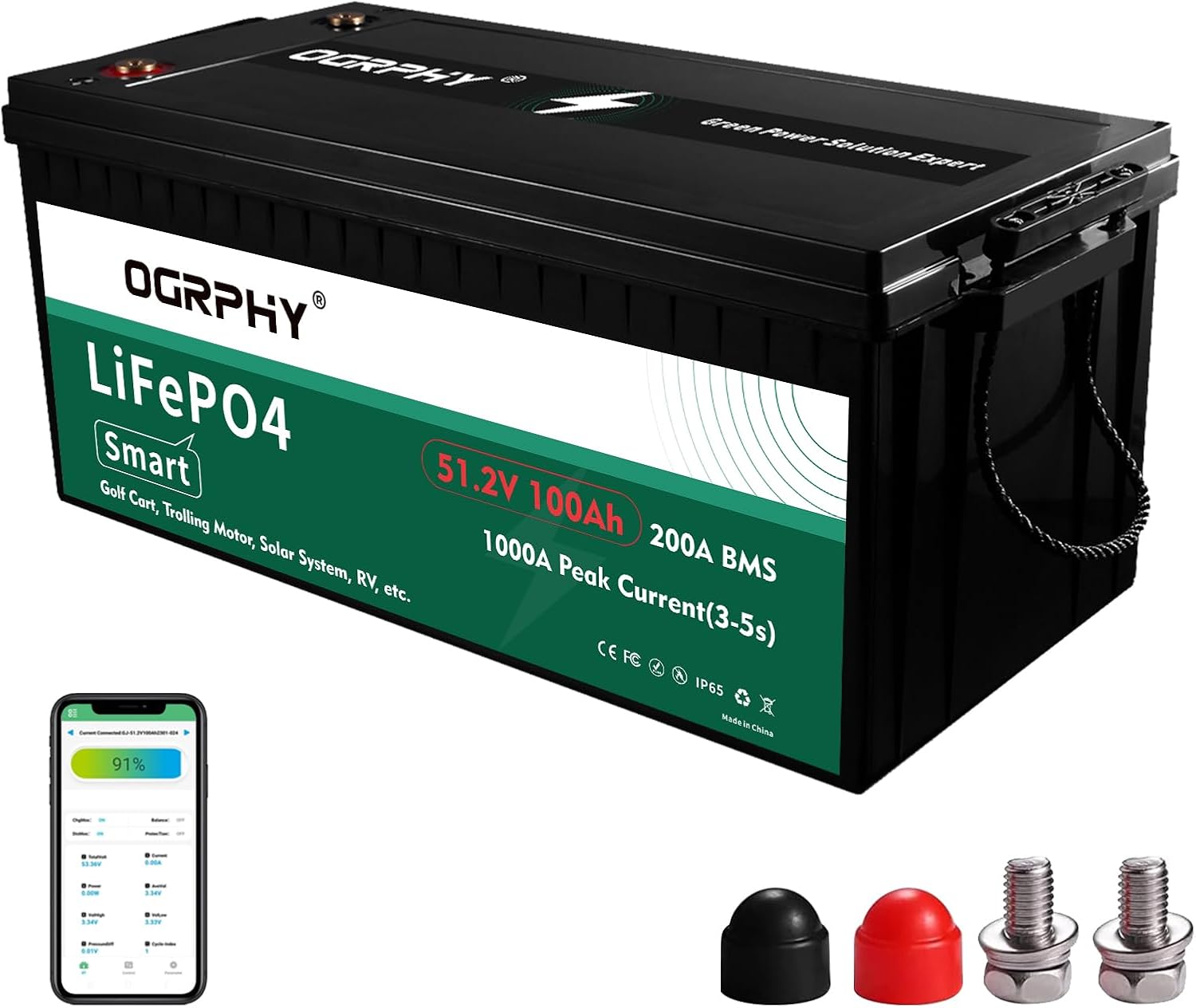
Here is the napkin version. 48 times 100 is 4800 watt-hours. Actually, no. That is not right. These packs are sixteen cells at 3.2 volts nominal, so it is really 51.2 volts times 100 amp-hours, which lands around 5100 watt-hours. Fine. Call it five. My fridge eats about 1.5 kWh a day, and I know that because I have a plug-in meter that has been living on that fridge for two years. Five minus one and a half is three and a half. So far so good, right?
Wrong.
Because the battery does not feed your fridge directly. It feeds an inverter, and the inverter takes its cut. Roughly 20% disappears converting DC to AC. That is not a defect, that is just physics with a fan on it. So your five kilowatt-hours become about four usable AC kilowatt-hours, and four minus the fridge leaves you two and a half for everything else. Lights, phones, the router, the coffee maker you will absolutely use during an outage because you are only human. Two and a half kilowatt-hours is not a day of normal life. It is a day of careful life. There is a difference, and the brochures never print it.
What actually sold me was the cycle count, not the capacity
LiFePO4 chemistry is rated around 6000 cycles to 80% depth of discharge, give or take depending on who is writing the spec sheet and how generous they are feeling that morning. Six thousand cycles is, in theory, sixteen years of daily cycling. I do not believe sixteen years. I believe the number is better than lead-acid by a wide margin, which is the only comparison that matters. A lead-acid bank this size would give you maybe 800 usable cycles and would weigh about twice as much and would punish you for discharging it past 50%. I have carried lead-acid. My back remembers.
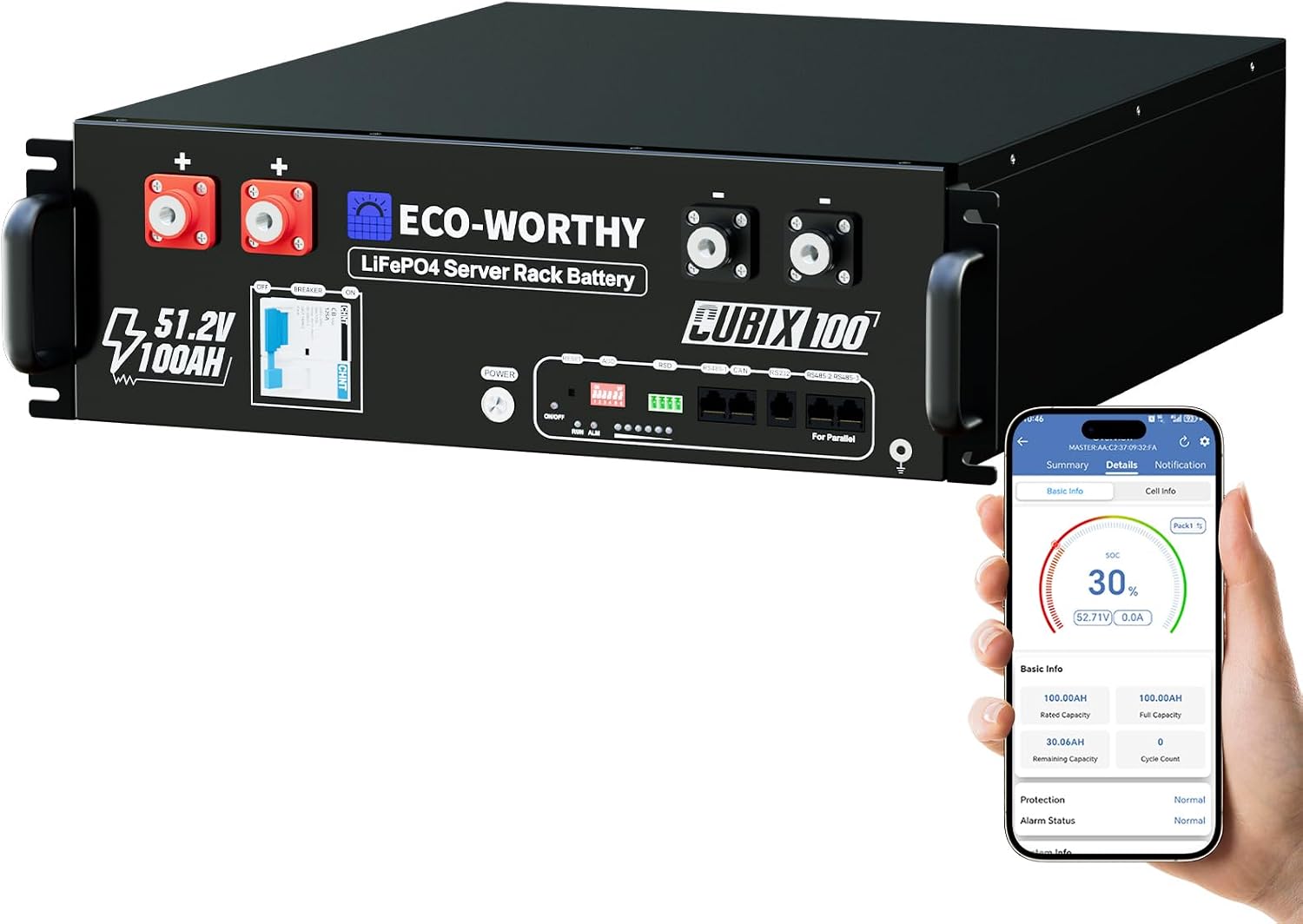
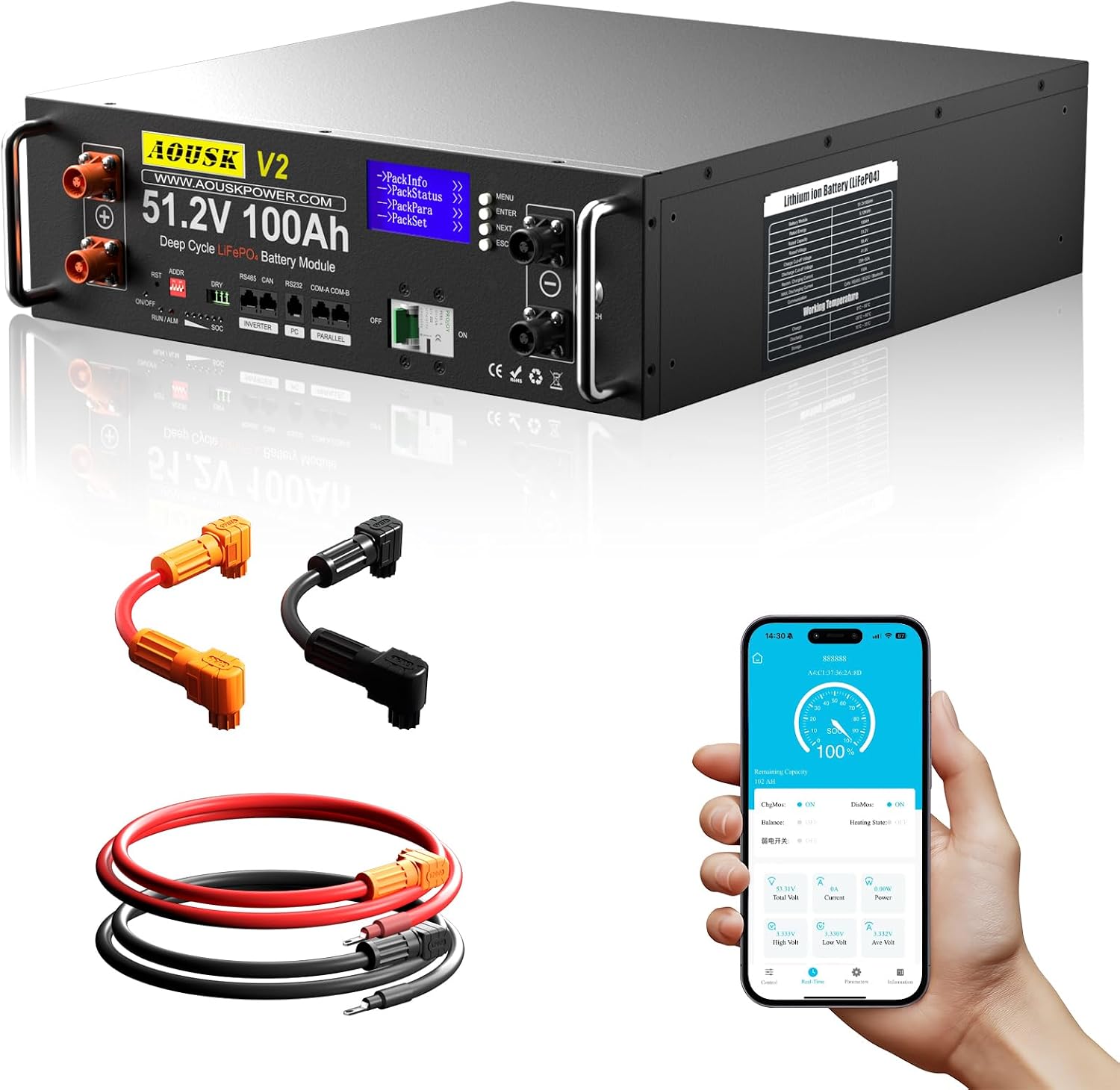
The Cubix100 is one module, roughly the size and weight of a carry-on suitcase filled with books. You can stack or parallel multiple units, which is where the marketing gets excited. Stackable. Expandable. Scalable. I hate that word. In practice, paralleling 48V modules means matching voltages before you connect them, keeping cable lengths even, and trusting that the BMS units in each box agree with each other. Most of the time they do. When they do not, you learn what a balance charge is.
The BMS is the thing nobody photographs. It is the circuit board inside the box that stops you from overcharging a cell, over-discharging the pack, or pulling more current than the wiring can survive. A 100Ah 48V pack with a 100A BMS gives you roughly 5kW of continuous discharge. That number matters more than the capacity number for one reason: startup surge. Your fridge compressor, your well pump, your furnace blower all pull three to five times their rated wattage for a few seconds when they kick on. I ran the numbers three times on my setup before I trusted them. A 100A BMS handles a 3kW inverter fine. It will not handle a 5kW air conditioner startup. Know your biggest motor before you buy anything.
Not even close to plug-and-play, by the way. Anyone who tells you a 48V battery is plug-and-play is selling you something, possibly a 48V battery.
The whole category has a sizing problem
And this is where I want to complain about the entire 48V DIY battery market, not this one box. The industry sells capacity the way car dealers sell horsepower: a big round number with no context. Five kilowatt-hours. Ten kilowatt-hours. Nobody prints the line that matters: at your house, with your loads, through your inverter, on a Tuesday when the sun is behind clouds. An American home uses somewhere between 20 and 30 kWh a day. So one of these modules holds maybe a fifth of a normal day. That is not an insult, it is arithmetic. But I have watched people buy one module expecting whole-home backup and then get angry at the battery, which is like getting angry at a gas can for not being a gas station.
That said, I blame buyers a little too. I blame myself first. My first battery purchase was sized by vibes. I wanted the big one because the big one felt safe, and the big one cost me more than two smaller ones would have and taught me less. Size the battery from your loads, not from your fears. I wrote that on a sticky note and stuck it on my inverter. It is still there.
Here is a paragraph that has nothing to do with batteries. During the last outage, my neighbor ran his portable generator all night. A cheap open-frame unit, loud enough that I could hear it through two walls and a closed window. At 3 AM I was lying awake doing two kinds of math: the watt-hour math for my own house, and the social math of whether it was worth knocking on his door to tell him his generator was keeping three houses awake. I did not knock. I just lay there, slightly smug and mostly tired, which is the emotional state that owning a silent battery bank buys you. Smug and tired.
The charging side is the part people underthink. A 100Ah pack at 48V takes about 5kWh to refill. If your solar array makes 2kW and you get four decent sun hours, that is one day of sun for one module. I am not sure that is the right framing, honestly. This gets confusing fast once you add real clouds. The point is simpler: a battery is only as useful as your ability to refill it, and an outage that lasts three days with grey skies will drain anything you own. I have not tested that scenario with this unit because my outages have all been under 36 hours. That is a gap in my experience and I will say so plainly.
So who is this actually for
It is for someone who already has or is building a 48V system: an off-grid cabin, a solar setup with a 48V inverter, a home backup that starts with one module and grows. It is not for someone who wants to unbox it and plug their house into it. There is no inverter in this box. There is no charger in this box. It is a battery. It does battery things. The price per kilowatt-hour is the honest way to compare it against the big-name power stations, and on that metric it wins, but only if you already own or are willing to buy the rest of the system around it. A properly sized inverter is not optional, and neither is knowing your loads.
One more thing about longevity, since I linked it earlier: how long solar batteries actually last depends more on temperature and depth of discharge than on brand. Keep this thing in a garage that hits 110 degrees in summer and the cycle count on the brochure will not save you. Batteries age in the heat the way everything else does. Mine lives in the basement where it is cool and boring, which is exactly how I want my energy storage: cool and boring.
This site contains affiliate links. We may earn a commission on qualifying purchases.
Questions I keep getting asked
How long will a 48V 100Ah LiFePO4 battery actually run my fridge?
A 48V 100Ah pack holds about 5.1 kWh on paper, and after inverter losses you get roughly 4 kWh of usable AC power. A typical fridge eats around 1.5 kWh a day, so you are looking at two days of fridge-only runtime, less once you add lights, phones, and the router. The number that surprises people is not capacity, it is the compressor's startup surge, which briefly demands three to five times the running watts.
Does the Cubix100 come with an inverter or charger built in?
No. It is a bare battery module with a BMS inside. You need a 48V inverter to get AC power out of it and a charger or solar charge controller to put power back in. That is normal for this class of product, but it catches first-time buyers off guard, so budget for the inverter and the cabling, not just the box.
Can I add more modules later?
Yes, that is the point of the 48V modular design. Parallel additional units as your needs grow, but match their voltage before connecting, keep the cable runs even, and let the BMS units in each box do their balancing work. Growing a bank over time beats buying one giant unit on day one. I learned that the expensive way.
The grid came back at 4:47 the last time. I know because the microwave clock blinked 4:47 at me and I reset it while the coffee brewed, and I stood there in the kitchen feeling the particular satisfaction of a system that did its job quietly. The battery had dropped to 62%. I had not thought about it once during the outage. That is the whole review, really. I did not think about it. It just worked, and I went back to sleep.