I bought it assuming it was a toy. It is a toy. That was the whole point, and I almost missed it.
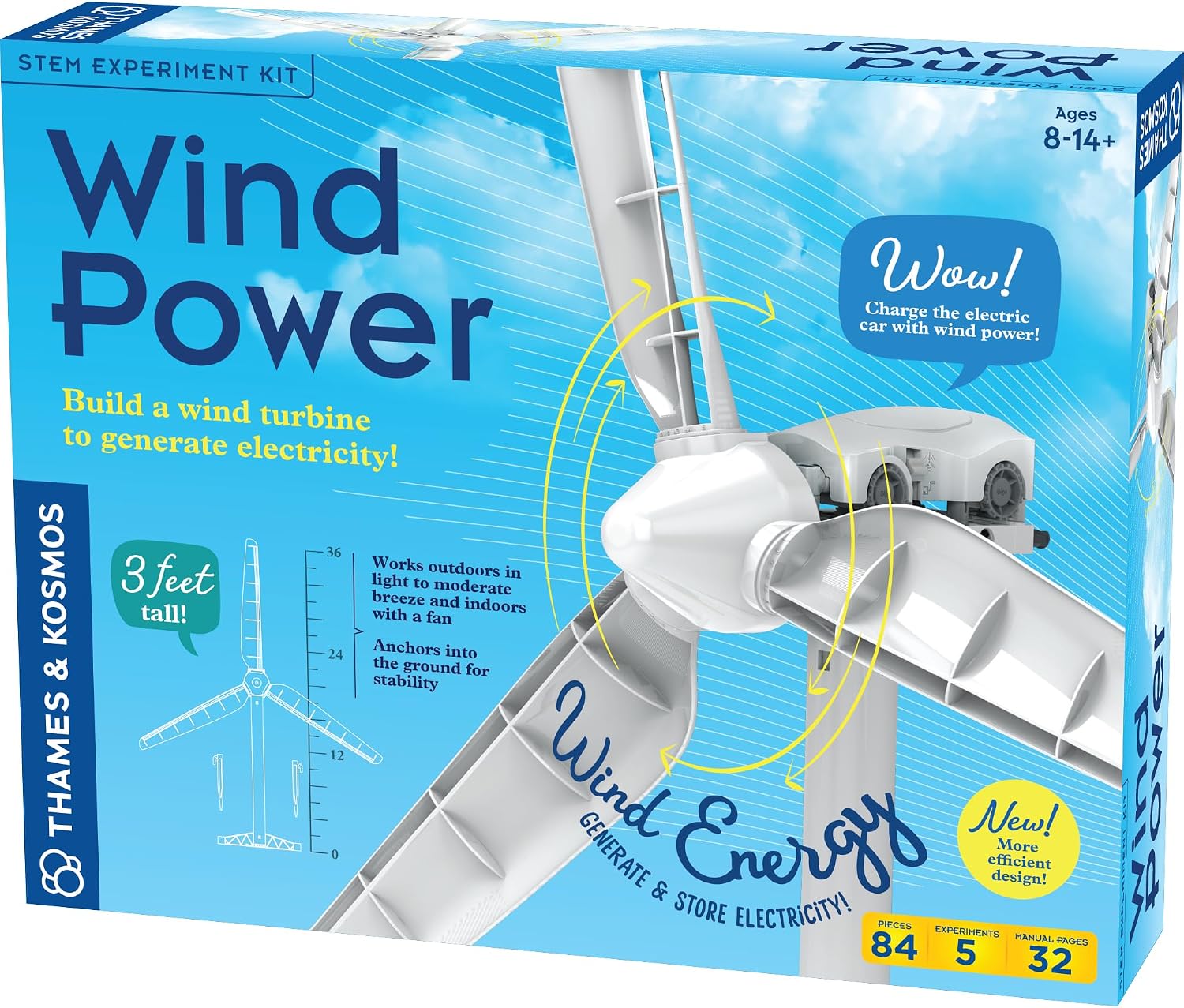
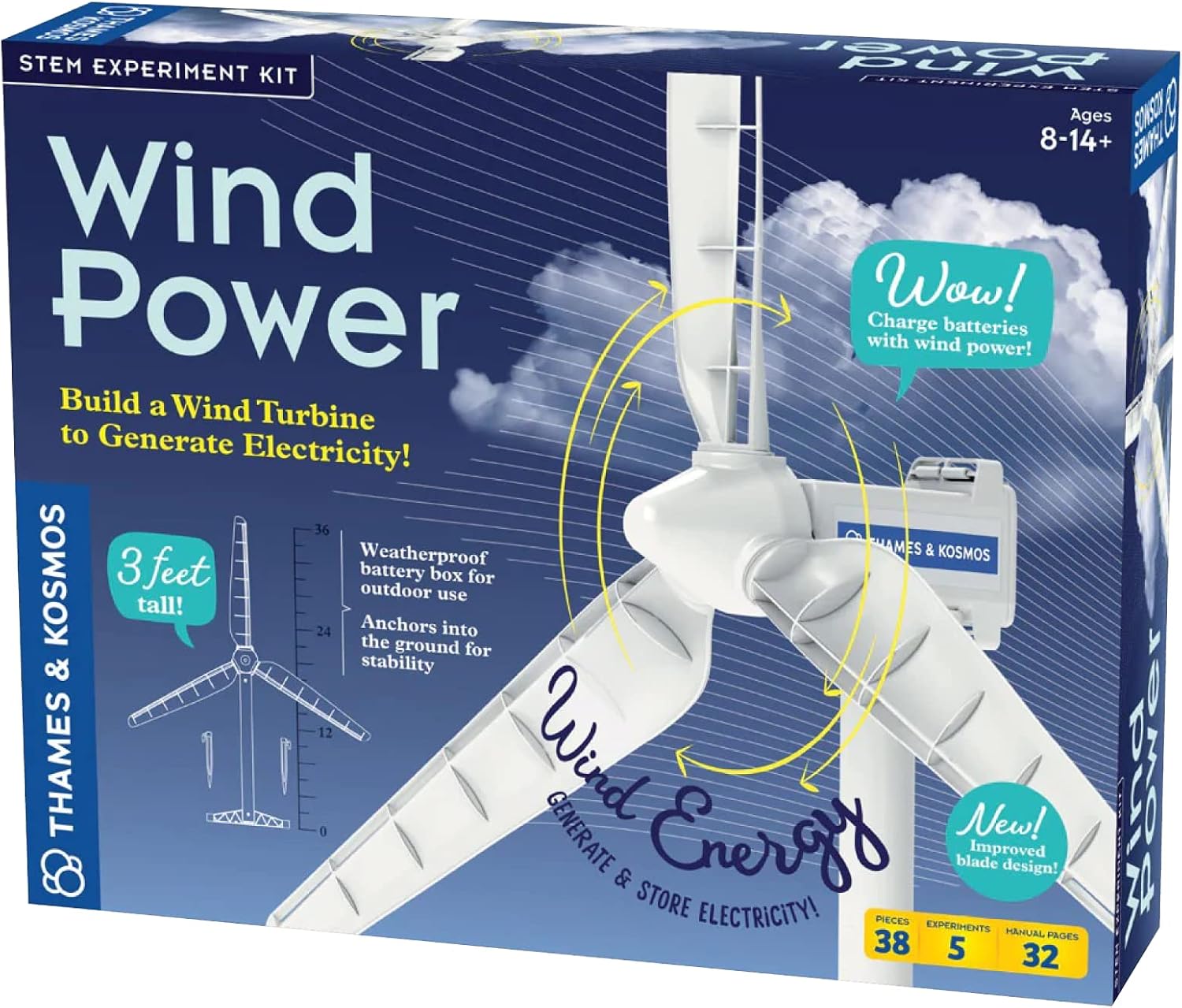
The Thames & Kosmos Wind Power kit — the current version, V5.0 as of this writing, though the versions iterate the way textbooks do — is a box of parts that builds a working wind turbine. Plastic blades, a little generator, a tower you assemble, and a manual that walks a kid through experiments: change the blade angle, count the LED brightness, learn why three blades beat two. My daughter built the first turbine in an afternoon. It powered a small LED. She was delighted in the specific way kids are delighted when something they built actually does something.
The wrong ruler
Here's the cognitive flip, and it's mine, not hers: I went in evaluating it like an energy product — watts per dollar, build quality, "is this a good wind turbine" — and about halfway through the manual I realized I was using the wrong ruler entirely. It's not a wind turbine product. It's a physics lesson that happens to spin. The "power output" is measured in LEDs lit, not kilowatt-hours. Judging it on energy economics is like judging a piano on its furniture value. Technically you can. You're missing the point.
So what is it actually, on its own terms? A well-designed STEM kit. The parts fit — and I want to linger on that, because I've assembled enough kids' science kits to know that "parts fit" is not the default; it's an achievement. The manual is genuinely instructional, not just assembly steps: it explains lift versus drag on blades, why blade pitch matters, what happens when you add or remove a blade. My daughter now knows more about wind turbine design trade-offs than most adults who have opinions about wind farms. That's the product. The spinning is the delivery mechanism.
The honest limitations, stated plainly: the plastic tower wobbles in real wind, the generator is a toy motor run in reverse, and the whole thing lives indoors or on a calm patio — take it into actual weather and you'll be chasing blades across the yard. This is not a "small wind turbine for home" in any energy sense, and I want to be explicit about that because the search terms that surface this kit overlap with real wind power equipment. If you want to power a shed, this is not it. If you want a ten-year-old to understand why real wind turbines look the way they do, this is exactly it.
What it actually teaches
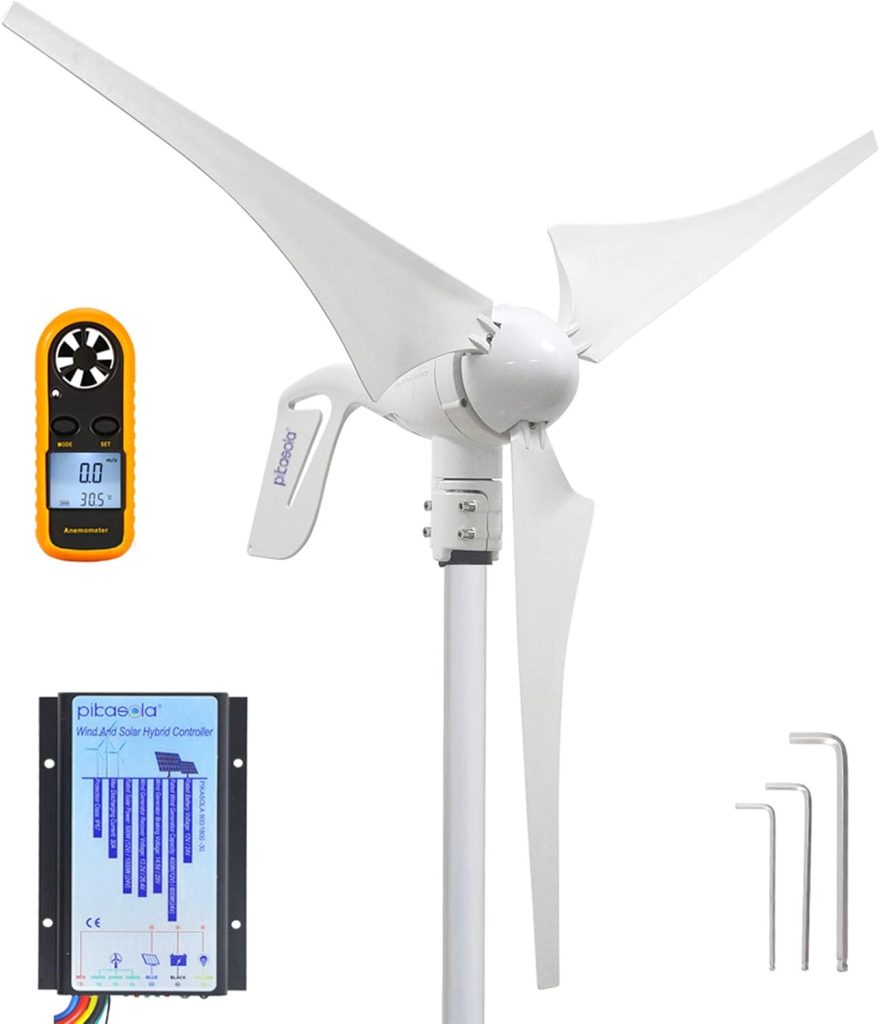
A gentle rant, at low intensity, about the category next door: real small-wind equipment listings are a swamp of fantasy numbers — "400W!" turbines rated at wind speeds your backyard sees twice a year — and I find it darkly funny that the toy kit is more honest about its output than half the real turbines on the market. The toy lights an LED and says "look, an LED." The real turbine claims 400W and makes 40. There's a lesson in there about honesty scaling inversely with price, and I'm not sure I like what it says.
Off-topic, but it's the memory the kit unlocked: my grandfather's farm, a windmill that pumped water, the slow creak of it turning in a steady breeze. No electricity involved — just a shaft and a pump and a century-old design that worked because it was simple. My daughter asked why the farm windmill had so many blades and modern ones have three. We looked it up together. The manual had already taught her the answer — more blades, more torque, slower; fewer blades, faster, better for electricity. She explained it to me. I stood in the kitchen being lectured on rotor solidity by a ten-year-old, and honestly it was the best part of the purchase.
Where I was wrong, and I'll own it: I initially steered her toward the solar kit instead, because solar felt more "practical." She wanted the wind one. She was right. The wind kit's experiments are more tactile — you feel the difference when you change the blade angle, the turbine visibly spins faster or slower — and that physical feedback is what made the concepts stick. Practical was the wrong criterion. Interesting was the right one, and she knew it before I did.
So: the Thames & Kosmos Wind Power kit is a genuinely good science toy that teaches real principles with parts that fit and a manual that respects the kid's intelligence. It will not power anything you own. It might, however, be the reason your kid understands the things that will.
The turbine is still on her desk. It spins when the window's open. She checks it every morning.
Related reading: a real 400W wind turbine with hybrid charger the tiny 5W USB wind turbine a 1200W 5-blade home wind kit
The practical questions, answered quickly: age range is about 8 and up, with a younger kid needing a parent's help on the fiddly steps — the manual is written for the kid, not the adult, which I appreciated more than I expected. As a gift, it's the rare STEM box that doesn't end up in the closet by February, because the experiments have a natural sequence: build it, change the blades, add the voltmeter readings, and suddenly it's March and your kid is explaining renewable energy at dinner. The parts are sturdy enough to survive being rebuilt six times, which is exactly what will happen.
Three worth comparing