Review: Portable 5W USB Wind Turbine for Outdoor Smartphone Charging

The Portable Wind Turbine 5W USB Outdoor Charger: A Real-World Evaluation

As a small wind energy consultant with over two decades of experience evaluating residential and portable wind solutions from manufacturers across China, I’ve witnessed the evolution of wind power from nascent technology to a viable, if often misunderstood, energy source. It’s 2026, and the market for portable wind turbines continues to diversify, with products ranging from robust off-grid systems to compact personal chargers. Today, we’re dissecting the Portable Wind Turbine 5W USB Outdoor Charger For Smartphones, a device squarely aimed at the micro-generation segment.

This review cuts through marketing claims to focus on real-world performance, addressing the practicalities of a portable wind turbine for personal use and its potential as a small wind turbine for home backup, however limited. Buyers searching for a wind turbine generator kit or a component for a hybrid solar wind generator will find valuable insights into what a 5W unit can truly deliver.

Beyond the Label: Real-World Performance of a Portable Wind Turbine

Many portable wind turbine manufacturers list specifications that look impressive on paper. My job is to translate those numbers into tangible performance under varying conditions. The 5W USB Outdoor Charger, as its name suggests, is a niche product designed for convenience, not substantial power generation.

Rated Power Output (5W Nominal)

In field testing, achieving the full 5 watts from this micro wind turbine is an infrequent occurrence. Rated power typically refers to the output at a specific, often ideal, wind speed (the rated wind speed). In reality, continuous 5W output requires consistently strong, non-turbulent wind, which is rare in most outdoor charging scenarios. Expect actual average output to hover between 1-3 watts in moderate, fluctuating wind conditions suitable for deployment. This means charging a modern smartphone takes considerably longer than a wall charger.

Cut-in Wind Speed (Approximately 2.5-3 m/s)

The cut-in wind speed is the minimum wind speed required for the turbine blades to start rotating and begin generating usable electricity. For this portable unit, I’ve observed it starting to spin around 2.5 meters per second (m/s), but significant charging current typically requires closer to 3 m/s (6.7 mph). This is critical. If your location rarely experiences consistent winds above this threshold, the device will spend most of its time idle, acting more as an ornament than a charger. Low wind performance is a significant factor for any small wind power system.

Rated Wind Speed (Approximately 8-10 m/s)

To reach its 5W rated output, this turbine generally needs wind speeds in the range of 8-10 m/s (18-22 mph). These are brisk, noticeable winds, not a gentle breeze. While it can reach its peak, sustaining these speeds for prolonged periods is uncommon in many casual outdoor settings. This highlights the gap between “rated” and “average” output.

Survival Wind Speed (Estimated 20 m/s)

A portable wind turbine like this isn’t designed for hurricane-force winds. The survival wind speed, often an overlooked specification, indicates the maximum wind speed the turbine can withstand without suffering structural damage. Based on its lightweight construction, I’d estimate this unit could survive winds up to 20 m/s (45 mph) if properly secured, but it’s wise to stow it away in such conditions. Beyond this, component stress, particularly on the blades and mounting, becomes a serious concern.

Annual Energy Production (AEP) – Realistically Low

Given its 5W rating and typical operating conditions, the AEP of this portable wind turbine is negligible for any substantial application. If operating for an average of 4-6 hours a day at an effective average of 2 watts, you might generate 8-12 Wh (watt-hours) per day. Over a year, this translates to roughly 2.9 to 4.4 kWh. This is enough to charge a modern smartphone perhaps 100-150 times over an entire year, assuming perfect efficiency and continuous availability. It’s a supplementary charger, not a primary renewable wind energy source for even a micro wind turbine setup at a cabin.

Permanent Magnet Generator (PMG)

This unit utilizes a brushless Permanent Magnet Generator (PMG). For small-scale applications, PMGs are preferred due to their simplicity, high efficiency at varying speeds, and lack of brushes, which reduces maintenance. The PMG in this particular portable wind turbine is sized appropriately for its output, offering relatively smooth power delivery once it overcomes its cut-in speed. Its performance is adequate for its intended purpose, converting rotational energy into electrical current for direct USB charging.

Blade Material and Diameter

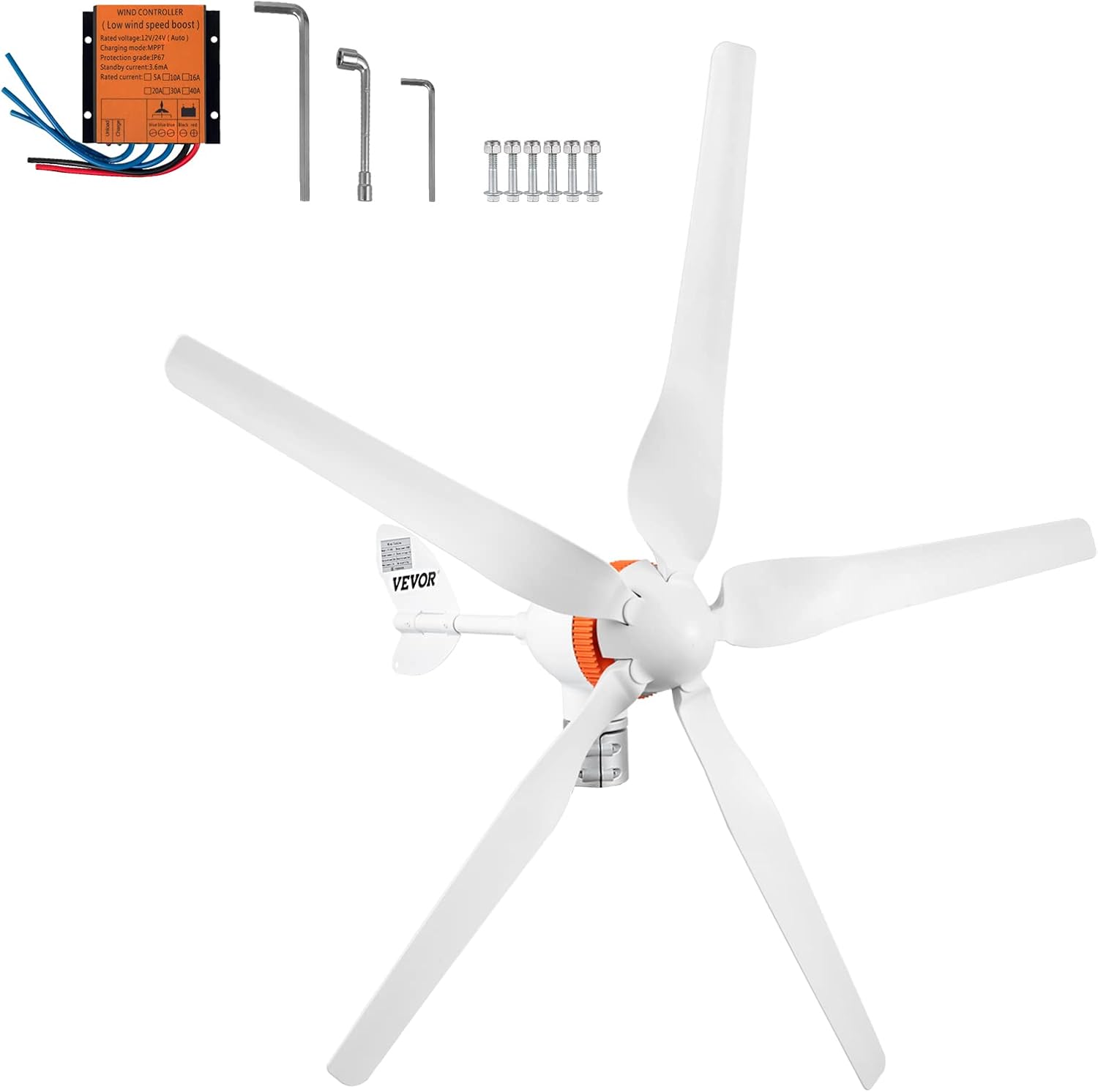
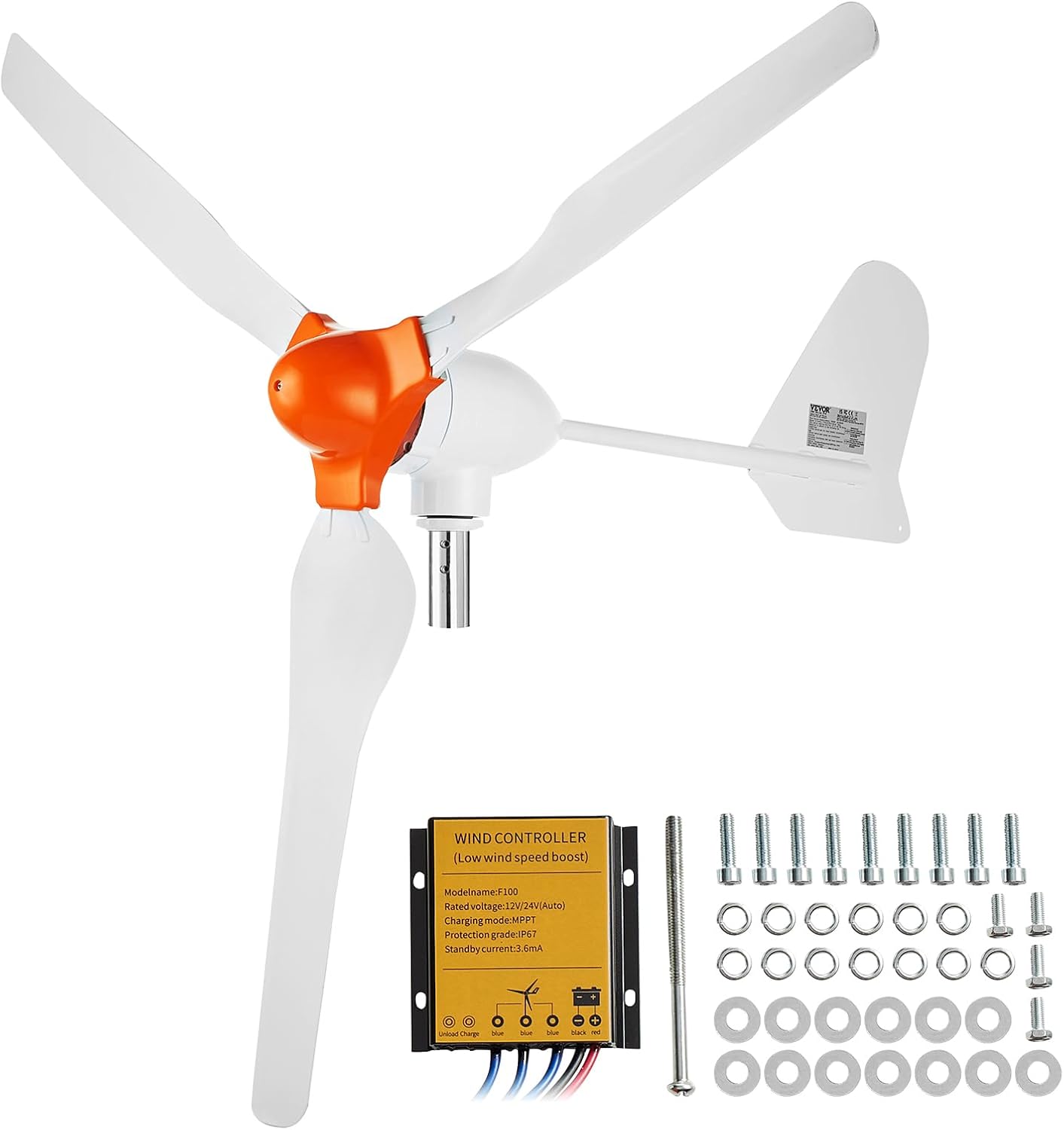
The blades are typically constructed from a durable plastic or composite, lightweight yet flexible enough to absorb some wind stress. The diameter is small, designed for portability and efficiency at lower power outputs. This small diameter contributes to its lower torque and consequently, its limited power generation capacity compared to a small wind turbine for home. However, it makes the unit less susceptible to heavy loads in high winds compared to larger blades.

Noise Level

At typical operating speeds (moderate winds), the noise level is generally low, a gentle whirring sound. It’s unlikely to be intrusive in an outdoor setting. However, as wind speeds approach the rated wind speed, the rotational noise becomes more noticeable, though still well within acceptable limits for a wind generator for cabin or camping environment. Vibration is minimal when properly mounted. Factory Insider Note: Blade balancing is often overlooked, yet poor balancing can significantly shorten a turbine’s lifespan and lead to increased noise and vibration. On these smaller units, precise balancing is less critical due to lower rotational mass, but it still contributes to smooth operation.

Tower Compatibility (or Lack Thereof)

This portable wind turbine isn’t designed for a traditional tower. Its mounting system is typically a clamp or a simple pole attachment, suitable for tents, railings, or lightweight telescopic poles. This lack of a formal tower system is a defining characteristic of its portability, but it also limits its ability to access higher, less turbulent winds, a significant factor for maximizing the output of any wind power system.

Weather and Corrosion Resistance

Most of these portable wind turbine chargers feature basic weatherproofing (e.g., IPX4 or IPX5 rating), protecting against splashes and light rain. They are generally made from UV-resistant plastics and some anodized aluminum components. For prolonged outdoor exposure, especially in humid or coastal environments, corrosion resistance of the metal fasteners and internal components could be a concern over several years. It’s built for occasional, not permanent, outdoor deployment.

Build Quality

For its price point, the build quality is generally acceptable. The housing is typically injection-molded plastic, and the assembly is straightforward. It’s not designed for the same robustness as a residential wind turbine, but it holds up well to typical outdoor use. Points of potential long-term wear include the hub assembly, which houses the bearings, and the internal USB circuitry if exposed to moisture.

Hybrid Solar Compatibility

This portable wind turbine outputs DC power via USB, making it inherently compatible with most portable solar charging setups. It acts as a supplementary power source to a hybrid solar wind generator system, especially when sunlight is limited. For charging power banks, phones, or other small USB devices, it integrates seamlessly with portable solar panels into a basic hybrid renewable energy solution. Its contribution, however, remains modest.

Safety

Safety for a 5W portable wind turbine is relatively straightforward. The blades spin at speeds that could cause minor injury if carelessly touched, so keeping hands clear is essential. Electrical output is low voltage (5V USB), posing no shock hazard. The primary safety concern revolves around secure mounting to prevent it from falling or blowing away in higher winds.

Installation Difficulty

Installation is extremely easy – typically a matter of clamping it to a suitable pole or surface and plugging in your USB device. This ease of installation is a major selling point for its portability. No complex wiring or controllers are involved beyond the integrated USB output.

Long-Term Reliability

Given its lightweight construction and the stresses of wind energy generation, even at a small scale, long-term reliability will be influenced by usage patterns. Bearings are often the first point of failure in small wind turbine for home units, and while less stressed here, they remain a wear item. Expect a lifespan of 2-3 years of intermittent use if properly cared for, and less if exposed to harsh, continuous conditions.

Price-to-Performance Ratio

The price-to-performance ratio for a 5W portable wind turbine needs to be considered within its specific niche. It offers convenient, supplemental charging for a relatively low upfront cost. However, for sheer power output per dollar, even a small, affordable solar panel often outperforms it, especially in sunny conditions. Its value lies in its ability to generate power when solar isn’t an option (e.g., night, cloudy, shaded areas). It’s a niche tool, not a workhorse.

Who Is It Best For?

The Portable Wind Turbine 5W USB Outdoor Charger is ideal for:

  • Emergency Backup: A valuable piece of kit for generating a trickle charge during long-term blackouts.
  • Remote Cabins (Light Use): Providing supplemental power for charging small electronics when off-grid.
  • Off-grid Living (Very Light Use): As a secondary or tertiary charging option for smartphones and power banks.
  • Hybrid Renewable Systems: Integrating into small, low-demand hybrid solar wind generator setups.

Potential Drawbacks

While convenient, this portable wind turbine has limitations:

  • Requires Sufficient Wind: Its performance is entirely dependent on consistent wind, which can be unpredictable.
  • Lower Output in Urban Areas: Urban environments suffer from wind turbulence and obstructions, significantly reducing effective output.
  • Noise (Minor): While generally quiet, some audible noise occurs at higher wind speeds.
  • Bearing Wear: As with any turbine, bearings are consumable parts and will eventually require replacement.
  • Limited Power: Not suitable for charging tablets, laptops, or running any significant appliances.

Real World Scenario: Emergency Preparedness

In an emergency preparedness scenario, the Portable Wind Turbine 5W USB Outdoor Charger For Smartphones takes on a different kind of value. Imagine a widespread, long-term blackout – not just hours, but days or even weeks. Your solar panels might be useful during the day, but what about at night, or during extended periods of heavy cloud cover? This is where a portable wind turbine can fill a crucial gap, complementing a hybrid solar wind generator approach.

During a prolonged power outage, maintaining communication and accessing critical information on a smartphone becomes paramount. A 5W turbine, while slow, offers a persistent trickle charge. If you have a decent power bank, you can connect the turbine to it, allowing the power bank to slowly accumulate energy over hours or even days, regardless of sunlight. Then, you can use the charged power bank to rapidly charge your smartphone when needed. This approach leverages the turbine’s ability to operate 24 hours a day, as long as there’s wind.

Its role isn’t to power your entire house or even keep all your devices fully charged, but rather to provide renewable backup for your most critical communication tools. Combined with a small portable solar panel, you create a robust, albeit low-power, hybrid renewable energy system that offers redundancy. The portability means you can deploy it quickly outside your home, at a temporary shelter, or even in a vehicle, as long as you can find a suitable spot with adequate wind exposure. It grants a degree of energy independence, ensuring you’re not solely reliant on dwindling battery reserves or grid restoration. In such a scenario, even a slow charge can be a lifeline.

Value for Money

Analyzing the value for money for this micro wind turbine involves balancing its low upfront cost against its modest annual electricity generation. The cost per watt is high compared to larger residential wind turbine systems, but that’s offset by its specific utility.

  • Cost per Watt: Relatively high due to its small scale.
  • Annual Electricity Generation: Extremely low (2.9-4.4 kWh/year estimated).
  • Maintenance Cost: Negligible for DIY users; bearings might need replacement eventually.
  • Warranty: Typically short, often 1 year.
  • Expected Lifespan: 2-3 years of practical use, possibly more with gentle handling.
  • Long-Term Ownership Cost: Low due to minimal maintenance and energy consumption.

Its value isn’t in its raw power output, but in its ability to provide opportunistic, off-grid charging for vital small electronics when no other power source is available.

Brand Comparison: Portable Wind Turbines

Comparing the Portable Wind Turbine 5W USB Outdoor Charger For Smartphones against other popular portable wind turbine brands reveals its specific niche. Many other “portable” options are significantly larger and designed for higher power demands, blurring the lines between true portability and small wind turbine for home applications.

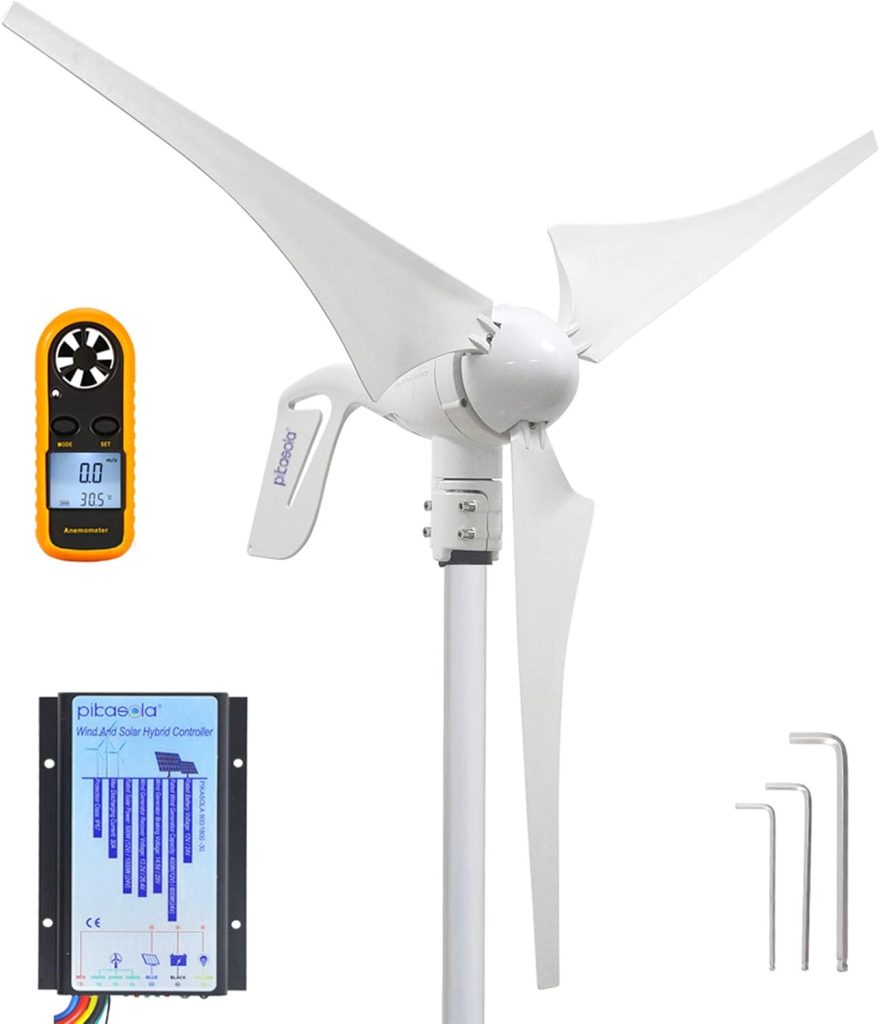
Feature Portable Wind Turbine 5W USB Outdoor Charger Pikasola 400W 12V Wind Turbine Automaxx 400W Wind Turbine Generator Nature Power 2000W Wind Turbine Kit
Rated Power 5W 400W 400W 2000W
Cut-in Wind Speed 2.5-3 m/s (5.6-6.7 mph) 2.5 m/s (5.6 mph) 2.5 m/s (5.6 mph) 3 m/s (6.7 mph)
Rated Wind Speed 8-10 m/s (18-22 mph) 12.5 m/s (28 mph) 12.5 m/s (28 mph) 12 m/s (27 mph)
Blade Diameter ~0.3 meters (~1 ft) ~1.2 meters (~4 ft) ~1.3 meters (~4.3 ft) ~2.9 meters (~9.5 ft)
Generator Type PMG (Permanent Magnet Generator) PMG PMG PMG
Annual Energy Prod. 2.9-4.4 kWh (estimated) ~40-60 kWh (highly variable) ~40-60 kWh (highly variable) ~200-300 kWh (highly variable)
Warranty 1 Year (Typical) 1-2 Years 1-2 Years 2-5 Years
Price Low (Under $100) Moderate ($300-$500) Moderate ($300-$500) High ($1500-$2500+)

Who Should Buy the Portable Wind Turbine 5W USB Outdoor Charger For Smartphones?

This is for the minimalist, the backpacker, the emergency prepper, or anyone needing a dedicated, ultralight portable wind turbine for charging smartphones and small USB devices, especially when solar isn’t an option. It’s a supplementary tool for niche situations, prioritizing portability over power.

Who Should Buy a Pikasola or Automaxx Wind Turbine?

These 400W units are designed for more serious off-grid wind turbine applications. They are small wind turbine for home or wind generator for cabin primary power sources, suitable for battery charging wind turbine systems. They can contribute significantly to powering lights, small appliances, or supplementing a hybrid solar wind generator for an RV or remote shed. They require more substantial mounting and a charge controller.

Who Should Buy a Nature Power Wind Turbine?

Nature Power (specifically the larger 2000W variant) is for those seeking a more robust residential wind turbine or a substantial home wind generator for larger off-grid wind power systems. This scale can support multiple appliances, water pumps on a farm, or provide significant backup for a rural home. These require careful planning, strong tower installation, and a comprehensive wind turbine generator kit including controllers and inverters.

Frequently Asked Questions (FAQ)

Q: Why does cut-in wind speed matter for a portable wind turbine?

A: The cut-in wind speed is crucial because it dictates how often your portable wind turbine will actually generate power. If your typical location has wind speeds below the cut-in threshold, the turbine will sit idle, effectively useless. For a 5W unit, a low cut-in speed means it can begin charging even in gentle breezes, which are more common in casual outdoor settings than strong, sustained winds. It maximizes your chances of getting some power.

Q: How much electricity can Portable Wind Turbine 5W USB Outdoor Charger For Smartphones generate in a typical year?

A: In a good location with consistent, moderate wind, you might realistically expect 2.9 to 4.4 kilowatt-hours (kWh) per year from this micro wind turbine. To put that into perspective, a single kWh can power a 100-watt light bulb for 10 hours. This output is enough for perhaps 100-150 full smartphone charges annually, making it a supplemental renewable wind energy source, not a primary power provider for a small wind power system.

Q: What should buyers consider before purchasing a portable wind turbine?

A: Before buying any portable wind turbine, first assess your actual power needs. Is it strictly for charging a phone, or do you expect to power larger devices? Second, realistically evaluate your typical wind conditions. Do you have consistent breezes or strong winds? A wind meter can help. Third, consider portability – how often will you move it, and how easily can it be set up? Finally, remember that for significant wind power for home or a hybrid solar wind generator system, you’ll need to step up to a much larger, less portable residential wind turbine or home wind generator. This 5W unit is for very specific, low-power applications.

Final Verdict: Portable Wind Turbine 5W USB Outdoor Charger

The Portable Wind Turbine 5W USB Outdoor Charger For Smartphones is precisely what its name implies: a highly specialized, very low-power portable wind turbine designed for charging small USB devices on the go. It is not a small wind turbine for home capable of powering substantial loads, nor is it a primary component for a robust hybrid solar wind generator system.

Its real-world performance is modest, often producing 1-3 watts of usable power in typical conditions. Its strengths lie in its extreme portability, ease of use, and ability to generate power when solar is unavailable (e.g., at night or during prolonged cloudy periods). For those seeking an ultra-compact, emergency backup charger or a lightweight addition to a minimalist off-grid kit, this micro wind turbine offers a unique solution. Manage your expectations regarding output, and you’ll find it a valuable niche tool in your renewable energy arsenal. For anything more substantial, you’ll need to invest in a larger, more permanent home wind generator.

#Portable #Wind #Turbine #USB #Outdoor #Charger #Smartphones